


Table of Contents
- What Is Keto Coffee and Why Do People Drink It?
- The Science Behind Fat in Your Coffee
- Butter in Keto Coffee: What You Need to Know
- Why Grass-Fed Butter?
- What Does Butter Add to Your Coffee?
- MCT Oil in Keto Coffee: The Quick Energy Booster
- Understanding Different MCT Types
- What Does MCT Oil Add to Your Coffee?
- Butter vs. MCT Oil: Head-to-Head Comparison
- Who Should Use Butter?
- Who Should Use MCT Oil?
- Why Not Use Both?
- How to Make Your First Cup of Keto Coffee
- What You'll Need
- Step-by-Step Instructions
- Frequently Asked Questions
- Can I drink keto coffee if I'm not on a keto diet?
- Will keto coffee break my intermittent fast?
- Why does my keto coffee taste oily or separate after a few minutes?
- Can I use coconut oil instead of MCT oil?
- How many calories are in a typical cup of keto coffee?
- Final Thoughts: Finding Your Perfect Keto Coffee
You’ve probably seen it all over social media: people blending butter into their morning coffee and swearing it keeps them energized for hours. It sounds strange at first, but keto coffee (also called bulletproof coffee) has become a staple for anyone following a low-carb, high-fat lifestyle. If you’re new to this creamy, frothy world, you might be wondering: should I use butter, MCT oil, or both? And what’s the difference anyway?
In this guide, I’ll break down everything you need to know about keto coffee for beginners. You’ll learn exactly what makes this drink so popular, the key differences between butter and MCT oil, and how to make your first cup without any guesswork. By the end, you’ll know which fat source works best for your goals and taste preferences.
What Is Keto Coffee and Why Do People Drink It?
Keto coffee is simply coffee blended with healthy fats—typically butter, MCT oil, or a combination of both. The idea originated from Dave Asprey’s “Bulletproof Coffee” concept, which he popularized after experiencing the energizing effects of yak butter tea in Tibet. The premise is straightforward: replace your carb-heavy breakfast with a high-fat coffee that keeps you satisfied and mentally sharp.
For those following a ketogenic diet, this drink serves multiple purposes. It provides a quick source of fat to help maintain ketosis, offers sustained energy without the blood sugar spike of traditional breakfast foods, and can help curb hunger for hours. In my experience, a well-made cup of keto coffee genuinely does keep the mid-morning snack cravings at bay.
The Science Behind Fat in Your Coffee
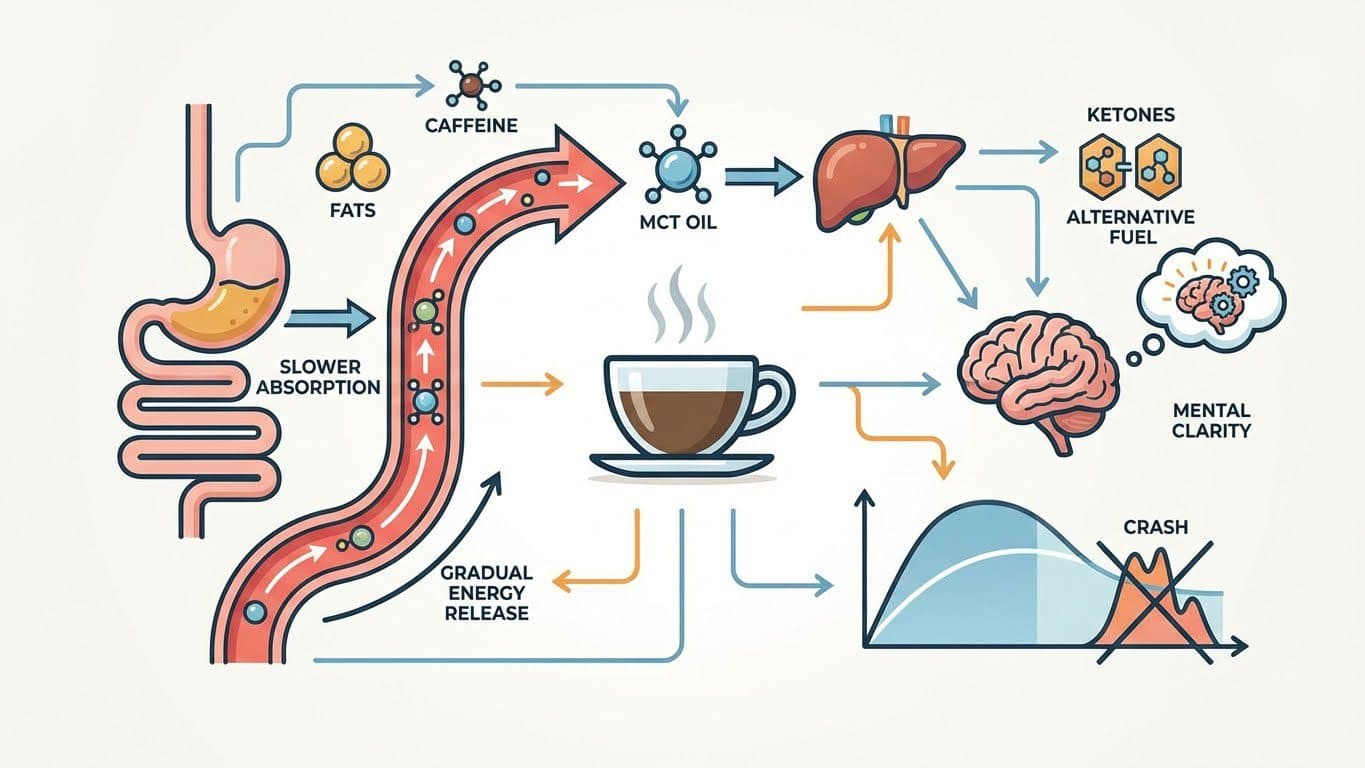
When you consume fats alongside caffeine, the absorption rate changes. The fats slow down caffeine absorption, which means you get a more gradual energy release rather than a sudden jolt followed by a crash. Additionally, MCT oil specifically gets converted to ketones quickly, providing an alternative fuel source for your brain. This is why many people report improved mental clarity after drinking keto coffee.
Key Takeaway: Keto coffee isn’t just a trend—it’s a strategic way to fuel your body with fats while enjoying the cognitive benefits of caffeine, especially if you’re following a low-carb lifestyle.
Butter in Keto Coffee: What You Need to Know
Let’s start with the ingredient that raises the most eyebrows: butter. Not just any butter, though. For keto coffee, you’ll want grass-fed, unsalted butter. The grass-fed part matters because it contains a better fatty acid profile, including more omega-3s and fat-soluble vitamins like A, D, and K2.
Why Grass-Fed Butter?
Grass-fed butter comes from cows that eat their natural diet of grass rather than grain. This affects the nutritional content significantly. You’ll get more conjugated linoleic acid (CLA), which some studies suggest may support metabolism. The butter also tastes richer and more complex—something you’ll definitely notice in your coffee.
Popular brands include Kerrygold, Vital Farms, and Organic Valley Pasture-Raised. I’ve found that Kerrygold is the most widely available and offers excellent quality for the price.
What Does Butter Add to Your Coffee?
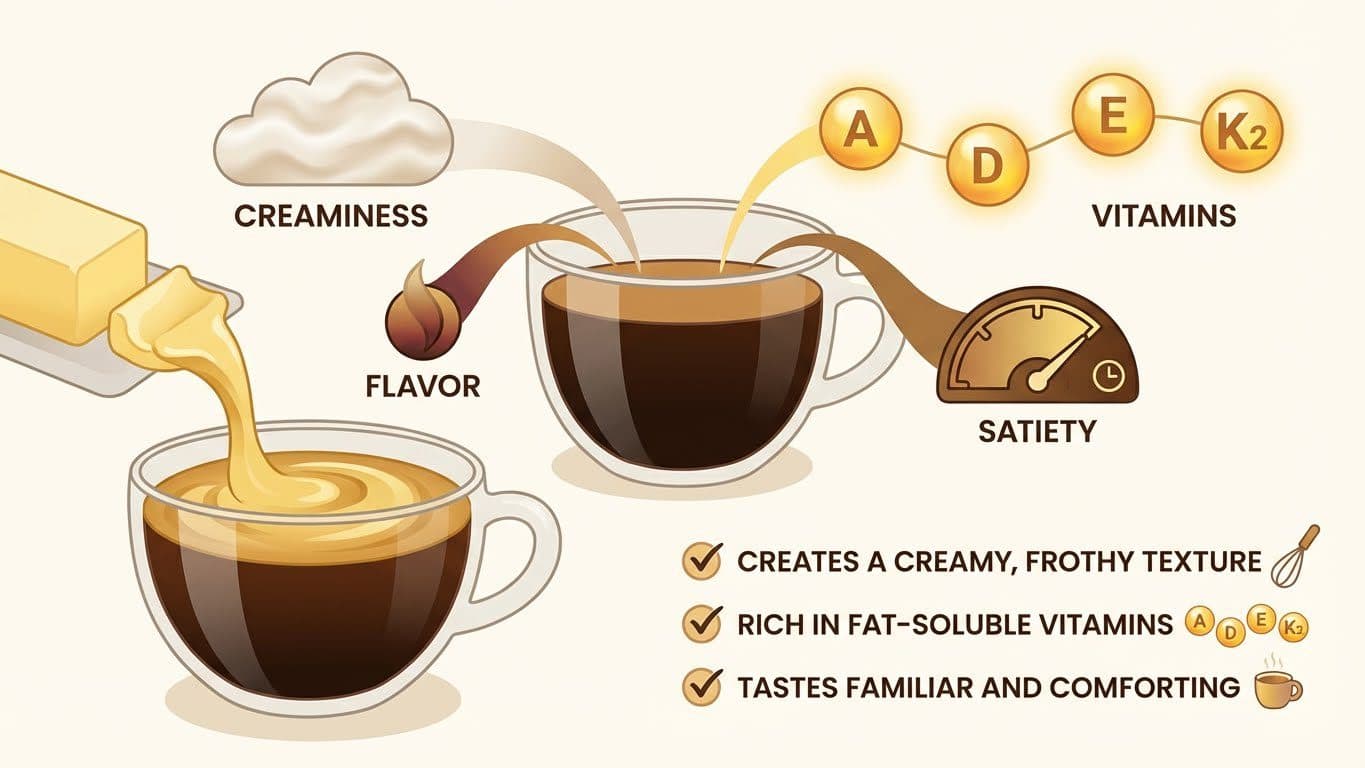
- Creaminess: Butter creates that latte-like, velvety texture that makes keto coffee so satisfying.
- Flavor: It adds a subtle richness without overpowering the coffee’s natural taste.
- Satiety: The combination of fats helps keep you full longer than black coffee alone.
- Vitamins: Grass-fed butter provides fat-soluble vitamins that support overall health.
Pros of Using Butter:
- Creates a creamy, frothy texture when blended properly
- Rich in fat-soluble vitamins (A, D, E, K2)
- Tastes familiar and comforting
- Widely available at most grocery stores
- More affordable than specialty MCT oils
Cons of Using Butter:
- Contains dairy, which some people don’t tolerate well
- Higher in saturated fat (a consideration for some individuals)
- Doesn’t provide the rapid ketone boost that MCT oil offers
- Can leave an oily film if not blended thoroughly
MCT Oil in Keto Coffee: The Quick Energy Booster
MCT stands for medium-chain triglycerides—a type of fat that your body processes differently than the long-chain fats found in most foods. MCT oil is typically derived from coconut oil, though it’s much more concentrated. Your liver converts MCTs directly into ketones, making them an almost instant fuel source for your brain and body.
Understanding Different MCT Types
Not all MCT oils are created equal. There are four types of MCTs, but the two most important for keto coffee are:
- C8 (Caprylic Acid): The most ketogenic MCT. It converts to ketones the fastest and is the easiest to digest. Premium MCT oils often contain pure C8.
- C10 (Capric Acid): Slightly slower to convert but still effective. Many quality MCT oils contain a blend of C8 and C10.
Cheaper MCT oils may contain C12 (lauric acid), which behaves more like a long-chain fat and doesn’t provide the same quick energy benefits. When shopping, look for oils that specify C8, C10, or both on the label.
What Does MCT Oil Add to Your Coffee?
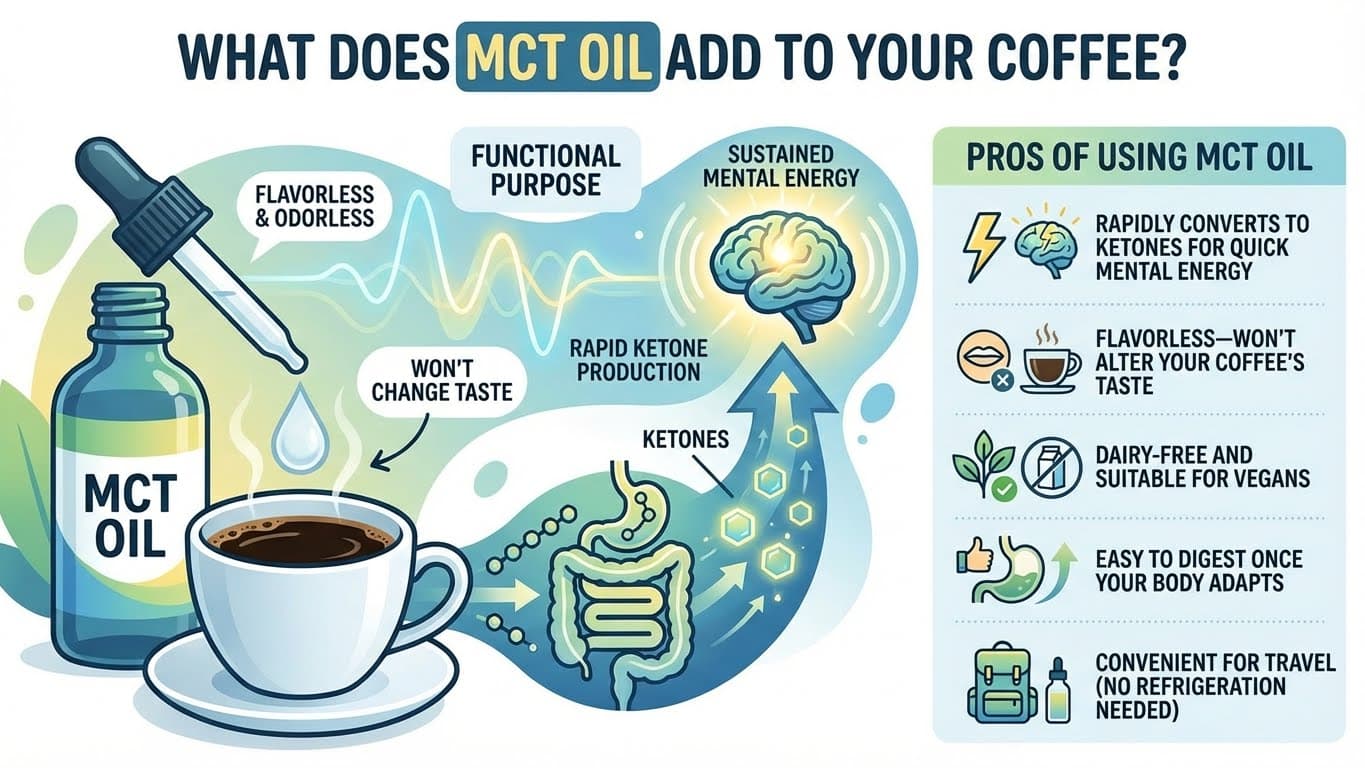
MCT oil is flavorless and odorless, so it won’t change how your coffee tastes. Its main purpose is functional: rapid ketone production and sustained mental energy. Many people describe the effect as a “clean” focus that lasts several hours.
Pros of Using MCT Oil:
- Rapidly converts to ketones for quick mental energy
- Flavorless—won’t alter your coffee’s taste
- Dairy-free and suitable for vegans
- Easy to digest once your body adapts
- Convenient for travel (no refrigeration needed)
Cons of Using MCT Oil:
- Can cause digestive upset if you use too much too soon
- Doesn’t create the same creamy texture as butter
- Higher quality oils can be expensive
- Some people experience “disaster pants” when starting out (start small!)
Barista Tip: If you’re new to MCT oil, start with just one teaspoon and gradually work up to one tablespoon over a week or two. Your digestive system needs time to adapt, and rushing this process can lead to uncomfortable stomach issues.
Butter vs. MCT Oil: Head-to-Head Comparison
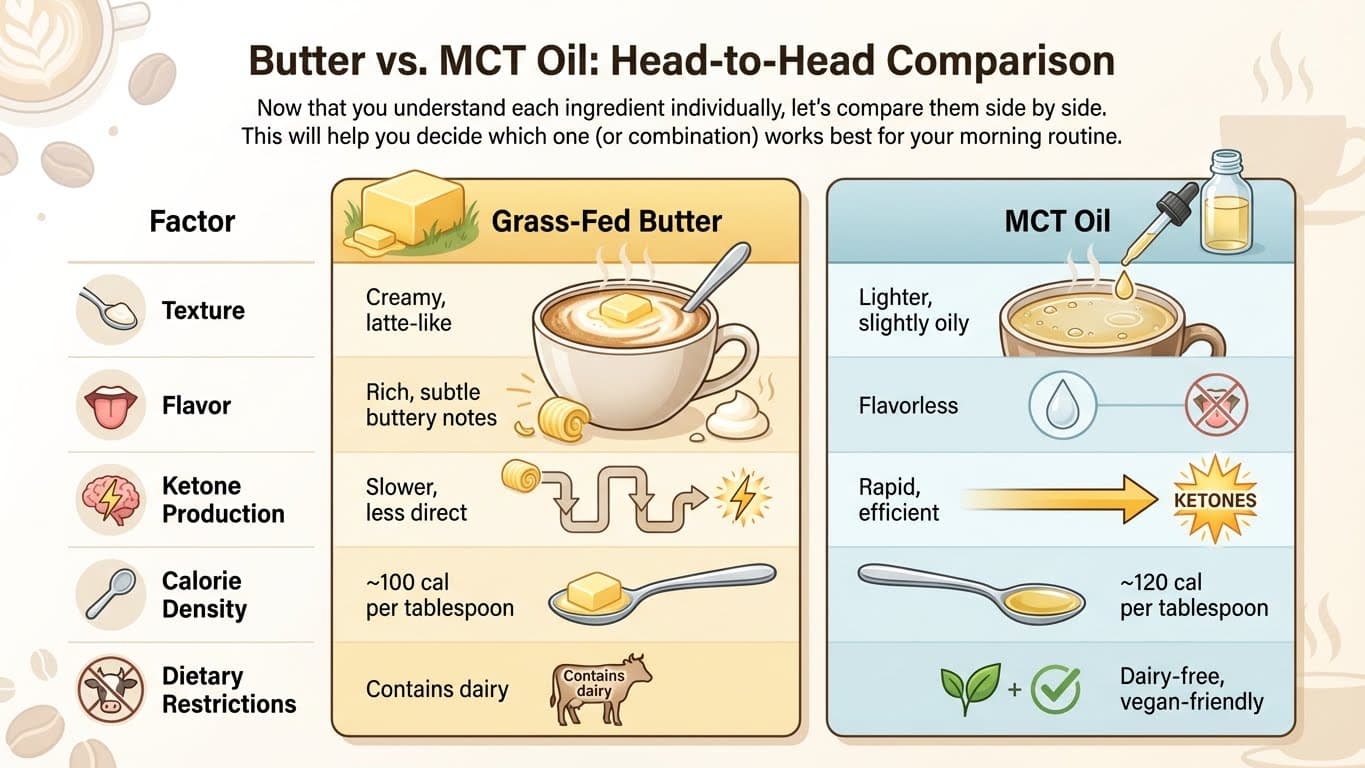
Now that you understand each ingredient individually, let’s compare them side by side. This will help you decide which one (or combination) works best for your morning routine.
| Factor | Grass-Fed Butter | MCT Oil |
|---|---|---|
| Texture | Creamy, latte-like | Lighter, slightly oily |
| Flavor | Rich, subtle buttery notes | Flavorless |
| Ketone Production | Slower, less direct | Rapid, efficient |
| Calorie Density | ~100 cal per tablespoon | ~120 cal per tablespoon |
| Dietary Restrictions | Contains dairy | Dairy-free, vegan-friendly |
| Best For | Taste and satiety | Mental energy and ketosis |
| Price | $$ (moderate) | $$$ (higher for quality) |
Who Should Use Butter?
Butter is ideal if you prioritize taste and texture in your morning coffee. If you tolerate dairy well and want that satisfying, creamy latte experience without the carbs, grass-fed butter delivers. It’s also a good starting point for keto coffee beginners because the effects are gentler on your system.
Who Should Use MCT Oil?
MCT oil is your go-to if you’re focused on mental clarity and ketone production. It’s also the better choice if you’re dairy-free or following a strict vegan keto approach. Athletes and intermittent fasters often prefer MCT oil for its quick-acting energy benefits.
Why Not Use Both?
Here’s a little secret: you don’t have to choose. Many keto coffee enthusiasts (myself included) use both butter and MCT oil together. The butter provides creaminess and flavor, while the MCT oil adds that cognitive boost. A typical combination might be one tablespoon of butter plus one tablespoon of MCT oil. This gives you the best of both worlds.
How to Make Your First Cup of Keto Coffee
Ready to try it yourself? Here’s a simple recipe to get you started. The key is proper blending—you can’t just stir these fats into your coffee and expect good results.
What You’ll Need
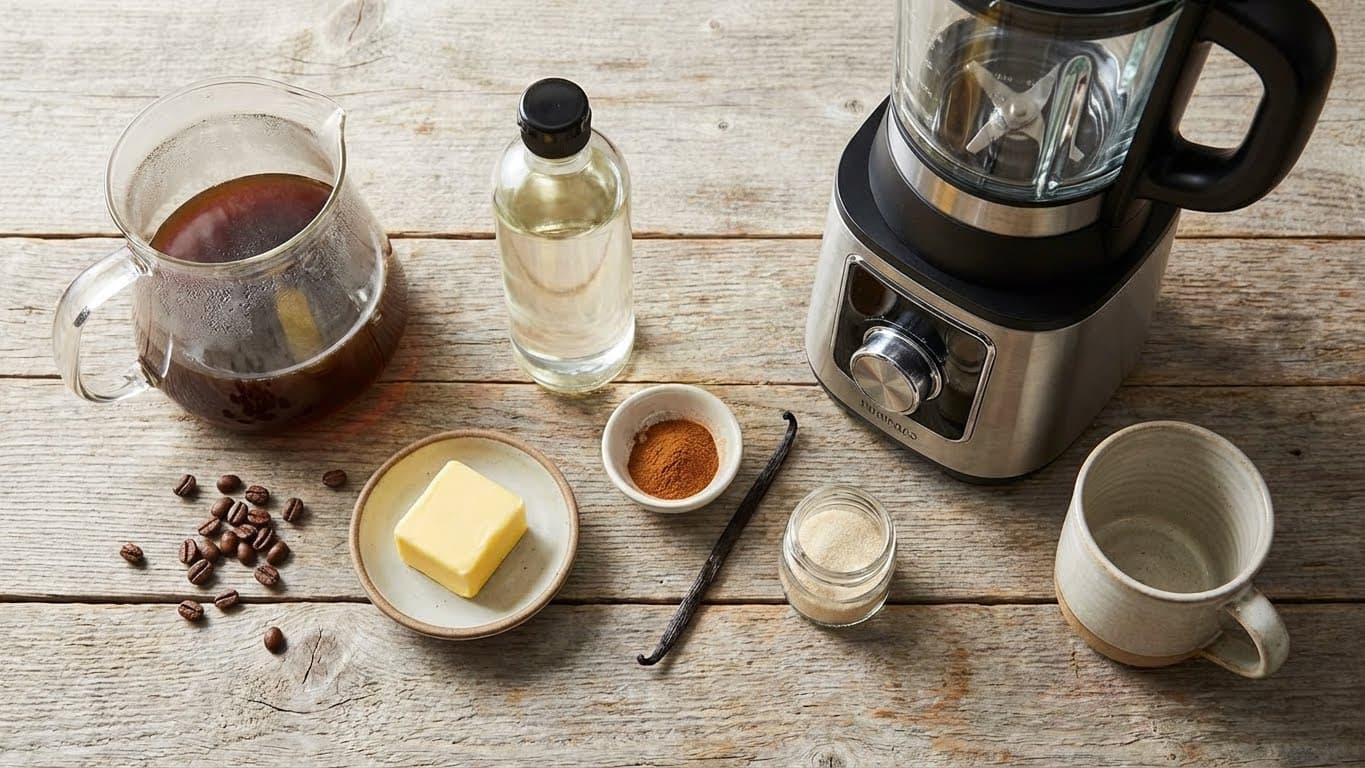
Ingredients:
- 8-12 oz freshly brewed hot coffee (quality beans make a difference)
- 1-2 tablespoons grass-fed unsalted butter
- 1 tablespoon MCT oil (or start with 1 teaspoon if you’re new)
- Optional: pinch of cinnamon, vanilla extract, or sugar-free sweetener
Gear:
- Blender (regular or immersion/stick blender)
- Your favorite mug
Step-by-Step Instructions
- Brew your coffee as you normally would. Use a method you enjoy—French press, pour-over, or drip all work fine.
- Pour the hot coffee into your blender. Make sure the coffee is fresh and hot for proper emulsification.
- Add the butter and MCT oil to the blender.
- Blend on high for 20-30 seconds until the mixture is completely combined and frothy.
- Pour into your mug and enjoy immediately while it’s warm and creamy.
Barista Tip: If you don’t have a blender, a milk frother can work in a pinch, though the results won’t be quite as smooth. Never just stir the fats in—you’ll end up with an oily, unappetizing layer floating on top.
Frequently Asked Questions
Can I drink keto coffee if I’m not on a keto diet?
Absolutely. While keto coffee is designed with the ketogenic diet in mind, anyone can enjoy it as a high-fat, low-carb breakfast alternative. Just be mindful that it’s calorie-dense, so factor those calories into your daily intake if you’re watching your overall consumption.
Will keto coffee break my intermittent fast?
This depends on how strict your fasting protocol is. Pure fasting purists would say yes, since you’re consuming calories. However, many people practicing intermittent fasting find that fat-only calories don’t spike insulin significantly and help them extend their fasting window more comfortably. It’s a personal choice based on your goals.
Why does my keto coffee taste oily or separate after a few minutes?
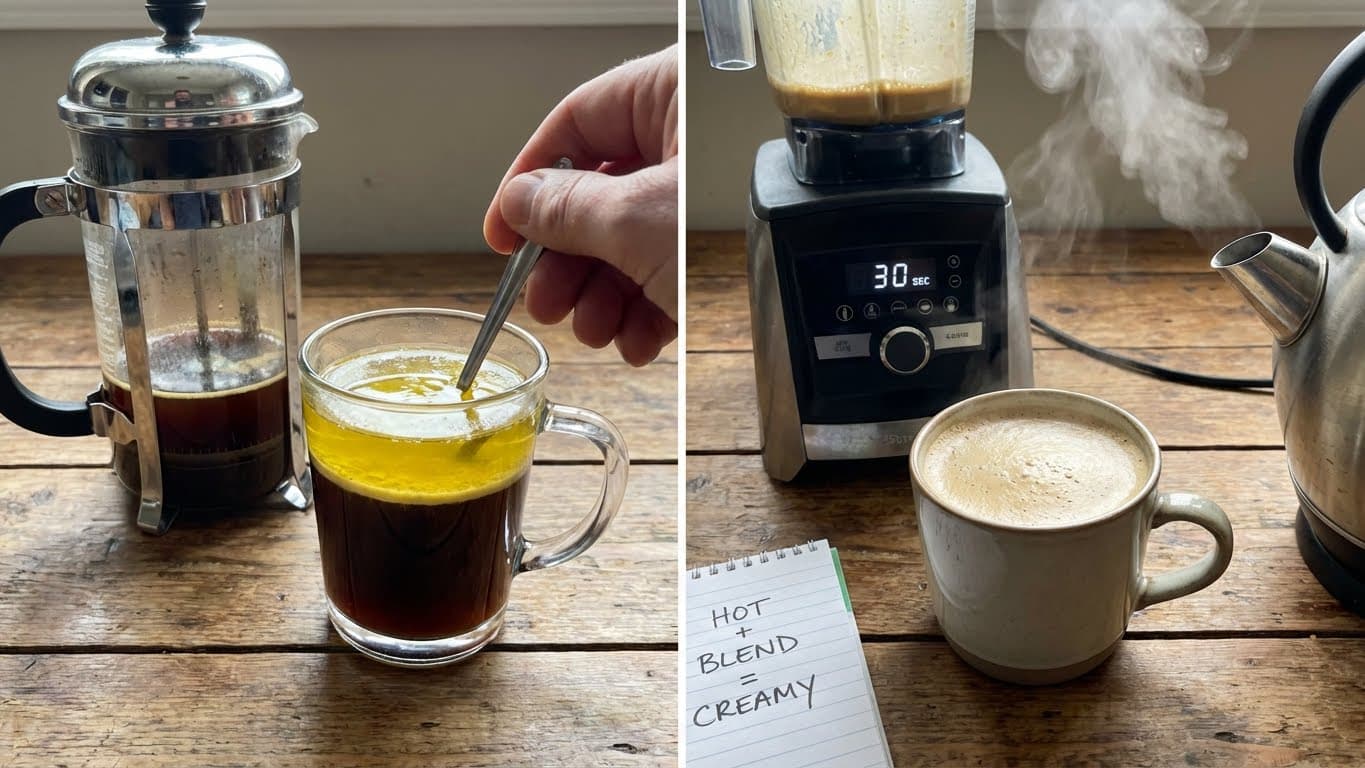
This usually means you didn’t blend it long enough or the coffee wasn’t hot enough. Hot coffee helps the fats emulsify properly. Try blending for a full 30 seconds and using freshly brewed, piping-hot coffee. Drinking it right away also helps—it will naturally separate as it cools.
Can I use coconut oil instead of MCT oil?
You can, but the results will differ. Coconut oil contains MCTs, but it’s only about 15% C8 and C10 (the most ketogenic types). It also has a noticeable coconut flavor that some people love and others dislike. MCT oil is more concentrated and flavorless, making it the preferred choice for keto coffee.
How many calories are in a typical cup of keto coffee?
A standard keto coffee with one tablespoon each of butter and MCT oil contains roughly 220-250 calories. Most of these calories come from fat, with virtually zero carbs. This makes it an effective meal replacement for those following a ketogenic or low-carb lifestyle.
Final Thoughts: Finding Your Perfect Keto Coffee
Keto coffee for beginners doesn’t have to be complicated. Whether you choose butter, MCT oil, or a combination of both, the goal is the same: a satisfying, energy-boosting drink that fits your dietary preferences. Butter brings the creaminess and flavor, while MCT oil delivers rapid ketones and mental clarity. There’s no single “right” answer—it’s about what works for your body and your taste buds.
Start simple. Try butter alone for your first few cups, then experiment with adding MCT oil gradually. Pay attention to how you feel, how long you stay satisfied, and whether you notice any digestive changes. Life is too short for bad coffee, but it’s also too short to overthink it. Blend up a cup, see what you think, and adjust from there. Your perfect keto coffee recipe is waiting to be discovered.




Comments