


Table of Contents
- Understanding Intermittent Fasting and Why It Matters for Coffee Lovers
- What Is Stevia and How Does It Differ From Other Sweeteners?
- Stevia's Nutritional Profile
- Stevia vs. Other Zero-Calorie Sweeteners
- Does Stevia Break a Fast? The Science-Based Answer
- Stevia and Blood Sugar Response
- Stevia and Autophagy
- Stevia and Weight Loss Goals
- How to Use Stevia in Your Intermittent Fasting Coffee
- Choosing the Right Stevia Product
- Avoiding the Bitter Aftertaste
- Common Myths About Stevia and Fasting
- Myth #1: Any Sweet Taste Breaks a Fast
- Myth #2: Stevia Is "Artificial" and Unhealthy
- Myth #3: You Must Drink Only Black Coffee While Fasting
- Frequently Asked Questions
- How much stevia can I add to my coffee without breaking my fast?
- Is stevia better than monk fruit for intermittent fasting?
- Can I use stevia in my coffee if I'm doing a strict water fast?
- Will stevia in my coffee make me hungrier during my fast?
- What about stevia-sweetened creamers—are those okay?
- Conclusion: Enjoying Your Intermittent Fasting Coffee With Stevia
You’ve committed to intermittent fasting, you’re feeling good about your progress, and then morning hits. That first cup of coffee is calling your name—but you want just a touch of sweetness. Suddenly, you’re staring at a packet of stevia wondering: will this tiny addition undo all my fasting efforts? If you’re combining intermittent fasting with your daily coffee ritual, understanding how stevia affects your fast is essential knowledge.
In this guide, we’ll explore whether stevia breaks a fast, how it interacts with your body during fasting windows, and how you can enjoy your intermittent fasting coffee without sabotaging your goals. I’ve spent years experimenting with different fasting protocols while refusing to give up my morning brew, so let me share what I’ve learned.
Understanding Intermittent Fasting and Why It Matters for Coffee Lovers
Intermittent fasting isn’t just another diet trend—it’s a pattern of eating that cycles between periods of fasting and eating. The most popular approach is the 16:8 method, where you fast for 16 hours and eat within an 8-hour window. During that fasting period, your body shifts from burning glucose to burning stored fat for energy, a metabolic state called ketosis.
Here’s where your morning coffee enters the picture. Black coffee is generally considered fasting-friendly because it contains virtually zero calories. But the moment you start adding things to it, questions arise. The key factors that determine whether something “breaks” your fast include:
- Caloric content: Consuming calories triggers digestive processes
- Insulin response: Anything that spikes insulin can interrupt fat-burning
- Autophagy disruption: Certain compounds may halt cellular cleanup processes
- Digestive activation: Engaging your gut can shift your body out of fasting mode
In short, whether stevia breaks your fast depends largely on what you’re trying to achieve with fasting in the first place.
What Is Stevia and How Does It Differ From Other Sweeteners?
Stevia is a natural sweetener derived from the leaves of the Stevia rebaudiana plant, native to South America. Unlike artificial sweeteners such as aspartame or sucralose, stevia comes from a plant source and has been used for centuries. The sweet compounds in stevia—called steviol glycosides—are up to 300 times sweeter than sugar, meaning you need very little to achieve the desired sweetness.
Stevia’s Nutritional Profile
Pure stevia extract contains essentially zero calories and zero carbohydrates. This is crucial for intermittent fasting because caloric intake is one of the primary triggers that can break a fast. However, not all stevia products are created equal. Some commercial stevia blends contain fillers like maltodextrin or dextrose, which do contain calories and can spike blood sugar.
Key Takeaway: Always check the ingredient list on your stevia product. Pure stevia extract or stevia leaf powder is your best bet for fasting. If you see maltodextrin, dextrose, or sugar alcohols listed, that product may not be ideal for your fasting window.
Stevia vs. Other Zero-Calorie Sweeteners
| Sweetener | Source | Calories | Insulin Impact |
|---|---|---|---|
| Stevia | Plant-based | 0 | Minimal to none |
| Monk Fruit | Plant-based | 0 | Minimal to none |
| Aspartame | Synthetic | 0 | Debated |
| Sucralose | Synthetic | 0 | May affect some individuals |
Does Stevia Break a Fast? The Science-Based Answer
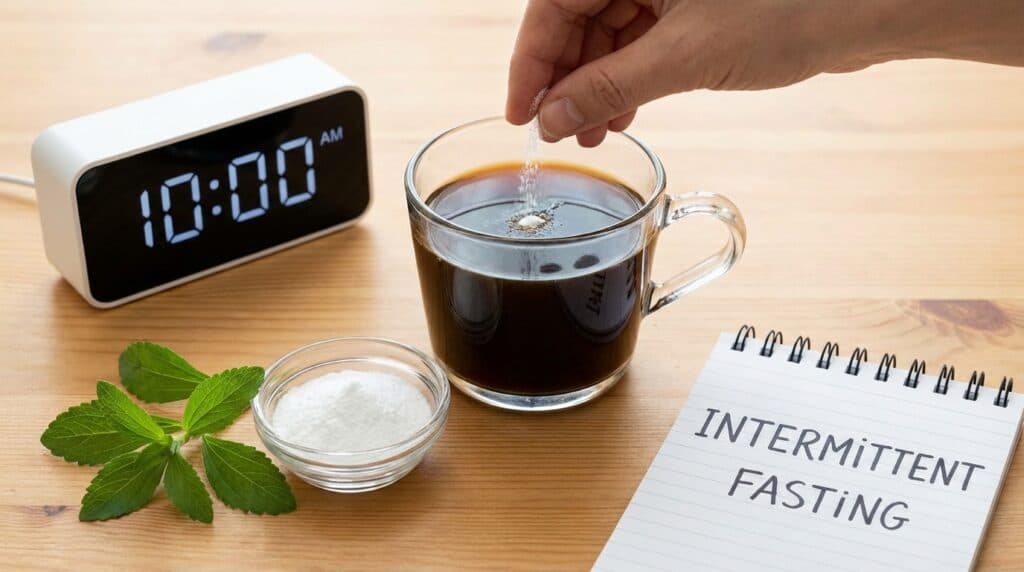
Here’s the good news for coffee lovers: current research suggests that pure stevia does not significantly break a fast for most fasting goals. According to recent studies and expert consensus from 2024, stevia appears to be a safe option during intermittent fasting windows. But let’s break this down by specific fasting objectives.
Stevia and Blood Sugar Response
One of the primary benefits of fasting is improved blood sugar control. Research published in peer-reviewed journals indicates that stevia has a negligible effect on blood glucose levels. In fact, some studies suggest stevia may actually improve insulin sensitivity over time. A meta-analysis examining stevia’s effects on glycemic response found no significant increase in blood sugar following stevia consumption.
In my experience, I’ve tested my blood glucose before and after adding stevia to my fasting coffee, and the numbers stayed remarkably stable. Your mileage may vary, but for most people, stevia won’t trigger the insulin spike that would interrupt fat-burning.
Stevia and Autophagy
Autophagy—your body’s cellular cleanup process—is a bit more complicated. This is where things get nuanced. While stevia doesn’t provide calories that would halt autophagy through the mTOR pathway, some researchers theorize that the sweet taste alone might trigger certain metabolic responses. However, there’s currently no strong evidence that stevia significantly disrupts autophagy.
If maximizing autophagy is your primary goal (for longevity or cellular health benefits), you might consider sticking to plain black coffee during your fasting window. But for general weight loss and metabolic health, stevia in your intermittent fasting coffee is unlikely to cause problems.
Stevia and Weight Loss Goals
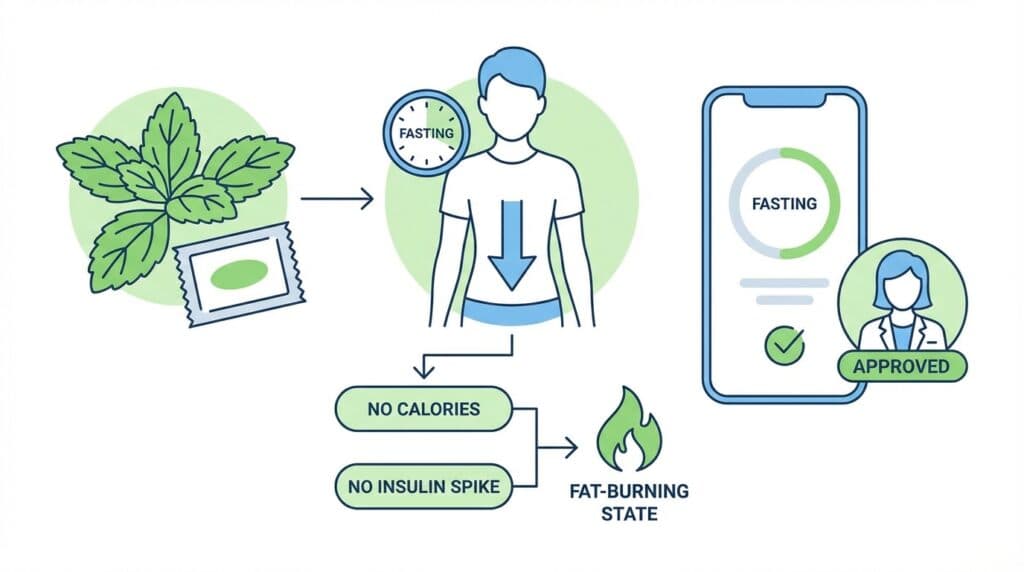
For those fasting primarily for weight loss, stevia is generally considered safe. Since it contains no calories and doesn’t spike insulin, it won’t interfere with the caloric deficit or fat-burning state that drives weight loss during fasting. Some fasting apps and nutrition experts even specifically approve stevia as a fasting-friendly sweetener.
How to Use Stevia in Your Intermittent Fasting Coffee
Now that we’ve established stevia is generally fasting-friendly, let’s talk about how to use it properly. Not all stevia products work equally well in coffee, and there are some tricks to getting the best taste without any bitter aftertaste.
Choosing the Right Stevia Product
- Pure stevia extract: The cleanest option with no fillers—ideal for strict fasting
- Liquid stevia drops: Easy to dose and dissolves instantly in hot coffee
- Stevia leaf powder: Minimally processed but may have a slight herbal taste
- Stevia blends: Check ingredients carefully; avoid those with maltodextrin or dextrose
Barista Tip: Start with less stevia than you think you need. Because it’s so much sweeter than sugar, a little goes a long way. I typically use just 2-3 drops of liquid stevia in my morning pour-over, and that’s plenty.
Avoiding the Bitter Aftertaste
Some people find stevia has a bitter or licorice-like aftertaste. Here’s how to minimize it:
- Use high-quality, pure stevia products (cheaper brands often taste more bitter)
- Add a tiny pinch of salt to your coffee—it neutralizes bitterness
- Don’t overdo it; too much stevia amplifies the aftertaste
- Try different brands until you find one that works for your palate
I’ve found that liquid stevia tends to blend more smoothly into coffee than powdered versions. The key is experimentation—your perfect stevia-to-coffee ratio might take a few tries to nail down.
Common Myths About Stevia and Fasting
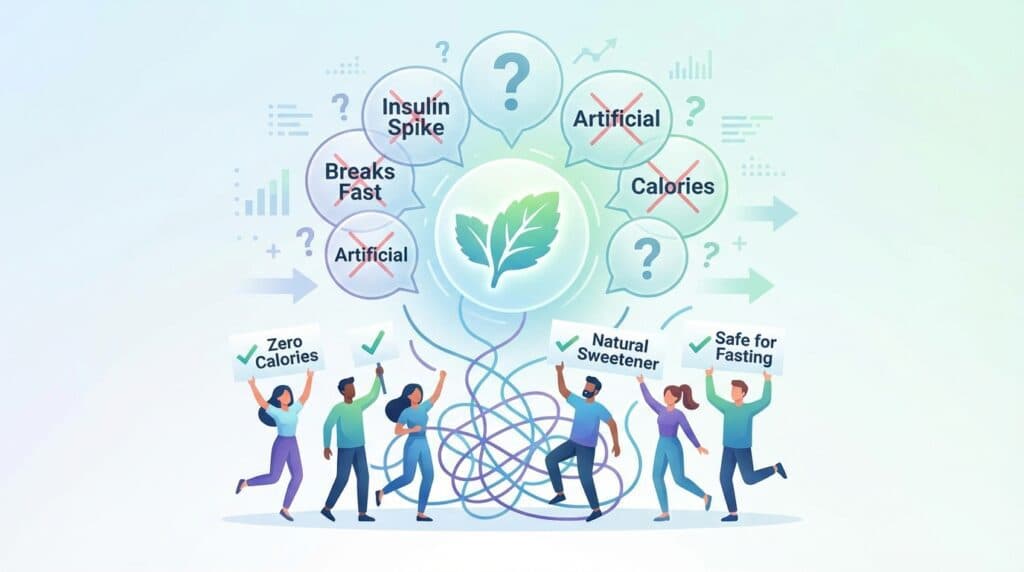
Let’s bust some misconceptions that circulate in fasting communities. Misinformation can lead to unnecessary restriction or, worse, abandoning your fasting practice altogether.
Myth #1: Any Sweet Taste Breaks a Fast
This is one of the most persistent myths. The theory suggests that tasting something sweet triggers an insulin response even without calories. While there’s some preliminary research on this “cephalic phase insulin response,” the effect appears to be minimal with non-caloric sweeteners like stevia. For practical fasting purposes, this small response (if it occurs at all) is unlikely to derail your results.
Myth #2: Stevia Is “Artificial” and Unhealthy
Stevia is actually a natural, plant-derived sweetener that has been used for hundreds of years. It’s not in the same category as synthetic sweeteners. Research on stevia’s safety profile is generally positive, with regulatory agencies worldwide approving it for consumption.
Myth #3: You Must Drink Only Black Coffee While Fasting
While black coffee is the “purest” fasting option, being overly restrictive can make fasting unsustainable. If a few drops of stevia help you stick with your fasting protocol long-term, that’s a worthwhile trade-off. Consistency beats perfection every time.
Did You Know? Some studies suggest that stevia may have additional health benefits beyond being a zero-calorie sweetener, including potential antioxidant and anti-inflammatory properties. While more research is needed, stevia isn’t just neutral—it might actually support your health goals.
Frequently Asked Questions
How much stevia can I add to my coffee without breaking my fast?
For most fasting goals, a moderate amount of pure stevia (1-3 servings) won’t break your fast. The key is using pure stevia without added fillers like maltodextrin. Since stevia has zero calories and minimal insulin impact, reasonable amounts are generally considered safe during fasting windows.
Is stevia better than monk fruit for intermittent fasting?
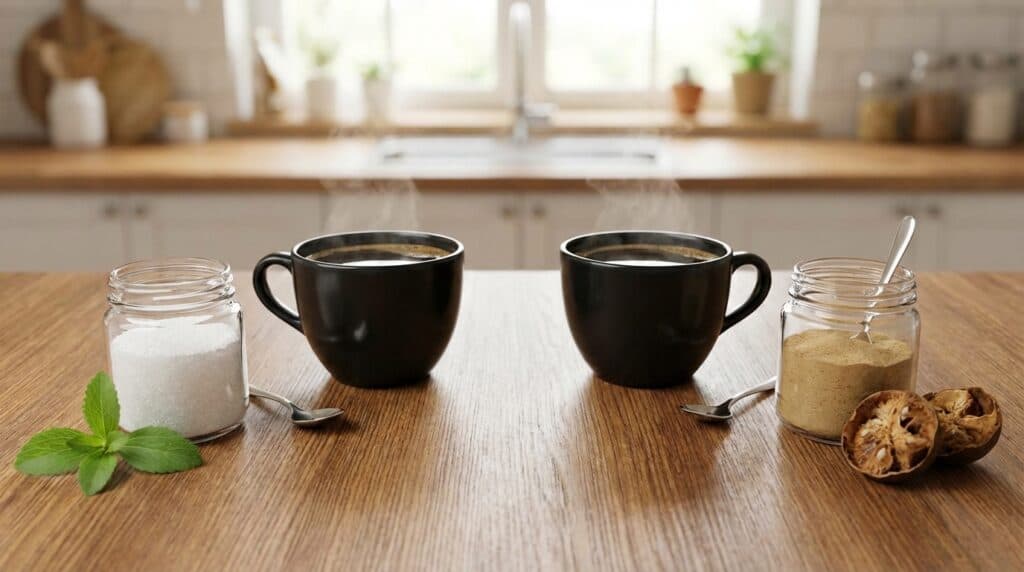
Both stevia and monk fruit are excellent choices for intermittent fasting. They’re both plant-based, zero-calorie, and have minimal impact on blood sugar and insulin. The choice often comes down to taste preference—some people prefer monk fruit’s flavor profile, while others favor stevia. Either works well in your fasting coffee.
Can I use stevia in my coffee if I’m doing a strict water fast?
If you’re doing a strict water-only fast for religious, medical, or autophagy-maximizing purposes, you’d want to avoid all additives, including stevia. However, for standard intermittent fasting protocols focused on weight loss or metabolic health, stevia is generally acceptable.
Will stevia in my coffee make me hungrier during my fast?
Some people worry that sweet tastes trigger hunger, but research on this is mixed. Many fasters report that a touch of stevia in their coffee actually helps them feel more satisfied and makes the fasting window easier to complete. Pay attention to your own body’s response.
What about stevia-sweetened creamers—are those okay?
This is where you need to be careful. Even if a creamer is sweetened with stevia, it likely contains fats and proteins that will break your fast. During your fasting window, stick to stevia in black coffee only. Save the creamers for your eating window.
Conclusion: Enjoying Your Intermittent Fasting Coffee With Stevia
Life is too short for bad coffee—and it’s also too short to stress over every tiny addition to your fasting routine. Based on current research and practical experience, pure stevia is unlikely to break your fast in any meaningful way. It contains zero calories, has minimal impact on blood sugar and insulin, and can make your fasting window significantly more enjoyable.
The most important factor in successful intermittent fasting is consistency. If adding a bit of stevia to your morning coffee helps you maintain your fasting practice long-term, that’s a win. Just remember to choose pure stevia products without fillers, start with small amounts, and listen to your body’s response.
Ready to optimize your fasting coffee routine? Start by checking the ingredient list on your current stevia product, experiment with the amount that tastes best to you, and enjoy that morning cup knowing you’re still on track with your fasting goals. Your intermittent fasting journey and your love of great coffee can absolutely coexist.

Comments