


Table of Contents
- Why Coffee Bean Storage Matters
- The Four Enemies of Fresh Coffee Beans
- Oxygen
- Light
- Heat
- Moisture
- Best Containers for Storing Coffee Beans at Home
- Airtight Opaque Containers
- Vacuum Canisters
- The Original Roaster Bag
- Containers to Avoid
- Where to Store Coffee Beans
- Should You Refrigerate Coffee Beans?
- Can You Freeze Coffee Beans?
- How Much Coffee Should You Keep Open?
- Whole Beans vs Ground Coffee
- How to Tell Beans Are Past Their Best
- Common Coffee Storage Mistakes
- Buying Too Much at Once
- Grinding Days Ahead
- Ignoring the Roast Date
- Storing Beans Above the Brewer
- Mixing Old and New Beans
- Using Scented or Previously Used Containers
- Frequently Asked Questions
- How long do coffee beans stay fresh after opening?
- Can stale coffee beans make you sick?
- Is whole bean coffee better for storage?
- Do light and dark roasts need different storage?
- Can stale coffee be revived?
- Simple Storage Plan
- Best Setup for Different Homes
Store coffee beans in an airtight, opaque container in a cool, dry cabinet. Keep them away from light, heat, moisture, and daily air exposure. For most home drinkers, that simple setup keeps beans tasting good for about two to four weeks after opening, assuming the coffee was reasonably fresh when you bought it.
The biggest storage mistake is treating coffee like decoration. Clear jars on sunny counters look tidy, but they expose beans to light and temperature swings. If flavor matters, your beans belong in the dark.
Why Coffee Bean Storage Matters
Roasted coffee is chemically active. After roasting, beans release carbon dioxide and gradually lose volatile aroma compounds. Oxygen then pushes the flavor further toward flat, papery, bitter, or stale. You cannot stop that aging completely, but you can slow it down.
The National Coffee Association recommends keeping coffee in an airtight, opaque container at room temperature. That advice sounds boring because good storage is boring. It is mostly about removing the conditions that speed up damage.
The Four Enemies of Fresh Coffee Beans
Oxygen
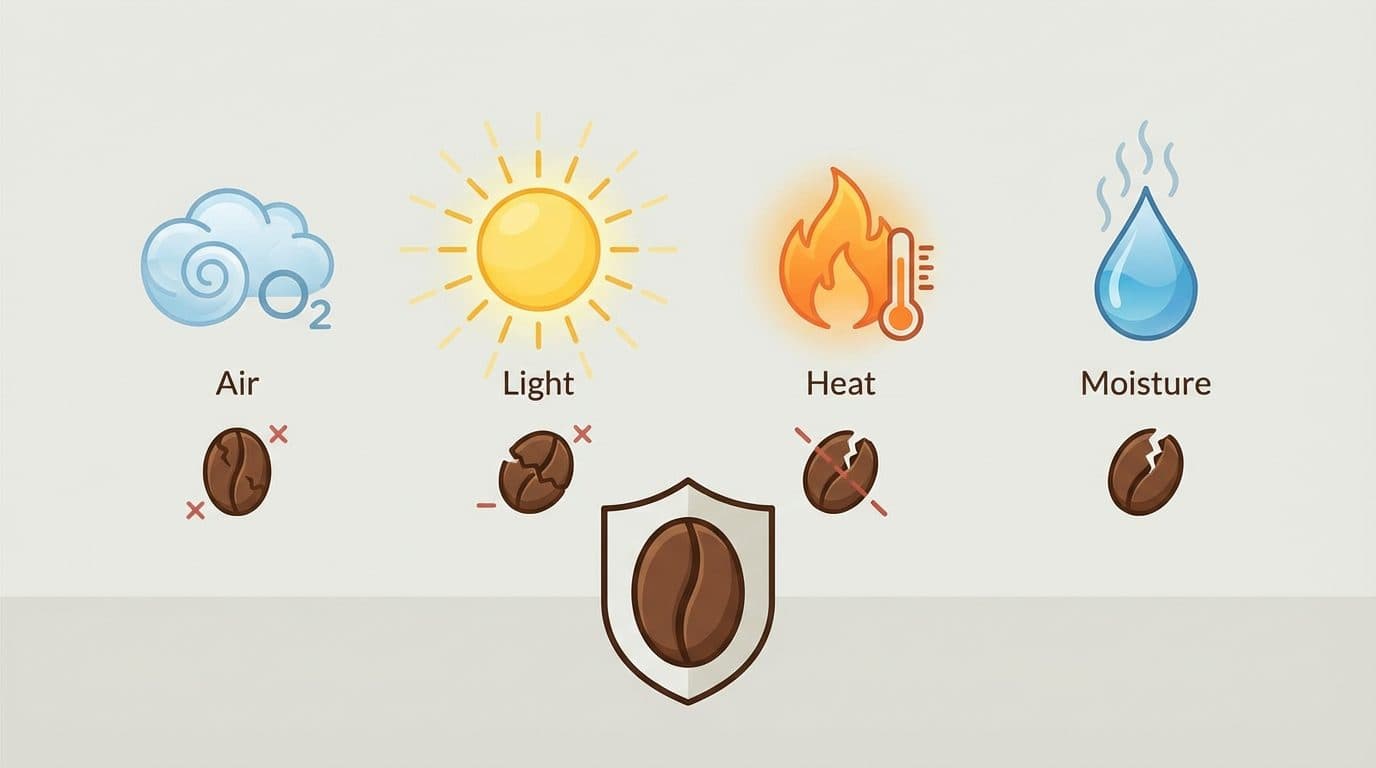
Oxygen is the main problem after opening a bag. Every time you scoop beans, fresh air enters. That air reacts with oils and aroma compounds, slowly muting sweetness and clarity. A wide jar you open several times a day is worse than a small container that stays mostly full.
Light
Light, especially sunlight, accelerates breakdown. Clear glass jars are fine for pasta; they are poor coffee storage unless they stay inside a dark cabinet. If you love the look of beans on a counter, use a small display amount and keep the drinking supply elsewhere.
Heat
Heat speeds chemical reactions. The cabinet above a stove, the shelf beside a toaster, or a counter in direct sun will age coffee faster. Room temperature is fine if the room is stable and the container is away from appliances.
Moisture
Coffee absorbs moisture and odors. Humidity can dull flavor, and severe moisture exposure can create mold risk. This is why refrigerator storage is usually worse than it sounds: cold air, food odors, condensation, and frequent opening are a bad mix.
Best Containers for Storing Coffee Beans at Home
Airtight Opaque Containers
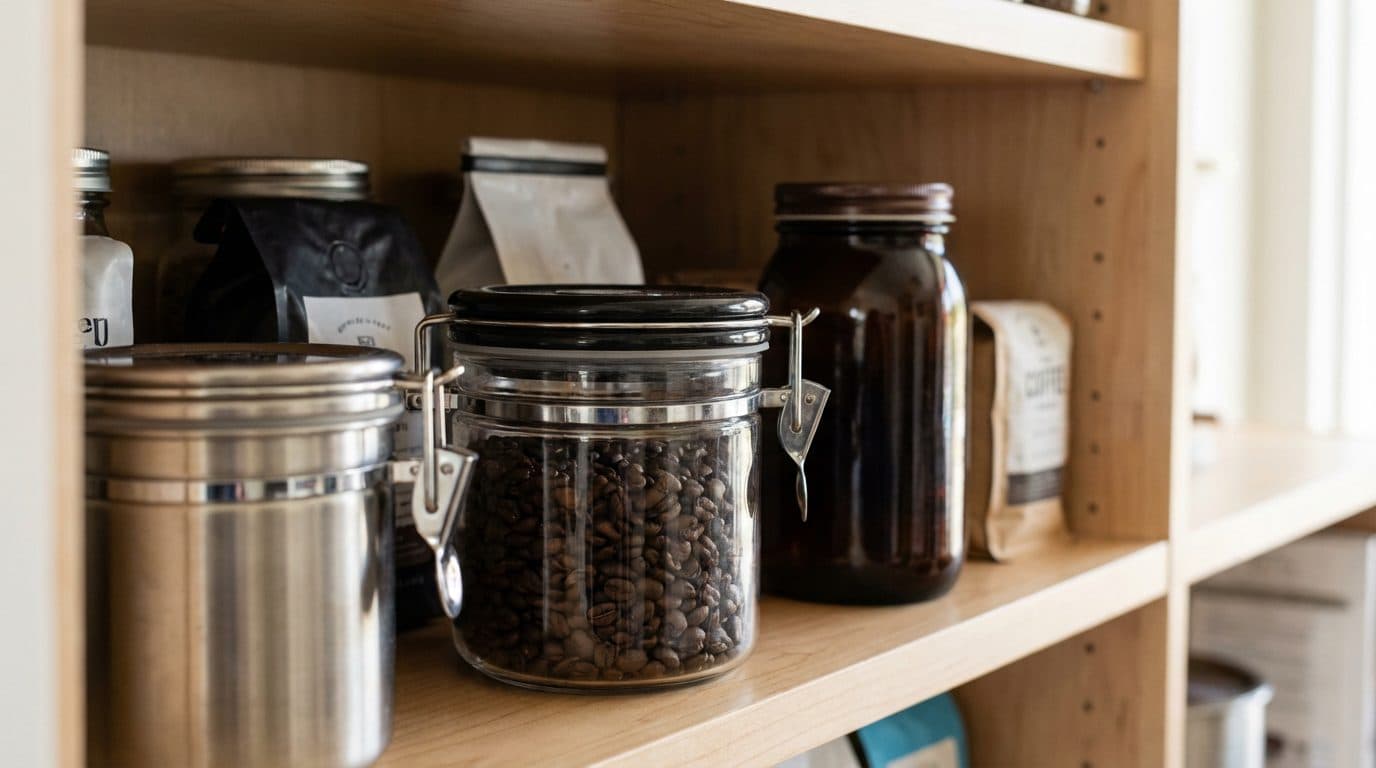
The best everyday container is airtight and blocks light. Ceramic, stainless steel, or dark glass canisters with a silicone gasket work well. The seal matters more than the marketing copy. If the lid wobbles or smells like old plastic, choose something else.
Size matters too. A huge container holding a small amount of beans traps extra air. If you buy 12-ounce bags, use a container that fits about that amount rather than a decorative jar built for bulk storage.
Vacuum Canisters
Vacuum canisters can help by removing some air after each use. They are useful if you buy good beans and drink them slowly. They are not magic. If you open the container ten times a day or leave it in a hot kitchen, a pump lid cannot rescue the coffee.
The Original Roaster Bag
Many specialty bags have a one-way valve and a resealable top. That can be a good short-term option. Press out excess air, seal the bag tightly, and keep it in a cabinet. If the zipper is weak or the bag is paper-only, move the beans to a better container.
Containers to Avoid
- Clear jars left on the counter
- Loose paper bags after opening
- Containers without a real seal
- Plastic containers that hold food smells
- Large bins opened repeatedly for small scoops
Where to Store Coffee Beans
A pantry or closed cabinet is the safest everyday location. Choose a spot away from the oven, dishwasher, kettle, radiator, and direct sunlight. If the cabinet feels warm when appliances run, move the coffee.
Should You Refrigerate Coffee Beans?
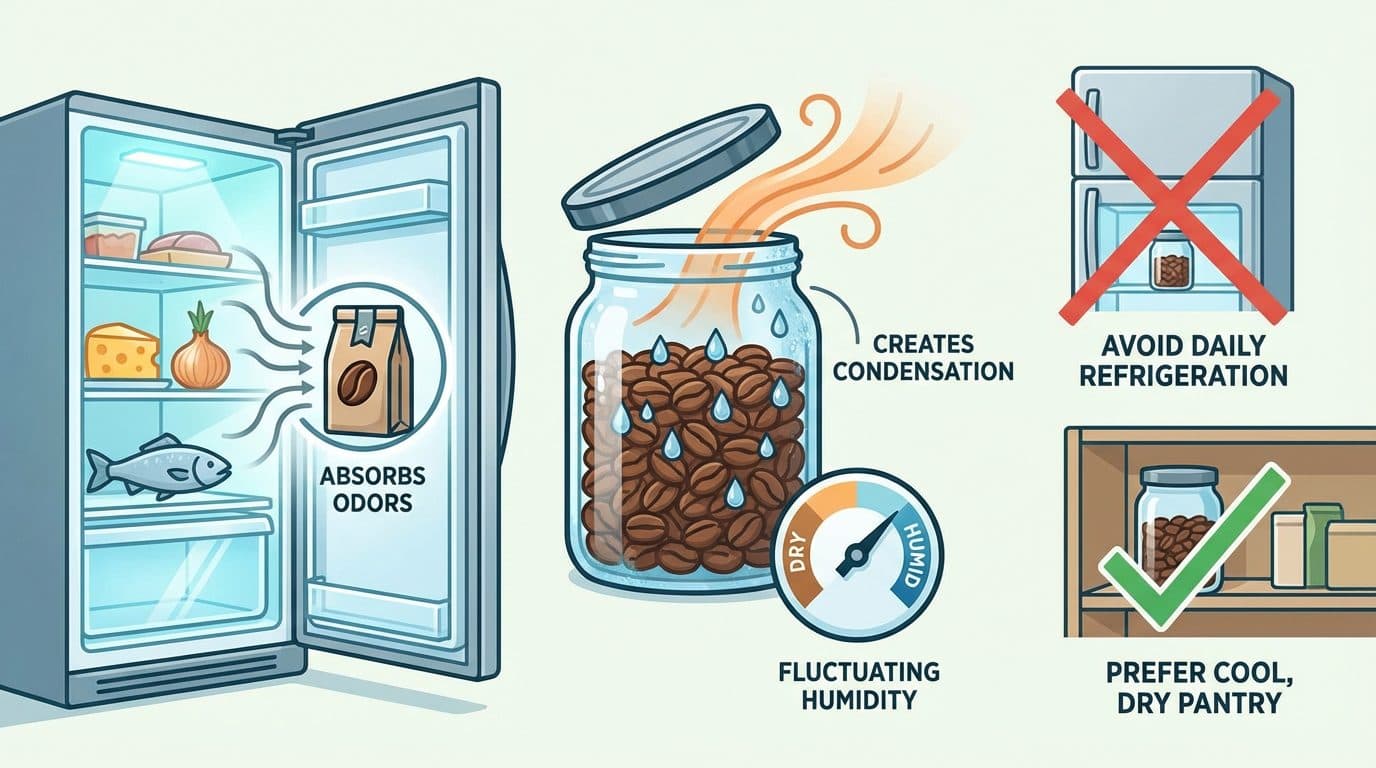
For daily use, no. The refrigerator adds moisture risk and odor exposure. Taking beans in and out also creates condensation. Coffee that smells faintly like onions or leftovers is not a storage victory.
Can You Freeze Coffee Beans?
Freezing can work for extra beans if you do it carefully. Divide coffee into small portions, seal each portion airtight, freeze once, and thaw a full portion before opening. Do not open a frozen bag, scoop a little, then return it to the freezer. That cycle invites condensation.
Freezing is most useful when you bought more than you can drink within a few weeks. It is less useful for a bag you plan to open every morning.
How Much Coffee Should You Keep Open?
A good rule is to keep only the coffee you will drink in the next one to three weeks in your daily container. The rest should stay sealed, or be portioned and frozen if you bought a larger bag. This matters because every opening exposes the entire container to fresh air.
For one person drinking one to two cups a day, a 250 to 350 gram bag is usually a practical size. For two heavy coffee drinkers, a 1-pound bag may be fine. The right amount is not the cheapest per ounce; it is the amount you can finish before the flavor fades.
Whole Beans vs Ground Coffee
Whole beans are more forgiving in storage. Once coffee is ground, oxygen reaches far more surface area, so the flavor drops faster. If you care about freshness but do not want an expensive grinder, even a modest burr grinder can be more useful than a fancy storage canister.
If you buy pre-ground coffee, do not punish yourself for it. Store it the same way: airtight, dark, cool, and dry. Use smaller bags, close them immediately after scooping, and avoid leaving the bag open while you prepare the brewer.
How to Tell Beans Are Past Their Best
Stale beans usually smell dull, woody, cardboard-like, or faintly rancid. The brewed cup may taste hollow, harsh, or flat even when your recipe is normal. Lack of bloom in pour-over can be one clue, though it is not a perfect freshness test because roast level and processing also affect degassing.
Do not rely only on surface oil. Many dark roasts look oily when fresh, while some light roasts never look oily. Smell and taste tell you more than shine.
Common Coffee Storage Mistakes
Buying Too Much at Once
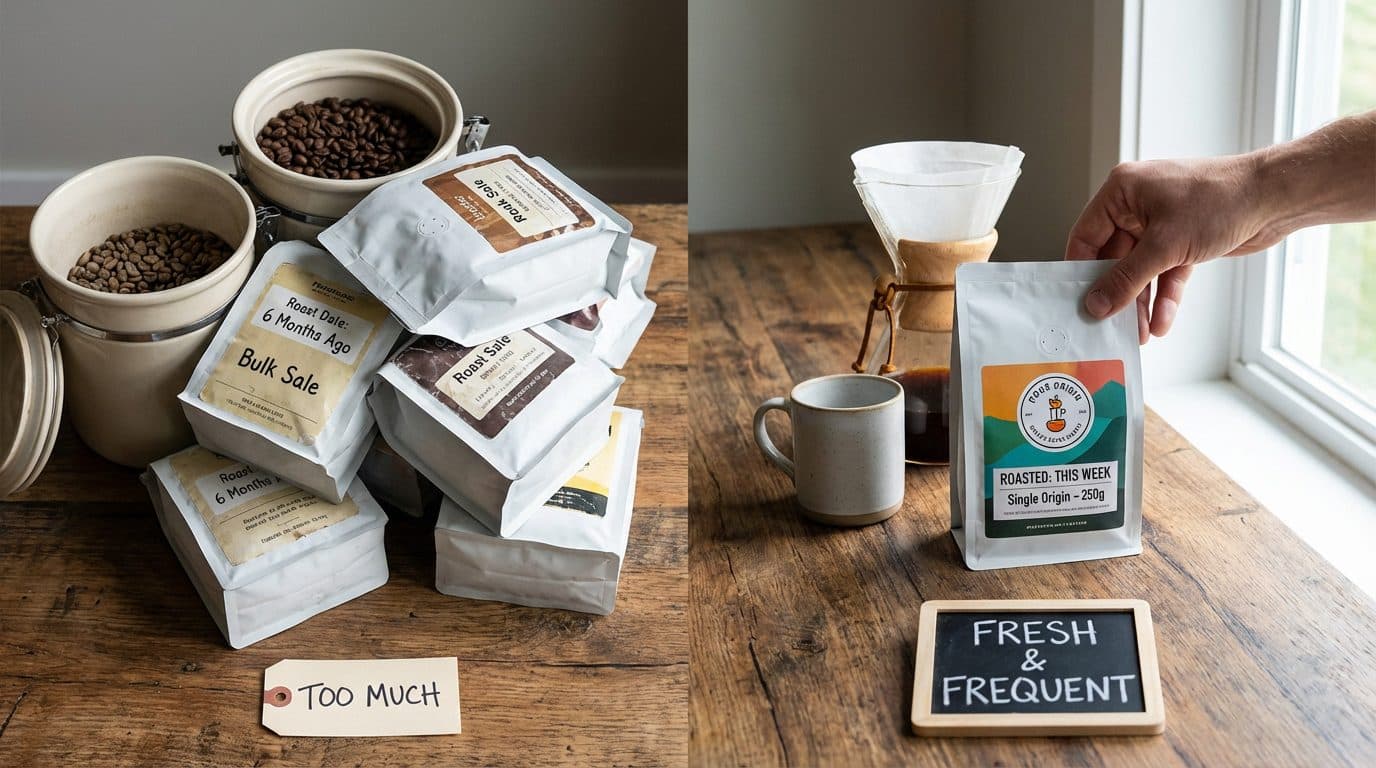
Bulk coffee can be cheaper, but the last third of the bag may taste tired. A smaller fresh bag often beats a bargain bag that sits for months. For one person, 250 to 350 grams every week or two is usually more sensible than a giant warehouse bag.
Grinding Days Ahead
Ground coffee stales faster because more surface area touches air. If you own a grinder, grind right before brewing. If you must buy ground coffee, buy smaller bags and keep them sealed tightly.
Ignoring the Roast Date
A “best by” date tells you less than a roast date. Coffee can be safe long after peak flavor, but freshness for taste is narrower. Look for roasters that print roast dates, and be skeptical of bags with only a distant expiry date.
Storing Beans Above the Brewer
The shelf near the coffee maker feels convenient, but it may catch steam and heat. Convenience should not put beans beside the exact things they hate.
Mixing Old and New Beans
Topping off a container with new beans before finishing the old ones makes it harder to judge freshness. Finish the old batch first, clean the container if it smells oily, then add the new bag. This is especially helpful with dark roasts, whose oils can cling to container walls.
Using Scented or Previously Used Containers
Coffee absorbs odors easily. A container that once held spices, tea, detergent, or strongly scented snacks can pass that smell into the beans. Wash and dry containers thoroughly, and avoid lids with rubber or plastic parts that hold old smells.
Frequently Asked Questions
How long do coffee beans stay fresh after opening?
Most beans taste best within two to four weeks after opening if stored well. They do not suddenly become unsafe after that, but aroma and sweetness fade. Dark roasts with oily surfaces may show stale flavors sooner.
Can stale coffee beans make you sick?
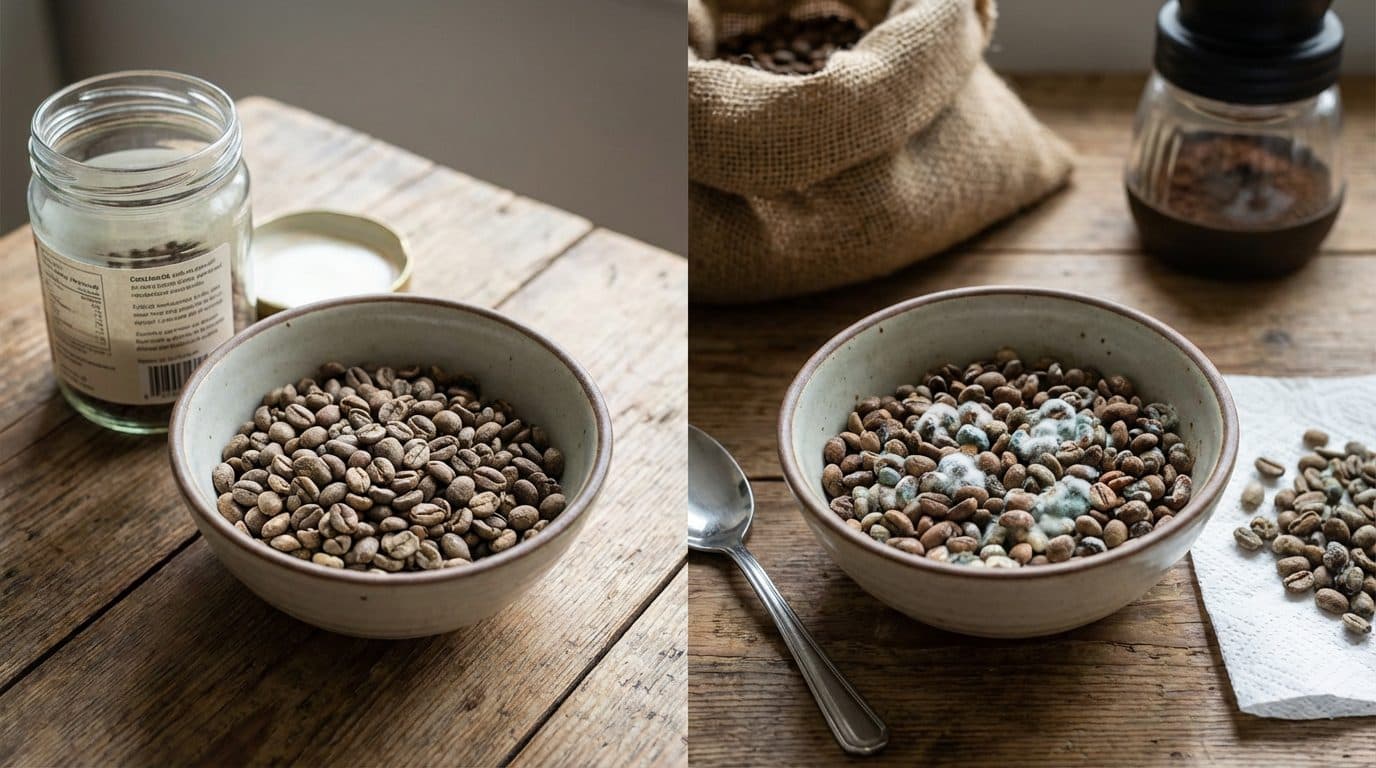
Stale beans are generally a taste problem, not a safety problem. Throw beans away if you see mold, smell mildew, or know they were exposed to moisture. Do not try to save moldy coffee by roasting, grinding, or brewing it stronger.
Is whole bean coffee better for storage?
Yes. Whole beans keep flavor longer than ground coffee because less surface area touches oxygen. Grind just before brewing when you can.
Do light and dark roasts need different storage?
The rules are the same: airtight, dark, cool, and dry. Dark roasts often have more surface oil, so stale or rancid flavors can show faster. That makes a good seal especially important.
Can stale coffee be revived?
Not fully. You can use stale beans for cold brew, baking, coffee ice cubes, or recipes where milk and sugar carry the drink. But lost aroma does not come back in storage.
Simple Storage Plan
- Buy beans with a roast date when possible.
- Keep one to three weeks of coffee at room temperature.
- Use an airtight, opaque container.
- Store it in a cool cabinet away from appliances.
- Freeze only unopened portions you will not use soon.
- Grind right before brewing.
Best Setup for Different Homes
Small apartment: Use the original resealable bag inside a cabinet if space is tight. Add a clip if the zipper is weak.
Sunny kitchen: Avoid the counter entirely. Use a dark cabinet far from windows, even if the container itself is opaque.
Bulk buyer: Divide the bag on day one. Keep one portion out, freeze the rest in airtight portions, and thaw one portion at a time.
Espresso drinker: Freshness changes shot behavior, so keep smaller portions open. Beans that tasted fine for filter coffee may pull thin or fast as espresso after they age.
Good storage will not turn old supermarket beans into fresh specialty coffee, but it will protect the flavor you paid for. Start with a dark cabinet and a real seal. That small fix usually does more than buying another gadget.



Comments