


Table of Contents
- Why Measuring Coffee Matters (Even Without a Scale)
- The Tablespoon Method: Your Most Accessible Tool
- Standard Tablespoon Coffee Ratio
- Adjusting for Your Taste
- Using a Coffee Scoop: The Built-In Solution
- Understanding Scoop Sizes
- The Scoop-and-Level Technique
- Visual Estimation and Hand Measurements
- The Palm Method
- Counting Whole Beans
- Adjusting for Different Brewing Methods
- Drip Coffee Makers
- French Press
- Pour-Over
- Cold Brew Concentrate
- Common Mistakes When Measuring Coffee Without a Scale
- Frequently Asked Questions
- How many tablespoons of coffee do I need for one cup?
- Can I use a regular spoon instead of a measuring tablespoon?
- Does the coffee roast level affect how I should measure?
- Is measuring by volume as accurate as using a scale?
- What's the easiest way to measure coffee while traveling?
- Conclusion and Your Next Steps
Ever found yourself ready to brew the perfect cup of coffee, only to realize your scale is broken, out of batteries, or simply nowhere to be found? You’re not alone. Knowing how to measure coffee without a scale is a skill every coffee lover should have in their back pocket. Whether you’re camping, traveling, or just starting your coffee journey at home, these beginner-friendly hacks will help you achieve consistent, delicious results every single time.
In this guide, you’ll learn practical methods to measure coffee using everyday kitchen items. We’ll cover tablespoon measurements, the coffee scoop standard, visual estimation techniques, and tips to fine-tune your brew based on taste. By the end, you’ll feel confident making great coffee even when precision tools aren’t available.
Why Measuring Coffee Matters (Even Without a Scale)
Before diving into the hacks, let’s quickly understand why measurement matters. Coffee brewing is essentially a science of ratios. Too much coffee grounds and your cup becomes bitter and overpowering. Too little, and you end up with a weak, watery disappointment.
The golden ratio that most coffee professionals recommend is roughly 1:15 to 1:18. In short, this means one part coffee to 15-18 parts water. For example, if you use 15 grams of coffee, you’d pair it with about 225-270 grams of water. But without a scale, how do you translate this into practical terms?
That’s where volume-based measurements come in. While they’re not as precise as weight (since coffee density varies by roast and grind), they work surprisingly well for everyday brewing. Let’s explore the most reliable methods.
The Tablespoon Method: Your Most Accessible Tool
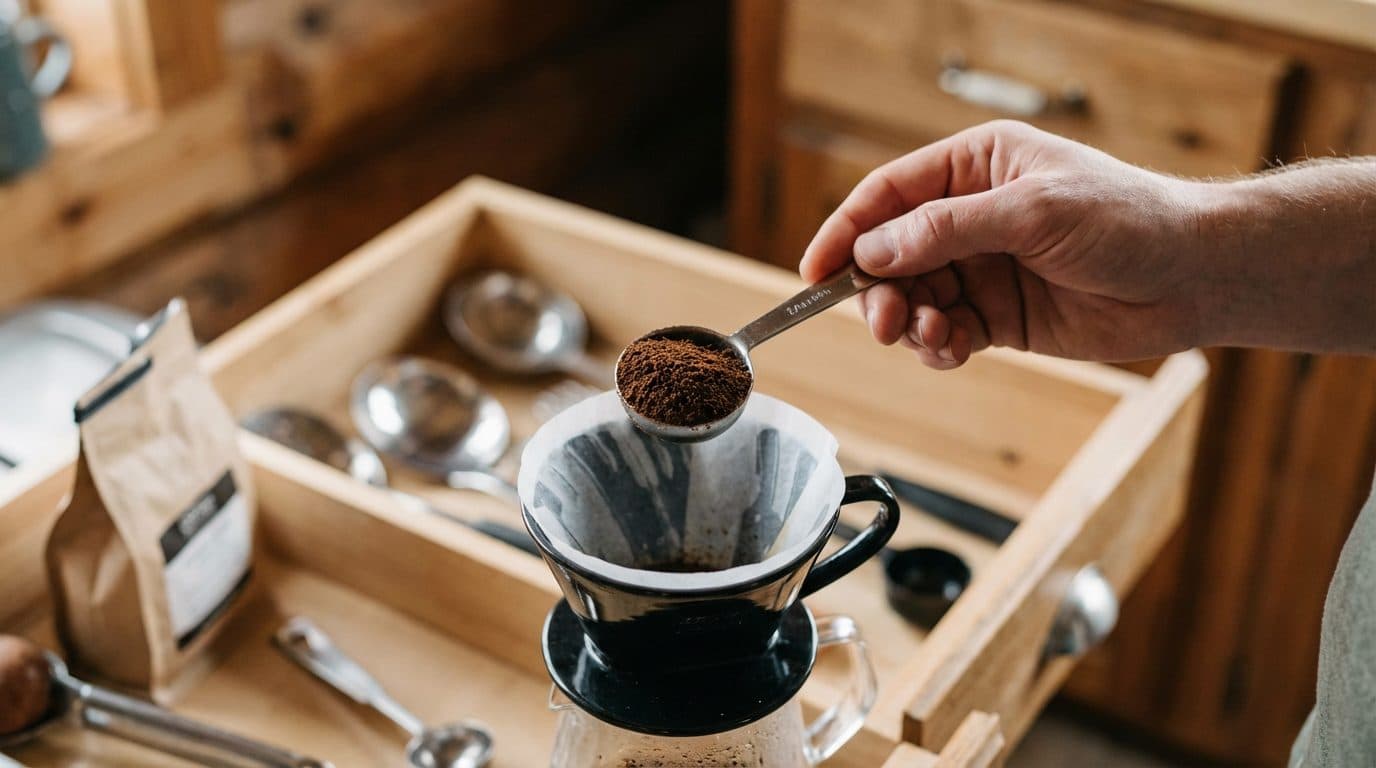
The humble tablespoon is probably sitting in your kitchen drawer right now. It’s one of the easiest ways to measure coffee without a scale, and most brewing guides reference it for good reason.
Standard Tablespoon Coffee Ratio
Here’s the basic guideline that works for most drip coffee makers and pour-over setups:
- 1 level tablespoon of ground coffee = approximately 5-7 grams
- Use 2 tablespoons of coffee per 6 ounces (180 ml) of water
- For a standard 12-cup coffee maker, you’d use about 24 tablespoons (or 1.5 cups) of grounds
Keep in mind that a “cup” in coffee maker terms usually means 5-6 ounces, not the standard 8-ounce measuring cup. This trips up many beginners. So if your machine says it makes 12 cups, it actually produces about 60-72 ounces of coffee.
Adjusting for Your Taste
Imagine you brew your first cup using the 2-tablespoon rule and find it too strong. Simply reduce to 1.5 tablespoons next time. If it tastes weak or sour, bump it up to 2.5 tablespoons. This trial-and-error approach helps you dial in your personal preference without needing any fancy equipment.
A friend of mine always uses exactly 1 tablespoon and 2 teaspoons per cup because that’s her sweet spot. The beauty of measuring coffee without a scale is that you can create your own consistent system once you find what works.
Using a Coffee Scoop: The Built-In Solution
Many coffee makers and grinders come with a plastic scoop included. These scoops are designed to take the guesswork out of measuring, but here’s what most people don’t realize: not all scoops are created equal.
Understanding Scoop Sizes
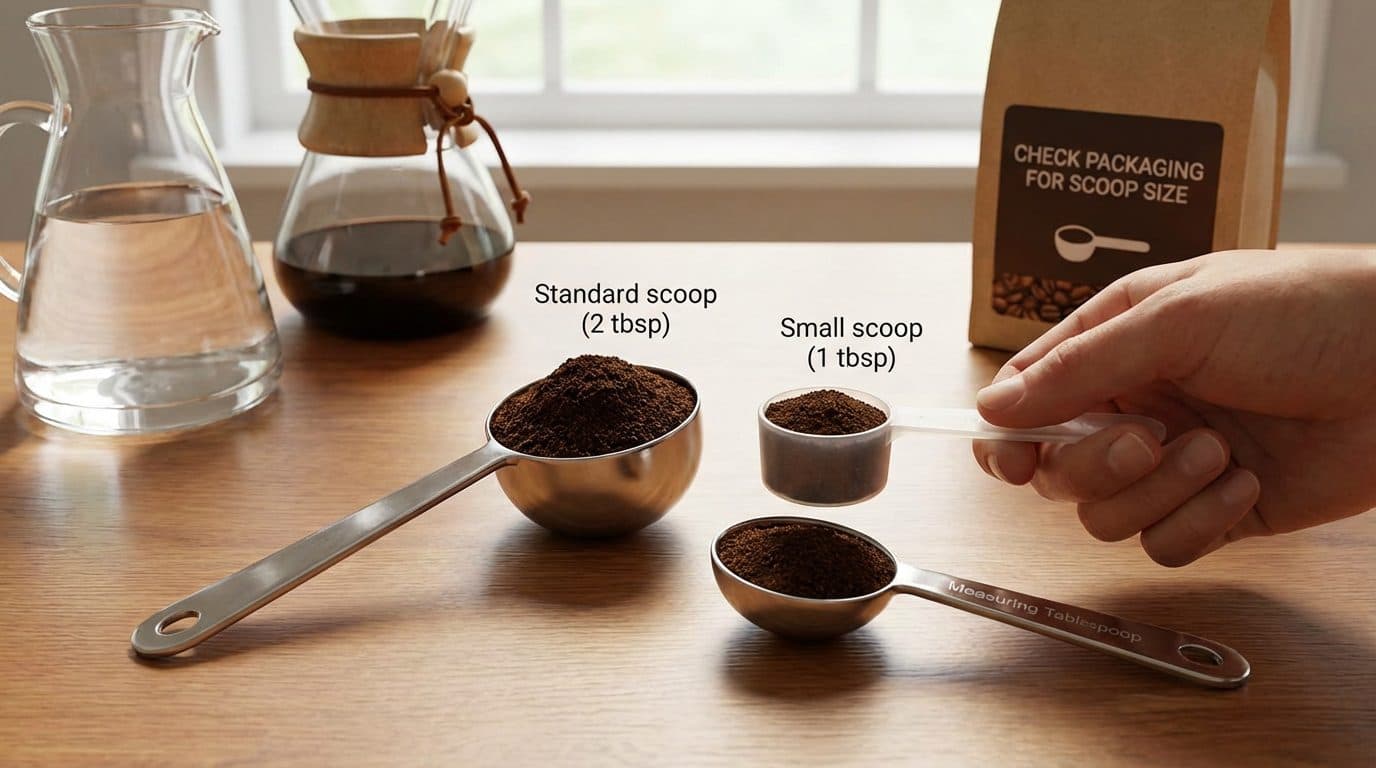
A standard coffee scoop typically holds about 2 tablespoons of ground coffee, which equals roughly 10-12 grams. However, some scoops are designed for single tablespoon portions. Before relying on your scoop, compare it to a measuring tablespoon to understand its actual capacity.
- Standard scoop (2 tbsp): Use 1 scoop per 6 ounces of water for regular strength
- Small scoop (1 tbsp): Use 2 scoops per 6 ounces of water
- When in doubt, check the packaging or manual that came with your coffee equipment
The Scoop-and-Level Technique
For consistency, always level off your scoop rather than using heaping portions. Dip the scoop into your coffee container, fill it completely, then use a knife or your finger to sweep off the excess. This small habit can make a noticeable difference in consistency from brew to brew.
Think of it like baking flour. Heaping versus leveled measurements can throw off your entire recipe. The same principle applies when you measure coffee without a scale.
Visual Estimation and Hand Measurements
Sometimes you don’t even have a tablespoon handy. Maybe you’re camping, staying at a friend’s house, or working with minimal equipment. In these situations, visual and hand-based estimates become your best friends.
The Palm Method
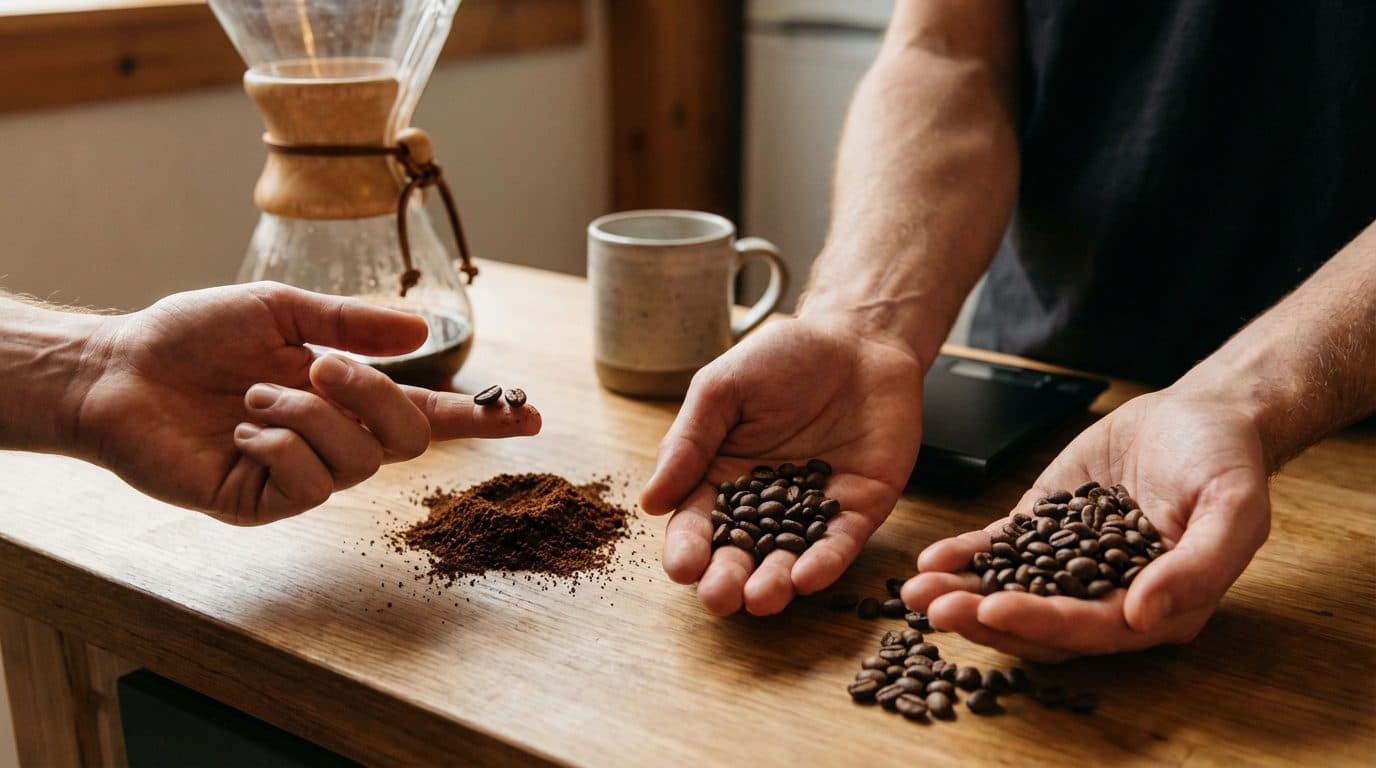
Your hand can serve as a surprisingly useful measuring tool:
- One tablespoon of coffee roughly equals the size of your thumb tip (from the knuckle to the tip)
- Two tablespoons would fill about half of your cupped palm
- A full cupped handful of whole beans equals approximately 30-35 grams, which is enough for about two standard cups of coffee
This method isn’t precise, but it gets you close enough for a decent cup. After a few tries, you’ll develop muscle memory for what the right amount looks and feels like.
Counting Whole Beans
If you’re grinding your own beans, counting can work in a pinch. On average, about 70-75 whole coffee beans equal roughly 10 grams. For a single cup, you’d want around 100-110 beans. Yes, this sounds tedious, but it’s actually kind of meditative once you try it. Plus, it gives you a deeper connection to your brewing process.
A practical scenario: you’re at a cabin with a hand grinder but no measuring tools. Counting out 100 beans takes about a minute and guarantees you a solid cup without any guesswork.
Adjusting for Different Brewing Methods
Not all brewing methods require the same coffee-to-water ratio. When you measure coffee without a scale, knowing these variations helps you adapt your approach.
Drip Coffee Makers
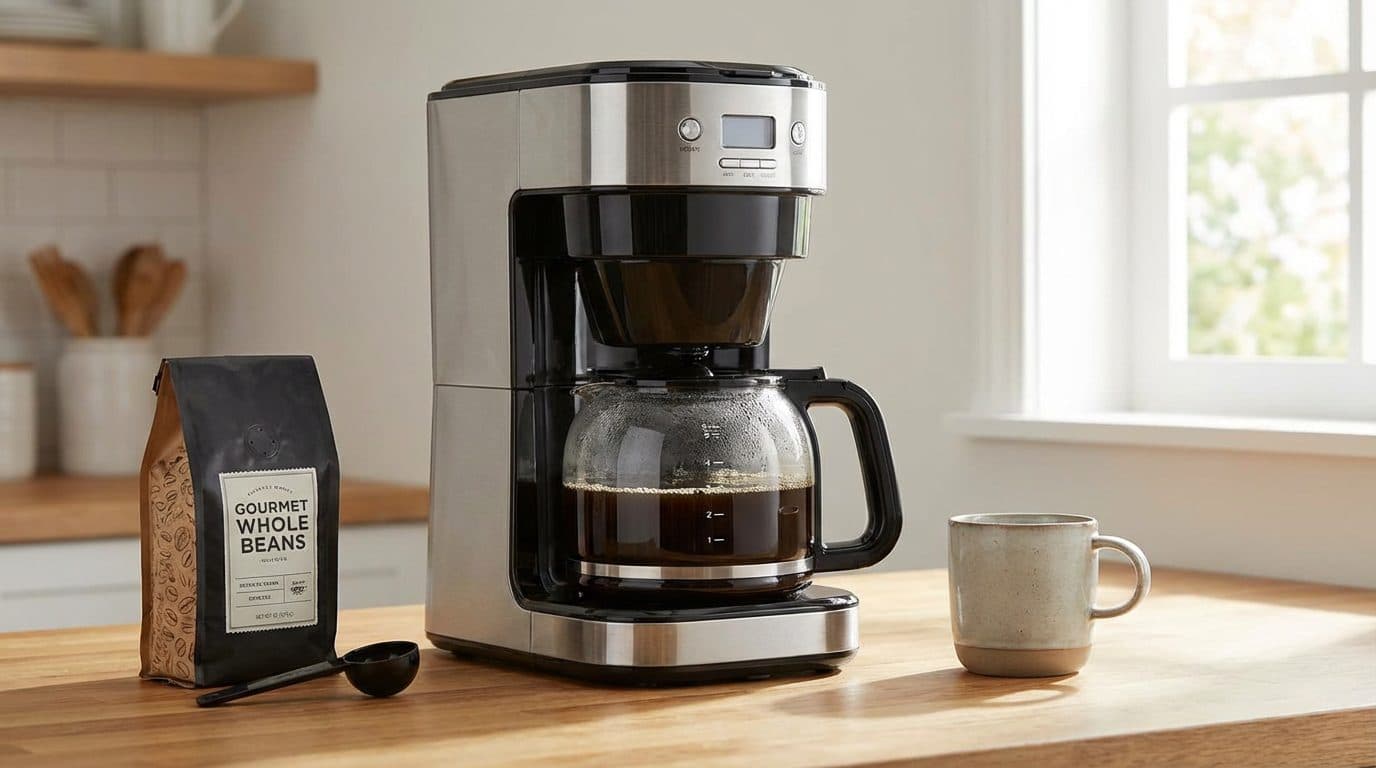
Stick with the standard 2 tablespoons per 6 ounces. Drip machines are forgiving, and this ratio produces a balanced, medium-strength cup that suits most palates.
French Press
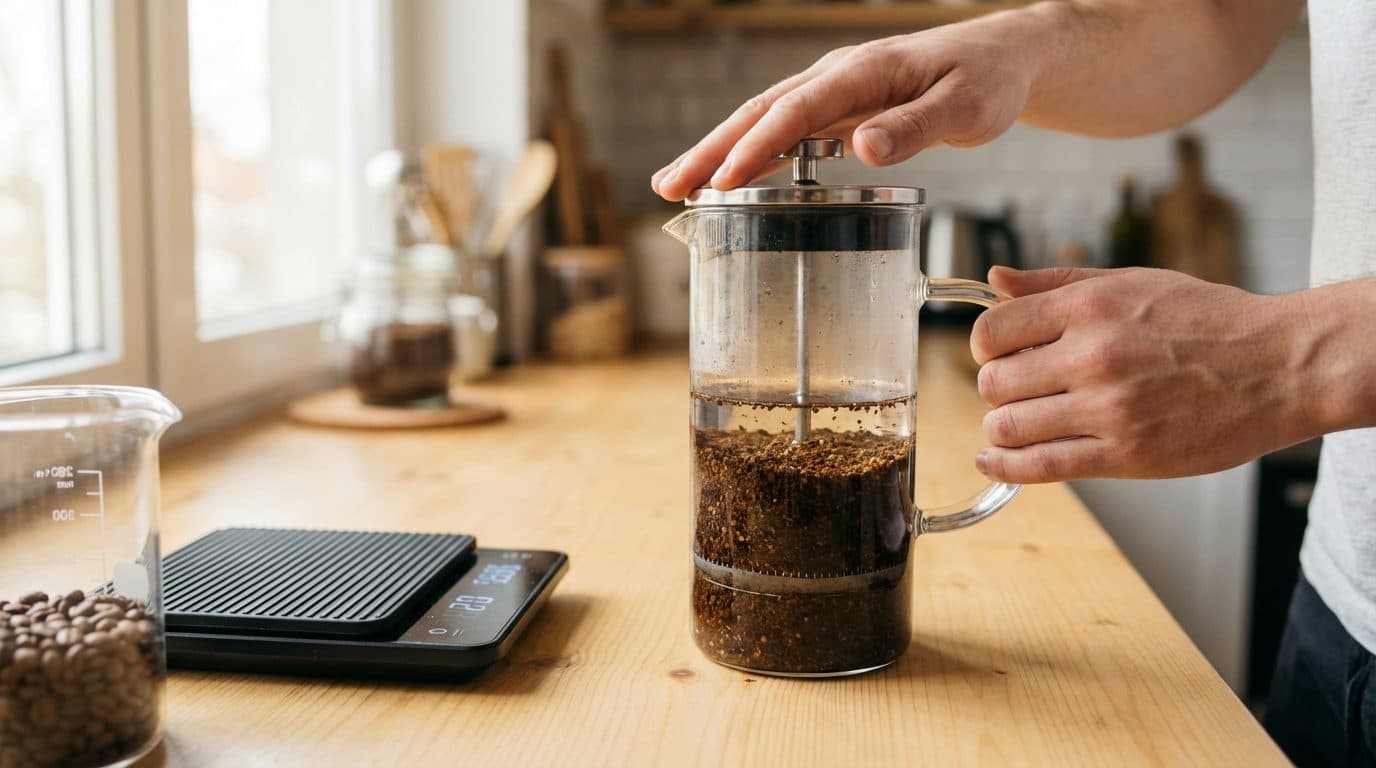
French press coffee benefits from a slightly higher ratio because the immersion brewing method extracts differently. Try 2.5 tablespoons per 6 ounces for a richer, fuller body. Use coarsely ground coffee to prevent over-extraction.
Pour-Over
Pour-over methods like Chemex or V60 work well with 2 tablespoons per 6 ounces, but you can experiment based on your preferred strength. The slower, controlled pour gives you more extraction control regardless of measurement precision.
Cold Brew Concentrate
Cold brew uses a much higher coffee-to-water ratio since it’s typically diluted before drinking:
- Use 1 cup of coarsely ground coffee per 4 cups of cold water
- Steep for 12-24 hours, then dilute with water or milk at a 1:1 ratio
Common Mistakes When Measuring Coffee Without a Scale
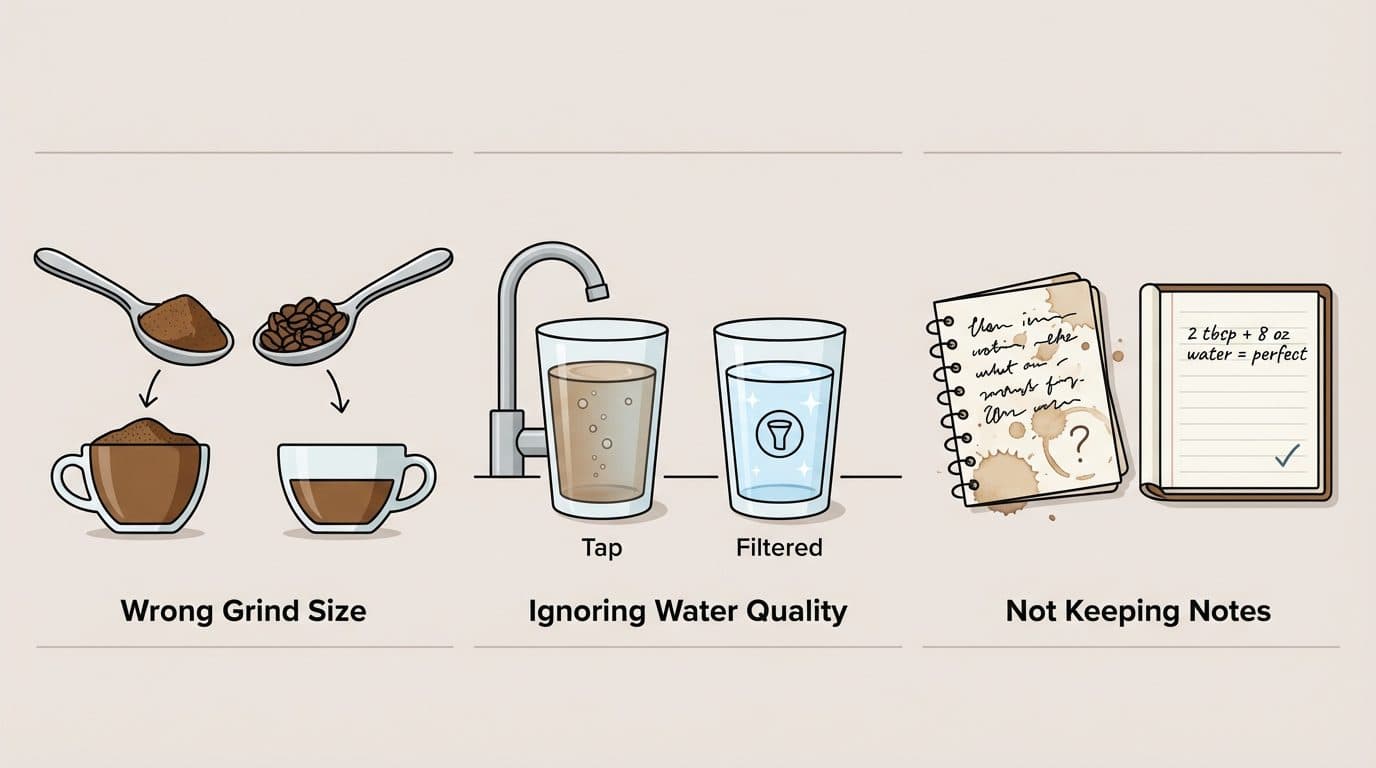
Even with these methods, beginners often make a few avoidable errors. Being aware of them helps you improve faster.
- Using the wrong grind size: Finer grinds pack more densely into a tablespoon than coarse grinds. If you switch grind sizes, adjust your volume measurements slightly.
- Ignoring water quality: Measurement only matters if your water isn’t ruining the brew. Use filtered water whenever possible.
- Not keeping notes: Write down what worked and what didn’t. “2 tbsp + 8 oz water = perfect” is valuable information for future you.
- Forgetting about coffee freshness: Stale coffee tastes flat no matter how accurate your measurements are. Use beans within 2-4 weeks of roasting for best results.
Frequently Asked Questions
How many tablespoons of coffee do I need for one cup?
For a standard 6-ounce cup of coffee, use approximately 2 level tablespoons of ground coffee. If you prefer a stronger brew, increase to 2.5 tablespoons. For a lighter cup, reduce to 1.5 tablespoons. Remember that “one cup” on most coffee makers is 5-6 ounces, not 8 ounces.
Can I use a regular spoon instead of a measuring tablespoon?
A regular eating spoon can work as a rough substitute. Most dinner spoons hold slightly less than a tablespoon, while soup spoons may hold a bit more. Compare your spoon to a measuring tablespoon once, and you’ll know how to adjust going forward.
Does the coffee roast level affect how I should measure?
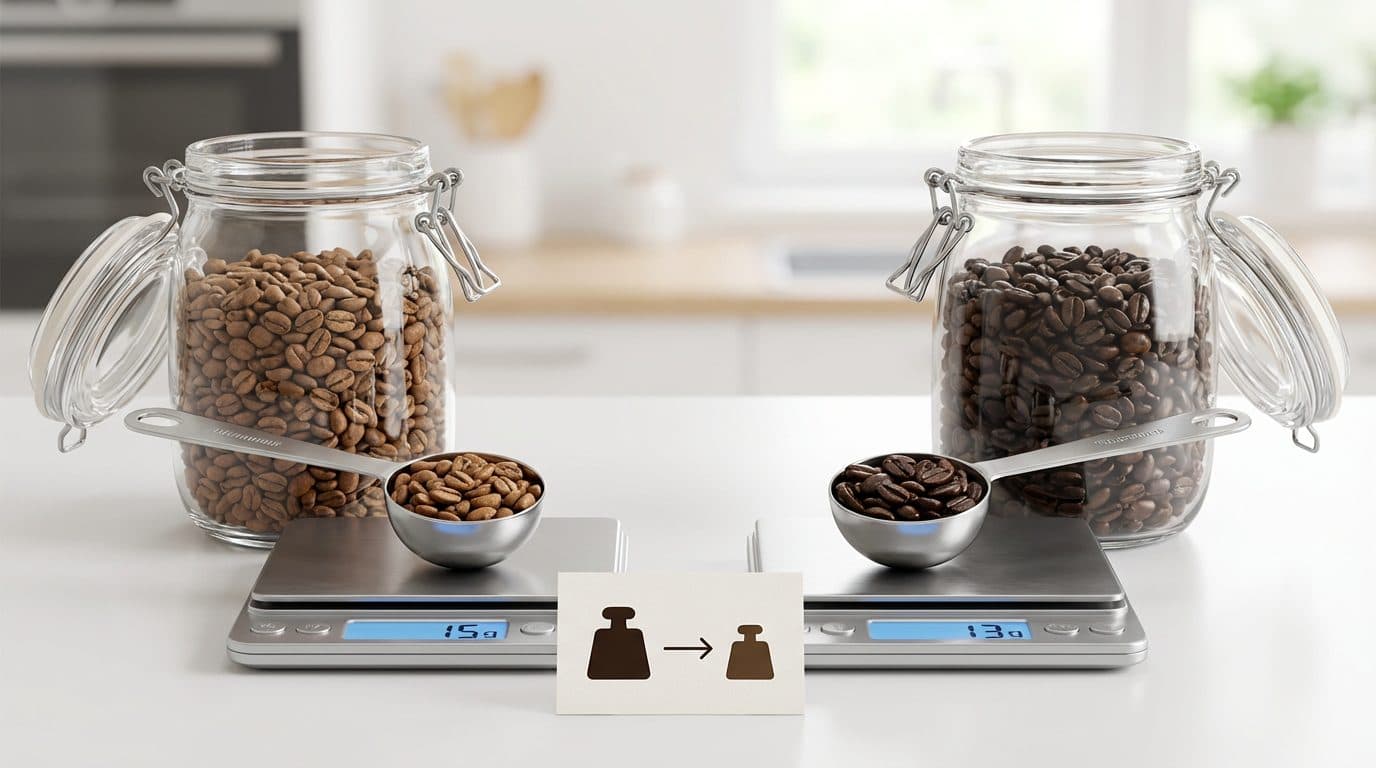
Yes, it does. Darker roasts are less dense than lighter roasts because they’ve lost more moisture during roasting. This means a tablespoon of dark roast weighs slightly less than a tablespoon of light roast. If you switch roast levels, you might need to add a bit more dark roast or reduce light roast to maintain your preferred strength.
Is measuring by volume as accurate as using a scale?
Measuring by volume is less precise than using a scale because coffee grounds vary in density based on grind size, roast level, and origin. However, for everyday home brewing, volume measurements produce perfectly enjoyable results. Scales matter more for competition-level precision or when you’re developing recipes.
What’s the easiest way to measure coffee while traveling?
Bring a small plastic scoop or remember the palm method described earlier. Some travelers pre-portion their coffee into small bags at home, measuring once and eliminating the need to measure on the road. Single-serve pour-over packets are another convenient option.
Conclusion and Your Next Steps
Learning how to measure coffee without a scale empowers you to brew confidently in any situation. Whether you’re using tablespoons, coffee scoops, or even your hands, consistency is the key. Start with the 2 tablespoons per 6 ounces guideline, then adjust based on your taste preferences and brewing method.
The best way to improve is simply to practice. Brew a cup tomorrow using one of these methods, take note of how it tastes, and tweak as needed. Before long, you’ll develop an intuitive sense for the right amount of coffee, no scale required. Grab your favorite mug and start experimenting. Your perfect cup is closer than you think.

Comments