


Table of Contents
- What You'll Need for Strong Cold Brew
- Ingredients
- Gear
- What Is Over-Extraction and Why Does It Ruin Cold Brew?
- Step-by-Step: Making Strong Cold Brew the Right Way
- The Key Variables: Finding Your Perfect Balance
- Choosing the Right Beans
- Common Mistakes and How to Fix Them
- Frequently Asked Questions
- Can I steep cold brew for 24 hours or more?
- Why does my cold brew taste weak even after long steeping?
- Is cold brew stronger than regular coffee?
- Can I use pre-ground coffee for cold brew?
- How do I make my cold brew even stronger without bitterness?
- Summary and Your Next Brew
You want your cold brew to pack a punch, but every time you try to make it stronger, it ends up tasting bitter, harsh, or just… wrong. Sound familiar? The secret to making strong cold brew at home isn’t just about adding more coffee or steeping longer. It’s about understanding the delicate balance between extraction and flavor.
In this guide, I’ll walk you through exactly how to brew bold, concentrated cold brew without crossing into over-extraction territory. You’ll learn the ideal ratios, grind sizes, and steeping times that deliver strength without the bitterness. Let’s get brewing.
What You’ll Need for Strong Cold Brew
Before we dive into the process, let’s gather your gear and ingredients. The good news? You don’t need fancy equipment to make exceptional cold brew at home.
Ingredients
- 100-120 grams of coarsely ground coffee (about 1 cup)
- 500-600 ml of filtered, cold water
- Optional: a pinch of salt to reduce bitterness perception
Gear
- A large mason jar, French press, or dedicated cold brew maker
- A burr grinder (or pre-ground coarse coffee)
- Fine mesh strainer or cheesecloth
- A second container for storing the finished brew
- Kitchen scale for precise measurements
Barista Tip: I’ve found that using a kitchen scale instead of measuring cups makes a huge difference in consistency. Coffee density varies, so weight is always more reliable than volume.
What Is Over-Extraction and Why Does It Ruin Cold Brew?
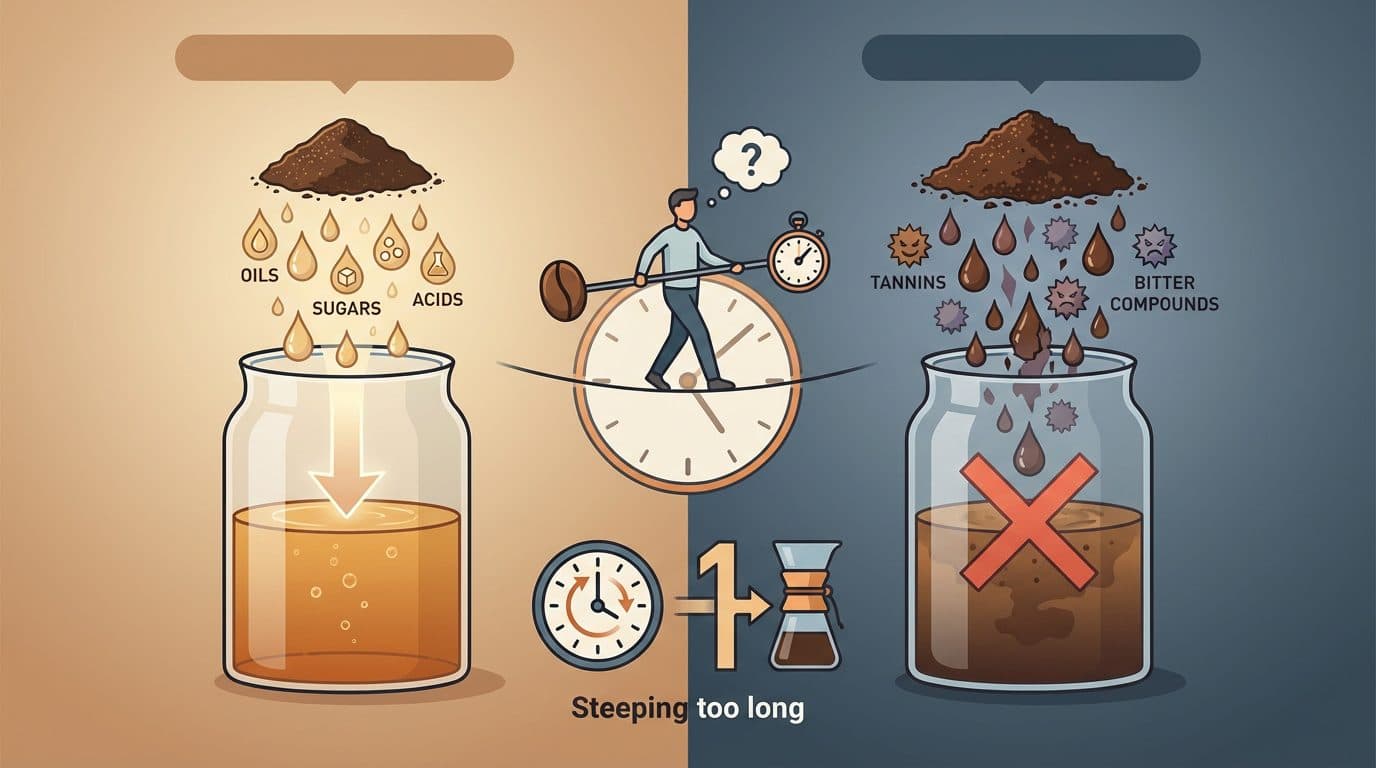
Over-extraction happens when you pull too many compounds out of your coffee grounds. While you want the good stuff—oils, sugars, and pleasant acids—going too far extracts harsh tannins and bitter compounds that make your cold brew taste like liquid regret.
Here’s the tricky part: cold brew already uses a long steeping time, which increases extraction risk. When you’re also trying to make it stronger, you’re walking a tightrope. The three main culprits behind over-extraction are:
- Steeping too long: Anything beyond 24 hours starts pulling unpleasant flavors
- Grind too fine: More surface area means faster, more aggressive extraction
- Wrong coffee-to-water ratio: Counterintuitively, too little coffee can lead to over-extraction as water “searches” for more to extract
In short, over-extraction turns your smooth, chocolatey cold brew into something astringent and undrinkable. But don’t worry—avoiding it is easier than you think.
Step-by-Step: Making Strong Cold Brew the Right Way
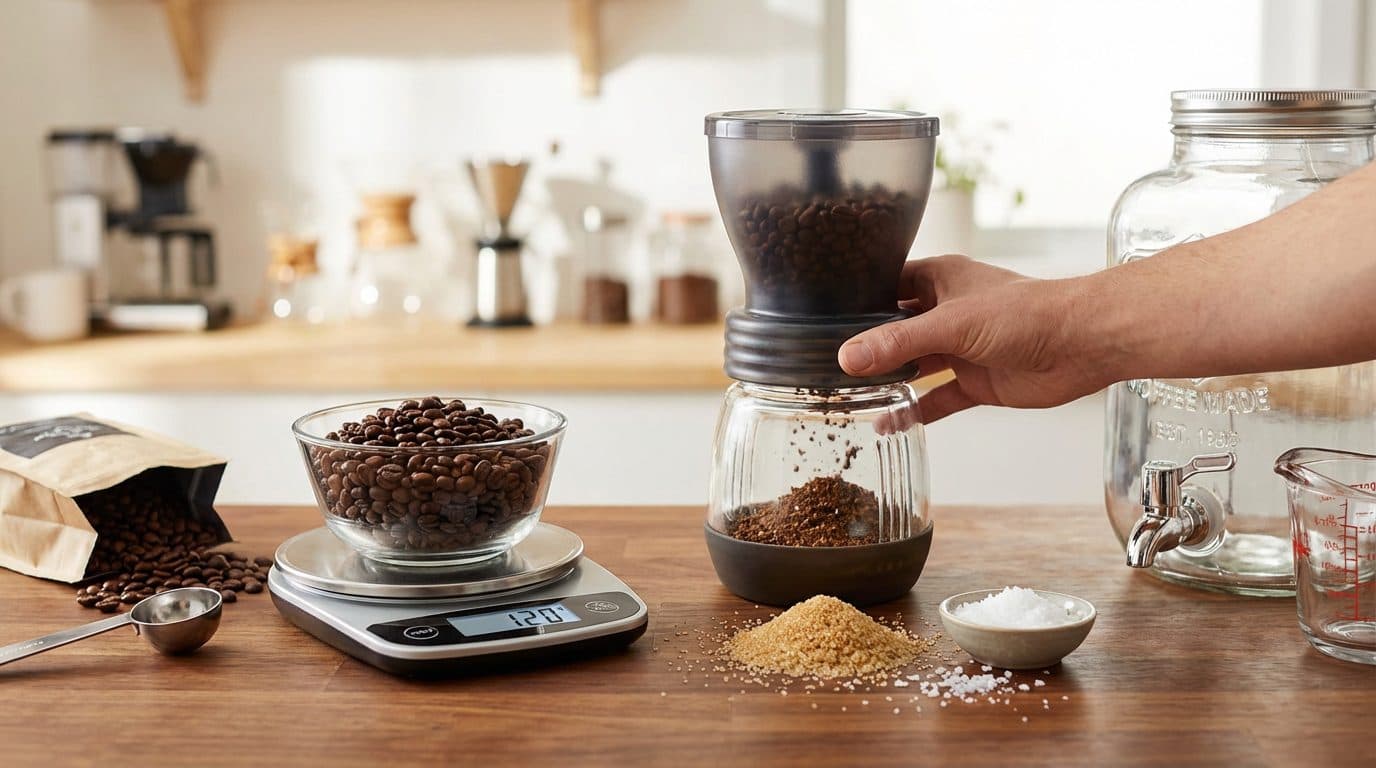
Follow these steps for a bold, concentrated cold brew that’s smooth, not bitter. This method produces a concentrate you can dilute to taste or drink straight if you’re feeling adventurous.
Step 1: Weigh out 100-120 grams of whole bean coffee. For strong cold brew, I recommend a ratio of 1:5 (coffee to water) for concentrate, compared to the standard 1:8.
Step 2: Grind your beans to a coarse consistency—think raw sugar or sea salt. This is crucial. A coarse grind slows extraction and prevents bitterness even during long steeps.
Step 3: Add the grounds to your brewing vessel and pour 500-600 ml of cold, filtered water over them. Stir gently to ensure all grounds are saturated.
Step 4: Cover your container and place it in the refrigerator. Fridge brewing is slower but produces a cleaner, more controlled extraction than room temperature.
Step 5: Steep for 16-18 hours. This is the sweet spot for strong cold brew. Going beyond 20 hours significantly increases over-extraction risk.
Step 6: Strain through a fine mesh strainer first, then through a cheesecloth or paper filter for a cleaner cup. Don’t squeeze the grounds—let gravity do the work.
Step 7: Store your concentrate in a sealed container in the fridge. It stays fresh for up to two weeks.
Taste Profile: When done right, this method produces a bold, full-bodied concentrate with chocolate and caramel notes, low acidity, and zero bitterness. Dilute with water or milk at a 1:1 or 1:2 ratio depending on your preference.
The Key Variables: Finding Your Perfect Balance
Making strong cold brew without over-extracting comes down to balancing three variables. Here’s a quick reference to help you dial in your perfect brew:
| Variable | For Stronger Brew | To Avoid Over-Extraction |
|---|---|---|
| Coffee-to-Water Ratio | 1:4 to 1:5 (concentrate) | Don’t go below 1:4 |
| Grind Size | Coarse (like sea salt) | Never use medium or fine |
| Steep Time | 16-18 hours | Never exceed 24 hours |
| Temperature | Refrigerator (slower extraction) | Avoid room temp for long steeps |
In my experience, the ratio is where most people go wrong. They think using less coffee and steeping longer will save money while still producing strong results. It doesn’t work that way. More coffee, shorter steep, coarse grind—that’s the formula for strength without bitterness.
Choosing the Right Beans
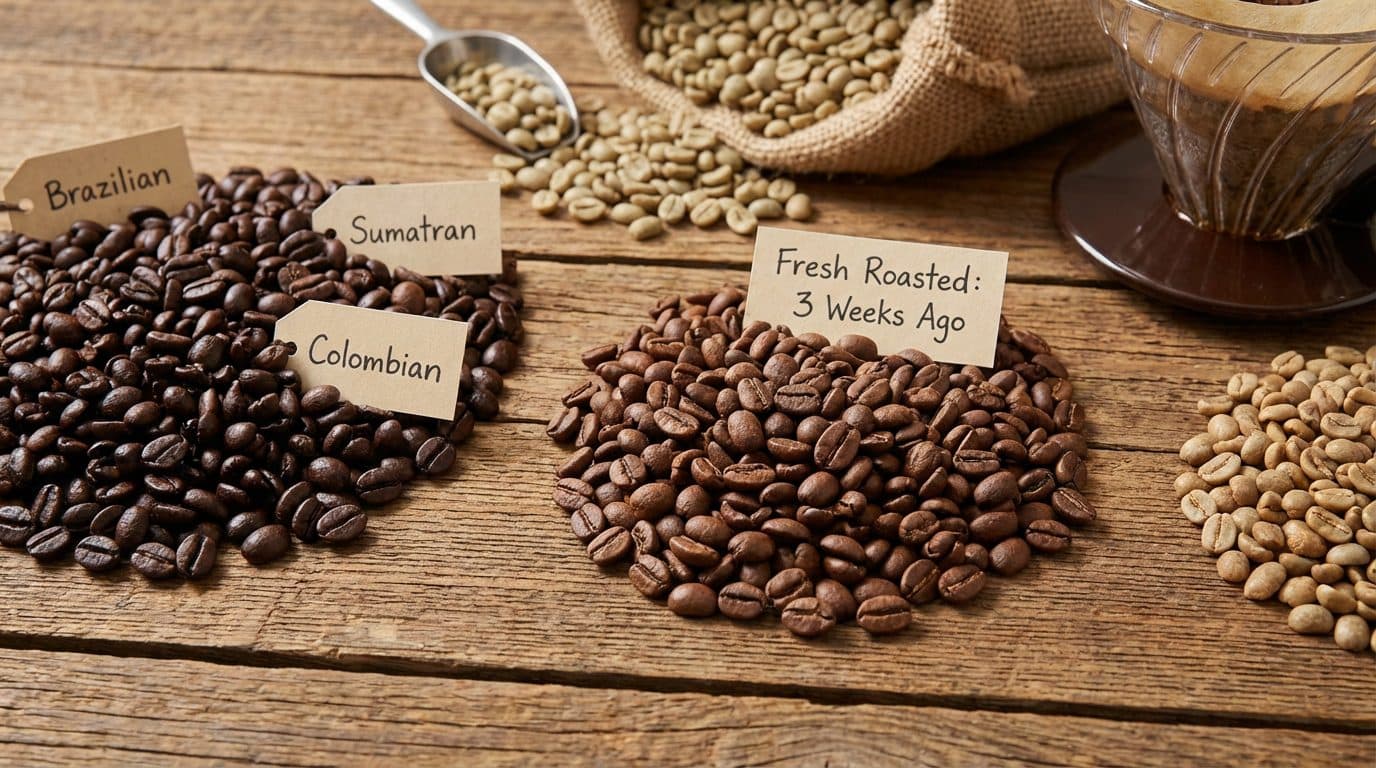
Your bean choice matters more than you might think. For strong cold brew, I recommend:
- Medium to dark roasts: They have more developed, bold flavors that shine in cold extraction
- Low-acid origins: Brazilian, Sumatran, or Colombian beans work beautifully
- Fresh beans: Roasted within the last 2-4 weeks for optimal flavor
Light roasts can work, but they often taste sour or tea-like in cold brew. Save those for your pour-over.
Common Mistakes and How to Fix Them
Even with the right method, things can go sideways. Here are the most common mistakes I see home brewers make:
Mistake 1: Grinding too fine. If your cold brew tastes bitter and muddy, your grind is probably too fine. The fix? Go coarser than you think you need. Your grounds should feel gritty, not powdery.
Mistake 2: Steeping at room temperature for too long. Room temperature extraction is faster. If you’re brewing on the counter, cap your steep time at 12-14 hours maximum. For the fridge, 16-18 hours is ideal.
Mistake 3: Not filtering properly. Sediment in your final brew continues extracting and turns bitter over time. Double-filter for the cleanest results.
Mistake 4: Using stale or low-quality beans. Cold brew is forgiving, but it can’t perform miracles. Old, stale beans produce flat, lifeless cold brew no matter what you do.
Barista Tip: If you accidentally over-extract a batch, don’t throw it out. Add a tiny pinch of salt—it genuinely reduces the perception of bitterness. You can also dilute it more than usual and use it for coffee cocktails or baking.
Frequently Asked Questions
Can I steep cold brew for 24 hours or more?
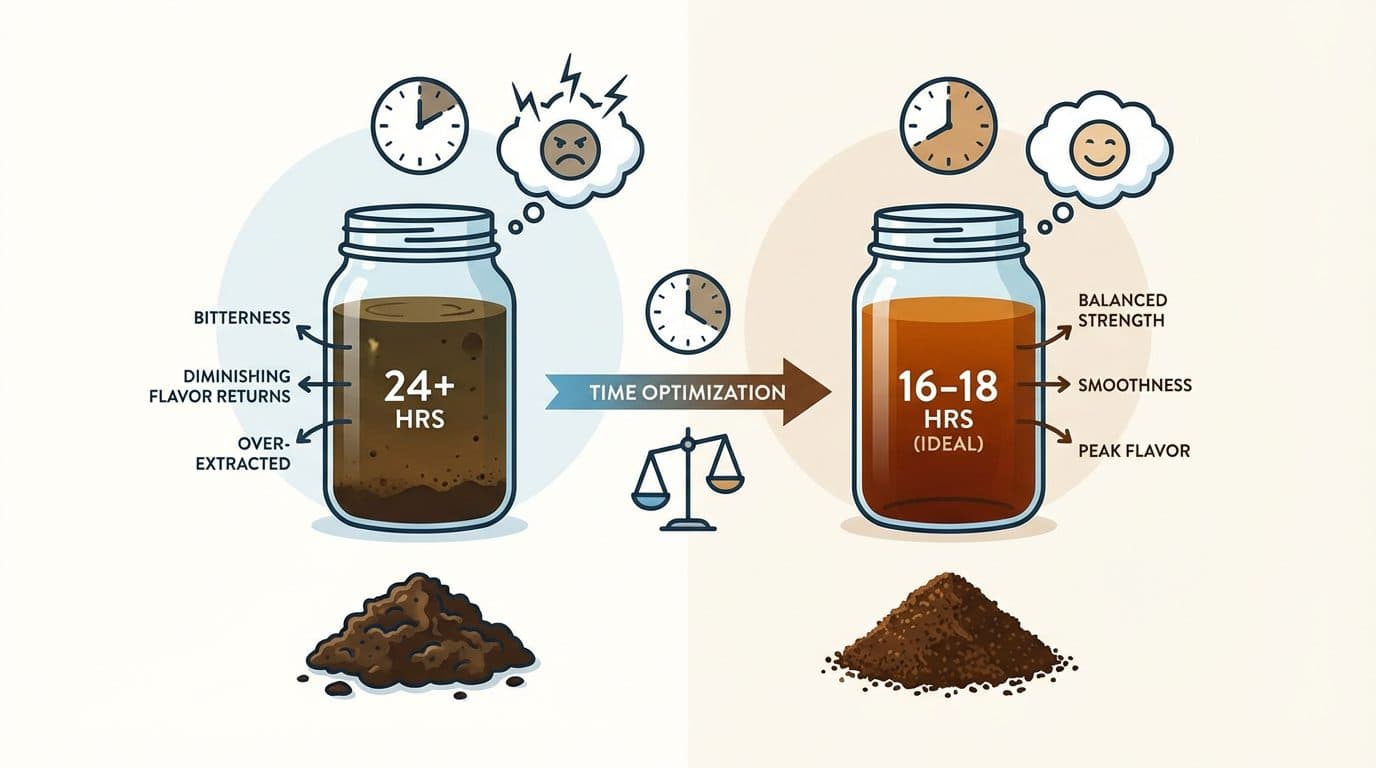
You can, but I don’t recommend it for strong concentrates. Beyond 20 hours, you’re extracting diminishing returns in flavor and increasing bitterness. Stick to 16-18 hours for the best balance of strength and smoothness.
Why does my cold brew taste weak even after long steeping?
This usually means your grind is too coarse or your ratio is off. Try using more coffee (1:5 ratio) rather than steeping longer. Also, make sure your grounds are fully saturated—dry pockets don’t extract properly.
Is cold brew stronger than regular coffee?
Cold brew concentrate is typically stronger in caffeine and flavor intensity. However, most people dilute it before drinking, which brings it closer to regular coffee strength. Undiluted concentrate can have 2-3 times the caffeine of drip coffee.
Can I use pre-ground coffee for cold brew?
Yes, but buy coarse-ground coffee specifically labeled for cold brew or French press. Standard pre-ground coffee is too fine and will over-extract. Freshly ground is always better if you have the option.
How do I make my cold brew even stronger without bitterness?
Increase your coffee-to-water ratio to 1:4 and keep your steep time at 16 hours. You can also try a second extraction: steep fresh grounds in your already-brewed cold brew for another 8-10 hours.
Summary and Your Next Brew
Making strong cold brew at home without over-extracting comes down to three things: using more coffee (not steeping longer), keeping your grind coarse, and respecting the 16-18 hour sweet spot. When you nail these variables, you get a concentrate that’s bold, smooth, and endlessly versatile.
Start with the 1:5 ratio and adjust from there based on your taste. Everyone’s palate is different, and part of the fun is dialing in your perfect recipe. Life’s too short for weak—or bitter—cold brew. Now go make something delicious.


Comments