


Table of Contents
- Italian Coffee Culture: Tradition, Ritual, and Espresso Perfection
- The Espresso Bar Experience
- The Unwritten Rules
- Australian Coffee Culture: Innovation, Quality, and the Flat White Revolution
- The Rise of Specialty Coffee
- The Café as a Third Place
- American Coffee Culture: Convenience, Customization, and Supersizing
- The Drip Coffee Tradition
- The Starbucks Effect and Third Wave Rise
- Coffee Culture Comparison: Italy vs. Australia vs. USA
- What Each Culture Does Best
- How These Cultures Are Influencing Each Other
- The Global Specialty Movement
- What This Means for Home Baristas
- Frequently Asked Questions
- Why is Italian coffee so much smaller than American coffee?
- What exactly is a flat white, and how is it different from a latte?
- Is it true that Starbucks failed in Australia?
- Why do Italians only drink cappuccino in the morning?
- Which country has the best coffee culture?
- Conclusion: Finding Your Own Coffee Culture
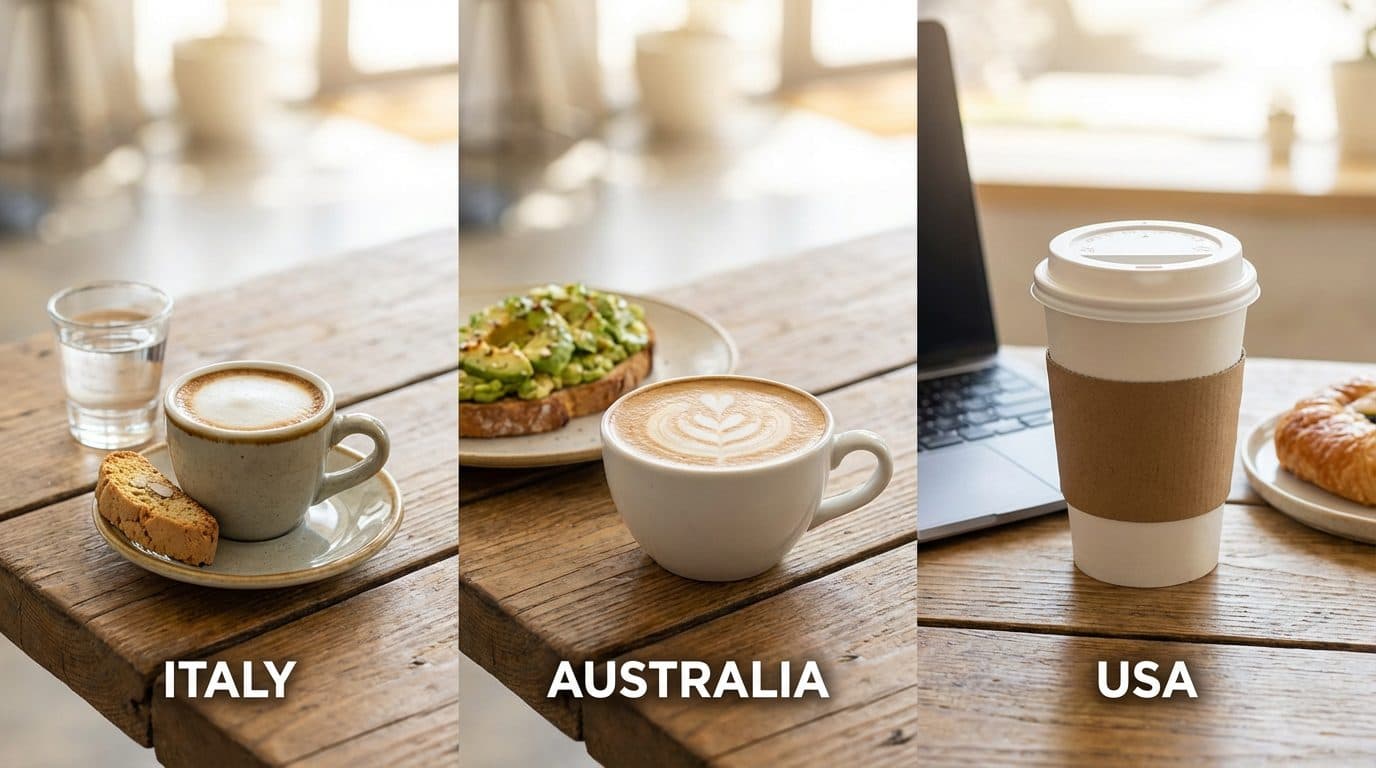
Ever wondered why an Italian would never order a cappuccino after 11 AM, while an Australian might sip a flat white at any hour? Or why Americans seem perfectly happy with a giant cup of drip coffee that Europeans find bewildering? Coffee culture varies wildly across the globe, and three countries stand out for their unique approaches: Italy, Australia, and the USA. Each has developed its own rituals, preferences, and unwritten rules that say a lot about how people live, work, and connect.
In this guide, I’ll walk you through the fascinating differences between Italian, Australian, and American coffee culture. You’ll discover why these three nations drink coffee the way they do, what you can learn from each tradition, and maybe even pick up some habits to improve your own home brewing experience. Life is too short for bad coffee—and even shorter for boring coffee culture.
Italian Coffee Culture: Tradition, Ritual, and Espresso Perfection
Italy is where modern espresso was born, and Italians take their coffee seriously—though perhaps not in the way you might expect. There’s no fussing over complicated orders or spending hours in cafés with laptops. Italian coffee culture is about speed, quality, and deeply ingrained social customs.
The Espresso Bar Experience
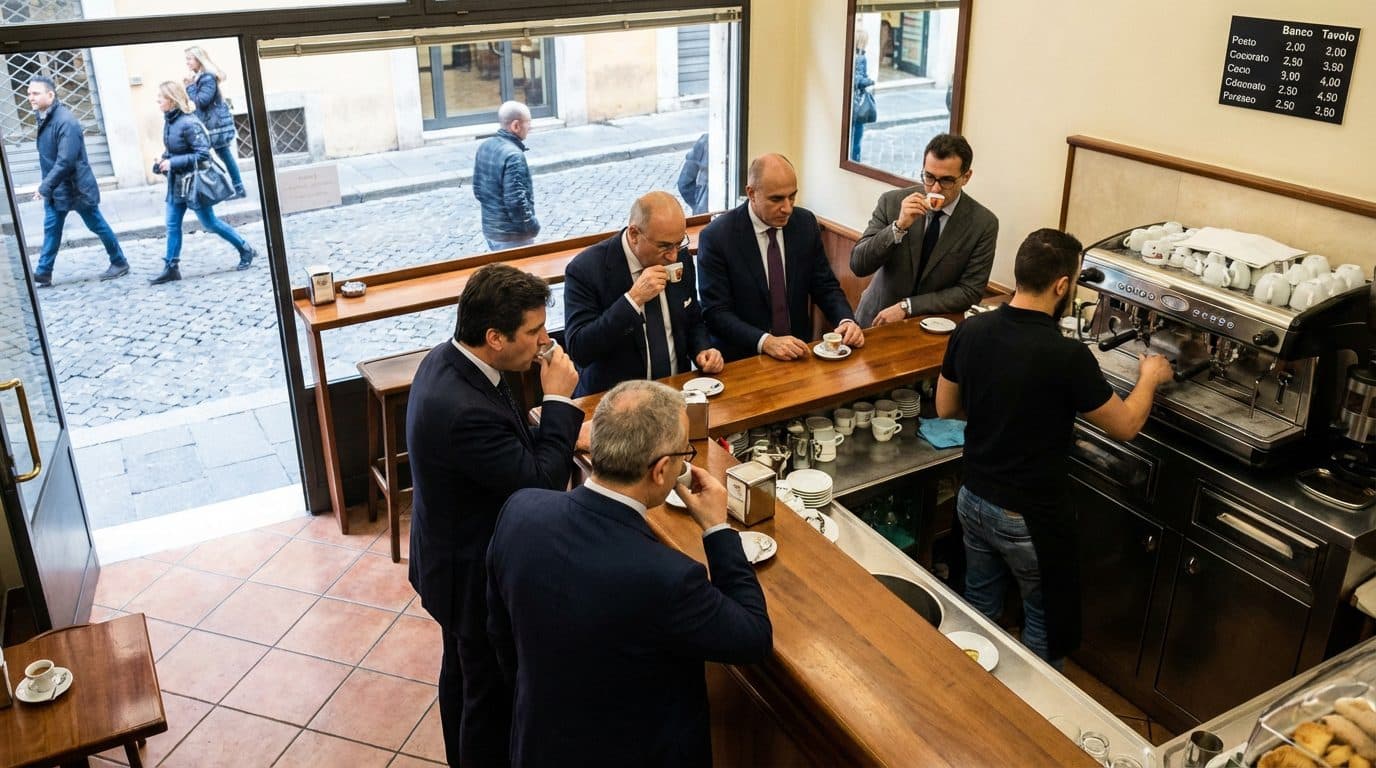
Walk into any Italian bar (which is actually a café, not a place for alcoholic drinks), and you’ll see locals standing at the counter, quickly downing an espresso, and heading out. The whole ritual takes maybe two minutes. In my experience, this standing-at-the-bar habit isn’t just cultural preference—it’s also cheaper. Sitting at a table often doubles or triples your bill.
- Espresso is the default order. If you ask for “un caffè,” you get a single shot of espresso.
- Cappuccino is strictly a morning drink, typically enjoyed with breakfast before 11 AM.
- Ordering a latte will get you a glass of milk—you need to say “caffè latte” for coffee with milk.
- No to-go cups—drinking coffee while walking is considered strange.
The Unwritten Rules
Italians have strong opinions about what’s acceptable. Milk-based drinks after a meal? Absolutely not—it’s considered bad for digestion. Flavored syrups or whipped cream? That’s for tourists. The focus is on the quality of the espresso itself: a perfectly extracted shot with rich crema, enjoyed in a ceramic cup that’s been pre-warmed on the machine.
Key Takeaway: Italian coffee culture values simplicity, quality, and speed. The espresso isn’t just a drink—it’s a quick moment of pleasure woven into daily life.
Australian Coffee Culture: Innovation, Quality, and the Flat White Revolution
Australia has quietly become one of the world’s most influential coffee cultures. While Italy perfected espresso, Australians took that foundation and ran with it, creating a café scene that prioritizes specialty beans, skilled baristas, and drinks you won’t find anywhere else.
The Rise of Specialty Coffee
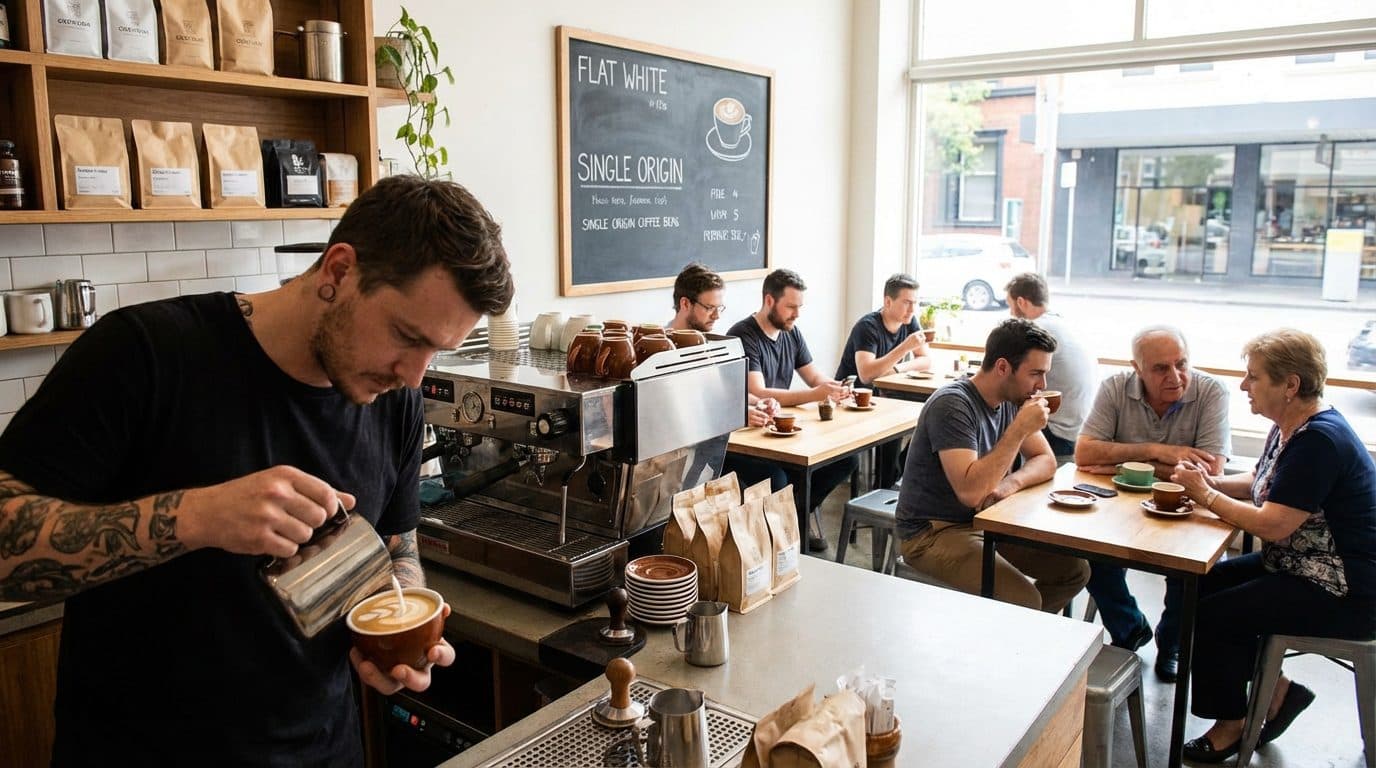
Australian coffee culture exploded in the 1980s and 1990s, driven largely by Italian and Greek immigrants who brought espresso machines with them. But Australians didn’t just copy—they innovated. Melbourne and Sydney became global coffee capitals, with independent cafés focusing on single-origin beans, precise brewing techniques, and latte art that doubles as Instagram content.
- Flat white is Australia’s gift to the coffee world—a velvety microfoam milk coffee that’s stronger than a latte but smoother than a cappuccino.
- Long black replaces the Americano—hot water first, then espresso poured over, preserving the crema.
- Specialty roasters dominate, with cafés often roasting their own beans on-site.
- No chain dominance—Starbucks famously failed in Australia because local cafés were simply better.
The Café as a Third Place
Unlike Italy’s quick-and-go approach, Australian cafés encourage lingering. They’re designed as comfortable “third places” between home and work. You’ll find people working on laptops, catching up with friends, or reading newspapers for hours. Baristas are treated as skilled professionals, and customers often develop relationships with their local café.
I’ve found that Australians are incredibly particular about their coffee. Ask someone from Melbourne where to get the best flat white, and you’ll get a passionate ten-minute answer. This pickiness has pushed quality standards incredibly high across the country.
American Coffee Culture: Convenience, Customization, and Supersizing
American coffee culture is a different beast entirely. It’s less about ritual and more about fuel—getting caffeine into your system however you like it, whenever you want it, in whatever size satisfies you. While this approach often gets criticized, there’s something admirable about its democratic accessibility.
The Drip Coffee Tradition
For decades, American coffee meant one thing: drip coffee. Brewed in large batches, served in diners with free refills, and often sitting on a hot plate for hours. It wasn’t about quality—it was about quantity and convenience. The bottomless cup became a symbol of American hospitality.
- Drip coffee remains the most consumed coffee style in America.
- Cream and sugar are standard additions, unlike in Italy where adulterating espresso is frowned upon.
- To-go culture dominates—most American coffee is consumed while driving, walking, or working.
- Size matters—a “small” American coffee would be considered enormous in Italy.
The Starbucks Effect and Third Wave Rise
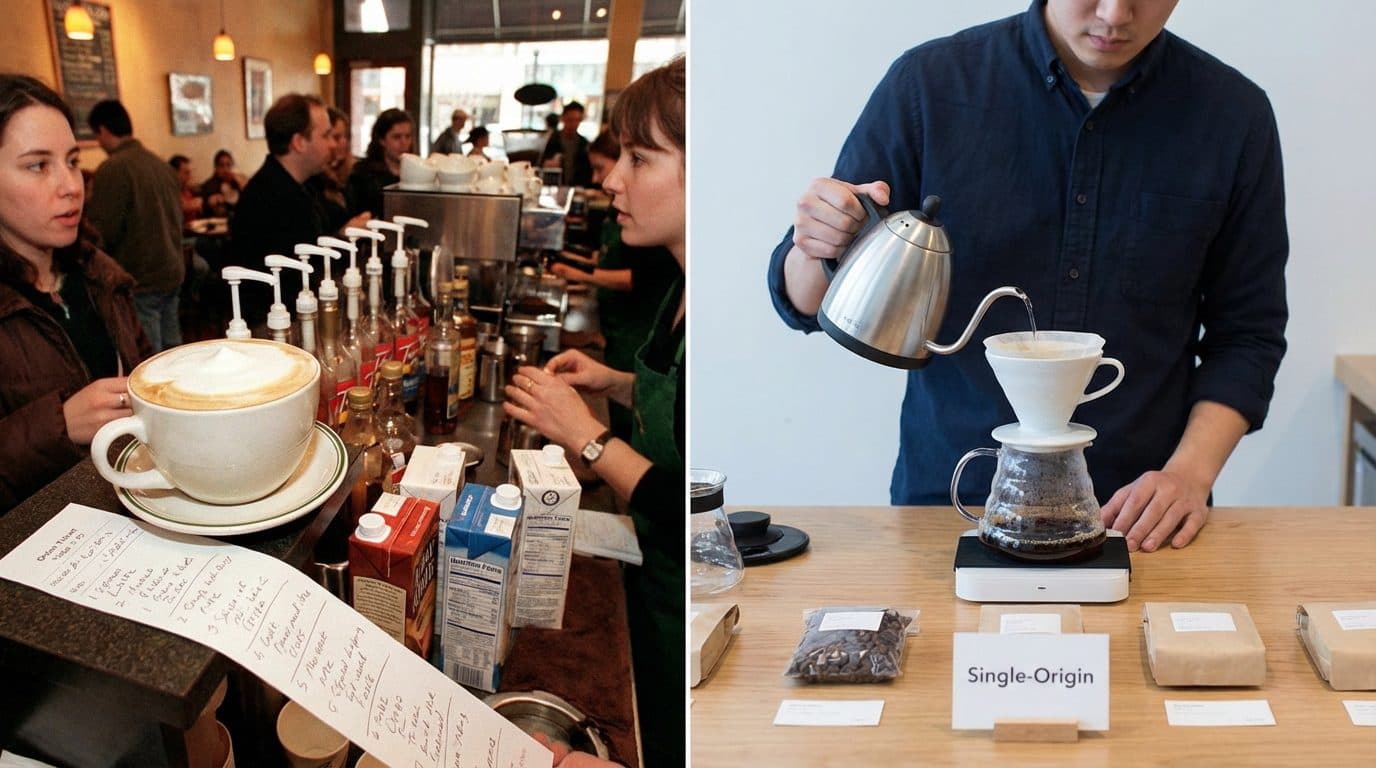
Starbucks changed everything in the 1990s by introducing espresso-based drinks to mainstream America. Suddenly, lattes and cappuccinos (though often much sweeter and larger than their Italian originals) became everyday orders. Customization became king—extra shots, alternative milks, flavored syrups, and drinks so personalized they need their own paragraph to order.
More recently, the “third wave” coffee movement has brought specialty coffee to American cities. Shops focusing on single-origin beans, pour-over brewing, and lighter roast profiles now compete with the chains. Cities like Portland, Seattle, and Brooklyn have become hotspots for coffee innovation.
Key Takeaway: American coffee culture is about personal choice and convenience. There’s no wrong way to drink coffee—whatever gets you through the day works.
Coffee Culture Comparison: Italy vs. Australia vs. USA
Seeing these three cultures side by side really highlights how differently people approach the same beverage. Here’s a quick comparison to help you understand the key differences:
| Aspect | Italy | Australia | USA |
|---|---|---|---|
| Default Drink | Espresso | Flat White | Drip Coffee/Latte |
| Typical Size | 25-30ml (1 oz) | 150-200ml (5-7 oz) | 350-600ml (12-20 oz) |
| Where Consumed | Standing at bar | Seated in café | On the go |
| Customization | Minimal | Moderate | Extensive |
| Chain Presence | Very low | Low | Very high |
| Price (espresso/coffee) | €1-1.50 | $4-5 AUD | $2-6 USD |
What Each Culture Does Best
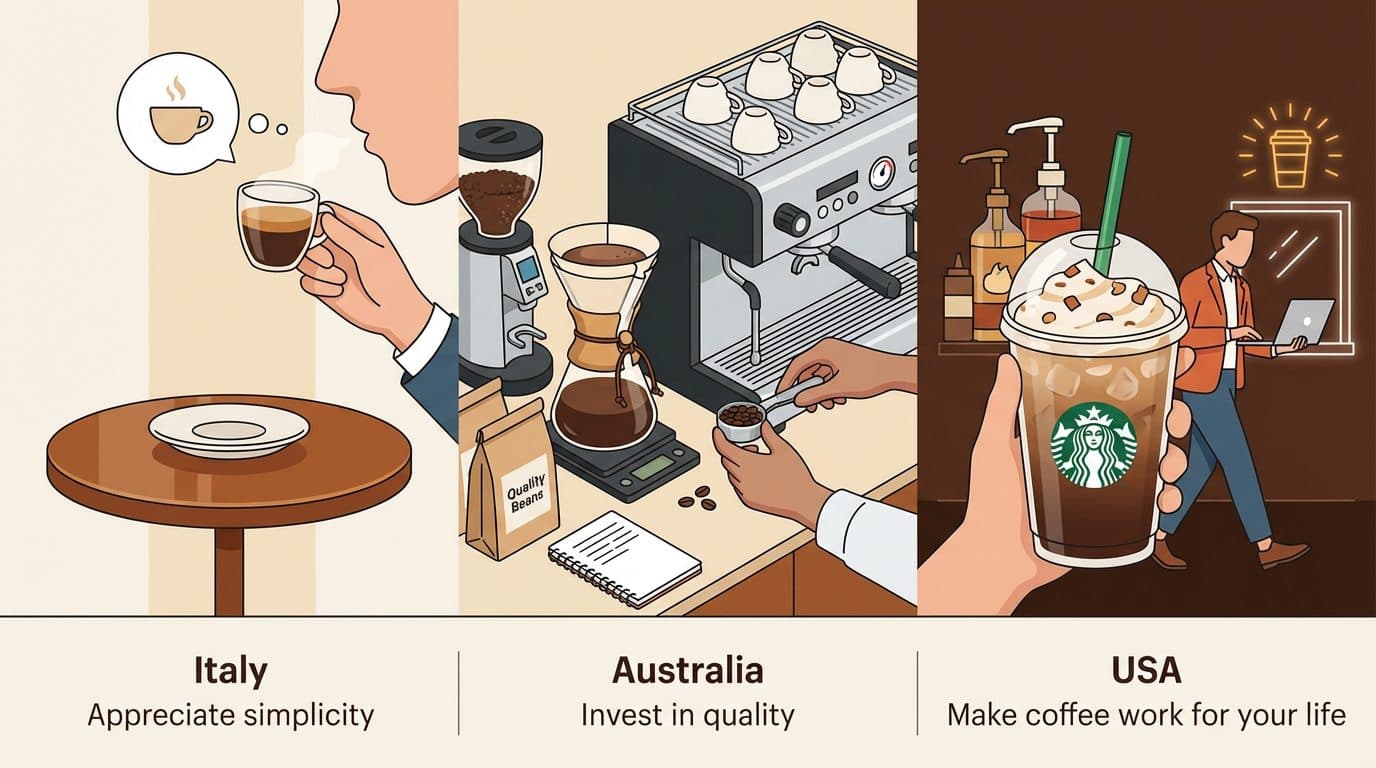
Each of these coffee cultures has lessons worth learning:
- From Italy: Appreciate simplicity. A well-made espresso needs nothing else. Take a moment to actually taste your coffee instead of mindlessly consuming it.
- From Australia: Invest in quality. Good beans, skilled preparation, and attention to detail make a noticeable difference. Don’t settle for mediocre coffee.
- From the USA: Make coffee work for your life. There’s no shame in customizing your drink or prioritizing convenience when you need it.
How These Cultures Are Influencing Each Other
The fascinating thing about modern coffee culture is how these traditions are blending together. Flat whites have conquered London, New York, and even some Italian cities. American-style specialty coffee shops now operate in Melbourne. And Italian espresso bars are slowly—very slowly—beginning to offer alternative milks.
The Global Specialty Movement
Social media and travel have accelerated this cultural exchange. A barista in Rome might follow Australian coffee influencers, while a Brooklyn café owner visits Tokyo for inspiration. The result is a growing global standard for specialty coffee that borrows from multiple traditions.
In my experience, this cross-pollination has been mostly positive. It’s pushing quality standards up everywhere while still allowing local traditions to survive. An Italian espresso bar doesn’t need to become Australian—but it might learn something about sourcing better beans.
What This Means for Home Baristas
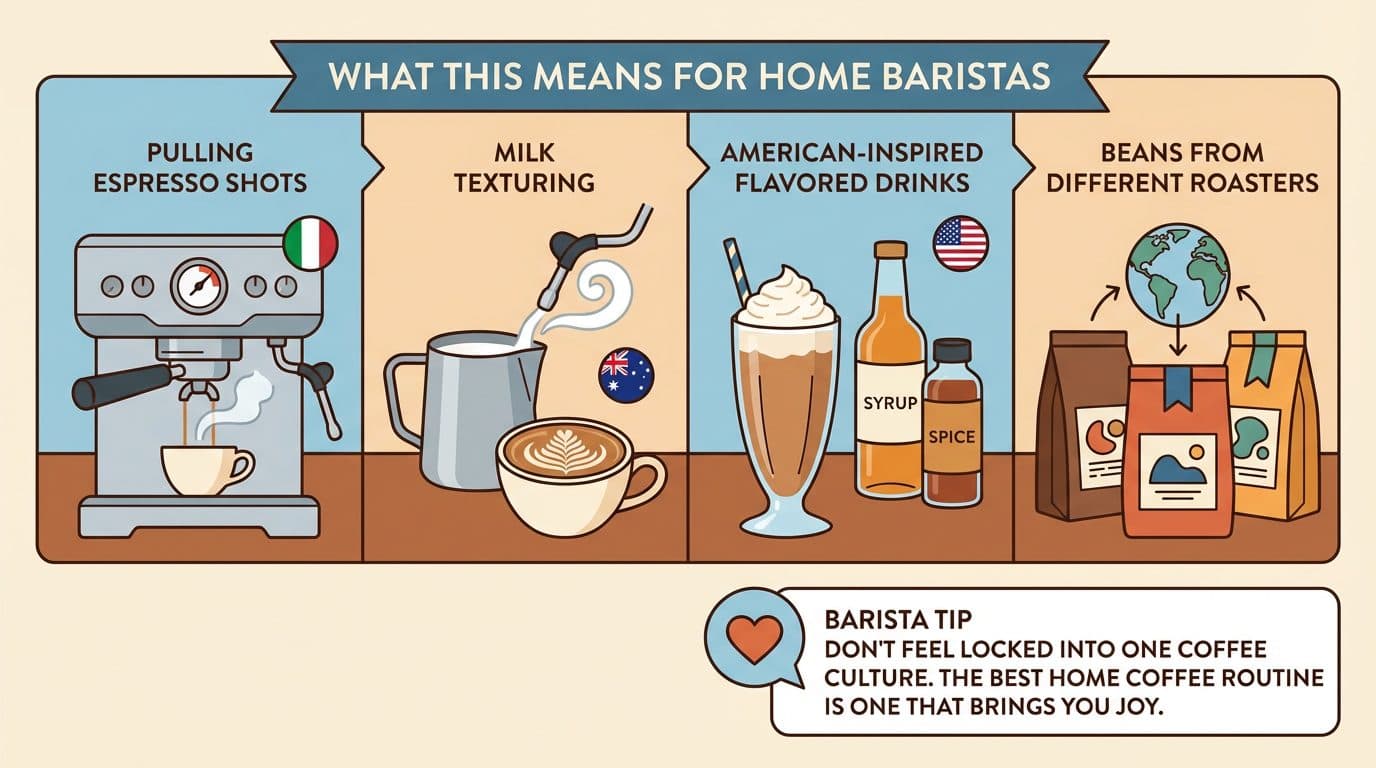
For those of us brewing at home, this global coffee culture offers incredible opportunities. You can:
- Practice pulling espresso shots with Italian precision
- Perfect your milk texturing for Australian-style flat whites
- Experiment with American-inspired flavored drinks when you want something fun
- Try beans from different roasters around the world
Barista Tip: Don’t feel locked into one coffee culture. The best home coffee routine is one that brings you joy—whether that’s a quick morning espresso or a leisurely pour-over with a side of breakfast.
Frequently Asked Questions
Why is Italian coffee so much smaller than American coffee?
Italian coffee culture developed around espresso, which is a concentrated extraction meant to be savored quickly. Americans historically favored drip coffee, which is much more diluted and designed to be sipped over longer periods. It’s not that Italians drink less caffeine—they often have multiple espressos throughout the day.
What exactly is a flat white, and how is it different from a latte?
A flat white is an Australian invention featuring espresso topped with silky, microfoam milk. It’s typically smaller and stronger than a latte, with less foam and a higher coffee-to-milk ratio. The milk texture is velvety rather than frothy, which lets the espresso flavor shine through more prominently.
Is it true that Starbucks failed in Australia?
Largely, yes. Starbucks entered Australia aggressively in 2000 but closed 61 of its 84 stores by 2008. Australians preferred their local independent cafés, which offered better quality coffee and a more personal experience. Starbucks still exists in Australia but mainly in tourist areas and airports.
Why do Italians only drink cappuccino in the morning?

Italians traditionally believe that milk is heavy on digestion and should only be consumed earlier in the day. Drinking a milky coffee after lunch or dinner is seen as potentially upsetting your stomach. While there’s limited scientific backing for this, the cultural norm remains strong.
Which country has the best coffee culture?
“Best” depends entirely on what you value. If you appreciate tradition and simplicity, Italy wins. If you prioritize quality and innovation, Australia is hard to beat. If you want variety and customization, America offers the most options. Personally, I think the best coffee culture is whatever helps you enjoy your daily cup more.
Conclusion: Finding Your Own Coffee Culture
Italian, Australian, and American coffee cultures each offer something unique. Italy teaches us to appreciate the art of espresso and the value of slowing down—even if just for a minute. Australia shows us that quality matters and that coffee is worth taking seriously. America reminds us that coffee should fit our lives, not the other way around.
The beauty of being a home barista in today’s connected world is that you don’t have to choose just one tradition. You can pull espresso like an Italian, texture milk like an Australian, and experiment with flavors like an American—all in your own kitchen. Start by trying one element from each culture that appeals to you. Maybe it’s standing while you drink your morning espresso, investing in better beans, or finally learning proper latte art. Whatever you choose, you’ll be richer for understanding where coffee culture comes from—and where it might be going.

Comments