


Table of Contents
- What You'll Need for Your Budget Coffee Corner
- Finding the Perfect Spot for Your Coffee Corner at Home
- Best Spots to Consider
- What to Avoid
- Essential Gear That Won't Break the Bank
- Budget Brewing Methods Compared
- The Grinder Question
- Smart Organization and Storage Ideas
- Repurpose What You Own
- Vertical Storage Saves Space
- Adding Personal Touches Without Overspending
- Free and Low-Cost Decor Ideas
- Keep It Minimal
- Frequently Asked Questions
- How much should I budget for a basic coffee corner setup?
- Can I set up a coffee corner without a dedicated counter space?
- Is it worth buying used coffee equipment?
- What's the one thing I shouldn't cheap out on?
- How do I keep my coffee corner clean and organized long-term?
- Conclusion and Your Next Steps
Ever scroll through social media and feel a pang of envy at those gorgeous coffee corners with gleaming espresso machines and perfectly organized shelves? Here’s the truth: you don’t need a second mortgage to create a beautiful, functional coffee corner at home. With a little creativity and some smart shopping, you can build your own cozy brewing station for far less than you might think.
In this guide, I’ll walk you through everything you need to set up a coffee corner at home that looks great, works perfectly, and keeps your wallet happy. Life is too short for bad coffee—and it’s also too short to stress about overspending on your coffee setup.
What You’ll Need for Your Budget Coffee Corner
Before you start rearranging furniture or hitting the stores, let’s get clear on what actually makes a coffee corner functional. In my experience, most people overcomplicate this. You need far less than Instagram would have you believe.
Essential Gear:
- One reliable brewing method (French press, pour-over, or Moka pot)
- A basic kettle (electric or stovetop)
- Airtight container for coffee beans or grounds
- Your favorite mug (or two)
- A small tray or mat to contain spills
Nice to Have (But Not Necessary):
- Manual coffee grinder
- Small scale for measuring
- Timer (your phone works fine)
- Milk frother
Barista Tip: Start with the absolute basics. You can always add equipment later as your budget allows. I started with just a French press and a secondhand kettle, and honestly, I made some of my best coffee in those early days.
Finding the Perfect Spot for Your Coffee Corner at Home
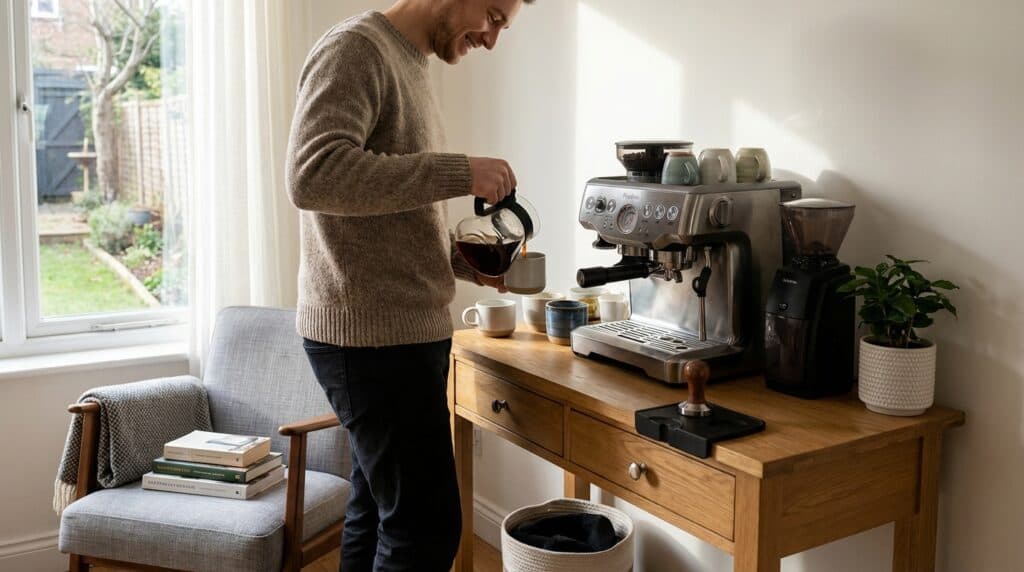
Location matters more than you might think. You want somewhere convenient but also somewhere that feels intentional—a dedicated space that makes your morning ritual feel special.
Best Spots to Consider
Look for unused counter space in your kitchen, a corner of your dining area, or even a section of a bookshelf. A rolling cart tucked beside your refrigerator works brilliantly if counter space is limited. I’ve seen people transform the top of a small dresser in their living room into a stunning coffee station.
The key requirements are simple: proximity to water (or at least easy access), an electrical outlet if you’re using an electric kettle or grinder, and enough surface area for your essentials. You don’t need much—about two to three square feet is plenty for most setups.
What to Avoid
Stay away from direct sunlight, which can degrade your coffee beans faster. Also avoid spots near the stove where heat and humidity fluctuate constantly. Your coffee deserves a stable, comfortable home.
Essential Gear That Won’t Break the Bank
Here’s where the magic happens. You can absolutely brew café-quality coffee with budget-friendly equipment. The secret isn’t expensive machinery—it’s understanding your tools and using them consistently.
Budget Brewing Methods Compared
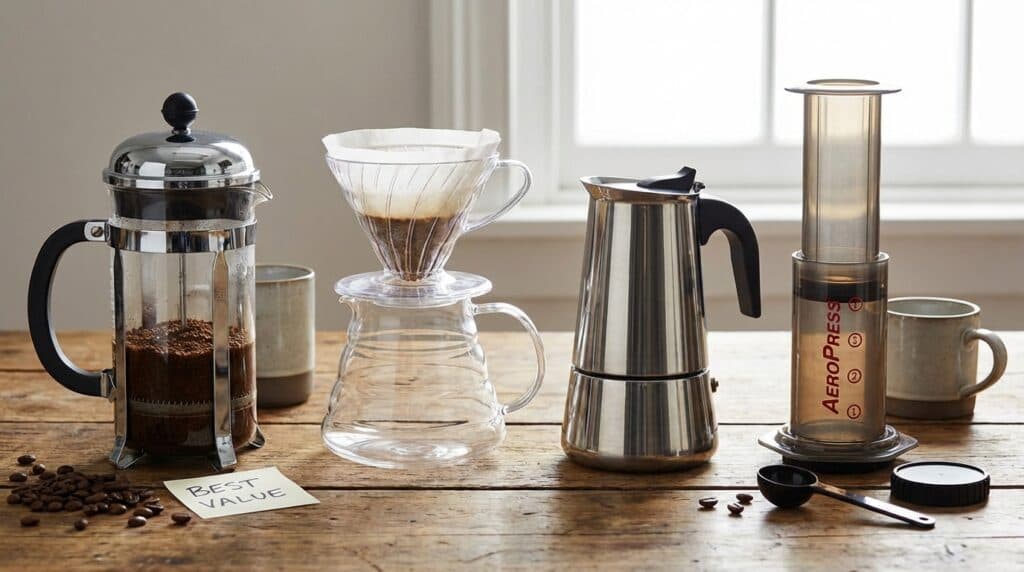
| Method | Average Cost | Best For | Skill Level |
|---|---|---|---|
| French Press | $15-30 | Rich, full-bodied coffee | Beginner |
| Pour-Over (Plastic) | $8-15 | Clean, nuanced flavor | Beginner-Intermediate |
| Moka Pot | $20-35 | Strong, espresso-style | Beginner |
| AeroPress | $30-40 | Versatile, travel-friendly | Beginner |
In my experience, a French press offers the best value for beginners. It’s forgiving, produces excellent coffee, and requires minimal technique. You can find quality options at discount stores, thrift shops, or online marketplaces for under twenty dollars.
The Grinder Question
Here’s a controversial take: you don’t absolutely need a grinder to start. Yes, freshly ground coffee tastes better—I won’t pretend otherwise. But if budget is tight, buying pre-ground coffee from a local roaster (ground to order) is perfectly acceptable. When you’re ready to upgrade, manual hand grinders offer excellent value, typically between twenty and forty dollars for a decent model.
Barista Tip: If you buy pre-ground, store it in an airtight container and use it within two weeks. This simple step makes a noticeable difference in flavor.
Smart Organization and Storage Ideas
A cluttered coffee corner feels stressful, not relaxing. But organization doesn’t require expensive containers or fancy shelving. Let’s get creative with what you might already have.
Repurpose What You Own
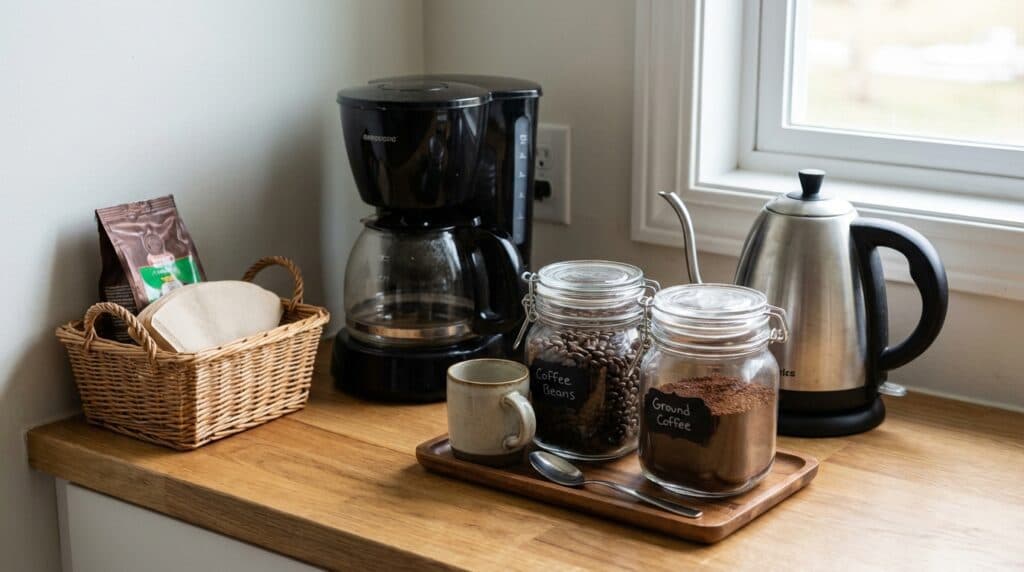
That mason jar collecting dust? Perfect for storing coffee beans. Old wooden crate from a craft project? Flip it on its side for instant shelving. Ceramic vase that never found flowers? Use it to hold stirring spoons and thermometers.
- Glass jars with tight lids work great for coffee storage
- Small baskets or boxes corral sugar packets and accessories
- A cutting board or wooden tray defines your coffee station space
- Hooks on the wall or under cabinets can hang mugs
Vertical Storage Saves Space
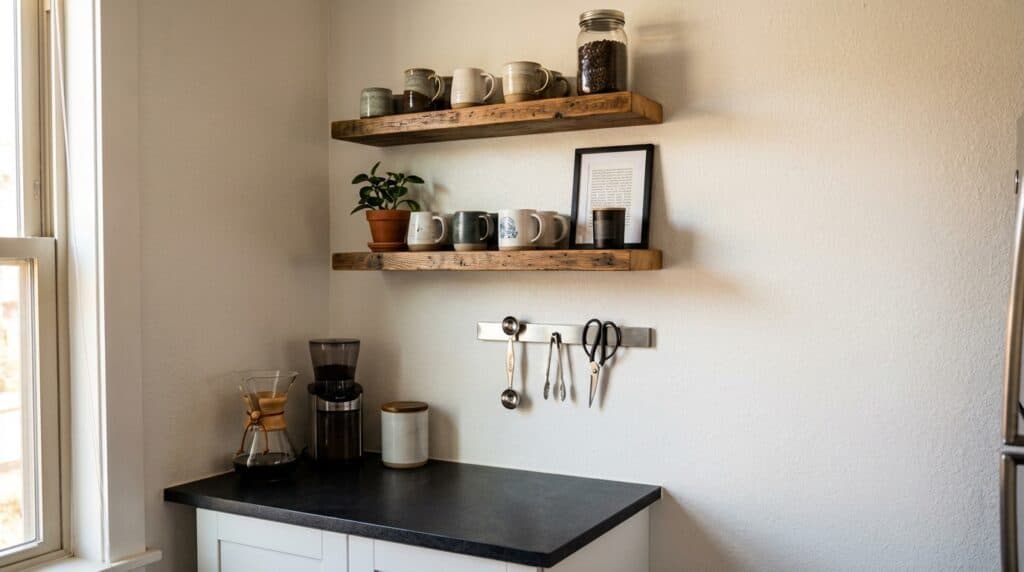
When counter space is limited, think upward. Wall-mounted shelves (even simple floating shelves from budget stores) can hold mugs, beans, and decorative elements. Magnetic strips designed for knives work wonderfully for metal accessories. I’ve found that using vertical space makes even the tiniest coffee corner feel organized and intentional.
Adding Personal Touches Without Overspending
This is where your coffee corner transforms from functional to genuinely yours. The goal isn’t to replicate someone else’s aesthetic—it’s to create a space that makes you smile every morning.
Free and Low-Cost Decor Ideas
Print a coffee-related quote and frame it using a thrift store frame. Display your prettiest mug as decoration rather than hiding it in a cabinet. Add a small plant (real or faux) for a touch of life. Even arranging your coffee bags with labels facing forward creates visual appeal.
- Chalkboard labels on jars add a café vibe
- A small clock or timer can be both functional and decorative
- Vintage finds from thrift stores add character
- Fairy lights or a small lamp create ambiance
I once found a gorgeous vintage coffee tin at a yard sale for two dollars. It’s been holding my filters for years and always gets compliments. The best decor often has a story behind it.
Keep It Minimal
Resist the urge to add too much. A coffee corner works best when it’s clean and uncluttered. Choose a few meaningful items rather than cramming every coffee-related thing you own into the space. You can always rotate decorations seasonally to keep things fresh without spending money.
Frequently Asked Questions
How much should I budget for a basic coffee corner setup?
You can create a fully functional coffee corner for between fifty and one hundred dollars if you shop smart. This includes a quality brewing method, basic kettle, storage containers, and minimal organization items. Thrift stores, discount retailers, and online marketplaces are your best friends for keeping costs down.
Can I set up a coffee corner without a dedicated counter space?
A rolling cart or bar cart is the perfect solution for small spaces. You can move it when needed and tuck it away when space is tight. Some people even use a sturdy TV tray or small folding table that stores flat when not in use.
Is it worth buying used coffee equipment?
For many items, buying secondhand is excellent value. French presses, kettles, mugs, storage containers, and organizational items are perfectly safe to buy used. I’d recommend buying new for anything with rubber seals or complex mechanical parts, as these wear out and can affect brewing quality.
What’s the one thing I shouldn’t cheap out on?
Your coffee beans. Even the best equipment can’t fix stale or low-quality coffee. Buy the freshest beans your budget allows, ideally from a local roaster. The difference between fresh and grocery store coffee is more significant than any equipment upgrade you could make.
How do I keep my coffee corner clean and organized long-term?
Build cleaning into your routine. Wipe down surfaces daily, empty grounds immediately, and do a weekly deep clean. Keep only what you regularly use in the space—store backups and rarely-used items elsewhere. A clean coffee corner is an inviting coffee corner.
Conclusion and Your Next Steps
Setting up a coffee corner at home without spending much money isn’t about compromise—it’s about being intentional. The best coffee corners I’ve seen aren’t the most expensive ones. They’re the ones that reflect their owner’s personality and prioritize function over flash.
Start small. Choose one good brewing method, find a spot that feels right, and build from there. Visit thrift stores and discount retailers before paying full price. Repurpose items you already own. And most importantly, remember that the point isn’t to impress anyone—it’s to create a space where you actually enjoy making and drinking your morning coffee.
Pick one thing from this guide and do it this week. Maybe it’s clearing a corner of your counter, ordering an affordable French press, or hunting for the perfect mug at a thrift store. Your budget-friendly coffee corner is closer than you think—and your future self will thank you every single morning.



Comments