


Table of Contents
- What Is a Vietnamese Phin Filter?
- What You'll Need to Make Vietnamese Phin Coffee
- Equipment
- Ingredients
- Step-by-Step: How to Brew Coffee With a Vietnamese Phin Filter
- Preparation
- Brewing
- Troubleshooting Common Phin Filter Problems
- Coffee Drips Too Fast
- Coffee Drips Too Slowly (or Not at All)
- Weak or Bland Flavor
- Bitter or Harsh Taste
- Tips for the Best Vietnamese Phin Coffee
- Frequently Asked Questions
- What grind size should I use for a Vietnamese phin filter?
- Can I use regular coffee instead of Vietnamese coffee?
- How do I make Vietnamese egg coffee (cà phê trứng) with a phin?
- Why is my phin filter coffee not as strong as café-style Vietnamese coffee?
- How long does a Vietnamese phin filter last?
- Conclusion: Start Brewing Your Own Vietnamese Coffee Today
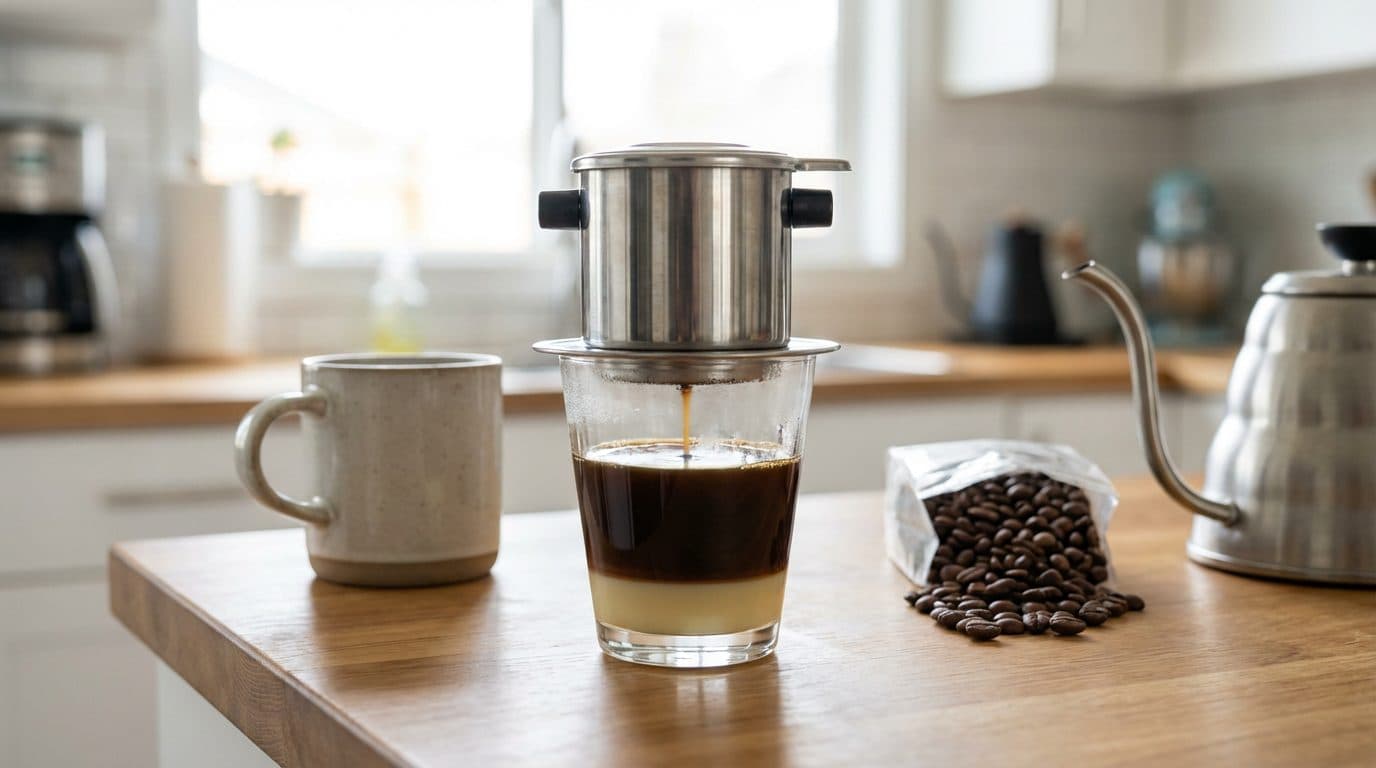
Have you ever tasted Vietnamese coffee at a café and wondered how they achieve that rich, sweet, almost syrupy brew? The secret lies in a small, unassuming metal device called the phin filter. This traditional Vietnamese brewing method produces one of the most unique and flavorful cups of coffee you’ll ever experience—and the best part is you can easily make it at home.
Whether you’re looking to expand your home brewing repertoire or simply craving that distinctive Vietnamese coffee experience, learning to use a phin filter is surprisingly straightforward. In this guide, I’ll walk you through everything you need to know to brew authentic Vietnamese phin filter coffee in your own kitchen.
What Is a Vietnamese Phin Filter?
A Vietnamese phin filter is a small, gravity-driven drip brewer typically made from stainless steel or aluminum. It consists of four simple parts: a brewing chamber, a perforated plate that sits inside, a press filter (or gravity insert), and a lid. The phin sits directly on top of your cup, and hot water slowly drips through the coffee grounds into your waiting vessel below.
Unlike pour-over methods that use paper filters, the phin’s metal construction allows more oils and fine particles to pass through. This creates a fuller body and more intense flavor profile. The slow drip process—usually taking 4 to 6 minutes—extracts deep, bold flavors that pair perfectly with sweetened condensed milk, the traditional Vietnamese accompaniment.
Barista Tip: The phin filter’s slow extraction is a feature, not a bug. Embrace the meditative pace—it’s part of the experience.
What You’ll Need to Make Vietnamese Phin Coffee
Equipment
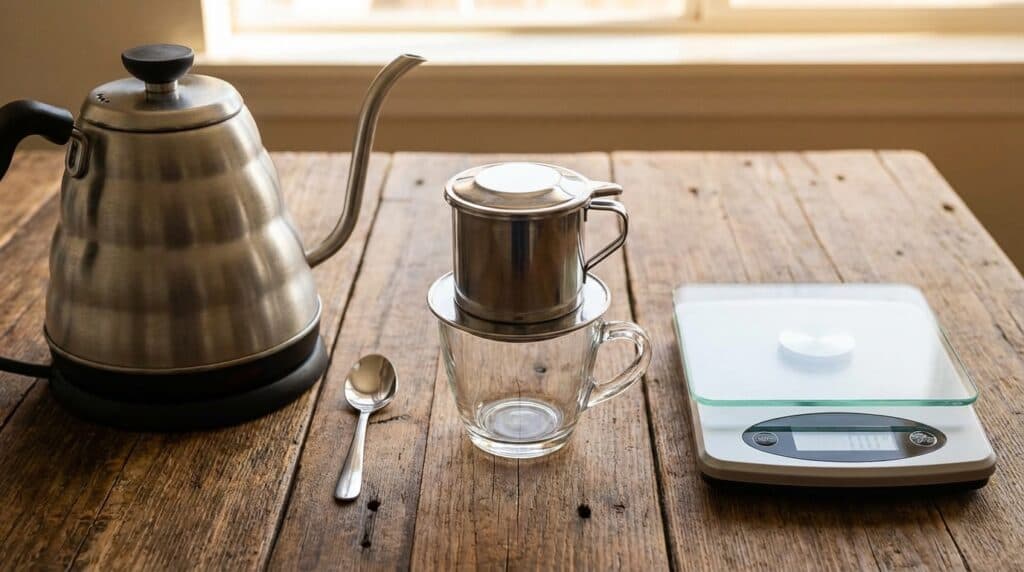
- Vietnamese phin filter (4-ounce or 8-ounce size)
- Heat-resistant glass or ceramic cup
- Kettle for boiling water
- Spoon for stirring
- Kitchen scale (optional but recommended)
Ingredients
- 2 to 3 tablespoons of coarsely ground coffee (about 15-20 grams)
- 6 to 8 ounces of hot water (195°F to 205°F / 90°C to 96°C)
- 1 to 2 tablespoons of sweetened condensed milk (for traditional cà phê sữa đá)
- Ice cubes (if making iced coffee)
For the most authentic experience, look for Vietnamese coffee brands that use robusta beans or a robusta-arabica blend. Robusta has higher caffeine content and a bolder, more bitter flavor that stands up beautifully to the sweetness of condensed milk. However, any medium to dark roast coffee will work if Vietnamese brands aren’t available in your area.
Step-by-Step: How to Brew Coffee With a Vietnamese Phin Filter
Now let’s get into the actual brewing process. I’ve found that once you do this a few times, it becomes second nature. Here’s how to make the perfect cup:
Preparation
1. Preheat your cup and phin. Pour some hot water into your cup and place the phin chamber on top. Let it sit for 30 seconds, then discard the water. This keeps your coffee hot throughout the brewing process.
2. Add condensed milk (if using). Spoon 1 to 2 tablespoons of sweetened condensed milk into the bottom of your cup before placing the phin on top. Watching the dark coffee slowly drip onto the white milk is part of the visual appeal.
Brewing
3. Add coffee grounds. Place the perforated plate into the brewing chamber, then add your coffee grounds. Give the phin a gentle shake to level the grounds evenly.
4. Insert the press filter. Place the gravity press on top of the grounds and give it a slight twist. You want gentle pressure—don’t pack it down too hard, or the water won’t drip through properly.
5. Bloom the coffee. Add just enough hot water to saturate the grounds (about 1 ounce). Wait 20 to 30 seconds. This “bloom” phase allows CO2 to escape and prepares the grounds for optimal extraction.
6. Add remaining water. Fill the chamber to the top with hot water and place the lid on. Now comes the waiting game.
7. Let it drip. The coffee should drip slowly—about one drop per second is ideal. The entire process takes 4 to 6 minutes. If it drips too fast, your grind is too coarse or the press isn’t tight enough. If it barely drips at all, your grind is too fine or the press is too tight.
8. Stir and enjoy. Once all the water has dripped through, remove the phin and stir the coffee and condensed milk together until well combined.
Barista Tip: For iced Vietnamese coffee (cà phê sữa đá), brew the coffee directly over the condensed milk as usual, then pour the mixture over a tall glass filled with ice. The contrast of hot, sweet coffee hitting cold ice creates an incredible drinking experience.
Troubleshooting Common Phin Filter Problems
Even experienced home baristas run into issues sometimes. Here are the most common problems and how to fix them:
Coffee Drips Too Fast
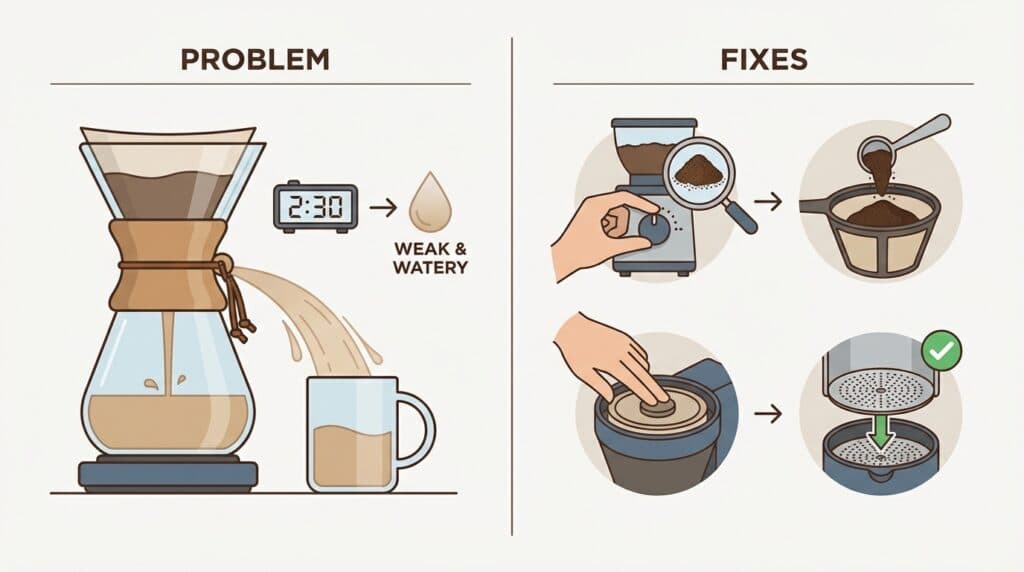
If your brew finishes in under 3 minutes, the extraction will be weak and watery. Try these fixes:
- Use a finer grind size
- Add more coffee grounds
- Press the gravity filter down slightly more
- Check that the perforated plate is seated properly
Coffee Drips Too Slowly (or Not at All)
If you’re waiting 10+ minutes for a cup, something’s off. The coffee will be over-extracted and bitter. Solutions include:
- Use a coarser grind
- Reduce the amount of coffee
- Loosen the press filter
- Make sure the holes in the filter aren’t clogged
Weak or Bland Flavor
This usually means under-extraction. In my experience, the culprit is often water temperature. Make sure your water is hot enough—between 195°F and 205°F. Water that’s too cool won’t extract the full range of flavors from the grounds.
Bitter or Harsh Taste
Over-extraction causes bitterness. If your coffee tastes harsh, try a coarser grind, use slightly cooler water, or reduce the brew time by loosening the press filter.
Tips for the Best Vietnamese Phin Coffee
After brewing countless cups with my phin filter, I’ve picked up a few tricks that make a real difference:
- Use filtered water. Tap water with high mineral content or chlorine can negatively affect flavor. Filtered water produces a cleaner, more balanced cup.
- Experiment with ratios. Start with a 1:4 coffee-to-water ratio and adjust based on your taste preferences. Some people prefer a stronger 1:3 ratio.
- Try different condensed milk brands. The quality and sweetness level varies between brands. Find one that suits your palate.
- Clean your phin after each use. Coffee oils can build up and turn rancid. Rinse thoroughly with hot water and let it air dry completely.
- Preheat everything. A cold cup and cold phin will drop your water temperature significantly, leading to under-extraction.
Taste Profile: When brewed correctly, Vietnamese phin coffee delivers a bold, intense cup with chocolatey, nutty undertones and a slight bitterness that’s beautifully balanced by the creamy sweetness of condensed milk. The body is thick and syrupy—nothing like the lighter brews from paper-filtered methods.
Frequently Asked Questions
What grind size should I use for a Vietnamese phin filter?
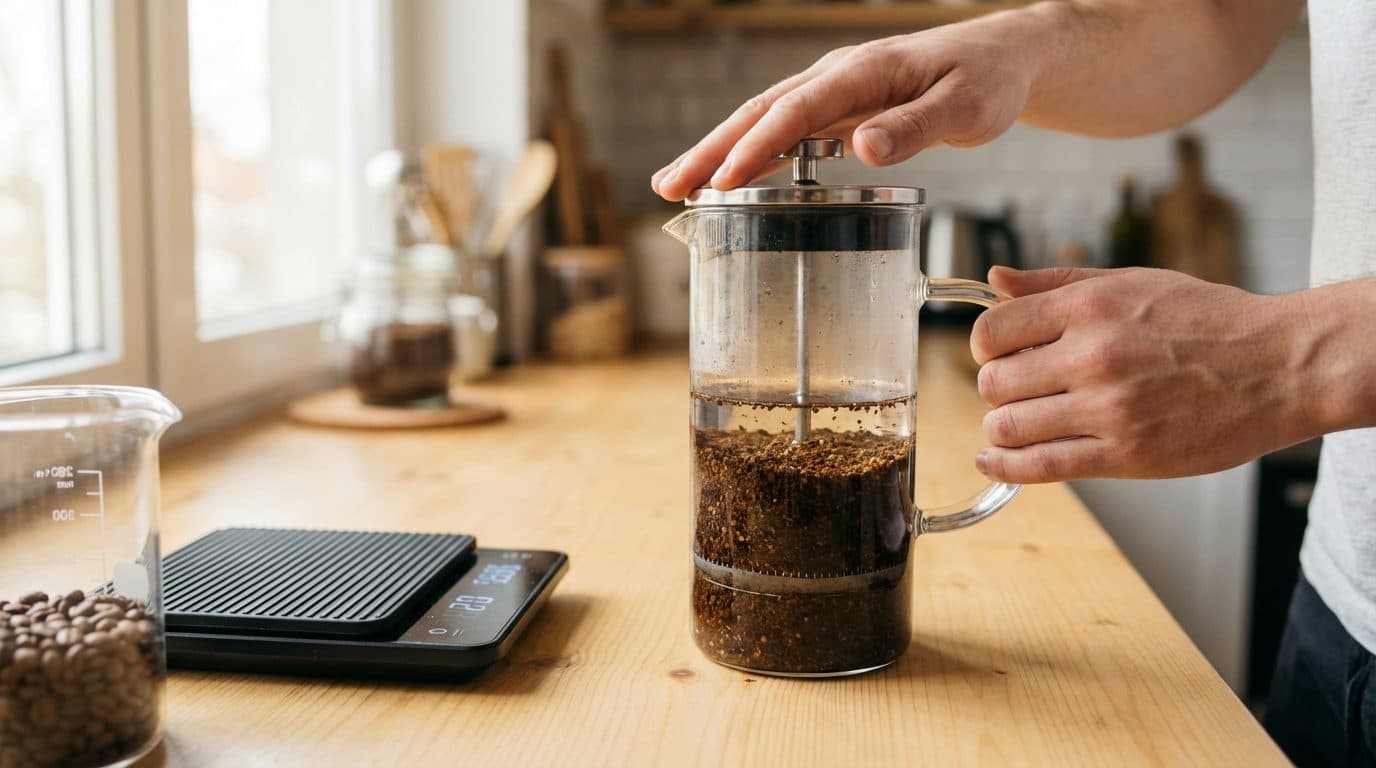
A medium-coarse to coarse grind works best—similar to what you’d use for a French press. If you’re buying pre-ground Vietnamese coffee, it’s usually already ground appropriately for phin brewing. If grinding at home, aim for grounds that resemble coarse sea salt.
Can I use regular coffee instead of Vietnamese coffee?
Yes, you can use any coffee you like. However, traditional Vietnamese coffee uses robusta beans or robusta blends, which have a stronger, more bitter flavor that pairs well with sweetened condensed milk. If using arabica, choose a dark roast for the closest flavor profile.
How do I make Vietnamese egg coffee (cà phê trứng) with a phin?
Brew your phin coffee as usual. While it drips, whisk one egg yolk with 2 tablespoons of sweetened condensed milk until thick and frothy. Pour the hot coffee into a cup, then spoon the egg mixture on top. The result is a creamy, custard-like coffee experience.
Why is my phin filter coffee not as strong as café-style Vietnamese coffee?
Cafés often use more coffee grounds and a tighter press for a more concentrated brew. Try increasing your coffee amount to 3 tablespoons and pressing the filter down a bit more firmly. Also, make sure you’re using robusta-based coffee for that authentic punch.
How long does a Vietnamese phin filter last?

With proper care, a stainless steel phin filter can last for years—even decades. Avoid using abrasive cleaners, rinse it thoroughly after each use, and dry it completely to prevent any mineral buildup or corrosion.
Conclusion: Start Brewing Your Own Vietnamese Coffee Today
Making coffee with a Vietnamese phin filter at home is one of the most rewarding brewing methods you can learn. It’s affordable, requires minimal equipment, and produces a uniquely delicious cup that’s hard to replicate with other methods. The slow, deliberate process is almost meditative—a nice change of pace from the rush of modern life.
Start with the basic technique outlined above, then experiment with grind sizes, coffee amounts, and water temperatures until you find your perfect brew. Life is too short for bad coffee, and once you’ve mastered the phin filter, you’ll have access to café-quality Vietnamese coffee whenever the craving strikes. Grab a phin, some good coffee, and a can of condensed milk—your taste buds will thank you.


Comments