


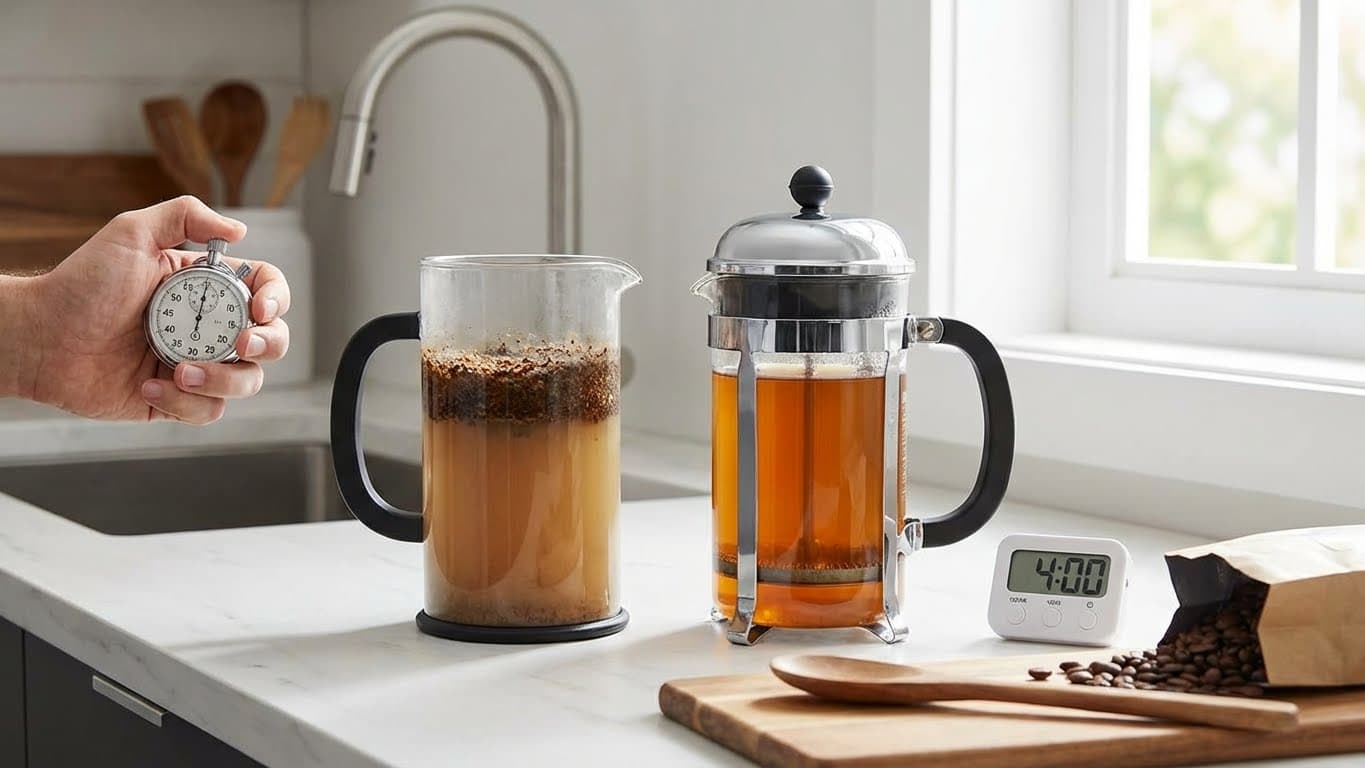
Table of Contents
- Mistake #1: Using the Wrong Grind Size
- How to Fix It
- Mistake #2: Getting the Water Temperature Wrong
- How to Fix It
- Mistake #3: Ignoring the Coffee-to-Water Ratio
- How to Fix It
- Mistake #4: Steeping for the Wrong Amount of Time
- How to Fix It
- Mistake #5: Neglecting the Bloom
- How to Fix It
- Bonus Tips for Better French Press Coffee
- Frequently Asked Questions
- Why does my French press coffee taste bitter?
- Can I use regular pre-ground coffee in a French press?
- How do I prevent sediment in my French press coffee?
- Should I stir my French press coffee before pressing?
- How long can I leave coffee in the French press after brewing?
- Summary and Next Steps
Ever wonder why your French press coffee tastes muddy, bitter, or just… disappointing? You’re not alone. The French press is one of the most accessible brewing methods out there, yet it’s surprisingly easy to get wrong. I’ve made every mistake in the book during my years as a home barista, and I’ve watched countless friends make the same errors.
The good news? These French press mistakes are incredibly easy to fix once you know what to look for. In this guide, I’ll walk you through the five most common French press mistakes everyone makes, explain why they matter, and show you exactly how to avoid them. By the end, you’ll be brewing rich, full-bodied coffee that actually lives up to the French press’s legendary reputation.
Mistake #1: Using the Wrong Grind Size
This is the big one. If you’re grinding your coffee too fine, you’re setting yourself up for a bitter, over-extracted cup with a muddy layer of sludge at the bottom. I’ve found that most pre-ground coffee from the supermarket is designed for drip machines—way too fine for French press brewing.
The French press requires a coarse grind, similar to sea salt or raw sugar. Here’s why it matters:
- Fine grinds over-extract: The longer steep time means more surface area gets exposed, pulling out harsh, bitter compounds.
- Fine grinds slip through the filter: You’ll end up with gritty coffee that feels unpleasant on your tongue.
- Coarse grinds extract evenly: They release their flavors gradually during the 4-minute steep, resulting in balanced extraction.
How to Fix It
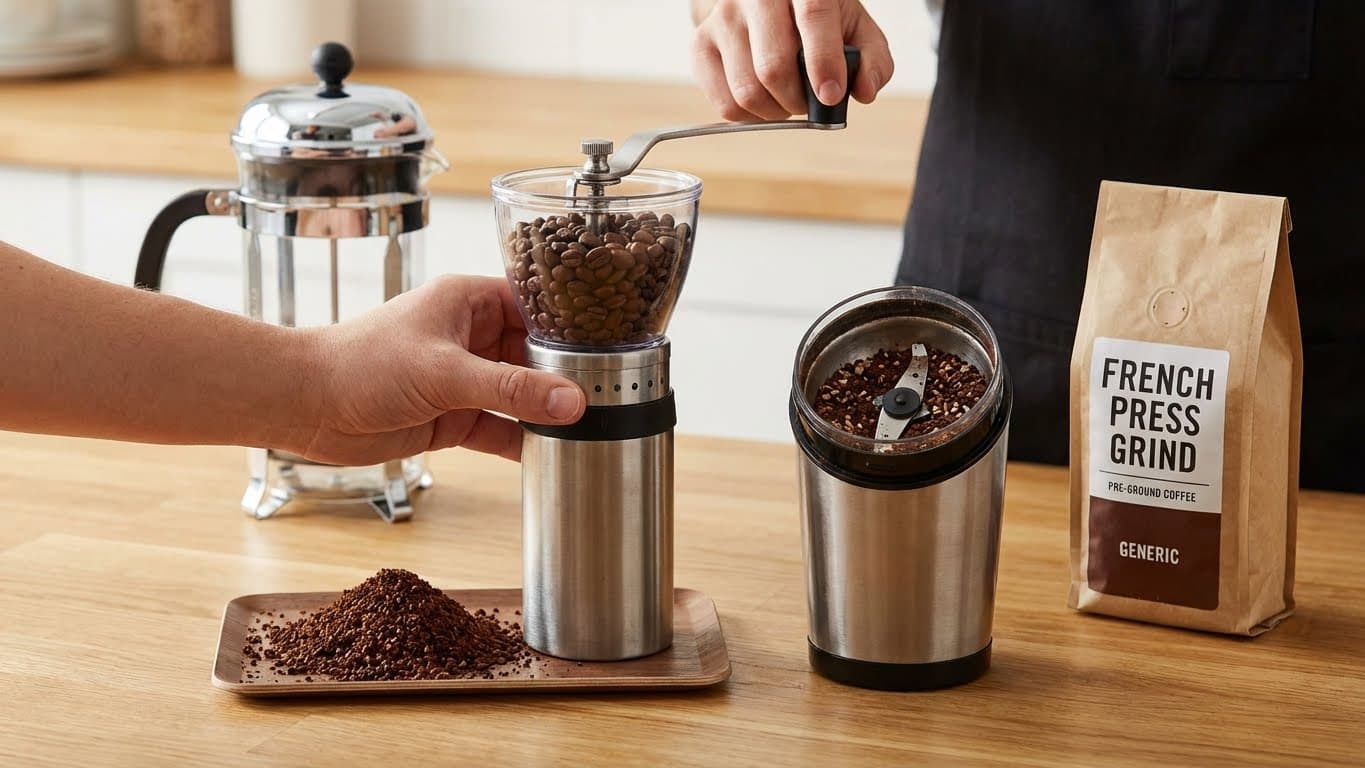
Invest in a burr grinder if you haven’t already. Blade grinders produce inconsistent particle sizes, which leads to uneven extraction. Set your burr grinder to the coarsest setting and adjust from there. If you’re buying pre-ground coffee, look for bags specifically labeled “French press grind” or “coarse grind.”
Barista Tip: When in doubt, go slightly coarser than you think you need. It’s easier to adjust toward finer if your coffee tastes weak than to fix an over-extracted bitter mess.
Mistake #2: Getting the Water Temperature Wrong
I see this constantly—people pour boiling water straight from the kettle into their French press. While it seems logical (hot water = good extraction, right?), boiling water actually scorches your coffee grounds and creates harsh, burnt flavors.
On the flip side, water that’s too cool won’t extract enough flavor, leaving you with a weak, sour cup. The sweet spot for French press brewing is between 195°F and 205°F (90°C to 96°C).
| Water Temperature | Result |
|---|---|
| Boiling (212°F / 100°C) | Bitter, burnt, over-extracted |
| 195°F – 205°F (90°C – 96°C) | Balanced, full-bodied, ideal extraction |
| Below 185°F (85°C) | Sour, weak, under-extracted |
How to Fix It
The easiest method? Boil your water, then let it rest for 30-45 seconds before pouring. If you want precision, use a thermometer or invest in a temperature-controlled kettle. In my experience, the 30-second rest works beautifully for most situations.
Here’s a realistic scenario: You’re rushing through your morning routine, the kettle just finished boiling, and you dump it straight in. The coffee tastes bitter and harsh. Simply waiting that brief moment transforms everything.
Mistake #3: Ignoring the Coffee-to-Water Ratio
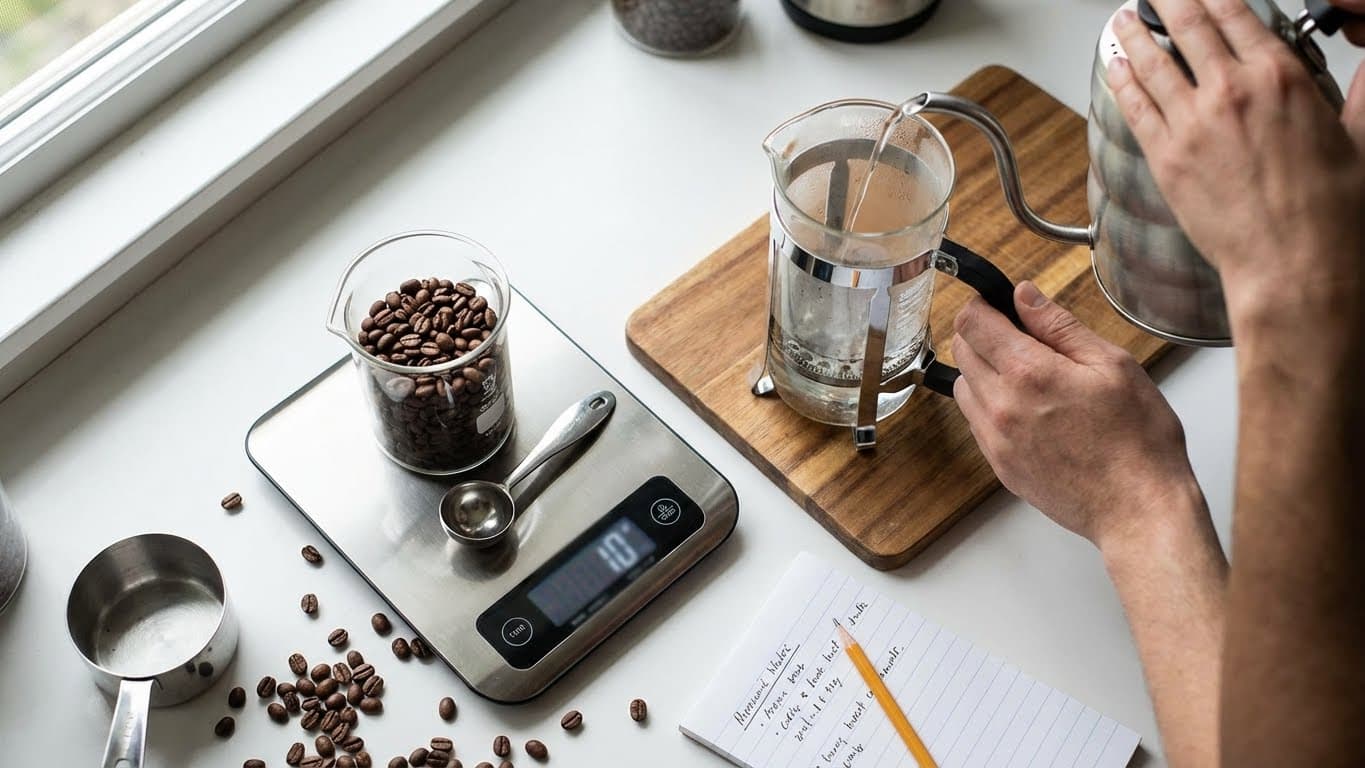
Eyeballing your coffee and water amounts is a recipe for inconsistency. One day your brew is too strong and overwhelming, the next it’s watery and bland. Without a proper French press coffee-to-water ratio, you’re essentially gambling every morning.
The standard ratio for French press is 1:15—that’s 1 gram of coffee for every 15 grams of water. For those without a scale, this translates roughly to:
- Small French press (3 cups / 350ml): About 23 grams of coffee (roughly 3 tablespoons)
- Medium French press (4 cups / 500ml): About 33 grams of coffee (roughly 4.5 tablespoons)
- Large French press (8 cups / 1 liter): About 66 grams of coffee (roughly 9 tablespoons)
How to Fix It
Get a kitchen scale. Seriously, this one tool will improve every cup you make. They’re inexpensive—around $10-15—and remove all guesswork. Measure your coffee, measure your water, and you’ll achieve consistent results every single time.
Did You Know? A “cup” measurement on French press carafes typically refers to 4 ounces, not the standard 8-ounce cup. So your “8-cup” French press actually holds about 4 standard cups of coffee.
Mistake #4: Steeping for the Wrong Amount of Time
Patience is a virtue—but over-steeping is a curse. One of the most common French press mistakes is letting your coffee brew for too long. I’ve talked to home brewers who leave their coffee steeping for 10, even 15 minutes, wondering why it tastes like liquid bitterness.
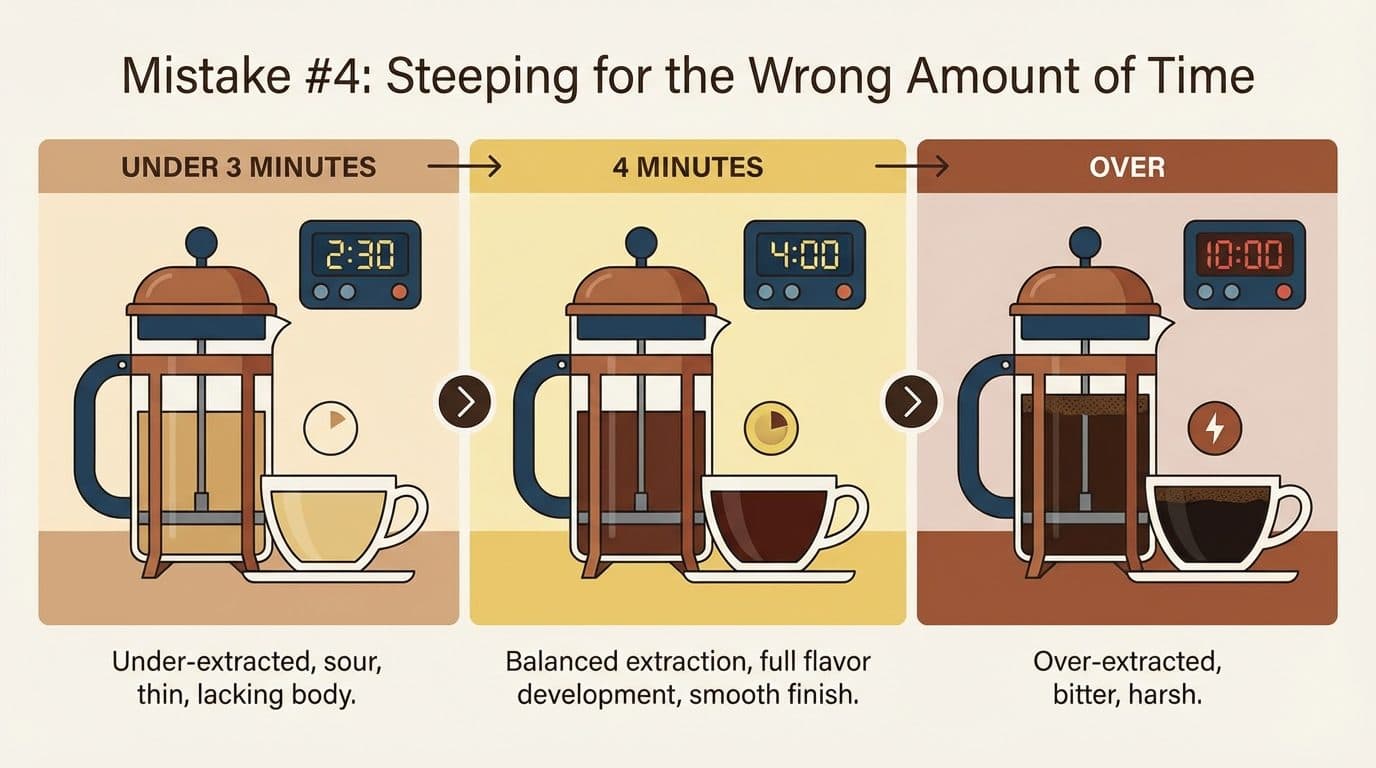
The ideal French press steep time is 4 minutes. Here’s what happens at different intervals:
- Under 3 minutes: Under-extracted, sour, thin, lacking body
- 4 minutes: Balanced extraction, full flavor development, smooth finish
- Over 5 minutes: Over-extracted, increasingly bitter, astringent aftertaste
How to Fix It
Use a timer. Your phone works perfectly. Start it the moment you finish pouring water over the grounds. At the 4-minute mark, press the plunger slowly and pour immediately.
Here’s something many people miss: even after pressing, extraction continues as long as coffee sits with the grounds. If you’re not going to drink all the coffee right away, pour it into a thermal carafe or separate container. Leaving brewed coffee in the French press is a guaranteed path to bitterness.
Barista Tip: If you prefer stronger coffee, don’t increase steep time—increase your coffee dose instead. More coffee at 4 minutes beats the same amount at 6 minutes every time.
Mistake #5: Neglecting the Bloom
This French press mistake flies under the radar because many people don’t even know blooming is a thing. When you pour hot water over freshly roasted coffee, it releases carbon dioxide—that’s the bloom. If you skip this step, those gases can interfere with extraction and leave your coffee tasting flat.
Blooming is especially important if you’re using coffee roasted within the last two weeks. The fresher the beans, the more CO2 they contain, and the more crucial this step becomes.
How to Fix It
After adding your coffee grounds, pour just enough hot water to saturate them—about twice the weight of the coffee. So if you’re using 30 grams of coffee, pour 60 grams of water. Let it sit for 30 seconds. You’ll see the grounds puff up and bubble slightly.
After the bloom, pour the remaining water in a slow, circular motion to ensure even saturation. Then start your 4-minute timer. This simple addition takes half a minute but makes a noticeable difference in flavor clarity and sweetness.
In my experience, people who start blooming their French press coffee never go back. It’s one of those small tweaks that separates okay coffee from genuinely excellent coffee.
Bonus Tips for Better French Press Coffee
Beyond these five core mistakes, here are a few extra practices that elevate your French press game:
- Preheat your French press: Rinse it with hot water before brewing to maintain stable temperature throughout extraction.
- Use filtered water: Tap water with heavy chlorine or mineral content affects taste more than you’d expect.
- Clean your French press thoroughly: Coffee oils build up and turn rancid over time, imparting stale flavors to fresh brews.
- Press slowly and steadily: Rushing the plunge stirs up sediment and can force fine particles through the filter.
Key Takeaway: Life is too short for bad coffee. These adjustments take seconds to implement but transform your daily cup from mediocre to memorable.
Frequently Asked Questions
Why does my French press coffee taste bitter?
Bitterness usually stems from over-extraction. The most common causes are water that’s too hot (boiling), steeping too long (over 4 minutes), or using too fine a grind. Try reducing your steep time first, then check your water temperature and grind size.
Can I use regular pre-ground coffee in a French press?
You can, but it’s not ideal. Most pre-ground coffee is designed for drip machines and ground too fine for French press. This leads to over-extraction and sludgy coffee. If you must use pre-ground, look for bags specifically labeled for French press or coarse grind.
How do I prevent sediment in my French press coffee?
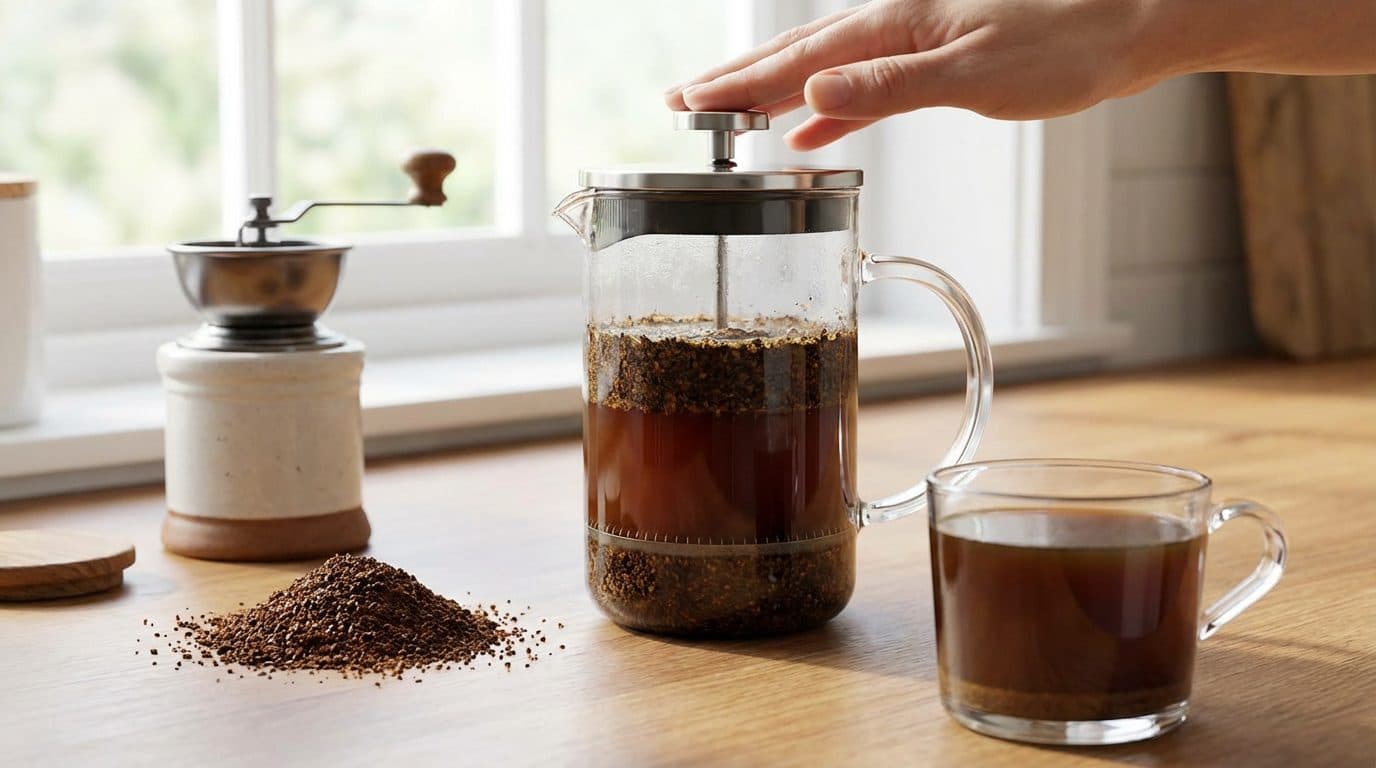
Some sediment is normal and even desirable—it contributes to the French press’s signature body. However, excessive sediment means your grind is too fine. Switch to a coarser grind, and press the plunger slowly to avoid disturbing settled particles.
Should I stir my French press coffee before pressing?
A gentle stir after 1 minute of steeping can help ensure even extraction, especially if grounds are floating on top. Use a wooden or plastic spoon rather than metal to avoid cracking the glass carafe. Don’t stir aggressively—just a few gentle strokes.
How long can I leave coffee in the French press after brewing?
Pour your coffee immediately after pressing. Even after plunging, the grounds remain in contact with the liquid, continuing extraction. Leaving it for even 10 extra minutes results in noticeably more bitter coffee.
Summary and Next Steps
French press coffee should be rich, smooth, and full of complex flavors—not bitter, muddy, or disappointing. By addressing these five common French press mistakes, you’ll transform your morning brew almost immediately. Remember: coarse grind, proper water temperature (195-205°F), accurate ratios, 4-minute steep time, and don’t skip the bloom.
Start with the mistake that resonates most with your current brewing habits. Maybe you’ve been using pre-ground coffee, or perhaps you never timed your steep. Fix one thing at a time, and you’ll quickly notice the improvement. By following these steps, you’ll be brewing French press coffee that rivals your favorite café—right in your own kitchen.


Comments