


Table of Contents
- Quick Verdict: Kalita Wave 185
- Kalita Wave 185 vs V60: Key Differences at a Glance
- What Makes the Kalita Wave 185 Easier to Use?
- The Flat Bottom Advantage
- The Wave Filter Design
- Kalita Wave 185: Pros and Cons
- Pros
- Cons
- Hario V60: Pros and Cons
- Pros
- Cons
- Who Is the Kalita Wave 185 For?
- Who Is This For?
- Who Is This NOT For?
- Brewing with the Kalita Wave 185: What to Expect
- What You'll Need
- Basic Brewing Steps
- Common Myths About the Kalita Wave
- Frequently Asked Questions
- Can I use other filters with the Kalita Wave 185?
- What's the difference between the Kalita Wave 155 and 185?
- Why is my Kalita Wave draining too slowly?
- Is the Kalita Wave 185 good for light roasts?
- How long should a Kalita Wave brew take?
- Final Verdict and Recommendations
If you’ve ever watched a barista effortlessly pour water over a V60 and thought, “That looks intimidating,” you’re not alone. The Hario V60 has earned a reputation as a demanding dripper that rewards precision but punishes sloppy technique. Enter the Kalita Wave 185—a flat-bottom pour-over that promises easier, more consistent brews without sacrificing quality. But is it really that much more forgiving? And does “easier” mean “better” for your morning cup?
In this Kalita Wave 185 review, I’ll break down exactly how this dripper compares to the V60, whether it lives up to its beginner-friendly reputation, and help you decide which one deserves a spot on your coffee shelf. Life is too short for bad coffee—and for brewing gear that frustrates you before your first sip.
Quick Verdict: Kalita Wave 185
After brewing hundreds of cups with both drippers, I can confidently say: yes, the Kalita Wave 185 is genuinely easier than the V60. Its flat-bottom design and three-hole drainage system create a more forgiving brewing experience that doesn’t punish you for imperfect pours. If you’re new to pour-over or simply want consistent results without obsessing over technique, the Kalita Wave 185 is the smarter choice.
That said, the V60 remains the better option for experienced brewers who love experimenting and chasing that “perfect” cup. It’s not about one being objectively superior—it’s about matching the dripper to your goals and skill level.
Kalita Wave 185 vs V60: Key Differences at a Glance
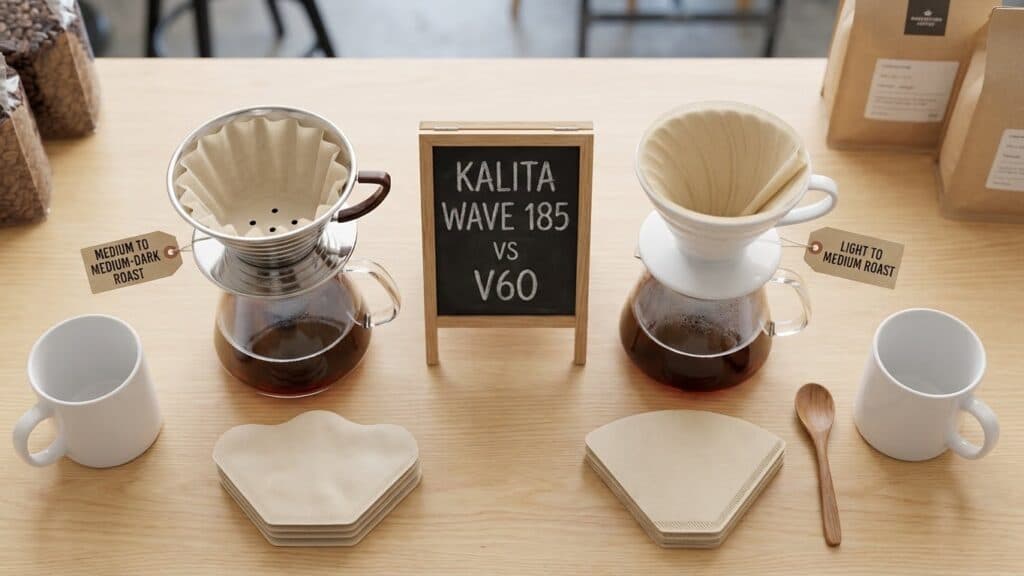
| Feature | Kalita Wave 185 | Hario V60 |
|---|---|---|
| Bottom Shape | Flat | Conical |
| Drainage Holes | Three small holes | One large hole |
| Flow Control | Dripper-controlled | User-controlled |
| Forgiveness Level | High | Low |
| Best For | Consistency, beginners | Experimentation, precision |
| Filter Style | Patented wave filters | Cone-shaped filters |
| Ideal Roast Level | Medium to medium-dark | Light to medium |
What Makes the Kalita Wave 185 Easier to Use?
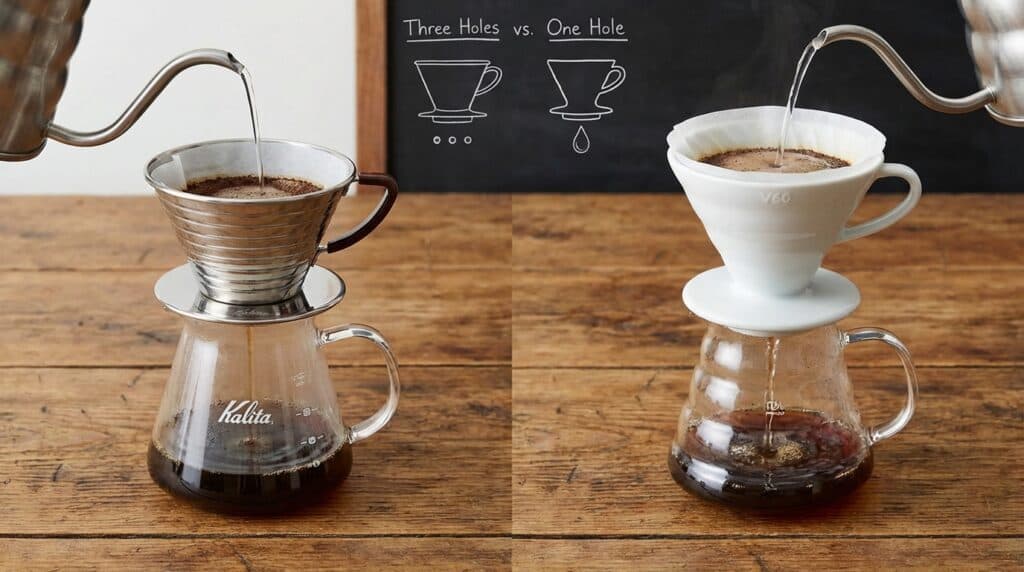
The secret to the Kalita Wave’s forgiving nature lies in its design. Unlike the V60’s single large hole, the Wave features three small drainage holes at the bottom. This means the dripper itself controls the flow rate—not your pouring technique. Even if your pour is a bit uneven or your timing is off, those three holes regulate extraction and prevent the dreaded channeling that can ruin a V60 brew.
The Flat Bottom Advantage
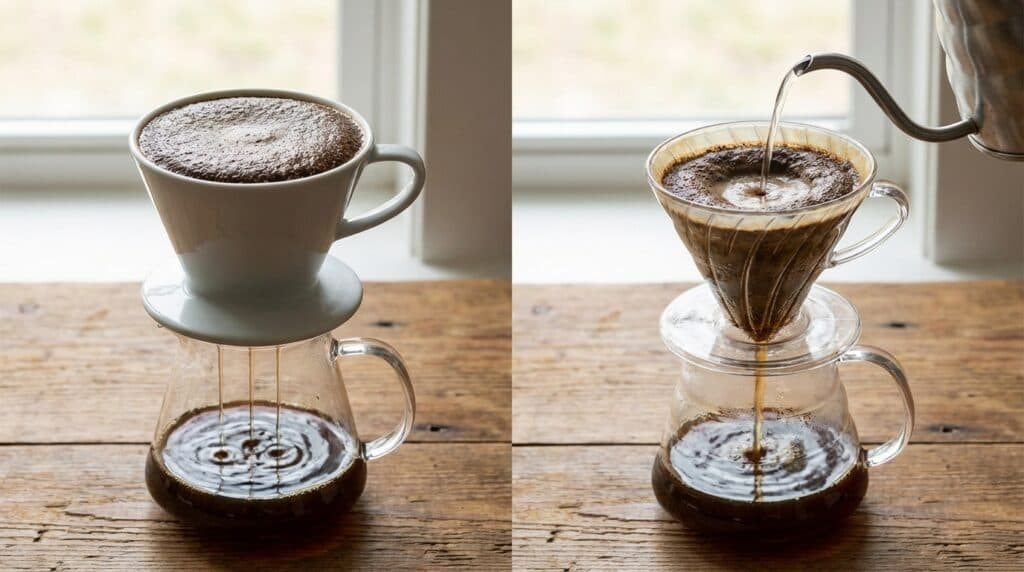
The flat-bottom design creates an even coffee bed throughout the brewing process. In my experience, this leads to more uniform extraction because water doesn’t rush through a single point like it does in a conical dripper. The coffee grounds stay relatively level, and each particle gets similar contact time with water.
Here’s a real-world scenario: imagine you’re brewing your morning coffee while half-asleep. With a V60, a wobbly pour can create channels where water bypasses most of the grounds, resulting in a weak, under-extracted cup. With the Kalita Wave 185, that same imperfect pour still produces a balanced, drinkable coffee. The margin for error is simply wider.
The Wave Filter Design
Kalita’s patented 20-wave filters aren’t just for aesthetics. Those crimped edges keep the filter away from the dripper walls, creating air pockets that promote even airflow and drainage. This design also means the filter doesn’t stick to the sides, which can cause uneven extraction in other drippers.
Barista Tip: Always rinse your Kalita Wave filters thoroughly before brewing. The wave filters are thicker than V60 filters and can impart a papery taste if not properly rinsed. Use plenty of hot water and discard it completely before adding your grounds.
Kalita Wave 185: Pros and Cons
After extensive testing, here’s my honest assessment of what the Kalita Wave 185 does well—and where it falls short.
Pros

- Forgiving technique requirements – Your pour doesn’t need to be perfect to get great results
- Consistent extraction – The flat bottom and three-hole design deliver reliable cups every time
- Excellent for medium roasts – Brings out sweetness and body beautifully
- Lower learning curve – You can make good coffee from day one
- Available in multiple materials – Choose from stainless steel, ceramic, or glass versions
- Great for batch consistency – If you brew the same coffee daily, you’ll get predictable results
Cons
- Less control over extraction – Experienced brewers may feel limited
- Proprietary filters required – Wave filters cost more and are harder to find than V60 filters
- Potential clogging issues – The stainless steel version can experience slower drainage with fine grinds
- Less “transparent” brews – Subtle flavor notes may be muted compared to V60
- Slower brew times – The restricted flow means longer total brew time
Hario V60: Pros and Cons
For a fair comparison, let’s look at what the V60 brings to the table.
Pros
- Maximum control – Your technique directly influences the final cup
- Transparent, clean brews – Highlights delicate flavor notes in light roasts
- Widely available filters – V60 filters are cheap and sold almost everywhere
- Versatile brewing – Accommodates many different recipes and techniques
- Faster brew times – The large hole allows quicker drainage
Cons
- Steep learning curve – Requires practice to master
- Punishes poor technique – Inconsistent pours lead to inconsistent cups
- Channeling risk – Water can bypass grounds if you’re not careful
- Less forgiving with medium-dark roasts – Can over-extract easily
Who Is the Kalita Wave 185 For?
The Kalita Wave 185 is ideal for a specific type of coffee lover. Here’s who will get the most value from this dripper.
Who Is This For?
- Pour-over beginners who want great coffee without months of practice
- Busy morning brewers who can’t focus on perfect technique before caffeine
- Medium roast enthusiasts who appreciate body and sweetness over bright acidity
- Consistency seekers who want the same great cup every single day
- Home baristas upgrading from drip machines who want better coffee with minimal fuss
Who Is This NOT For?

- Technique obsessives who enjoy the challenge of perfecting their pour
- Light roast lovers who want maximum clarity and brightness
- Budget-conscious brewers who don’t want to pay premium filter prices
- Experimenters who love trying wildly different recipes and methods
- Control freaks who want to manipulate every variable in their brew
Brewing with the Kalita Wave 185: What to Expect
Let me walk you through what a typical brew looks like with the Kalita Wave 185, so you know exactly what you’re getting into.
What You’ll Need
- Kalita Wave 185 dripper
- Kalita Wave 185 filters
- 25-30g of medium-ground coffee (about the texture of coarse sand)
- 400-450g of water heated to 200-205°F (93-96°C)
- Gooseneck kettle (helpful but not mandatory)
- Scale and timer
- Your favorite mug or carafe
Basic Brewing Steps
- Place the wave filter in the dripper and rinse thoroughly with hot water
- Add your ground coffee and gently shake to level the bed
- Start your timer and pour 50-60g of water for the bloom, covering all grounds
- Wait 30-45 seconds for the coffee to degas
- Pour in slow, steady circles until you reach your target water weight
- Let it drain completely—total brew time should be around 3:00-4:00 minutes
Taste Profile: Expect a balanced, full-bodied cup with pronounced sweetness and moderate acidity. The Kalita Wave 185 tends to produce rounder, more approachable flavors compared to the V60’s brighter, more articulated notes.
Barista Tip: If your brew is taking longer than 4 minutes, try a coarser grind. The Kalita Wave’s restricted flow means you generally need to grind slightly coarser than you would for a V60.
Common Myths About the Kalita Wave

Let’s bust a few misconceptions I’ve encountered about this dripper.
Myth: “The Kalita Wave makes inferior coffee to the V60.” This simply isn’t true. Different? Yes. Inferior? No. The Wave produces a different flavor profile—more body, more sweetness, less brightness. Neither is objectively better; it’s about preference.
Myth: “You don’t need a gooseneck kettle for the Kalita Wave.” While you can technically brew without one, a gooseneck kettle still helps you pour more evenly and avoid disturbing the coffee bed. It’s less critical than with a V60, but still beneficial.
Myth: “The stainless steel version is the best choice.” Actually, many experienced users report that the stainless steel Kalita Wave 185 can have drainage issues due to how the filter sits against the metal. The ceramic and glass versions often perform more consistently.
Frequently Asked Questions
Can I use other filters with the Kalita Wave 185?
The Kalita Wave is designed specifically for its proprietary wave filters. While some third-party alternatives exist, they may not fit properly or perform as well. The wave filter design is integral to how the dripper functions, so I recommend sticking with genuine Kalita filters for best results.
What’s the difference between the Kalita Wave 155 and 185?
The numbers refer to the filter size. The 155 is designed for single cups (1-2 servings, using about 15-25g of coffee), while the 185 handles larger batches (2-4 servings, using 25-45g of coffee). If you typically brew for yourself, the 155 works great. For couples or larger servings, go with the 185.
Why is my Kalita Wave draining too slowly?
Slow drainage usually comes from grinding too fine or using the stainless steel version, which can create suction issues. Try a coarser grind first. If problems persist with a stainless steel dripper, consider switching to ceramic or glass, or try lifting the dripper slightly during brewing to break the vacuum seal.
Is the Kalita Wave 185 good for light roasts?
It can work, but the V60 generally handles light roasts better. The Kalita Wave’s slower extraction and fuller body can mute some of the delicate, bright notes that light roast enthusiasts seek. For light roasts, you may need to grind finer and use hotter water to compensate.
How long should a Kalita Wave brew take?
For the 185 with a standard recipe (around 30g coffee to 450g water), aim for a total brew time of 3:00-4:00 minutes. If you’re consistently outside this range, adjust your grind size accordingly.
Final Verdict and Recommendations
So, is the Kalita Wave 185 easier than the V60? In my experience, absolutely. The flat-bottom design, three-hole drainage, and wave filter system create a brewing experience that’s genuinely more forgiving. You don’t need perfect technique to make excellent coffee with this dripper.
If you’re just starting your pour-over journey, the Kalita Wave 185 will help you build confidence and enjoy great coffee while you develop your skills. If you’re an experienced brewer looking for a reliable daily driver that doesn’t demand your full attention at 6 AM, it’s equally valuable.
The V60 remains the better choice if you love the ritual of perfecting your pour, prefer bright and complex light roasts, or enjoy experimenting with different techniques. There’s no wrong answer here—just different tools for different goals.
My recommendation? If consistency and ease matter more to you than maximum control, grab a Kalita Wave 185 and start brewing. You might be surprised how quickly it becomes your go-to morning ritual. And remember: the best coffee is the one you actually enjoy making.

Comments