



Table of Contents
- Understanding Coffee and Food Pairing Basics
- The Role of Milk and Sweeteners
- Best Coffee Styles for Popular Breakfast Foods
- Eggs and Savory Proteins
- Pastries and Baked Goods
- Pancakes, Waffles, and French Toast
- Fresh Fruit and Yogurt
- Brewing Methods That Enhance Breakfast Pairings
- French Press for Rich Breakfasts
- Pour-Over for Delicate Dishes
- Espresso-Based Drinks for Versatility
- Practical Tips for Better Morning Pairings
- Plan Around the Food First
- Keep Multiple Roast Levels on Hand
- Taste in Sequence
- Keep It Flexible
- Frequently Asked Questions
- Does the coffee origin matter for breakfast pairing?
- Should I add milk to my coffee when pairing with food?
- What coffee works best with spicy breakfast foods?
- Can cold brew pair well with breakfast?
- How strong should my coffee be for breakfast pairing?
- Bottom Line
The easiest way to make coffee that pairs well with breakfast is to match intensity. Rich breakfasts such as bacon, eggs, sausage, or pancakes need stronger coffee with more body. Lighter breakfasts such as fruit, yogurt, toast, and pastries work better with cleaner, brighter brews. If the meal is sweet, use coffee for contrast. If the meal is delicate, keep the coffee gentle.
Food pairing can sound fussy, but breakfast makes it practical. You already know whether the plate is buttery, sweet, salty, spicy, or fresh. Your coffee only needs to support that profile instead of fighting it.
Understanding Coffee and Food Pairing Basics
Coffee pairing works through balance. You can either complement similar flavors or create useful contrast. A nutty medium roast can echo an almond croissant. A darker, bitter cup can cut through maple syrup and butter. A light, citrusy pour-over can feel sharp beside sausage but clean beside fruit.
Pay attention to four variables:
- Roast level: Light roasts are brighter; dark roasts are heavier, toastier, and more bitter.
- Brewing strength: Espresso and French press stand up to rich food better than a mild drip cup.
- Acidity: Brighter coffees cut fat but can clash with citrus or tart yogurt.
- Body: Full-bodied coffee suits hearty plates; lighter body suits pastries and fruit.
A delicate Ethiopian pour-over may disappear next to greasy hash browns. The same coffee can taste excellent with berries and plain yogurt because the fruit notes have space to show up.
The Role of Milk and Sweeteners
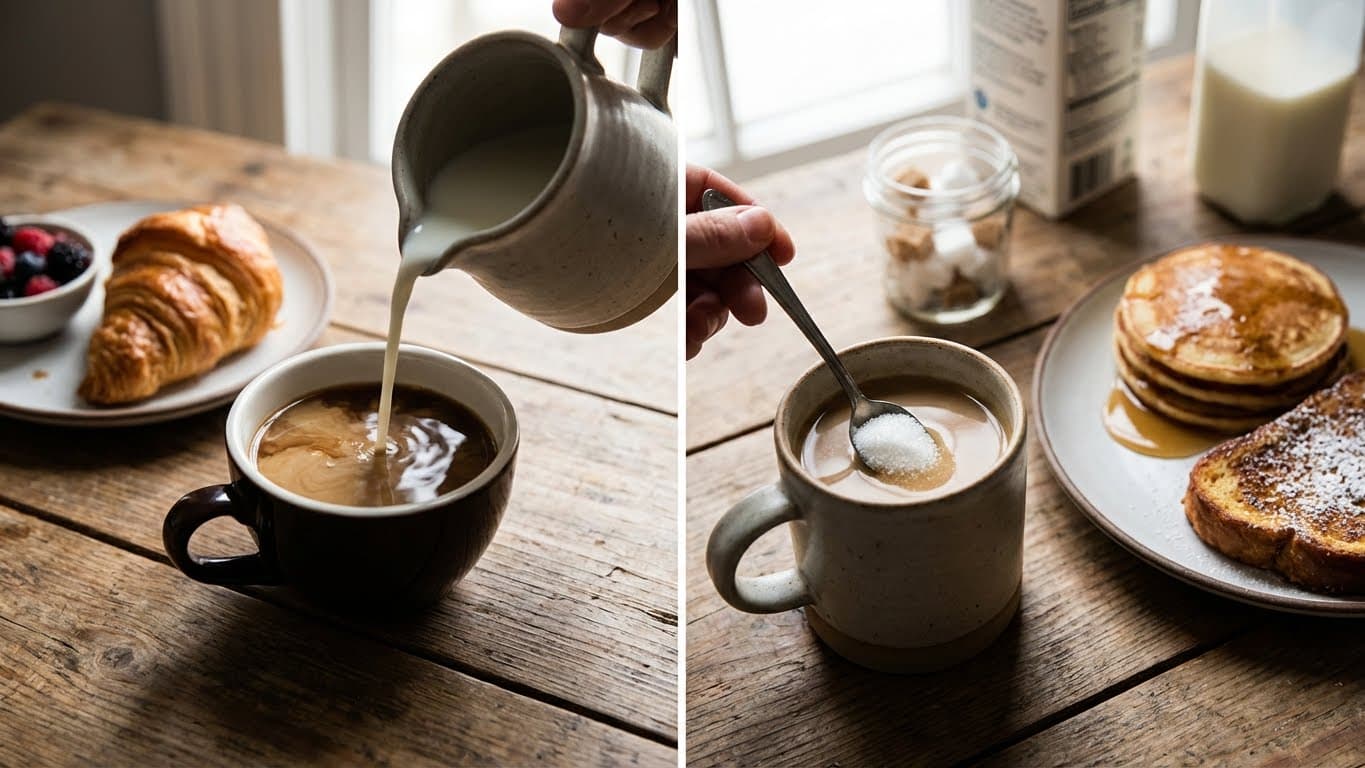
Milk makes coffee easier to pair because it softens bitterness and adds texture. A cappuccino can sit comfortably beside eggs, toast, pastries, or pancakes because the milk bridges gaps between bitter, sweet, and fatty flavors.
Sugar can help with very bitter coffee, but be careful when breakfast is already sweet. Pancakes with syrup plus a sweet latte can become one-note quickly. In that case, a small Americano or darker black coffee may be more balanced.
Best Coffee Styles for Popular Breakfast Foods
These pairings are starting points. Your beans, water, roast level, and personal taste still matter. Use the suggestions to choose a direction, then adjust strength and milk from there.
Eggs and Savory Proteins
Scrambled eggs, omelets, bacon, sausage, and breakfast sandwiches bring salt, fat, and protein. They need a coffee that does not vanish after the first bite.
- Best match: Medium-dark roast brewed by French press, strong drip, or moka pot.
- Why it works: Bitterness and body cut through fat while matching the meal’s weight.
- Brewing tip: Try a 1:15 coffee-to-water ratio for a fuller cup.
For bacon and eggs, a medium-dark French press with chocolate or toasted nut notes is a safe bet. The texture feels substantial, and the slight bitterness clears the palate between bites.
Pastries and Baked Goods
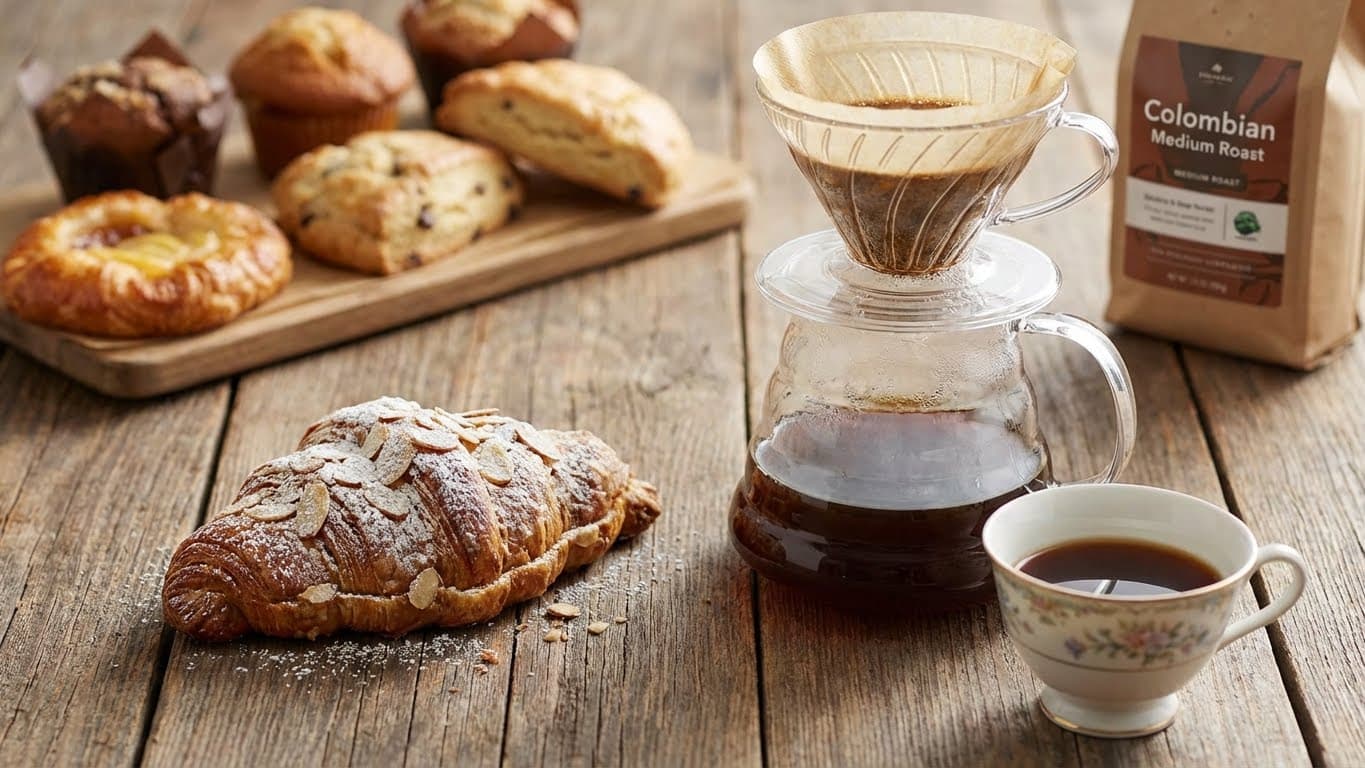
Croissants, muffins, scones, and Danish pastries are buttery and sometimes lightly sweet. They do best with coffee that has balance rather than brute force.
- Best match: Medium roast brewed as pour-over or clean drip coffee.
- Why it works: Moderate acidity and sweetness complement butter without overpowering it.
- Brewing tip: Avoid over-extraction; bitterness can make pastries taste flat.
An almond croissant with a Colombian or Brazilian medium roast is a classic match. Nutty coffee notes reinforce the pastry, while a clean finish keeps the butter from feeling heavy.
Pancakes, Waffles, and French Toast
Syrup-heavy breakfasts need contrast. If the coffee is also sweet and milky, the whole meal can feel heavy after a few bites.
- Best match: Dark roast drip, Americano, or straight espresso.
- Why it works: Bitterness balances maple syrup, butter, and custard-like bread.
- Brewing tip: If espresso feels too intense, lengthen it with hot water instead of adding syrup.
A dark roast can be useful here even if you normally prefer medium roast. You are not pairing it with a delicate dish; you are using it as structure against sweetness.
Fresh Fruit and Yogurt
Fruit bowls, yogurt, granola, and lighter breakfast plates can clash with heavy, smoky coffee. They work better with coffee that feels clean and bright.
- Best match: Light to medium-light single-origin coffee, especially from East Africa or Latin America.
- Why it works: Fruit, floral, citrus, or honey notes can align with berries, yogurt, and granola.
- Brewing tip: Use pour-over or Chemex for clarity.
If your breakfast includes tart yogurt, avoid pushing coffee acidity too high. A slightly sweeter washed Colombian or honey-processed Central American coffee may be easier than a very bright Kenyan coffee.
Brewing Methods That Enhance Breakfast Pairings
Brewing method changes body, clarity, and perceived strength. That is why the same bean can pair differently as French press, drip, espresso, or cold brew. The Specialty Coffee Association uses controlled variables such as dose, grind, and water temperature in its standards for a reason: repeatability makes flavor easier to manage.
French Press for Rich Breakfasts
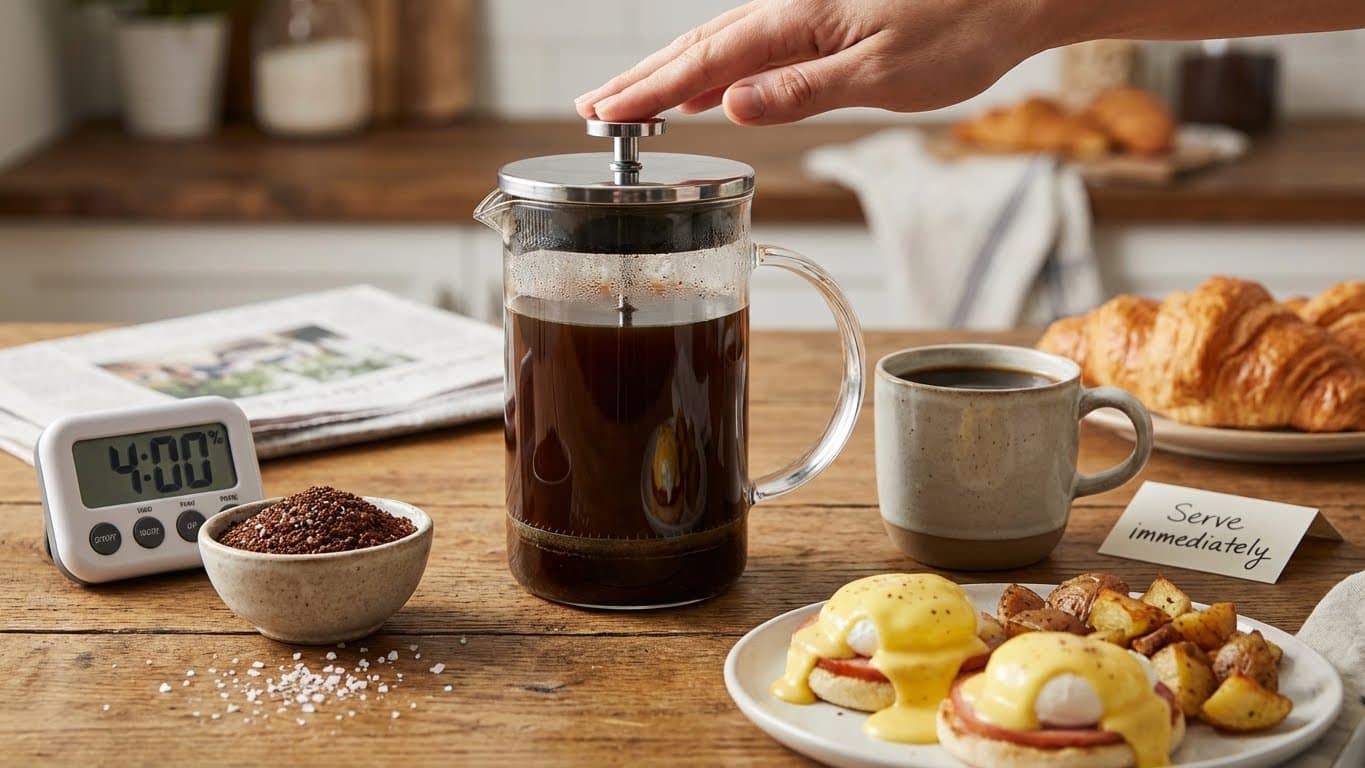
French press keeps more coffee oils and fine particles in the cup, giving it a heavier body. That makes it a good companion for eggs Benedict, breakfast burritos, sausage, or potatoes.
For a reliable breakfast French press:
- Use coarse coffee, about the texture of sea salt.
- Steep for 4 minutes.
- Pour into cups or a carafe after plunging so it does not keep extracting.
If the cup tastes harsh, grind coarser or shorten contact time. If it tastes thin, use a little more coffee.
Pour-Over for Delicate Dishes
Pour-over produces a cleaner cup, especially with paper filters. It is better for toast, fruit, granola, yogurt, lighter pastries, and breakfast salads.
Basic pour-over targets:
- Use medium-fine grounds.
- Use water around 195-205°F, or 90-96°C.
- Pour slowly enough to wet the bed evenly.
- Aim for a total brew time around 3 to 4 minutes.
The clean texture is the point. It lets subtle breakfast flavors stay visible instead of covering everything with roast bitterness.
Espresso-Based Drinks for Versatility
Espresso is concentrated, so it gives you options. Straight espresso pairs well with sweet foods because it cuts through sugar. Milk drinks pair broadly because steamed milk adds sweetness and texture.
A cortado is especially useful at breakfast: enough espresso to stay present, enough milk to soften the edges. Try it with toast, a savory pastry, or a small plate of eggs.
Practical Tips for Better Morning Pairings
You do not need a tasting notebook to get better pairings. A few small habits are enough.
Plan Around the Food First
Pick the coffee after you know breakfast. Pancakes? Go darker or more bitter. Fruit and yogurt? Go cleaner and lighter. Bacon and eggs? Choose body and strength.
Keep Multiple Roast Levels on Hand
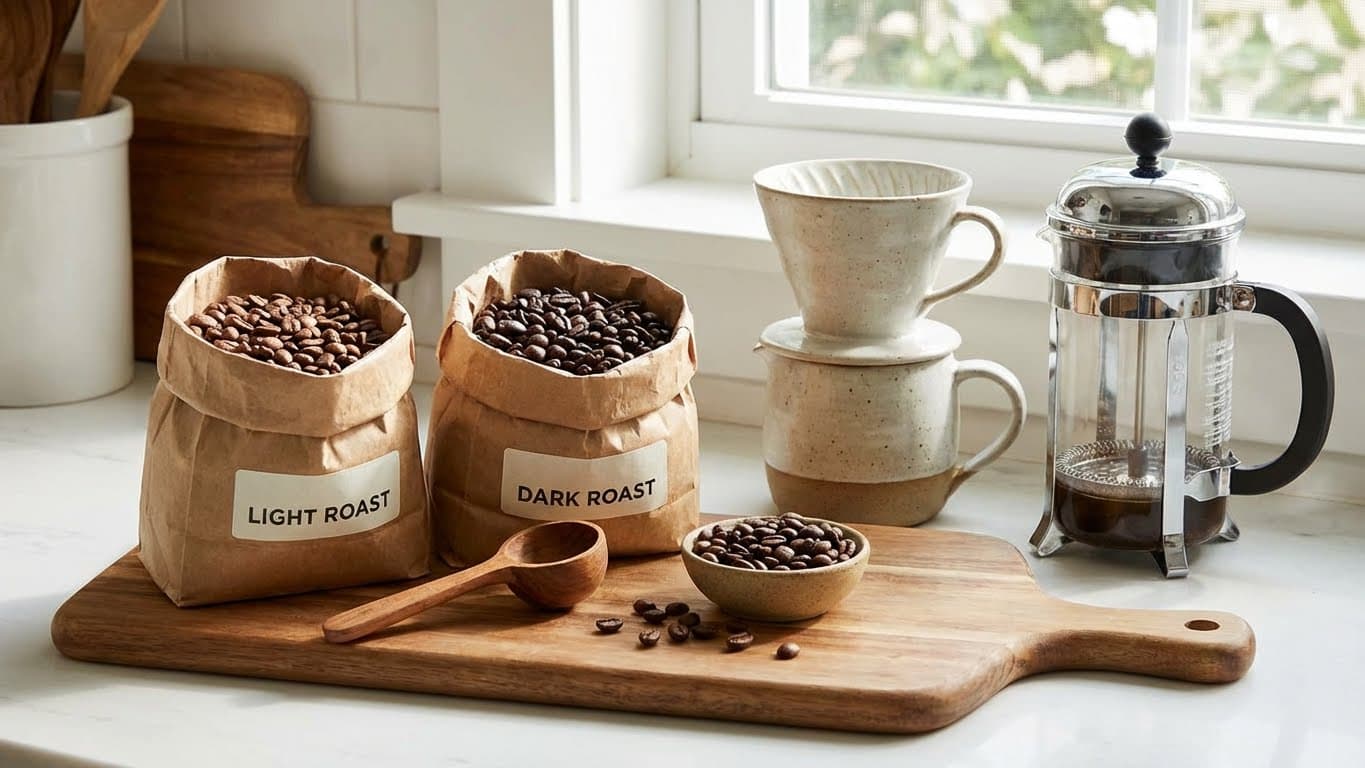
You do not need five bags open at once. One medium roast and one darker roast cover most breakfasts. If you often eat fruit or yogurt, add a lighter roast when you can finish it while fresh.
Taste in Sequence
Take a sip, then a bite, then another sip. Good pairings either reset your palate or make the next bite taste better. Poor pairings exaggerate bitterness, sourness, or sweetness.
Keep It Flexible
Pairing rules are useful until they get in the way. If you love light roast with eggs, drink it. The goal is a better breakfast, not a performance.
Frequently Asked Questions
Does the coffee origin matter for breakfast pairing?
Yes. Origin often hints at flavor style, though roast and processing matter too. East African coffees can taste fruity or floral, Latin American coffees often bring chocolate, nuts, or citrus, and Indonesian coffees can feel earthy and full-bodied. Match those qualities to the plate.
Should I add milk to my coffee when pairing with food?
Add milk when the coffee feels too sharp, bitter, or intense for the food. Milk makes pairings more forgiving, especially with pastries, eggs, and spicy breakfast dishes. Black coffee gives more contrast but demands a better match.
What coffee works best with spicy breakfast foods?
Breakfast tacos, shakshuka, and huevos rancheros usually pair well with medium roasts that have some sweetness. Avoid very acidic coffee if the dish is already tomato-heavy or spicy. Milk can help cool the palate.
Can cold brew pair well with breakfast?
Yes. Cold brew works well with pastries, granola, yogurt, and lighter savory plates because it is smooth and low in perceived acidity. With heavy fried breakfasts, make it stronger or use less dilution so it does not disappear.
How strong should my coffee be for breakfast pairing?
Match the dish. Light toast and fruit need a gentler cup. Eggs, meat, potatoes, and syrup can handle stronger coffee. If the first sip disappears after one bite, brew stronger next time.
Bottom Line
Better breakfast coffee is mostly about matching weight and flavor. Rich food needs body. Sweet food needs contrast. Delicate food needs clarity. Milk can smooth out difficult pairings, and a darker cup can rescue syrup-heavy breakfasts from feeling cloying.
Start tomorrow with one small change: choose the brew method and roast after choosing breakfast. That simple order makes the coffee feel intentional without adding work to the morning.



Comments