


Table of Contents
- What You'll Need for Your Sugar-Free Latte
- Ingredients
- Gear
- Understanding Natural Sweetness in Sugar-Free Lattes
- The Magic of Properly Steamed Milk
- Why Coffee Quality Matters More Without Sugar
- Choosing the Best Milk for Natural Sweetness
- Step-by-Step Guide to Making Your Sugar-Free Latte
- Preparing Your Espresso
- Steaming Your Milk to Perfection
- Assembling Your Latte
- Best Sugar-Free Sweeteners for Lattes
- Natural Options
- Sugar-Free Syrups
- Flavor Hacks for Sweeter-Tasting Sugar-Free Lattes
- Frequently Asked Questions
- Will a sugar-free latte taste as good as a regular latte?
- What's the best sugar-free sweetener that doesn't have an aftertaste?
- Can I make a sugar-free latte without special equipment?
- How long does it take for taste buds to adjust to less sugar?
- Is a sugar-free latte actually healthier?
- Final Thoughts and Your Next Step
Ever taken a sip of a sugar-free coffee drink and felt like you were drinking bitter disappointment? You’re not alone. Many home baristas struggle to create a sugar-free latte that actually tastes good—one that delivers that comforting sweetness without the glucose spike or the artificial aftertaste. The good news? Making a delicious sugar-free latte at home is absolutely possible, and I’m going to show you exactly how to do it.
In this guide, you’ll learn how to make a sugar-free latte that genuinely tastes sweet using natural techniques, the right milk choices, and a few clever sweetener swaps. Whether you’re cutting sugar for health reasons, managing diabetes, or simply trying to reduce your daily intake, these methods will transform your morning coffee ritual.
What You’ll Need for Your Sugar-Free Latte
Ingredients
- 1-2 shots of espresso (or 1/2 cup strong brewed coffee)
- 8-10 oz of milk (we’ll discuss the best options below)
- Sugar-free sweetener of your choice
- Optional: sugar-free vanilla extract or other flavorings
- Optional: a pinch of cinnamon or cocoa powder
Gear
- Espresso machine, Moka pot, or AeroPress
- Milk frother (steam wand, handheld frother, or French press)
- Thermometer (optional but helpful)
- Your favorite latte mug
Barista Tip: Use filtered water for brewing your espresso. It makes a noticeable difference in taste clarity, which becomes even more important when you’re not masking flavors with sugar.
Understanding Natural Sweetness in Sugar-Free Lattes
Here’s something most people don’t realize: your latte can taste sweeter without adding any sweetener at all. The secret lies in understanding how milk proteins and brewing techniques affect perceived sweetness.
The Magic of Properly Steamed Milk
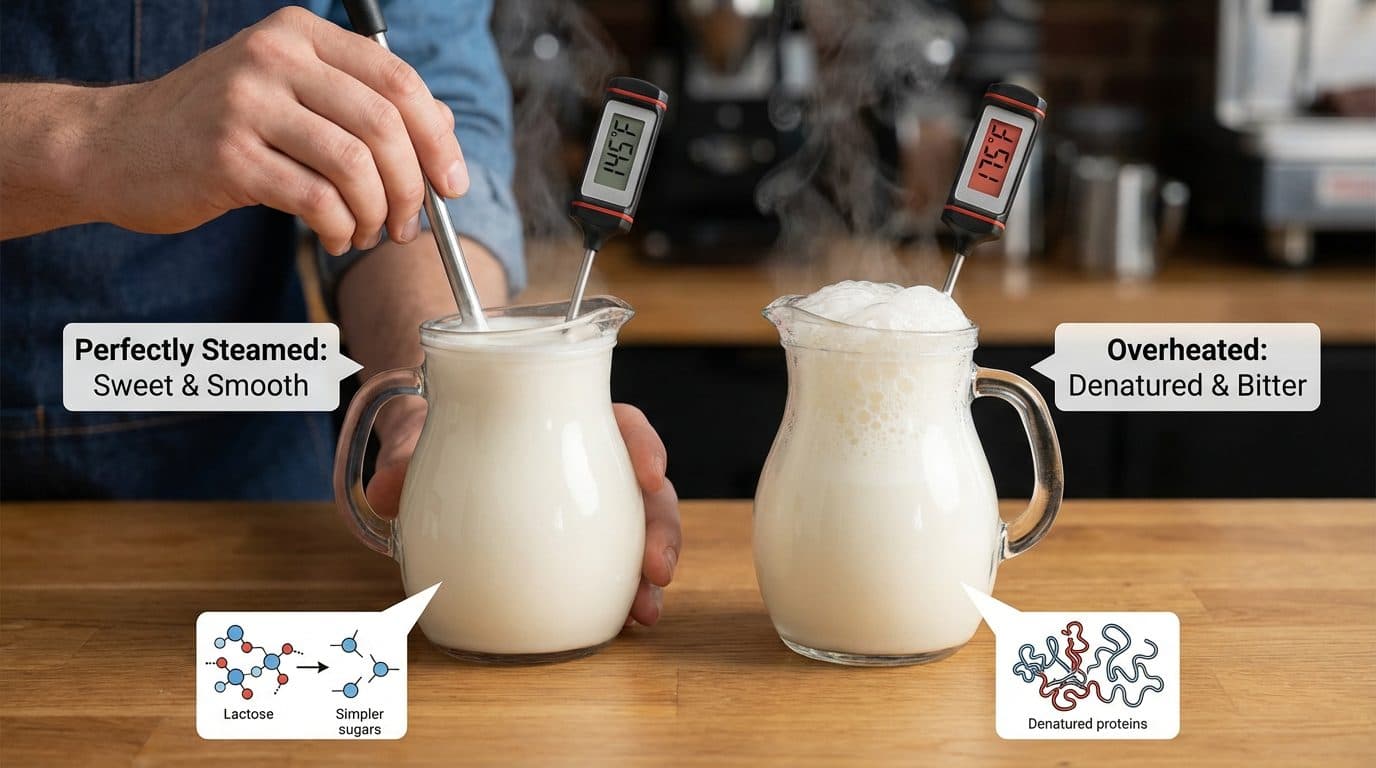
When you heat milk to the right temperature, you break down lactose into simpler sugars that taste noticeably sweeter. In my experience, the sweet spot is between 140-150°F (60-65°C). Go above 160°F, and you’ll start denaturing the proteins, resulting in a scalded taste that ruins everything.
I’ve found that taking an extra 30 seconds to steam your milk properly can eliminate the need for sweeteners entirely for some people. The difference between rushed, overheated milk and perfectly steamed milk is genuinely remarkable.
Why Coffee Quality Matters More Without Sugar
Sugar acts as a flavor mask. When you remove it, every flaw in your coffee becomes more apparent. That’s why using freshly roasted, high-quality beans is crucial for a satisfying sugar-free latte. Look for beans with natural sweetness notes like chocolate, caramel, or berry.
Key Takeaway: Medium roasts often work better for sugar-free lattes than dark roasts. They retain more of the bean’s natural sugars and have less bitterness to overcome.
Choosing the Best Milk for Natural Sweetness
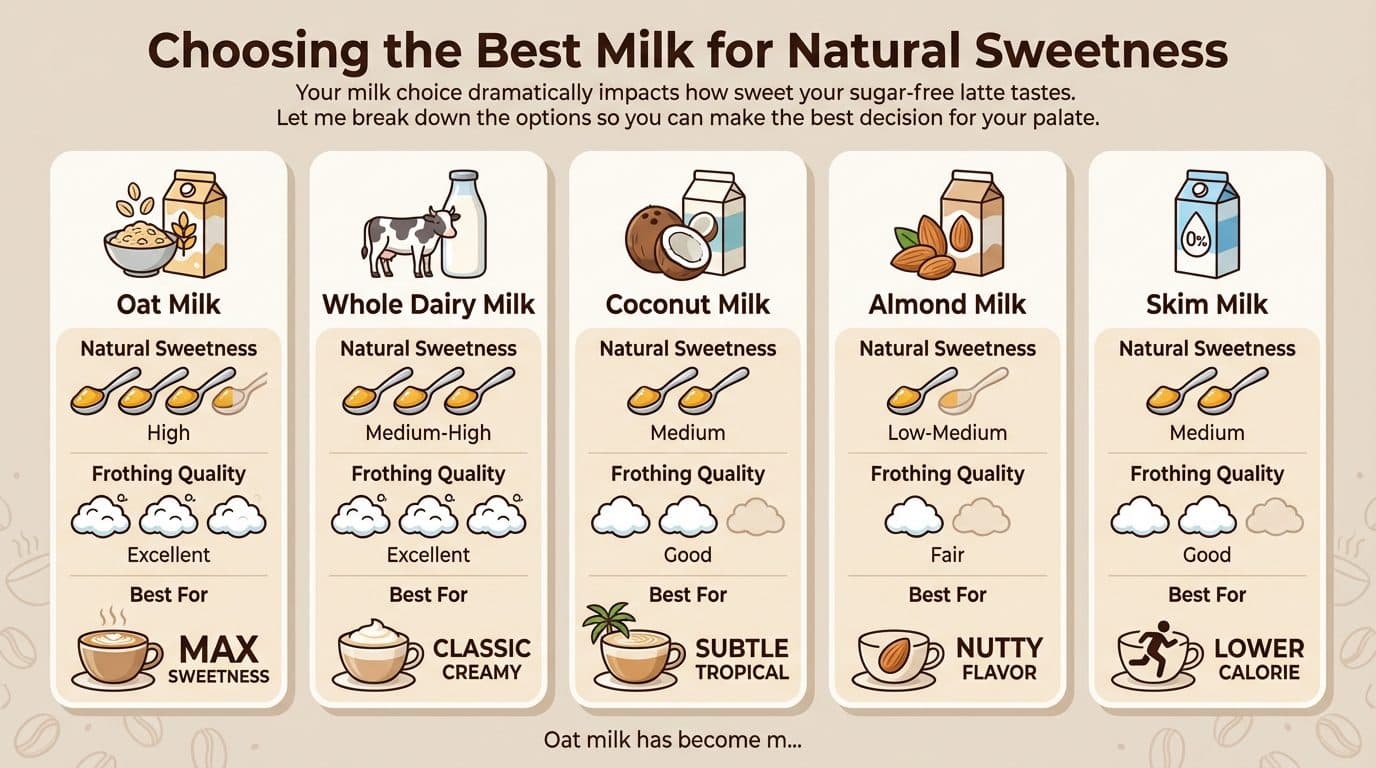
Your milk choice dramatically impacts how sweet your sugar-free latte tastes. Let me break down the options so you can make the best decision for your palate.
| Milk Type | Natural Sweetness | Frothing Quality | Best For |
|---|---|---|---|
| Oat Milk | High | Excellent | Maximum natural sweetness |
| Whole Dairy Milk | Medium-High | Excellent | Classic creamy texture |
| Coconut Milk | Medium | Good | Subtle tropical notes |
| Almond Milk | Low-Medium | Fair | Nutty flavor lovers |
| Skim Milk | Medium | Good | Lower calorie option |
Oat milk has become my go-to recommendation for sugar-free lattes. Brands like Oatly Barista Edition or Califia Farms Barista Blend contain natural sugars from the oats and create beautifully silky microfoam. Just check the label—some oat milks contain added sugars, which defeats the purpose.
If you prefer dairy, whole milk provides more natural sweetness than skim due to its higher fat content. The fat also contributes to a richer mouthfeel that makes the drink feel more indulgent without any added sugar.
Step-by-Step Guide to Making Your Sugar-Free Latte
Now let’s put everything together. Follow these steps for a sugar-free latte that actually tastes sweet and satisfying.
Preparing Your Espresso
- Grind 18-20 grams of fresh coffee beans to a fine espresso grind.
- Distribute the grounds evenly in your portafilter and tamp with consistent pressure.
- Pull your shot, aiming for 25-30 seconds extraction time for a double shot.
- Look for a honey-like flow and rich crema on top.
If your espresso tastes overly bitter or sour, adjust your grind size. Bitter means you’re over-extracting (grind coarser), while sour indicates under-extraction (grind finer). Getting this right is essential for a naturally sweet-tasting sugar-free latte.
Steaming Your Milk to Perfection
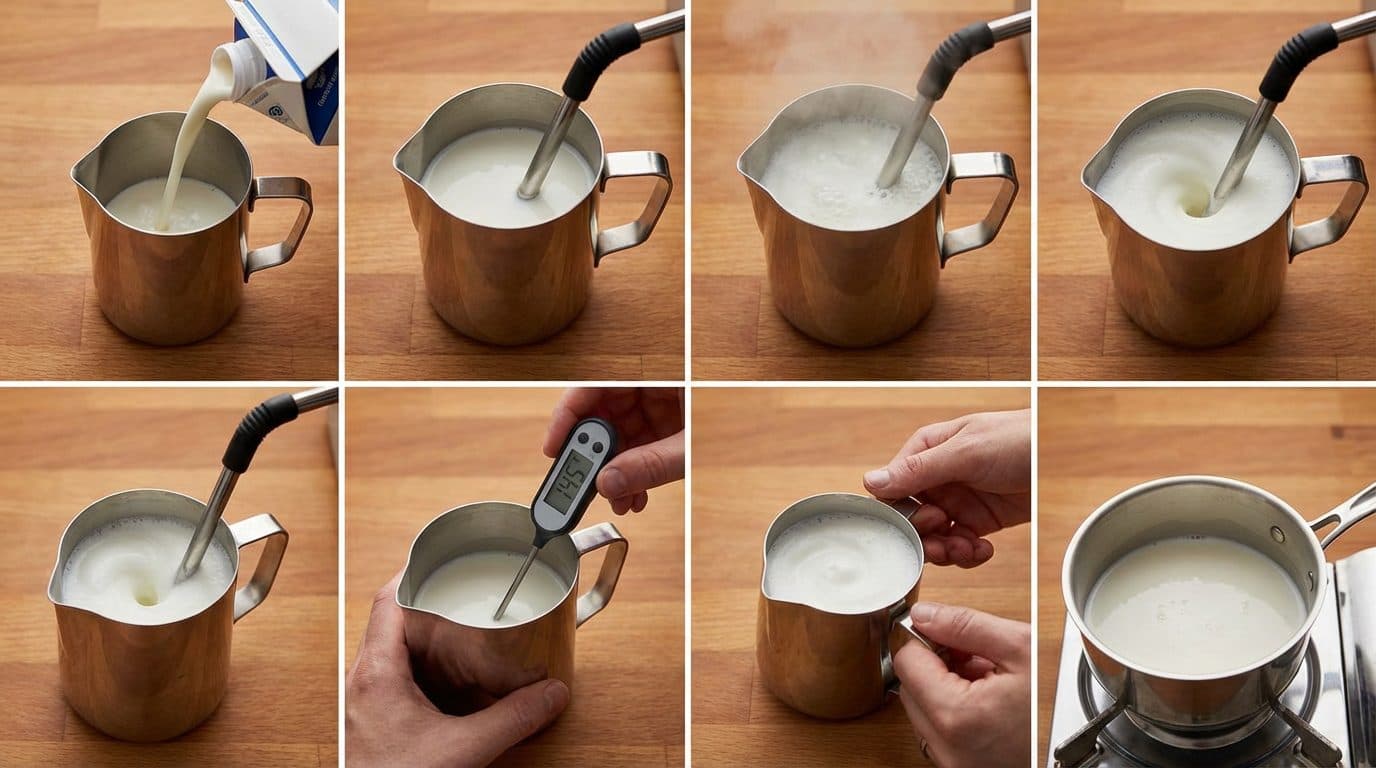
- Pour cold milk into your steaming pitcher—fill it about one-third full.
- Submerge the steam wand tip just below the surface.
- Turn on the steam and create a gentle “paper tearing” sound for 3-5 seconds to incorporate air.
- Lower the wand deeper and create a whirlpool motion to heat and texturize.
- Stop when the pitcher feels hot but not uncomfortable to touch (around 140-150°F).
- Tap the pitcher on the counter and swirl to remove large bubbles.
Barista Tip: No steam wand? Heat your milk on the stove to 150°F, then use a handheld frother or pump it vigorously in a French press. You can still achieve excellent results.
Assembling Your Latte
- Pour your espresso shots into your preheated mug.
- Add any sweetener or flavoring to the espresso and stir.
- Pour the steamed milk slowly, starting from a height and bringing the pitcher closer as you finish.
- Top with a light dusting of cinnamon if desired.
Taste Profile: When made correctly, this sugar-free latte should taste smooth, naturally sweet, and creamy with subtle coffee notes. The bitterness should be minimal, and you shouldn’t feel like something is missing.
Best Sugar-Free Sweeteners for Lattes
Sometimes you want extra sweetness, and that’s perfectly fine. Here are the sugar-free sweeteners that work best in lattes, ranked by how natural they taste.
Natural Options
- Monk fruit sweetener: My top recommendation. Zero aftertaste, doesn’t spike blood sugar, and tastes remarkably similar to sugar. Start with half the amount you’d use with regular sugar.
- Stevia: Very sweet—a little goes a long way. Look for liquid stevia drops for easier mixing. Some brands have a licorice-like aftertaste, so experiment to find one you like.
- Allulose: Tastes almost identical to sugar with 90% fewer calories. It dissolves well in hot beverages and doesn’t have the cooling effect of erythritol.
- Erythritol: Good option but can have a slight cooling sensation. Works well blended with other sweeteners.
Sugar-Free Syrups
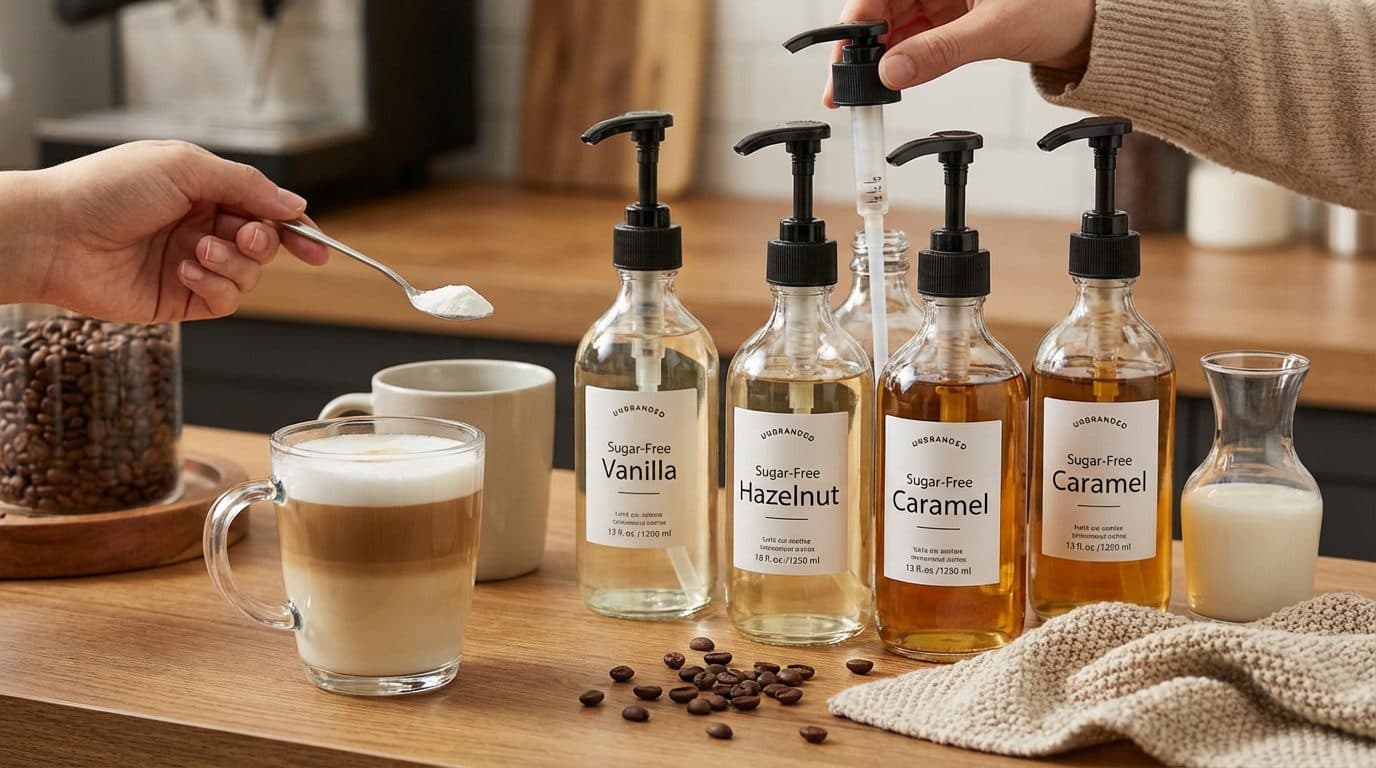
Brands like Jordan’s Skinny Syrups and Torani Sugar-Free offer excellent options for flavored sugar-free lattes. Vanilla, hazelnut, and caramel flavors can make your sugar-free latte taste like a coffee shop treat. I’d suggest starting with half a pump and adjusting to your taste—these syrups can be quite potent.
Here’s a real-life scenario: my friend Sarah switched from two tablespoons of sugar in her daily latte to one teaspoon of monk fruit sweetener. After two weeks, she reduced it to half a teaspoon. A month later, she was using just a pinch. Her taste buds adjusted, and now she prefers her lattes with less sweetness overall.
Flavor Hacks for Sweeter-Tasting Sugar-Free Lattes
Beyond sweeteners and milk choices, these tricks can enhance the perceived sweetness of your sugar-free latte without adding any sugar.
- Add a pinch of salt: This sounds counterintuitive, but a tiny pinch of salt reduces bitterness and enhances sweet flavors. Don’t overdo it—you shouldn’t taste the salt.
- Use vanilla extract: Pure vanilla extract adds depth and a perception of sweetness. Just 1/4 teaspoon makes a difference.
- Try cinnamon: This warming spice tricks your brain into perceiving sweetness. Plus, it may help stabilize blood sugar levels.
- Cocoa powder: Unsweetened cocoa adds chocolate notes that feel indulgent without adding sugar.
- Nutmeg: A light grating adds warmth and complexity that enhances the overall sweetness perception.
Did You Know? Your sense of smell accounts for up to 80% of what you perceive as taste. Adding aromatic elements like vanilla, cinnamon, or nutmeg can make your latte taste sweeter even though you haven’t added any sweetener.
Frequently Asked Questions
Will a sugar-free latte taste as good as a regular latte?
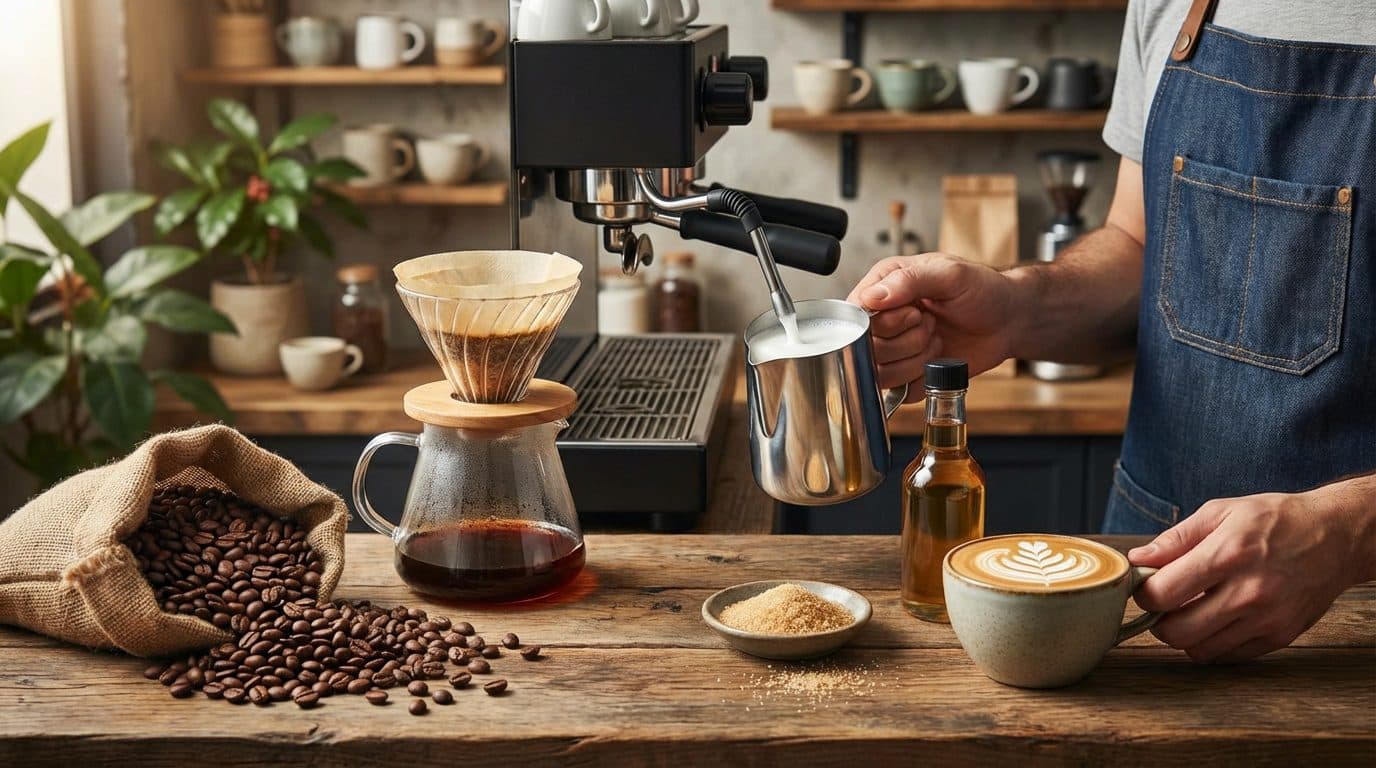
Honestly? It can taste even better once you know the right techniques. The key is using quality beans, properly steamed milk, and finding a sweetener that works for your palate. Many people find they prefer the cleaner, more complex flavors of a well-made sugar-free latte.
What’s the best sugar-free sweetener that doesn’t have an aftertaste?
Monk fruit sweetener and allulose are widely considered the most natural-tasting options with minimal to no aftertaste. Everyone’s taste buds are different, so I’d recommend buying small quantities of a few options and experimenting to find your favorite.
Can I make a sugar-free latte without special equipment?
Absolutely. You can use strong coffee from a French press or pour-over instead of espresso. For frothing, heat milk on the stove and use a handheld frother, or shake it vigorously in a sealed jar. The techniques matter more than the equipment.
How long does it take for taste buds to adjust to less sugar?
Most people notice significant changes within 2-4 weeks of reducing sugar intake. Your taste buds will become more sensitive to sweetness, and things that once tasted bland will start tasting naturally sweet. Be patient with yourself during this adjustment period.
Is a sugar-free latte actually healthier?
Reducing added sugar intake is generally associated with health benefits, including more stable energy levels and better metabolic health. However, individual health needs vary. If you have specific health concerns, it’s worth discussing your diet with a healthcare professional who knows your situation.
Final Thoughts and Your Next Step
Making a sugar-free latte at home that actually tastes sweet isn’t about deprivation—it’s about discovering new flavors and techniques that make your coffee experience even better. By choosing the right milk, mastering your steaming technique, and experimenting with natural sweetness enhancers, you can create a latte that satisfies your cravings without the sugar crash.
Start with oat milk and properly steamed temperatures tomorrow morning. Add a pinch of cinnamon and a drop of vanilla. You might be surprised at how sweet your latte tastes without a single grain of sugar. Life is too short for bad coffee—and it’s also too short to miss out on enjoying your daily latte because you’re avoiding sugar.



Comments