


Table of Contents
- Why Does Your Coffee Taste Salty or Strange?
- Understanding How Water Affects Coffee Taste
- The Ideal Water Profile for Coffee
- Did You Know?
- Common Water Problems That Ruin Your Coffee
- Hard Water and Mineral Overload
- Chlorine and Chemical Tastes
- The Water Softener Problem
- Old Plumbing and Metallic Tastes
- How to Fix Water-Related Coffee Taste Issues
- Solution 1: Use a Quality Water Filter
- Solution 2: Try Bottled Spring Water
- Solution 3: Blend Your Water
- Solution 4: Address Your Water Softener
- Solution 5: Flush Your Pipes
- Testing Your Water Quality
- Frequently Asked Questions
- Can water really make coffee taste salty?
- Is filtered water better than tap water for coffee?
- Why does my coffee taste different at home than at a café?
- Should I use distilled water for coffee?
- How often should I change my water filter?
- Conclusion and Your Next Steps
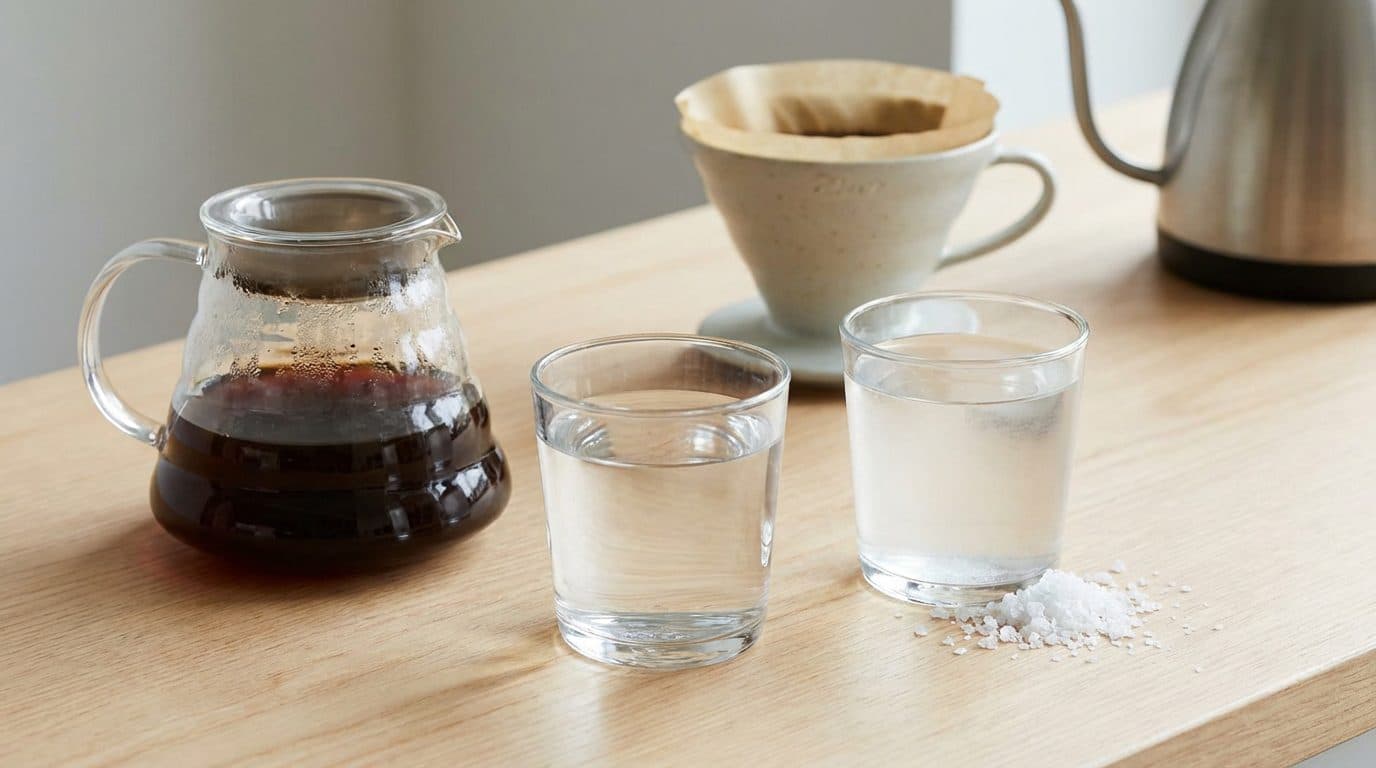
You’ve just brewed your morning cup, taken that first eager sip, and… something’s off. Your coffee tastes salty, metallic, or just plain weird. Before you blame your beans or your brewing technique, consider this: the culprit might be hiding in plain sight. Water makes up about 98% of your cup of coffee, so when your coffee tastes too salty or strange, water is often the problem you need to solve first.
In this guide, I’ll walk you through exactly why your water might be sabotaging your brew and, more importantly, how to fix it. Whether you’re dealing with mineral-heavy tap water, a funky aftertaste, or that mysterious salty note that shouldn’t be there, you’ll find practical solutions to get your coffee tasting right again.
Why Does Your Coffee Taste Salty or Strange?
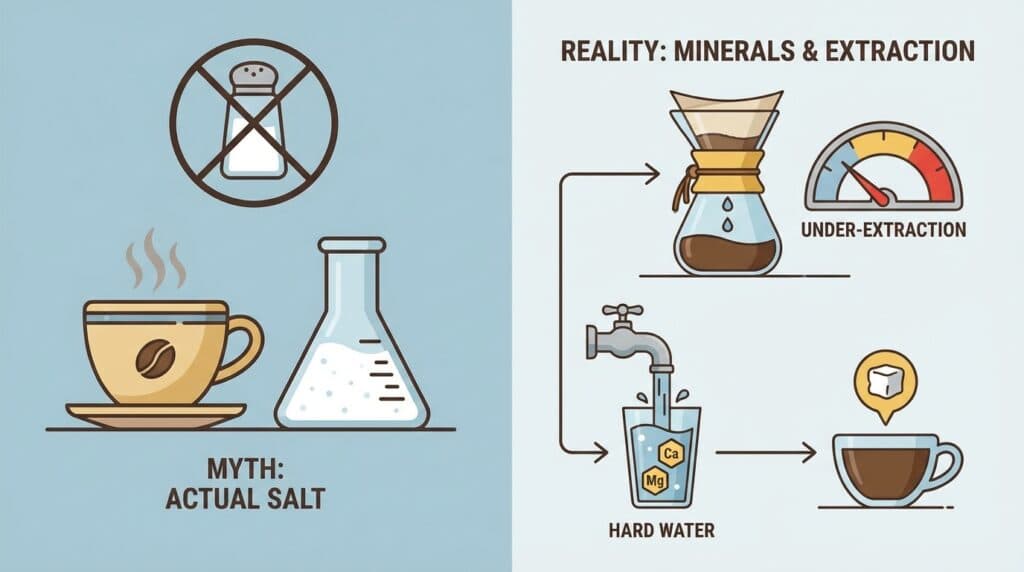
Let’s bust a common myth right away: salty-tasting coffee isn’t always about actual salt. In my experience, that “salty” perception often comes from mineral imbalances in your water or even from under-extraction during brewing. Your taste buds can interpret certain mineral combinations as saltiness, even when sodium isn’t the main issue.
Here are the most common reasons your coffee might taste off:
- High mineral content – Hard water loaded with calcium and magnesium can create bitter, chalky, or salty flavors
- Chlorine or chloramine – Municipal water treatment chemicals leave a chemical, pool-like taste
- Old pipes – Corroded plumbing can leach metals into your water
- Water softener issues – Some softeners replace calcium with sodium, literally adding salt to your water
- TDS imbalance – Total Dissolved Solids outside the ideal range affect extraction and taste
Key Takeaway: That strange taste in your coffee is your water talking. The good news? Once you identify the specific problem, fixing it is usually straightforward.
Understanding How Water Affects Coffee Taste
Here’s something many home baristas don’t realize: water isn’t just a neutral carrier for coffee flavor. It’s an active participant in extraction. The minerals in your water actually help pull flavor compounds from your coffee grounds. Too few minerals, and your coffee tastes flat and sour. Too many, and you get that harsh, salty, or bitter mess.
The Ideal Water Profile for Coffee
The Specialty Coffee Association recommends specific water parameters for optimal brewing:
- TDS (Total Dissolved Solids): 75-250 mg/L, with a target around 150 mg/L
- Calcium hardness: 50-175 mg/L
- pH level: 6.5-7.5 (neutral range)
- Sodium: Less than 30 mg/L
- Chlorine: 0 mg/L (none detectable)
When your water falls outside these ranges, you’ll notice it in your cup. I’ve found that water on the harder side tends to mute bright, fruity notes while amplifying bitterness. Soft water, on the other hand, can make coffee taste weak and acidic.
Did You Know?
Distilled or reverse osmosis water might seem like a pure choice, but it actually makes terrible coffee. Without any minerals, the water can’t properly extract flavors from your grounds. The result? A flat, underwhelming cup that tastes nothing like it should.
Common Water Problems That Ruin Your Coffee
Let’s dig into the specific issues you might be facing and how to recognize them.
Hard Water and Mineral Overload
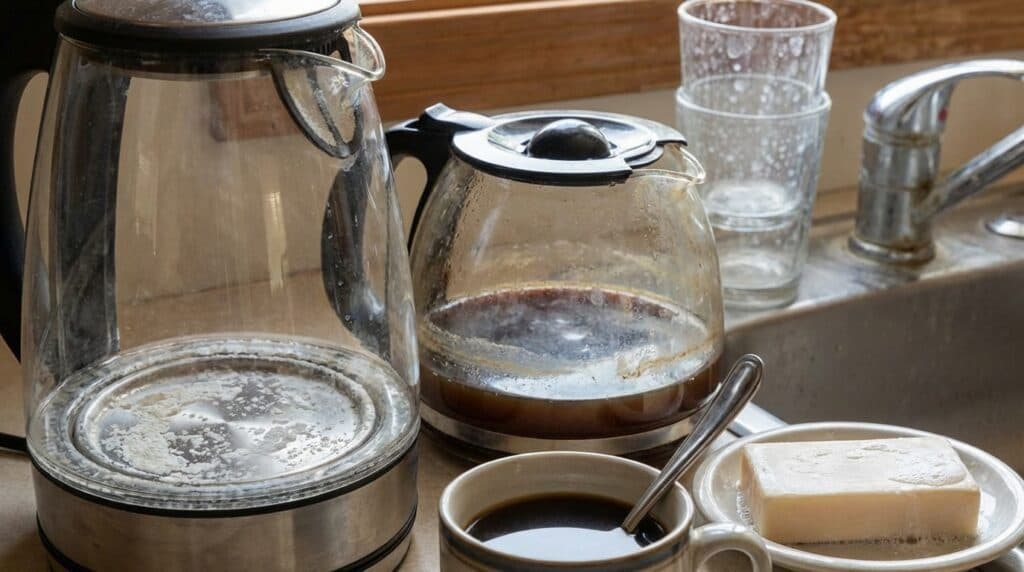
If you notice white scale buildup in your kettle or coffee maker, you’re dealing with hard water. This mineral-heavy water doesn’t just taste off—it also damages your equipment over time. The excess calcium and magnesium can create a chalky mouthfeel and mask the nuanced flavors in specialty coffee.
Signs you have hard water:
- Scale deposits on heating elements
- Coffee tastes flat, bitter, or slightly salty
- Soap doesn’t lather well
- Water spots on glasses and dishes
Chlorine and Chemical Tastes
Municipal water supplies use chlorine or chloramine to kill bacteria. While safe to drink, these chemicals can give your coffee a swimming pool vibe. Even small amounts that you might not notice when drinking water straight can become amplified when heated and combined with coffee compounds.
The Water Softener Problem
Here’s a scenario I see often: someone installs a water softener to deal with hard water, and suddenly their coffee tastes salty. Traditional ion-exchange softeners work by swapping calcium and magnesium ions for sodium ions. If your water was very hard to begin with, you might end up with significant sodium levels—enough to actually taste.
In short, your water softener might be solving one problem while creating another.
Old Plumbing and Metallic Tastes
If your coffee has a metallic or rusty flavor, your pipes might be the issue. Older homes with galvanized steel or copper plumbing can leach metals into the water, especially if the water sits in the pipes overnight. This is why your first-draw morning water often tastes worse than water that’s been running.
How to Fix Water-Related Coffee Taste Issues
Now for the good part—let’s fix your water and rescue your coffee.
Solution 1: Use a Quality Water Filter
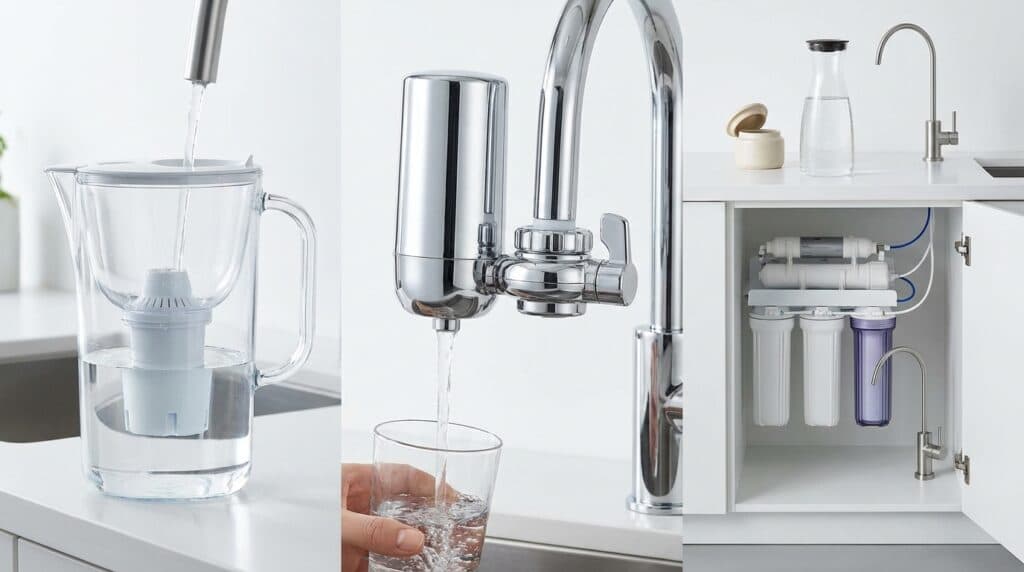
A carbon filter is your first line of defense. It removes chlorine, chloramine, and many organic compounds that cause off-flavors. You have several options:
- Pitcher filters – Affordable and easy, good for removing chlorine and improving taste
- Faucet-mounted filters – Convenient for daily use with better flow rates
- Under-sink systems – More thorough filtration, including some mineral reduction
Barista Tip: Let filtered water sit in an open container for 30 minutes before brewing. This allows any remaining chlorine to off-gas naturally, giving you even cleaner-tasting water.
Solution 2: Try Bottled Spring Water
If you want a quick fix without investing in filtration, try brewing with bottled spring water. Spring water typically has a balanced mineral content that works well for coffee. Avoid distilled or purified water—remember, you need some minerals for proper extraction.
I’ve found that switching to spring water is an excellent diagnostic tool. If your coffee suddenly tastes amazing, you’ve confirmed that your tap water was the problem.
Solution 3: Blend Your Water
This might sound like overkill, but serious home baristas sometimes create custom water blends. If your tap water is too hard, try mixing it 50/50 with distilled water to reduce mineral content while keeping some extraction power. It’s a simple trick that can make a noticeable difference.
Solution 4: Address Your Water Softener
If a water softener is adding too much sodium, you have a few options:
- Install a bypass line to your kitchen for unsoftened water
- Use potassium chloride instead of sodium chloride in your softener
- Add a reverse osmosis system after the softener, then remineralize for coffee
Solution 5: Flush Your Pipes
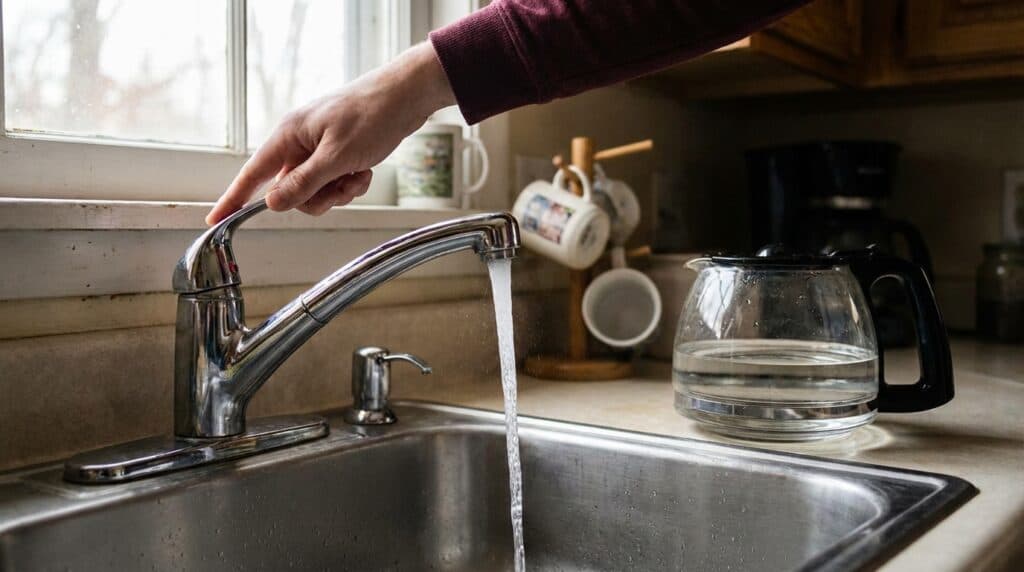
For metallic tastes from old plumbing, run your tap for 30-60 seconds before collecting water for coffee. This flushes out water that’s been sitting in contact with pipes. It’s wasteful, but effective as a short-term solution while you consider longer-term fixes.
Testing Your Water Quality
Before you invest in solutions, it helps to know exactly what you’re dealing with. Here’s how to test your water:
- TDS meter – An inexpensive digital tool that measures total dissolved solids in seconds
- Water test strips – Available at hardware stores, these test for hardness, pH, chlorine, and more
- Professional lab testing – For a complete analysis, send a sample to a water testing lab
- Municipal water reports – Your water utility publishes annual quality reports you can review online
Once you know your water’s TDS, hardness, and chlorine levels, you can make informed decisions about filtration. A TDS reading over 250 mg/L suggests you need to reduce minerals. Under 75 mg/L means you might need to add minerals back.
Frequently Asked Questions
Can water really make coffee taste salty?
Yes, absolutely. High sodium content from water softeners, certain mineral combinations, or even under-extracted coffee can all create a salty perception. Your water’s mineral balance directly impacts how your coffee tastes.
Is filtered water better than tap water for coffee?
In most cases, yes. Filtered water removes chlorine and other compounds that create off-flavors. However, the best water for coffee isn’t the purest—it’s water with balanced mineral content in the ideal range for extraction.
Why does my coffee taste different at home than at a café?
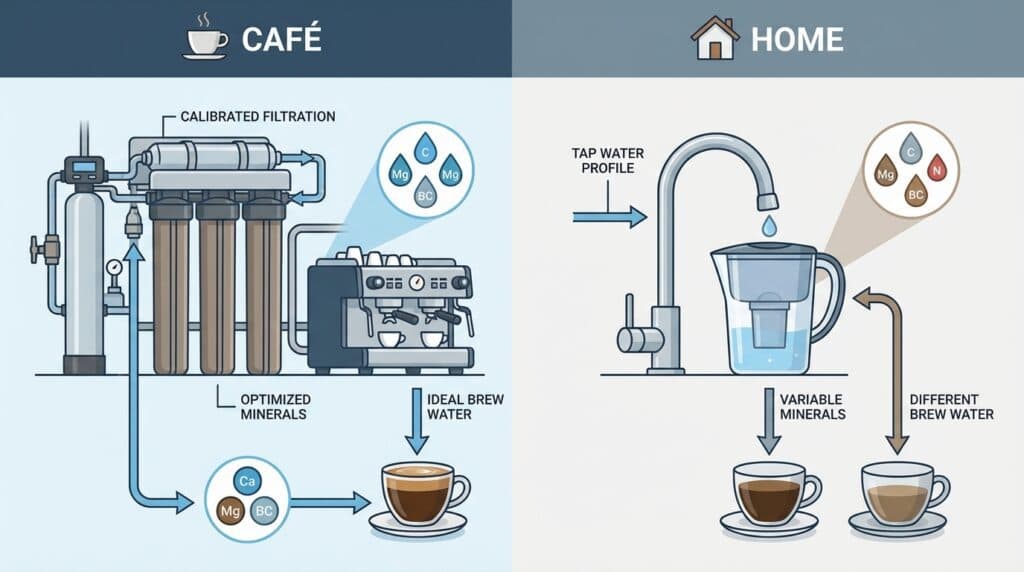
Professional coffee shops often use commercial water filtration systems calibrated specifically for coffee brewing. They’ve optimized their water to hit ideal mineral targets. Your home tap water likely has a very different profile.
Should I use distilled water for coffee?
No, distilled water lacks the minerals needed for proper extraction. Your coffee will taste flat and under-developed. If you want to use distilled water, you’ll need to add minerals back using specialized coffee water recipes or mineral drops.
How often should I change my water filter?
Follow the manufacturer’s recommendations, but generally every 2-3 months for pitcher filters and 6 months for faucet-mounted systems. If you notice your coffee starting to taste off again, it might be time for a fresh filter.
Conclusion and Your Next Steps
Life is too short for bad coffee, and it’s especially frustrating when the fix is as simple as addressing your water quality. If your coffee tastes too salty or strange, start by testing your water to understand what you’re working with. From there, a basic carbon filter solves most chlorine issues, while harder water problems might need more targeted solutions.
My recommendation? Begin with the simplest fix first. Try brewing with bottled spring water and see if your coffee improves. If it does, you’ve confirmed water is your issue, and you can invest in the right filtration solution for your specific situation. Your taste buds—and your morning routine—will thank you.



Comments