


Table of Contents
- Why Your Pour Technique Affects Extraction
- What You'll Need for Better Pouring
- Essential Gear
- Nice to Have
- The Fundamentals of a Good Pour
- Start with a Proper Bloom
- Master the Circular Pour
- Control Your Flow Rate
- Common Pouring Mistakes and How to Fix Them
- Mistake: Pouring in One Spot
- Mistake: Hitting the Filter Walls
- Mistake: Inconsistent Pulse Pours
- Mistake: Ignoring the Coffee Bed
- Putting It All Together: A Sample Pour Routine
- Frequently Asked Questions
- Does the type of pour-over dripper affect my pouring technique?
- How do I know if my extraction is uneven?
- Can I fix bad beans with better pouring?
- How long does it take to develop good pouring habits?
- Is a gooseneck kettle really necessary?
- Summary and Your Next Step
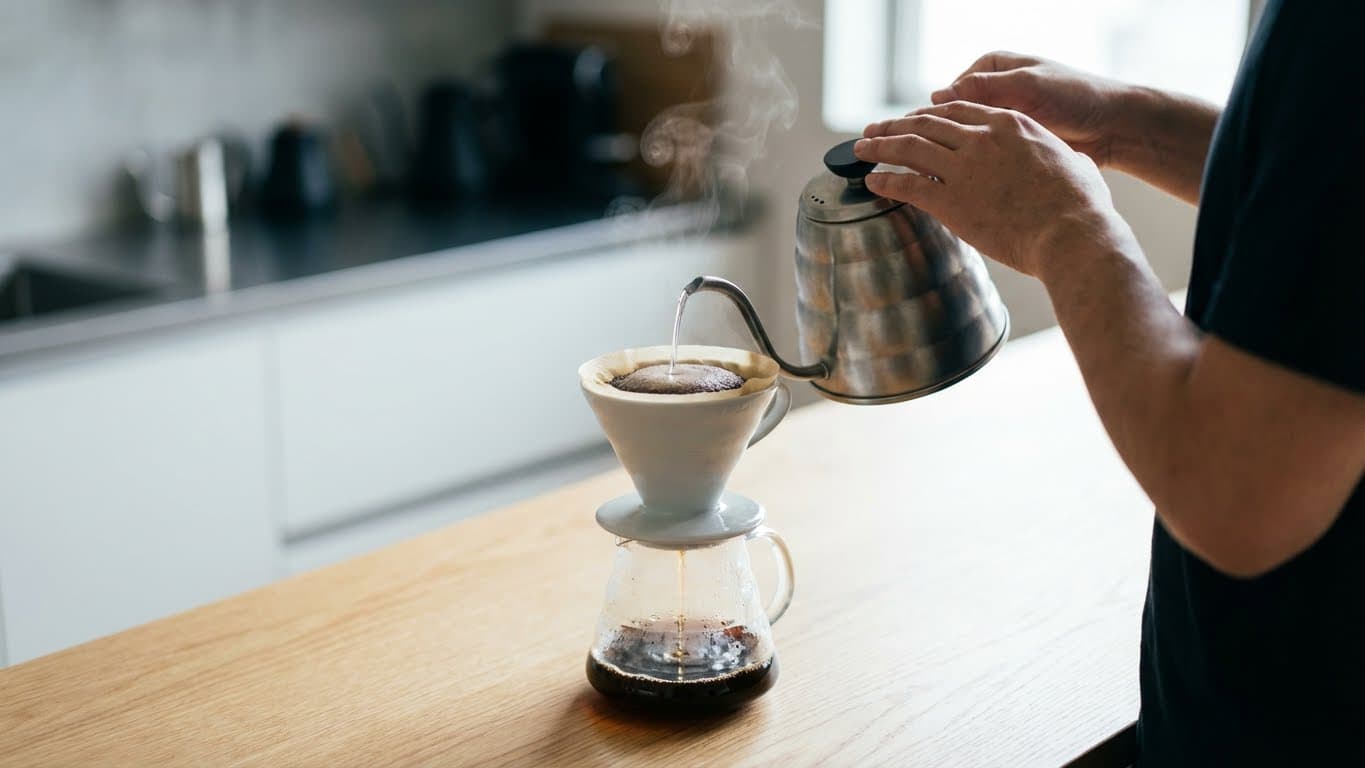
Ever brewed a pour-over that tasted sour on one sip and bitter on the next? That frustrating inconsistency usually comes down to one thing: uneven extraction. The good news is that mastering your pour technique can transform your morning cup from mediocre to magnificent. In my experience, learning to pour better is the single most impactful skill you can develop as a home barista—and it costs nothing to improve.
You’re about to learn exactly why your pouring matters so much, what equipment helps you succeed, and the specific techniques that lead to even extraction every single time. Life is too short for bad coffee, so let’s fix your pour.
Why Your Pour Technique Affects Extraction
Extraction is the process of dissolving soluble compounds from your coffee grounds into water. When extraction is uneven, some grounds get over-extracted (bitter, harsh) while others remain under-extracted (sour, weak). The result? A confusing, unbalanced cup that never quite hits the spot.
Your pour directly controls how water interacts with the coffee bed. Pour too aggressively in one spot, and you create channels where water rushes through without extracting properly. Pour too slowly or unevenly, and some grounds sit dry while others drown. I’ve found that most home brewers underestimate just how much their pouring pattern influences the final taste.
Key Takeaway: Even extraction means every coffee particle contributes equally to your cup. Your pour is the tool that makes this happen.
What You’ll Need for Better Pouring
Before diving into technique, let’s make sure you have the right gear. You don’t need to spend a fortune, but certain tools make a noticeable difference.
Essential Gear
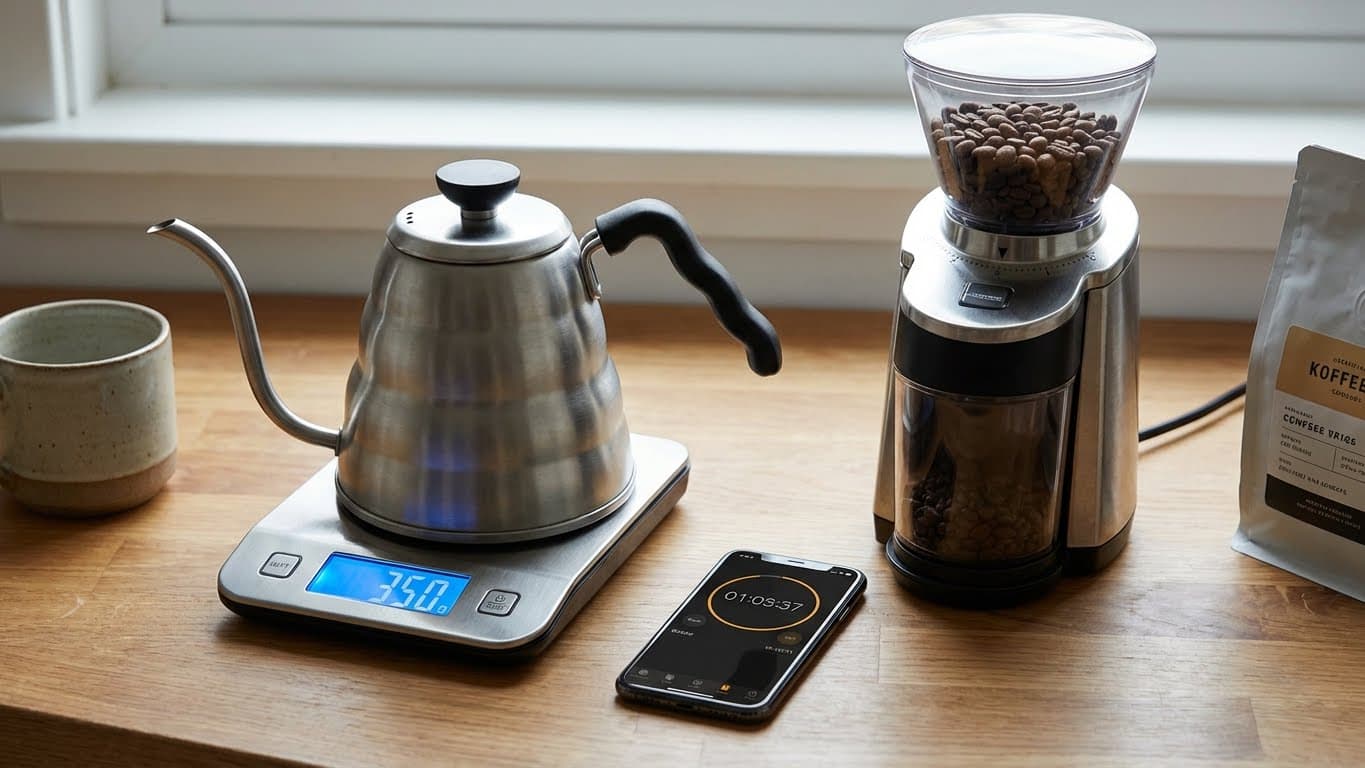
- Gooseneck kettle: The narrow spout gives you precise control over water flow and placement. This is non-negotiable for serious pour-over brewing.
- Kitchen scale: Measuring your water by weight ensures consistency and helps you track your pour rate.
- Timer: Most scales have built-in timers, or use your phone. Timing your pours keeps you accountable.
- Quality burr grinder: Even particle size is the foundation of even extraction. Blade grinders create inconsistent grounds that no pour technique can fully compensate for.
Nice to Have
- Temperature-controlled kettle: Hitting your target temperature (typically 195-205°F or 90-96°C) removes one variable from the equation.
- Pour-over stand: Elevating your dripper makes it easier to see the coffee bed and maintain consistent technique.
Barista Tip: If you’re using a standard kettle, transfer water to a gooseneck for pouring. The control difference is dramatic—I’ve seen beginners improve their cups immediately just by switching kettles.
The Fundamentals of a Good Pour
Now let’s get into the actual technique. These principles apply regardless of which pour-over device you use—V60, Chemex, Kalita Wave, or others.
Start with a Proper Bloom
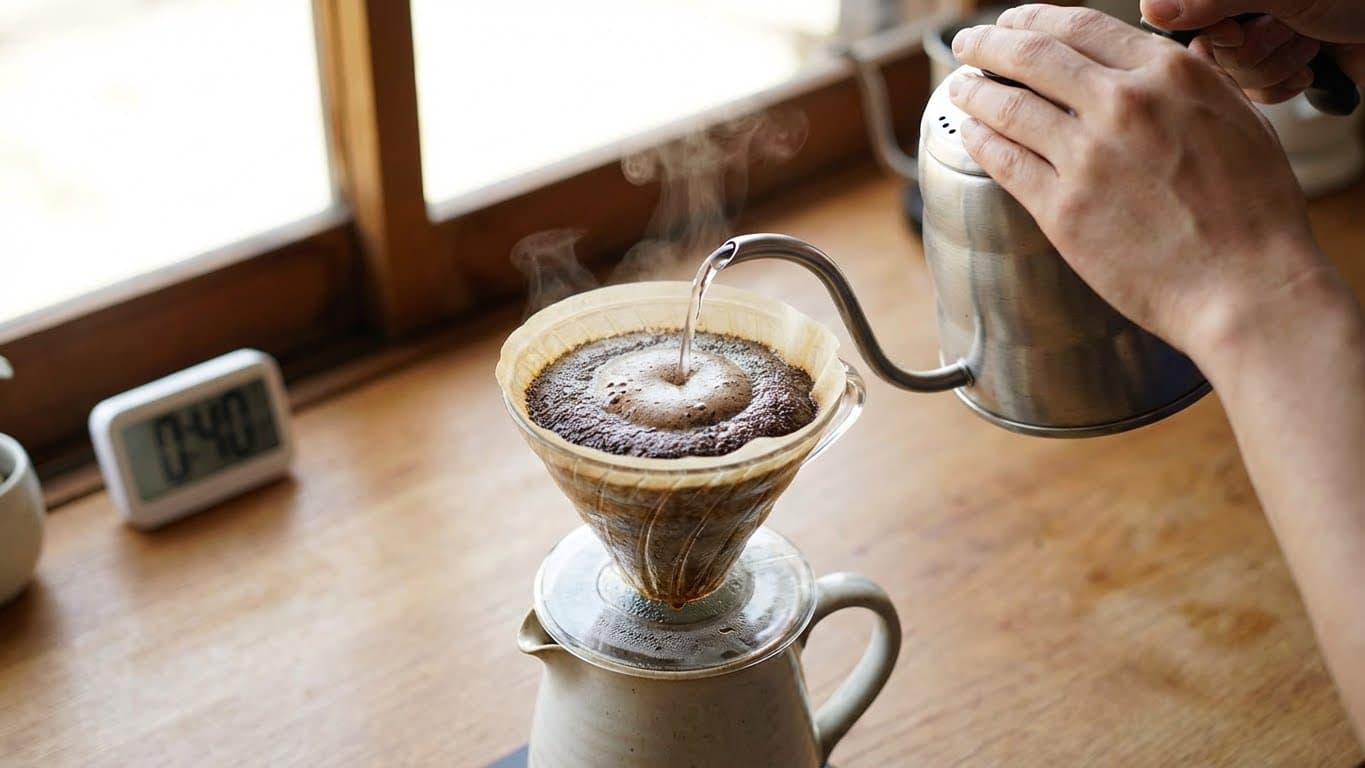
The bloom is your first pour, typically using twice the weight of coffee in water (so 30g water for 15g coffee). This step releases CO2 trapped in fresh coffee, which would otherwise create bubbles that disrupt extraction.
- Pour slowly in concentric circles, starting from the center and moving outward.
- Saturate all the grounds evenly—no dry spots.
- Wait 30-45 seconds before your main pour begins.
- Watch for bubbling; more bubbles indicate fresher coffee.
A common mistake I see is rushing the bloom or using too much water. Keep it controlled. The bloom sets the stage for everything that follows.
Master the Circular Pour
For your main pours, the classic technique involves steady, concentric circles moving from the center outward and back again. Here’s how to do it right:
- Keep your kettle spout about 2-3 inches above the coffee bed.
- Pour at a consistent rate—aim for a stream about the thickness of a pencil.
- Move in smooth, controlled circles without pausing.
- Avoid pouring directly on the filter walls; this lets water bypass the coffee entirely.
- Keep the water level relatively consistent—don’t let it drain completely between pours.
Imagine you’re drawing a spiral on the coffee bed. The goal is to wet every particle equally while gently agitating the grounds for better extraction.
Control Your Flow Rate
Flow rate—how fast water leaves your kettle—dramatically impacts extraction. Pour too fast, and water rushes through without extracting enough. Pour too slow, and you risk over-extraction and cooling.
- A good target is roughly 4-5 grams of water per second during your main pours.
- Practice by pouring onto your scale without coffee to develop muscle memory.
- Tilt your kettle gradually; sudden movements create surges.
Barista Tip: Record yourself pouring from above. You’ll immediately spot inconsistencies you can’t feel in the moment. I was shocked the first time I watched my own technique—I thought I was pouring evenly, but the video told a different story.
Common Pouring Mistakes and How to Fix Them
Let’s bust some myths and address the errors I see most often with home brewers.
Mistake: Pouring in One Spot
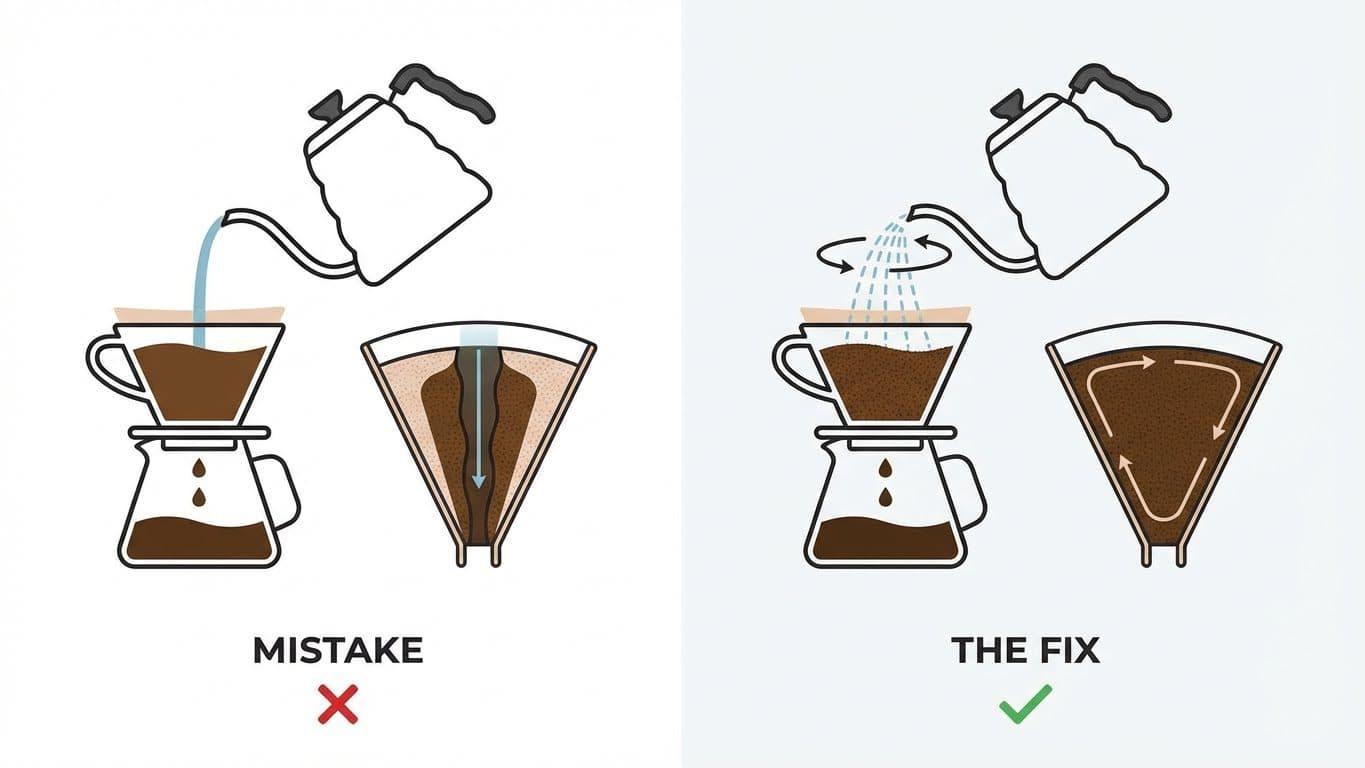
Some people pour straight down the center, thinking gravity will distribute the water. It won’t. This creates a channel where water takes the path of least resistance, leaving outer grounds under-extracted.
The fix: Always use circular motions. Even if your circles aren’t perfect, movement is better than a stationary pour.
Mistake: Hitting the Filter Walls
Water poured on the paper filter runs straight down without touching coffee. You end up with a weaker, watery cup and wasted potential.
The fix: Keep your circles within the coffee bed. Leave about a centimeter of margin from the filter edge.
Mistake: Inconsistent Pulse Pours
Pulse pouring (multiple smaller pours instead of one continuous pour) can work well, but many brewers pour different amounts each pulse or wait inconsistent times between them.
The fix: If you pulse pour, use your scale and timer religiously. For example: 50g every 30 seconds until you reach your target. Consistency is everything.
Mistake: Ignoring the Coffee Bed
Your coffee bed tells you a story. A flat, even bed after draining suggests good extraction. A cratered, uneven bed with grounds stuck high on the filter walls indicates problems.
The fix: After each brew, examine your spent grounds. Adjust your technique based on what you see. A gentle swirl after your final pour can help settle the bed evenly.
Putting It All Together: A Sample Pour Routine
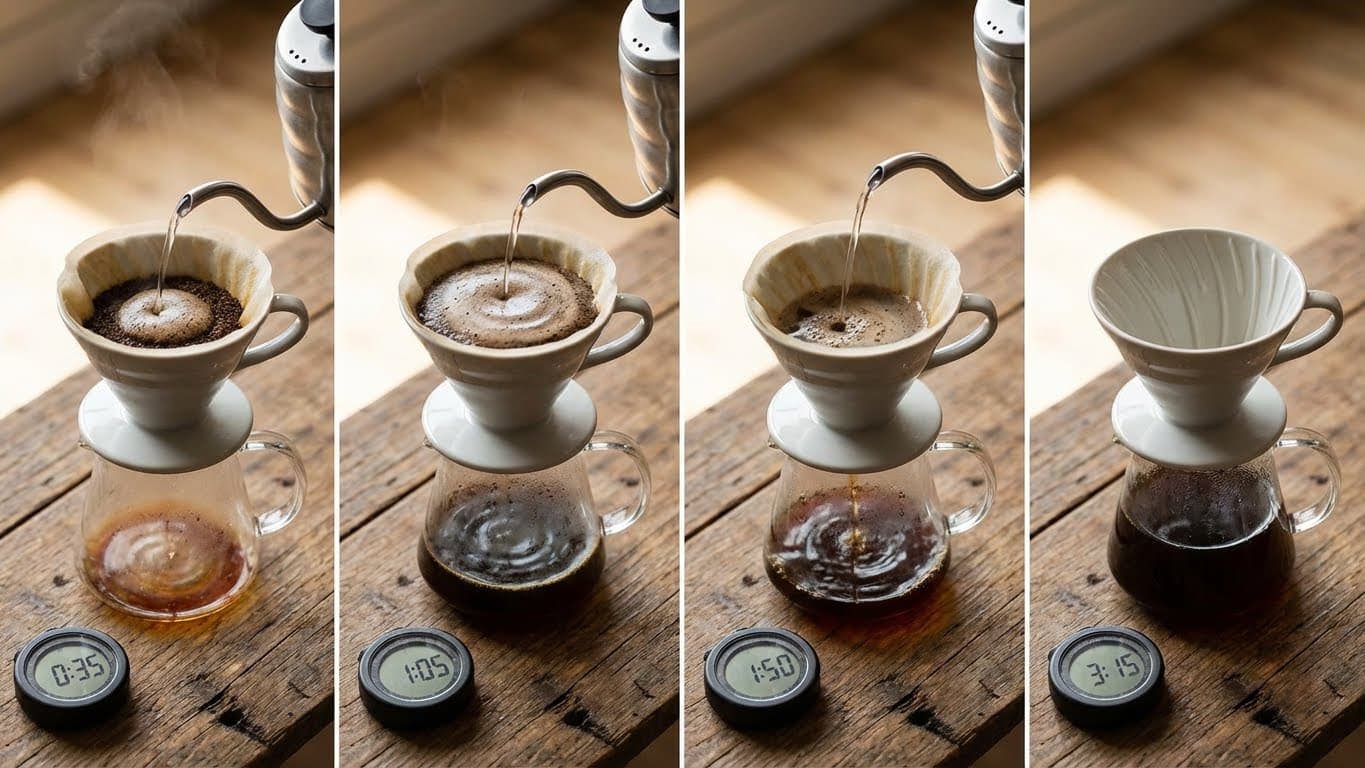
Here’s a practical routine you can follow for a standard 15g coffee to 250g water brew. Adjust ratios to your taste, but keep the technique consistent.
- 0:00 – Begin bloom with 30-40g water in gentle circles. Ensure all grounds are wet.
- 0:45 – Start your main pour. Add water in slow circles until you reach about 150g total.
- 1:15 – Continue pouring steadily, maintaining water level, until you hit 250g.
- 1:45-2:00 – Let the water draw down completely.
- 2:30-3:30 – Total brew time should fall in this range for medium grinds.
If your brew finishes too fast, your grind is too coarse or your pour was too aggressive. If it drains too slowly, grind coarser or pour with slightly more vigor. In my experience, small adjustments compound into big flavor improvements over time.
Taste Profile: When extraction is even, expect a balanced cup with clear flavor notes, pleasant sweetness, and a clean finish. No harsh bitterness, no puckering sourness—just coffee that tastes like it should.
Frequently Asked Questions
Does the type of pour-over dripper affect my pouring technique?
Yes, slightly. Flat-bottom drippers like the Kalita Wave are more forgiving because water pools before draining. Conical drippers like the V60 respond more directly to your pour, making technique more critical. Start with the same fundamentals, then adjust based on your specific brewer’s behavior.
How do I know if my extraction is uneven?
Taste is your best indicator. Sour, thin, or tea-like flavors suggest under-extraction. Bitter, harsh, or astringent notes point to over-extraction. If you taste both in the same cup, uneven extraction is likely the culprit. Also check your spent coffee bed—it should be flat and even.
Can I fix bad beans with better pouring?
Good technique helps, but it can’t perform miracles. Stale, low-quality, or poorly roasted beans will always limit your results. Invest in fresh, quality coffee and store it properly. Your pour technique will then shine.
How long does it take to develop good pouring habits?
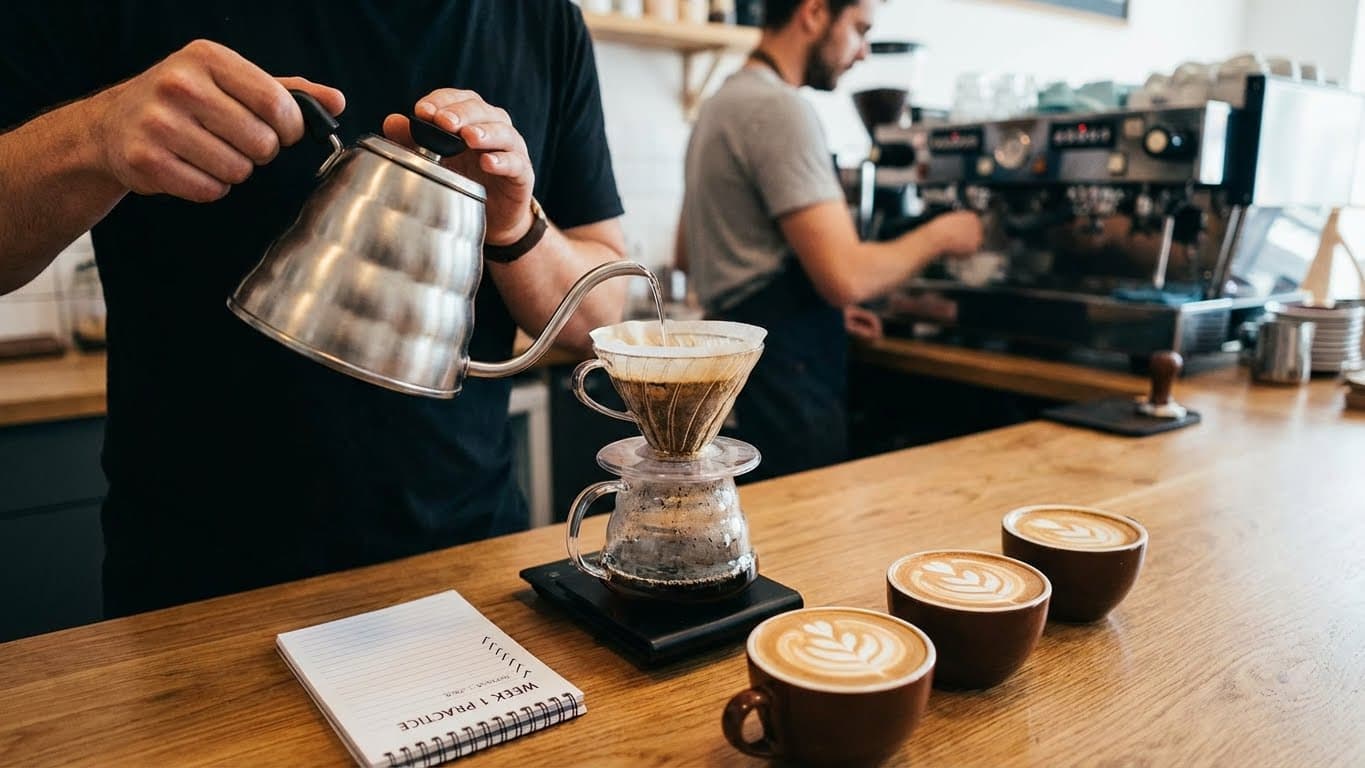
Most home brewers notice improvement within a week of focused practice. Muscle memory develops quickly when you brew daily. Give yourself grace—even professional baristas continually refine their technique.
Is a gooseneck kettle really necessary?
Technically, you can pour from any kettle. Practically, a gooseneck makes precision so much easier that I consider it essential. The difference in control is immediately noticeable, and decent gooseneck kettles are affordable.
Summary and Your Next Step
Even extraction transforms pour-over coffee from a gamble into a reliable ritual. By using a gooseneck kettle, pouring in controlled circles, maintaining consistent flow, and avoiding common mistakes like hitting the filter walls, you set yourself up for success every morning.
Start with your next brew. Focus on one element—maybe your bloom technique or your circular motion. Watch your coffee bed after draining and taste mindfully. Small, intentional improvements add up quickly. Before long, you’ll pour with confidence and wonder how you ever tolerated uneven cups. Your best coffee is just a few pours away.



Comments