


Table of Contents
- The Great Soap Debate: Myth vs. Reality
- Why Soap Can Be Problematic for Cast Iron
- When Soap Becomes a Problem
- A Real-World Scenario
- The Moka Pot Dilemma: To Soap or Not to Soap
- The "Coffee Patina" Argument
- Stainless Steel vs. Aluminum Moka Pots
- How to Properly Clean Your Cast Iron and Moka Pot
- Cleaning Cast Iron the Right Way
- Cleaning Your Moka Pot Without Ruining It
- Common Cleaning Mistakes to Avoid
- Frequently Asked Questions
- Can I use soap on cast iron if it's really dirty?
- Why does my moka pot coffee taste metallic after cleaning?
- How do I know if I've damaged my cast iron seasoning?
- Is it okay to use vinegar to clean my moka pot?
- How often should I deep clean my moka pot?
- Conclusion: Clean Smart, Not Hard
You’ve probably heard it a thousand times: “Never use soap on cast iron!” or “Soap ruins your moka pot’s flavor!” But is this advice actually true, or is it one of those kitchen myths that gets passed down without question? If you’ve ever scrubbed your beloved cast iron skillet or moka pot with dish soap and then panicked, you’re not alone. Let’s break down what really happens when soap meets these classic coffee and cooking tools, and whether you’ve actually done any damage.
In this guide, I’ll walk you through the science behind the soap debate, explain when cleaning with soap is actually fine, and share the proper techniques to keep your cast iron and moka pot in top shape for years to come.
The Great Soap Debate: Myth vs. Reality
Here’s the thing: the “no soap ever” rule is largely outdated. It comes from a time when soaps were made with lye, which could indeed strip the seasoning right off your cast iron. Modern dish soaps are much gentler and won’t destroy a well-established seasoning layer with occasional use.
Key Takeaway: Modern dish soap is not the enemy. The real enemies are harsh scrubbing, prolonged soaking, and neglecting to dry and oil your cookware properly afterward.
That said, there’s a difference between “won’t cause damage” and “best practice.” Just because you can use soap doesn’t always mean you should. Let me explain why context matters for both cast iron and moka pots.
Why Soap Can Be Problematic for Cast Iron
Cast iron develops its non-stick properties through seasoning—layers of polymerized oil that bond to the metal surface. This seasoning is surprisingly durable, but it’s not invincible.
When Soap Becomes a Problem
- New or poorly seasoned pans: If your cast iron doesn’t have a solid seasoning foundation, soap can more easily penetrate and weaken what little protection exists.
- Excessive scrubbing: Combining soap with abrasive scrubbers or steel wool can strip seasoning faster than soap alone.
- Soaking: Leaving cast iron submerged in soapy water is a recipe for rust and seasoning loss.
- Frequent use: Using soap every single time can gradually thin your seasoning layer over months.
In my experience, a quick wash with a small amount of dish soap once in a while won’t hurt a well-seasoned pan. The problem arises when people treat cast iron like any other dish—soaking it, scrubbing aggressively, and then leaving it to air dry. That’s when you’ll see rust spots appearing and food starting to stick.
A Real-World Scenario
Imagine you’ve cooked a particularly greasy breakfast in your cast iron skillet. A simple wipe with a paper towel isn’t cutting it. In this case, a drop of dish soap and a gentle scrub with a soft brush is perfectly acceptable. The key is what you do next: rinse thoroughly, dry immediately over low heat, and apply a thin layer of oil before storing.
The Moka Pot Dilemma: To Soap or Not to Soap
Moka pots are a different beast entirely. These stovetop espresso makers, typically made from aluminum, have their own set of cleaning rules—and the soap debate here is even more nuanced.
The “Coffee Patina” Argument
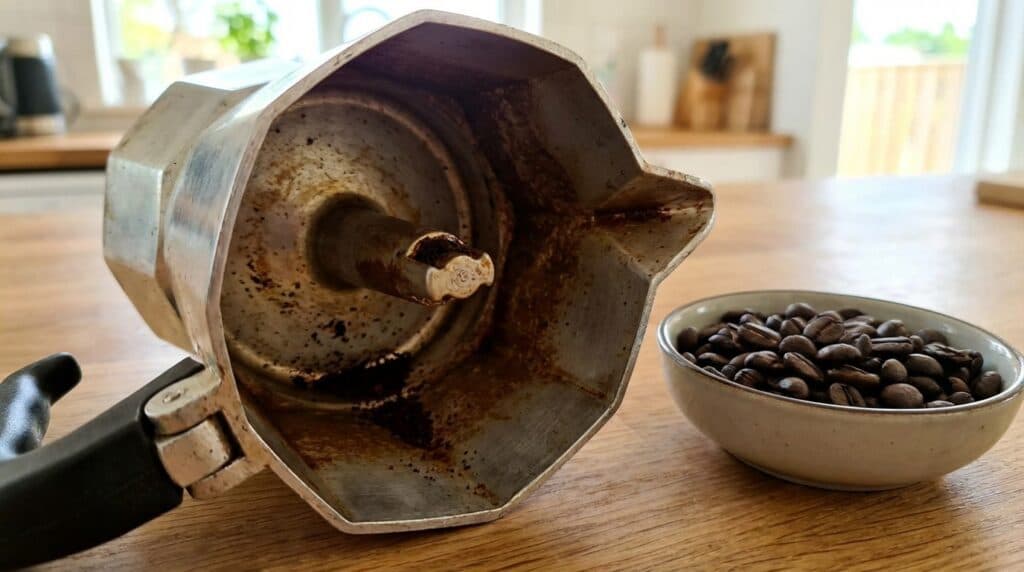
Many moka pot enthusiasts swear by never using soap because they believe the coffee oils that build up inside create a “patina” that improves flavor over time. There’s some truth to this: a thin layer of coffee residue can prevent the metallic taste that new aluminum moka pots sometimes impart.
However, here’s where it gets tricky:
- Old coffee oils go rancid. That “patina” can turn into a layer of stale, oxidized oils that make your coffee taste bitter and off.
- Buildup affects extraction. Clogged filter plates and gunky gaskets can lead to uneven extraction and weak coffee.
- Hygiene matters. Coffee residue is organic matter, and organic matter can harbor bacteria and mold over time.
Did You Know? The aluminum in traditional moka pots can react with certain dish soaps, leaving behind a residue or causing discoloration. This is why many manufacturers recommend avoiding soap—not because of flavor, but because of potential chemical reactions with the metal.
Stainless Steel vs. Aluminum Moka Pots
If you have a stainless steel moka pot, you have more flexibility. Stainless steel doesn’t react with soap the way aluminum does, so occasional gentle washing is less of a concern. Still, I’d recommend keeping soap use minimal and always rinsing thoroughly.
How to Properly Clean Your Cast Iron and Moka Pot
Now that we’ve covered the why, let’s get into the how. Here are my tried-and-true methods for keeping both items clean without causing damage.
Cleaning Cast Iron the Right Way
- For everyday cleaning: While the pan is still warm, wipe out food residue with a paper towel. For stuck-on bits, use coarse salt as a gentle abrasive with a little oil.
- For stubborn messes: Use hot water and a stiff brush or chainmail scrubber. A tiny drop of dish soap is fine if needed.
- After washing: Dry immediately over low heat on the stovetop. Apply a thin layer of cooking oil with a paper towel while the pan is still warm.
- Never do this: Soak in water, put in the dishwasher, or leave wet.
Barista Tip: If you use your cast iron for coffee-related recipes (like skillet coffee cake or stovetop roasting), make sure to clean it well before switching back to savory dishes. Coffee oils can linger and affect flavor.
Cleaning Your Moka Pot Without Ruining It
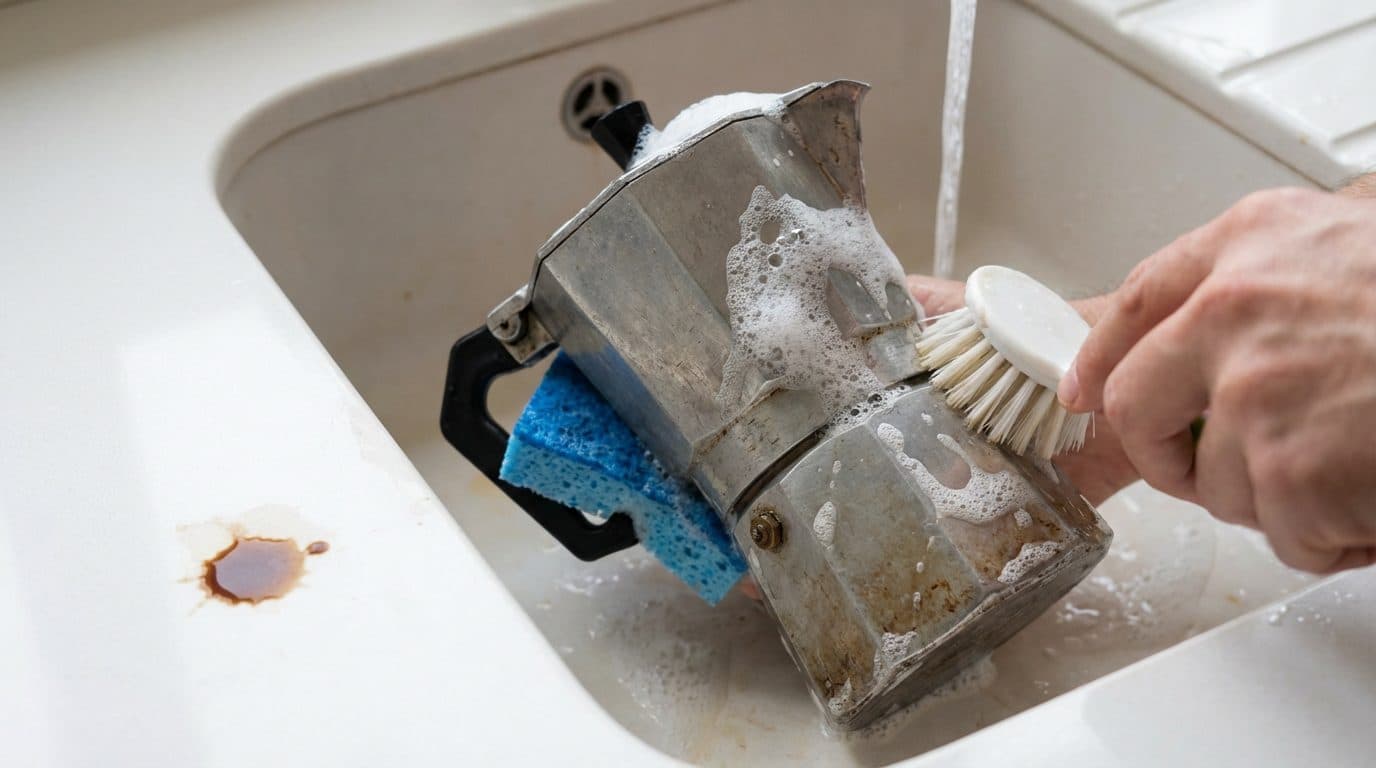
- After each use: Let the pot cool completely, then disassemble all parts. Rinse everything under warm running water.
- Remove coffee grounds: Tap out the used grounds and rinse the filter basket thoroughly. Use a soft brush to clear any grounds stuck in the filter holes.
- Check the gasket: The rubber gasket collects oils and residue. Wipe it down and inspect for cracks or hardening.
- Deep cleaning (monthly): If you notice off-flavors, run a brew cycle with just water—no coffee. This helps flush out old oils.
- Dry completely: Leave all parts disassembled to air dry before reassembling. Trapped moisture leads to mold and corrosion.
In short: hot water and a soft brush are your best friends for moka pot maintenance. Save the soap for rare occasions when you notice visible buildup or rancid smells.
Common Cleaning Mistakes to Avoid
Beyond the soap question, there are several other cleaning mistakes that can damage your cast iron or moka pot:
- Using the dishwasher: The harsh detergents and prolonged water exposure will destroy cast iron seasoning and can damage moka pot components.
- Scrubbing with steel wool: This strips seasoning from cast iron and scratches aluminum moka pots.
- Storing while damp: Moisture is the enemy of both items. Always dry thoroughly before storing.
- Ignoring the gasket: Moka pot gaskets need regular inspection and replacement every 6-12 months depending on use.
- Over-oiling cast iron: Too much oil creates a sticky residue. Use just enough to leave a thin, non-tacky coating.
I’ve seen people ruin perfectly good cast iron by leaving it soaking overnight “to loosen stuck food.” Trust me, a few minutes of soaking is the maximum—and even that should be avoided when possible.
Frequently Asked Questions
Can I use soap on cast iron if it’s really dirty?
Yes, occasional use of mild dish soap on well-seasoned cast iron is fine. The key is to use a small amount, avoid harsh scrubbing, dry immediately, and re-oil the surface afterward. Don’t make it a daily habit, but don’t panic if you need to use soap once in a while.
Why does my moka pot coffee taste metallic after cleaning?
If you used soap on an aluminum moka pot, residue might be left behind. Run 2-3 brew cycles with just water to flush out any soap traces. The metallic taste can also occur with new moka pots—brewing and discarding the first few batches helps season the pot.
How do I know if I’ve damaged my cast iron seasoning?
Signs of damaged seasoning include food sticking more than usual, rust spots appearing, or the surface looking dull and patchy instead of smooth and dark. If this happens, you can re-season your pan by applying thin layers of oil and baking it in the oven at high heat.
Is it okay to use vinegar to clean my moka pot?
Vinegar can help remove mineral buildup, but use it sparingly on aluminum moka pots as the acid can react with the metal. A diluted solution (one part vinegar to two parts water) used occasionally is generally safe. Rinse very thoroughly afterward.
How often should I deep clean my moka pot?
A water-only brew cycle once a month is a good baseline for regular users. If you brew daily, you might want to do this every two weeks. Pay attention to taste—if your coffee starts tasting off or bitter, it’s time for a deep clean.
Conclusion: Clean Smart, Not Hard
The soap debate around cast iron and moka pots is more nuanced than the old “never use soap” rule suggests. Modern dish soaps are gentle enough that occasional use won’t destroy your cookware—but that doesn’t mean you should reach for the soap every time. For cast iron, hot water and a good scrub usually do the trick, with soap reserved for particularly messy situations. For moka pots, stick to water and a soft brush for daily cleaning, and save any soap use for rare deep cleans on stainless steel models.
The real keys to longevity are proper drying, appropriate storage, and regular maintenance. Treat your cast iron and moka pot with a little care, and they’ll reward you with years of perfectly seared steaks and rich, flavorful espresso. Life’s too short for bad coffee—and it’s definitely too short to stress over a drop of dish soap.


Comments