


Table of Contents
- Understanding the Main Types of Coffee Makers
- Drip Coffee Makers
- Single-Serve Pod Machines
- French Press
- Pour-Over Coffee Makers
- Espresso Machines
- Key Factors to Consider When Choosing Your First Coffee Maker
- Your Daily Coffee Consumption
- How Much Time You Have in the Morning
- Counter Space and Kitchen Size
- Budget Considerations
- Features That Matter (and Ones That Don't)
- Worth Paying For
- Nice but Not Essential
- Probably Skip These
- Matching Your Coffee Maker to Your Taste Preferences
- Common Mistakes First-Time Buyers Make
- Frequently Asked Questions
- What is the easiest coffee maker for beginners?
- How much should I spend on my first coffee maker?
- Is a coffee grinder necessary if I'm just starting out?
- Can I make good coffee without an expensive machine?
- How often do I need to clean my coffee maker?
- Conclusion: Your Next Steps to Better Home Brewing
Your first coffee maker should fit your mornings, not your fantasy version of mornings. A beautiful pour-over setup is useless if you rush out the door every day. A huge drip machine is wasteful if you drink one cup. An espresso machine is exciting until you realize it also wants a grinder, cleaning routine, and patience.
The easiest way to choose is to start with behavior: how many cups you need, how much time you have, how much cleanup you will tolerate, and what kind of coffee you actually like. For most beginners, a basic drip coffee maker, French press, AeroPress-style brewer, or simple pour-over is a better first move than an expensive espresso setup. Buy the tool that solves your real morning first. You can always get nerdier later.
Understanding the Main Types of Coffee Makers
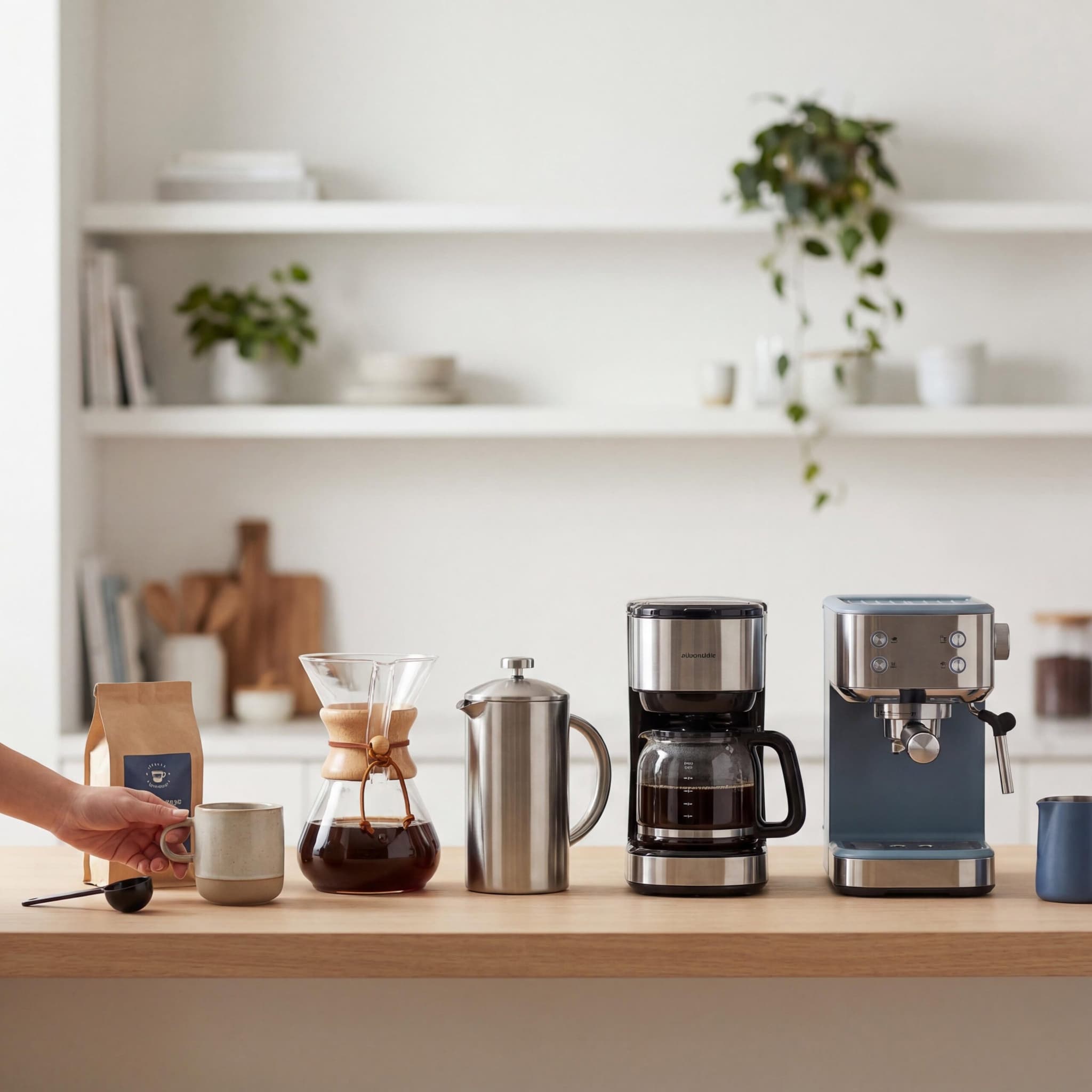
Every coffee maker is a tradeoff between convenience, flavor, capacity, cleanup, and cost. There is no universal best. The right first brewer is the one you will use consistently without resenting it.
Drip Coffee Makers
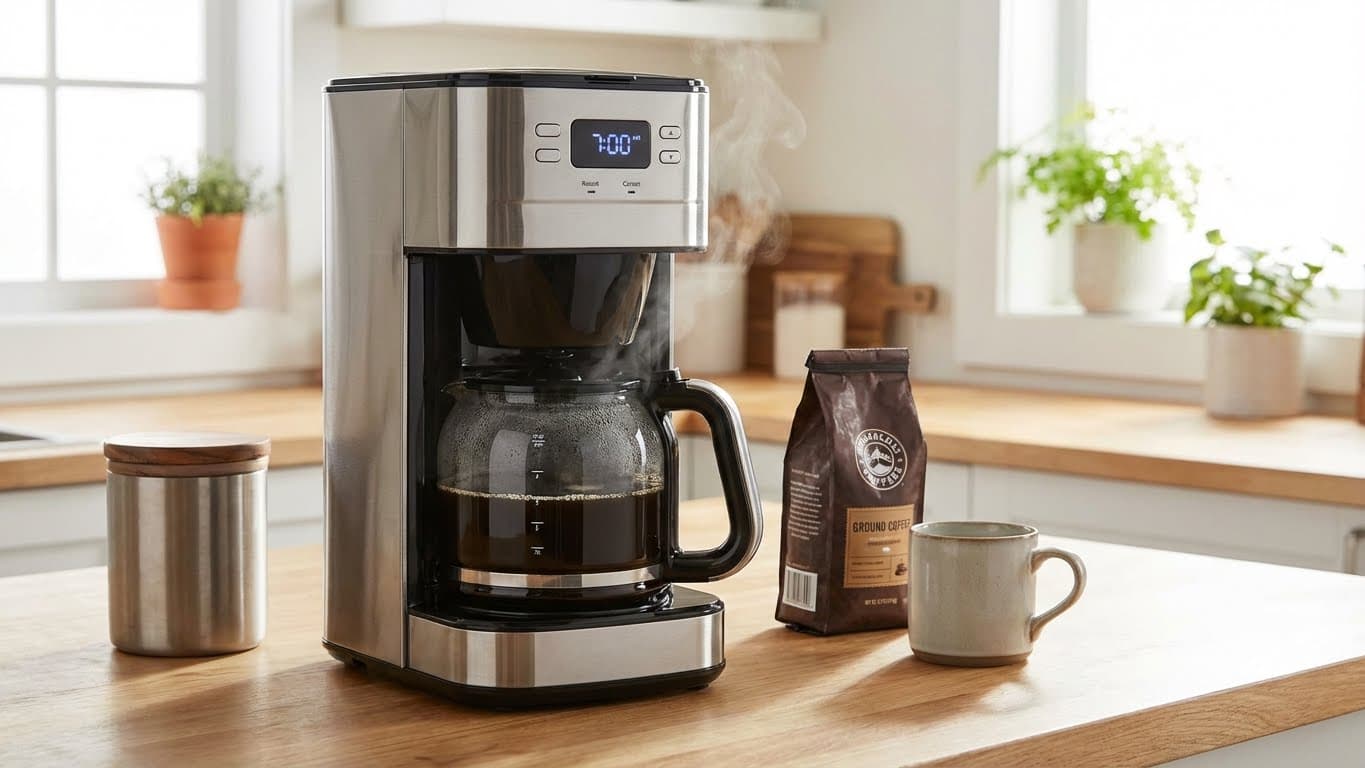
Drip coffee makers are the most practical choice for many households. Add water, add ground coffee, press a button, and get several cups. They are especially useful if two or more people drink coffee or if you want a mug ready while you do other things.
The catch is quality variation. Cheap drip machines may brew with water that is too cool or distribute water unevenly over the grounds. That can make coffee taste weak or flat. If you choose drip, look for a model with a thermal carafe, simple controls, easy cleaning, and enough capacity for your actual household.
Single-Serve Pod Machines
Pod machines are fast and tidy. They make sense if convenience matters more than chasing the best flavor, or if different people in the house want different drinks. They also reduce measuring and cleanup.
The tradeoffs are ongoing cost, packaging waste, and flavor limits. Pods can be much more expensive per cup than beans or ground coffee. Some are recyclable in theory but annoying in practice. If you drink several cups a day, calculate pod costs before buying the machine.
French Press
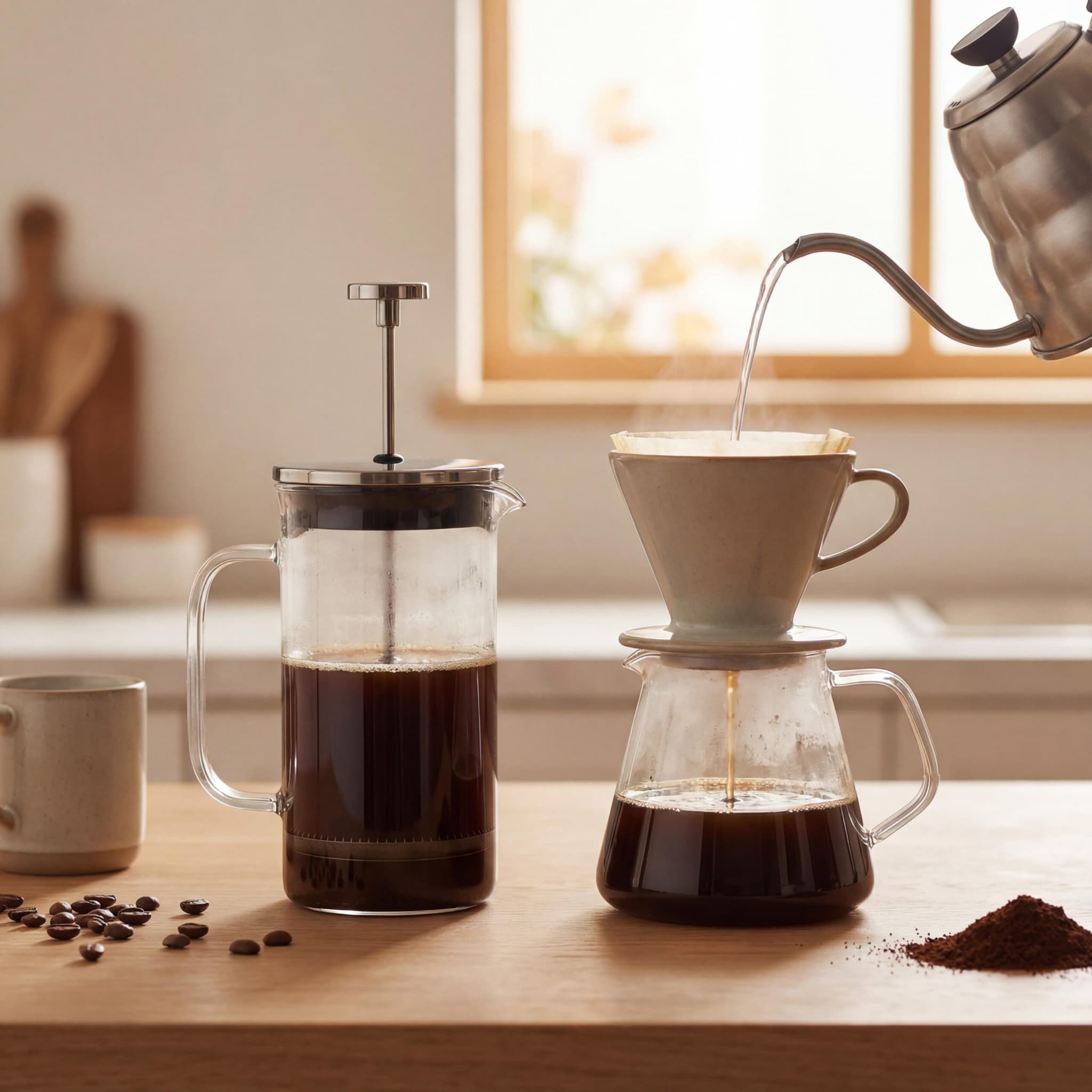
A French press is inexpensive, compact, and capable of rich coffee. You add coarse grounds, pour hot water, wait about four minutes, and press the plunger. Because there is no paper filter, more oils and fine particles remain in the cup, giving it a fuller body.
It is a good first brewer if you like bold coffee and do not mind cleanup. It is less ideal if you hate sediment, want a very clean cup, or need coffee to stay hot for a long time. Glass models can break, so consider stainless steel if durability matters.
Pour-Over Coffee Makers
Pour-over brewers, such as cone drippers and Chemex-style brewers, reward attention. You control the water flow, brew time, and extraction more directly. With fresh beans and a decent grinder, pour-over can make clean, clear coffee that highlights subtle flavors.
It is not the best fit for rushed mornings. You need a kettle, filters, a little focus, and ideally a scale. If the ritual sounds pleasant, pour-over is a great low-cost entry into better coffee. If it sounds like homework, choose something more automatic.
Espresso Machines
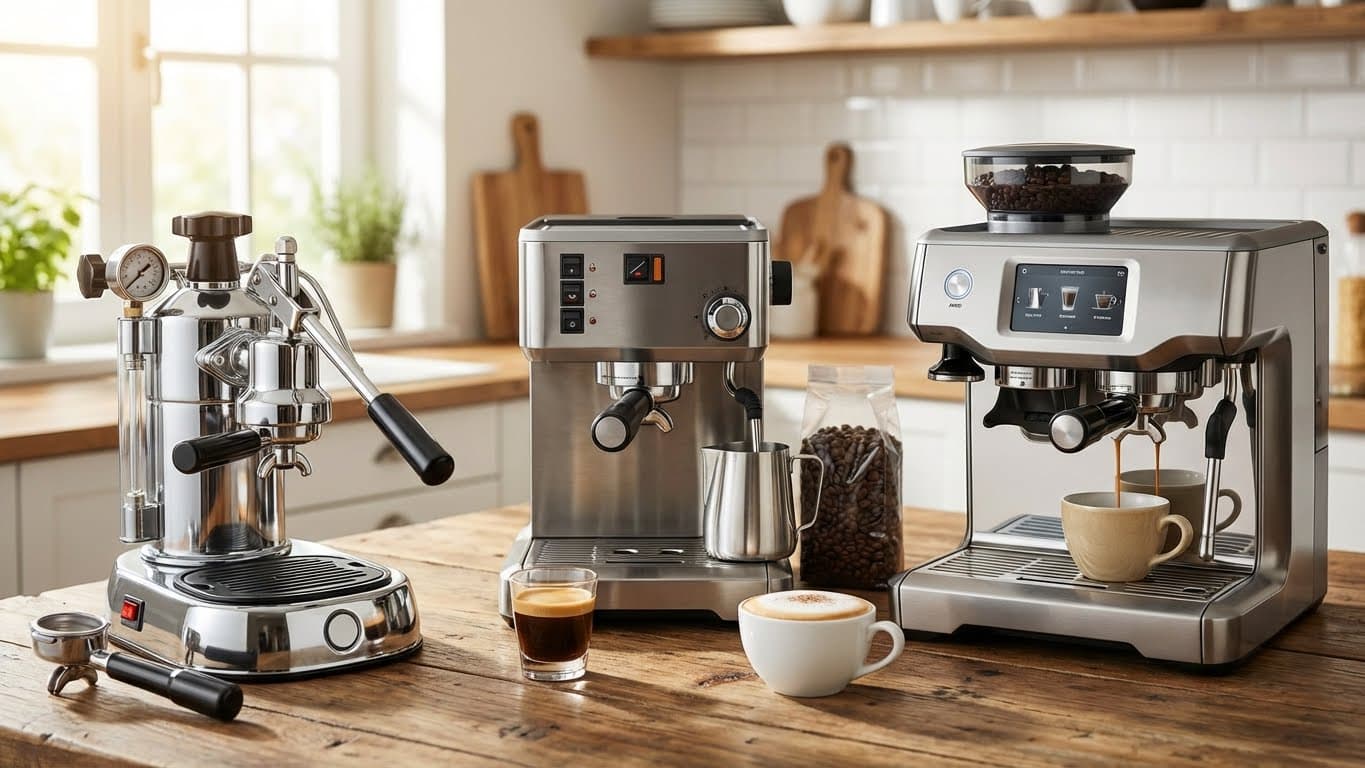
Espresso machines make concentrated coffee under pressure and form the base for lattes, cappuccinos, and americanos. They can be rewarding, but they are rarely the simplest first coffee maker.
The machine is only part of the cost. Good espresso also needs a capable grinder, fresh beans, a scale, cleaning supplies, and time to learn. A beginner can start with espresso if milk drinks are the main goal, but it is better to enter with realistic expectations. Cheap machines can be frustrating; expensive ones do not remove the learning curve.
Key Factors to Consider When Choosing Your First Coffee Maker
The best buying decision comes from a few honest answers. Marketing focuses on features. Your routine decides whether those features matter.
Your Daily Coffee Consumption
Count cups before looking at machines. If you brew for several people, a drip coffee maker with a thermal carafe is usually more efficient than making individual cups. If you drink one cup, a French press, AeroPress-style brewer, pod machine, or small pour-over may make more sense.
Also think about leftovers. A big pot that sits on a warming plate for two hours is not a bargain if you throw half of it away or drink stale coffee.
How Much Time You Have in the Morning
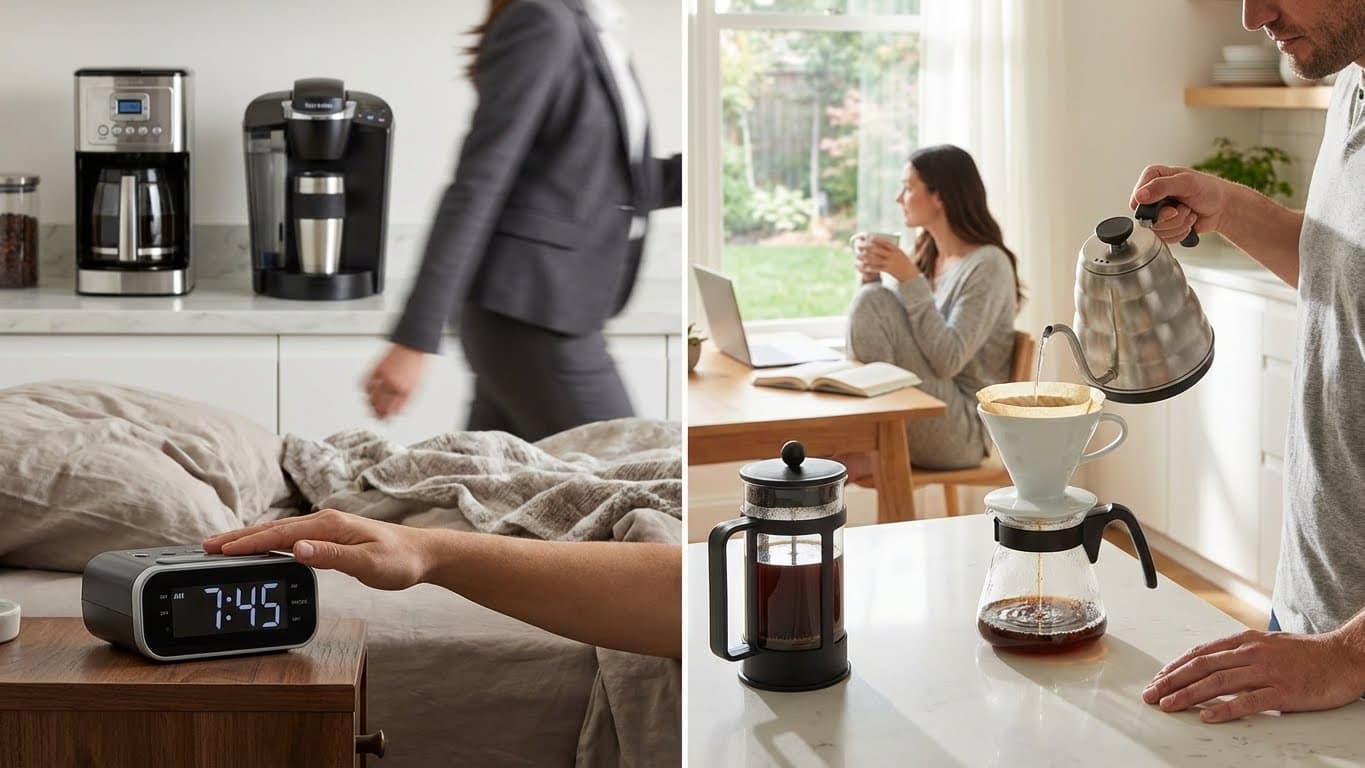
If your morning is compressed, choose automation. Drip machines and pod machines are built for speed. A programmable drip brewer can be loaded the night before, though freshly ground coffee will still taste better than grounds left exposed overnight.
If you have slower mornings, manual brewing can be pleasant. French press takes a few minutes but is relaxed. Pour-over takes more attention. Espresso takes the most active skill, especially if you steam milk.
Counter Space and Kitchen Size
Measure before buying. Include the space needed to open lids, remove water tanks, lift carafes, and access outlets. A machine that technically fits under a cabinet may still be annoying if you have to drag it forward every morning.
Small kitchens often do better with manual brewers that store in a drawer or cabinet. A French press, pour-over cone, moka pot, or AeroPress-style brewer can make good coffee without claiming permanent counter space.
Budget Considerations
Think about total cost, not just the sticker price.
- French press: usually low upfront cost and no paper filters.
- Pour-over: affordable brewer, plus filters, kettle, and ideally a scale.
- Drip machine: wide price range, standard filters, good household value.
- Pod machine: moderate upfront cost, higher cost per cup.
- Espresso machine: machine plus grinder and accessories can add up quickly.
If you drink two pod coffees every day, the monthly pod bill can exceed the cost of buying better beans. If you buy an espresso machine without a grinder, you may spend more later fixing the setup. Leave room in the budget for coffee itself.
A useful beginner budget has three lines: brewer, coffee, and small accessories. For drip, that may mean filters and descaler. For pour-over, it may mean filters and a gooseneck kettle later. For French press, it may mean a burr grinder sooner than expected because coarse, even grinding matters. A cheap brewer plus fresh coffee often beats an expensive brewer fed with old pre-ground coffee.
Also check return policy and replacement parts. A glass carafe that cannot be replaced cheaply turns a small accident into a new machine purchase. A brewer with standard filters and simple parts is less glamorous, but it is easier to live with.
Features That Matter (and Ones That Don't)
Coffee makers often advertise more features than beginners need. A few make daily use better. Others mostly make the box look impressive.
Worth Paying For
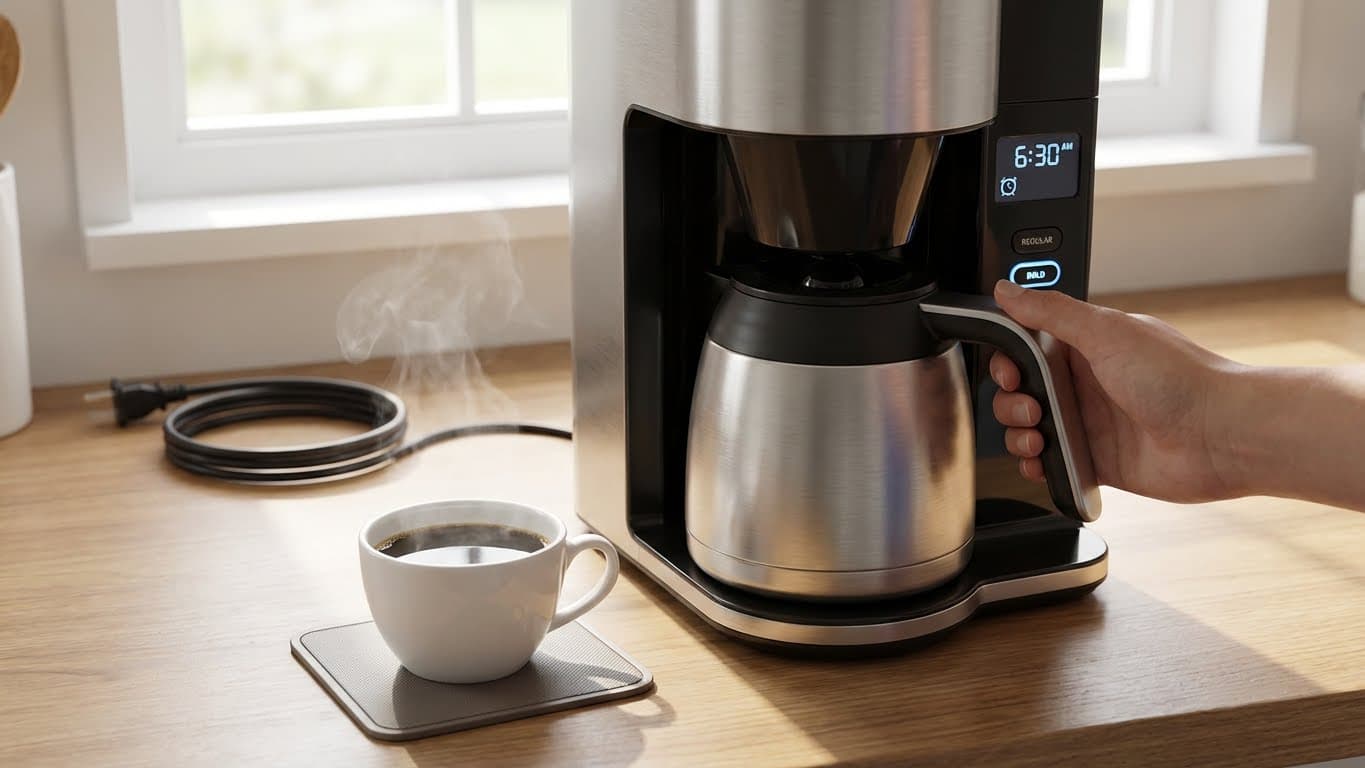
- Thermal carafe: keeps coffee hot without cooking it on a warming plate.
- Easy cleaning: removable parts and wide openings matter more than fancy menus.
- Auto shut-off: useful safety feature for rushed households.
- Reasonable brew temperature: better machines heat water more consistently.
- Programmable timer: useful if convenience is the reason you chose drip.
Nice but Not Essential
- Built-in grinder: convenient, but separate burr grinders are often better and easier to replace.
- Water filtration: helpful if your water tastes bad, but a separate filter pitcher can do the job.
- Brew strength settings: useful on some machines, but changing coffee dose usually gives more control.
- Smart app controls: pleasant for a few users, unnecessary for most.
Probably Skip These
- Permanent warming plates: they keep coffee hot but can make it taste burnt over time.
- Too many drink buttons: more buttons do not mean better coffee.
- Novelty milk systems: they can be hard to clean and may age poorly.
- Oversized machines: capacity you never use becomes counter clutter.
Matching Your Coffee Maker to Your Taste Preferences
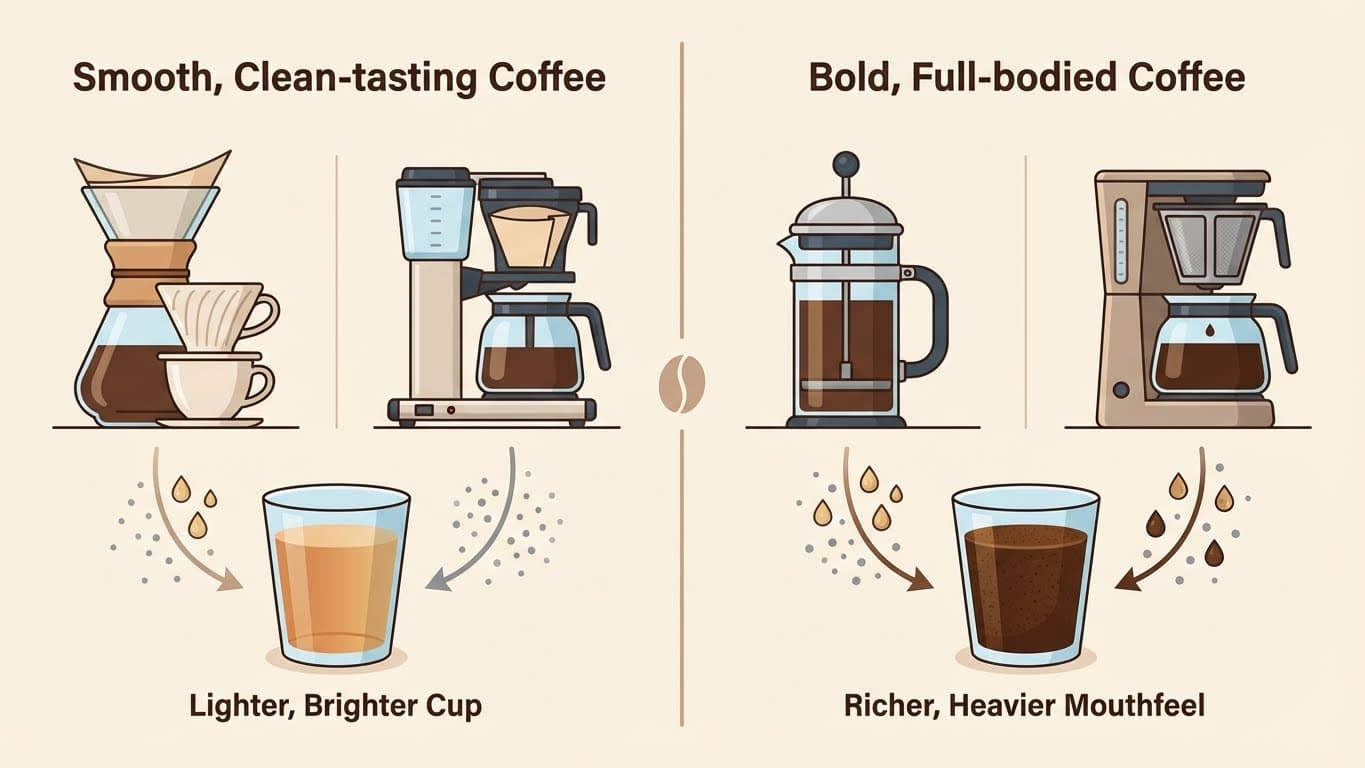
If you like clean, lighter coffee, choose paper-filter methods: drip, pour-over, Chemex-style brewers, or AeroPress with paper filters. These remove more oils and sediment, leaving a brighter cup.
If you like bold, heavy coffee, choose French press, moka pot, or metal-filter methods. These keep more oils and texture. The cup can feel richer, though it may also carry sediment or bitterness if the recipe is careless.
If you love milk drinks, be honest about whether you mean espresso drinks or just coffee with milk. True lattes and cappuccinos need espresso or a close substitute. But a strong AeroPress, moka pot, or concentrated drip recipe may satisfy casual milk-coffee drinkers for far less money.
If you mostly want one reliable morning mug, do not overbuild the setup. A good drip machine and fresh medium roast may bring more happiness than a complicated brewer you avoid using.
Common Mistakes First-Time Buyers Make
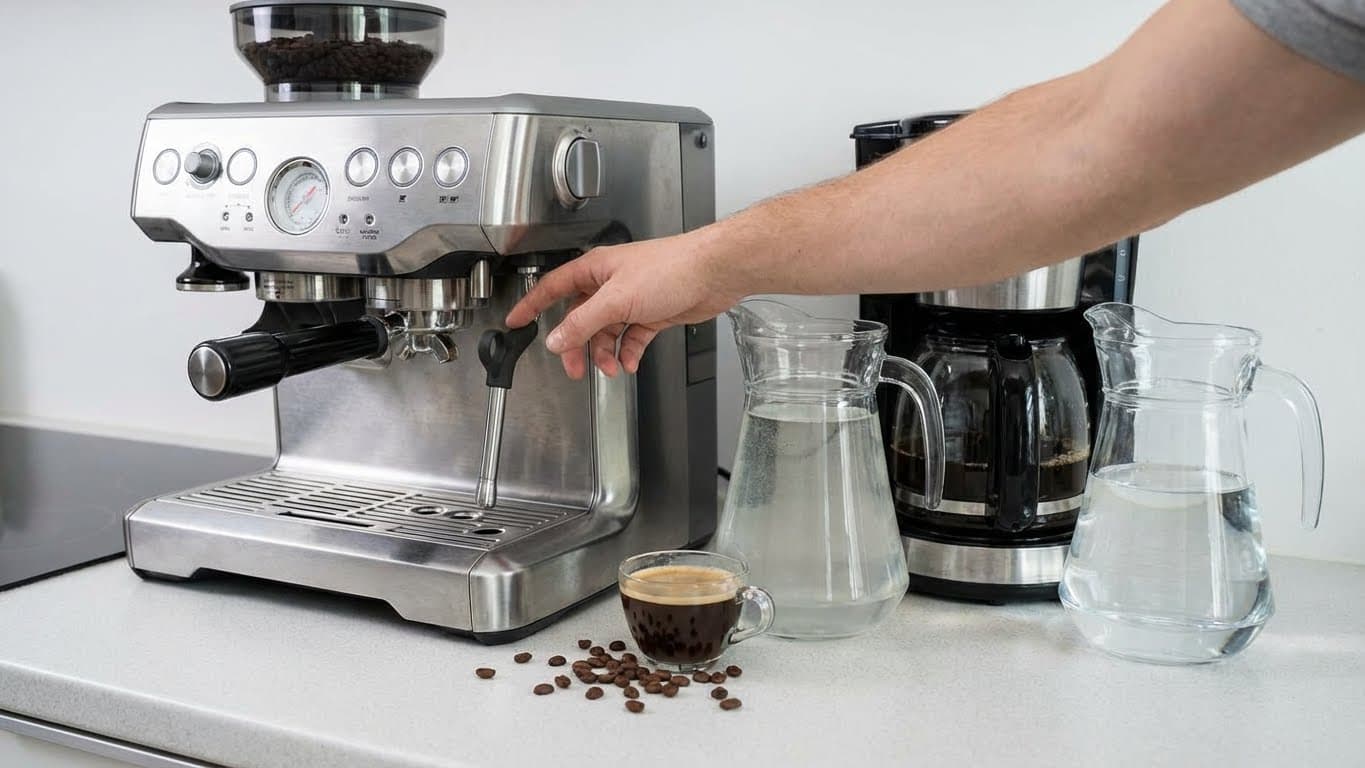
- Buying for aspiration: choose the brewer for the morning you actually live.
- Ignoring cleanup: every brewer needs washing, descaling, or filter management.
- Spending everything on the machine: stale coffee in an expensive brewer still tastes stale.
- Forgetting water quality: bad-tasting water makes bad-tasting coffee.
- Underestimating grinder impact: grind size and freshness can matter as much as the brewer.
- Choosing too much capacity: bigger is not better if most of the pot gets wasted.
Frequently Asked Questions
What is the easiest coffee maker for beginners?
A basic drip coffee maker is usually easiest for multiple cups. For one cup, a pod machine is easiest, while a French press is the simplest non-pod manual option. The easiest good-tasting choice depends on whether you value convenience or control.
How much should I spend on my first coffee maker?
Many beginners can start well in the $30 to $150 range, depending on brewer type. Spend less for French press or pour-over, more for a reliable drip machine. Be cautious with cheap espresso machines unless you understand their limits.
Is a coffee grinder necessary if I'm just starting out?
Not required, but helpful. A burr grinder makes freshness and grind size easier to control. If budget is tight, buy coffee from a roaster and ask them to grind it for your brewer. That is better than using a poor grinder badly.
Can I make good coffee without an expensive machine?
Yes. Fresh beans, clean water, correct grind, and a sensible recipe can make excellent coffee with simple gear. A French press, pour-over cone, or modest drip brewer can beat an expensive machine used carelessly.
How often do I need to clean my coffee maker?
Rinse removable parts after each use. Wash French presses and pour-over gear with soap regularly. Drip machines need descaling every one to three months depending on water hardness and use. Follow the manufacturer's instructions for your model.
Conclusion: Your Next Steps to Better Home Brewing
Choose your first coffee maker by matching it to your routine. For several cups and low effort, choose drip. For one fast cup, consider pods but calculate the ongoing cost. For rich coffee on a budget, choose French press. For clean flavor and a hands-on ritual, choose pour-over. For true lattes and cappuccinos, consider espresso only if you are ready for the full setup.
Your first brewer does not need to be permanent. It needs to get you making better coffee at home without creating a new chore. Start with a realistic tool, buy fresh coffee, use clean water, and learn one repeatable recipe. That foundation matters more than chasing the most impressive machine on the shelf.

Comments