


Table of Contents
- Why Does Brewing Coffee at Home Get So Messy?
- Coffee Grounds Are the Main Offender
- Water Splashes and Spills
- Rushing Through the Process
- Choose Equipment That Minimizes Mess
- Opt for Enclosed Brewing Systems
- Invest in a Quality Grinder
- Use a Gooseneck Kettle
- Set Up a Dedicated Coffee Station
- Choose the Right Spot
- Add a Tray or Mat
- Keep Supplies Organized
- Master the Art of Mess-Free Grinding and Scooping
- Scoop Over the Container
- Tap, Don't Shake
- Use a Funnel for Narrow Openings
- Pour Water Carefully and Avoid Overfilling
- Know Your Capacity Limits
- Pour Slowly
- Wipe the Kettle Before Pouring
- Clean as You Go
- Wipe Spills Instantly
- Empty Grounds Right Away
- Rinse Equipment Before Residue Dries
- Common Mistakes and How to Avoid Them
- Frequently Asked Questions
- What's the easiest coffee brewing method for avoiding mess?
- How do I stop coffee grounds from getting everywhere when I grind beans?
- Can I prevent water spots around my coffee station?
- How often should I clean my coffee equipment to prevent buildup?
- Is there a way to compost coffee grounds without creating a mess?
- Conclusion and Your Next Steps
Have you ever started your morning with a simple goal—brew a cup of coffee—only to end up with grounds scattered across the counter, water dripping down the cabinets, and a sticky residue that somehow found its way to the floor? You’re not alone. Learning how to brew coffee at home without making a mess is a skill that takes a bit of practice, but once you nail it, your mornings become smoother and your kitchen stays cleaner.
In this guide, you’ll discover practical tips and techniques to keep your coffee-making routine tidy. We’ll cover everything from choosing the right equipment to cleaning as you go, so you can enjoy your perfect cup without dreading the aftermath.
Why Does Brewing Coffee at Home Get So Messy?
Before diving into solutions, it helps to understand why coffee brewing tends to create such chaos. Identifying the common culprits makes it easier to prevent them.
Coffee Grounds Are the Main Offender
Coffee grounds are lightweight, slightly oily, and love to cling to surfaces. When you scoop them from a bag or grinder, they scatter easily. A small spill can spread quickly if you try to wipe it up without the right approach.
For example, imagine you’re rushing in the morning. You grab the coffee bag, scoop quickly, and a few grounds fall onto the counter. You brush them aside with your hand, and suddenly they’re on the floor, your shirt, and somehow in the silverware drawer. Sound familiar?
Water Splashes and Spills
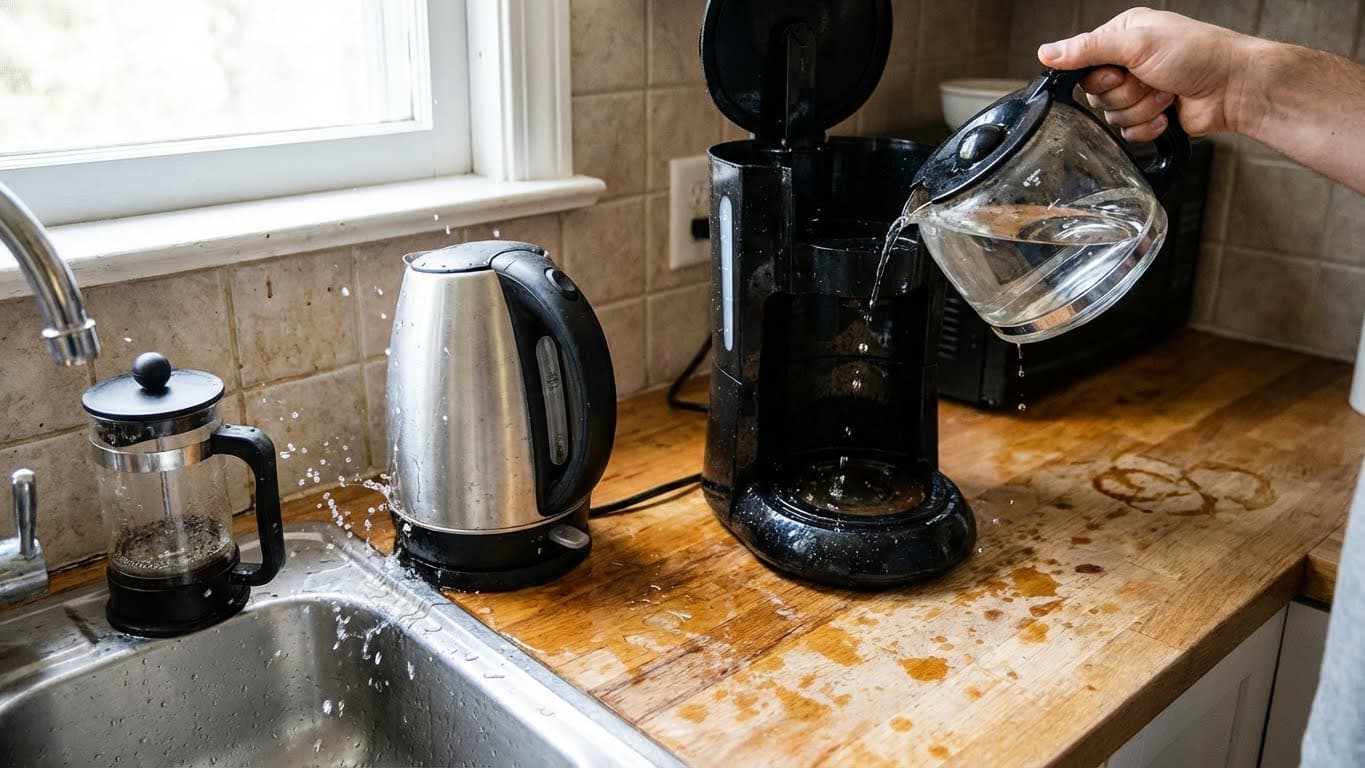
Filling a kettle, pouring water into a coffee maker, or rinsing a French press—all of these actions involve water that can splash unexpectedly. Over time, these small splashes create water stains and sticky spots, especially if they mix with coffee residue.
Rushing Through the Process
Most messes happen when you’re in a hurry. Speed leads to careless pouring, overfilled reservoirs, and knocked-over containers. Slowing down even a little can prevent most accidents.
Choose Equipment That Minimizes Mess
The tools you use play a significant role in how clean your brewing experience stays. Some coffee makers and accessories are simply designed better for mess-free operation.
Opt for Enclosed Brewing Systems
Drip coffee makers with enclosed filter baskets tend to contain grounds better than open pour-over setups. If you love pour-over coffee, look for drippers with wide bases that sit securely on your mug or carafe.
Single-serve pod machines, while not everyone’s preference, virtually eliminate ground coffee mess since everything stays sealed until you dispose of the used pod.
Invest in a Quality Grinder
If you grind your own beans—which many coffee lovers prefer for freshness—choose a grinder with a secure lid and a grounds container that locks in place. Burr grinders often produce less static than blade grinders, meaning fewer grounds clinging to everything.
In short: a good grinder with anti-static features keeps grounds where they belong.
Use a Gooseneck Kettle
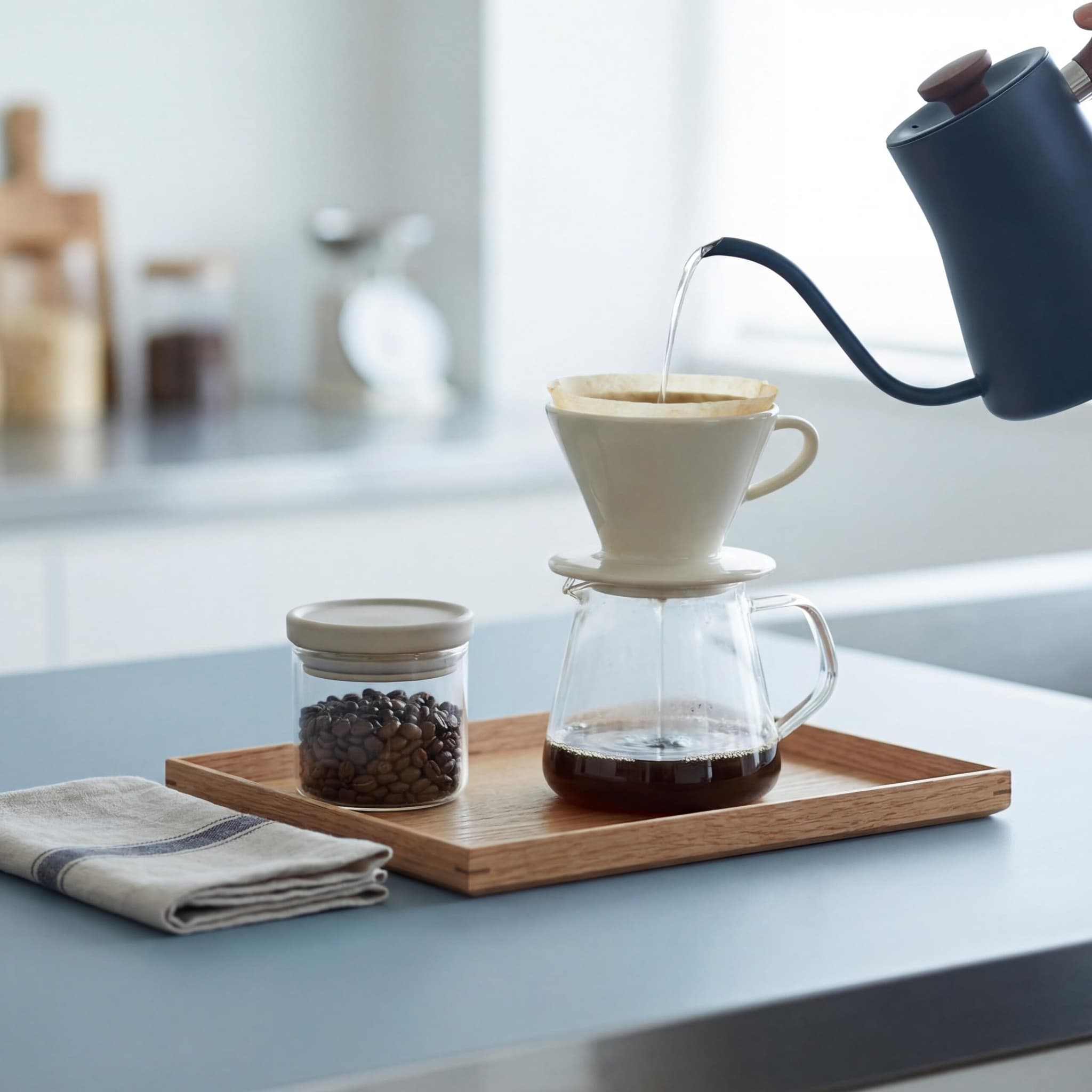
For pour-over methods, a gooseneck kettle gives you precise control over water flow. This prevents splashing and overshooting your target. You pour exactly where you want, at the speed you want.
Set Up a Dedicated Coffee Station
One of the best ways to brew coffee at home without making a mess in the kitchen is to create a dedicated space for it. This contains any potential spills to one area and makes cleanup faster.
Choose the Right Spot
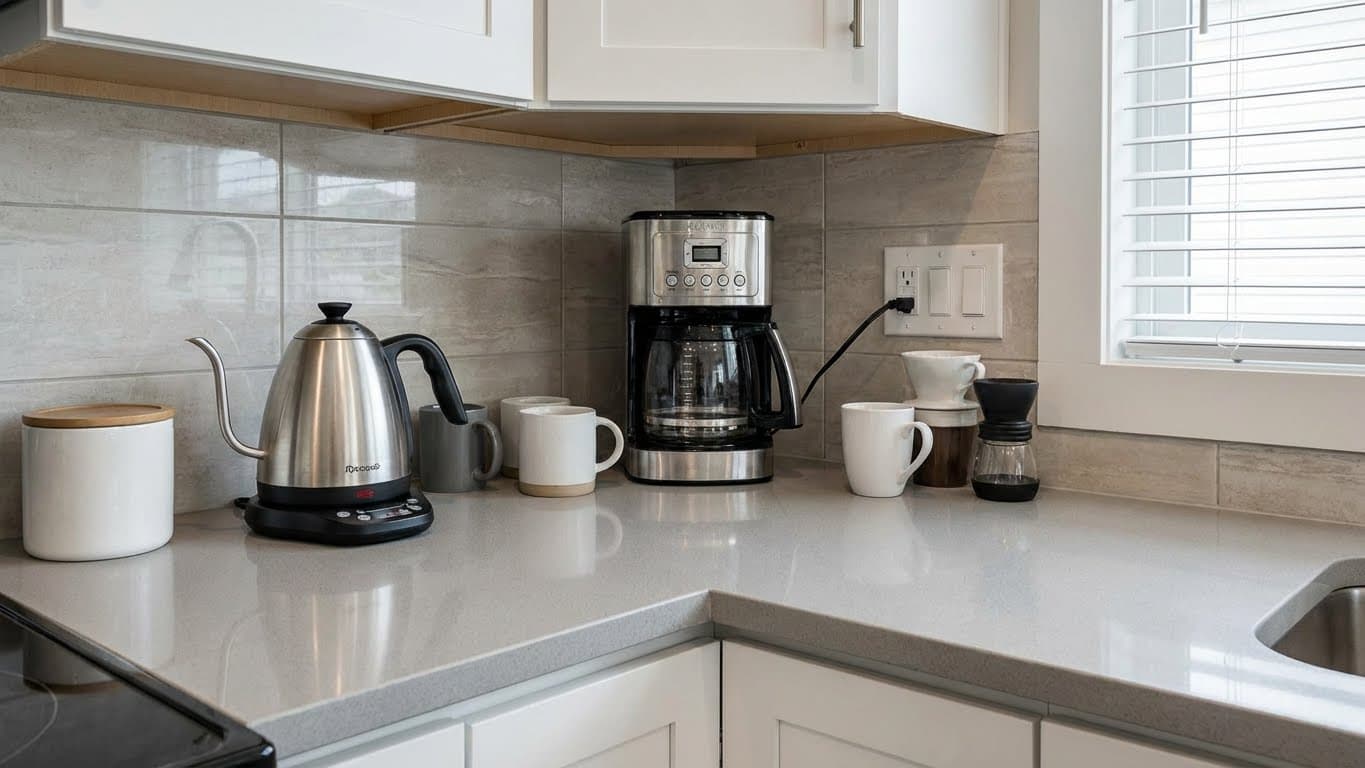
Pick a corner of your counter near a power outlet if you use an electric kettle or coffee maker. Make sure the surface is easy to wipe down—avoid placing your station near fabric curtains or wooden surfaces that stain easily.
Add a Tray or Mat
Place a small tray, silicone mat, or even a simple dish towel under your coffee setup. This catches drips, grounds, and splashes before they reach your counter. When the mat gets dirty, you simply wash it instead of scrubbing the entire countertop.
- Silicone mats are heat-resistant and easy to rinse clean.
- Metal trays look sleek and contain larger spills.
- Cloth towels work in a pinch but need regular washing.
Keep Supplies Organized
Store your coffee beans, filters, and tools within arm’s reach of your brewing spot. When everything has a designated place, you’re less likely to fumble around and knock things over. A small container for your scoop and a sealed canister for beans go a long way.
Master the Art of Mess-Free Grinding and Scooping
Handling coffee grounds is where many people go wrong. A few simple habits can keep grounds contained.
Scoop Over the Container
Instead of scooping beans or grounds over the counter, hold your bag or container directly over your grinder or filter basket. Any stray bits fall back into the source instead of scattering across surfaces.
Tap, Don’t Shake
When transferring grounds from a grinder to a filter, gently tap the container to release them. Shaking aggressively sends grounds flying. A calm, controlled tap keeps everything in place.
Use a Funnel for Narrow Openings
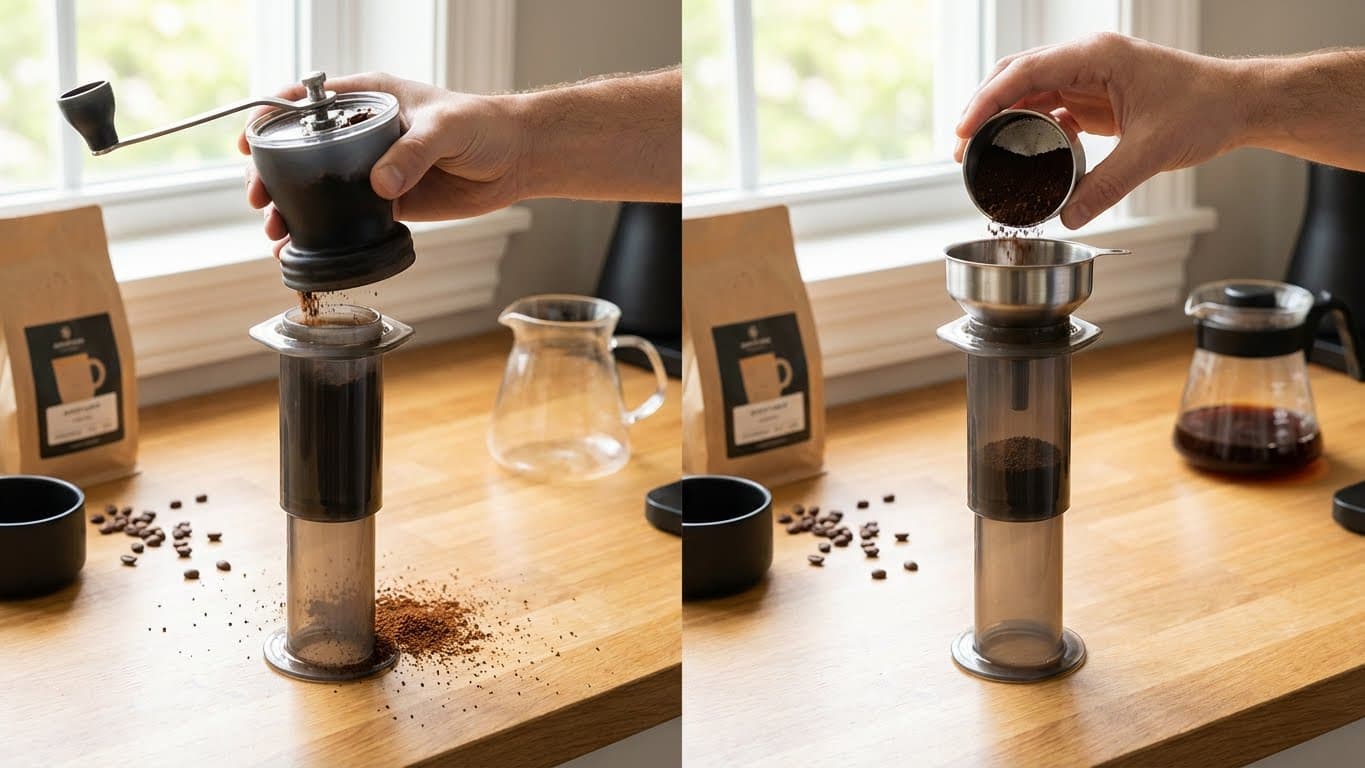
If you’re filling a moka pot, AeroPress, or any brewer with a small opening, a small funnel makes a huge difference. It directs the grounds exactly where they need to go without spillage.
Here’s a quick scenario: You’re making AeroPress coffee and try to pour grounds directly from your grinder into the narrow chamber. Half of them miss and land on the counter. Next time, you use a funnel—problem solved.
Pour Water Carefully and Avoid Overfilling
Water-related messes are easy to prevent with a bit of attention and the right technique.
Know Your Capacity Limits
Every coffee maker has a maximum fill line for a reason. Overfilling leads to overflow during brewing, which means hot water and coffee dripping down the machine and onto your counter. Always check the water level before starting.
Pour Slowly
Whether you’re filling a reservoir or doing a manual pour-over, slow and steady wins the race. Fast pouring causes splashing. Take an extra few seconds to pour at a controlled pace.
Wipe the Kettle Before Pouring
After boiling water, the outside of your kettle often has condensation or residual drips. Give it a quick wipe with a towel before you pour. This prevents water from dripping onto your counter or brewing setup.
- Fill your kettle over the sink, not the counter.
- Keep a small towel nearby for quick wipes.
- Use a kettle with a drip-free spout if possible.
Clean as You Go
The secret to a mess-free coffee routine isn’t avoiding all spills—it’s addressing them immediately before they become bigger problems.
Wipe Spills Instantly
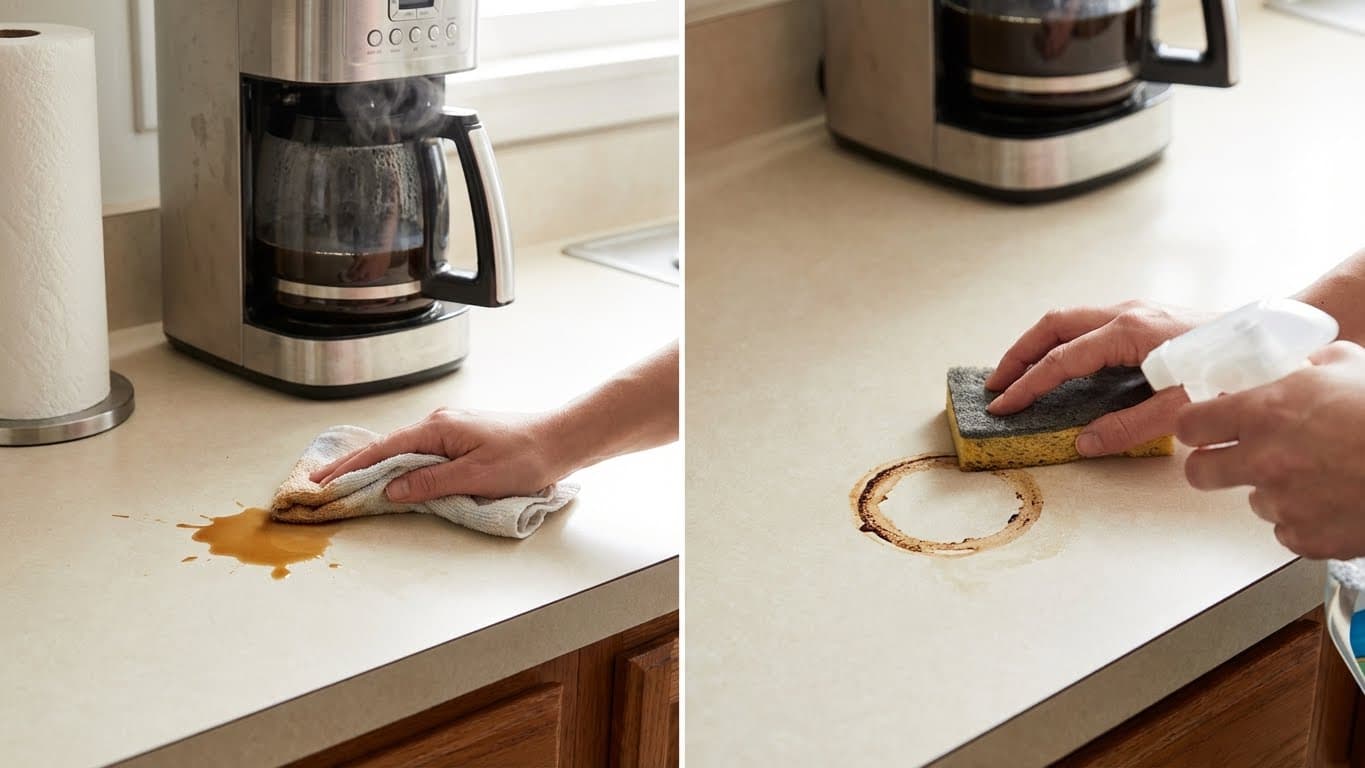
Coffee and water are much easier to clean when fresh. A dried coffee ring takes scrubbing; a fresh drip takes a quick swipe. Keep a damp cloth or paper towel within reach while you brew.
Empty Grounds Right Away
Used coffee grounds can clog sinks and create odors if left sitting. After brewing, dispose of them immediately. Many people compost their grounds, which is an eco-friendly option. Others simply toss them in the trash.
To sum up: don’t let used grounds sit in your brewer for hours. The longer they sit, the messier the cleanup.
Rinse Equipment Before Residue Dries
Give your carafe, French press plunger, or filter basket a quick rinse right after use. Coffee oils and residue harden over time, making them tougher to remove later. A five-second rinse now saves five minutes of scrubbing later.
Common Mistakes and How to Avoid Them
Even experienced home baristas make errors that lead to messy kitchens. Here are some typical pitfalls and their solutions.
- Using a dull grinder blade: Produces uneven grounds that scatter more. Replace or sharpen as needed.
- Ignoring machine maintenance: Clogged or dirty machines overflow and leak. Clean your coffee maker regularly.
- Leaving the coffee bag open: Leads to spills when the bag tips over. Always seal or clip your bag after use.
- Brewing distracted: Checking your phone while pouring water is a recipe for overflow. Stay focused during the brewing process.
A simple example: You start your drip machine, walk away to check emails, and return to find coffee pooling on the counter because the carafe wasn’t seated properly. Taking ten seconds to double-check your setup prevents this entirely.
Frequently Asked Questions
What’s the easiest coffee brewing method for avoiding mess?
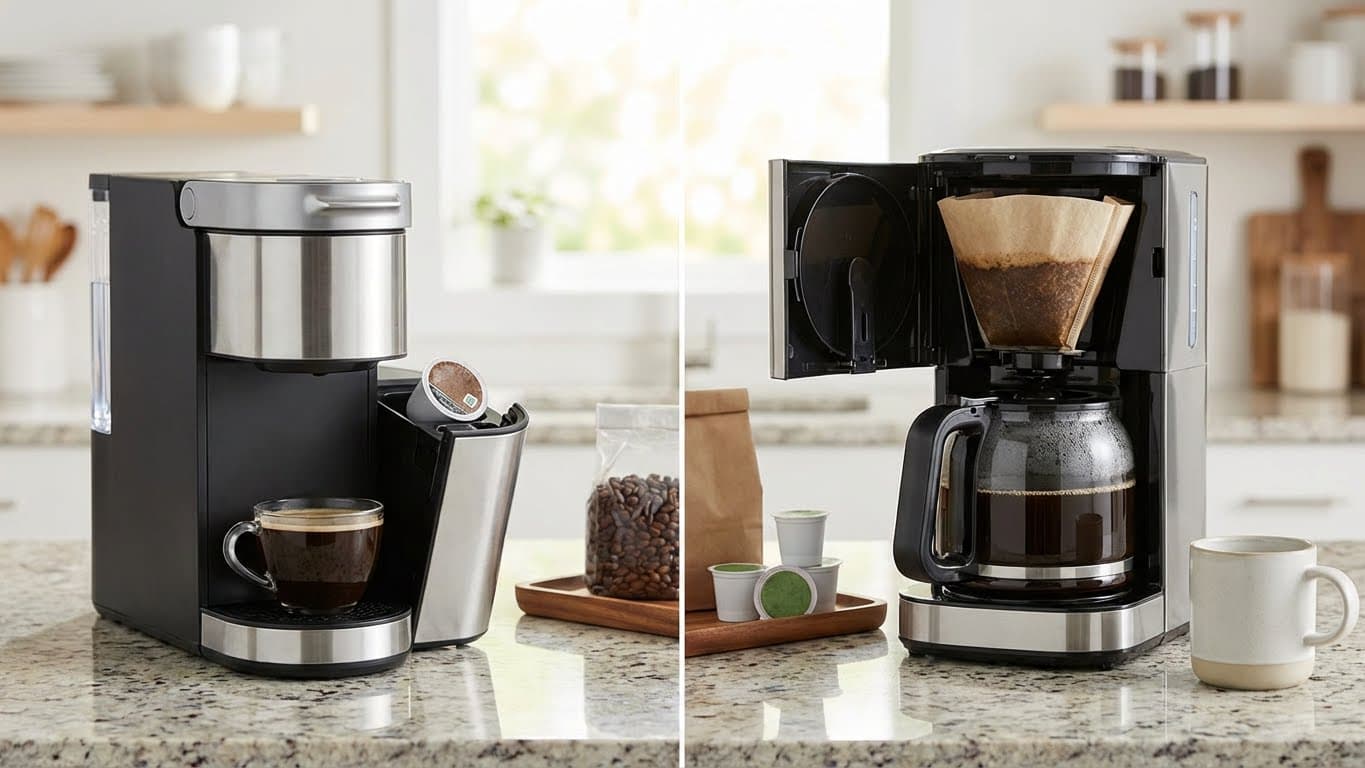
Single-serve pod machines create the least mess since grounds are pre-packaged and contained. However, if you prefer fresh grounds, a drip coffee maker with a proper filter basket is also very tidy when used correctly.
How do I stop coffee grounds from getting everywhere when I grind beans?
Use a grinder with a secure lid and a static-reducing grounds container. Tap the container gently instead of shaking it. You can also lightly mist your beans with water before grinding to reduce static cling.
Can I prevent water spots around my coffee station?
Yes. Use a tray or mat under your setup to catch drips. Wipe your kettle before pouring, and address any splashes immediately with a dry cloth before they leave marks.
How often should I clean my coffee equipment to prevent buildup?
Rinse removable parts after each use. Deep clean your coffee maker—including descaling if needed—every one to three months depending on usage and water hardness. Regular maintenance prevents residue buildup that leads to messier brewing.
Is there a way to compost coffee grounds without creating a mess?
Keep a small compost bin with a lid near your coffee station. Transfer grounds directly from your brewer into the bin. Empty the bin into your outdoor compost regularly to avoid odors.
Conclusion and Your Next Steps
Brewing coffee at home without making a mess in the kitchen comes down to thoughtful habits and a bit of preparation. Choose equipment that contains grounds and water effectively. Set up a dedicated, easy-to-clean coffee station. Handle grounds and water with care, and always clean as you go.
By implementing even a few of these tips, you’ll notice a significant difference in how your kitchen looks after your morning brew. Start with one change—maybe adding a mat under your coffee maker or slowing down your pour—and build from there. Before long, you’ll enjoy your coffee ritual without dreading the cleanup that used to follow.



Comments