


Table of Contents
- Understanding What Affects Caffeine in Your Coffee
- Bean Type Matters More Than You Think
- Roast Level Plays a Role
- Grind Size and Brew Time
- Choose the Right Brewing Method for Less Caffeine
- Cold Brew: Not as Low-Caffeine as You'd Think
- French Press and Pour-Over
- Espresso: Small But Mighty
- Practical Tips to Reduce Caffeine at Home
- Blend Regular and Decaf Beans
- Use Less Coffee Per Cup
- Lower Your Water Temperature
- Shorten Your Brew Time
- Consider Low-Caffeine Coffee Alternatives
- Half-Caf and Swiss Water Decaf
- Chicory Coffee Blends
- Mushroom Coffee and Adaptogen Blends
- Building a Lower-Caffeine Coffee Routine
- Start With Your Afternoon Cup
- Gradually Adjust Your Ratios
- Pay Attention to How You Feel
- Frequently Asked Questions
- Does decaf coffee have any caffeine at all?
- Will reducing caffeine make my coffee taste worse?
- How long does it take to adjust to less caffeine?
- Is it healthier to drink less caffeine?
- Can I use these tips for tea as well?
- Summary and Your Next Step
Do you love the ritual of brewing coffee at home but find yourself jittery, anxious, or unable to sleep after your afternoon cup? You’re not alone. Many coffee lovers want to reduce their caffeine intake without completely giving up the taste and experience they enjoy. The good news is that brewing coffee at home with less caffeine is entirely possible—and you don’t have to switch to decaf to do it.
In this guide, you’ll discover practical techniques for lowering the caffeine content in your daily brew. From choosing the right beans to adjusting your brewing method, these tips will help you enjoy a gentler cup while keeping the flavor you love.
Understanding What Affects Caffeine in Your Coffee
Before you start tweaking your brewing routine, it helps to understand what actually determines how much caffeine ends up in your cup. Caffeine extraction depends on several factors, and knowing them gives you control over the final result.
Bean Type Matters More Than You Think
There are two main species of coffee beans: Arabica and Robusta. Arabica beans contain roughly half the caffeine of Robusta beans. If you’re buying supermarket blends or instant coffee, there’s a good chance you’re consuming Robusta without realizing it. Switching to 100% Arabica beans is one of the easiest ways to cut caffeine without changing anything else about your routine.
Roast Level Plays a Role
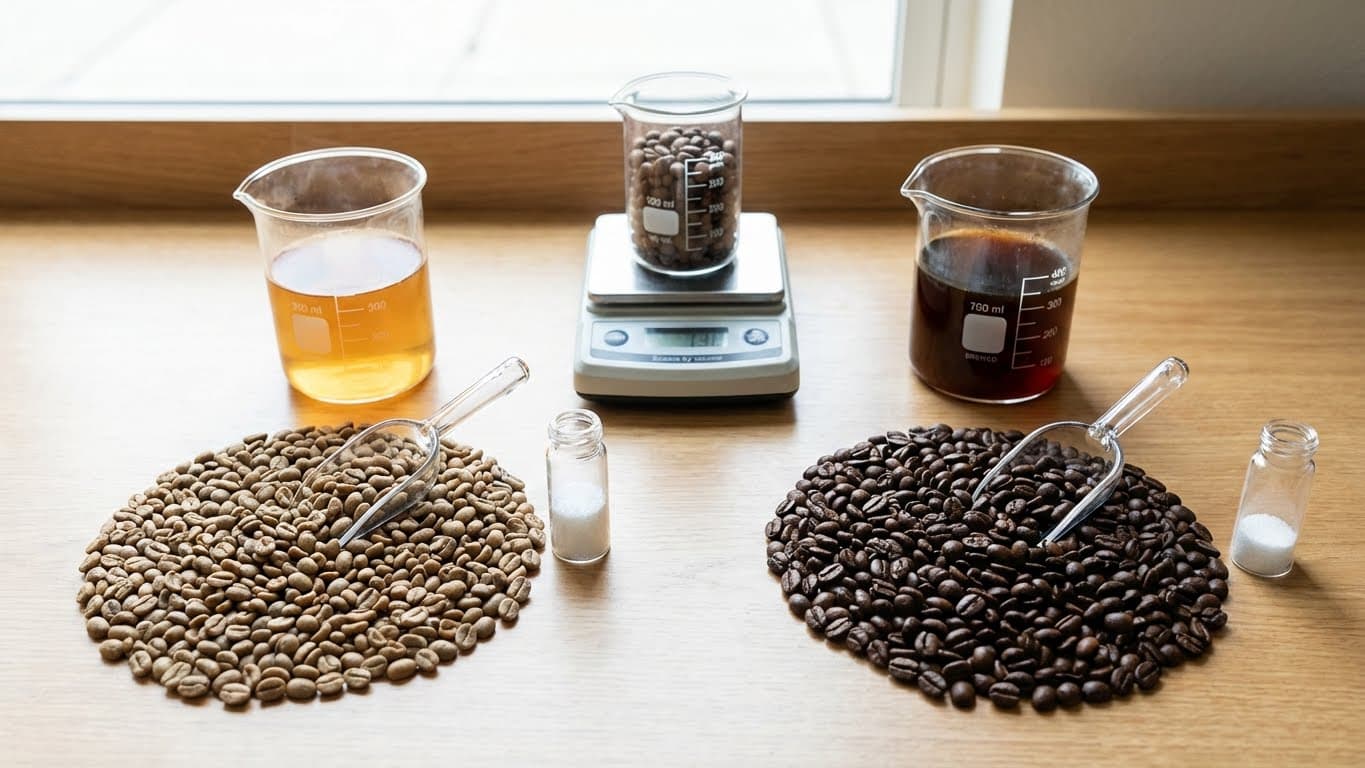
Here’s a common myth: dark roast coffee has more caffeine because it tastes stronger. In reality, the roasting process burns off small amounts of caffeine. While the difference isn’t dramatic, dark roasts contain slightly less caffeine than light roasts by volume. If you measure your coffee by scoops rather than weight, choosing a dark roast can give you a marginally lower-caffeine cup.
Grind Size and Brew Time
Caffeine is extracted when hot water comes into contact with coffee grounds. The finer the grind and the longer the brew time, the more caffeine ends up in your cup. A coarse grind with a shorter extraction time will naturally produce a lower-caffeine result.
Choose the Right Brewing Method for Less Caffeine
Your brewing method has a significant impact on caffeine levels. Some methods are naturally lower in caffeine, while others maximize extraction. Here’s how popular brewing methods compare.
Cold Brew: Not as Low-Caffeine as You’d Think
Many people assume cold brew is gentler on caffeine because it’s smooth and less acidic. However, cold brew typically steeps for 12–24 hours, which extracts a lot of caffeine. If you dilute your cold brew concentrate properly, it can be moderate in caffeine, but straight concentrate is actually quite potent.
French Press and Pour-Over
Both French press and pour-over methods give you control over brew time. For less caffeine, try:
- Using a coarser grind than usual
- Reducing your steep or pour time by 30–60 seconds
- Using slightly cooler water (around 90°C instead of boiling)
For example, if you normally steep your French press for 4 minutes, try pulling it at 3 minutes. You’ll notice a lighter body and slightly less caffeine without a huge flavor sacrifice.
Espresso: Small But Mighty
A single shot of espresso contains less total caffeine than a full cup of drip coffee—around 63mg compared to 95mg or more. If you enjoy espresso-based drinks, ordering or making a single-shot latte instead of a double gives you the coffee experience with less stimulation.
Practical Tips to Reduce Caffeine at Home
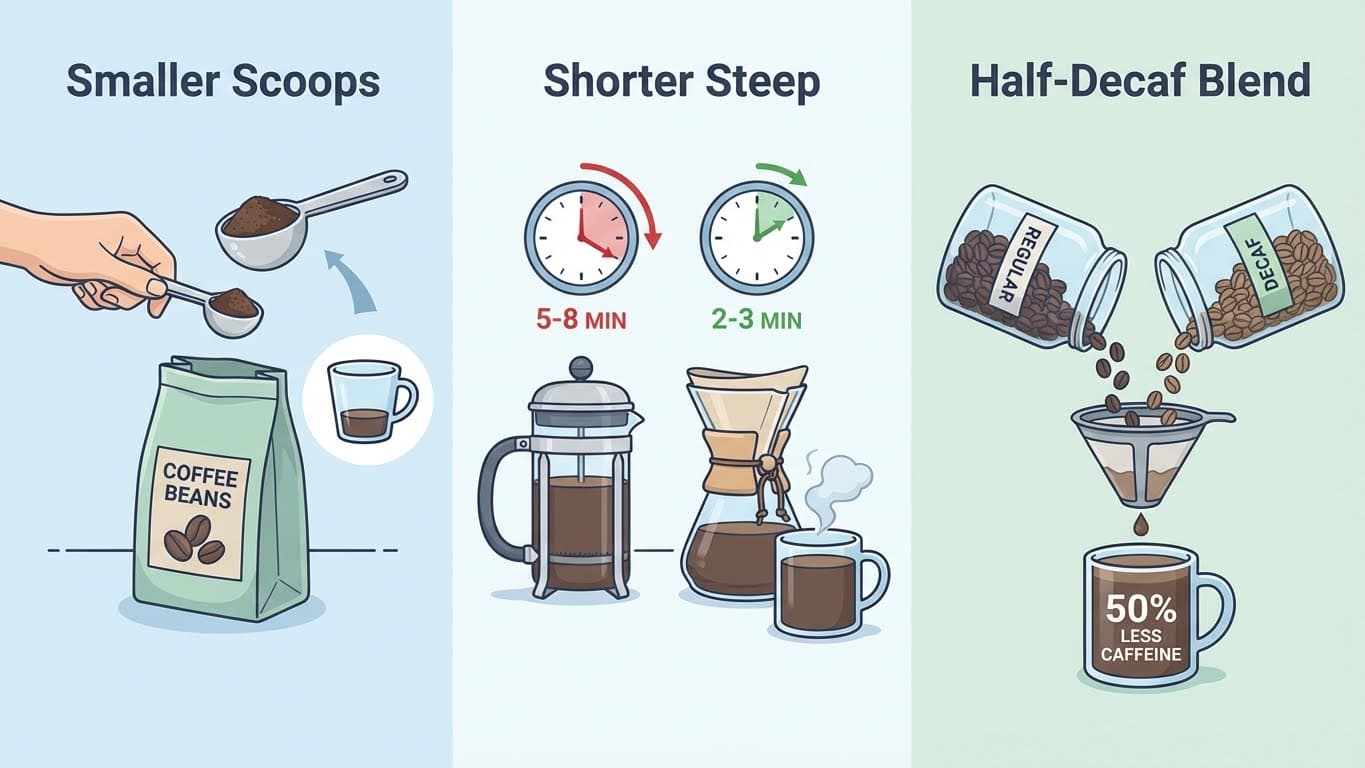
Now let’s get into actionable strategies you can start using today. These tips work for any brewing method and don’t require special equipment.
Blend Regular and Decaf Beans
This is one of the most effective and underrated methods. By mixing regular coffee with decaf, you get the flavor complexity of regular beans with reduced caffeine. Start with a 50/50 blend and adjust from there. Many specialty roasters now sell “half-caf” blends, or you can create your own at home.
A typical scenario: You normally use 30 grams of coffee for your morning pour-over. Try using 15 grams of regular and 15 grams of decaf. You’ll cut your caffeine roughly in half while maintaining most of the taste profile.
Use Less Coffee Per Cup
This sounds obvious, but it works. The standard ratio is about 1:15 to 1:17 (coffee to water). If you typically use a 1:15 ratio, try 1:18 or even 1:20. Your coffee will be slightly lighter in body, but you’ll consume less caffeine per cup. Over time, your palate adjusts.
Lower Your Water Temperature
Caffeine extracts more efficiently at higher temperatures. Brewing with water around 85–90°C instead of 96°C will reduce extraction. This also tends to produce a smoother, less bitter cup. Just be careful not to go too cool, or you’ll end up with under-extracted, sour coffee.
Shorten Your Brew Time
For immersion methods like French press or AeroPress, cutting your brew time reduces caffeine. In an AeroPress, for instance, a 1-minute brew instead of 2 minutes will yield less caffeine. Experiment gradually to find the sweet spot between flavor and caffeine reduction.
Consider Low-Caffeine Coffee Alternatives
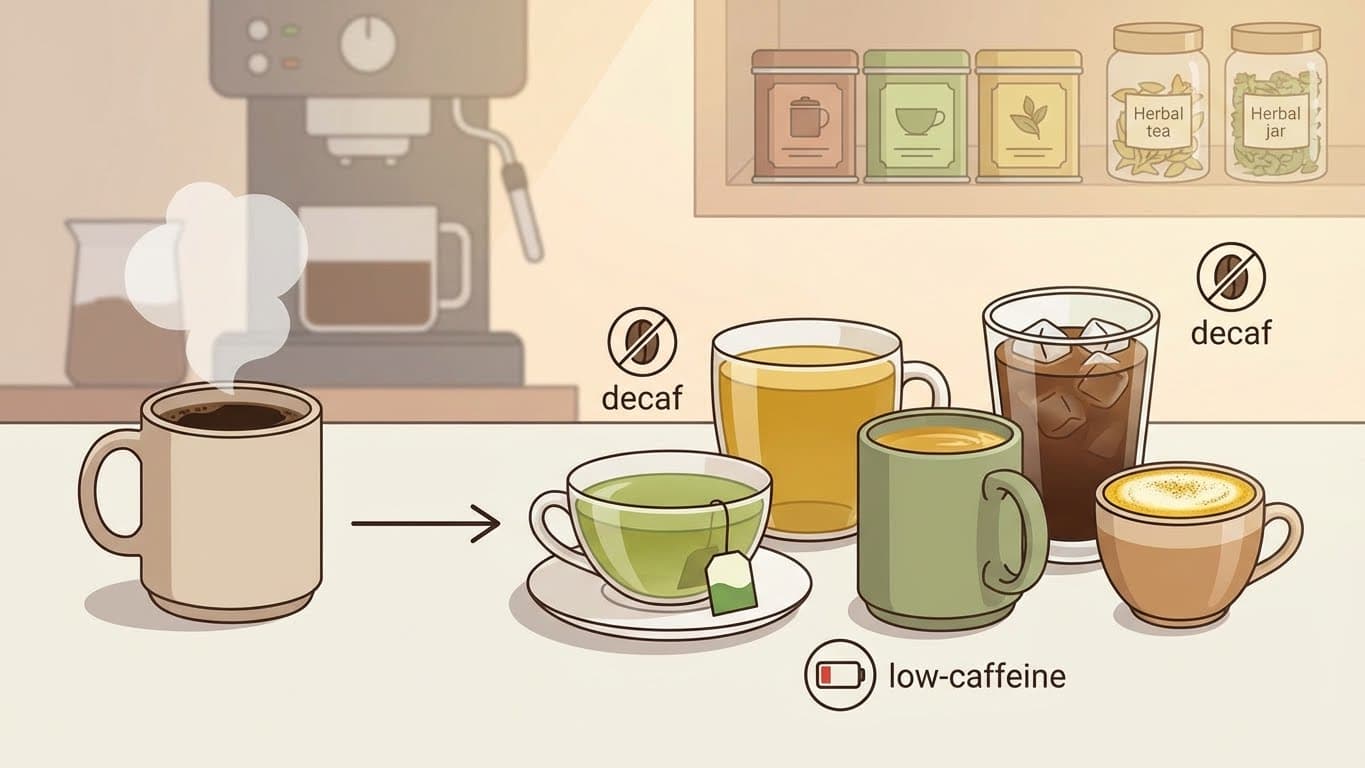
Sometimes the best approach is to replace one or two cups with something else entirely. This doesn’t mean giving up coffee—just supplementing with lower-caffeine options.
Half-Caf and Swiss Water Decaf
If you haven’t tried modern decaf coffee, you might be pleasantly surprised. Swiss Water Process decaf removes caffeine without chemicals and preserves more flavor than traditional methods. Many specialty roasters now offer high-quality decaf that tastes remarkably close to regular coffee.
Chicory Coffee Blends
Popular in New Orleans-style coffee, chicory root adds body and a slightly nutty flavor while containing zero caffeine. Blending your regular coffee with chicory stretches your beans further and reduces overall caffeine. Start with a 20% chicory blend and adjust to taste.
Mushroom Coffee and Adaptogen Blends
These trendy alternatives mix small amounts of coffee with functional mushrooms like lion’s mane or chaga. They typically contain about half the caffeine of regular coffee while claiming additional health benefits. The taste takes some getting used to, but many people find them a satisfying afternoon option.
Building a Lower-Caffeine Coffee Routine
Reducing caffeine works best when you approach it systematically rather than going cold turkey. Here’s how to transition smoothly.
Start With Your Afternoon Cup
Most people are more sensitive to caffeine later in the day. Keep your morning ritual unchanged and focus on reducing or replacing your afternoon or evening cups first. Swap your 3 PM coffee for a half-caf version or a chicory blend.
Gradually Adjust Your Ratios
If you’re blending regular and decaf, start at 75% regular and 25% decaf. After a week, move to 50/50. This gradual approach helps you avoid withdrawal headaches while giving your palate time to adjust.
Pay Attention to How You Feel
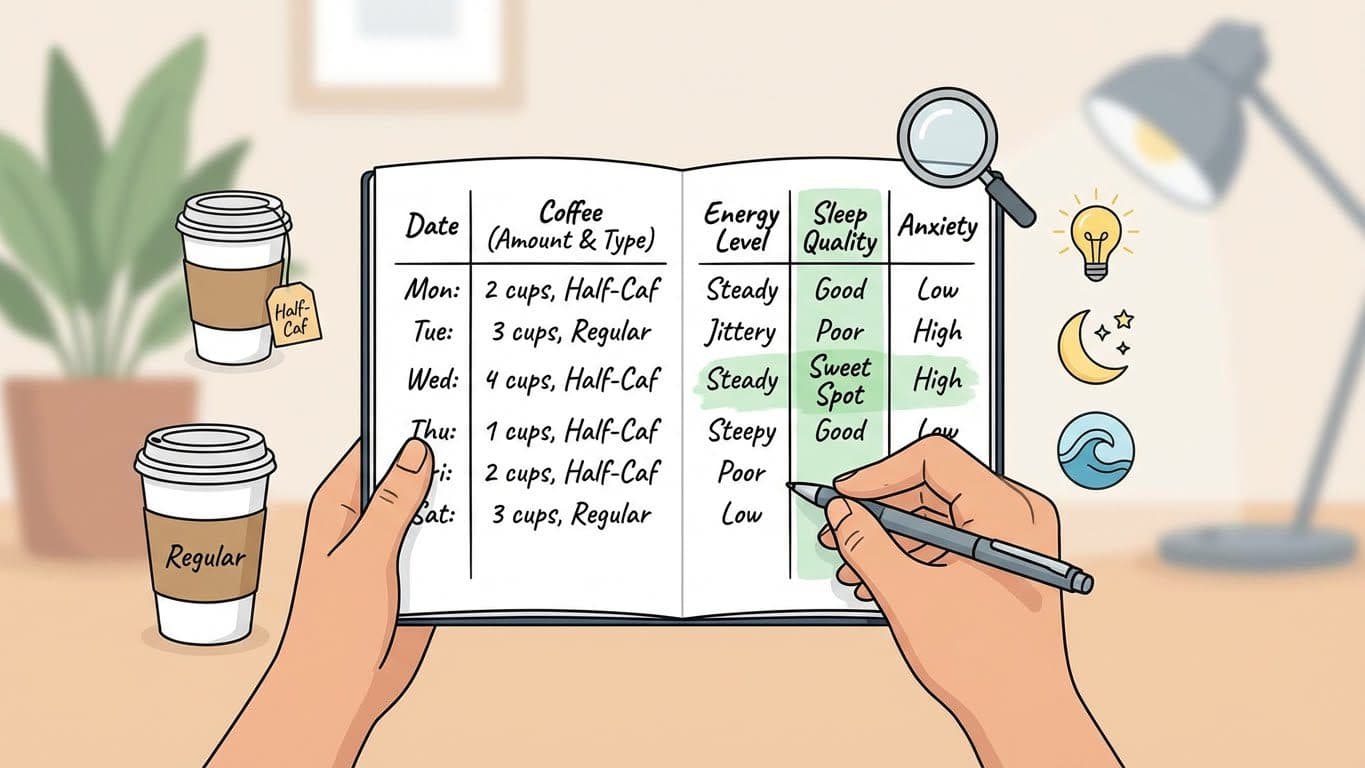
Keep a simple log for a week or two. Note how much coffee you drink, what type, and how you feel in terms of energy, sleep quality, and anxiety. This awareness helps you find your personal sweet spot—the amount of caffeine that gives you benefits without downsides.
For instance, you might discover that two cups of half-caf in the morning leaves you alert without the afternoon crash, while your previous three cups of regular coffee did not.
Frequently Asked Questions
Does decaf coffee have any caffeine at all?
Yes, decaf isn’t completely caffeine-free. A typical cup of decaf contains about 2–15mg of caffeine, compared to 95mg or more in regular coffee. For most people, this small amount doesn’t cause noticeable effects, but those extremely sensitive to caffeine should be aware.
Will reducing caffeine make my coffee taste worse?
Not necessarily. Using high-quality decaf beans, adjusting your brewing method carefully, and blending rather than eliminating regular coffee can maintain excellent flavor. The key is making gradual changes and using good beans.
How long does it take to adjust to less caffeine?
Most people experience mild withdrawal symptoms (headache, fatigue, irritability) for 2–9 days when significantly reducing caffeine. By tapering gradually, you can minimize or avoid these effects entirely.
Is it healthier to drink less caffeine?
This depends on the individual. Moderate caffeine consumption (up to 400mg daily for most adults) is generally considered safe and may have health benefits. However, if you experience anxiety, sleep issues, or heart palpitations, reducing caffeine could improve your quality of life. For personalized advice, consult a healthcare professional.
Can I use these tips for tea as well?
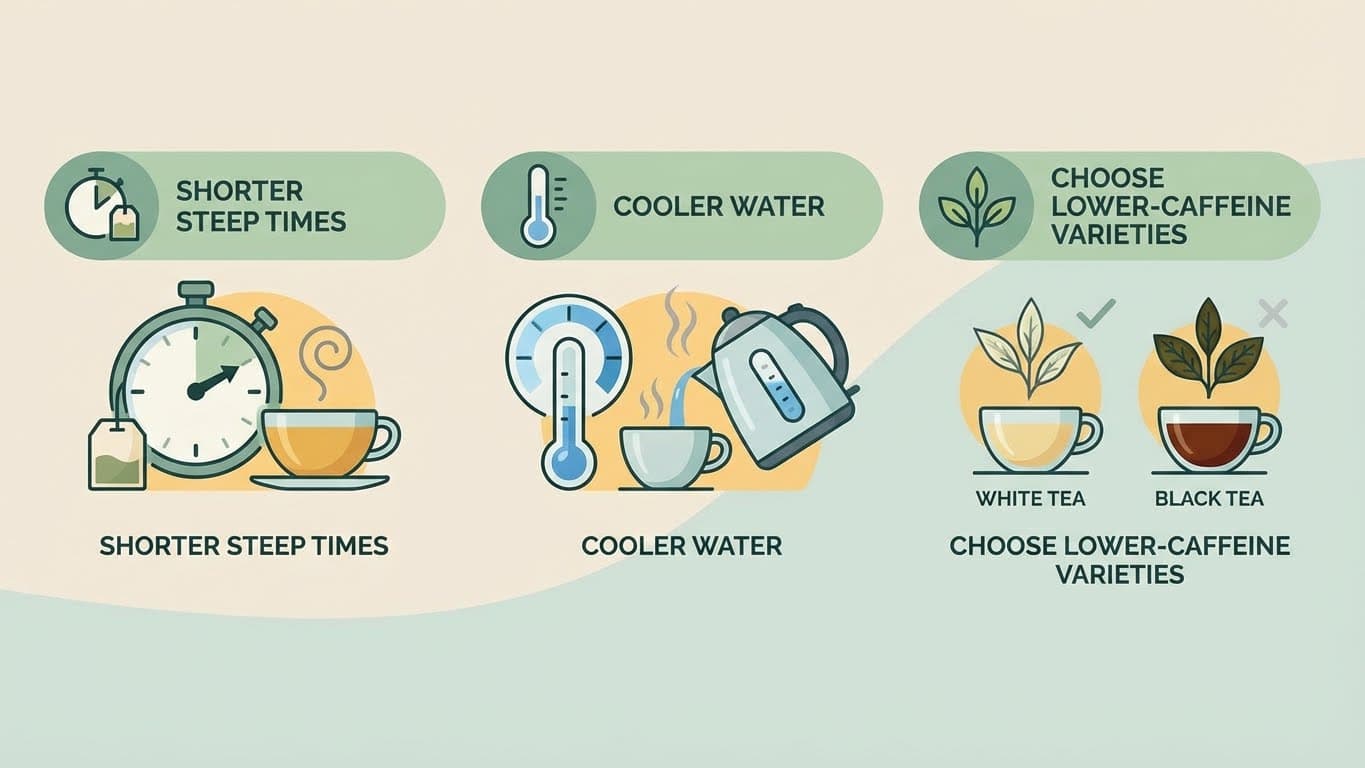
Many of these principles apply to tea too. Shorter steep times, cooler water, and choosing naturally lower-caffeine varieties (like white tea instead of black) will reduce caffeine in your cup.
Summary and Your Next Step
Brewing coffee at home with less caffeine doesn’t require dramatic sacrifices. By choosing Arabica beans, experimenting with dark roasts, adjusting your grind size and brew time, or simply blending regular with decaf, you can significantly reduce your caffeine intake while still enjoying great-tasting coffee.
Start with one small change this week—perhaps mixing 25% decaf into your usual beans or shortening your brew time by a minute. Pay attention to how you feel, and adjust from there. With a little experimentation, you’ll find a routine that gives you the coffee experience you love with the caffeine level that works for your body.



Comments