


Table of Contents
- Understanding the Connection Between Coffee and Focus
- Why Brewing Method Matters
- Choose Beans That Support a Clean Routine
- Arabica vs. Canephora
- Freshness Matters, But Do Not Obsess
- Light to Medium Roasts Are Worth Testing
- Best Brewing Methods for Focus and Productivity
- Pour-Over: Clean and Measurable
- French Press: Simple and Full-Bodied
- AeroPress: Fast and Flexible
- Cold Brew: Smooth and Easy to Batch
- Time Coffee Around Real Work
- Wait Before the First Cup
- Match the Cup to the Task
- Protect Sleep with a Cutoff
- Use the Coffee Nap Carefully
- Make Coffee Feel Smoother
- Drink Water Too
- Pair Coffee with Food When Needed
- Fix the Cup Before Adding More Cups
- Do Not Ask Coffee to Fix Everything
- Frequently Asked Questions
- How much coffee should I drink for focus?
- Does sugar or cream affect focus?
- Can instant coffee work?
- What if coffee makes me anxious?
- Is decaf useful for productivity?
- Bottom Line
Brewing coffee at home for better focus is less about chasing a perfect “productivity hack” and more about controlling a few variables: dose, freshness, brew method, timing, and what your body does with caffeine. A good cup can help you feel alert. A badly timed or oversized cup can leave you scattered, shaky, or sleepy later.
The useful question is not, “Which coffee guarantees focus?” No coffee can do that. The better question is, “How do I make a cup that gives me steady alertness without turning my workday into a caffeine roller coaster?” That is where home brewing gives you an advantage.
Understanding the Connection Between Coffee and Focus
Caffeine blocks adenosine, a chemical signal that builds sleep pressure while you are awake. When caffeine temporarily blocks that signal, you may feel more alert and less tired. Coffee may also influence mood and motivation through related brain chemistry, though the effect is not the same for everyone.
This is why one person can write calmly after a pour-over while another feels anxious after half a mug. Genetics, sleep, food, stress, medications, and caffeine tolerance all change the result. Better brewing gives you more control, but it does not override your biology.
Why Brewing Method Matters
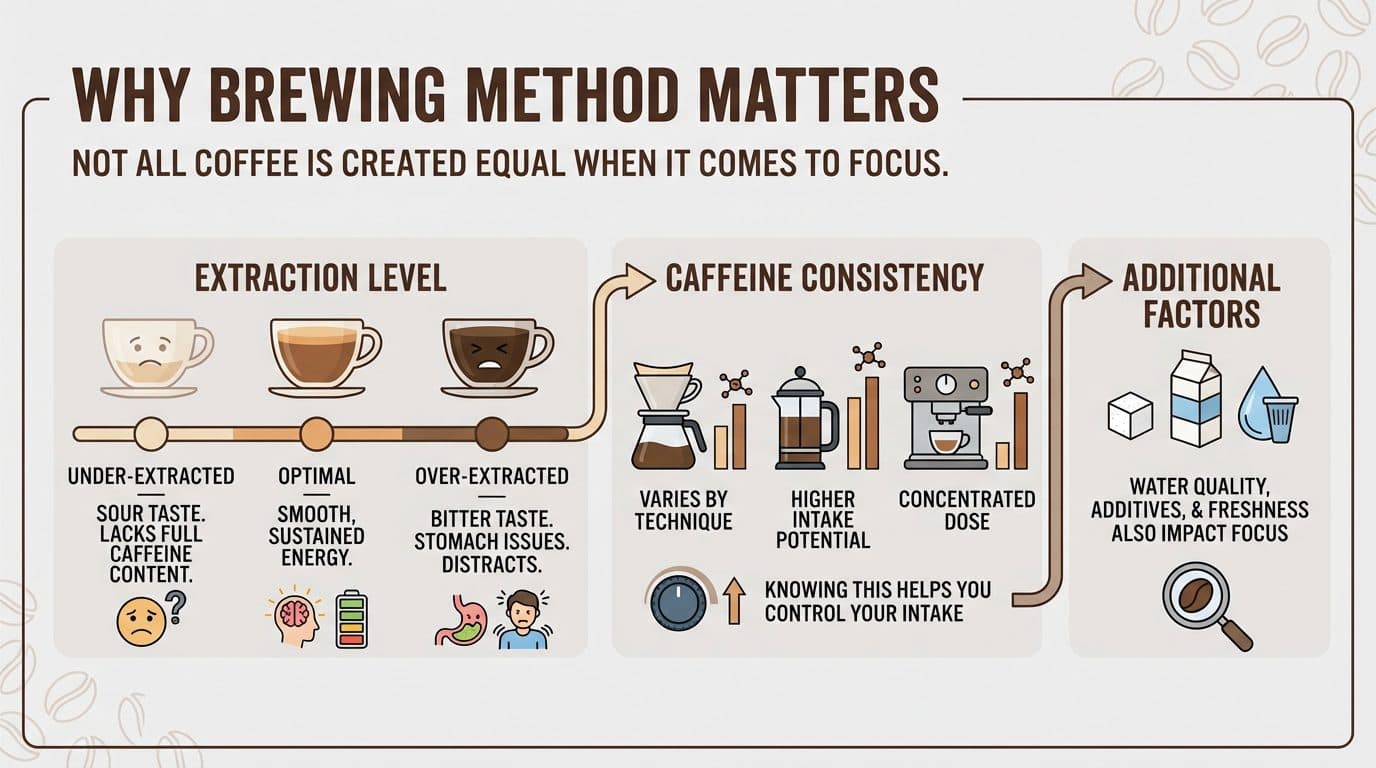
Brewing method changes flavor, strength, oils, acidity, and how easy it is to repeat the same cup tomorrow. For focus, repeatability matters. If one cup is mild and the next is twice as strong, your energy will be inconsistent too.
- Extraction: under-extracted coffee can taste sour and thin; over-extracted coffee can taste bitter and harsh.
- Dose control: measuring coffee and water helps you avoid accidental caffeine swings.
- Filtration: paper filters remove more oils and sediment, which some people find easier on the stomach.
- Acidity: brew style and roast can affect comfort, especially if coffee distracts you with reflux or nausea.
Choose Beans That Support a Clean Routine
Your beans do not need to be expensive, rare, or described with five tasting notes. They need to be fresh enough, consistent enough, and pleasant enough that you can drink them without turning every morning into a correction project.
Arabica vs. Canephora
Arabica usually tastes smoother and contains less caffeine than canephora, the species often sold as robusta. Canephora is stronger, more bitter, and often higher in caffeine. For steady focus, many people do best with Arabica or a blend that is not too aggressive. If you like the extra kick of canephora, use it deliberately rather than assuming stronger is always better.
Freshness Matters, But Do Not Obsess
Whole beans ground just before brewing usually taste better than old pre-ground coffee. Look for a roast date when possible, and try to use beans within a few weeks of opening. Store them in an airtight container away from heat, light, and moisture.
Fresh coffee will not make you brilliant. But stale coffee often leads people to brew stronger, add more sugar, or drink extra cups just to make the habit satisfying.
Light to Medium Roasts Are Worth Testing

Darker roast does not automatically mean more caffeine. Depending on how you measure, light and medium roasts can be similar or slightly higher in caffeine. They also tend to preserve brighter flavors. If dark roasts feel heavy or bitter to you, a medium roast may be easier to drink without extra sweeteners.
Best Brewing Methods for Focus and Productivity
The best brewing method is the one you can repeat. Here are the most useful home options if your goal is a stable workday.
Pour-Over: Clean and Measurable
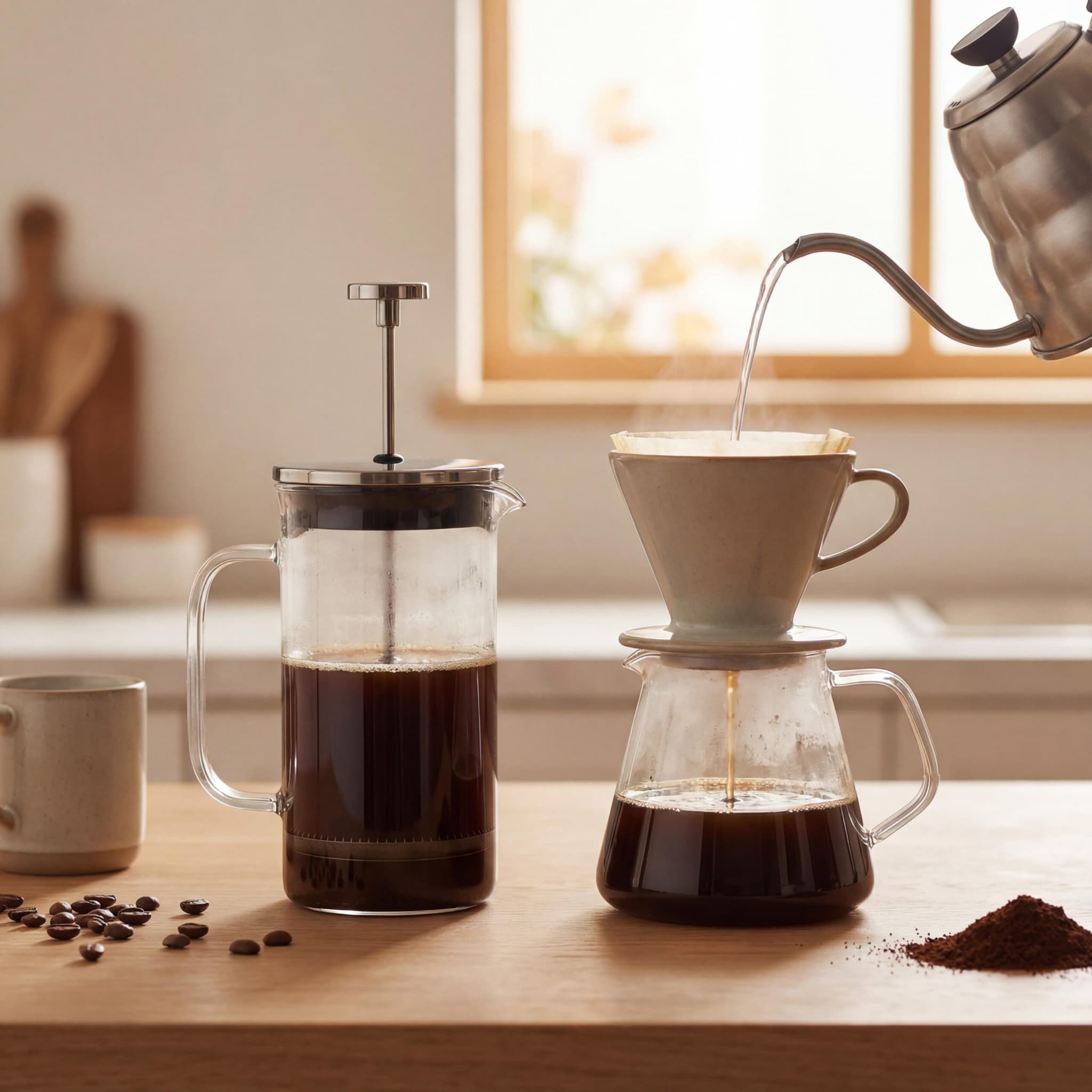
Pour-over brewing, such as a V60, Kalita, or Chemex, gives you control over water, grind, and timing. Paper filters create a clean cup with less sediment, which can be helpful if heavy coffee distracts your stomach.
- Use about 1 gram of coffee for every 15 to 17 grams of water.
- Use water around 195-205°F, or just off the boil if you do not use a thermometer.
- Let the grounds bloom for about 30 seconds, then pour steadily.
- Aim for a total brew time around 3 to 4 minutes.
Pour-over asks for attention, which can be either a benefit or a burden. If the small ritual settles you before work, it is a strong choice.
French Press: Simple and Full-Bodied
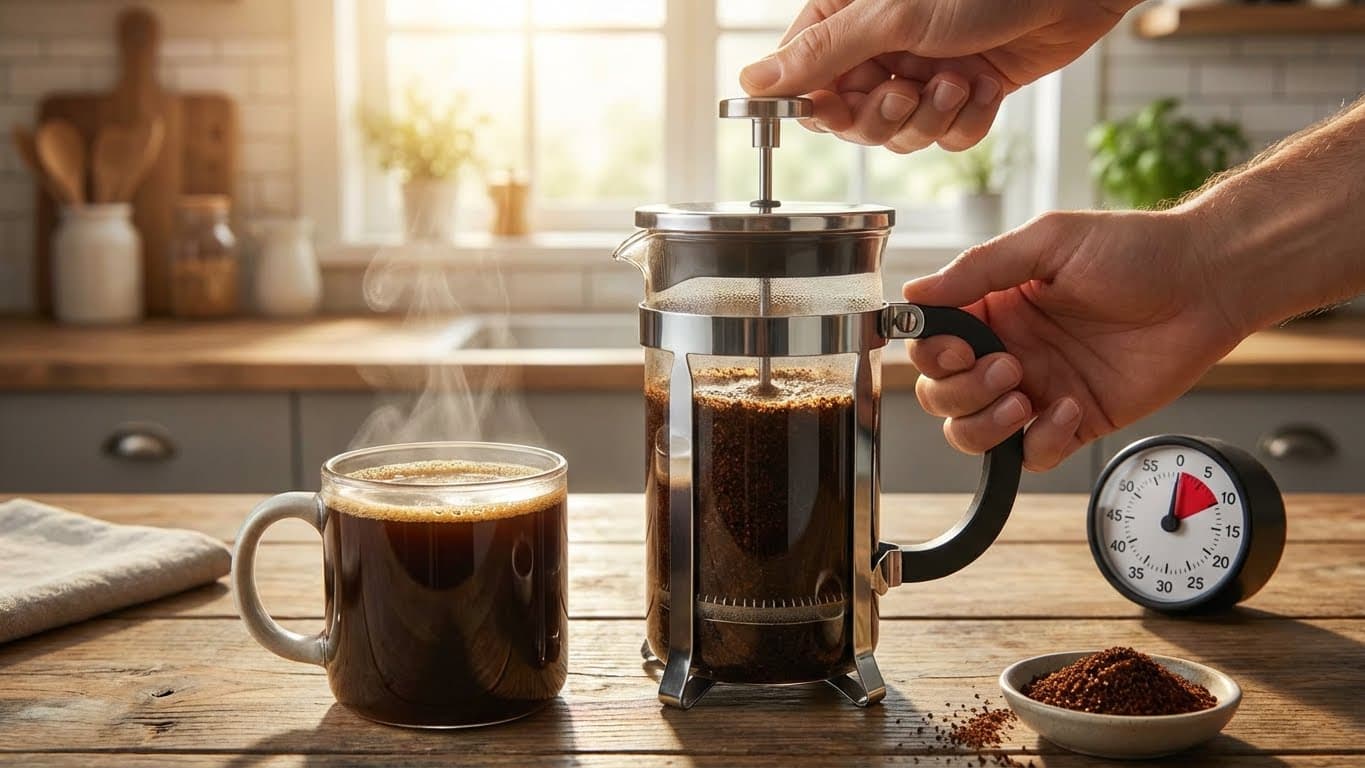
French press coffee is rich because the metal filter lets oils and fine particles through. Some people love that body; others find it heavy. If you drink many cups a day and have cholesterol concerns, ask your clinician whether unfiltered coffee should be limited.
- Use a coarse grind.
- Steep for about 4 minutes.
- Press slowly.
- Pour the coffee out of the press after brewing so it does not keep extracting.
French press works well when you want a straightforward morning brew, but measure your grounds. It is easy to make it stronger than intended.
AeroPress: Fast and Flexible
The AeroPress is useful for work mornings because it is quick, forgiving, and easy to clean. It can make a concentrated cup or a lighter filtered coffee depending on recipe.
- Use 15 to 17 grams of medium-fine coffee.
- Add about 200 ml of water.
- Steep for 1 to 2 minutes.
- Press gently and dilute if needed.
If coffee often makes you jittery, use a slightly lower dose before changing everything else.
Cold Brew: Smooth and Easy to Batch
Cold brew is often lower in perceived acidity and can be easier on the stomach. It is also convenient because you can make it ahead. The caution: concentrate can contain a lot of caffeine if you pour casually.
- Combine coarse coffee and cold water at about 1:8 for concentrate.
- Steep 12 to 24 hours in the refrigerator.
- Strain well.
- Dilute with water or milk before drinking.
Cold brew can feel smoother, but smooth does not mean weak. Measure the concentrate until you know your serving.
Time Coffee Around Real Work
Focus is partly chemical, but it is also behavioral. Coffee works best when paired with a clear task, not when it is used to postpone deciding what to do.
Wait Before the First Cup
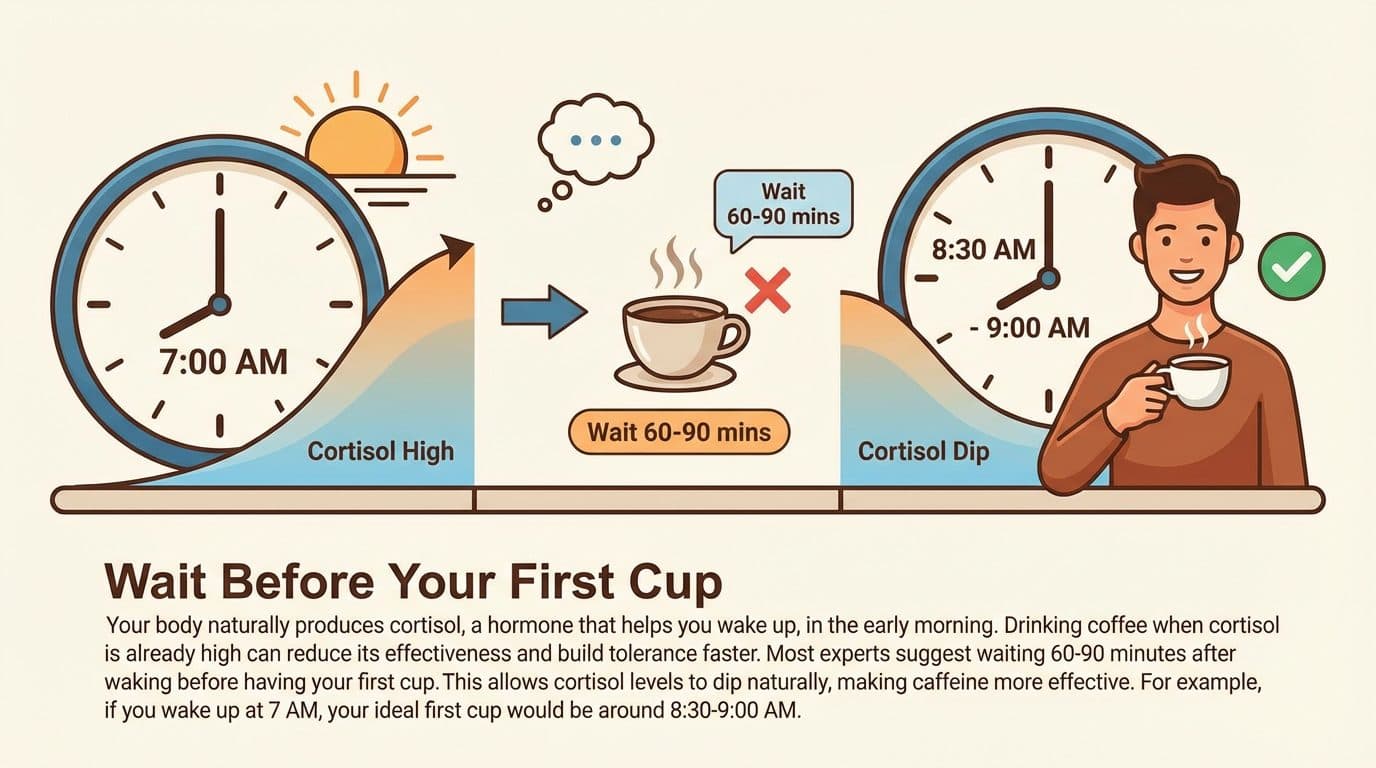
If you crash later in the day, try waiting 60 to 90 minutes after waking before your first coffee. This gives you time to hydrate, get light, and let morning alertness rise naturally. It is not a strict rule, but it is a useful experiment.
Match the Cup to the Task
Use your strongest coffee before your deepest work, not before email scrolling. A smaller cup may be enough for admin tasks. If you have a demanding writing, coding, studying, or planning block, drink coffee shortly before starting and remove obvious distractions.
Protect Sleep with a Cutoff
Caffeine often has a half-life around five to six hours, and some people metabolize it more slowly. A practical cutoff is six to eight hours before bed. If sleep is fragile, make it earlier.
Use the Coffee Nap Carefully
A coffee nap means drinking coffee, then taking a 15 to 20 minute nap before caffeine fully kicks in. Some people find it helpful for a short reset. It is not a replacement for sleep, and it can backfire if naps make you groggy or if the caffeine is too late in the day.
Make Coffee Feel Smoother
Drink Water Too
Mild dehydration can look like poor focus. Drink water before or alongside coffee, especially if you start the day dry, exercise, or sit in a warm room.
Pair Coffee with Food When Needed
Empty-stomach coffee can feel sharp for some people. A small breakfast or snack with protein, fiber, or fat may reduce shakiness and support steadier energy.
Fix the Cup Before Adding More Cups
If coffee is not helping, do not immediately double the dose. First check the basics: old beans, inconsistent scoops, water that tastes off, a grind that is too fine or too coarse, or a brew that sits on heat for an hour. These small problems can make coffee unpleasant enough that you keep drinking more without feeling satisfied.
A simple troubleshooting pass works well. Brew one measured cup tomorrow, drink it slowly, and note how you feel after 30, 90, and 180 minutes. If focus improves and stays smooth, keep the recipe. If you feel tense, reduce the dose. If you feel nothing, check sleep and food before assuming you need stronger coffee.
Do Not Ask Coffee to Fix Everything
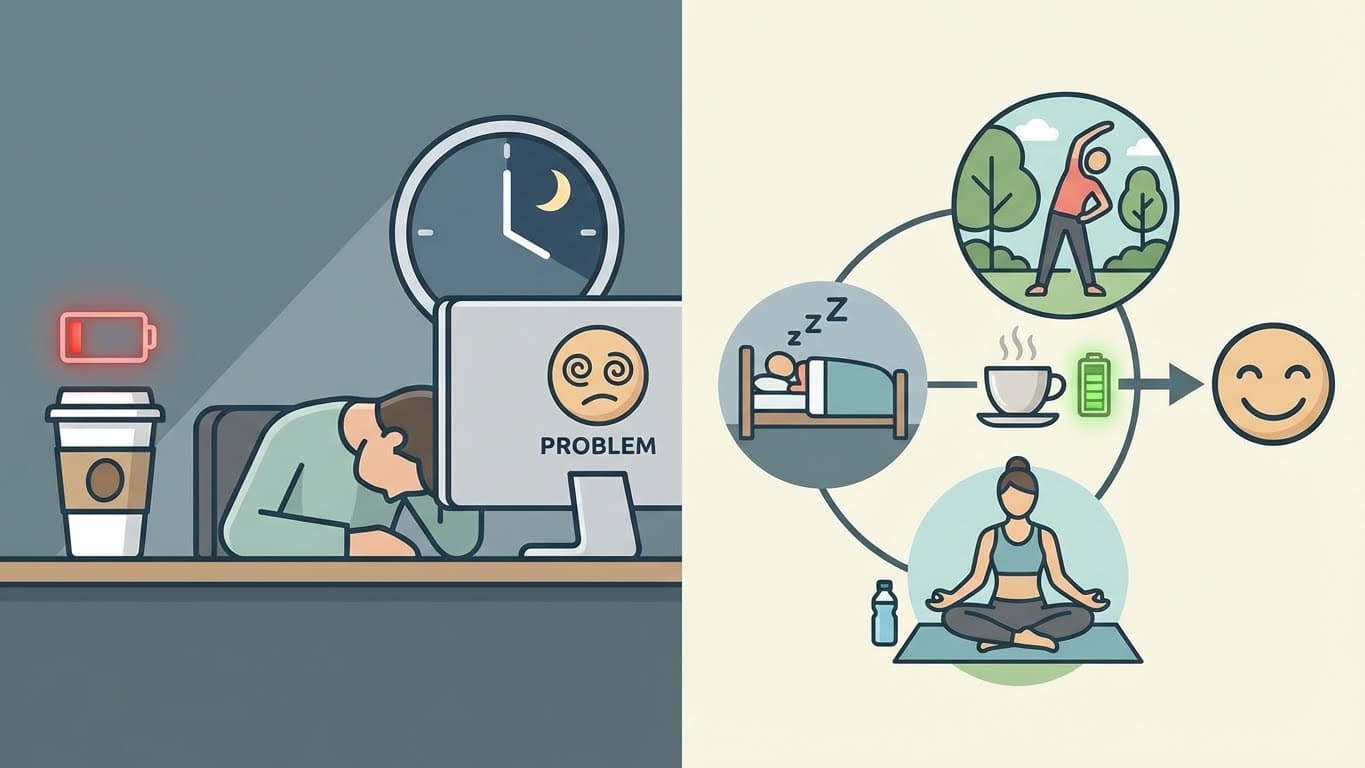
If you are sleep-deprived, underfed, stressed, or constantly interrupted, coffee may make you feel briefly sharper without making you more effective. Use it as support for a workable routine, not as proof that the routine is fine.
Frequently Asked Questions
How much coffee should I drink for focus?
Many people do well with one to two cups earlier in the day. General guidance for healthy adults often caps caffeine around 400 mg daily, but some people feel best far below that. If you get jitters, anxiety, reflux, or poor sleep, reduce the dose.
Does sugar or cream affect focus?
The caffeine remains, but lots of sugar can create energy swings for some people. Heavy cream may bother digestion if you drink it before focused work. Use additions deliberately and notice the effect.
Can instant coffee work?
Yes. Instant coffee contains caffeine and can support alertness. Freshly brewed coffee usually tastes better and gives you more control, but instant is not useless. Measure it consistently.
What if coffee makes me anxious?
Try a smaller cup, half-caf, decaf, or tea. Avoid drinking it on an empty stomach. If anxiety is strong or persistent, do not keep forcing caffeine just because it helps other people.
Is decaf useful for productivity?
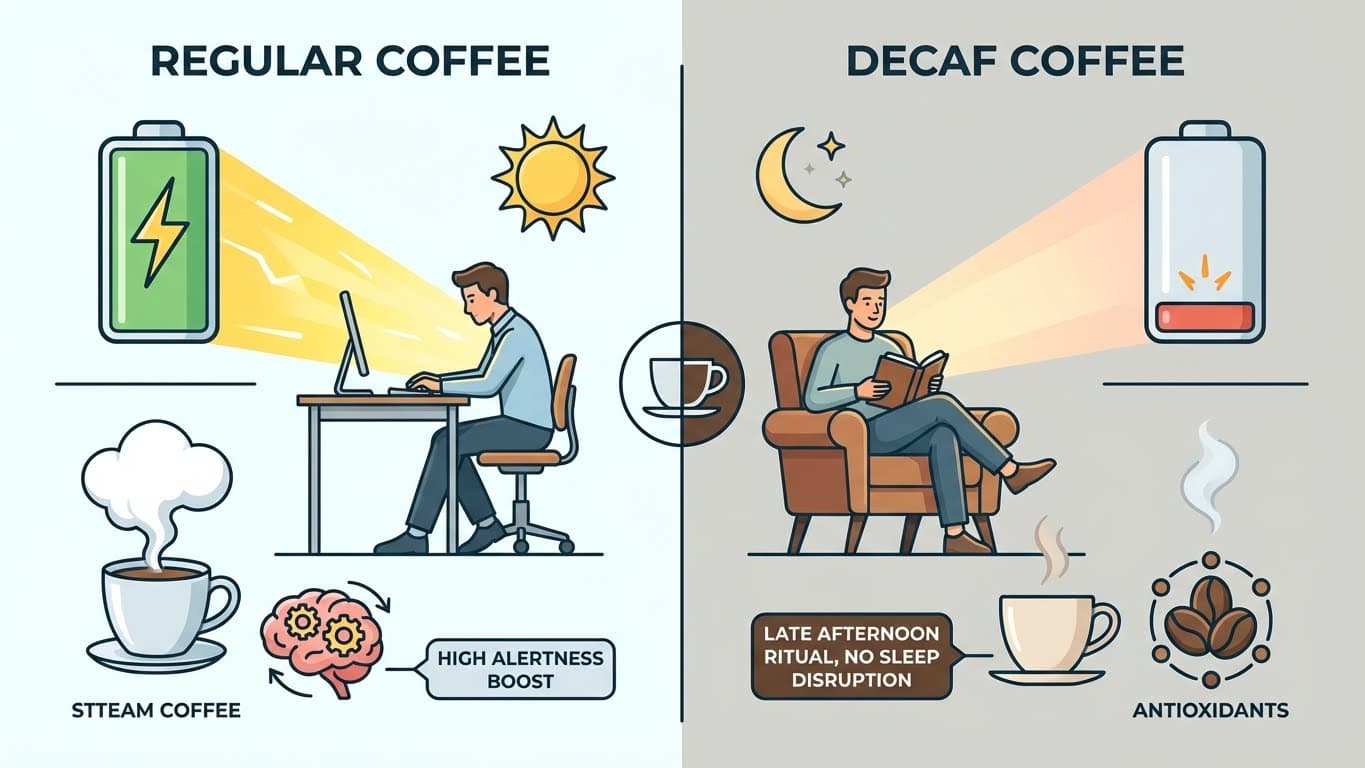
Decaf will not give the same caffeine boost, but the ritual can still help signal a work block. It is also useful later in the day when you want coffee without putting sleep at risk.
Bottom Line
To brew coffee at home for better focus and productivity, make the process repeatable. Use fresh beans, measure coffee and water, choose a brew method your stomach tolerates, and time your strongest cup before meaningful work rather than late-day fatigue.
Start with one change tomorrow: measure your dose, delay your first cup, switch to a gentler brew, or set a caffeine cutoff. The best coffee routine is not the most intense one. It is the one that helps you work clearly, then still lets you sleep.



Comments