


Table of Contents
- Why Coffee Grind Size Matters for Extraction
- Matching Grind Size to Your Brewing Method
- Espresso: Extra Fine Grind
- Moka Pot and AeroPress: Fine to Medium-Fine Grind
- Pour-Over and Drip Coffee: Medium Grind
- French Press and Cold Brew: Coarse Grind
- How to Grind Coffee at Home: Tools and Tips
- Blade Grinders vs. Burr Grinders
- Adjusting Your Grinder
- Grinding Fresh vs. Pre-Ground Coffee
- Troubleshooting Common Grind-Related Problems
- Coffee Tastes Bitter
- Coffee Tastes Sour or Weak
- Coffee Is Muddy or Has Too Much Sediment
- Espresso Shots Pull Too Fast or Too Slow
- Frequently Asked Questions
- Can I use the same grind size for all brewing methods?
- How do I know if my grind size is correct?
- Does the type of coffee bean affect grind size?
- Is a hand grinder good enough for home brewing?
- How often should I clean my coffee grinder?
- Summary and Next Steps
Have you ever brewed a cup of coffee at home that tasted disappointingly bitter, sour, or just plain weak? The culprit might not be your beans or your water—it could be your grind size. Understanding how fine you should grind coffee is one of the most important factors in achieving a delicious cup, yet it’s often overlooked by home brewers.
In this guide, you’ll learn exactly how grind size affects extraction, which grind works best for different brewing methods, and how to dial in the perfect grind for your setup at home. Whether you’re using a French press, pour-over, espresso machine, or any other method, getting the grind right can transform your morning routine.
Why Coffee Grind Size Matters for Extraction
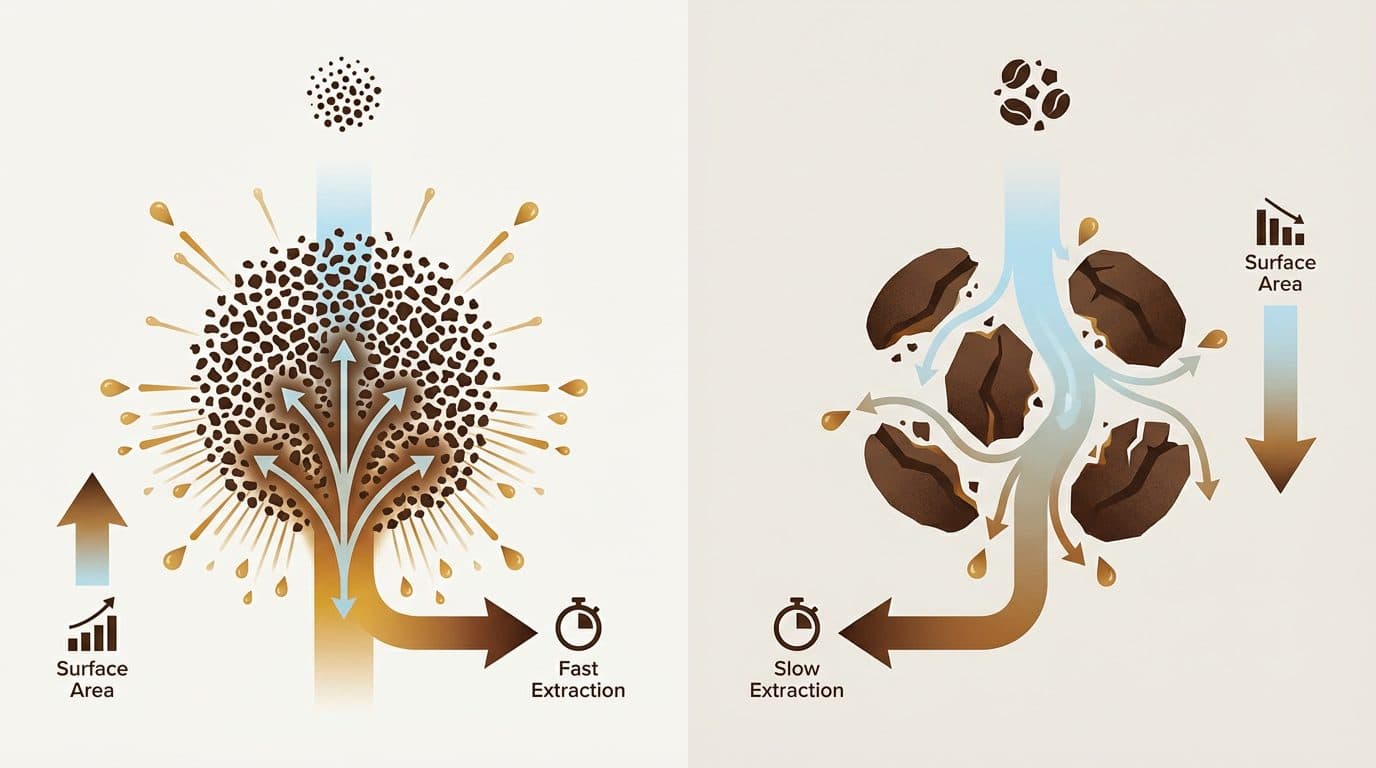
When hot water meets ground coffee, it extracts flavors, oils, and aromatic compounds from the beans. This process is called extraction, and grind size directly controls how quickly and efficiently it happens. Think of it like this: finer grounds have more surface area exposed to water, so extraction happens faster. Coarser grounds have less surface area, slowing things down.
If your grind is too fine for your brewing method, water will extract too much from the coffee. This leads to over-extraction, which produces bitter, harsh, and unpleasant flavors. On the other hand, if your grind is too coarse, the water passes through too quickly without pulling enough flavor. This under-extraction results in sour, weak, and watery coffee.
In short: matching your grind size to your brew time and method is the key to balanced, flavorful coffee. Here’s a quick overview of what happens with different grind levels:
- Too fine: Slow extraction, bitter and astringent taste, sometimes muddy texture
- Just right: Balanced extraction, sweet, complex, and smooth flavors
- Too coarse: Fast extraction, sour, acidic, and thin body
Matching Grind Size to Your Brewing Method
Different brewing methods require different contact times between water and coffee. This is why a one-size-fits-all approach to grinding doesn’t work. Let’s break down the ideal grind size for the most popular home brewing methods.
Espresso: Extra Fine Grind
Espresso machines force hot water through tightly packed coffee at high pressure in just 25–30 seconds. To get proper extraction in such a short time, you need an extra fine grind—almost like powdered sugar or fine sand. If your grind is too coarse, water rushes through too fast, and you’ll end up with a watery, sour shot.
For example, imagine pulling a shot that takes only 15 seconds. That’s a clear sign your grind is too coarse. Adjusting finer will slow the flow and create that thick, syrupy espresso with a beautiful crema on top.
Moka Pot and AeroPress: Fine to Medium-Fine Grind
Moka pots use steam pressure to push water through coffee, similar to espresso but at lower pressure. A fine grind works well here, slightly coarser than espresso. For AeroPress, you have more flexibility. A medium-fine grind (like table salt) is a good starting point, but you can adjust based on your brew time and technique.
A typical mistake with Moka pots is using espresso-fine grounds, which can clog the filter and create excessive pressure. Start a bit coarser and adjust from there.
Pour-Over and Drip Coffee: Medium Grind
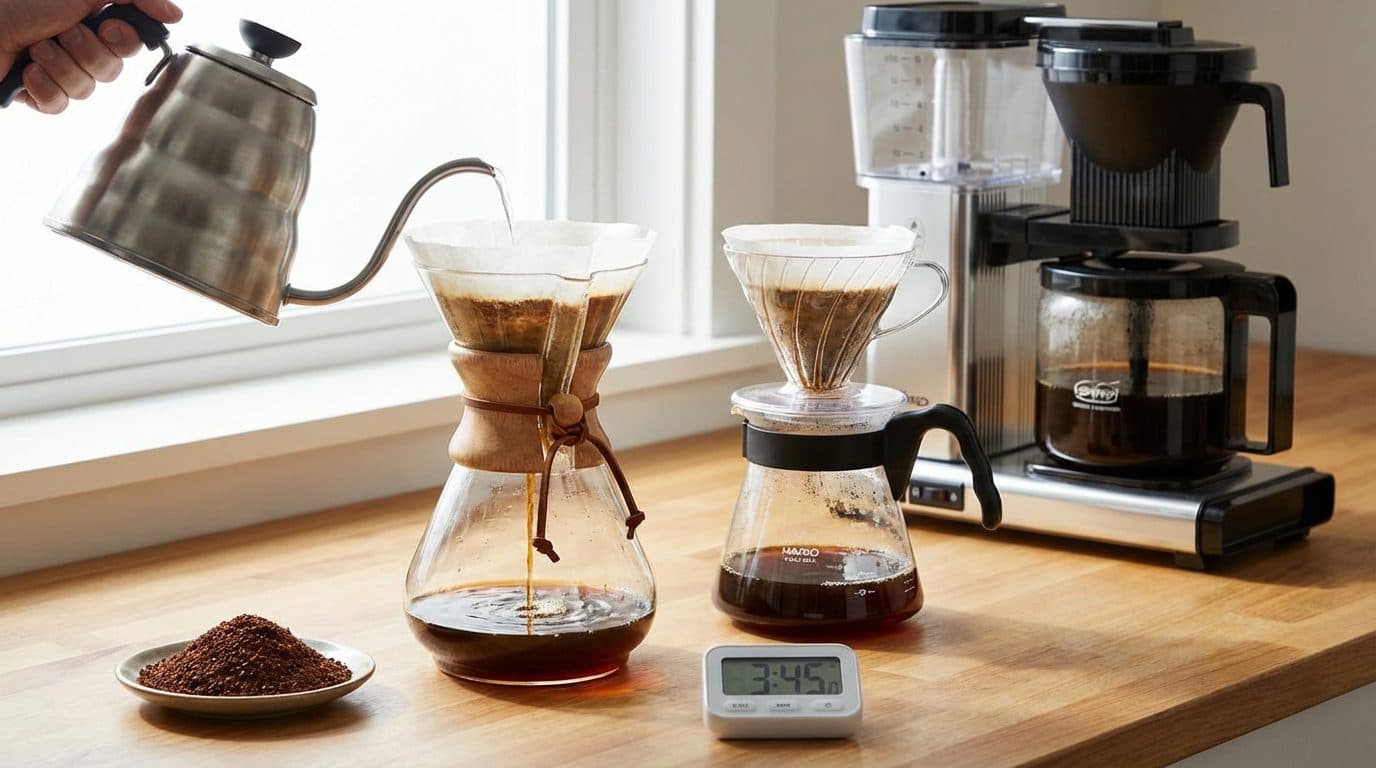
Pour-over methods like the Hario V60, Chemex, or Kalita Wave typically need a medium grind, similar to regular sand or sea salt. Drip coffee makers also work best with this range. The brew time for these methods is usually 3–4 minutes, and a medium grind allows water to flow through at the right pace.
If your pour-over takes longer than 4 minutes, your grind might be too fine. If it drains in under 2 minutes, go finer. Small adjustments make a big difference here.
French Press and Cold Brew: Coarse Grind
French press coffee steeps for 4–5 minutes with full immersion, meaning the grounds sit in water the entire time. A coarse grind—similar to breadcrumbs or coarse sea salt—prevents over-extraction and keeps sediment out of your cup. Cold brew requires an even coarser grind because it steeps for 12–24 hours.
Using a fine grind in a French press is a common beginner mistake. The result is bitter, muddy coffee that’s unpleasant to drink. Go coarse, and you’ll notice a cleaner, sweeter cup.
How to Grind Coffee at Home: Tools and Tips
Now that you know which grind size matches which method, let’s talk about how to actually achieve consistent grinds at home. Your grinder matters more than you might think.
Blade Grinders vs. Burr Grinders
Blade grinders are affordable and widely available, but they chop beans unevenly. You’ll end up with a mix of fine powder and large chunks, leading to inconsistent extraction. Some parts of your coffee will be over-extracted while others are under-extracted.
Burr grinders crush beans between two abrasive surfaces, producing uniform particles. This consistency is crucial for balanced extraction. If you’re serious about improving your home brewing, investing in a burr grinder—even an affordable hand grinder—is one of the best upgrades you can make.
Adjusting Your Grinder
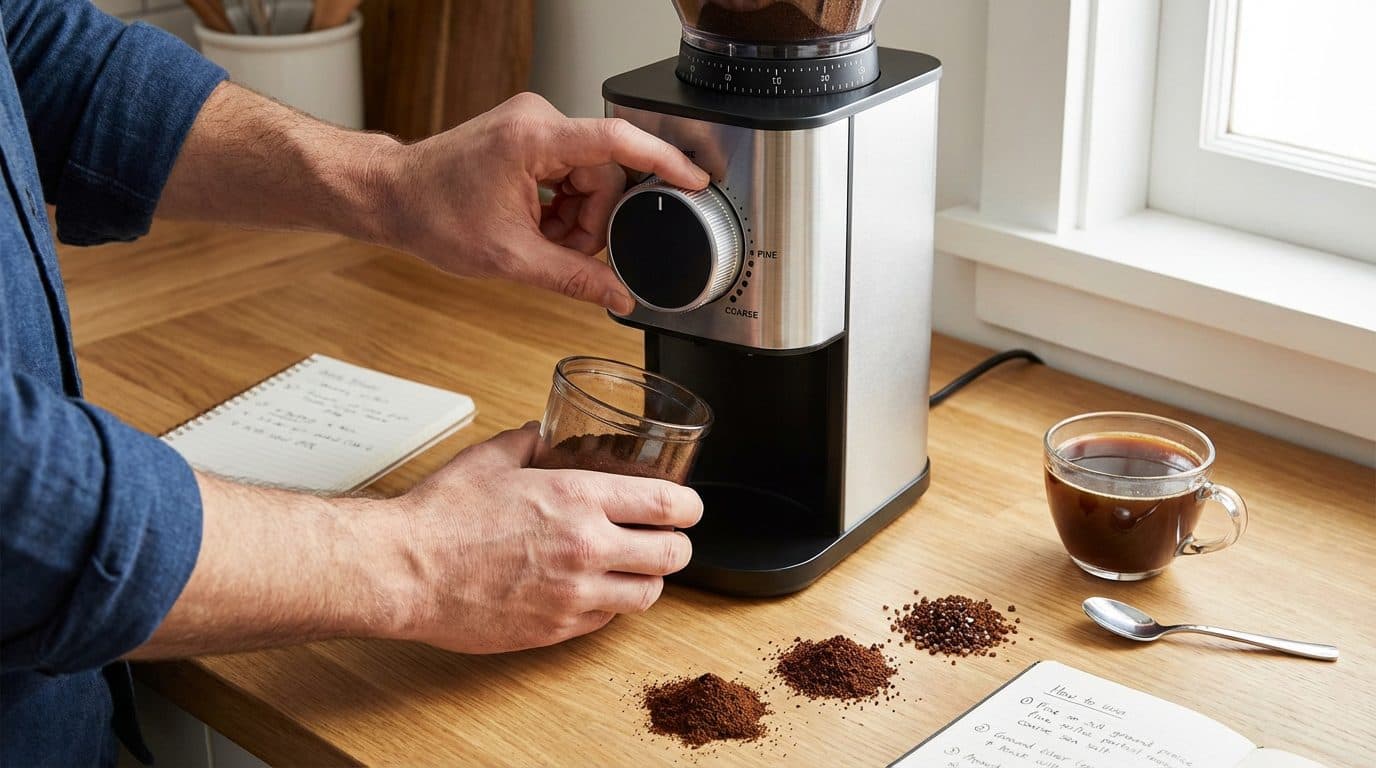
Most burr grinders have adjustable settings ranging from fine to coarse. Start with the manufacturer’s recommendations for your brewing method, then taste and adjust. Here’s a simple process:
- Brew a cup using your current grind setting
- Taste carefully: is it bitter and harsh, or sour and weak?
- If bitter, grind coarser next time
- If sour, grind finer next time
- Make small adjustments—one or two notches at a time
Keep notes on what works. Coffee brewing is partly science, partly personal preference. Over time, you’ll develop an intuition for what your setup needs.
Grinding Fresh vs. Pre-Ground Coffee
Freshly ground coffee tastes noticeably better than pre-ground. Once coffee is ground, it starts losing aromatic compounds within minutes. Pre-ground coffee from the store has already lost much of its flavor potential before you even open the bag.
If you must use pre-ground coffee, store it in an airtight container away from light and heat. But for the best results, grind your beans just before brewing.
Troubleshooting Common Grind-Related Problems
Even with the right equipment, things can go wrong. Here are some common issues and how to fix them.
Coffee Tastes Bitter
Bitterness usually signals over-extraction. Your grind is likely too fine, or your brew time is too long. Try grinding coarser or reducing your brew time. Also check your water temperature—water that’s too hot (above 205°F or 96°C) can extract bitter compounds more aggressively.
Coffee Tastes Sour or Weak
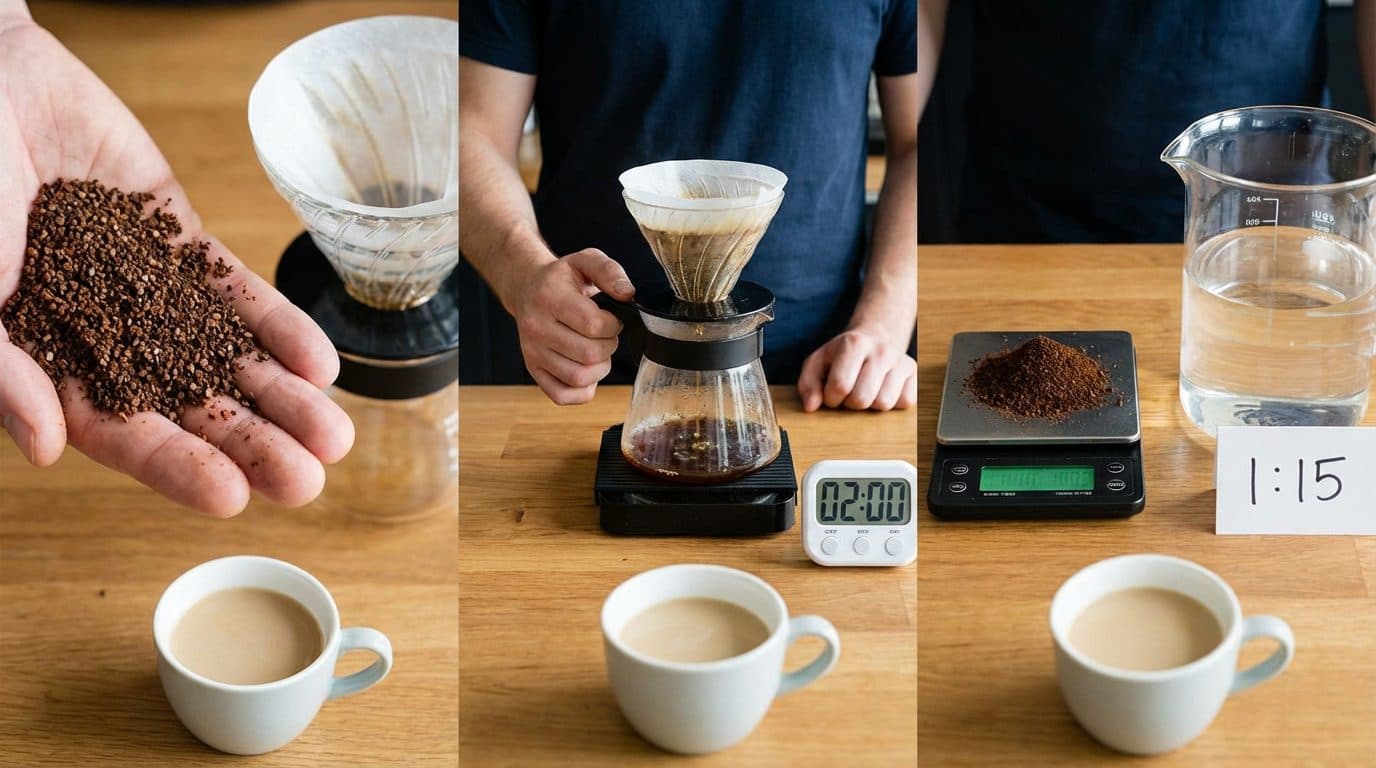
Sourness and weakness point to under-extraction. Your grind may be too coarse, or you’re not brewing long enough. Grind finer or extend your brew time slightly. Make sure you’re using enough coffee—a good starting ratio is about 1:15 (1 gram of coffee to 15 grams of water).
Coffee Is Muddy or Has Too Much Sediment
This is common with French press or when using blade grinders. The fines (tiny particles) slip through filters and end up in your cup. Switch to a burr grinder for more uniform particles, or try grinding slightly coarser. For French press, let the coffee settle for a minute before pouring.
Espresso Shots Pull Too Fast or Too Slow
Espresso is particularly sensitive to grind size. A shot that gushes out in 15 seconds needs a finer grind. A shot that drips out over 40 seconds needs a coarser grind. Aim for 25–30 seconds for a balanced extraction. Remember that humidity, bean freshness, and dose also affect flow rate.
Frequently Asked Questions
Can I use the same grind size for all brewing methods?
No, different methods require different grind sizes. Using espresso-fine grounds in a French press will result in bitter, over-extracted coffee. Using coarse grounds for espresso will produce sour, watery shots. Always match your grind to your brewing method for the best results.
How do I know if my grind size is correct?
Taste is your best guide. Balanced coffee should be sweet, slightly acidic (in a pleasant way), and smooth. If it’s bitter, grind coarser. If it’s sour or weak, grind finer. Brew time can also indicate correctness—if your pour-over drains too fast or too slow, adjust accordingly.
Does the type of coffee bean affect grind size?
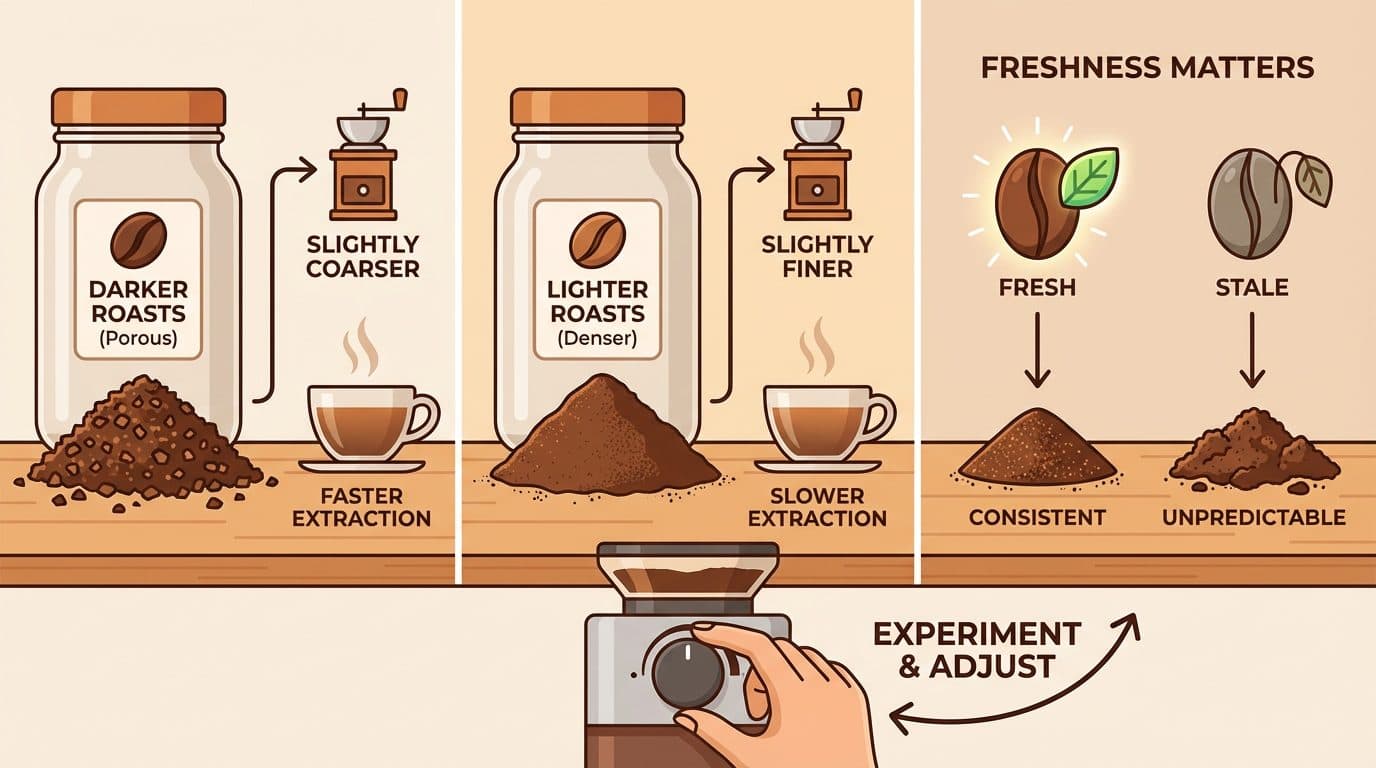
Yes, to some extent. Darker roasts are more porous and extract faster, so you might grind them slightly coarser. Lighter roasts are denser and may need a slightly finer grind. Freshness also matters—stale beans behave differently than fresh ones. Experiment and adjust based on your specific beans.
Is a hand grinder good enough for home brewing?
A quality hand burr grinder can produce excellent results, often comparable to electric burr grinders costing much more. The main trade-off is effort and time—grinding manually takes a minute or two. For most home brewers making one or two cups at a time, a hand grinder is a great affordable option.
How often should I clean my coffee grinder?
Clean your grinder every few weeks to remove old coffee oils and residue that can turn rancid. Brush out the burrs, and occasionally run grinder cleaning tablets through if your model allows. A clean grinder produces fresher-tasting coffee and maintains consistent performance.
Summary and Next Steps
Getting your coffee grind size right is one of the simplest ways to improve your home brewing. To recap: espresso needs extra fine, pour-over and drip work best with medium, and French press requires coarse. Always match your grind to your method, and use taste as your feedback loop. Bitter means too fine; sour means too coarse.
Investing in a burr grinder, even an inexpensive one, will make a noticeable difference in consistency and flavor. Grind fresh, adjust in small increments, and keep notes on what works for your setup. By paying attention to this often-overlooked variable, you’ll start brewing coffee at home that rivals your favorite café. Start experimenting with your grind settings today, and enjoy the better cups ahead.


Comments