


Table of Contents
- Why Coffee Works as a Pre-Workout Boost
- Optimal Timing: When to Drink Coffee Before Your Workout
- The 30-60 Minute Window
- Factors That Affect Absorption
- What About Fasted Training?
- Caffeine Dosage: How Much Coffee Do You Actually Need?
- The Science-Backed Sweet Spot
- How Much Caffeine Is in Your Coffee?
- The "More Is Better" Myth
- Choosing the Right Coffee for Your Pre-Workout Routine
- Low-Acid Options for Sensitive Stomachs
- Skip the Sugar and Heavy Cream
- Common Mistakes to Avoid
- Mistake #1: Drinking Coffee Too Close to Workout Time
- Mistake #2: Ignoring Your Caffeine Tolerance
- Mistake #3: Forgetting About Sleep
- Mistake #4: Relying Only on Caffeine
- Frequently Asked Questions
- Can I drink coffee before every workout?
- Is coffee better than pre-workout supplements?
- Will coffee dehydrate me during exercise?
- Should I eat before drinking pre-workout coffee?
- How do I know if I've had too much caffeine?
- Summary and Your Next Step
Ever wondered why so many gym-goers clutch a cup of coffee before hitting the weights or lacing up for a run? Coffee before workout isn’t just a ritual—it’s backed by serious science. Caffeine, the star compound in your morning brew, can genuinely boost your exercise performance, endurance, and even fat burning. But here’s the catch: timing and dosage matter more than most people realize.
In this guide, you’ll discover exactly when to drink your pre-workout coffee, how much caffeine you actually need, and how to avoid common mistakes that could sabotage your training session. Life is too short for bad coffee—and it’s definitely too short for poorly timed caffeine that leaves you jittery or crashing mid-workout.
Why Coffee Works as a Pre-Workout Boost
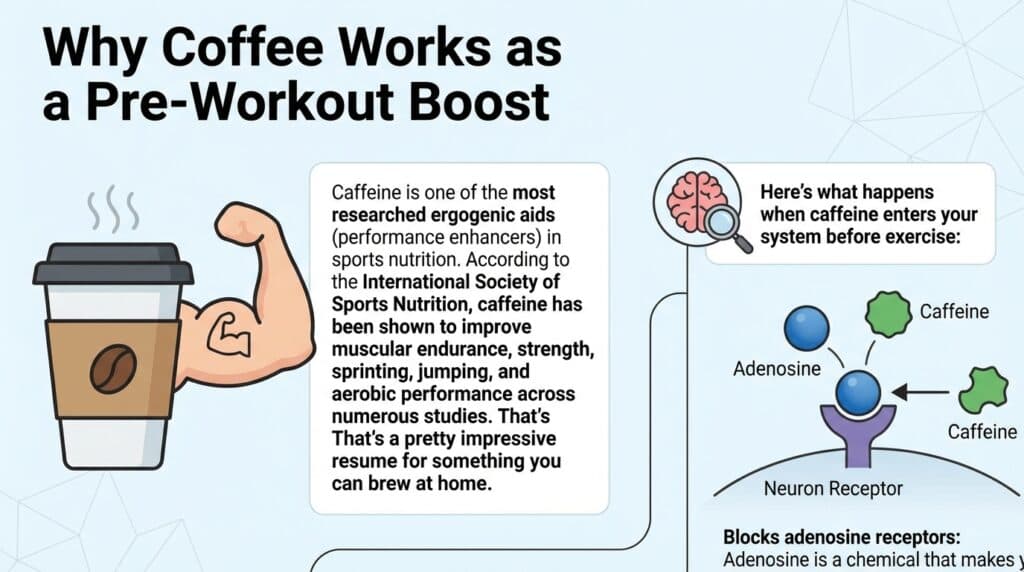
Caffeine is one of the most researched ergogenic aids (performance enhancers) in sports nutrition. According to the International Society of Sports Nutrition, caffeine has been shown to improve muscular endurance, strength, sprinting, jumping, and aerobic performance across numerous studies. That’s a pretty impressive resume for something you can brew at home.
Here’s what happens when caffeine enters your system before exercise:
- Blocks adenosine receptors: Adenosine is a chemical that makes you feel tired. Caffeine blocks it, keeping you alert and energized.
- Increases adrenaline: Your body releases more epinephrine, preparing you for physical exertion.
- Enhances fat oxidation: Caffeine helps your body tap into fat stores for fuel, which can be especially useful during longer workouts.
- Reduces perceived effort: Exercise feels slightly easier, allowing you to push harder without feeling like you’re dying.
Key Takeaway: Coffee isn’t just a mental pick-me-up. It creates real physiological changes that can translate to better workout performance—if you get the timing and dose right.
Optimal Timing: When to Drink Coffee Before Your Workout
Timing is everything. Drink your coffee too early, and the effects might wear off. Drink it too late, and you’ll be warming up while the caffeine is still kicking in. Research consistently points to a sweet spot that maximizes benefits.
The 30-60 Minute Window
Most studies suggest consuming caffeine 30 to 60 minutes before exercise for optimal results. This timeframe allows caffeine levels in your blood to peak right when you need them most. In my experience, 45 minutes tends to be the magic number for most people—enough time to feel the energy without the initial jitters.
Factors That Affect Absorption
Not everyone metabolizes caffeine at the same rate. Here’s what can influence how quickly coffee hits your system:
- Empty vs. full stomach: Coffee on an empty stomach absorbs faster (15-45 minutes). With food, it can take up to an hour or more.
- Genetics: Some people are “fast metabolizers” while others are “slow metabolizers.” If coffee keeps you up at night easily, you’re likely a slow metabolizer.
- Caffeine tolerance: Regular coffee drinkers may need slightly more time or a higher dose to feel the same effects.
- Coffee form: Caffeinated gums and gels absorb faster than brewed coffee because they’re absorbed through the mouth lining.
Practical tip: If you’re training early in the morning, set your alarm 45 minutes before your workout, brew your coffee, sip it while you wake up, and you’ll be primed by the time you start moving.
What About Fasted Training?
Many people prefer working out on an empty stomach, especially for morning cardio. Coffee fits perfectly into this routine. Black coffee contains virtually zero calories, so it won’t break your fast. Plus, the enhanced fat oxidation from caffeine may complement fasted training goals. Just be mindful that coffee on a completely empty stomach can cause digestive discomfort for some people.
Caffeine Dosage: How Much Coffee Do You Actually Need?
Here’s where things get interesting—and where many people go wrong. More caffeine doesn’t always mean better performance. In fact, research shows that moderate doses work just as well as high doses, with fewer side effects.
The Science-Backed Sweet Spot
According to sports nutrition research, the effective dose for performance benefits is 3 to 6 mg of caffeine per kilogram of body weight. Most studies find that 3 mg/kg provides significant improvements, and going higher doesn’t necessarily add extra benefits.
Let me break that down into real numbers:
| Body Weight | Low Dose (3 mg/kg) | Moderate Dose (6 mg/kg) |
|---|---|---|
| 60 kg (132 lbs) | 180 mg | 360 mg |
| 70 kg (154 lbs) | 210 mg | 420 mg |
| 80 kg (176 lbs) | 240 mg | 480 mg |
| 90 kg (198 lbs) | 270 mg | 540 mg |
How Much Caffeine Is in Your Coffee?
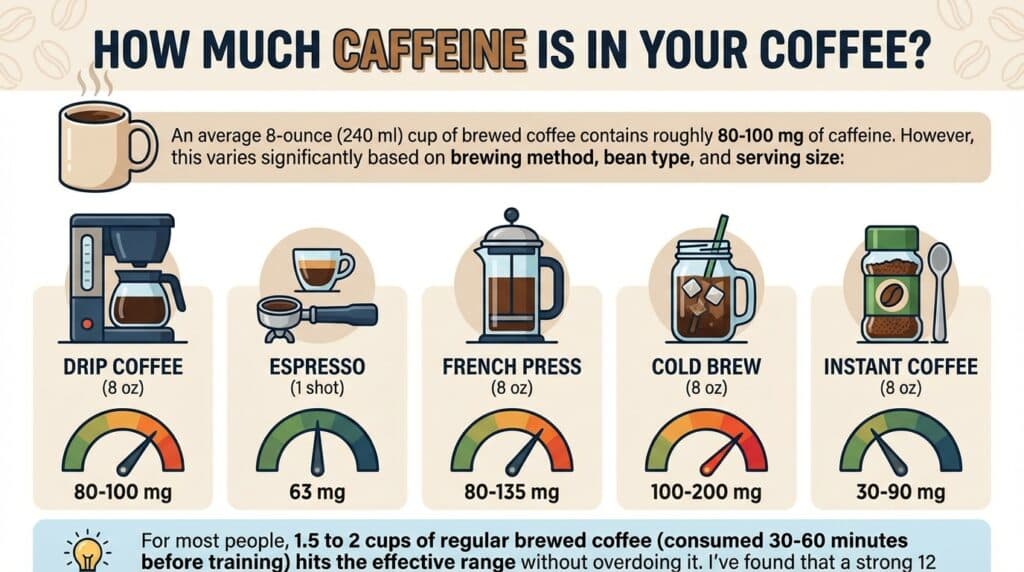
An average 8-ounce (240 ml) cup of brewed coffee contains roughly 80-100 mg of caffeine. However, this varies significantly based on brewing method, bean type, and serving size:
- Drip coffee (8 oz): 80-100 mg
- Espresso (1 shot): 63 mg
- French press (8 oz): 80-135 mg
- Cold brew (8 oz): 100-200 mg
- Instant coffee (8 oz): 30-90 mg
For most people, 1.5 to 2 cups of regular brewed coffee (consumed 30-60 minutes before training) hits the effective range without overdoing it. I’ve found that a strong 12-ounce pour-over does the trick for my morning lifting sessions.
The “More Is Better” Myth
Here’s a common misconception worth busting: chugging three espressos won’t turn you into a superhero. Research shows that very high doses (9 mg/kg and above) are associated with increased side effects—anxiety, rapid heartbeat, digestive issues—without additional performance benefits. In short, you’ll feel terrible and perform the same or worse.
Did You Know? Studies have found that 3 mg/kg of caffeine produces similar performance improvements to 6 mg/kg in many exercise tests. Starting with a lower dose is often the smarter approach.
Choosing the Right Coffee for Your Pre-Workout Routine
Not all coffee is created equal when it comes to pre-workout fuel. Since this article is for the DailyHomeCoffee community, let’s talk about what works best from a home barista perspective.
Low-Acid Options for Sensitive Stomachs
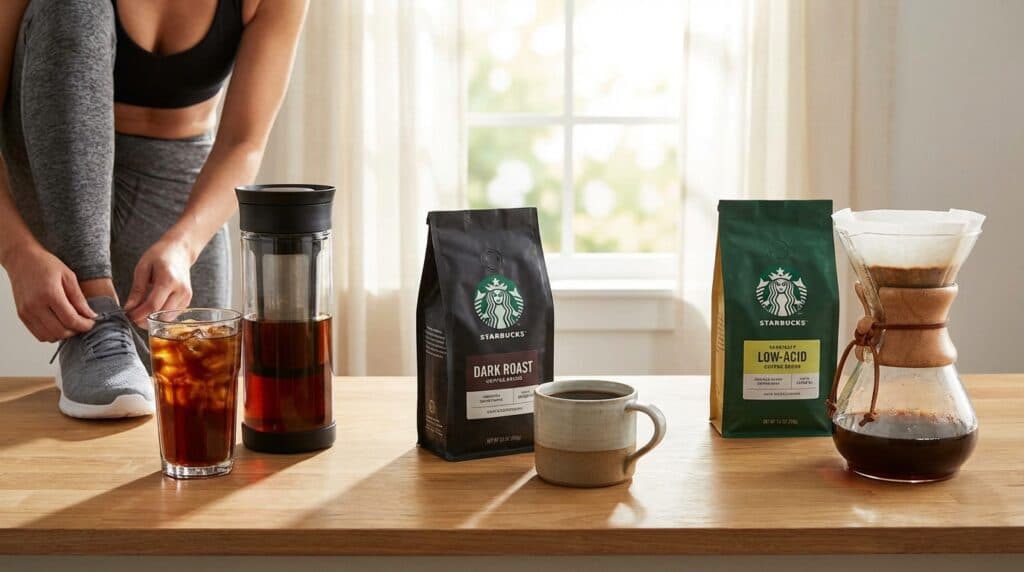
If you’re exercising on an empty stomach or have a sensitive digestive system, high-acid coffee can cause discomfort. Consider these alternatives:
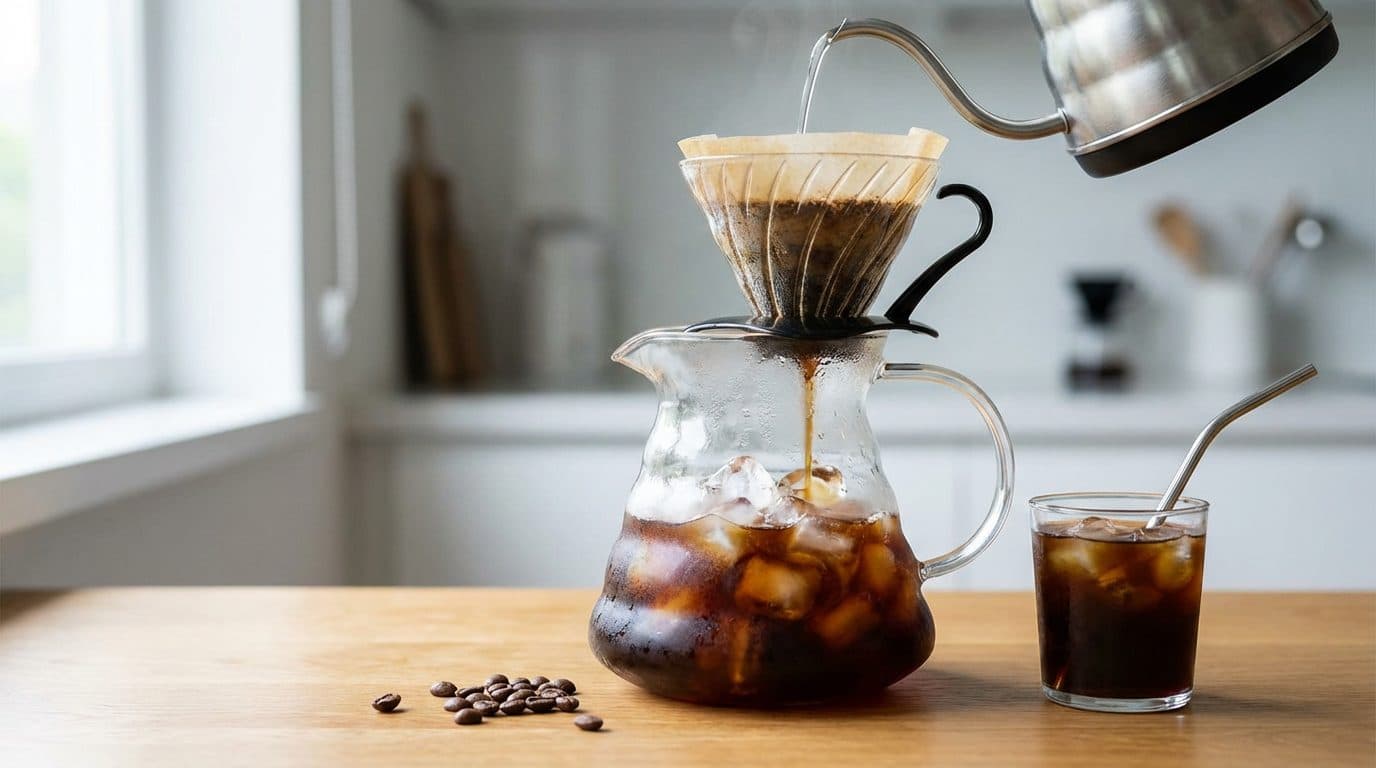
- Cold brew: Naturally lower in acidity due to the cold extraction process. Great for morning workouts.
- Dark roasts: Contrary to popular belief, darker roasts tend to be slightly less acidic than light roasts.
- Low-acid coffee beans: Some specialty roasters offer beans specifically processed to reduce acidity.
Skip the Sugar and Heavy Cream
Adding sugar or heavy cream to your pre-workout coffee can slow digestion and potentially cause stomach issues during intense exercise. If you need some flavor, a splash of milk or a small amount of a natural sweetener is usually fine. Black coffee remains the cleanest option for pre-workout purposes.
Barista Tip: If black coffee is too harsh for you, try adding a tiny pinch of salt. It sounds strange, but it reduces bitterness without adding calories or slowing absorption.
Common Mistakes to Avoid
I’ve seen plenty of well-intentioned coffee lovers sabotage their workouts with simple mistakes. Here’s what to watch out for:
Mistake #1: Drinking Coffee Too Close to Workout Time
Gulping down coffee in the gym parking lot won’t help. You need at least 30 minutes for caffeine to reach effective levels in your bloodstream. Plan ahead.
Mistake #2: Ignoring Your Caffeine Tolerance
If you drink four cups of coffee daily, your body has adapted. You might need a slightly higher dose for pre-workout benefits, or consider cycling off caffeine periodically to reset your sensitivity.
Mistake #3: Forgetting About Sleep
Caffeine has a half-life of about 5-6 hours, meaning half of it is still in your system hours later. If you work out in the evening, that pre-workout coffee could wreck your sleep—which ultimately hurts recovery and performance more than the caffeine helped. Recent research emphasizes that limiting caffeine intake well before bedtime is crucial for sleep quality.
Mistake #4: Relying Only on Caffeine
Coffee is a tool, not a magic solution. It won’t compensate for poor sleep, inadequate nutrition, or lack of training consistency. Use it as an enhancement, not a crutch.
Frequently Asked Questions
Can I drink coffee before every workout?
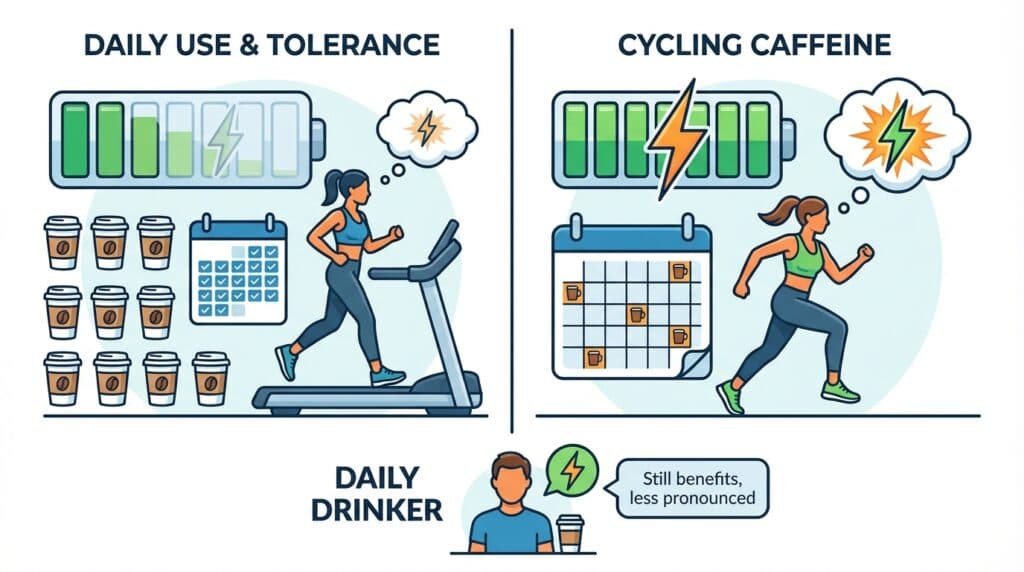
You can, but be aware that daily caffeine use builds tolerance over time. Some athletes cycle caffeine—using it only for important training sessions or competitions—to maintain its effectiveness. If you’re a daily coffee drinker anyway, you’ll still get benefits, just potentially less pronounced ones.
Is coffee better than pre-workout supplements?
Coffee is simpler, cheaper, and contains only one main active ingredient (caffeine). Pre-workout supplements often include additional compounds like beta-alanine, citrulline, or creatine. If you just want the caffeine boost, coffee works great. If you want the other ingredients, a supplement might make sense—but always check labels for quality and dosing.
Will coffee dehydrate me during exercise?
This is a persistent myth. While caffeine has a mild diuretic effect, the water in coffee more than compensates for it. Studies show that moderate coffee consumption doesn’t cause dehydration, even during exercise. That said, don’t rely on coffee as your only fluid—drink water too.
Should I eat before drinking pre-workout coffee?
It depends on your stomach and workout timing. Eating a small snack can reduce potential digestive discomfort, but it may slow caffeine absorption slightly. For early morning workouts, many people do fine with just coffee. For afternoon sessions, a light meal an hour or two before (with coffee 30-60 minutes before) often works well.
How do I know if I’ve had too much caffeine?
Signs of overconsumption include jitteriness, rapid heartbeat, anxiety, digestive upset, and difficulty focusing. If you experience these, you’ve likely exceeded your personal tolerance. Scale back the dose next time and see how you feel.
Summary and Your Next Step
Coffee before workout is a legitimate, research-backed strategy for boosting exercise performance. The key takeaways are simple: aim for 3-6 mg of caffeine per kilogram of body weight (roughly 1.5-2 cups of brewed coffee for most people), consume it 30-60 minutes before training, and pay attention to how your body responds. Avoid the temptation to overdo it—moderate doses work just as well without the unpleasant side effects.
Start with the lower end of the dosage range and adjust based on your tolerance and results. Keep a mental note of how you feel during workouts with different amounts and timing. Within a few sessions, you’ll dial in your personal sweet spot. Now go brew that perfect pre-workout cup and crush your next training session.

Comments