


Table of Contents
- Why Coconut Milk Has Such a Strong Flavor
- What You'll Need to Mask Coconut Flavor
- Step-by-Step Methods to Neutralize Coconut Taste
- Method 1: The Salt Trick
- Method 2: Vanilla Masking
- Method 3: Chocolate Camouflage
- Choosing the Right Coffee to Pair with Coconut Milk
- Advanced Flavor Combinations That Work
- The Toasted Almond Latte
- The Maple Spice
- The Dirty Chai Approach
- Common Mistakes to Avoid
- Frequently Asked Questions
- Does coconut milk froth well for lattes?
- Will these methods work with canned coconut milk?
- Can I mix coconut milk with other plant milks?
- Is there a coconut milk brand with less coconut flavor?
- How long do these flavor additions keep in a prepared latte?
- Final Thoughts and Your Next Steps
You’ve made the switch to coconut milk for your morning latte, but there’s one problem: that distinct tropical taste keeps overpowering your espresso. You’re not alone. Many home baristas love coconut milk for its creamy texture and dairy-free benefits, yet struggle with its signature flavor stealing the spotlight from their carefully brewed coffee.
The good news? You can absolutely enjoy coconut milk in lattes without tasting like you’re sipping coffee on a beach. In this guide, I’ll share practical techniques I’ve tested in my own kitchen to neutralize, complement, or completely mask that coconut flavor while keeping all the benefits of this popular plant-based milk.
Why Coconut Milk Has Such a Strong Flavor
Before we fix the problem, let’s understand it. Coconut milk gets its distinctive taste from natural fatty acids, particularly lauric acid. The higher the fat content in your coconut milk, the more pronounced that tropical flavor becomes.
Not all coconut milks are created equal. Canned coconut milk packs a much stronger punch than the carton varieties designed for drinking. Barista-blend coconut milks typically have a milder taste because manufacturers specifically formulate them for coffee applications.
Barista Tip: If you’re currently using canned coconut milk, switching to a barista-blend carton version is the easiest first step. You’ll notice an immediate difference in how much coconut flavor comes through.
What You’ll Need to Mask Coconut Flavor
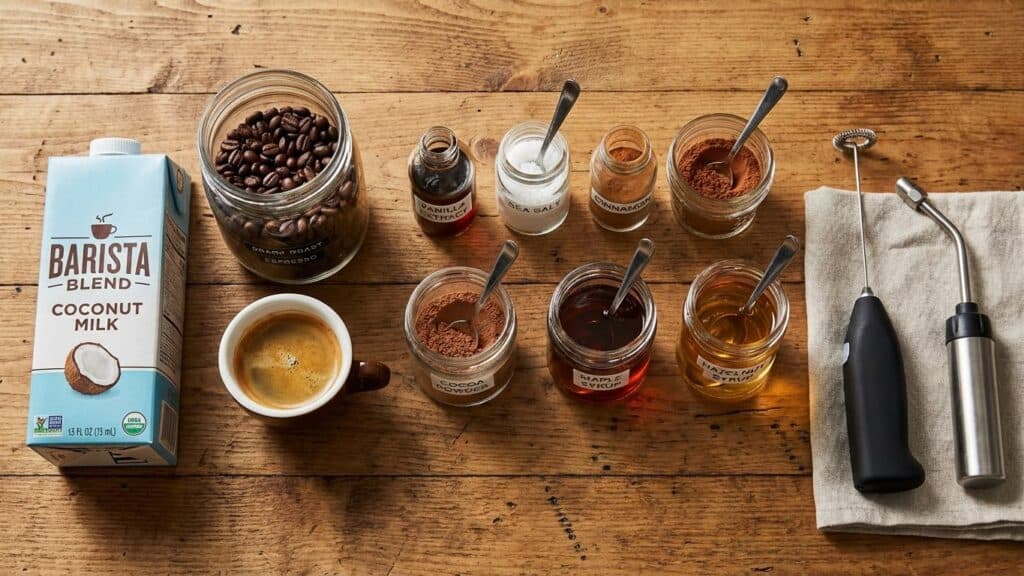
Here’s your toolkit for creating coconut milk lattes that taste like coffee, not a tropical smoothie:
- Barista-blend coconut milk (refrigerated, not canned)
- Dark roast espresso or strong coffee
- Vanilla extract or vanilla syrup
- A pinch of salt
- Optional flavor additions: cinnamon, cocoa powder, maple syrup, or hazelnut syrup
- Milk frother or steam wand
In my experience, having these items on hand gives you multiple strategies to work with depending on your mood and taste preferences.
Step-by-Step Methods to Neutralize Coconut Taste
Method 1: The Salt Trick
This is my go-to technique because it’s simple and surprisingly effective. Salt naturally suppresses certain flavor compounds while enhancing others.
- Pour your coconut milk into a frothing pitcher
- Add a tiny pinch of salt (about 1/16 teaspoon per cup)
- Stir or shake to dissolve completely
- Froth as usual and add to your espresso
The salt doesn’t make your latte taste salty. Instead, it rounds out the coconut flavor and lets the coffee shine through. I’ve found this works best when combined with a darker roast.
Method 2: Vanilla Masking
Vanilla and coconut are flavor cousins, which means vanilla can blend with and soften the coconut taste rather than clash with it.
- Add 1/4 teaspoon of pure vanilla extract to your coconut milk
- Alternatively, use 1-2 pumps of vanilla syrup
- Mix thoroughly before frothing
- Combine with your espresso shot
The result is a subtly sweet latte where the vanilla takes center stage. Your brain registers “vanilla latte” instead of “coconut milk latte.”
Method 3: Chocolate Camouflage

Cocoa powder or chocolate syrup creates a mocha that completely hides the coconut undertones.
- Mix 1 tablespoon of unsweetened cocoa powder with a splash of hot water to create a paste
- Add this to your espresso shot
- Top with frothed coconut milk
- Stir gently to combine
Taste Profile: Rich, chocolatey, with a creamy mouthfeel. The coconut adds body without announcing its presence.
Choosing the Right Coffee to Pair with Coconut Milk
Your coffee choice matters more than you might think. Light roasts with fruity or floral notes tend to clash with coconut milk, creating a confusing flavor experience. Dark roasts work much better.
| Coffee Type | Coconut Milk Compatibility | Why It Works (or Doesn’t) |
|---|---|---|
| Dark Roast | Excellent | Bold, smoky notes overpower coconut |
| Medium Roast | Good | Balanced enough to compete with coconut |
| Light Roast | Poor | Delicate flavors get lost |
| Flavored Coffee | Excellent | Added flavors mask coconut completely |
I’ve found that espresso blends with chocolate or nutty tasting notes pair beautifully with coconut milk. The complementary flavors create harmony instead of competition.
Barista Tip: Pull a slightly longer espresso shot (ristretto lovers, hear me out). The extra extraction brings out more bitter compounds that naturally balance the sweetness of coconut milk.
Advanced Flavor Combinations That Work
Once you’ve mastered the basics, try these combinations that turn coconut milk from a problem into an asset:
The Toasted Almond Latte
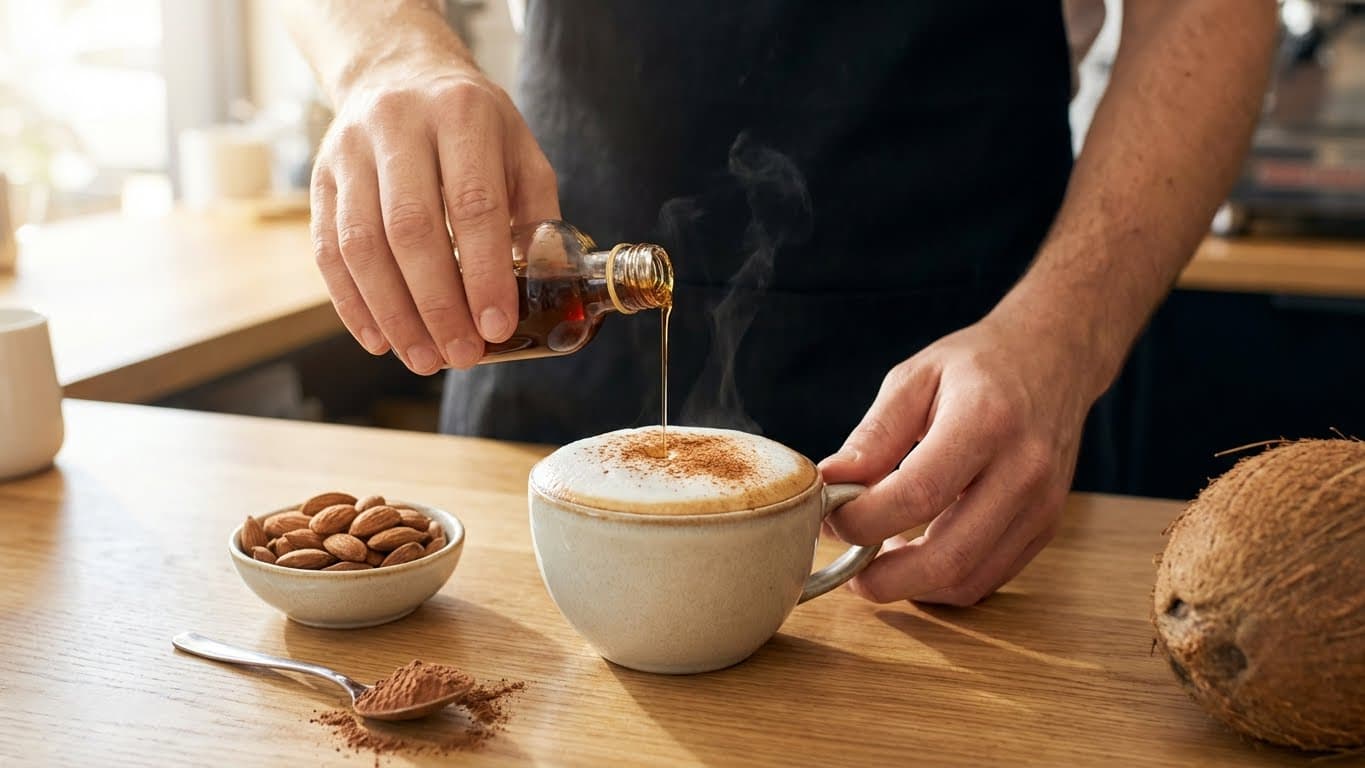
Add a pump of almond syrup and a dash of cinnamon to your coconut milk before frothing. The nutty sweetness completely transforms the drink. People won’t even guess you’re using coconut milk.
The Maple Spice
Mix pure maple syrup with a pinch of cinnamon and nutmeg into your espresso. Top with frothed coconut milk. This autumn-inspired drink uses warm spices to redirect your taste buds away from the tropical notes.
The Dirty Chai Approach

Chai spices are powerful enough to dominate any milk flavor. Brew a strong chai concentrate, add an espresso shot, and top with coconut milk. The cardamom, ginger, and cinnamon create a complex flavor profile where coconut simply adds creaminess.
- Cinnamon pairs naturally with coffee and masks coconut
- Nutmeg adds warmth that complements both flavors
- Cardamom creates an exotic twist that makes coconut taste intentional
- Ginger adds a spicy kick that distracts from tropical notes
Common Mistakes to Avoid
In my years of experimenting with plant-based milks, I’ve made plenty of errors. Here’s what not to do:
Using sweetened coconut milk and adding more sweetener. This creates an overly sweet drink that actually amplifies the coconut flavor. Stick to unsweetened varieties and add sweetness separately if needed.
Overheating the milk. Coconut milk becomes more coconutty when heated too aggressively. Keep your frothing temperature below 150°F (65°C) for best results.
Pairing with fruity coffees. Ethiopian single origins with berry notes plus coconut milk equals a flavor disaster. Save those beans for black coffee or oat milk lattes.
Skipping the shake. Coconut milk separates in the carton. Always shake vigorously before pouring, or you’ll get inconsistent flavor and texture.
Frequently Asked Questions
Does coconut milk froth well for lattes?
Barista-blend coconut milks froth reasonably well, though not as dramatically as dairy. The foam tends to be lighter and less stable. For best results, use cold milk and don’t over-froth. Some brands include stabilizers that improve frothing performance significantly.
Will these methods work with canned coconut milk?

They’ll help, but canned coconut milk has such a concentrated flavor that complete masking is difficult. I recommend diluting canned coconut milk with water (about 1:1 ratio) before using these techniques, or simply switching to carton varieties designed for beverages.
Can I mix coconut milk with other plant milks?
Absolutely. Blending coconut milk with oat milk or almond milk reduces the coconut intensity while maintaining creaminess. Try a 50/50 mix as a starting point and adjust based on your preference.
Is there a coconut milk brand with less coconut flavor?
Barista-blend varieties from major brands are specifically formulated to be milder. Look for products labeled “barista” or “professional” as these typically have reduced coconut flavor and better coffee compatibility.
How long do these flavor additions keep in a prepared latte?
Drink your latte fresh. The masking flavors work best immediately after preparation. As the drink sits, the coconut flavor can become more noticeable, especially once it cools down.
Final Thoughts and Your Next Steps
Masking coconut flavor in your lattes isn’t about fighting against the milk. It’s about creating balance. Start with the salt trick since it requires no extra ingredients and makes an immediate difference. From there, experiment with vanilla, chocolate, or spice additions based on your taste preferences.
The key is matching your coffee roast to your milk choice and not being afraid to add complementary flavors. Life is too short for lattes that taste wrong. With these techniques, you can enjoy all the benefits of coconut milk, the creaminess, the dairy-free convenience, the health perks, without compromising on flavor.
Try one method tomorrow morning and see how it changes your latte experience. Once you find your perfect combination, you might even start looking forward to that coconut milk in a whole new way.


Comments