


Table of Contents
- Why Is Coffee Acidic in the First Place?
- The Baking Soda Hack: What You'll Need
- How to Use Baking Soda to Reduce Coffee Acidity
- Method 1: Add Baking Soda to Your Grounds
- Method 2: Add Baking Soda to Brewed Coffee
- Expected Taste Profile
- Other Ways to Reduce Acidity in Coffee at Home
- Choose Low-Acid Coffee Beans
- Try Cold Brew Coffee
- Adjust Your Brewing Variables
- Add a Pinch of Salt
- Comparing Acidity Reduction Methods
- Frequently Asked Questions
- Is baking soda safe to add to coffee?
- Will baking soda change the taste of my coffee?
- Can I use this method with any type of coffee?
- How much baking soda should I use for a full pot of coffee?
- Are there any side effects to drinking low-acid coffee?
- Summary and Your Next Steps
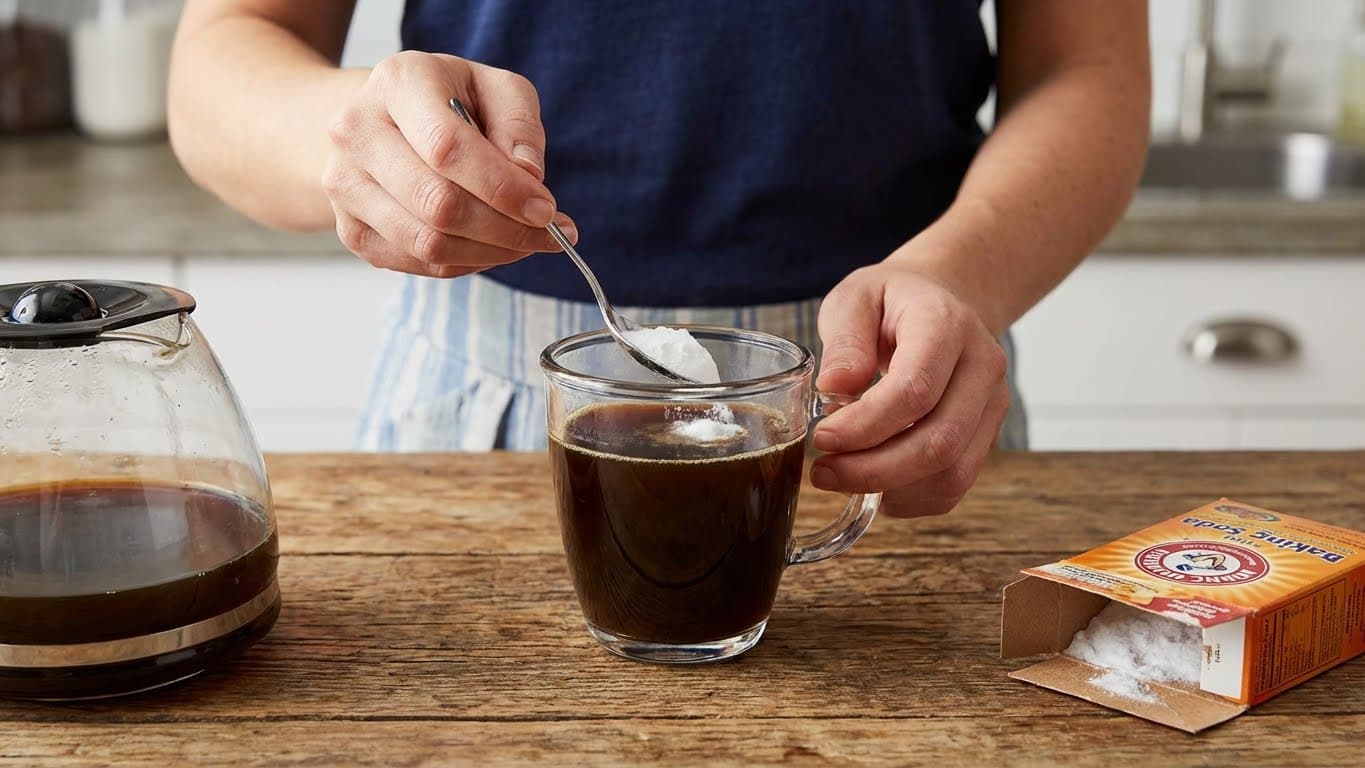
Does your morning coffee leave you with an uncomfortable burning sensation in your stomach? You’re not alone. Millions of coffee lovers deal with acid reflux, heartburn, or general stomach discomfort after enjoying their favorite brew. The good news is that you can reduce acidity in coffee at home with some simple tricks—and the baking soda hack is one of the easiest and most effective methods I’ve come across in my years of brewing.
In this guide, you’ll learn exactly why coffee is acidic, how baking soda works to neutralize that acidity, and several other practical methods to enjoy a smoother, stomach-friendly cup. Life is too short for bad coffee—and it’s definitely too short for coffee that makes you feel terrible afterward.
Why Is Coffee Acidic in the First Place?
Before we dive into solutions, it helps to understand the problem. Coffee naturally contains several organic acids, including chlorogenic acid, citric acid, and quinic acid. These compounds contribute to coffee’s bright, complex flavor profile. However, they can also irritate sensitive stomachs.
The pH level of most brewed coffee ranges between 4.5 and 5.5, making it mildly acidic. For reference, water is neutral at 7, and stomach acid sits around 1.5 to 3.5. While coffee isn’t extremely acidic, it’s enough to trigger discomfort for many people.
Key Takeaway: Acidity isn’t inherently bad—it adds brightness and flavor complexity. But if your body reacts poorly to it, reducing that acidity can make your coffee experience much more enjoyable.
The Baking Soda Hack: What You’ll Need
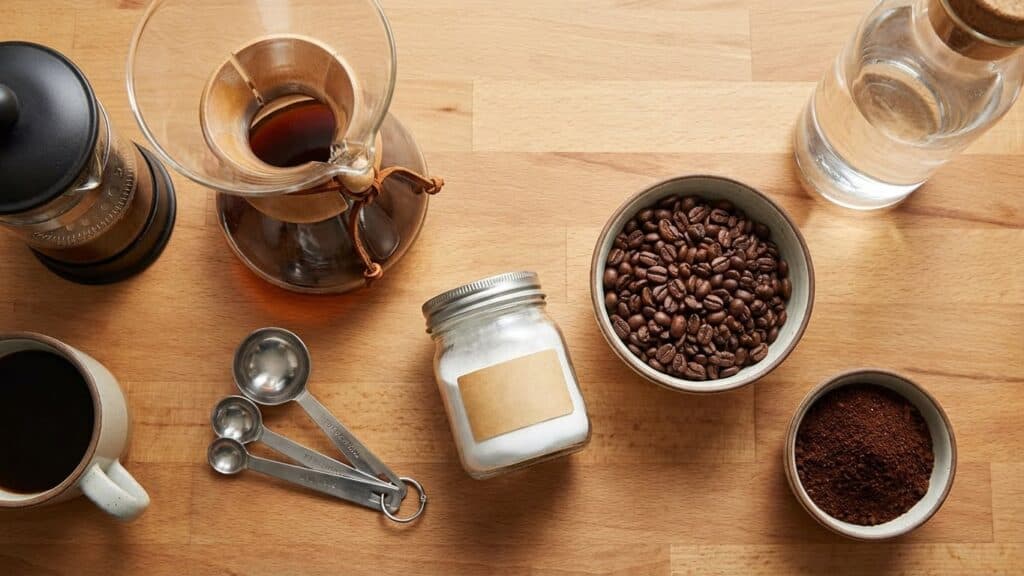
This method is remarkably simple and requires items you probably already have in your kitchen. Here’s what you’ll need to reduce acidity in coffee using baking soda:
- Baking soda (sodium bicarbonate) – regular grocery store variety works perfectly
- Your preferred coffee – grounds or beans
- Measuring spoons – precision matters here
- Your usual brewing equipment – drip machine, French press, pour-over, etc.
- Filtered water – for the cleanest taste
That’s it. No fancy gadgets, no expensive specialty products. Just a pantry staple that costs less than a dollar and lasts for months.
How to Use Baking Soda to Reduce Coffee Acidity
There are two main approaches to using the baking soda hack, and I’ve tested both extensively. Choose the one that fits your brewing style best.
Method 1: Add Baking Soda to Your Grounds
This is my preferred method because it integrates the neutralization into the brewing process itself.
- Measure out your coffee grounds as usual.
- Add a tiny pinch of baking soda—about 1/16 teaspoon per cup of coffee. Start small.
- Mix the baking soda into the dry grounds gently.
- Brew your coffee using your normal method.
- Taste and adjust the amount in future brews if needed.
Barista Tip: Less is more with baking soda. Adding too much will give your coffee a soapy, metallic taste that’s far worse than the original acidity. I’ve learned this the hard way—trust me, start with barely a pinch.
Method 2: Add Baking Soda to Brewed Coffee
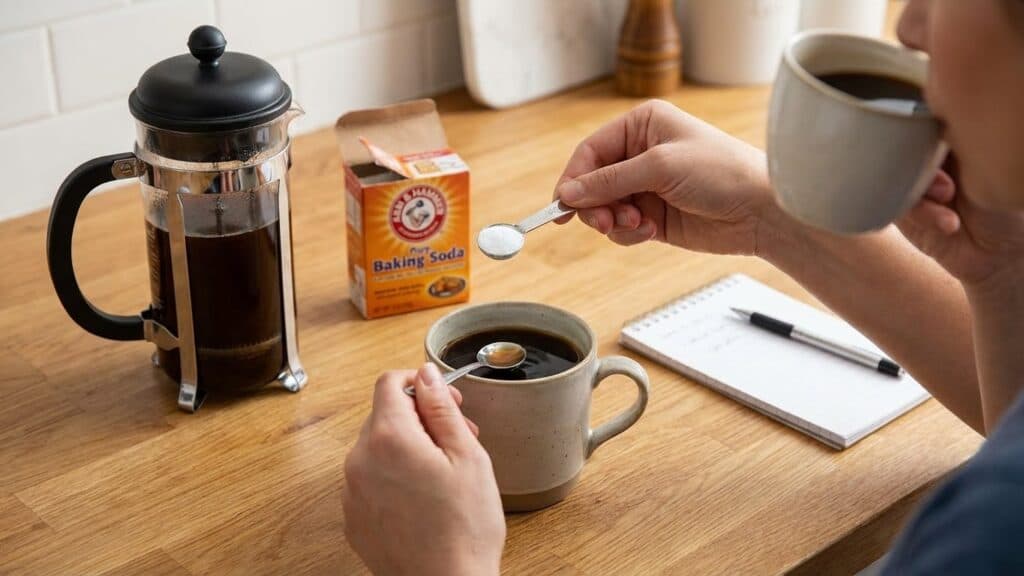
If you prefer more control or want to experiment with a single cup first, try this approach.
- Brew your coffee as you normally would.
- Add 1/16 to 1/8 teaspoon of baking soda directly to your cup.
- Stir thoroughly until dissolved.
- Taste immediately and note the difference.
This method lets you fine-tune each cup, which is helpful when you’re still figuring out your ideal amount. However, I find that adding baking soda to the grounds produces a more consistent and natural-tasting result.
Expected Taste Profile
When done correctly, your coffee should taste smoother and less sharp without losing its essential character. You might notice a slight reduction in brightness, but the overall flavor should remain intact. Think of it as rounding off the edges rather than completely changing the taste.
Other Ways to Reduce Acidity in Coffee at Home
The baking soda hack is excellent, but it’s not your only option. In my experience, combining multiple methods often produces the best results for truly sensitive stomachs.
Choose Low-Acid Coffee Beans
Some coffee origins are naturally less acidic than others. Look for beans from:
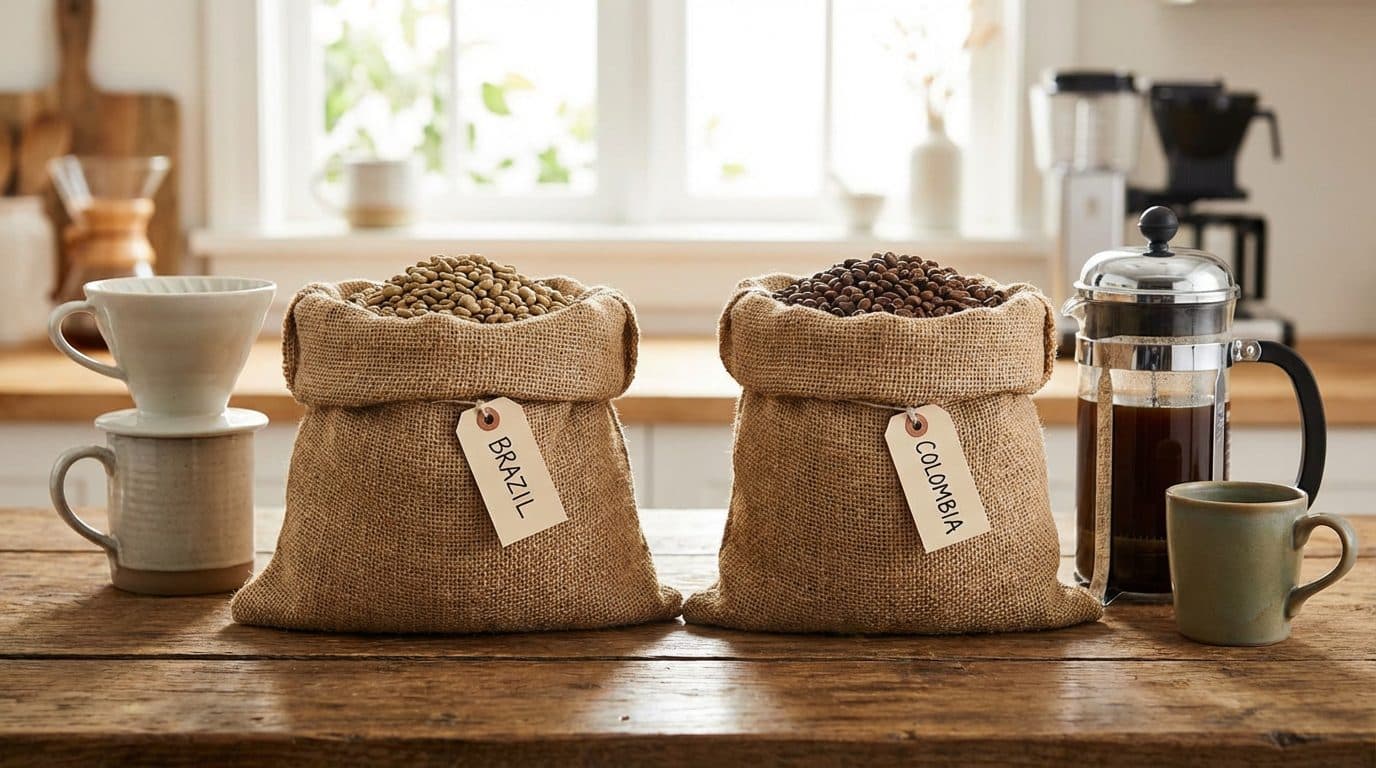
- Brazil – known for smooth, nutty, low-acid profiles
- Sumatra (Indonesia) – earthy and full-bodied with minimal brightness
- Mexico – mild and balanced
Additionally, dark roasts tend to be less acidic than light roasts. The longer roasting process breaks down more of the organic acids.
Try Cold Brew Coffee
Cold brewing reduces acidity by up to 67% compared to hot brewing methods. The cold water extracts fewer acidic compounds, resulting in a naturally sweeter, mellower cup.
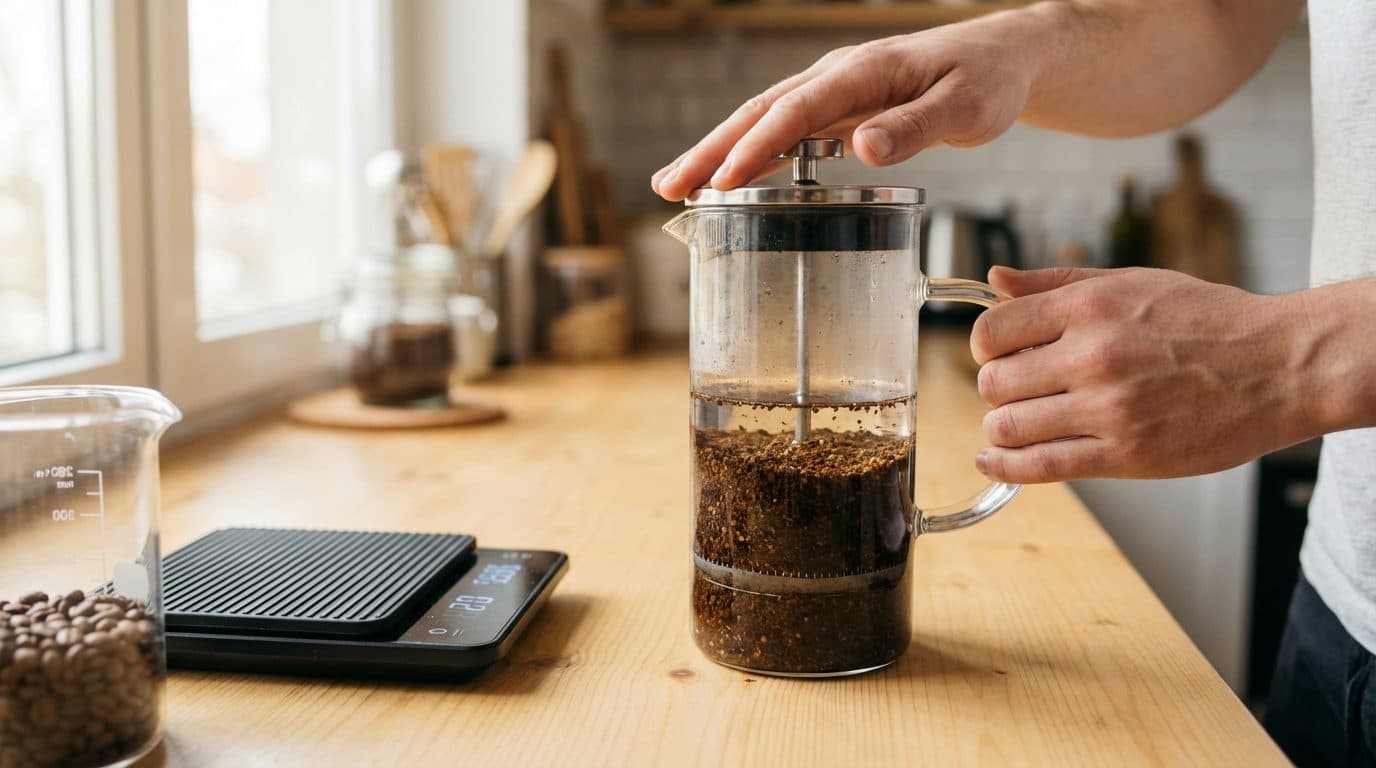
To make cold brew at home, combine coarsely ground coffee with cold water at a 1:8 ratio. Let it steep in the refrigerator for 12-24 hours, then strain. The result is a concentrate you can dilute to taste.
Adjust Your Brewing Variables
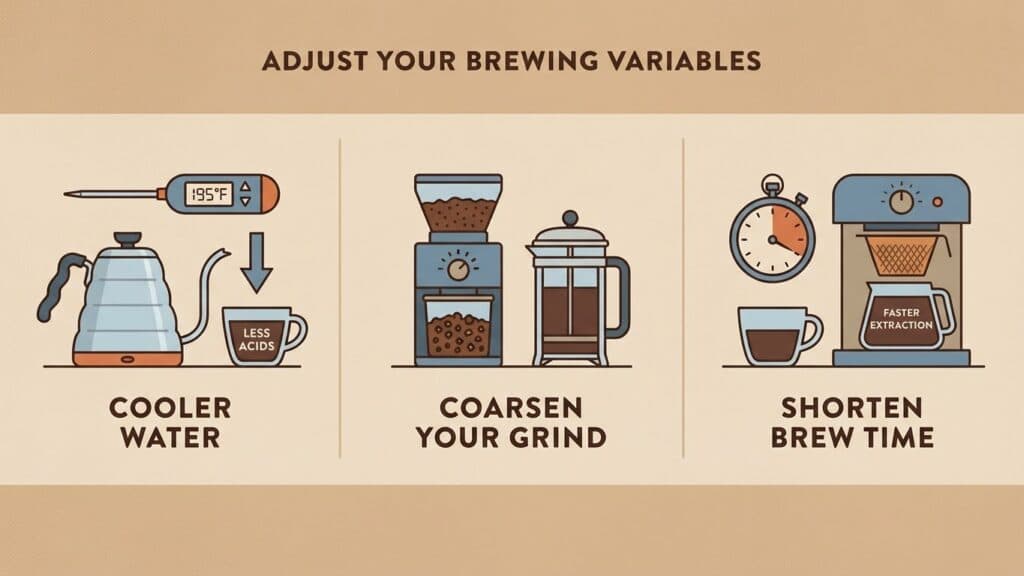
Small changes in your brewing process can make a noticeable difference:
- Use slightly cooler water – brewing at 195°F instead of 205°F extracts fewer acids
- Coarsen your grind – less surface area means less acid extraction
- Shorten brew time – a faster extraction pulls fewer acidic compounds
Add a Pinch of Salt
This old-school trick works similarly to baking soda. A tiny pinch of salt (even less than you’d use for baking soda) can neutralize some acidity while enhancing the coffee’s natural sweetness. It sounds strange, but it’s surprisingly effective.
Comparing Acidity Reduction Methods
| Method | Ease of Use | Effectiveness | Flavor Impact |
|---|---|---|---|
| Baking Soda Hack | Very Easy | High | Minimal if done correctly |
| Cold Brew | Easy (requires time) | Very High | Different profile—sweeter, smoother |
| Low-Acid Beans | Easy | Moderate to High | Depends on origin |
| Dark Roast | Very Easy | Moderate | Bolder, less bright |
| Lower Water Temperature | Moderate | Moderate | Slightly muted flavors |
Frequently Asked Questions
Is baking soda safe to add to coffee?
Yes, in small amounts. Baking soda is commonly used in cooking and baking, and the tiny quantity needed to reduce coffee acidity is perfectly safe for most people. However, if you’re on a sodium-restricted diet or have kidney issues, consult your doctor first.
Will baking soda change the taste of my coffee?
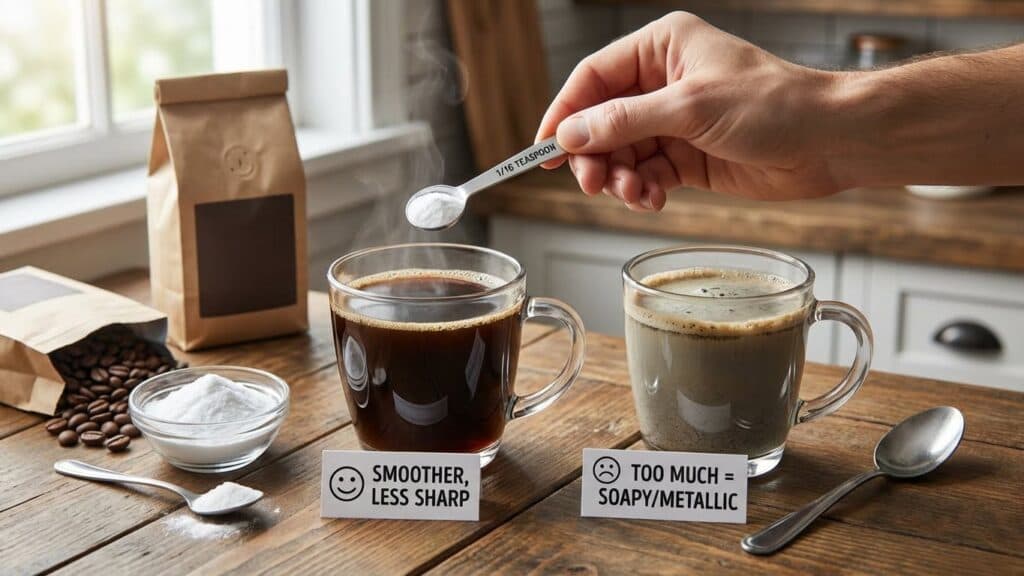
When used correctly (about 1/16 teaspoon per cup), the taste change is minimal. You’ll notice a smoother, less sharp quality. Adding too much, however, will create an unpleasant metallic or soapy flavor. Always start small and adjust gradually.
Can I use this method with any type of coffee?
Absolutely. The baking soda hack works with drip coffee, French press, pour-over, espresso, and even instant coffee. The chemistry is the same regardless of your brewing method.
How much baking soda should I use for a full pot of coffee?
For a standard 12-cup coffee pot, start with 1/4 teaspoon mixed into the grounds. Taste the result and adjust from there. Some people prefer slightly more, but I’d recommend staying under 1/2 teaspoon for a full pot.
Are there any side effects to drinking low-acid coffee?
For most people, no. Reducing coffee acidity simply makes it gentler on the stomach. However, if you’re adding baking soda regularly, be mindful of your overall sodium intake. The amount is small, but it can add up if you drink several cups daily.
Summary and Your Next Steps
Reducing acidity in coffee at home doesn’t require expensive equipment or specialty beans—though those options exist if you want them. The baking soda hack is a quick, affordable, and effective solution that I’ve recommended to countless friends and fellow coffee lovers over the years. Most are surprised by how well it works.
Start by trying the baking soda method with your next brew. Use just a pinch, taste the difference, and adjust from there. If you want to maximize stomach-friendliness, combine this trick with cold brewing or switching to low-acid beans. Your digestive system will thank you, and you won’t have to sacrifice your beloved coffee ritual.
Remember, the goal isn’t to eliminate all acidity—some of those compounds contribute to coffee’s wonderful complexity. The goal is finding your personal sweet spot where flavor and comfort coexist. Happy brewing!

Comments