



Table of Contents
- What Is Cordyceps and Why Add It to Coffee?
- How Cordyceps Supports Energy (Without Overstimulation)
- Myth vs. Reality: Cordyceps Coffee Claims
- How to Use Cordyceps in Your Coffee
- Option 1: Pre-Blended Mushroom Coffee
- Option 2: Add Cordyceps Powder to Your Existing Coffee
- Dosage Guidelines
- What to Expect: Taste and Effects
- Who Should (and Shouldn't) Try Cordyceps Coffee
- Good candidates:
- Proceed with caution:
- Key Takeaways
Adding cordyceps in coffee delivers a smoother, more sustained energy lift without the crash or jitters that straight caffeine often brings. This adaptogenic mushroom has been used in traditional Chinese medicine for centuries, and modern research is starting to catch up with what practitioners have long observed: cordyceps supports natural energy production at the cellular level, making it a compelling addition to your morning cup.
But here’s the thing—not all cordyceps coffee is created equal, and the way you use it matters. Below, you’ll find everything needed to understand how this functional mushroom works, how much to use, and whether it’s actually worth the hype.
What Is Cordyceps and Why Add It to Coffee?
Cordyceps is a genus of parasitic fungi with over 700 identified species. The two most studied for human use are Cordyceps sinensis (wild-harvested, extremely expensive) and Cordyceps militaris (cultivated, more accessible, and used in most supplements).
The appeal of combining cordyceps with coffee comes down to synergy:
- Caffeine provides immediate alertness by blocking adenosine receptors
- Cordyceps supports ATP production—your cells’ actual energy currency—offering a deeper, more sustained boost
- Together, they create a “smooth acceleration” rather than a caffeine spike followed by a crash
According to Harvard Health, mushroom coffees (including those with cordyceps) have been associated with improved energy, better focus, and reduced inflammation. Most cordyceps-infused coffees also contain less caffeine than standard brews—typically 40-80mg per serving versus 95-200mg in regular coffee—which naturally reduces jitter potential.
How Cordyceps Supports Energy (Without Overstimulation)
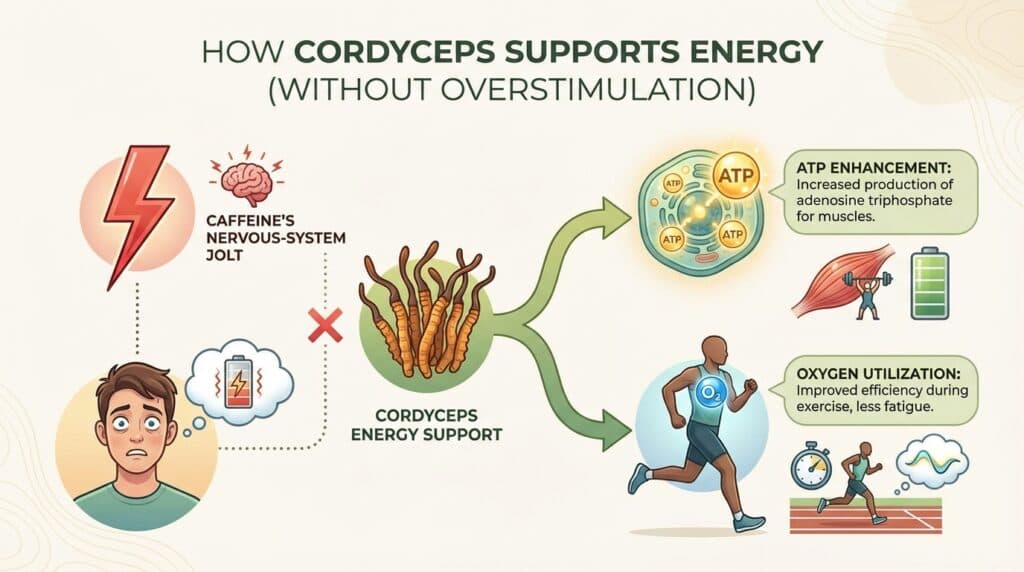
The energy you feel from cordyceps isn’t the same as caffeine’s nervous-system jolt. Here’s what’s happening:
ATP Enhancement: Research suggests cordyceps may increase the body’s production of adenosine triphosphate (ATP), the molecule that delivers energy to muscles. This is why athletes and endurance enthusiasts have gravitated toward it.
Oxygen Utilization: Some studies indicate cordyceps can improve how efficiently the body uses oxygen during exercise. Better oxygen uptake means less fatigue during physical or mental exertion.
Adaptogenic Properties: As an adaptogen, cordyceps helps the body manage stress responses. Instead of pushing your system harder (like stimulants do), it helps your system work more efficiently under pressure.
The result? Energy that builds gradually, peaks steadily, and fades gently—rather than the rollercoaster many experience with high-caffeine drinks.
Myth vs. Reality: Cordyceps Coffee Claims
Functional mushroom products have attracted both genuine enthusiasm and marketing exaggeration. Here’s what holds up:
- Myth: Cordyceps coffee is completely caffeine-free.
Reality: Most products still contain caffeine from the coffee base. The cordyceps doesn’t eliminate caffeine—it complements it. Check labels for actual caffeine content. - Myth: You’ll feel dramatic effects immediately.
Reality: Cordyceps benefits tend to accumulate over consistent use (days to weeks). The first cup won’t transform your energy; the twentieth might. - Myth: All cordyceps supplements are equally effective.
Reality: Extraction method matters enormously. Look for products using fruiting body extracts or dual-extraction processes. Mycelium-on-grain products may contain more starch filler than active compounds. - Myth: Cordyceps is a miracle cure for fatigue.
Reality: It’s a supportive tool, not a replacement for sleep, nutrition, or addressing underlying health issues. Manage expectations accordingly.
How to Use Cordyceps in Your Coffee
There are two main approaches: pre-made blends or DIY mixing.
Option 1: Pre-Blended Mushroom Coffee
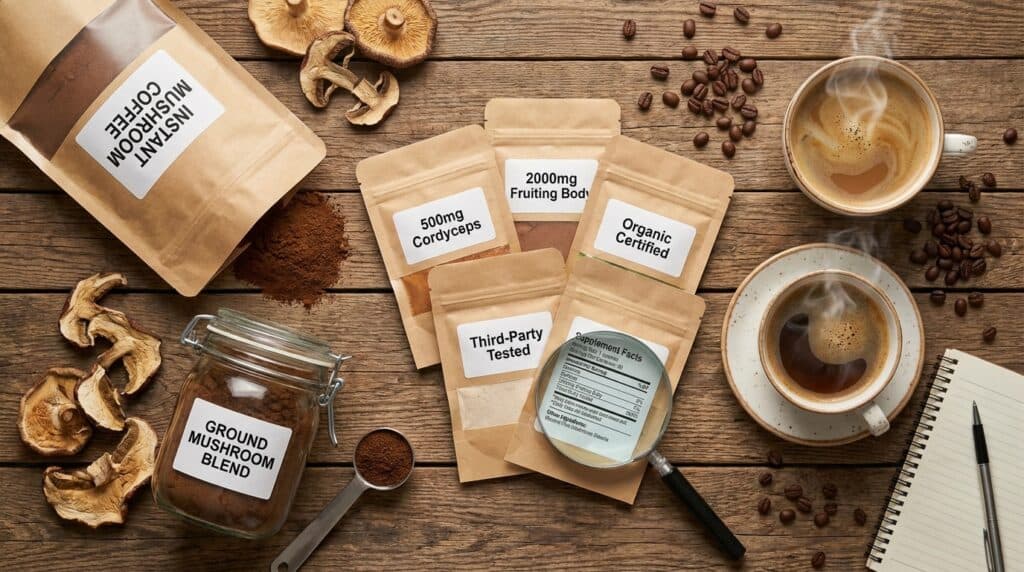
Several brands offer instant or ground coffee with cordyceps already incorporated. These are convenient but vary widely in quality and cordyceps concentration. When evaluating products:
- Check for cordyceps dosage per serving (aim for 500mg-2000mg)
- Verify whether it’s fruiting body or mycelium-based
- Look for third-party testing or organic certification
- Note the caffeine content if jitter-reduction is your goal
Option 2: Add Cordyceps Powder to Your Existing Coffee
This gives you control over both coffee quality and mushroom dosage.
- Brew your preferred coffee (any method works)
- Add 1/2 to 1 teaspoon (approximately 1000-2000mg) of cordyceps extract powder
- Stir thoroughly—cordyceps powder can clump
- Add milk, sweetener, or other additions as desired
Barista Tip: Blend cordyceps powder into a small amount of hot water first to create a slurry, then add to your coffee. This prevents clumping and ensures even distribution throughout the cup.
Dosage Guidelines
Based on supplement research and manufacturer recommendations:
| Goal | Daily Cordyceps Dose | Notes |
|---|---|---|
| General wellness | 1000-2000mg | Standard maintenance dose |
| Athletic performance | 2000-3000mg | Often split between morning and pre-workout |
| Starting out | 500-1000mg | Assess tolerance before increasing |
Most functional mushroom experts suggest taking cordyceps in the morning or early afternoon. Its energy-supporting effects may interfere with sleep if consumed too late in the day—even without caffeine.
What to Expect: Taste and Effects

Cordyceps has a mild, slightly earthy flavor that blends well with coffee’s natural bitterness. Most people find it undetectable in a full cup, especially with milk or sweetener added. It’s far less “mushroomy” than lion’s mane or reishi.
Effects-wise, don’t expect a lightning bolt. The experience is more like:
- Steady alertness without the “wired” feeling
- Fewer afternoon energy dips
- Potentially improved workout stamina (reported by many users, though individual results vary)
- A gentler comedown as caffeine wears off
Some notice benefits within the first week; others need 2-4 weeks of consistent use. Patience matters here.
Who Should (and Shouldn’t) Try Cordyceps Coffee
Good candidates:
- Coffee lovers who experience jitters, anxiety, or crashes from regular coffee
- Anyone seeking sustained energy for long workdays or workouts
- People interested in adaptogens and functional foods
- Those looking to reduce caffeine intake without eliminating it entirely
Proceed with caution:
- Pregnant or nursing: Insufficient safety data exists. Consult a healthcare provider.
- Autoimmune conditions: Cordyceps may stimulate immune activity, which could be problematic for some conditions.
- Blood-thinning medications: Cordyceps may have mild anticoagulant effects. Discuss with your doctor.
- Scheduled surgery: Discontinue use at least two weeks before surgical procedures due to potential bleeding concerns.
Note: These cautions apply to cordyceps supplements generally, not just coffee applications. When in doubt, consult a healthcare professional.
Key Takeaways
- Cordyceps supports energy through ATP production and oxygen utilization—different from caffeine’s mechanism
- Combining cordyceps with coffee creates smoother, more sustained energy with fewer jitters
- Effective dosing ranges from 1000-2000mg daily for most people
- Quality matters: prioritize fruiting body extracts over mycelium-on-grain products
- Benefits accumulate over time—give it 2-4 weeks of consistent use before judging effectiveness
- Morning or early afternoon consumption is ideal; avoid late-day use
If caffeine has become a frenemy—useful but unpredictable—adding cordyceps to your coffee routine offers a way to keep the benefits while smoothing out the rough edges. Start with a half-teaspoon in tomorrow’s brew and see how your body responds over the next few weeks.




Comments