


Table of Contents
- What Is Chaga and Why Add It to Your Coffee?
- What You'll Need for Chaga Coffee
- Ingredients
- Gear
- Chaga Coffee Recipe: Step-by-Step Instructions
- Method 1: Quick Chaga Powder Coffee (5 Minutes)
- Method 2: Traditional Chaga Chunk Brew (30-45 Minutes)
- Customizing Your Chaga Coffee for Maximum Benefits
- Immunity-Boosting Blend
- Creamy Adaptogen Latte
- Low-Acid Morning Brew
- Tips for Getting the Best Results
- Frequently Asked Questions
- How much chaga coffee can I drink per day?
- Does chaga coffee taste like mushrooms?
- Can I use chaga coffee if I'm pregnant or nursing?
- Will chaga coffee keep me awake at night?
- Where can I buy quality chaga for my coffee?
- Final Thoughts: Your Immunity-Boosting Morning Ritual
What if your morning coffee could do more than just wake you up? Imagine sipping a rich, earthy brew that also supports your immune system, reduces inflammation, and gives you sustained energy without the jitters. That’s exactly what a chaga coffee recipe delivers. This powerful combination has become a staple in my morning routine, and I’m excited to share how you can make it at home.
In this guide, you’ll learn everything about making chaga coffee—from understanding what chaga mushroom actually is, to preparing the perfect cup that tastes great and supports your health. Whether you’re new to medicinal mushrooms or looking to upgrade your current recipe, I’ve got you covered with practical tips from my own kitchen experiments.
What Is Chaga and Why Add It to Your Coffee?
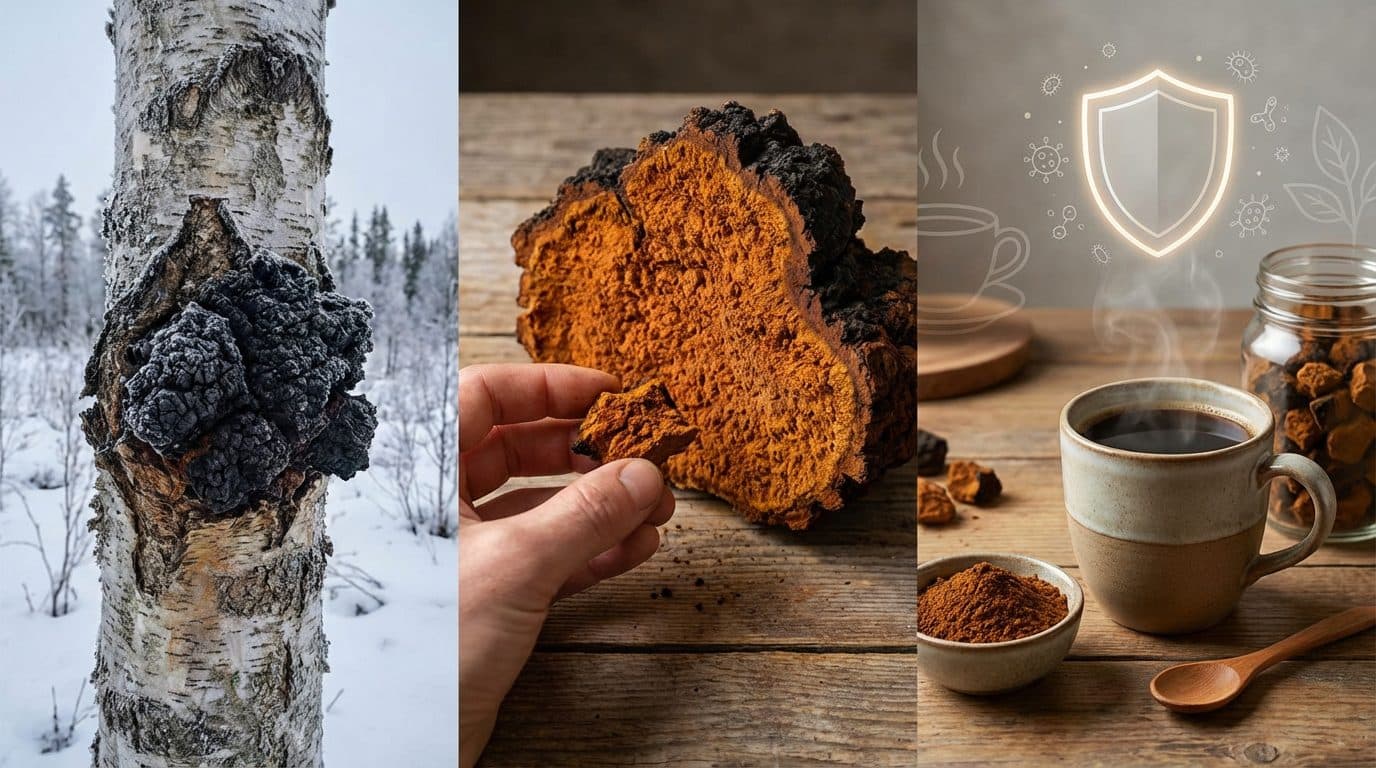
Chaga (Inonotus obliquus) is a fungus that grows primarily on birch trees in cold climates like Siberia, Northern Canada, and Alaska. It looks like a dark, charcoal-like growth on the outside, but inside, it reveals a beautiful rust-orange color. For centuries, people in Russia and Northern Europe have used chaga as a traditional remedy for various ailments.
So why combine it with coffee? In my experience, there are several compelling reasons:
- Immune support: Chaga contains beta-glucans, compounds known to help modulate and strengthen immune function
- Antioxidant powerhouse: Studies suggest chaga has one of the highest ORAC (antioxidant) scores of any food
- Balanced energy: The adaptogenic properties help smooth out coffee’s stimulating effects
- Low acidity: Chaga’s alkaline nature can help balance coffee’s natural acidity
- Earthy flavor: It adds depth and complexity without overpowering your coffee
Did You Know? Chaga has been called the “King of Medicinal Mushrooms” and was traditionally consumed as a tea in Siberia, where locals believed it contributed to their remarkable longevity despite harsh conditions.
The combination works beautifully because chaga’s slightly vanilla-like, earthy notes complement coffee’s roasted flavors. I’ve found that people who try chaga coffee often describe it as “coffee, but smoother and more grounding.”
What You’ll Need for Chaga Coffee
Ingredients
- Chaga: 1-2 teaspoons of chaga powder OR 1 tablespoon of chaga chunks (for simmering)
- Coffee: Your favorite ground coffee (medium to dark roast works best), enough for one cup
- Water: 10-12 oz filtered water
- Optional additions: Coconut oil or MCT oil (1 teaspoon), cinnamon (1/4 teaspoon), raw honey or maple syrup (to taste), plant-based milk or cream
Gear
- Coffee maker of your choice (French press, pour-over, drip, or espresso machine)
- Small saucepan (if using chaga chunks)
- Blender or milk frother (optional, for creamy texture)
- Fine mesh strainer or cheesecloth (if using chunks)
- Your favorite mug
Barista Tip: Always use filtered water for both your chaga preparation and coffee brewing. Tap water with chlorine or heavy minerals can interfere with the extraction of chaga’s beneficial compounds and negatively affect the taste.
Chaga Coffee Recipe: Step-by-Step Instructions
There are two main approaches to making chaga coffee, depending on whether you’re using powder or chunks. I’ll walk you through both methods so you can choose what works best for your lifestyle.
Method 1: Quick Chaga Powder Coffee (5 Minutes)

This is my go-to method for busy mornings. Chaga powder dissolves easily and requires no extra cooking time.
- Brew your coffee as you normally would using your preferred method
- While the coffee is still hot, add 1-2 teaspoons of chaga powder directly to your cup
- Stir vigorously for 30 seconds to ensure the powder dissolves completely
- Add any optional ingredients like coconut oil, cinnamon, or sweetener
- For an extra creamy texture, blend everything together for 15-20 seconds
- Pour into your favorite mug and enjoy
Taste Profile: Smooth, slightly earthy with hints of vanilla, full-bodied with reduced bitterness compared to regular coffee.
Method 2: Traditional Chaga Chunk Brew (30-45 Minutes)
This method extracts more compounds from the chaga and creates a deeper, more complex flavor. I prefer this on weekends when I have more time.
- Add 1 tablespoon of chaga chunks to a small saucepan with 2 cups of filtered water
- Bring the water to a gentle simmer (not a rolling boil—high heat can destroy beneficial compounds)
- Let it simmer for 20-30 minutes until the water turns a deep amber-brown color
- Strain the chaga tea through a fine mesh strainer or cheesecloth
- Use this chaga tea as your water base for brewing coffee
- Brew your coffee using the chaga-infused water
- Add optional ingredients and serve
Barista Tip: Don’t throw away your chaga chunks after one use! You can reuse them 3-5 times before they lose their potency. Store used chunks in the freezer between uses.
Customizing Your Chaga Coffee for Maximum Benefits
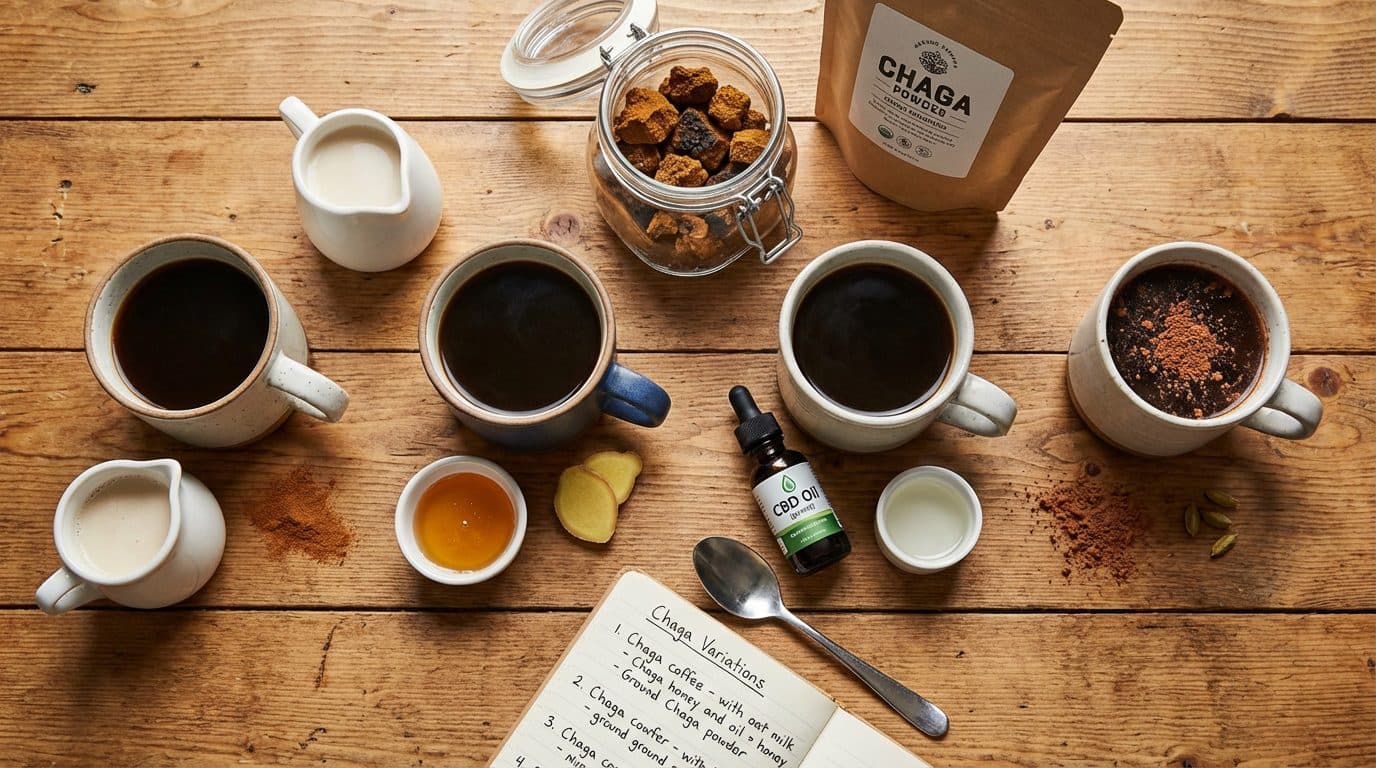
One of the things I love about this chaga coffee recipe is how adaptable it is. Here are some variations I’ve tested and enjoyed:
Immunity-Boosting Blend
When I feel a cold coming on or during flu season, I enhance my chaga coffee with additional immune supporters. Add a tiny pinch of turmeric (about 1/8 teaspoon), a dash of black pepper to increase absorption, and a small piece of fresh ginger. This combination creates a warming, protective brew that tastes surprisingly good.
Creamy Adaptogen Latte
For a coffee-shop-worthy experience, blend your chaga coffee with 1 tablespoon of coconut oil or MCT oil, a splash of oat milk, and 1/2 teaspoon of lion’s mane powder. The blending creates a frothy, creamy texture while the lion’s mane adds cognitive benefits. I call this my “brain-boosting latte.”
Low-Acid Morning Brew
If you struggle with coffee’s acidity, chaga is your friend. Use a dark roast coffee (naturally lower in acid), brew it cold or use a cold brew concentrate, then warm it gently. Add your chaga powder along with 1/4 teaspoon of cinnamon, which further reduces perceived acidity. This combination has been a game-changer for friends of mine with sensitive stomachs.
| Variation | Best For | Key Additions |
|---|---|---|
| Immunity Boost | Cold and flu season | Turmeric, ginger, black pepper |
| Adaptogen Latte | Mental clarity and focus | MCT oil, lion’s mane, oat milk |
| Low-Acid Brew | Sensitive stomachs | Dark roast, cinnamon, cold brew base |
Tips for Getting the Best Results
After experimenting with chaga coffee for over a year, I’ve learned a few things that make a real difference:
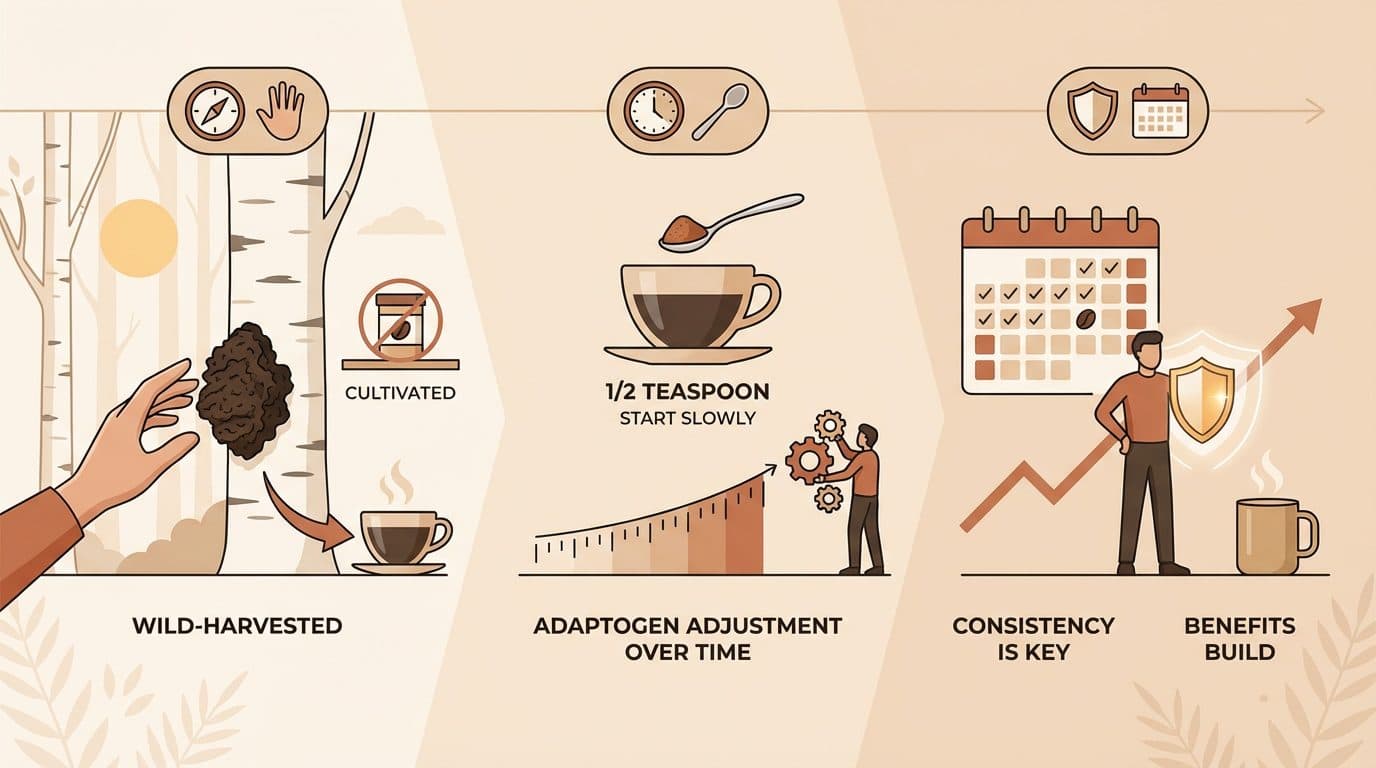
- Source matters: Look for wild-harvested chaga from reputable suppliers. Cultivated chaga often lacks the same concentration of beneficial compounds
- Start slowly: If you’re new to chaga, begin with 1/2 teaspoon and work your way up. Your body needs time to adjust to adaptogens
- Consistency is key: The immune-supporting benefits build over time with regular consumption. Occasional use won’t deliver the same results
- Store properly: Keep chaga powder in an airtight container away from light and moisture. Chunks can be stored in a cool, dark place for up to two years
Key Takeaway: The best chaga coffee recipe is one you’ll actually make regularly. Choose the method that fits your morning routine, even if it’s the simpler powder approach.
Frequently Asked Questions
How much chaga coffee can I drink per day?
Most experts suggest limiting chaga intake to 1-2 servings daily. While chaga is generally considered safe, it does contain oxalates, which in very high amounts could potentially affect kidney function over time. One cup of chaga coffee in the morning is plenty for most people to experience benefits.
Does chaga coffee taste like mushrooms?
Not at all like the mushrooms you’d put in a salad! Chaga has a mild, slightly earthy flavor with subtle notes of vanilla. When combined with coffee, it blends seamlessly and actually smooths out some of coffee’s harsher notes. Most people find it tastes like a richer, more complex version of their regular coffee.
Can I use chaga coffee if I’m pregnant or nursing?
This is one area where I recommend caution. There isn’t enough research on chaga’s effects during pregnancy or breastfeeding. It’s best to consult with your healthcare provider before adding chaga to your routine during these times.
Will chaga coffee keep me awake at night?

Chaga itself doesn’t contain caffeine, so the stimulating effects come entirely from the coffee you use. Many people report that chaga actually helps balance coffee’s effects, providing more sustained energy with fewer jitters. However, if you’re caffeine-sensitive, stick to morning consumption or use decaf coffee.
Where can I buy quality chaga for my coffee?
Look for chaga from suppliers who source from cold climates (Siberia, Alaska, Canada, or Northern Europe). Health food stores, specialty mushroom retailers, and online shops specializing in medicinal mushrooms are good options. Always check for third-party testing to ensure purity and potency.
Final Thoughts: Your Immunity-Boosting Morning Ritual
Making chaga coffee part of your morning routine is one of the simplest upgrades you can make for your health. This chaga coffee recipe takes just a few extra minutes but delivers benefits that extend far beyond the energy boost. From immune support to antioxidant protection, you’re giving your body something valuable with every sip.
Start with the quick powder method if you’re short on time, and experiment with the chunk brewing approach on weekends. Pay attention to how your body responds, and don’t be afraid to customize the recipe with additions that support your specific health goals.
Life is too short for bad coffee—and it’s definitely too short to miss out on simple ways to support your wellbeing. Give this recipe a try tomorrow morning and see how it transforms your daily brew.
Note: While chaga has a long history of traditional use and promising research, the information here is for educational purposes. If you have specific health conditions, take medications (especially blood thinners or diabetes medications), or have concerns, please consult with a qualified healthcare professional before adding chaga to your diet.


Comments