


Table of Contents
- What Makes Camping Coffee Different?
- The Main Challenges
- Best Camping Coffee Methods Compared
- French Press: Best for Car Camping
- What You Need
- How to Brew
- AeroPress: Best All-Around Camping Brewer
- What You Need
- How to Brew
- Pour-Over: Best Lightweight Brewed Coffee
- What You Need
- How to Brew
- Cowboy Coffee: Best No-Gear Backup
- How to Brew
- Percolator: Best for Groups at a Campsite
- Premium Instant Coffee: Best for Speed and Weight
- Essential Tips for Better Camping Coffee
- Water Quality Matters
- Pre-Grind at Home
- Use Sensible Water Temperature
- Practice Before the Trip
- Pack Coffee in Daily Portions
- Think About Cleanup Before Brewing
- Use the Right Grind Size
- Common Camping Coffee Problems
- My Coffee Tastes Bitter
- My Coffee Tastes Weak
- My Coffee Is Full of Grounds
- I Do Not Want to Carry Wet Grounds
- Frequently Asked Questions
- Can I use regular grocery-store ground coffee?
- How do I dispose of coffee grounds while camping?
- What is the lightest camping coffee setup?
- Can I make cold brew while camping?
- How do I keep coffee hot outdoors?
- Best Method by Trip Type
- Minimal Packing Lists
The best camping coffee method depends on how you travel. Car campers should start with a stainless steel French press or percolator. Backpackers should use an AeroPress, collapsible pour-over, or good instant coffee. Cowboy coffee is the backup method when gear is missing or weight matters more than polish.
Outdoor coffee is not about recreating your kitchen. It is about choosing the least annoying method that still tastes good at 6 a.m., with cold fingers, limited water, and a stove that never feels quite level. The best setup is the one you can clean responsibly and repeat when you are tired.
What Makes Camping Coffee Different?
At home, you can control grind size, water temperature, scale accuracy, and cleanup. At camp, the basics get messier. Wind cools water fast. Fuel matters. Grounds cannot be dumped wherever you like. Glass gear breaks. And if you are hiking, every extra ounce becomes a small argument with your shoulders.
The Main Challenges

- Weight: Fine for car camping, critical for backpacking.
- Durability: Stainless steel and plastic beat glass outside.
- Fuel use: Longer brew methods can burn more fuel.
- Water quality: Bad-tasting water makes bad-tasting coffee.
- Grounds disposal: Leave No Trace recommends packing out food waste where possible and keeping waste away from water, trails, and camp.
Best Camping Coffee Methods Compared
| Method | Weight | Brew Time | Best For | Main Drawback |
|---|---|---|---|---|
| French press | Medium | 4 to 5 min | Car camping, base camps | Messy grounds |
| AeroPress | Light-medium | 2 to 3 min | Solo trips, reliable cups | One cup at a time |
| Pour-over | Light | 3 to 4 min | Backpacking, clean flavor | Requires careful pouring |
| Cowboy coffee | No extra gear | 5 to 6 min | Emergencies, ultralight trips | Sediment |
| Percolator | Heavy | 7 to 10 min | Groups, car camping | Can overextract |
| Instant coffee | Ultralight | 30 sec | Fast hiking mornings | Quality varies |
French Press: Best for Car Camping
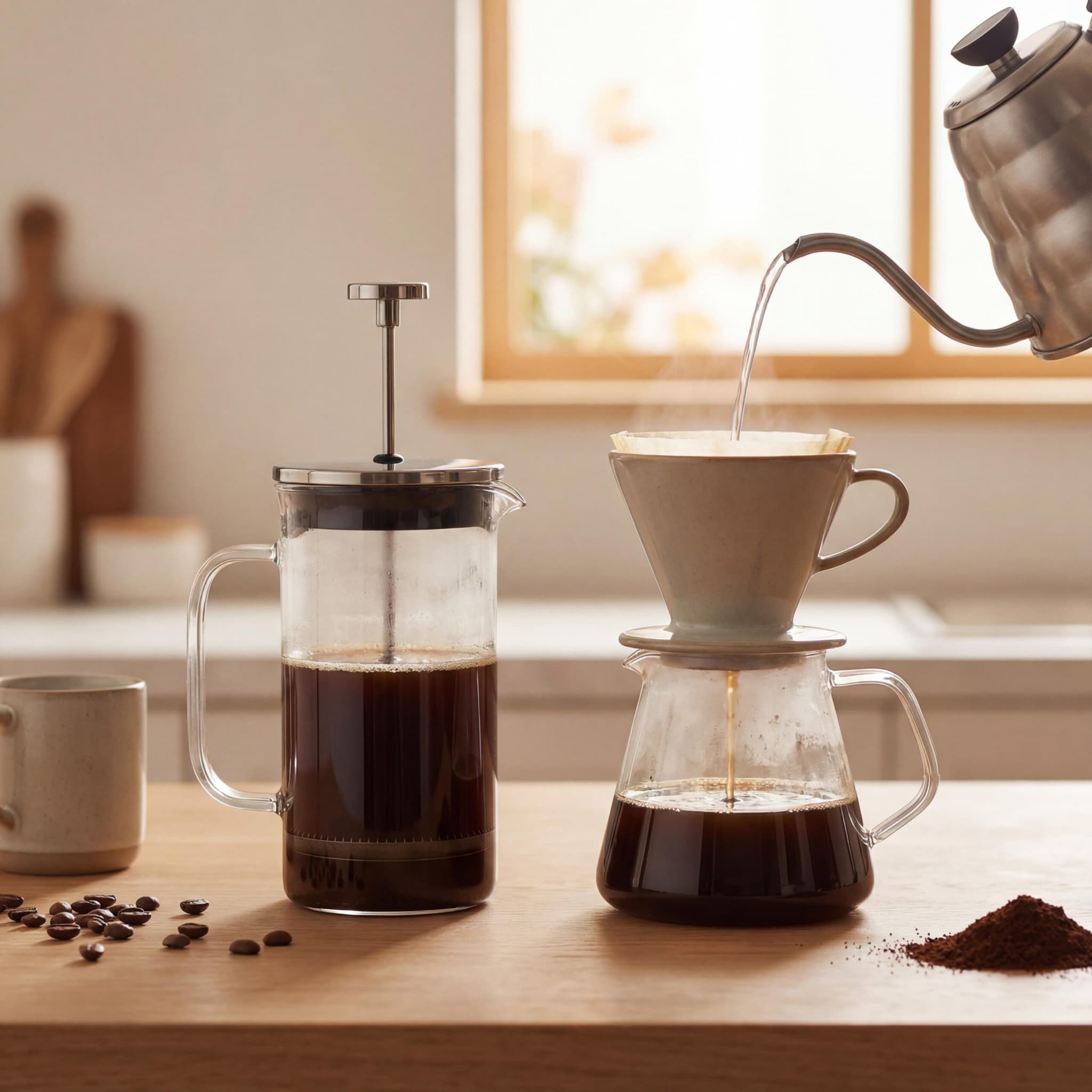
A camping French press is hard to beat if you have room for it. It is forgiving, makes several cups, and does not require a perfect pour. Use a stainless steel or insulated model, not a glass kitchen press.
What You Need
- Stainless steel camping French press
- Coarse-ground coffee
- Hot water
- Spoon or stirrer
- Small bag or container for used grounds
How to Brew

- Add about 2 tablespoons of coarse coffee per 6 ounces of water.
- Boil water, then let it sit briefly so it is not violently boiling.
- Pour, stir, and place the lid on with the plunger up.
- Wait 4 minutes.
- Press slowly and pour all the coffee out so it does not keep extracting.
Field note: The French press tastes rich because the metal filter lets oils and fine particles through. That is pleasant in a mug, less pleasant in cleanup. Bring a dedicated waste bag for grounds.
AeroPress: Best All-Around Camping Brewer
The AeroPress is the most balanced outdoor brewer for many people. It is tough, compact, fast, and easy to clean. It also works with a wide range of grind sizes, which helps if you pre-ground coffee at home.
What You Need
- AeroPress or AeroPress Go
- Paper or metal filters
- Medium-fine coffee
- Stable mug
- Hot water
How to Brew
- Place a rinsed filter in the cap and attach it to the chamber.
- Add coffee, then pour hot water to your chosen level.
- Stir for about 10 seconds.
- Insert the plunger and press slowly for 20 to 30 seconds.
- Add hot water if you want a larger, softer cup.
The puck pops out cleanly, which is why many campers prefer it over French press. It is also less fragile than a ceramic dripper and more forgiving than pour-over in wind.
Pour-Over: Best Lightweight Brewed Coffee
Pour-over is the best lightweight method if you still want a clean brewed cup. A collapsible silicone dripper and paper filters weigh very little, and the used grounds are contained in the filter.
What You Need
- Collapsible dripper
- Paper filters or a reusable filter
- Medium-ground coffee
- Pot with a reasonably controlled pour
How to Brew
- Set the dripper on a mug and add the filter.
- Rinse the paper filter if you have enough hot water.
- Add coffee and wet the grounds evenly.
- Wait 30 seconds.
- Pour slowly in small circles until the mug is full.
The downside is technique. Without a gooseneck kettle, pouring can be sloppy. That does not ruin the drink, but it can make the cup uneven. If you are brewing in wind or cold, AeroPress may be calmer.
Cowboy Coffee: Best No-Gear Backup
Cowboy coffee is just coffee grounds steeped in a pot. It sounds rough, and it can be rough, but it works surprisingly well if you use coarse grounds and pour slowly.
How to Brew
- Bring water to a boil in your pot.
- Remove from heat and wait about 30 seconds.
- Add coarse coffee, roughly 2 tablespoons per cup.
- Stir once and steep 4 to 5 minutes.
- Add a small splash of cold water to help grounds settle.
- Pour carefully, leaving sludge behind.
This is not the cleanest cup, but it is reliable when you forgot filters or broke a brewer. The trick is patience. If you pour too soon or use fine grounds, you will drink grit.
Percolator: Best for Groups at a Campsite
A percolator is old-school and useful when you need coffee for several people. It sits on a camp stove or fire-safe surface and cycles hot water through grounds. The flavor is bold, sometimes too bold, because it is easy to overcook.
Use a medium-coarse grind, watch the color through the knob if your model has one, and pull it off heat before it tastes harsh. Percolators are heavy, so they make sense for car camping, cabins, and group sites rather than backpacking.
Premium Instant Coffee: Best for Speed and Weight
Instant coffee deserves a fair hearing outdoors. Cheap instant can taste flat, but better freeze-dried specialty options are useful when you need caffeine fast and cannot spare weight, water, or cleanup time.
- Best for: Long hikes, early starts, bad weather, minimalist kits.
- Weakness: Less satisfying if you enjoy the brewing process.
- Buying tip: Test packets at home before taking a whole box into the field.
Essential Tips for Better Camping Coffee
Water Quality Matters

Coffee is mostly water, so filtered or good-tasting water matters. If you are using stream or lake water, treat it safely first with your normal filter, purifier, or boiling process. Do not assume beautiful water is safe water.
Pre-Grind at Home
Fresh grinding is better, but a hand grinder adds weight and effort. For most campers, pre-grinding at home is a smart compromise. Pack coffee in small airtight bags so one wet morning does not ruin the whole supply.
Use Sensible Water Temperature
The Specialty Coffee Association lists a common brewing range around 195 to 205 degrees F. Outdoors, you do not need a thermometer. Boil water, take it off heat, wait 30 to 60 seconds, then brew. At higher altitude, boiling temperature is lower, so waiting matters less.
Practice Before the Trip
Try the method once at home with the same mug, stove, and grinder setting if possible. Camping mornings expose every tiny design flaw in a setup. Better to learn that your mug is too narrow for the AeroPress before you are standing beside a tent.
Pack Coffee in Daily Portions
Pre-measure coffee into daily packets before leaving. It saves time, keeps the main supply sealed, and prevents the classic campsite mistake of dumping too much coffee into too little water. Small zip bags, reusable containers, or vacuum-sealed portions all work. Label decaf or half-caf clearly if more than one person is packing coffee.
Think About Cleanup Before Brewing
A brewing method is only good outdoors if you can clean it without wasting half your water. French press tastes great but leaves wet grounds stuck around the plunger. Pour-over keeps grounds in a filter. AeroPress creates a compact puck. That cleanup difference matters on dry trips, cold mornings, and campsites without sinks.
Use the Right Grind Size
Grind size changes the whole cup. French press and cowboy coffee need coarse grounds so the drink does not turn muddy. AeroPress works well from medium-fine to medium, depending on recipe. Pour-over usually prefers medium. If you are buying pre-ground coffee, choose the method that tolerates it best rather than forcing one grind to do everything.
Common Camping Coffee Problems
My Coffee Tastes Bitter
Likely causes are water that was too hot, grounds that were too fine, too much brew time, or a percolator left on heat for too long. Use a slightly coarser grind, remove water from the boil before brewing, and shorten contact time.
My Coffee Tastes Weak
You may be using too little coffee or pouring water through too quickly. Add more coffee before extending brew time. Longer brewing can create bitterness without adding the strength you want.
My Coffee Is Full of Grounds
Use a coarser grind for immersion methods and pour more slowly. With cowboy coffee, wait after adding the cold-water splash so grounds settle. With French press, check that the mesh filter is fitted properly and not bent.
I Do Not Want to Carry Wet Grounds
Use instant coffee, single-serve steeped coffee bags, or pour-over with paper filters. If you prefer French press or AeroPress, bring a small sealable trash bag. Wet grounds smell stronger than dry ones, so do not leave them loose in your pack.
Frequently Asked Questions
Can I use regular grocery-store ground coffee?
Yes. It may not be perfect for every method, but it is workable. Medium grind is fine for pour-over and AeroPress. For French press and cowboy coffee, coarser is better because fine grounds create sludge.
How do I dispose of coffee grounds while camping?

Pack them out when you can, especially in sensitive areas. If local rules allow scattering, keep grounds well away from water, trails, and campsites, and spread them broadly rather than leaving a pile. Never rinse grounds into a stream or lake.
What is the lightest camping coffee setup?
Instant coffee is the lightest. For brewed coffee, a collapsible dripper with paper filters is usually the lightest practical setup. AeroPress is heavier, but many people accept the weight because cleanup and flavor are better.
Can I make cold brew while camping?
Yes. Put coarse coffee and cold water in a sealed bottle at night, using about 1 part coffee to 8 parts water by weight if you can estimate it. Let it steep overnight, then strain through a filter, cloth, or clean bandana. Keep food safety in mind in hot weather.
How do I keep coffee hot outdoors?
Use an insulated mug with a lid. If you are brewing for later, pour immediately into a thermos. A thin enamel mug looks great in photos but loses heat quickly in cold air.
Best Method by Trip Type
- Car camping: Stainless French press or percolator.
- Solo backpacking: AeroPress or collapsible pour-over.
- Ultralight hiking: Premium instant coffee.
- Group breakfast: Percolator or large French press.
- Backup plan: Cowboy coffee.
Minimal Packing Lists
Car camping comfort kit: stainless French press, coarse coffee, insulated mugs, stove, kettle or pot, small brush, and a grounds bag. Add a thermos if people wake up at different times.
Backpacking brewed kit: AeroPress or collapsible dripper, pre-ground coffee portions, filters, mug, stove, and a waste bag. Skip the scale unless coffee is a major part of the trip for you.
Fast-and-light kit: premium instant packets, mug, and hot water. It is not romantic, but it is hard to beat when rain is coming and you need to move.
Start with the method that matches your trip, then simplify. The best camping coffee is not the fanciest cup you can imagine. It is hot, repeatable, packable, and cleaned up without leaving a mess behind.



Comments