


Table of Contents
- Understanding What Causes Burnt Taste in Espresso
- Is Your Brew Temperature Causing the Burnt Taste?
- What Happens When Temperature Is Too High
- How to Check and Adjust Your Temperature
- Are Your Coffee Beans Creating That Burnt Flavor?
- The Dark Roast Dilemma
- Freshness Matters More Than You Think
- Other Sneaky Causes of Burnt Espresso
- Dirty Equipment
- Over-Extraction from Grind or Time
- Scorched Grounds from Preheating
- How to Diagnose Your Burnt Espresso Problem
- Frequently Asked Questions
- Can cheap beans cause a burnt taste in espresso?
- Why does my espresso taste burnt even with light roast beans?
- How often should I clean my espresso machine to prevent burnt taste?
- Does water quality affect burnt taste in espresso?
- What's the ideal temperature for espresso to avoid burnt taste?
- Final Thoughts: Fixing Your Burnt Espresso
You pull a shot, take that first eager sip, and… it tastes like you licked an ashtray. That harsh, acrid, burnt flavor in your espresso is one of the most frustrating problems a home barista can face. The good news? It’s almost always fixable once you identify the root cause.
So, is that burnt taste in espresso coming from your brew temperature being too high, or are your beans to blame? In my experience, it’s rarely just one thing. Let’s break down both culprits—and a few sneaky extras—so you can get back to pulling shots you actually want to drink.
Understanding What Causes Burnt Taste in Espresso
Before pointing fingers at your machine or your beans, it helps to understand what “burnt” actually means in coffee terms. That unpleasant flavor typically comes from over-extraction or actual scorching of the coffee grounds during brewing.
Over-extraction happens when too many compounds are pulled from the coffee, including bitter and ashy-tasting ones that you’d rather leave behind. Scorching occurs when the grounds are exposed to excessive heat, literally cooking them instead of brewing them.
Key Takeaway: A burnt taste usually signals that something in your process is too aggressive—whether it’s heat, time, or the roast level of your beans.
Is Your Brew Temperature Causing the Burnt Taste?
Temperature is one of the most common suspects when espresso tastes burnt. Most espresso machines are designed to brew between 90°C and 96°C (195°F to 205°F). Go above that range, and you’re entering dangerous territory.
What Happens When Temperature Is Too High

When water hits coffee grounds at excessively high temperatures, it extracts compounds too quickly and aggressively. This pulls out harsh, bitter flavors that taste burnt or ashy. I’ve found that even a few degrees above the ideal range can make a noticeable difference.
Here’s what to watch for:
- Your espresso tastes bitter and harsh, even with fresh beans
- The shot pulls faster than expected
- You notice a smoky or charred aftertaste
- The crema appears darker than usual or dissipates quickly
How to Check and Adjust Your Temperature
If you have a machine with a PID controller, check your settings and try lowering the temperature by 2-3 degrees. For machines without temperature control, try a “cooling flush”—run a small amount of water through the group head before pulling your shot.
Barista Tip: After your machine heats up, wait 20-30 seconds before brewing. Some machines overshoot their target temperature initially, then settle down.
Here’s a quick reference for temperature troubleshooting:
| Symptom | Likely Cause | Solution |
|---|---|---|
| Burnt, ashy taste | Temperature too high | Lower by 2-3°C or cooling flush |
| Sour, weak taste | Temperature too low | Increase temperature or let machine heat longer |
| Inconsistent shots | Temperature instability | Check machine calibration |
Are Your Coffee Beans Creating That Burnt Flavor?
Here’s the truth many home baristas don’t want to hear: sometimes the beans are the problem, not your technique. Dark roasted beans, stale coffee, or low-quality beans can all produce that burnt taste you’re trying to eliminate.
The Dark Roast Dilemma
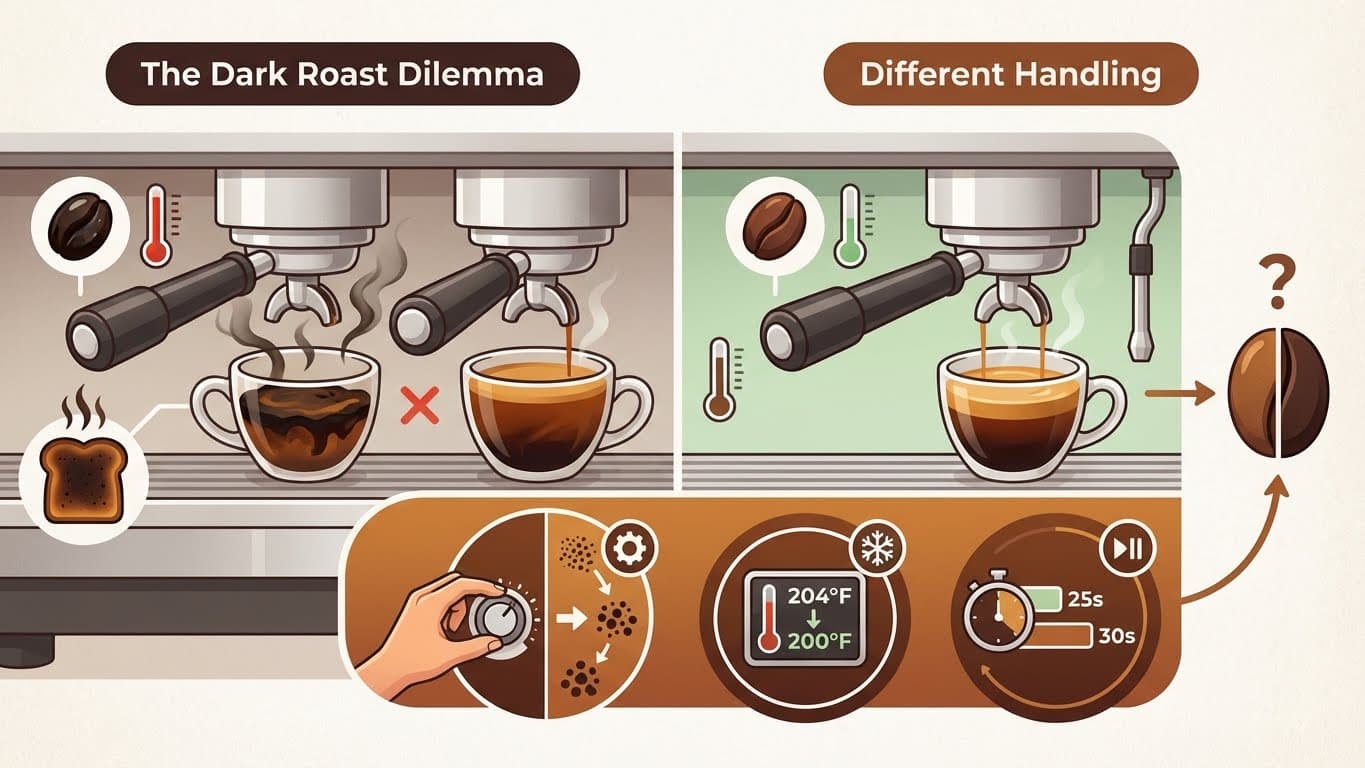
Dark roasted beans have been roasted longer, which means they’ve already developed smoky, charred flavors during the roasting process. When you brew them as espresso, those flavors become concentrated and can taste burnt—even when everything else is perfect.
This doesn’t mean dark roasts are bad. It means they require different handling:
- Use a slightly coarser grind to reduce extraction
- Lower your brew temperature by 2-4 degrees
- Shorten your shot time slightly
- Consider switching to a medium or medium-dark roast for espresso
Freshness Matters More Than You Think
Stale beans don’t just taste flat—they can taste burnt and bitter too. As coffee ages, the oils oxidize and develop off-flavors. I’ve seen home baristas blame their machines when the real culprit was a bag of beans that had been sitting open for three weeks.
For best results, use beans within 2-4 weeks of their roast date. Store them in an airtight container away from light and heat. If you can’t remember when you bought your beans, that’s probably your answer right there.
Did You Know? Coffee beans actually need to “degas” for 5-7 days after roasting before they’re ideal for espresso. Too fresh can cause channeling and uneven extraction.
Other Sneaky Causes of Burnt Espresso
Temperature and beans get most of the blame, but several other factors can create that burnt taste. Don’t overlook these common culprits.
Dirty Equipment
Old coffee oils build up in your portafilter, group head, and basket. These oils go rancid over time and add a burnt, bitter taste to every shot you pull. A quick rinse isn’t enough—you need to backflush regularly and deep clean your equipment weekly.
Over-Extraction from Grind or Time
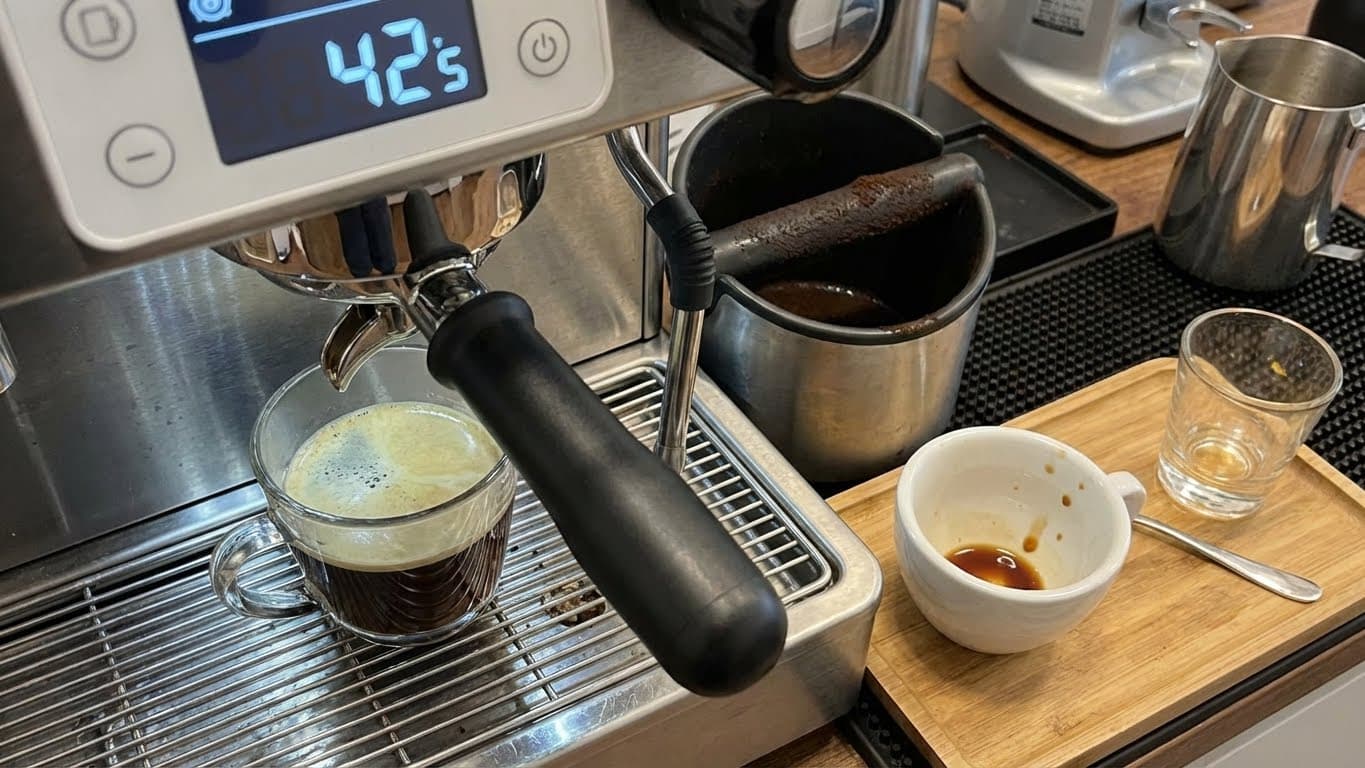
If your grind is too fine or your shot runs too long, you’ll extract those unpleasant bitter compounds. A standard espresso shot should take 25-30 seconds for about 36-40ml of liquid. Anything significantly longer, and you’re likely over-extracting.
Signs of over-extraction include:
- Shot time exceeding 35 seconds
- Thin, watery crema
- Bitter, hollow taste
- Dry, astringent mouthfeel
Scorched Grounds from Preheating
Some baristas leave their portafilter loaded and locked into the group head while the machine heats up. This can actually scorch the grounds before you even start brewing. Load your portafilter just before pulling your shot to avoid this issue.
How to Diagnose Your Burnt Espresso Problem
When you’re troubleshooting, change one variable at a time. Otherwise, you won’t know what actually fixed the problem. Here’s a systematic approach I use:
- Step 1: Start with fresh beans (roasted within the last 2 weeks)
- Step 2: Clean your equipment thoroughly
- Step 3: Check your grind size and adjust if needed
- Step 4: Monitor your shot time (aim for 25-30 seconds)
- Step 5: If still burnt, lower your temperature by 2-3 degrees
Keep a simple log of your changes. Note the grind setting, shot time, temperature (if adjustable), and taste. After a few days, patterns will emerge that point you toward the real issue.
Barista Tip: Pull a shot and let it cool for 30 seconds before tasting. Burnt flavors become more obvious as espresso cools, making diagnosis easier.
Frequently Asked Questions
Can cheap beans cause a burnt taste in espresso?
Yes. Lower-quality beans are often roasted darker to mask defects, which creates that burnt, ashy flavor. Investing in specialty-grade beans from a reputable roaster can make a dramatic difference in your cup.
Why does my espresso taste burnt even with light roast beans?
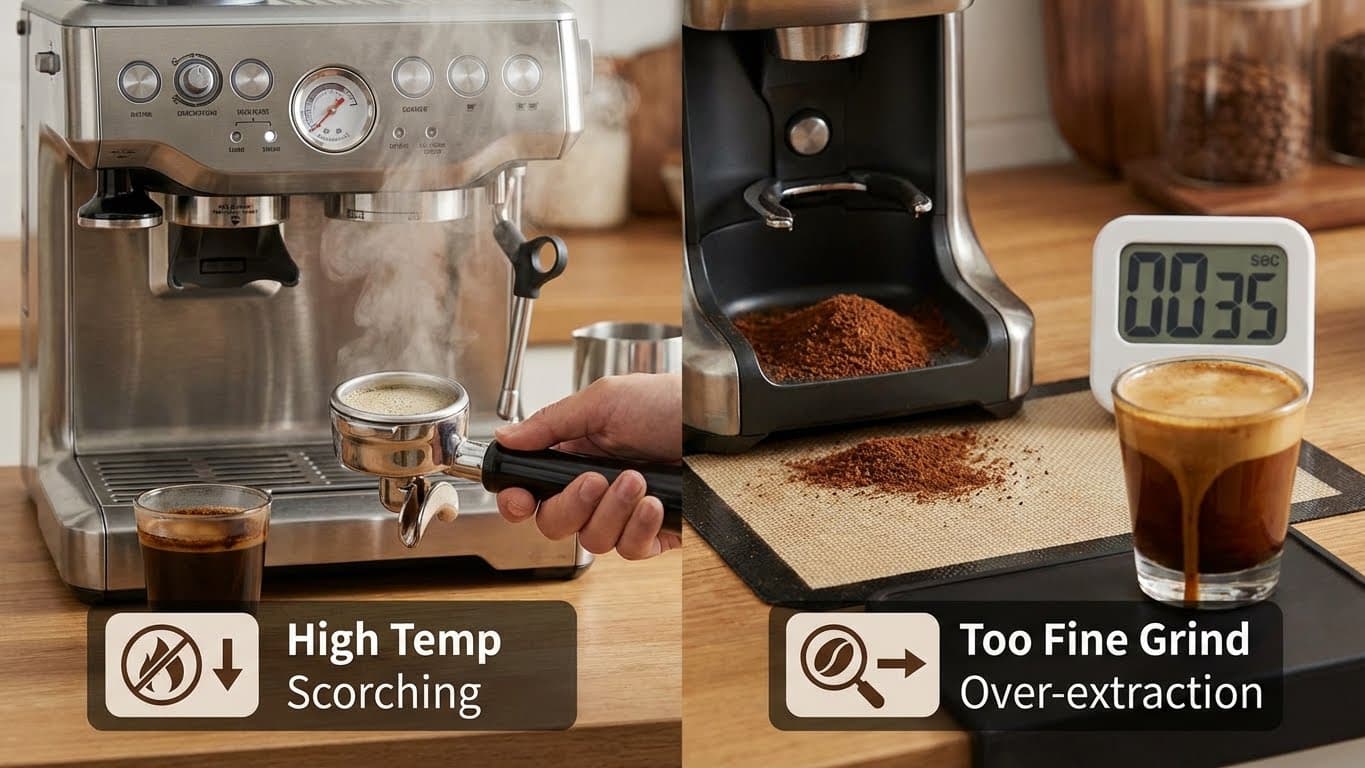
Light roast beans are denser and require higher extraction temperatures. If your machine runs hot, you might be scorching them. Try a cooling flush before brewing, or check if your grind is too fine, causing over-extraction.
How often should I clean my espresso machine to prevent burnt taste?
Backflush with water daily and with cleaning solution weekly. Deep clean the portafilter, basket, and group head at least once a week. Descale your machine every 1-3 months depending on your water hardness.
Does water quality affect burnt taste in espresso?
Indirectly, yes. Hard water causes scale buildup, which can affect your machine’s temperature stability. Use filtered water with balanced mineral content for the best results and machine longevity.
What’s the ideal temperature for espresso to avoid burnt taste?
Most espresso extracts best between 90°C and 96°C (195°F to 205°F). For darker roasts, stay on the lower end. For lighter roasts, you can push toward the higher end. Experiment within this range to find your sweet spot.
Final Thoughts: Fixing Your Burnt Espresso
That burnt taste in your espresso is frustrating, but it’s almost always solvable. In most cases, it comes down to a combination of factors—temperature running a bit high, beans that are too dark or too old, or equipment that needs a good cleaning.
Start by ruling out the easy fixes: fresh beans, clean equipment, and proper grind size. If the problem persists, focus on temperature adjustments. Life is too short for bad coffee, and with a little patience and systematic troubleshooting, you’ll be pulling smooth, balanced shots in no time.


Comments