


Table of Contents
- Why Instant Coffee Drinkers Often Hate "Real" Coffee at First
- What to Look for in Beginner-Friendly Coffee Beans
- Quick Verdict: Best Bean Profiles for Former Instant Drinkers
- Bean Profile Comparison
- The Brewing Method Matters More Than You Think
- Pros and Cons of Switching from Instant
- Pros
- Cons
- Who Should Make the Switch (And Who Shouldn't)
- Common Mistakes to Avoid
- A Simple Starting Setup
- Final Thoughts
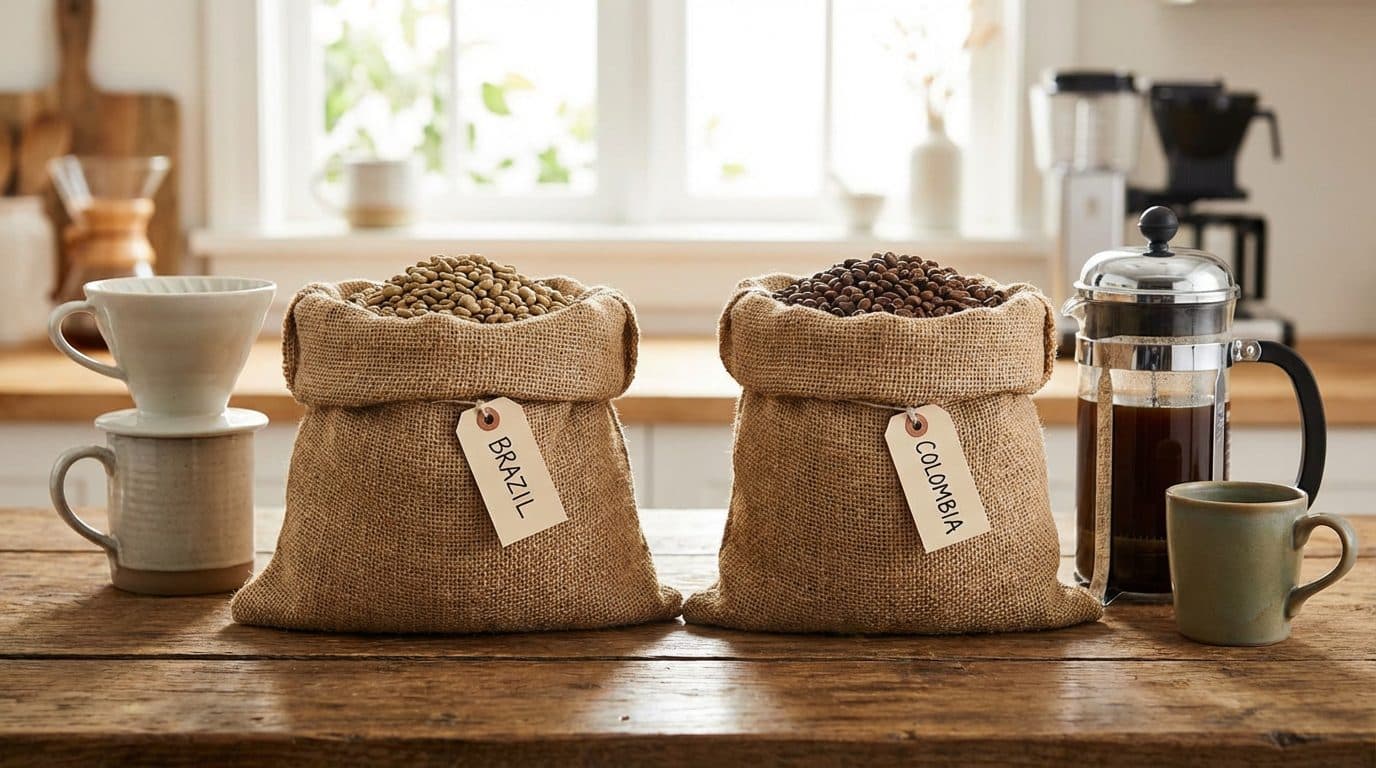
There’s this moment—right when hot water hits freshly ground beans—where my whole kitchen fills with this warm, toasty, almost caramel-like smell that instant coffee just can’t replicate. If you’ve been drinking instant for years and you’re curious about making the switch to real beans, here’s the short answer: start with a medium roast from Brazil or Colombia. These origins are naturally smooth, low in acidity, and won’t shock your palate with weird fruity or sour notes. The best coffee beans for people who usually drink instant coffee are forgiving, consistent, and taste like what you *think* coffee should taste like.
Now let me explain why—and help you avoid the mistakes I made when I first switched.
Why Instant Coffee Drinkers Often Hate “Real” Coffee at First
Here’s the ugly truth. Most specialty coffee is roasted to highlight bright, acidic, fruity flavors. And if your palate is trained on instant? That stuff tastes like sour lemon water. It’s jarring.
Instant coffee is typically made from Robusta beans (or low-grade Arabica), roasted dark, and processed to remove most of the complexity. What you’re left with is a flat, predictable, slightly bitter flavor. Not bad—just… simple.
So when someone hands you a light-roasted Ethiopian and says “taste the blueberry notes!”, your brain goes: this is broken coffee.
It’s not. But you need a bridge.
What to Look for in Beginner-Friendly Coffee Beans
I’ve converted a lot of instant drinkers over the years. My neighbor Linda was the toughest—she’d been drinking the same instant brand for 30 years. Here’s what finally worked:
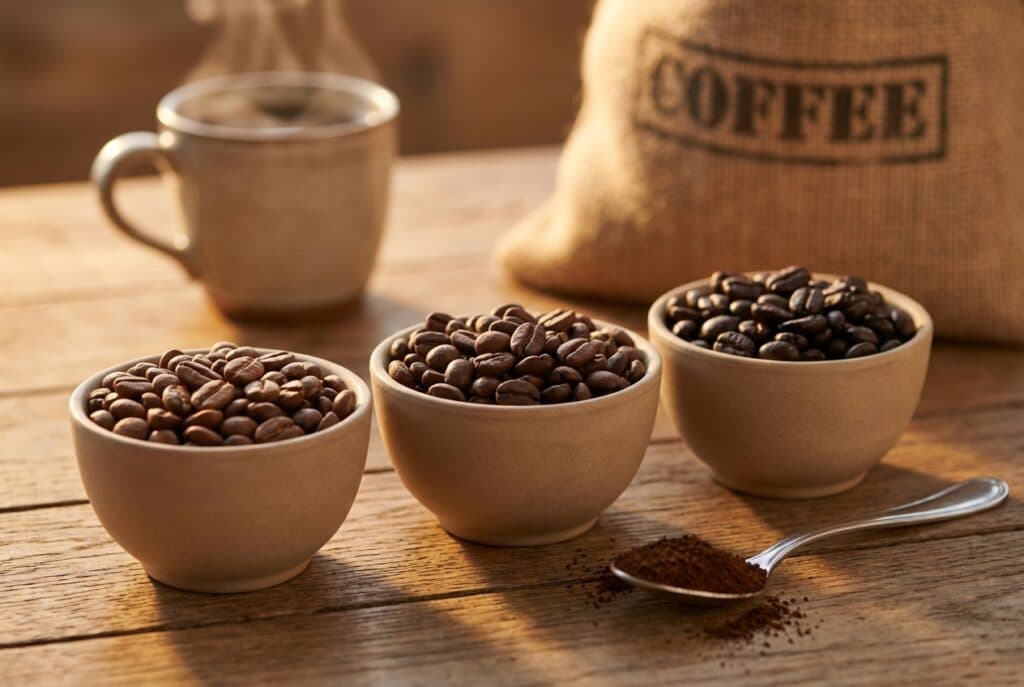
- Roast level: Medium or medium-dark. Light roasts are too acidic. Dark roasts can taste burnt and ashy. Medium is the sweet spot.
- Origin: Brazil, Colombia, Sumatra, or Guatemala. These regions produce beans with chocolate, nutty, and caramel notes—familiar flavors.
- Processing: Washed or semi-washed. Natural/dry-processed beans have funky fruit flavors that can be off-putting at first.
- Freshness: Roasted within the last 2-4 weeks. Stale beans taste flat and papery.
Avoid anything labeled “single origin Ethiopian” or “light roast” until you’ve built up your palate. I’m not saying those are bad—I love them now—but they’re an acquired taste.
Quick Verdict: Best Bean Profiles for Former Instant Drinkers
Quick Verdict:
- Best overall starting point: Medium-roast Brazilian (chocolate, nuts, low acidity)
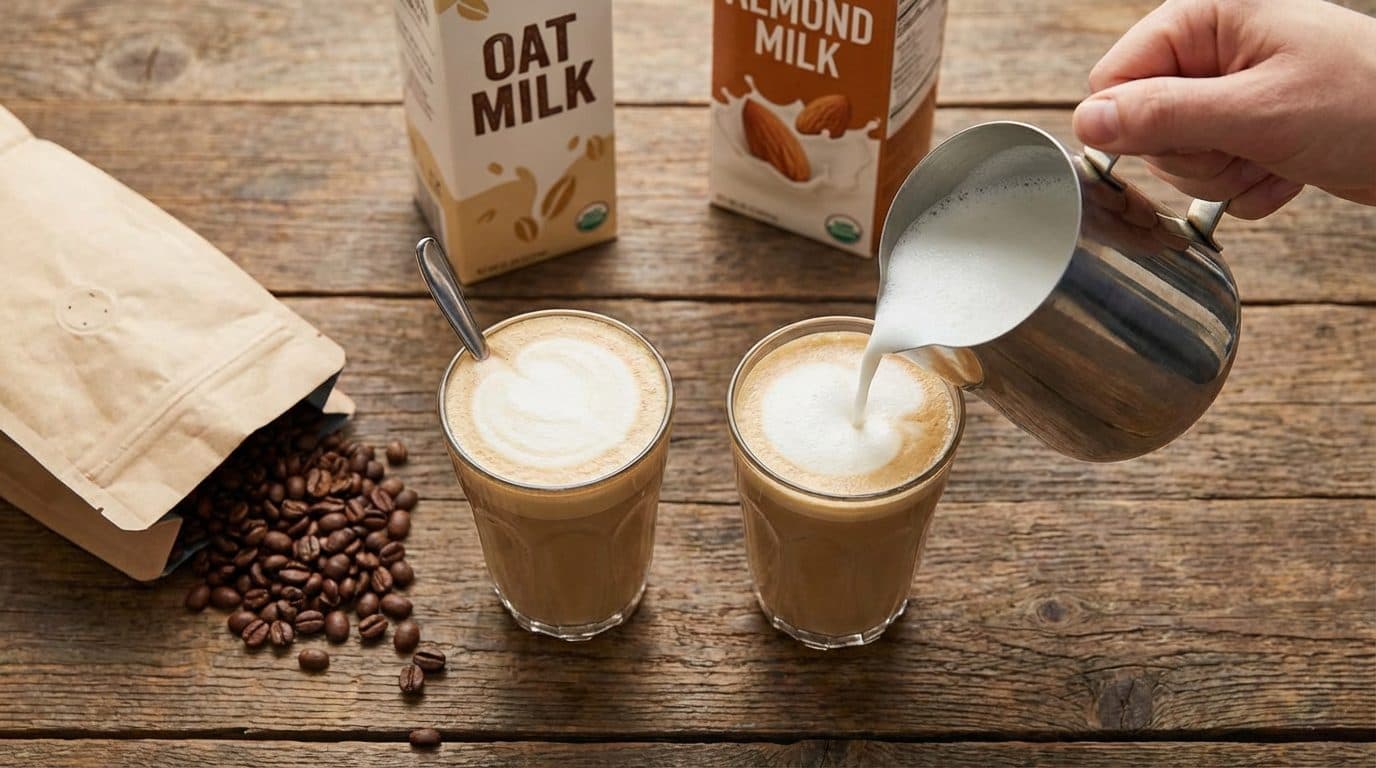
- Best for milk drinks: Colombian or Guatemalan blend (holds up well with cream)
- Best for sensitive stomachs: Sumatra or any “low-acid” labeled bean
- Best budget option: Supermarket Colombian medium roast (widely available, consistent)
Bean Profile Comparison
| Origin/Type | Flavor Profile | Acidity | Best For |
|---|---|---|---|
| Brazilian Medium Roast | Chocolate, nuts, caramel | Low | Black coffee drinkers |
| Colombian Medium Roast | Balanced, mild fruit, brown sugar | Medium-low | All-around versatility |
| Sumatra (Indonesian) | Earthy, herbal, full body | Very low | Those who want bold + smooth |
| Guatemalan | Cocoa, spice, subtle sweetness | Medium | Espresso or milk drinks |
| House Blends (medium) | Balanced, predictable | Low-medium | Beginners who want consistency |
The Brewing Method Matters More Than You Think
Okay, confession time. When I first bought “good” beans, I brewed them in a cheap drip machine with tap water and wondered why they tasted terrible. Turns out I was doing everything wrong.
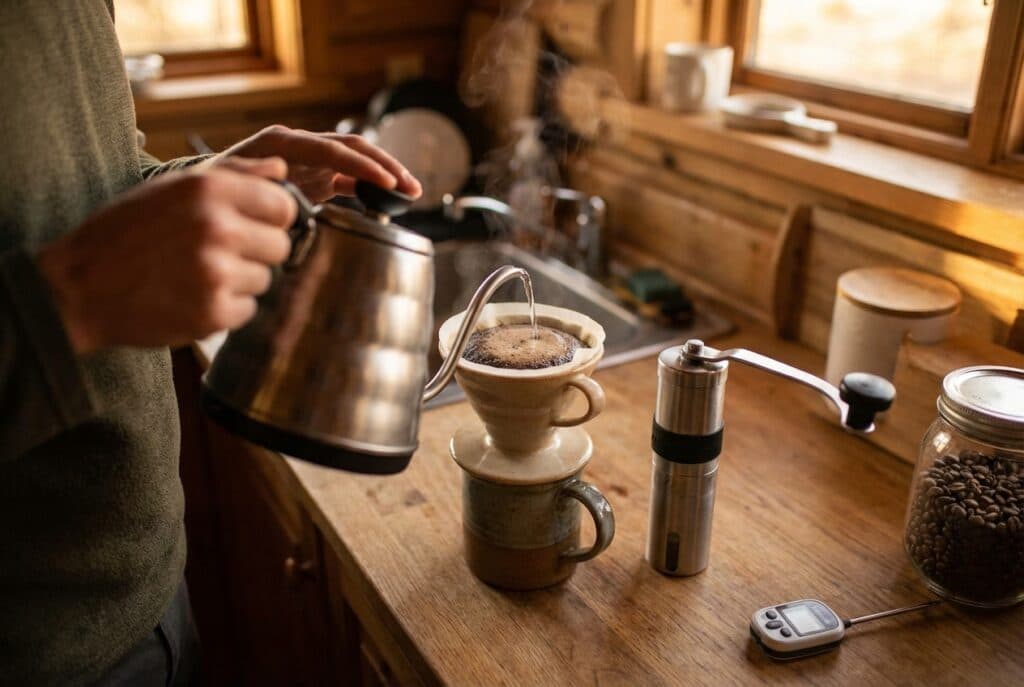
You don’t need fancy equipment. But you do need to follow a few basics:
- Grind fresh if possible. Pre-ground is fine to start, but whole beans stay fresh longer. A $20 hand grinder changes everything.
- Use water between 93°C-96°C (200°F-205°F). Boiling water scorches the grounds. Too cool and you get sour, under-extracted coffee.
- Ratio matters. Start with 1:15 (1 gram coffee to 15 grams water). For a standard mug, that’s roughly 15g coffee to 225ml water.
- Don’t let it sit on a hot plate. Brewed coffee goes stale and bitter within 30 minutes.
Barista Tip: If your coffee tastes sour, grind finer or brew longer. If it tastes bitter and harsh, grind coarser or shorten brew time. This one adjustment fixes 80% of bad cups.
Pros and Cons of Switching from Instant
Pros
- Dramatically better flavor (once you dial it in)
- More control over strength and taste
- Fresher coffee = more antioxidants
- Cheaper per cup than most instant brands long-term
- It becomes a genuinely enjoyable morning ritual
Cons
- Takes 3-5 minutes instead of 30 seconds
- Small learning curve
- Requires some basic equipment
- Easy to waste beans while experimenting (I learned this the hard way with a $22 bag of Guatemalan that I completely butchered)
Who Should Make the Switch (And Who Shouldn’t)
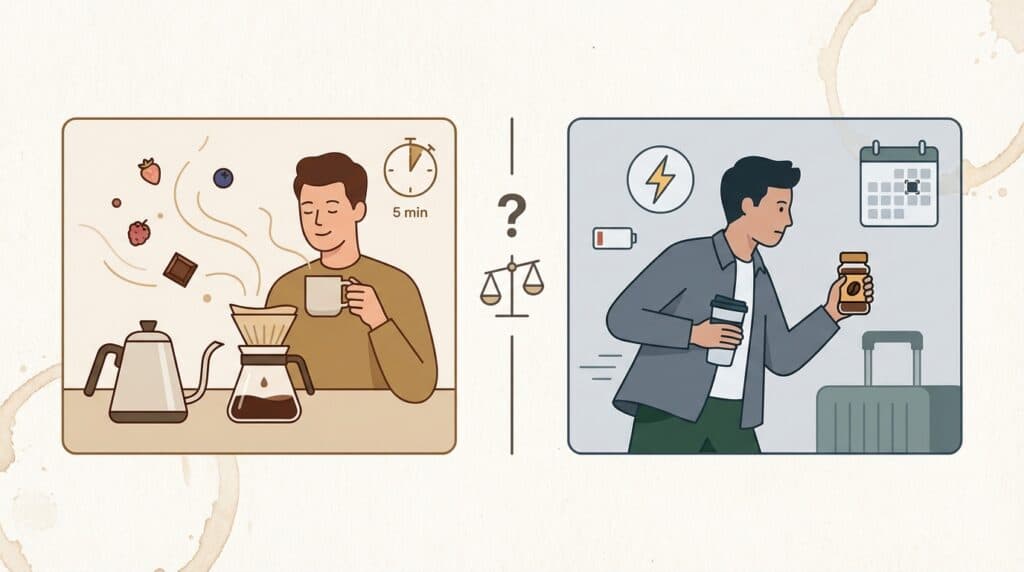
This is for you if:
- You drink coffee daily and want better flavor
- You’re curious about what “good” coffee actually tastes like
- You have 5 extra minutes in your morning
- You’re tired of that metallic aftertaste instant sometimes has
Maybe stick with instant if:
- You genuinely don’t care about taste—coffee is just caffeine delivery
- You travel constantly and need maximum convenience
- You only drink one cup a week
Honestly? No judgment either way. My dad still drinks instant and he’s perfectly happy. But if you’re reading this, you’re probably at least a little curious.
Common Mistakes to Avoid
I’ve watched so many people try fresh beans, hate them, and go back to instant. Usually it’s one of these issues:
- Buying light roast first. Too acidic. Start medium.
- Using stale beans. Check the roast date. If there isn’t one, that’s a red flag.
- Storing beans wrong. Keep them in an airtight container at room temperature. Not the fridge. Not the freezer (unless long-term storage).
- Expecting instant results. Your first few cups might be mediocre. That’s normal. Adjust your grind and ratio.
- Buying the fanciest beans. A $40 bag of competition-grade Geisha is wasted on a beginner palate. Start simple.
My friend Sarah bought high-end Kenyan beans for her first real coffee experience. She said it tasted like “tomato soup.” That’s actually a compliment in specialty coffee circles—but not what she wanted at 7 AM.
A Simple Starting Setup
You don’t need to spend hundreds. Here’s what I recommend:
- A basic pour-over dripper or French press (under $25)
- A kitchen scale (optional but helpful—$10-15)
- A hand grinder if buying whole beans ($20-40)
- A bag of medium-roast Brazilian or Colombian beans from a local roaster
Total investment: around $50-70. And you’ll taste the difference immediately.
Final Thoughts
Switching from instant to fresh beans isn’t about being a coffee snob. It’s about discovering that coffee can actually taste *good*—not just functional. Start with smooth, low-acid beans from Brazil or Colombia. Use water that’s hot but not boiling. Give yourself permission to experiment.
And if your first cup isn’t perfect? Adjust and try again. That’s half the fun.
If you want a specific recommendation, head to a local roaster and ask for their “most approachable medium roast.” Tell them you’re coming from instant. They’ll point you in the right direction—and probably be thrilled someone’s making the jump.

Comments