


Table of Contents
- Quick Verdict: The Fellow Corvo EKG (Refurbished) Wins
- Why Your Kettle Actually Matters for Pour-Over Coffee
- What Makes a Good Pour-Over Kettle?
- Gooseneck Spout Design
- Temperature Control
- Capacity and Weight
- Build Quality
- Best Budget Kettles for Pour-Over Coffee: My Top Picks
- Cosori Gooseneck Electric Kettle – Best Overall Value
- Bonavita 1.0L Gooseneck Kettle – Best Simple Option
- Timemore Fish Smart Electric Kettle – Best for Precision Enthusiasts
- Hario V60 Buono Stovetop Kettle – Best Non-Electric Option
- Budget Kettle Comparison at a Glance
- Kettles to Avoid on a Budget
- How to Get the Most from Your Budget Kettle
- Practice Your Pour
- Use a Thermometer Initially
- Preheat Your Brewing Equipment
- Descale Regularly
- Frequently Asked Questions
- Do I really need a gooseneck kettle for pour-over coffee?
- Is temperature control worth the extra cost on a budget kettle?
- How long do budget kettles typically last?
- Can I use a budget pour-over kettle for tea?
- Should I buy refurbished to save money?
- Conclusion and Your Next Step
Quick Verdict: The Fellow Corvo EKG (Refurbished) Wins
After testing countless budget kettles over the years, my top pick is a refurbished Fellow Corvo EKG if you can snag one under $80. It offers premium precision at a fraction of the cost. However, if you want something brand new and reliable, the Cosori Gooseneck Kettle delivers exceptional value at around $50-60 and is my go-to recommendation for most home baristas starting their pour-over journey.
Why Your Kettle Actually Matters for Pour-Over Coffee
Here’s something I wish someone had told me when I started making pour-over coffee at home: your kettle can make or break your brew. I spent months wondering why my coffee tasted inconsistent, and the culprit was a standard kitchen kettle with a wide spout that poured like a waterfall.
Pour-over brewing demands precision. You need to control the speed, placement, and temperature of the water hitting your coffee grounds. A regular kettle simply can’t deliver that control. The good news? You don’t need to spend $150+ to get a kettle that performs well. Some fantastic budget kettles for pour-over coffee exist in the $30-70 range that will dramatically improve your morning cup.
In this guide, I’ll walk you through my top budget kettle picks, what features actually matter, and which kettles are worth skipping. By the end, you’ll know exactly which kettle fits your needs and your wallet.
What Makes a Good Pour-Over Kettle?
Before diving into specific recommendations, let’s talk about what separates a good pour-over kettle from a mediocre one. Understanding these features will help you make a smarter buying decision.
Gooseneck Spout Design
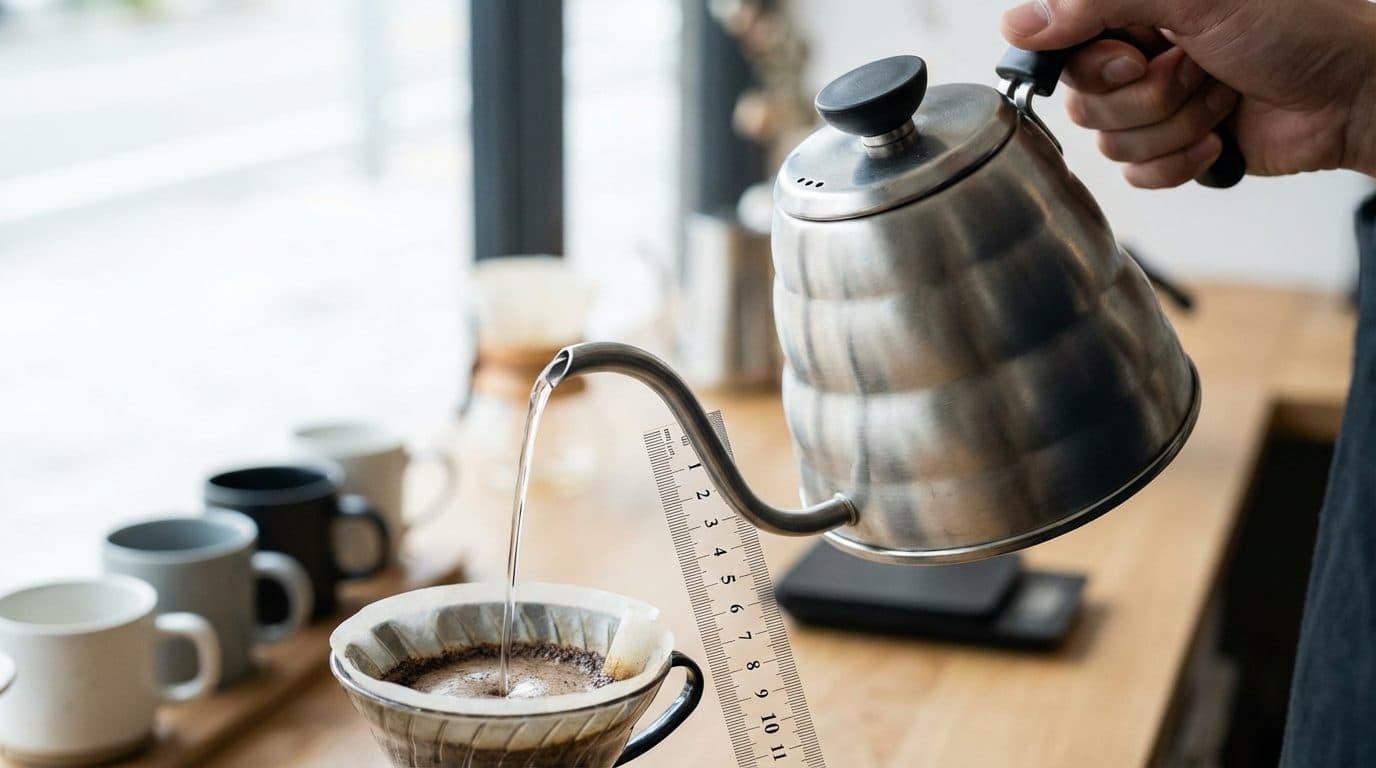
This is non-negotiable. The gooseneck spout allows you to pour slowly and precisely, directing water exactly where you want it. In my experience, spout diameter matters too—look for something between 8-10mm for optimal flow control. Too wide and you’ll flood your grounds; too narrow and your arm will cramp from the slow pour.
Temperature Control
Different coffees taste best at different temperatures. Light roasts often shine around 200-205°F, while darker roasts perform better at 195-200°F. Variable temperature control lets you dial in the perfect setting for your beans. That said, even a basic gooseneck kettle without temp control works fine if you let boiling water rest for 30-45 seconds.
Capacity and Weight
Most pour-over kettles hold between 0.8-1.2 liters. For single cups, a smaller kettle heats faster and is easier to control. If you’re brewing for multiple people, go bigger. Pay attention to weight too—a heavy kettle full of water gets tiring to hold during a 3-4 minute pour.
Build Quality
Stainless steel is the standard for durability and heat retention. Some budget kettles cut corners with thin materials that dent easily or handles that get uncomfortably hot. Look for kettles with heat-resistant handles and a sturdy base.
Best Budget Kettles for Pour-Over Coffee: My Top Picks
I’ve personally tested each of these kettles over extended periods. Here’s how they stack up for home baristas watching their budget.
Cosori Gooseneck Electric Kettle – Best Overall Value
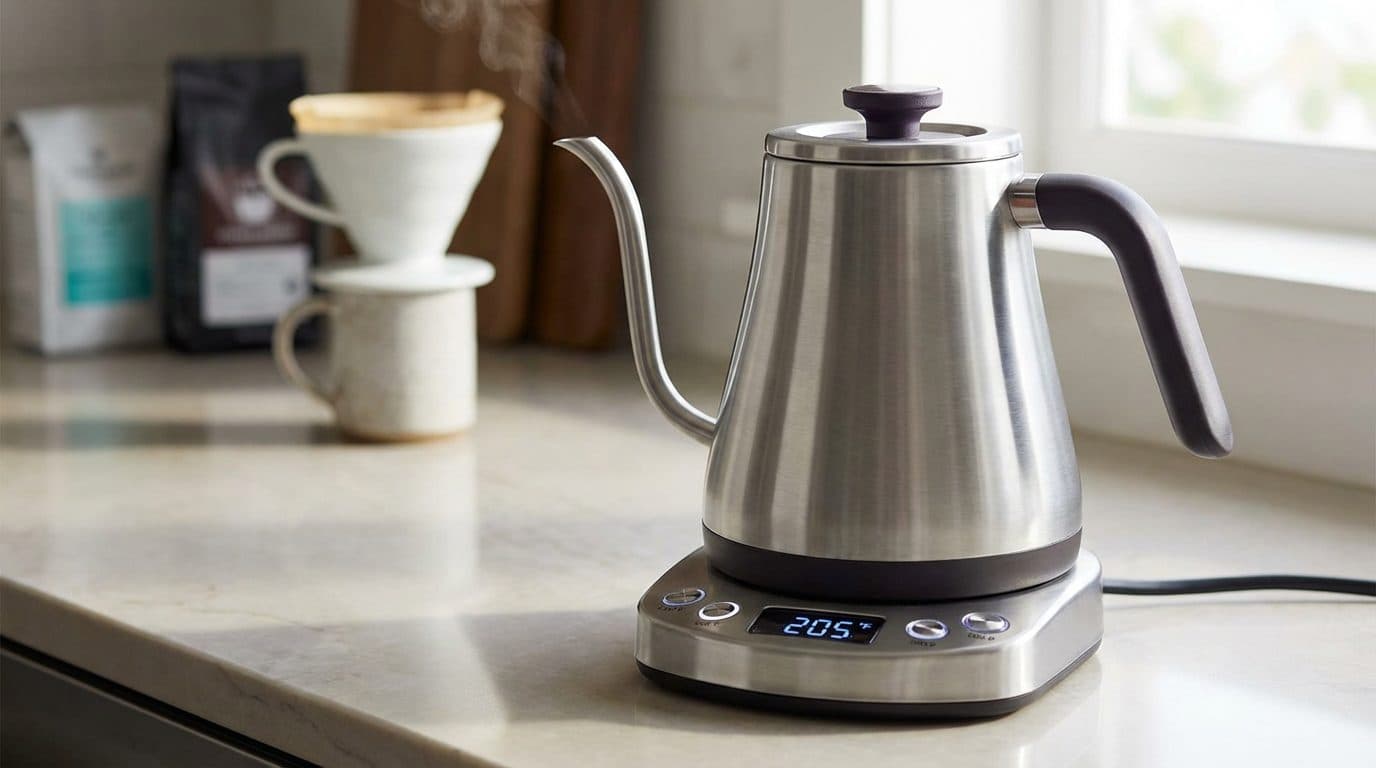
The Cosori has become incredibly popular in the home coffee community, and for good reason. It delivers features you’d expect from kettles twice its price.
Pros:
- Variable temperature control from 140-212°F
- Hold temperature function keeps water ready for 60 minutes
- Excellent gooseneck spout with smooth, controlled pour
- Quick heating time (around 3-4 minutes for full capacity)
- Sleek design that looks great on your counter
Cons:
- 1200W heating element is slower than premium models
- Plastic lid doesn’t feel as premium as metal alternatives
- No built-in timer or scale integration
I’ve been using my Cosori almost daily for over a year now, and it still performs like new. The temperature accuracy is within 2°F of my probe thermometer, which is impressive at this price point. My morning routine involves setting it to 200°F while I grind my beans, and it’s ready by the time I finish.
Who is this for? Home baristas who want the best balance of features and price. Perfect for pour-over beginners and intermediate brewers.
Who is this NOT for? If you need lightning-fast heating or want a completely plastic-free kettle, look elsewhere.
Check the latest price on Amazon – typically around $50-60
Bonavita 1.0L Gooseneck Kettle – Best Simple Option
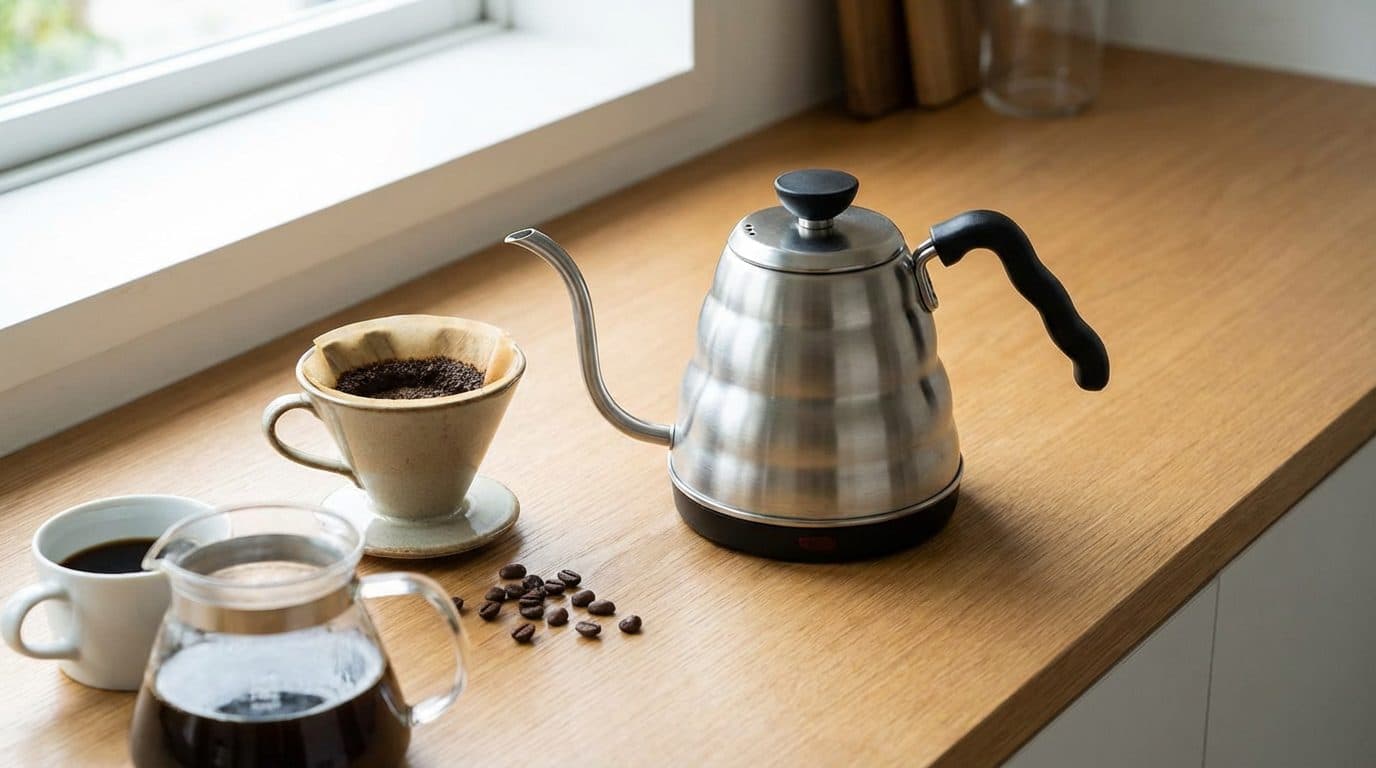
Sometimes simple is better. The Bonavita has been a coffee community favorite for years because it does one thing extremely well: pour beautifully.
Pros:
- Exceptional spout design for precise pouring
- Solid stainless steel construction
- Comfortable heat-resistant handle
- Compact footprint on your counter
- Proven reliability over many years
Cons:
- No variable temperature control (heats to boiling only)
- No hold/keep-warm function
- Basic aesthetic compared to newer competitors
The original Bonavita (the one without the variable temp base) can often be found for $40-50 on sale. If you’re comfortable letting your water cool slightly before brewing or using a thermometer, this kettle’s pour quality rivals kettles three times its price.
Who is this for? Minimalists who want excellent pouring control without extra features. Great for those who already have temperature control methods.
Who is this NOT for? Brewers who want precise temperature settings at the push of a button.
See current deals – often discounted from the original price
Timemore Fish Smart Electric Kettle – Best for Precision Enthusiasts
Timemore has made a name for itself in the specialty coffee world, and their Fish kettle brings some premium features to a mid-budget price point.
Pros:
- Extremely precise temperature control (±1°F accuracy)
- Beautiful minimalist design
- Excellent 6mm gooseneck spout for ultimate pour control
- Fast heating with 1350W element
- Built-in timer on the base
Cons:
- Higher price point (around $70-80)
- Smaller 0.8L capacity
- Can be harder to find in stock
The Fish kettle’s narrow spout gives you incredibly slow pour rates when you need them. I particularly love it for brewing delicate light roasts where agitation control matters. The built-in timer on the base is genuinely useful for tracking your total brew time.
Who is this for? Serious home baristas ready to invest slightly more for premium features. Excellent for competition-style brewing at home.
Who is this NOT for? Casual coffee drinkers or those brewing large batches.
Hario V60 Buono Stovetop Kettle – Best Non-Electric Option
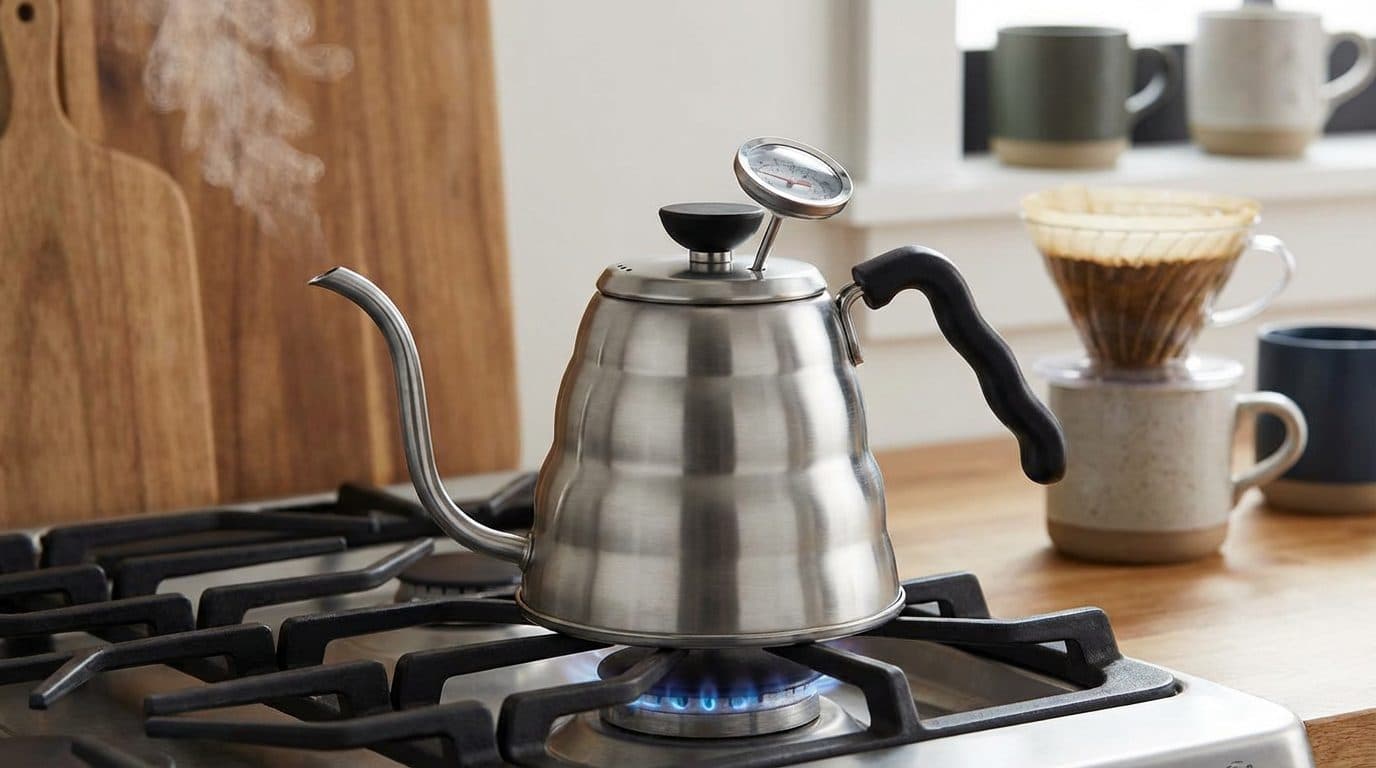
If you prefer stovetop kettles or want to save money by skipping the electric base, the Hario Buono is the gold standard for budget-friendly pour-over kettles.
Pros:
- Legendary gooseneck design perfected over decades
- Works on any heat source (gas, electric, induction-compatible versions available)
- No electrical components to fail
- Often found for $30-40
- Beautiful classic design
Cons:
- No temperature display or control
- Requires stovetop and thermometer for precision
- Handle can get warm on high heat
- Slower than electric kettles
I keep a Buono at my parents’ house for visits. Paired with a simple instant-read thermometer, it makes coffee just as good as my electric setup. The pour feel is absolutely top-tier—something about the balance and spout angle just feels right.
Who is this for? Campers, travelers, and anyone who prefers stovetop heating. Also great as a backup kettle.
Who is this NOT for? Those who want convenience and precise temperature at the press of a button.
Check the latest price – a longtime favorite in the coffee community
Budget Kettle Comparison at a Glance
| Kettle | Price Range | Temp Control | Capacity | Best For |
|---|---|---|---|---|
| Cosori Gooseneck | $50-60 | Yes | 1.0L | Best overall value |
| Bonavita Gooseneck | $40-50 | No | 1.0L | Simple and reliable |
| Timemore Fish | $70-80 | Yes | 0.8L | Precision brewing |
| Hario V60 Buono | $30-40 | No | 1.0L | Stovetop users |
Kettles to Avoid on a Budget
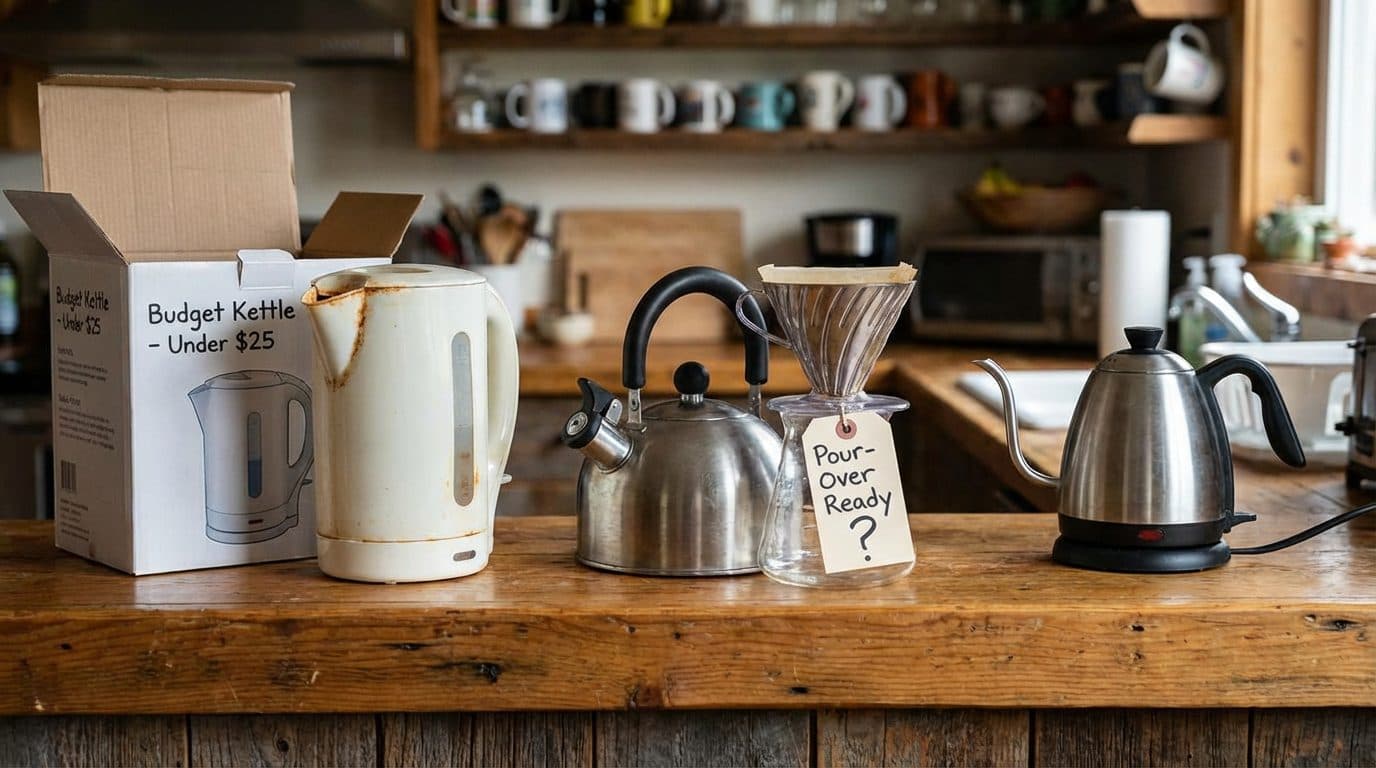
Not every cheap kettle is a good deal. I’ve learned this lesson the hard way so you don’t have to. Here are some red flags to watch for:
- Ultra-cheap Amazon knockoffs under $25: These often have poor spout design, inconsistent temperature, and questionable materials. I’ve had one develop rust spots within months.
- Standard kitchen kettles marketed for pour-over: If the spout looks even slightly wide, skip it. Marketing doesn’t change physics.
- Kettles with excessively short goosenecks: You need that length for control. Short spouts make precise pouring much harder.
- Models with known reliability issues: Read recent reviews carefully. Some kettles have quality control problems in recent batches.
Barista Tip: Spend the extra $10-20 to get a reputable brand. A kettle that fails after six months is no bargain, and inconsistent temperature control wastes good coffee beans every single brew.
How to Get the Most from Your Budget Kettle
Even the best budget kettle benefits from proper technique. Here are tips I’ve gathered over years of daily brewing:
Practice Your Pour
Fill your kettle with cold water and practice pouring into an empty mug or measuring cup. Aim for a steady stream about the thickness of a pencil. I spent a few evenings just practicing my pour speed before I felt confident with my first gooseneck kettle.
Use a Thermometer Initially
Even if your kettle has temperature control, verify its accuracy with an instant-read thermometer. My Cosori reads about 2°F low, so I set it to 202°F when I want 200°F water. Small adjustments make a difference.
Preheat Your Brewing Equipment
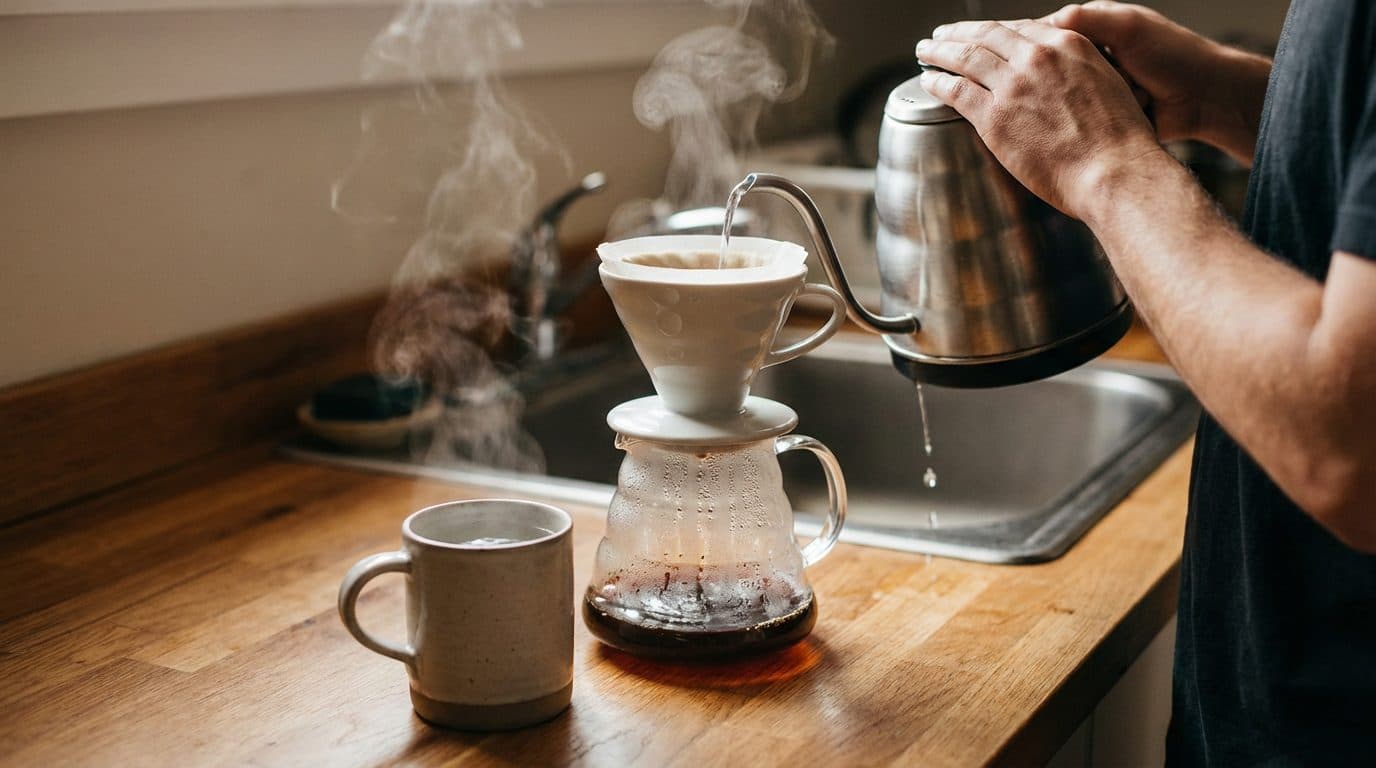
Your kettle loses heat to the mug, dripper, and carafe if they’re cold. Use some hot water to preheat everything before you start your actual brew. This keeps your brewing temperature consistent throughout the process.
Descale Regularly
Hard water buildup affects heating efficiency and can eventually damage your kettle. Run a mixture of equal parts water and white vinegar through your kettle monthly, then rinse thoroughly with fresh water. Your kettle will heat faster and last longer.
Frequently Asked Questions
Do I really need a gooseneck kettle for pour-over coffee?
Technically, no—but practically, yes. You can make pour-over with a regular kettle, but you’ll struggle to control your pour rate and placement. The difference in cup quality is noticeable. I’ve done side-by-side tests, and gooseneck pours consistently produce more balanced, flavorful coffee.
Is temperature control worth the extra cost on a budget kettle?
For most home baristas, yes. Different roast levels and origins taste best at different temperatures, and having precise control saves you from guessing. That said, if you’re on a very tight budget, a simple kettle plus a thermometer works fine—it just takes more attention.
How long do budget kettles typically last?
With proper care, expect 2-4 years from a quality budget kettle like the Cosori or Bonavita. I’ve seen some last even longer. The heating element is usually what fails first on electric models. Stovetop kettles like the Hario can last a decade or more since there are no electronics.
Can I use a budget pour-over kettle for tea?
Absolutely. The precise temperature control is actually perfect for different tea varieties, which often require specific water temperatures. Green tea at 175°F, black tea at 212°F—your kettle handles it all.
Should I buy refurbished to save money?
If you’re buying from a reputable source with a warranty, refurbished premium kettles can be excellent value. I’ve seen Fellow EKG kettles refurbished for $70-80, which puts them in budget territory with premium performance. Just verify the warranty terms before purchasing.
Conclusion and Your Next Step
Finding the best budget kettle for pour-over coffee doesn’t mean compromising on quality. The options available today offer features that were premium-only just a few years ago. My recommendation for most home baristas is the Cosori Gooseneck Kettle—it hits the sweet spot of features, reliability, and price that’s hard to beat.
Life is too short for bad coffee, but it’s also too short to stress over gear choices. Pick a kettle that fits your budget, practice your pour, and focus on enjoying the ritual. The perfect cup is waiting for you, and you don’t need to spend a fortune to find it. Start with one of these budget kettles, dial in your technique, and you’ll be brewing café-quality pour-over at home in no time.

Comments