


Table of Contents
- Quick Verdict: Arabica or Robusta?
- The Basics: What Are Arabica and Robusta Coffee Beans?
- Arabica at a Glance
- Robusta at a Glance
- Arabica vs Robusta: Taste Comparison in the Cup
- Arabica Flavor Profile
- Robusta Flavor Profile
- Side-by-Side Comparison Table
- Who Is Each Bean For? (And Who Should Skip It)
- Arabica Is For You If:
- Arabica Is NOT For You If:
- Robusta Is For You If:
- Robusta Is NOT For You If:
- The Case for Blending: Why Not Both?
- Barista Tip
- Why Quality Matters More Than Species
- Frequently Asked Questions
- Is Arabica coffee healthier than Robusta?
- Why is Arabica more expensive than Robusta?
- Can I use Robusta in a pour-over or French press?
- What does "100% Arabica" on a coffee bag mean?
- Which bean has more caffeine—Arabica or Robusta?
- Conclusion: Choose the Bean That Fits Your Cup
You’ve probably seen “100% Arabica” plastered on coffee bags like a badge of honor. But does that actually mean it’s better? And what about Robusta—is it really the villain of the coffee world, or just deeply misunderstood? If you’ve ever wondered why Arabica vs Robusta beans matter for your morning cup, you’re about to get some real answers.
In this guide, I’ll break down the genuine differences between these two coffee species—from how they taste in your cup to why they cost what they do. By the end, you’ll know exactly which bean suits your brewing style, your palate, and your caffeine needs. Life is too short for bad coffee, so let’s make sure you’re choosing wisely.
Quick Verdict: Arabica or Robusta?
Arabica wins for flavor complexity and smoothness. If you enjoy specialty coffee, pour-overs, or appreciate nuanced tasting notes like fruit, chocolate, or floral hints, Arabica is your bean. However, Robusta deserves serious respect for espresso blends, cold brew, and anyone who wants a bold, high-caffeine punch without paying premium prices.
In short: there’s no universal “better” bean. It depends entirely on what you want from your coffee.
The Basics: What Are Arabica and Robusta Coffee Beans?
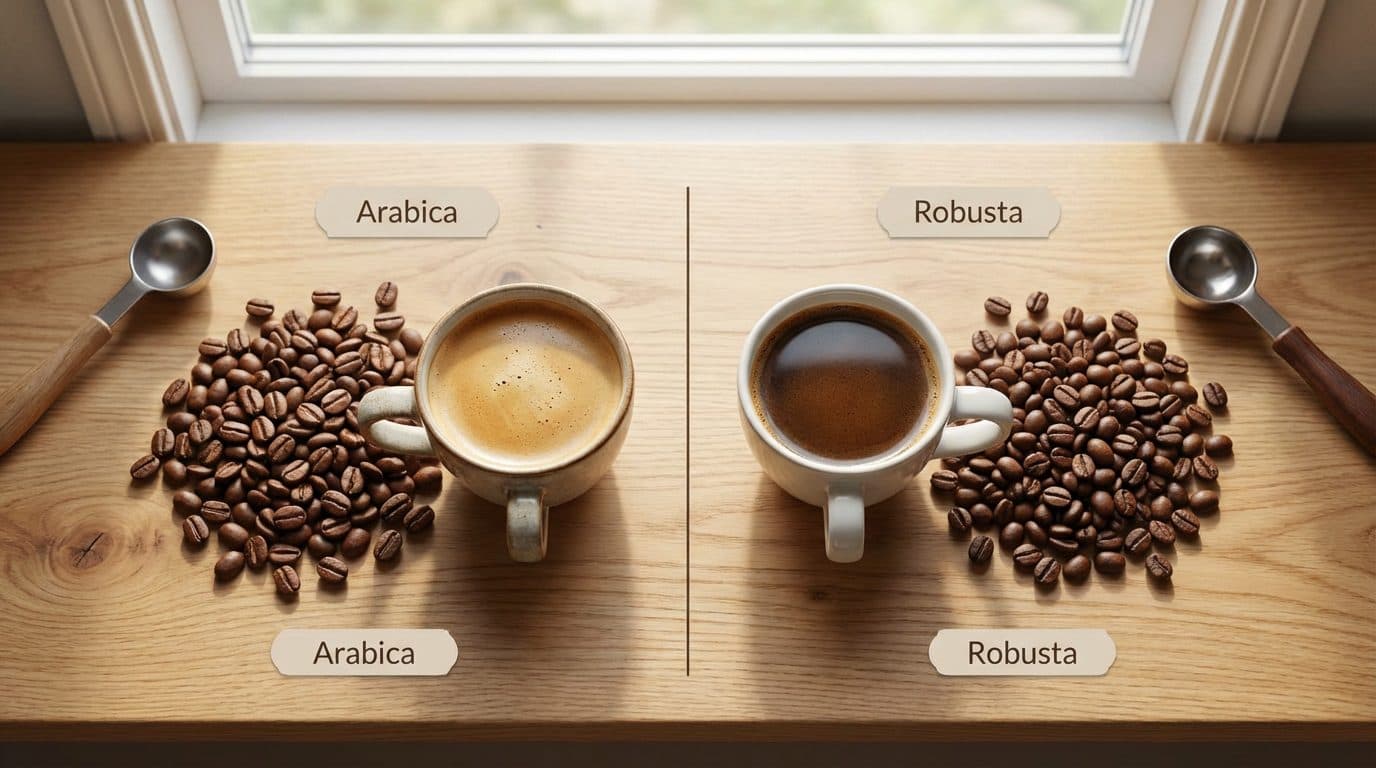
Arabica (Coffea arabica) and Robusta (Coffea canephora) are the two main commercial coffee species. Together, they account for nearly all the coffee consumed worldwide. But they’re quite different plants with distinct characteristics.
Arabica at a Glance
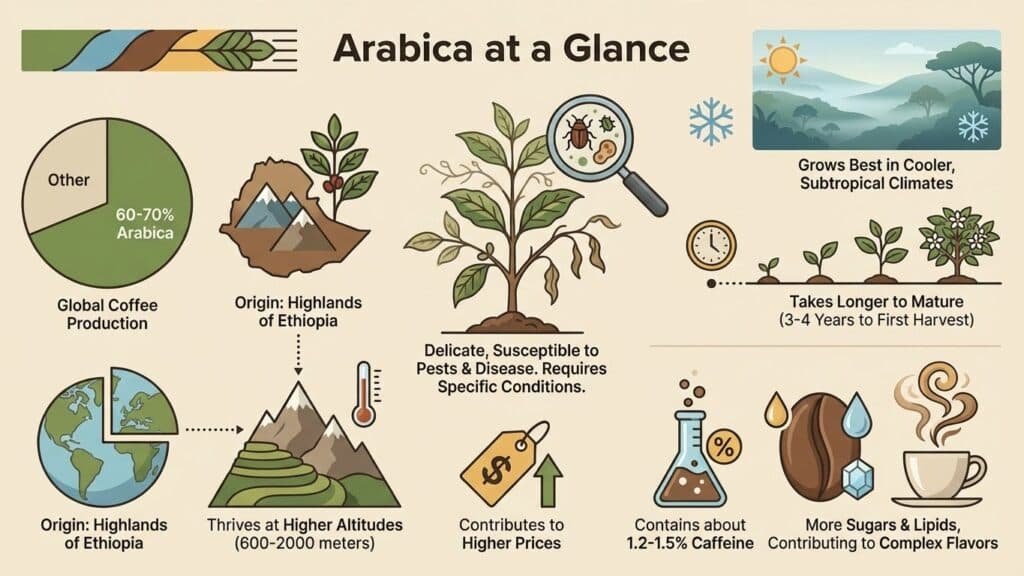
Arabica makes up roughly 60-70% of global coffee production. It originated in the highlands of Ethiopia and thrives at higher altitudes (600-2000 meters). The plants are more delicate, susceptible to pests and disease, and require specific growing conditions. This finicky nature contributes to higher prices.
- Grows best in cooler, subtropical climates
- Takes longer to mature (3-4 years to first harvest)
- Contains about 1.2-1.5% caffeine
- Has more sugars and lipids, contributing to complex flavors
Robusta at a Glance
Robusta accounts for about 30-40% of global production. It originated in central and western Africa and grows at lower altitudes (sea level to 800 meters). As the name suggests, these plants are robust—they resist pests, tolerate heat, and produce higher yields. This makes them cheaper to farm.
- Thrives in hot, humid lowland conditions
- Matures faster and produces more fruit
- Contains about 2.2-2.7% caffeine (nearly double Arabica)
- Has fewer sugars and more chlorogenic acids
Arabica vs Robusta: Taste Comparison in the Cup
Here’s where things get interesting for home baristas. The chemical makeup of each bean translates directly into what you taste.
Arabica Flavor Profile
Arabica beans generally deliver a wider range of flavors and a smoother, more refined cup. In my experience, well-roasted Arabica can offer everything from bright citrus notes to deep caramel sweetness, depending on origin and processing.
- Acidity: Higher, often described as bright, wine-like, or fruity
- Body: Light to medium, silky mouthfeel
- Sweetness: More pronounced natural sugars
- Common tasting notes: Berries, chocolate, nuts, florals, caramel
A typical scenario: you brew a single-origin Ethiopian Arabica in your pour-over, and you get blueberry notes with a tea-like body. That complexity is why specialty coffee shops almost exclusively use Arabica.
Robusta Flavor Profile
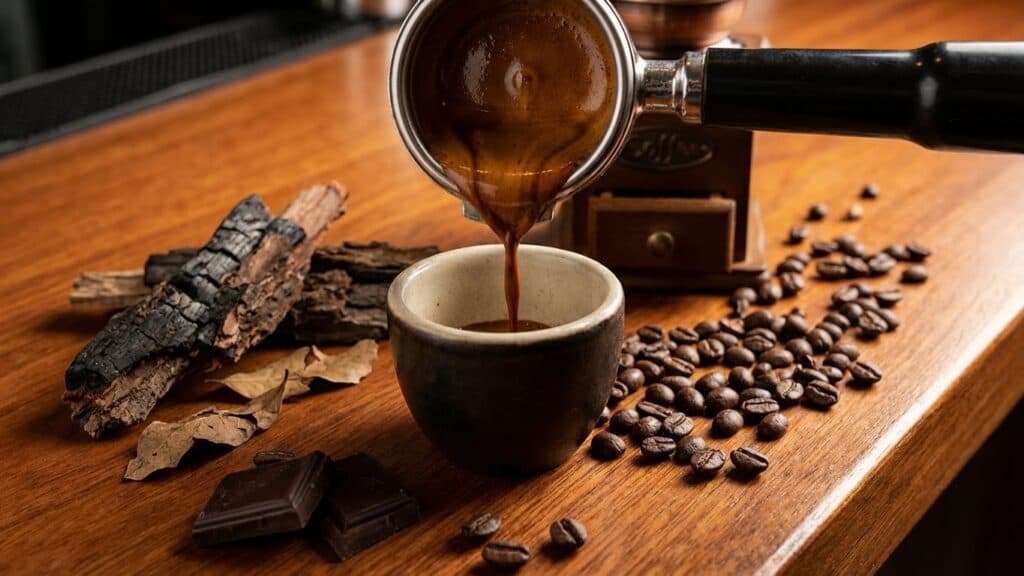
Robusta tends toward bold, earthy, and intense flavors. The higher caffeine and chlorogenic acid content create more bitterness, which some people love and others find harsh. But here’s the thing—quality Robusta can be excellent.
- Acidity: Lower, flatter profile
- Body: Heavy, full, almost syrupy
- Bitterness: More pronounced
- Common tasting notes: Earthy, woody, nutty, dark chocolate, rubbery (in lower grades)
Picture this: you’re making a traditional Italian-style espresso. A Robusta blend gives you that thick crema and bold, wake-you-up intensity that many espresso lovers crave. It cuts through milk beautifully in lattes and cappuccinos.
Side-by-Side Comparison Table
| Characteristic | Arabica | Robusta |
|---|---|---|
| Caffeine Content | 1.2-1.5% | 2.2-2.7% |
| Sugar Content | 6-9% | 3-7% |
| Acidity | Higher, brighter | Lower, flatter |
| Body | Light to medium | Full and heavy |
| Price Point | Higher | Lower |
| Best Brewing Methods | Pour-over, French press, drip | Espresso, moka pot, cold brew |
Who Is Each Bean For? (And Who Should Skip It)
Let me help you figure out which bean actually matches your coffee personality.
Arabica Is For You If:
- You enjoy exploring different flavor profiles and origins
- You prefer black coffee or light milk-based drinks
- You use brewing methods like pour-over, Chemex, or AeroPress
- You’re sensitive to bitterness
- You want a gentler caffeine experience
Arabica Is NOT For You If:
- You want maximum caffeine punch
- You primarily drink strong espresso with milk
- You’re on a tight coffee budget
- You find “fruity” or “floral” coffee notes off-putting
Robusta Is For You If:

- You need serious caffeine to function
- You love bold, intense espresso
- You drink lattes, cappuccinos, or milk-heavy coffee
- You enjoy Vietnamese-style coffee or traditional Italian blends
- You want good coffee without breaking the bank
Robusta Is NOT For You If:
- You prefer delicate, nuanced flavors
- You drink coffee black and savor the subtleties
- You’re sensitive to caffeine
- Bitterness bothers you
The Case for Blending: Why Not Both?
Here’s something many coffee snobs won’t tell you: blending Arabica and Robusta can create something better than either alone. I’ve found that a small percentage of quality Robusta (10-20%) in an espresso blend adds crema, body, and that caffeine kick without overwhelming the flavor.
Traditional Italian espresso often uses this approach. The Robusta provides structure and intensity, while the Arabica brings sweetness and complexity. For milk drinks especially, this combination can be ideal.
Barista Tip
Tip: If you’re experimenting with blends at home, start with 80% Arabica and 20% Robusta. Adjust based on your taste. For cold brew, you can go higher on Robusta since the cold extraction mellows bitterness significantly.
Why Quality Matters More Than Species
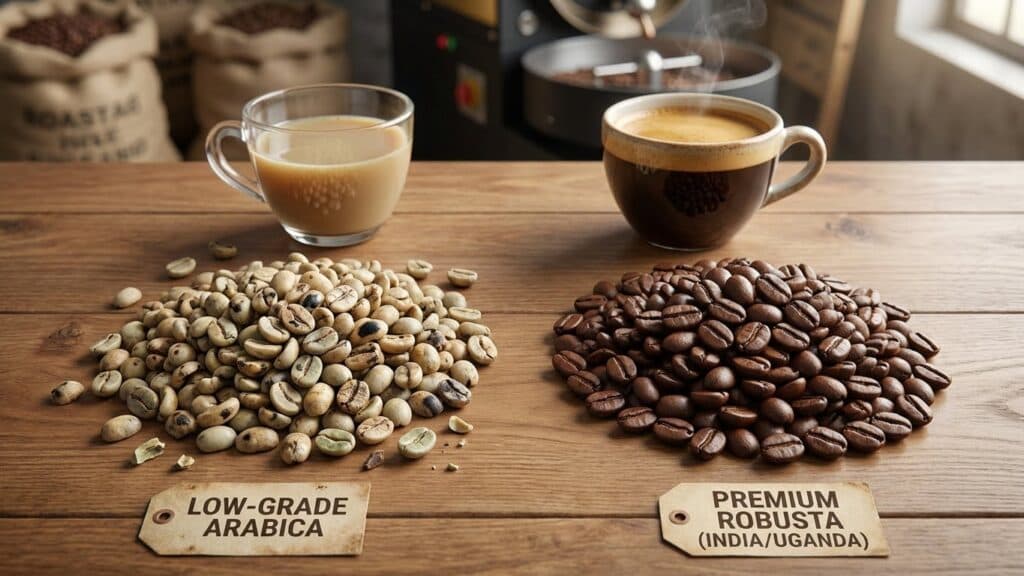
Here’s a key takeaway that changed how I think about coffee: a premium-grade Robusta will taste better than a low-grade Arabica every time. Species isn’t everything.
Poor Arabica—beans that are underripe, defected, or badly processed—can taste sour, flat, or just bland. Meanwhile, specialty-grade Robusta from places like India or Uganda can offer rich chocolate notes and satisfying intensity. The problem is that most commercial Robusta has been grown and processed cheaply, giving the entire species a bad reputation.
When shopping for coffee beans, look beyond the “100% Arabica” label. Consider:
- Origin and farm information
- Roast date (fresh is crucial)
- Processing method
- Roaster reputation
Frequently Asked Questions
Is Arabica coffee healthier than Robusta?
Both types offer antioxidants and potential health benefits associated with coffee consumption. Robusta has more chlorogenic acids (linked to metabolism benefits) but also more caffeine, which might not suit everyone. Neither is inherently “healthier”—it depends on your individual tolerance and health situation. For specific health concerns, consult a healthcare professional.
Why is Arabica more expensive than Robusta?
Arabica plants are more difficult and costly to cultivate. They require specific altitude and climate conditions, take longer to produce fruit, yield less per plant, and are vulnerable to diseases like coffee leaf rust. All these factors increase production costs, which get passed to consumers.
Can I use Robusta in a pour-over or French press?
You can, but the results might be intense and bitter for most palates. Robusta shines in espresso and cold brew, where the brewing method either concentrates its strengths or mellows its harshness. If you want to try it, use a coarser grind and shorter brew time to reduce bitterness.
What does “100% Arabica” on a coffee bag mean?
It means the bag contains only Arabica beans with no Robusta blended in. However, this label doesn’t guarantee quality. Low-grade Arabica still exists, so “100% Arabica” isn’t a synonym for “great coffee.” Look for additional quality indicators like origin, altitude, and processing details.
Which bean has more caffeine—Arabica or Robusta?
Robusta has roughly twice the caffeine content of Arabica. If you need a strong wake-up call, Robusta delivers. If you’re caffeine-sensitive or drink multiple cups daily, Arabica is the gentler choice.
Conclusion: Choose the Bean That Fits Your Cup
The Arabica vs Robusta debate isn’t really about which one is “better.” It’s about understanding what each bean brings to your coffee experience and matching that to your preferences. Arabica offers nuance, sweetness, and complexity—perfect for savoring black coffee and exploring origins. Robusta delivers power, crema, and intensity—ideal for espresso lovers and those who need their coffee to stand up to milk.
My recommendation? Try both. Grab a quality single-origin Arabica for your morning pour-over, and keep a Robusta-containing espresso blend on hand for those afternoons when you need something bold. By understanding these differences, you’re already brewing smarter than most coffee drinkers out there. Now go put that knowledge into your next cup.



Comments