


Table of Contents
- What Exactly Is Honey-Processed Coffee?
- The Different Colors of Honey Processing
- Why Honey-Processed Coffee Beans Taste So Unique
- How It Compares to Other Processing Methods
- How to Brew Honey-Processed Coffee at Home
- What You'll Need
- Pour-Over Method (My Favorite for Honey-Processed)
- French Press Method
- Espresso Brewing
- Common Mistakes When Brewing Honey-Processed Coffee
- Frequently Asked Questions
- Does honey-processed coffee actually taste like honey?
- Is honey-processed coffee more expensive than regular coffee?
- How should I store honey-processed coffee beans?
- Can I cold brew honey-processed coffee?
- What roast level is best for honey-processed beans?
- Summary and Your Next Steps
Ever wondered why some coffee bags mention “honey-processed” even though there’s no actual honey involved? You’re not alone. This beautifully named processing method creates some of the most intriguing, complex cups you’ll ever taste at home. If you’ve been exploring single-origin coffees and stumbled upon honey-processed beans, you’re in for a treat—and I’m here to help you understand exactly what makes them special and how to brew them perfectly in your own kitchen.
In this guide, we’ll explore what honey processing actually means, why it creates such unique flavor profiles, and most importantly, how you can get the best out of these beans with your home brewing setup. Whether you’re using a pour-over, French press, or espresso machine, I’ve got you covered.
What Exactly Is Honey-Processed Coffee?
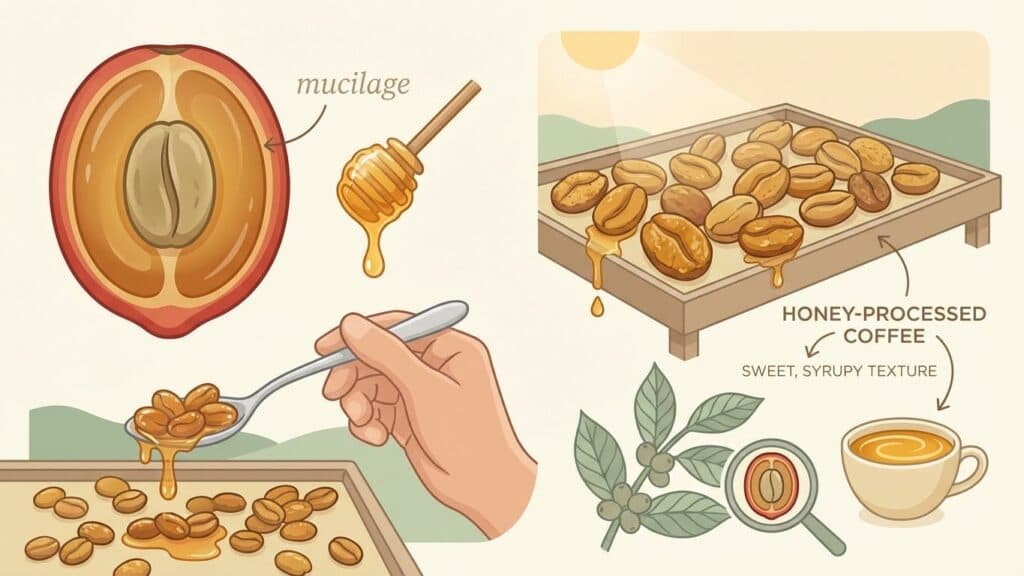
Let’s clear up the mystery right away: honey-processed coffee has nothing to do with bees or actual honey. The name comes from the sticky, honey-like mucilage that surrounds the coffee bean inside the cherry. During honey processing, this mucilage is left partially or fully intact while the beans dry, creating a sweet, syrupy texture that resembles—you guessed it—honey.
To understand honey processing, it helps to know the basics. Coffee beans are actually seeds inside a fruit called a coffee cherry. After harvesting, producers must remove the fruit and dry the beans. The three main methods are:
- Washed (wet) process: All fruit and mucilage removed before drying
- Natural (dry) process: Entire cherry dried intact around the bean
- Honey process: Skin removed, but mucilage left on during drying
In short, honey processing sits right between washed and natural methods, combining characteristics of both. The result? A cup that’s cleaner than naturals but sweeter and more complex than washed coffees.
The Different Colors of Honey Processing
Here’s where things get interesting. Not all honey-processed coffees are created equal. Producers classify them by color based on how much mucilage remains:
- White honey: About 80-90% mucilage removed; closest to washed coffee
- Yellow honey: Around 50-75% mucilage removed; light sweetness
- Red honey: About 25-50% mucilage removed; more fruit-forward
- Black honey: Nearly all mucilage intact; most intense sweetness
I’ve found that yellow and red honey coffees tend to be the most approachable for home brewers just discovering this processing method. Black honey can be incredibly intense and fruit-forward, which some people love while others find overwhelming.
Why Honey-Processed Coffee Beans Taste So Unique
The magic happens during drying. As the mucilage-coated beans sit in the sun (typically on raised beds or patios), sugars from that sticky layer absorb into the bean. This creates flavor compounds you simply can’t get from other processing methods.
Expect these common tasting notes from honey-processed coffee:
- Stone fruits like peach, apricot, and plum
- Brown sugar and caramel sweetness
- Honey-like viscosity and mouthfeel
- Mild berry notes without the fermented funk of naturals
- A smooth, syrupy body
Did You Know? Costa Rica pioneered modern honey processing in the early 2000s, partly due to water conservation concerns. Now, countries like El Salvador, Brazil, and Guatemala produce exceptional honey-processed lots.
How It Compares to Other Processing Methods
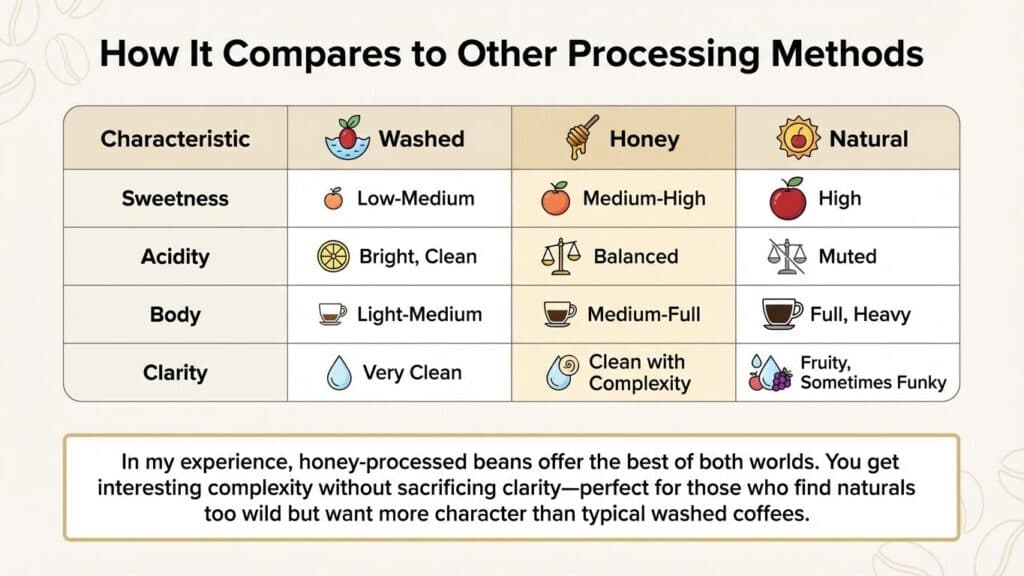
| Characteristic | Washed | Honey | Natural |
|---|---|---|---|
| Sweetness | Low-Medium | Medium-High | High |
| Acidity | Bright, Clean | Balanced | Muted |
| Body | Light-Medium | Medium-Full | Full, Heavy |
| Clarity | Very Clean | Clean with Complexity | Fruity, Sometimes Funky |
In my experience, honey-processed beans offer the best of both worlds. You get interesting complexity without sacrificing clarity—perfect for those who find naturals too wild but want more character than typical washed coffees.
How to Brew Honey-Processed Coffee at Home
Now for the fun part. Brewing honey-processed coffee beans at home requires some adjustments to your usual routine. The goal is highlighting that inherent sweetness while maintaining enough clarity to appreciate the nuanced flavors.
What You’ll Need
Gear:
- Burr grinder (blade grinders work but won’t give consistent results)
- Your preferred brewing device (pour-over, French press, AeroPress, or espresso machine)
- Scale for precise measurements
- Gooseneck kettle for pour-overs (temperature control helps)
- Timer
Ingredients:
- Fresh honey-processed coffee beans (ideally roasted within the last 2-4 weeks)
- Filtered water
Pour-Over Method (My Favorite for Honey-Processed)
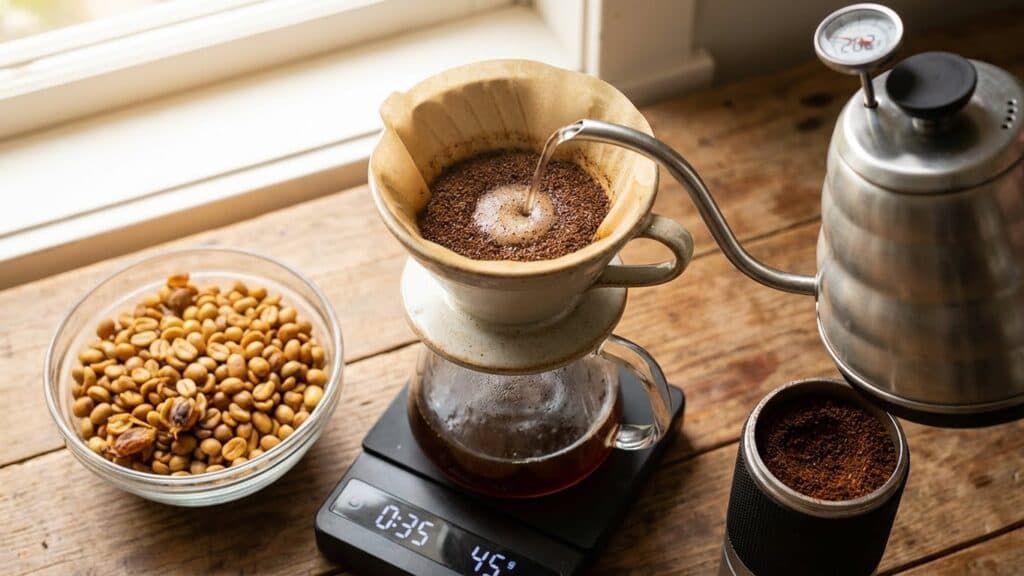
Pour-over brewing really lets honey-processed beans shine. The paper filter removes oils that can muddy flavors while the slow extraction highlights sweetness.
- Heat filtered water to 200-205°F (93-96°C)—slightly lower than usual to avoid over-extracting sweetness into bitterness
- Grind 20-22 grams of coffee to medium-fine consistency (like table salt)
- Rinse your filter with hot water and discard
- Add grounds and create a small well in the center
- Bloom with 40-50ml water for 30-45 seconds
- Pour remaining water in slow, steady circles over 2.5-3 minutes
- Total brew time should be around 3-3.5 minutes
Barista Tip: Try a slightly coarser grind than you’d use for washed coffees. Honey-processed beans can extract quickly due to their sugar content, and going too fine risks bitterness.
Taste Profile: Expect a sweet, syrupy cup with notes of stone fruit, caramel, and a smooth finish. The acidity should be pleasant but not sharp.
French Press Method
If you prefer a fuller-bodied cup, French press works wonderfully with honey-processed coffee. The metal filter allows more oils through, amplifying that honey-like mouthfeel.
- Use a coarse grind (like sea salt)
- Ratio: 1:15 coffee to water (30g coffee to 450ml water)
- Pour water at 200°F over grounds
- Stir gently after 30 seconds
- Steep for 4 minutes total
- Press slowly and pour immediately
Barista Tip: Let your French press coffee cool slightly before drinking. As honey-processed coffee drops in temperature, those fruity sweetness notes really pop.
Espresso Brewing
Honey-processed beans make spectacular espresso—think natural sweetness that reduces the need for added sugar. However, they require some dialing in.
- Aim for a slightly longer extraction (28-32 seconds)
- Use a ratio of 1:2 to 1:2.5 (e.g., 18g in, 40-45g out)
- Temperature: 200-202°F works well
- Watch for channeling—the sugars can make grounds clump
I’ve found that honey-processed espresso shines in milk drinks. That inherent sweetness complements steamed milk beautifully, creating lattes and cappuccinos that taste almost like dessert without any added syrup.
Common Mistakes When Brewing Honey-Processed Coffee
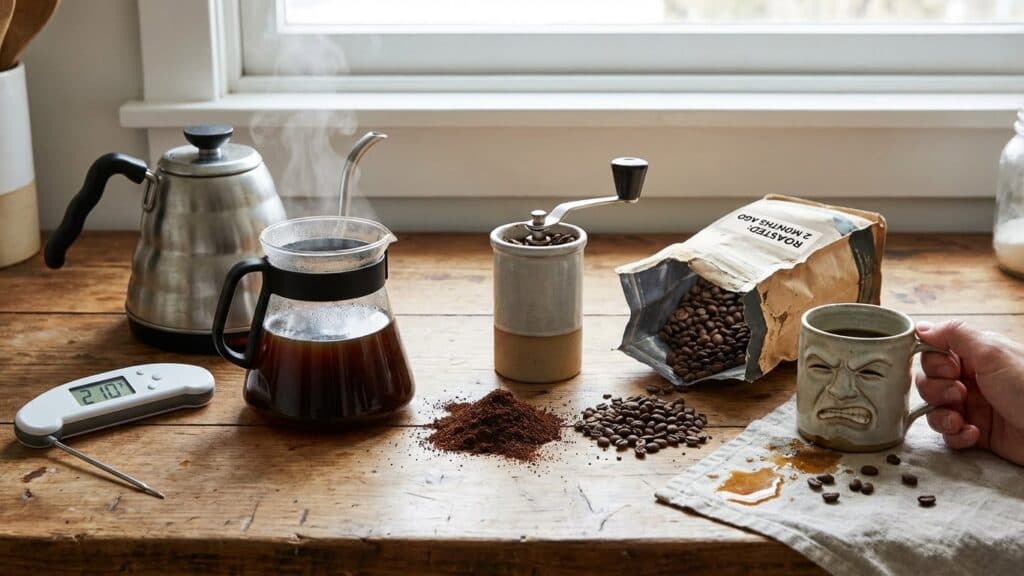
Even experienced home baristas sometimes struggle with honey-processed beans. Here are pitfalls I’ve learned to avoid:
- Brewing too hot: High temperatures over-extract the sugars, creating harsh bitterness. Keep water between 195-205°F
- Grinding too fine: Again, the sugar content means faster extraction. When in doubt, go slightly coarser
- Using stale beans: Honey-processed coffees lose their distinctive sweetness faster than washed coffees. Buy smaller quantities and use within 3-4 weeks of roast date
- Ignoring your water: Hard water or chlorinated tap water masks those delicate fruity notes. Use filtered water for the best results
A mini scenario: Imagine you’ve bought an amazing red honey Costa Rican coffee. You brew it at boiling temperature with a super-fine grind, and it tastes bitter and flat. Before blaming the beans, adjust your variables—drop the temperature, coarsen the grind, and taste the difference. Sometimes small tweaks reveal a completely different cup.
Frequently Asked Questions
Does honey-processed coffee actually taste like honey?
Not exactly like the honey you’d put in tea, but there’s a reason for the name. Honey-processed coffee often has a syrupy sweetness and viscous mouthfeel reminiscent of honey. You’ll notice brown sugar, caramel, and stone fruit notes rather than literal honey flavor.
Is honey-processed coffee more expensive than regular coffee?
Generally, yes—though not dramatically. Honey processing requires careful monitoring during drying to prevent mold and defects, making it more labor-intensive. Expect to pay a modest premium over comparable washed coffees, but less than high-end naturals or experimental processes.
How should I store honey-processed coffee beans?
Store them in an airtight container away from light, heat, and moisture. A cool, dark cabinet works perfectly. Avoid the refrigerator or freezer for beans you’re actively using, as temperature fluctuations create moisture. Use within 4 weeks of the roast date for optimal sweetness.
Can I cold brew honey-processed coffee?
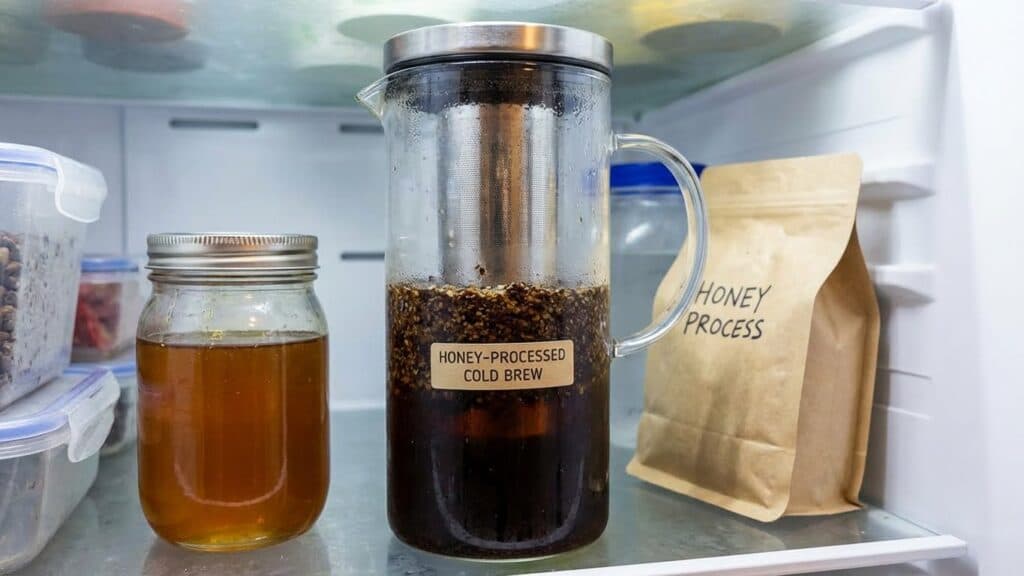
Absolutely! Cold brewing actually works beautifully with honey-processed beans. The slow extraction at low temperatures pulls out sweetness while minimizing acidity and bitterness. Use a coarse grind and steep for 12-18 hours in the refrigerator for a smooth, naturally sweet cold brew.
What roast level is best for honey-processed beans?
Light to medium roasts generally showcase honey processing best. Darker roasts can overwhelm those delicate fruit and caramel notes with roasty, smoky flavors. Look for roasters who specifically mention highlighting origin characteristics.
Summary and Your Next Steps
Honey-processed coffee beans offer a wonderful middle ground between the clean brightness of washed coffees and the fruit-forward intensity of naturals. That sticky mucilage left on during drying creates sweetness, complexity, and body that make these beans genuinely special—and they’re absolutely worth exploring at home.
To get started, pick up a bag of yellow or red honey-processed beans from a reputable roaster (Costa Rican or El Salvadoran origins are great entry points). Experiment with pour-over or French press brewing, keeping your temperatures moderate and your grind slightly coarser than usual. Pay attention to how the flavors change as your cup cools—that’s when honey-processed coffees really reveal their character.
Life’s too short for boring coffee. Give honey-processed beans a try, and you might just discover your new favorite way to start the morning.


Comments