


Table of Contents
- What Makes Vietnamese Iced Coffee So Special?
- The Flavor Profile You Can Expect
- What You'll Need for Authentic Ca Phe Sua Da
- Essential Gear
- Ingredients
- Step-by-Step Vietnamese Iced Coffee Recipe
- Preparing Your Glass and Filter
- The Brewing Process
- Finishing Your Ca Phe Sua Da
- Common Mistakes and How to Avoid Them
- Weak or Watery Coffee
- Overly Bitter Taste
- Too Sweet or Not Sweet Enough
- Variations to Try Once You've Mastered the Basics
- Coconut Vietnamese Iced Coffee
- Egg Coffee (Ca Phe Trung)
- Cold Brew Vietnamese Coffee
- Frequently Asked Questions
- Can I use regular milk instead of sweetened condensed milk?
- Do I really need a phin filter?
- How much caffeine is in Vietnamese iced coffee?
- Why does my coffee taste different from coffee shops?
- How long does brewed Vietnamese coffee last?
- Final Thoughts and Your Next Steps
Have you ever taken a sip of coffee so bold, so sweet, and so refreshing that it completely changed your expectations of what iced coffee could be? That’s exactly what Vietnamese iced coffee, or Ca Phe Sua Da, does to people. This iconic drink combines dark-roasted robusta coffee with sweetened condensed milk, creating a flavor experience that’s simultaneously intense and indulgent. In my experience, once you’ve mastered this authentic recipe at home, you’ll never look at your regular iced coffee the same way again.
In this guide, I’ll walk you through everything you need to know to make authentic Ca Phe Sua Da in your own kitchen. You’ll learn about the traditional brewing method, the right ingredients to use, and the little tricks that make all the difference between a good Vietnamese iced coffee and an exceptional one.
What Makes Vietnamese Iced Coffee So Special?
Vietnamese coffee culture is unlike any other in the world. While most Western coffee traditions lean toward arabica beans and subtle flavor profiles, Vietnam embraced robusta coffee and made it the star of the show. Robusta beans are stronger, more bitter, and contain nearly twice the caffeine of arabica. This bold base needs something equally powerful to balance it out—and that’s where sweetened condensed milk enters the picture.
The combination isn’t accidental. During French colonial rule in Vietnam, fresh milk was scarce and expensive. Sweetened condensed milk, which didn’t require refrigeration, became the practical alternative. What started as necessity evolved into a beloved tradition that’s now enjoyed worldwide.
The Flavor Profile You Can Expect
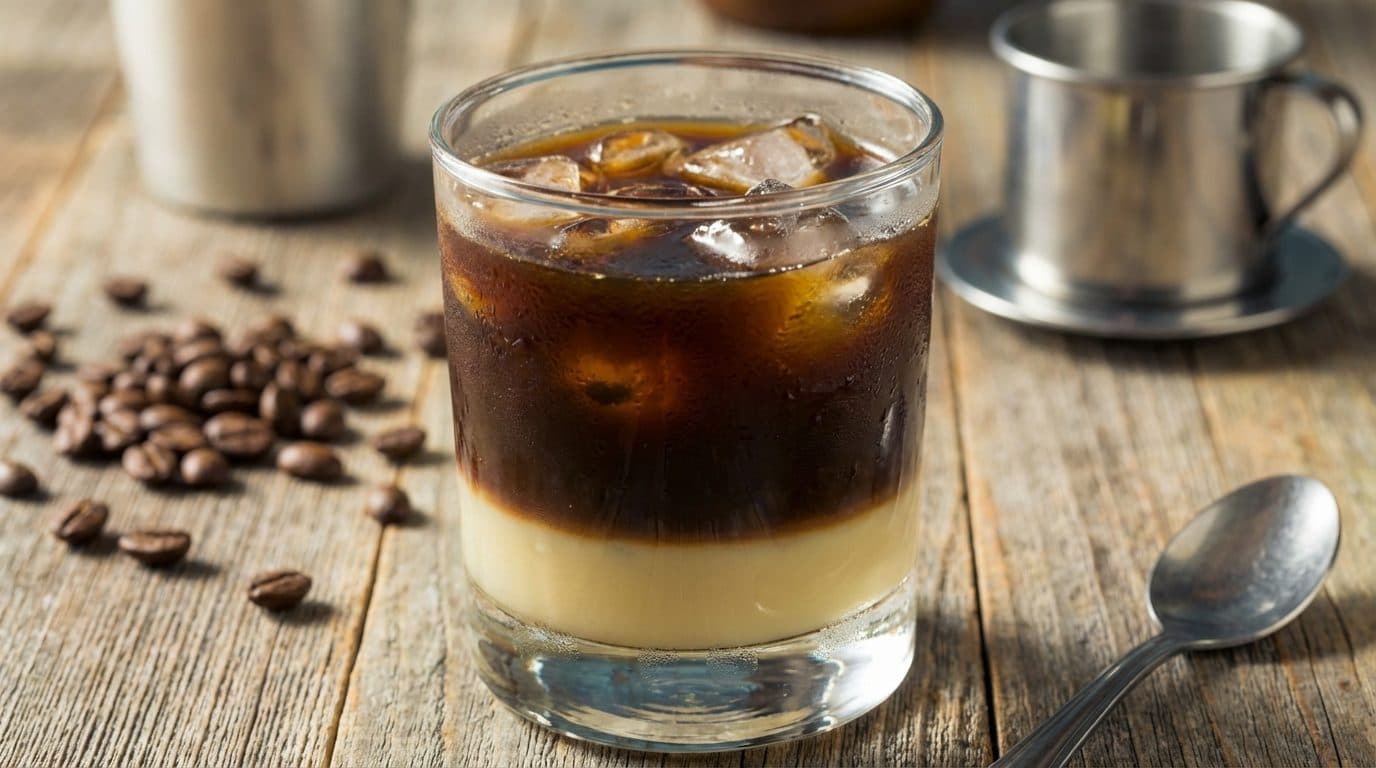
When you take your first sip of properly made Ca Phe Sua Da, you’ll notice several distinct layers:
- Initial hit: Bold, almost chocolatey coffee flavor with hints of dark caramel
- Sweetness: Rich, creamy sweetness from the condensed milk that doesn’t taste artificial
- Finish: A slight bitterness that keeps everything balanced and leaves you wanting more
- Body: Thick, almost syrupy texture that coats your palate
Life is too short for bad coffee, and once you’ve experienced this authentic version, you’ll understand why Vietnamese iced coffee has developed such a devoted following.
What You’ll Need for Authentic Ca Phe Sua Da
Before we dive into the brewing process, let’s gather everything you’ll need. The good news is that this recipe requires minimal equipment, but the right ingredients make a significant difference.
Essential Gear
- Phin filter: This small, inexpensive Vietnamese coffee filter is traditional and produces the best results (around $5-10)
- Tall glass: Preferably 12-16 oz to accommodate ice and allow for stirring
- Kettle: For heating water to the right temperature
- Spoon: For stirring and pressing the filter
Ingredients
- Vietnamese coffee: 2-3 tablespoons of coarse-ground coffee (brands like Cafe Du Monde or Trung Nguyen work great)
- Sweetened condensed milk: 2-3 tablespoons (adjust to taste)
- Hot water: About 6-8 oz, just off the boil (195-205°F / 90-96°C)
- Ice: Plenty of it—this drink needs to be properly cold
Barista Tip: If you can’t find Vietnamese coffee, use a dark French roast with chicory, or even a strong espresso blend. The key is choosing something bold enough to stand up to the sweetened condensed milk.
Step-by-Step Vietnamese Iced Coffee Recipe
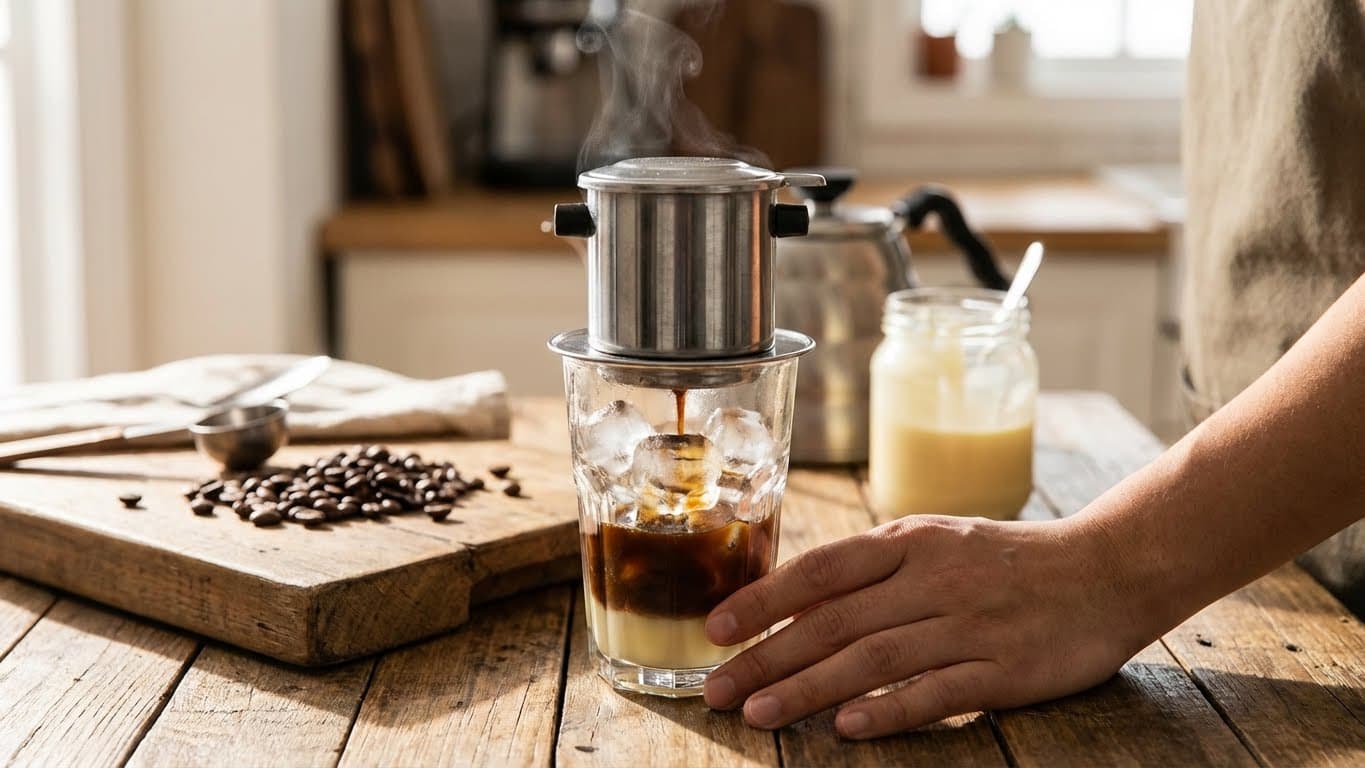
Now let’s get into the actual brewing process. The phin filter is simple to use, but there are a few techniques that make all the difference. I’ve found that patience is your best friend here—rushing the process leads to weak, watery coffee.
Preparing Your Glass and Filter
- Add 2-3 tablespoons of sweetened condensed milk to the bottom of your glass. You can adjust this amount based on how sweet you like your coffee.
- Place the phin filter on top of your glass. It should sit securely on the rim.
- Remove the filter press (the small disc inside the phin) and add your ground coffee to the chamber.
- Give the filter a gentle shake to level the grounds.
- Place the filter press on top of the grounds and press down lightly—just enough to compact them slightly, not too hard.
The Brewing Process
- Pour a small amount of hot water (about 1-2 tablespoons) over the grounds. This “blooms” the coffee and allows the grounds to expand.
- Wait 20-30 seconds. You’ll notice the grounds puffing up slightly.
- Slowly pour the remaining hot water into the filter. Fill it to just below the rim.
- Place the lid on top of the phin. This helps retain heat during brewing.
- Wait patiently. The coffee should drip slowly—the entire process takes 4-6 minutes. If it’s dripping too fast, press the filter disc down a bit more next time.
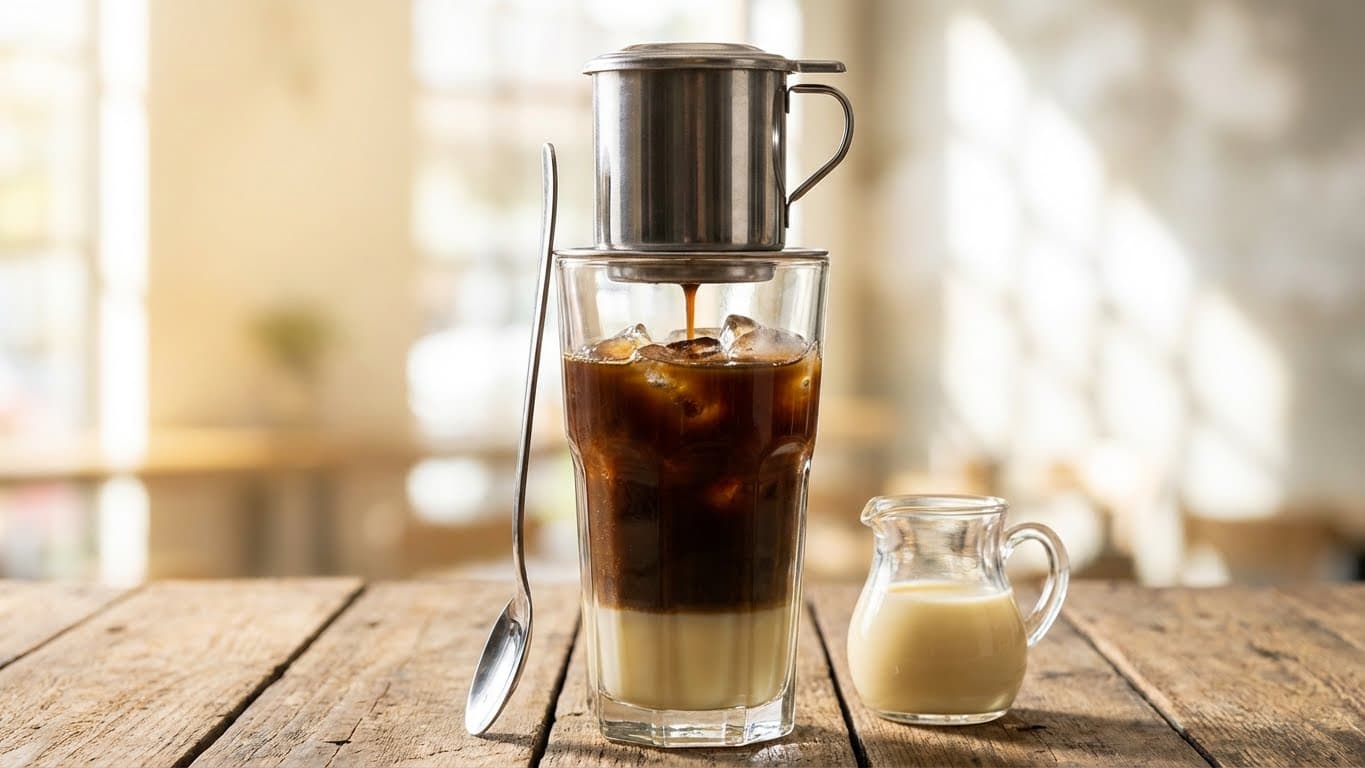
Watching the dark coffee slowly drip onto the pale condensed milk is part of the experience. The two layers create a beautiful contrast before they’re mixed together.
Finishing Your Ca Phe Sua Da
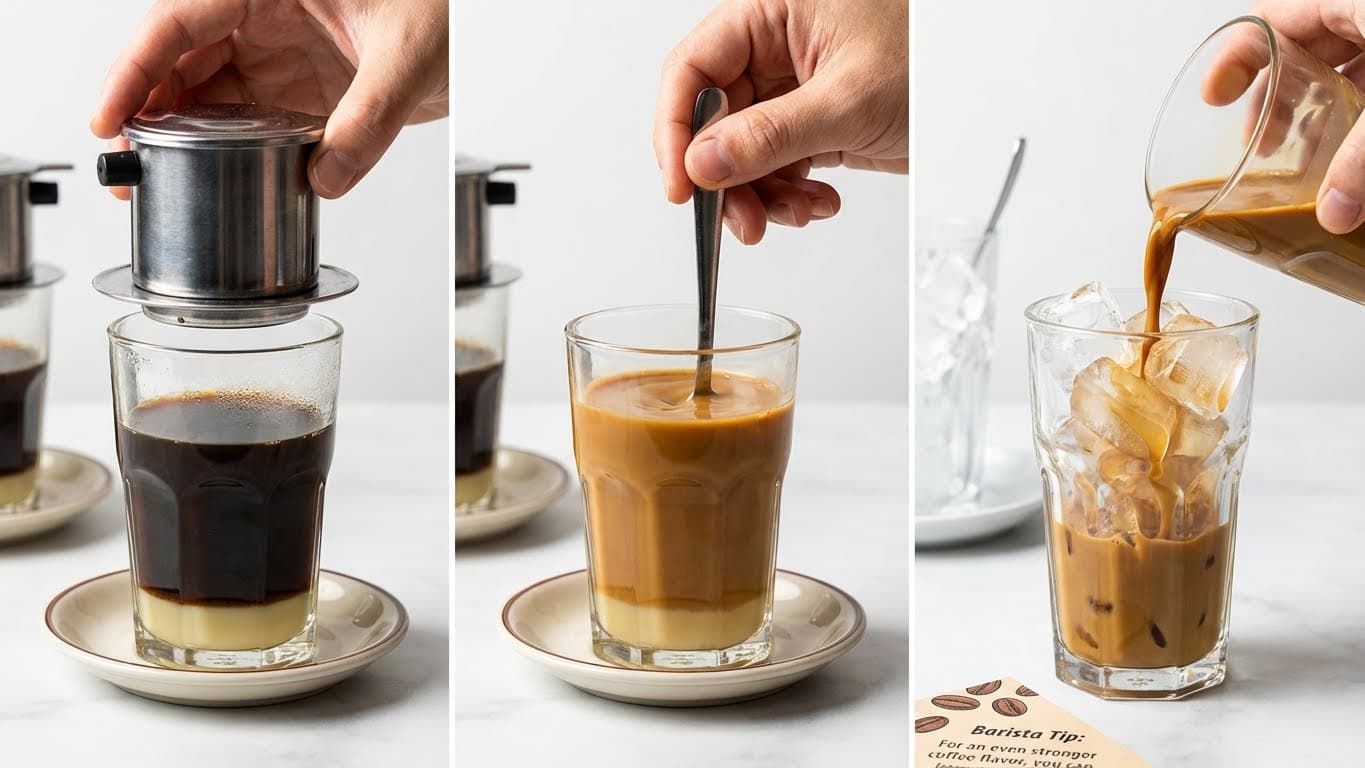
- Once all the water has dripped through, remove the phin filter and set it aside.
- Stir the coffee and condensed milk together vigorously until completely combined. The mixture should become a uniform caramel color.
- Fill a second glass with ice—and I mean really fill it. Vietnamese iced coffee needs a lot of ice to achieve the right temperature and dilution.
- Pour the coffee mixture over the ice.
- Give it one final stir and enjoy immediately.
Barista Tip: For an even stronger coffee flavor, you can chill the brewed coffee in the refrigerator for 30 minutes before pouring over ice. This reduces dilution and intensifies the taste.
Common Mistakes and How to Avoid Them
Even a simple recipe like Ca Phe Sua Da has its pitfalls. Here are the issues I see most often and how to fix them.
Weak or Watery Coffee
This usually happens when the grind is too coarse or when you’re not using enough coffee. Vietnamese coffee should be ground medium-coarse—similar to sea salt. If your coffee drips through in under 3 minutes, you need to either use more coffee or grind finer.
Another culprit is using too much water. Stick to the 6-8 oz range for a proper strength. More water just means weaker coffee.
Overly Bitter Taste

While Vietnamese coffee should be bold, it shouldn’t be unpleasantly bitter. If you’re getting harsh flavors, check your water temperature. Using boiling water can over-extract the coffee and pull out harsh compounds. Let your kettle rest for about 30 seconds after boiling before pouring.
Also consider the coffee itself. Low-quality robusta can taste excessively bitter. Investing in a reputable Vietnamese coffee brand makes a noticeable difference.
Too Sweet or Not Sweet Enough
The beauty of making Ca Phe Sua Da at home is that you control the sweetness. Start with 2 tablespoons of condensed milk and adjust from there. Some people prefer a 1:1 ratio of coffee to condensed milk, while others like just a thin layer at the bottom.
In short: there’s no wrong answer here. Experiment until you find your perfect balance.
Variations to Try Once You’ve Mastered the Basics
Once you’re comfortable with the classic recipe, here are some fun variations that put a twist on the traditional Ca Phe Sua Da.
Coconut Vietnamese Iced Coffee
Replace half the sweetened condensed milk with coconut cream for a tropical twist. This version is popular in southern Vietnam and adds a subtle richness that complements the bold coffee beautifully.
Egg Coffee (Ca Phe Trung)
This Hanoi specialty involves whipping egg yolks with condensed milk until fluffy, then spooning it over hot coffee. It’s like coffee meets tiramisu. For an iced version, let the coffee cool before adding the egg cream on top.
Cold Brew Vietnamese Coffee
If you don’t have a phin filter, you can make a cold brew version:
- Combine 1 cup coarse-ground Vietnamese coffee with 4 cups cold water
- Steep in the refrigerator for 12-24 hours
- Strain and serve over ice with condensed milk
This method produces a smoother, less acidic coffee while still maintaining that signature Vietnamese strength.
Frequently Asked Questions
Can I use regular milk instead of sweetened condensed milk?
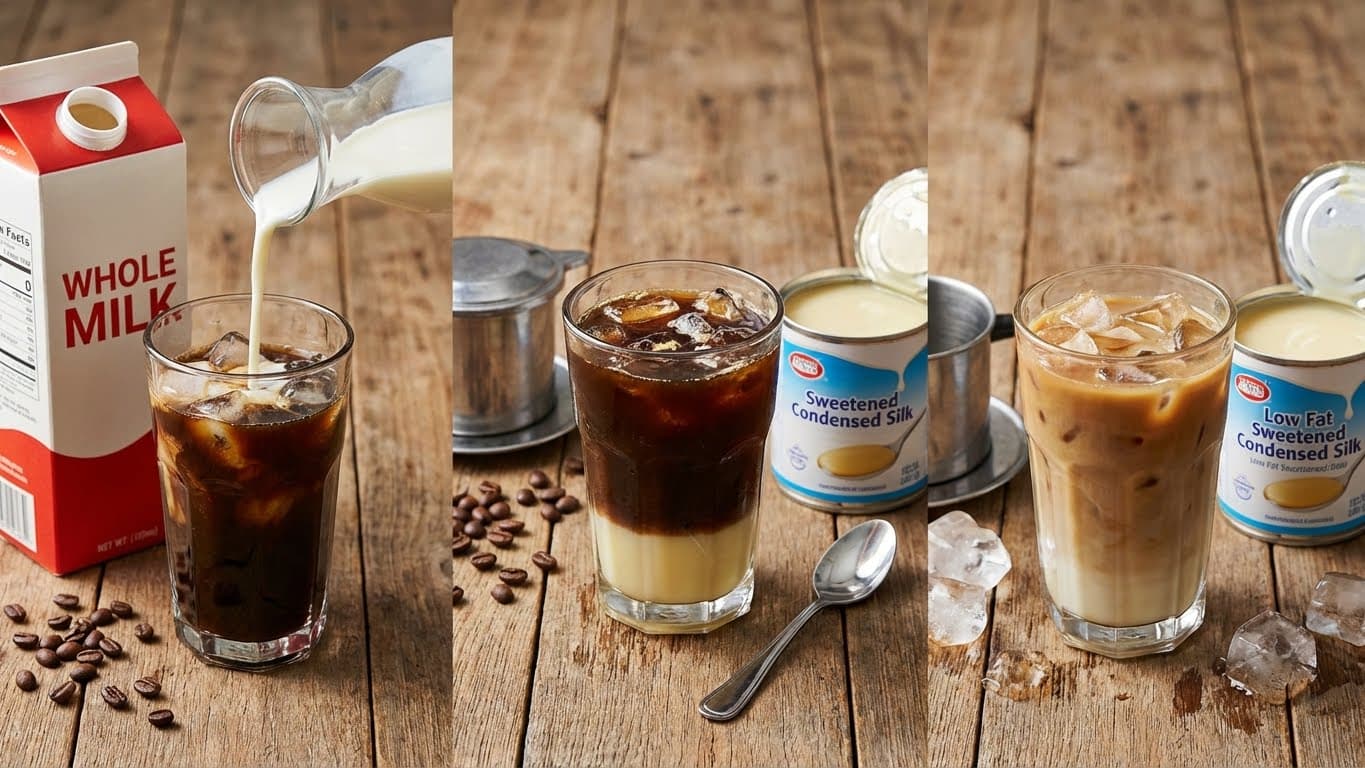
You can, but it won’t be authentic Ca Phe Sua Da. The sweetened condensed milk is essential to the drink’s character—it provides both sweetness and body. If you want a lighter version, try using half condensed milk and half regular milk, or look for low-fat sweetened condensed milk.
Do I really need a phin filter?
While a phin filter produces the most authentic results, you can use alternatives. A French press works reasonably well, as does a Moka pot. Even a strong pour-over can work in a pinch. The goal is extracting bold, concentrated coffee that can stand up to the condensed milk.
How much caffeine is in Vietnamese iced coffee?
Because robusta beans contain about twice the caffeine of arabica, a typical glass of Ca Phe Sua Da packs a serious punch—usually around 200mg of caffeine, similar to a double espresso. I’ve found it’s best enjoyed in the morning or early afternoon unless you have a high caffeine tolerance.
Why does my coffee taste different from coffee shops?
Authentic Vietnamese coffee often includes chicory or other flavorings that add complexity. Brands like Cafe Du Monde include chicory, which gives the coffee a slightly sweet, nutty flavor. If your homemade version tastes flat, try switching to a coffee blend that includes chicory.
How long does brewed Vietnamese coffee last?
You can refrigerate brewed Vietnamese coffee (without the condensed milk) for up to 24 hours. However, it’s best fresh. I usually brew what I need for immediate consumption to get the best flavor.
Final Thoughts and Your Next Steps
Making authentic Vietnamese iced coffee at home is easier than you might think, and the results are absolutely worth the small investment in a phin filter and proper coffee. The slow brewing process becomes almost meditative, and there’s something deeply satisfying about watching those dark drops fall into the creamy condensed milk below.
Start with the classic recipe, get comfortable with the technique, and then feel free to experiment with variations. Adjust the coffee-to-milk ratio until you find your sweet spot. Try different Vietnamese coffee brands to discover your favorite. The beauty of home brewing is that you’re in complete control.
By following these steps and paying attention to the details—water temperature, grind size, brewing time—you’ll be making Ca Phe Sua Da that rivals your favorite Vietnamese restaurant. Your mornings are about to get a whole lot more interesting.



Comments