


Table of Contents
- Quick Verdict: Urnex Dezcal
- What Is Urnex Dezcal and How Does It Work?
- The Science Behind the Formula
- What Can You Use It On?
- Urnex Dezcal vs. Other Descaling Options
- Dezcal vs. Vinegar
- Dezcal vs. Pure Citric Acid
- Dezcal vs. Brand-Specific Descalers
- How to Use Urnex Dezcal Properly
- What You'll Need
- Step-by-Step Descaling Process
- Who Is Urnex Dezcal For?
- Who Is This For?
- Who Is This NOT For?
- Common Mistakes to Avoid When Descaling
- Frequently Asked Questions
- Is Urnex Dezcal safe for all coffee machines?
- How often should I use Dezcal?
- Can I use Dezcal on my kettle or other appliances?
- Does Dezcal leave any taste or smell?
- Is the powder or liquid version better?
- Final Verdict and Recommendations
Scale buildup is the silent killer of coffee machines. If you’ve ever noticed your espresso pulling slower than usual or your drip brewer taking forever to finish a cycle, mineral deposits are likely the culprit. Urnex Dezcal has become one of the most talked-about descaling solutions in the home barista community, but does it truly deserve the hype? In this Urnex Dezcal review, I’ll break down everything you need to know—from its ingredients and effectiveness to how it stacks up against the competition.
By the end of this article, you’ll know whether Dezcal is the right descaler for your setup, what makes it different from DIY alternatives like vinegar or citric acid, and whether it’s worth the investment over brand-specific descalers.
Quick Verdict: Urnex Dezcal
After testing and researching extensively, I can confidently say that Urnex Dezcal earns its spot as one of the best all-around descalers for home coffee equipment. It’s effective, safe for most machines, and offers excellent value compared to brand-name alternatives. America’s Test Kitchen has recommended it, and countless home baristas swear by it for good reason.
Pros:
- Dual-acid formula (citric and sulfamic acid) tackles stubborn scale effectively
- Phosphate-free and biodegradable
- Works on espresso machines, drip brewers, kettles, and pod machines
- Available in convenient single-use packets or bulk powder
- More affordable than most brand-specific descalers
- No lingering odor or taste when rinsed properly
Cons:
- Requires proper dilution—not as foolproof as pre-mixed liquids
- Some machine manufacturers recommend their own branded descaler
- Powder version requires dissolving before use
What Is Urnex Dezcal and How Does It Work?
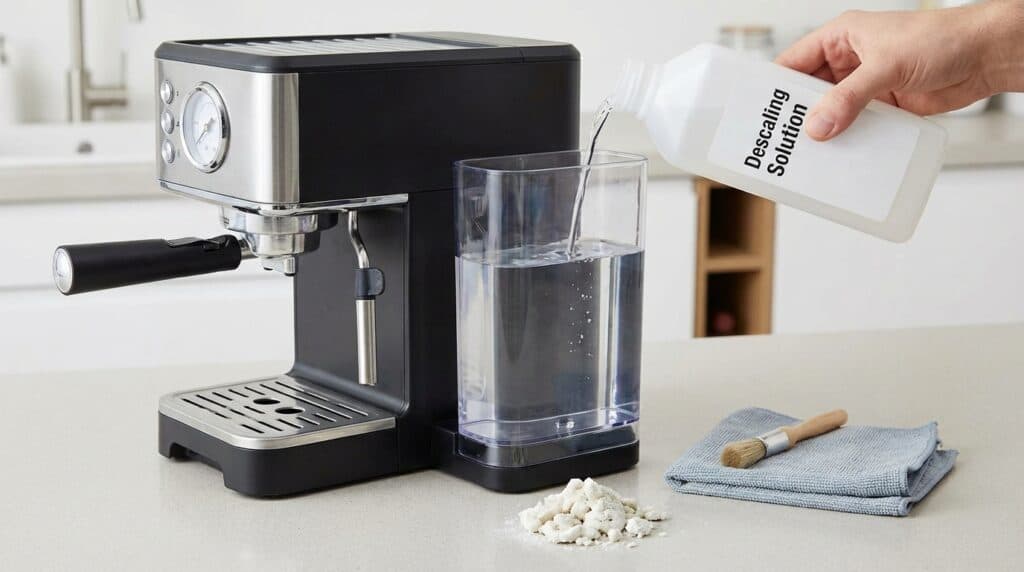
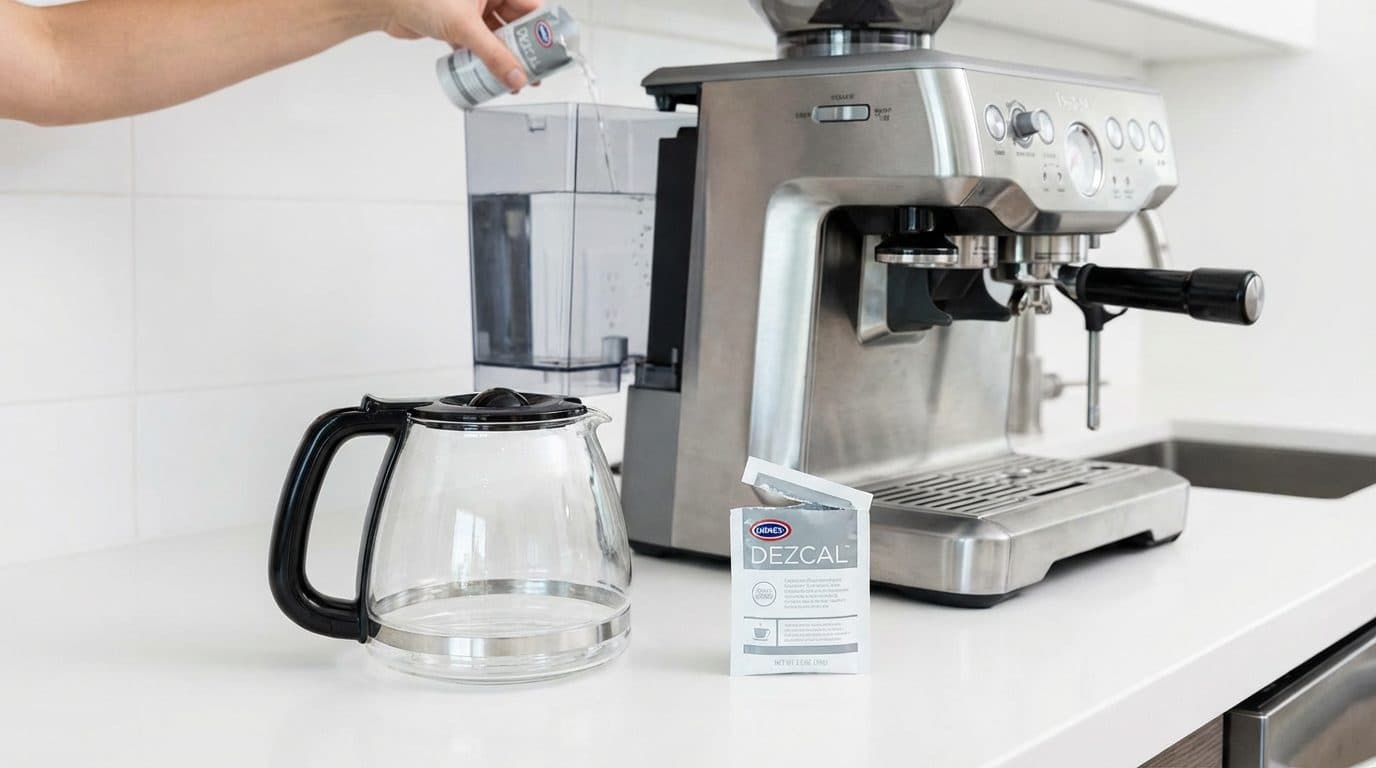
Urnex is a company that’s been in the coffee equipment cleaning business for decades, supplying products to commercial cafés and home users alike. Dezcal is their flagship descaling product, designed specifically for removing mineral scale from coffee and espresso machines.
The Science Behind the Formula
What sets Dezcal apart from basic DIY solutions is its dual-acid formula. The active ingredients are citric acid and sulfamic acid, which work together to dissolve calcium carbonate deposits more effectively than either acid alone. In short, citric acid is great for general descaling, while sulfamic acid adds extra punch for tougher buildup without being overly corrosive.
Here’s an interesting detail I’ve discovered: the powder version of Dezcal is primarily citric acid-based, while the liquid version leans more heavily on sulfamic acid. Both are effective, but the liquid may work slightly faster on severe scale buildup.
What Can You Use It On?
Dezcal is versatile enough for most coffee equipment in your kitchen:
- Espresso machines (semi-automatic, automatic, and super-automatic)
- Drip coffee makers
- Single-serve pod machines
- Electric kettles
- Steam wands and milk frothers
- Hot water dispensers
I’ve used it on everything from a basic drip brewer to a semi-automatic espresso machine, and it performs consistently well across the board.
Urnex Dezcal vs. Other Descaling Options
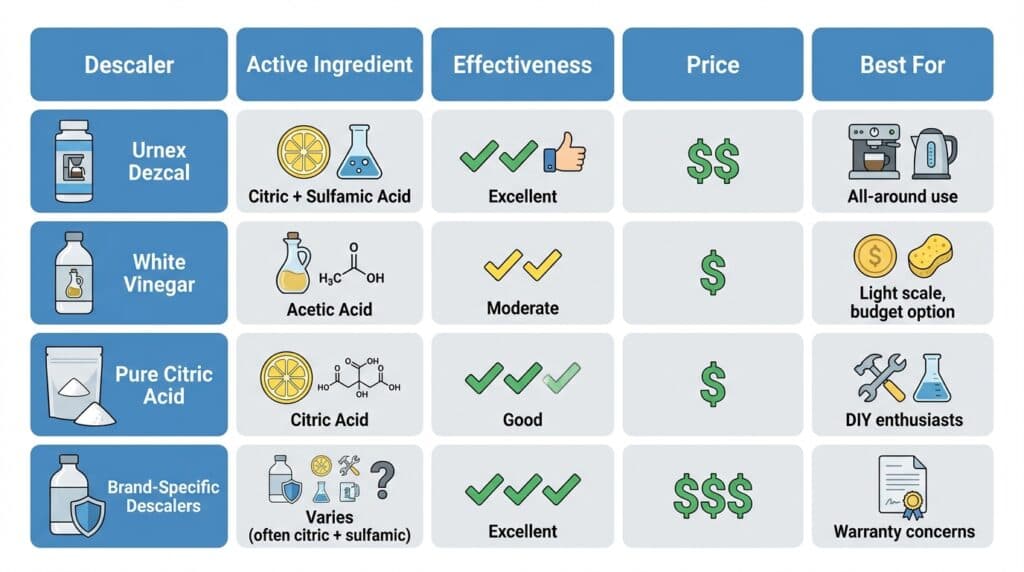
Let’s be honest—you have plenty of choices when it comes to descaling. Here’s how Dezcal compares to the most common alternatives.
| Descaler | Active Ingredient | Effectiveness | Price | Best For |
|---|---|---|---|---|
| Urnex Dezcal | Citric + Sulfamic Acid | Excellent | $$ | All-around use |
| White Vinegar | Acetic Acid | Moderate | $ | Light scale, budget option |
| Pure Citric Acid | Citric Acid | Good | $ | DIY enthusiasts |
| Brand-Specific Descalers | Varies (often citric + sulfamic) | Excellent | $$$ | Warranty concerns |
Dezcal vs. Vinegar
Vinegar is the classic DIY descaling solution, and yes, it works—to a point. The problem? Acetic acid (the active component in vinegar) is weaker than citric or sulfamic acid, meaning you’ll need more cycles to achieve the same results. Worse, vinegar can actually be corrosive to rubber seals and gaskets over time. Plus, that lingering vinegar smell is hard to rinse away completely.
In my experience, Dezcal outperforms vinegar in every measurable way. It’s faster, more thorough, and leaves no odor behind.
Dezcal vs. Pure Citric Acid
Buying food-grade citric acid in bulk is a popular hack among home baristas. It’s cheap and effective for light to moderate scale. However, citric acid alone may struggle with heavy mineral deposits, especially in areas with very hard water. The addition of sulfamic acid in Dezcal gives it an edge for tougher jobs.
If you’re on a tight budget and have relatively soft water, pure citric acid can work. But for most users, Dezcal’s balanced formula is worth the small price premium.
Dezcal vs. Brand-Specific Descalers
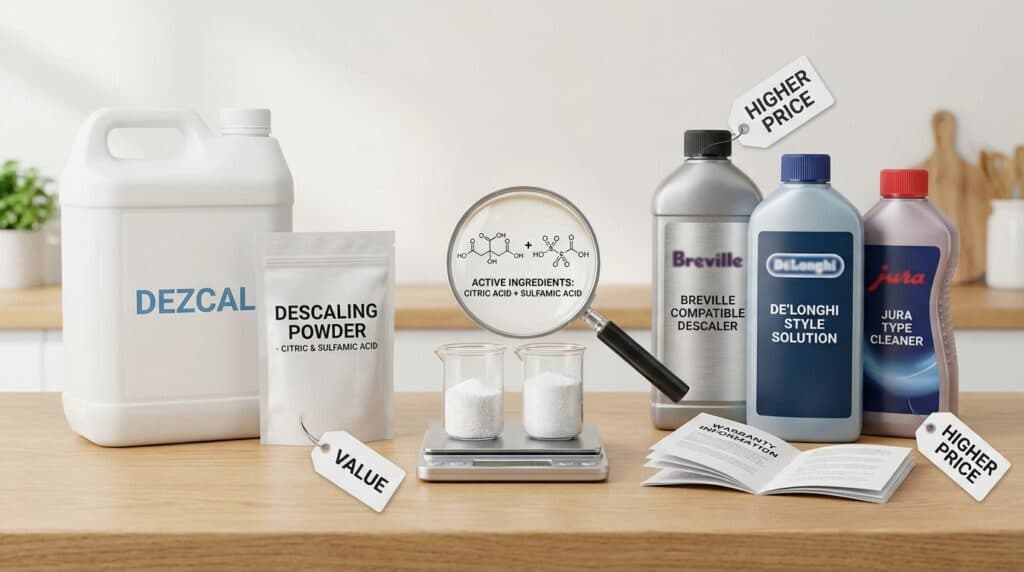
Here’s something that might surprise you: many brand-specific descalers (like those from Breville, De’Longhi, or Jura) contain the exact same active ingredients as Dezcal—citric acid and sulfamic acid. According to user research and product comparisons, they’re essentially the same product in different packaging, often at a higher price point.
That said, some manufacturers recommend using only their branded descaler to maintain warranty coverage. If you’re concerned about voiding your warranty, check your machine’s documentation. In most cases, using a reputable third-party descaler like Dezcal won’t cause issues, but it’s worth confirming.
How to Use Urnex Dezcal Properly
Getting the best results from Dezcal requires following the right process. Here’s my recommended approach:
What You’ll Need
- Urnex Dezcal powder or liquid
- Fresh water (filtered is ideal)
- A container for mixing (if using powder)
- Your machine’s water reservoir
- About 30-45 minutes of time
Step-by-Step Descaling Process
1. Prepare the solution. If using powder, dissolve one packet (or one tablespoon of bulk powder) in about 32 ounces of warm water. Stir until fully dissolved. For liquid Dezcal, follow the dilution ratio on the bottle.
2. Empty and fill. Remove any water from your machine’s reservoir and pour in the Dezcal solution.
3. Run the descaling cycle. If your machine has a dedicated descaling mode, use it. Otherwise, run the solution through as if you were brewing coffee. For espresso machines, run some solution through the group head and steam wand.
4. Let it soak. For heavy buildup, pause halfway through and let the solution sit for 15-20 minutes before continuing.
5. Rinse thoroughly. This is crucial. Run at least two full reservoirs of fresh water through your machine to flush out all descaler residue. Nobody wants their morning espresso tasting like cleaning solution.
Barista Tip: I descale my espresso machine every 2-3 months, but your frequency should depend on your water hardness. If you notice slower brew times or reduced steam pressure, it’s time to descale regardless of the calendar.
Who Is Urnex Dezcal For?
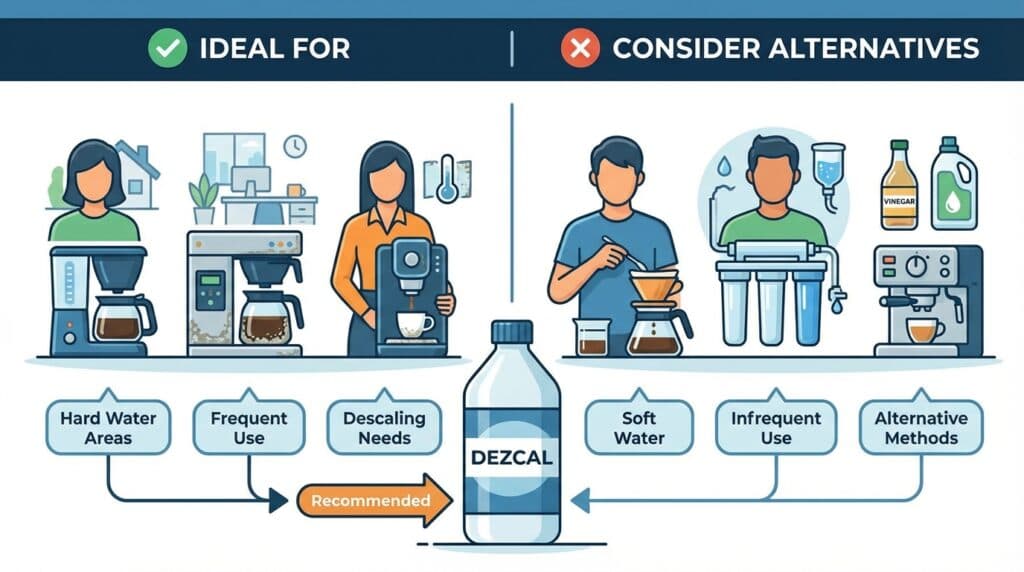
Dezcal isn’t necessarily the perfect choice for everyone. Here’s a breakdown to help you decide.
Who Is This For?
- Home baristas with multiple machines – One product works across all your equipment
- Anyone tired of overpriced brand-specific descalers – Same ingredients, better value
- Users in hard water areas – The dual-acid formula handles heavy scale effectively
- People who want a trusted, professional-grade product – Urnex supplies commercial cafés worldwide
- Environmentally conscious users – Phosphate-free and biodegradable
Who Is This NOT For?
- Those who prefer pre-mixed, ready-to-use solutions – Powder requires dissolving first
- Users with machines under strict warranty terms – Some manufacturers insist on branded descalers
- People looking for the absolute cheapest option – Bulk citric acid is cheaper, though less effective
Common Mistakes to Avoid When Descaling
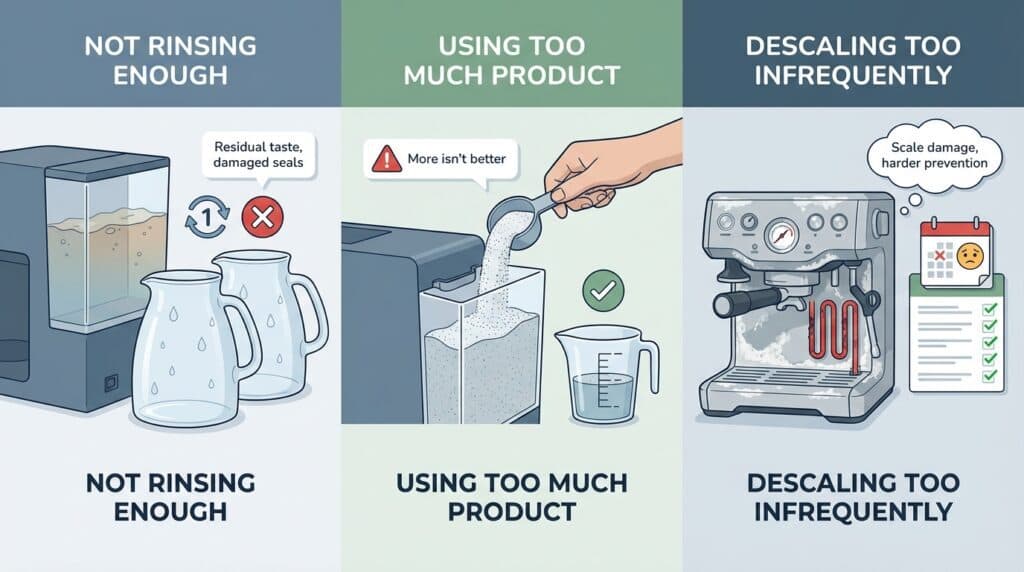
Even with a great product like Dezcal, improper use can lead to problems. Here are the most common mistakes I see:
- Not rinsing enough. Two full water cycles minimum. Residual descaler can affect taste and potentially damage seals over time.
- Using too much product. More isn’t better. Follow the recommended dilution ratio for safe, effective results.
- Descaling too infrequently. Waiting until your machine is visibly struggling means the scale has already done damage. Prevention is easier than cure.
- Skipping the steam wand. On espresso machines, scale builds up in the steam system too. Run some solution through the wand during descaling.
A quick scenario: I once helped a friend troubleshoot their espresso machine that was producing weak, under-extracted shots. They hadn’t descaled in over a year. After two Dezcal cycles, the machine was pulling shots like new again. Don’t let it get to that point.
Frequently Asked Questions
Is Urnex Dezcal safe for all coffee machines?
Dezcal is safe for most home coffee and espresso machines, including popular brands like Breville, De’Longhi, Gaggia, and Jura. However, always check your machine’s manual for specific descaling recommendations. Some manufacturers have particular requirements that could affect warranty coverage.
How often should I use Dezcal?
For most users, descaling every 2-3 months is sufficient. If you have very hard water or use your machine heavily, monthly descaling may be necessary. Signs that you need to descale include slower brew times, reduced water flow, and weaker steam pressure.
Can I use Dezcal on my kettle or other appliances?
Yes, Dezcal works well on electric kettles, hot water dispensers, and other appliances that suffer from mineral buildup. Just follow the same dilution and rinsing process.
Does Dezcal leave any taste or smell?
When rinsed properly, Dezcal leaves no residual taste or odor. This is one of its advantages over vinegar, which can leave a lingering smell even after multiple rinse cycles.
Is the powder or liquid version better?
Both are effective. The powder is more economical and has a longer shelf life, while the liquid is slightly more convenient and may work faster on severe scale. For most home users, the powder packets offer the best balance of value and ease of use.
Final Verdict and Recommendations
After putting Urnex Dezcal through its paces and comparing it to the alternatives, I’m confident recommending it as one of the best descalers for home coffee equipment. Its dual-acid formula delivers professional-grade cleaning power without the premium price tag of brand-specific products. It’s versatile, effective, and leaves no unpleasant residue behind.
Is it the absolute best descaler? For most home baristas, yes. The only scenarios where I’d suggest alternatives are if your machine manufacturer explicitly requires their branded product for warranty purposes, or if you’re on an extremely tight budget and willing to experiment with pure citric acid.
Life is too short for bad coffee—and it’s also too short to let scale ruin your expensive equipment. Pick up some Dezcal, set a reminder to descale regularly, and your machine will thank you with years of delicious brews. Your morning ritual deserves nothing less.


Comments