


Table of Contents
- Why Vanilla Extract Works So Well in Coffee
- How to Add Vanilla Extract to Coffee the Right Way
- What You'll Need
- The Golden Ratio
- When to Add It
- Best Coffee Drinks to Pair with Vanilla Extract
- Lattes and Cappuccinos
- Cold Brew
- French Press Coffee
- Drip Coffee
- Common Mistakes to Avoid
- Using Too Much Extract
- Choosing Imitation Vanilla
- Adding It to Burnt or Stale Coffee
- Forgetting to Stir
- Other Ways to Get Vanilla Flavor in Coffee
- Frequently Asked Questions
- Does vanilla extract add calories to coffee?
- Can I use vanilla extract in coffee if I'm avoiding alcohol?
- Will vanilla extract make my coffee sweet?
- How long does vanilla extract last?
- Can I add vanilla extract to coffee pods or K-cups?
- Final Thoughts and Next Steps
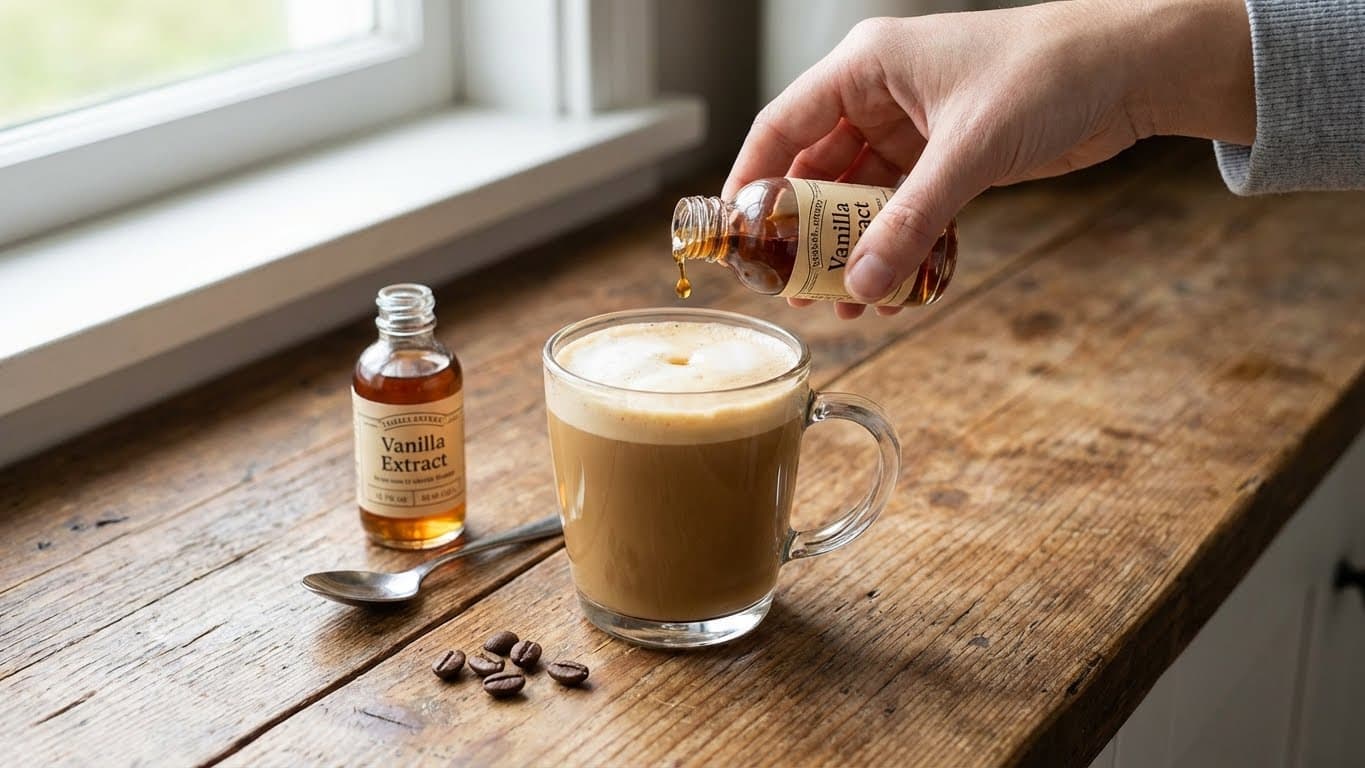
Ever stood in your kitchen, coffee mug in hand, wondering if that little bottle of vanilla extract in your pantry could transform your morning brew? You’re not alone. Adding vanilla extract to coffee is one of the simplest ways to elevate your cup without reaching for sugary syrups or expensive flavored beans. The short answer is yes—you absolutely can put vanilla extract in coffee, and when done right, it creates a smooth, aromatic experience that rivals your favorite café drinks.
In this guide, I’ll walk you through everything you need to know about using vanilla extract in coffee: how much to use, when to add it, which coffee drinks benefit most, and the mistakes that can turn your delicious idea into a bitter disappointment.
Why Vanilla Extract Works So Well in Coffee
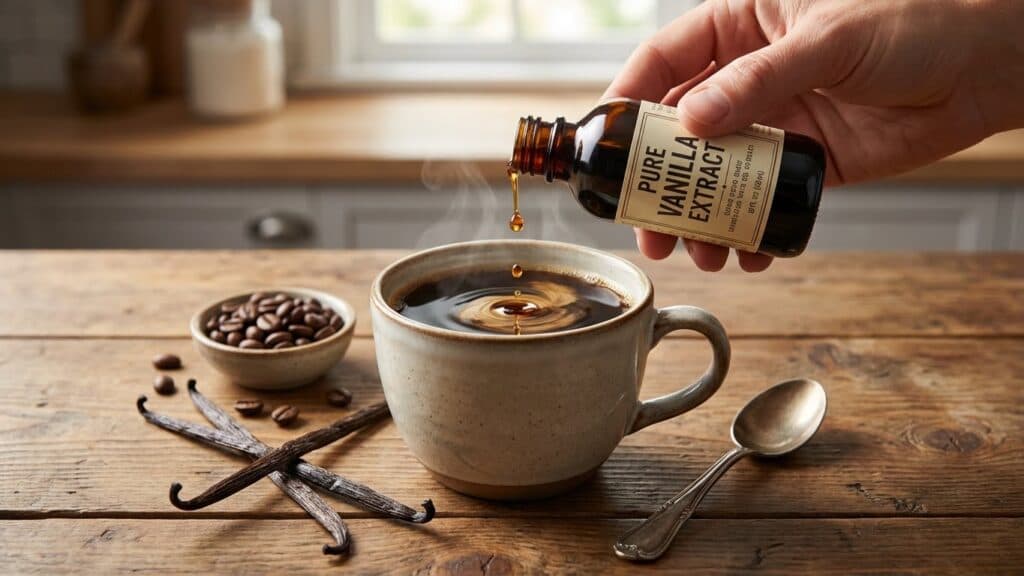
Vanilla and coffee share more than 30 aromatic compounds, which is why they complement each other so naturally. When you add vanilla extract to coffee, you’re not masking the coffee flavor—you’re enhancing it. The vanilla rounds out any harsh or bitter notes while adding a subtle sweetness that doesn’t come from sugar.
In my experience, vanilla extract works better than vanilla-flavored syrups for a few reasons:
- No added sugar – Pure vanilla extract contains minimal calories and no sweeteners
- More authentic flavor – Real extract has depth that artificial syrups can’t replicate
- Cost-effective – A single bottle lasts months since you only need drops at a time
- Versatility – Works in hot coffee, iced coffee, espresso drinks, and cold brew
Key Takeaway: Vanilla extract enhances coffee’s natural flavors rather than covering them up, making it ideal for quality beans you want to showcase with a twist.
How to Add Vanilla Extract to Coffee the Right Way
Here’s where most people go wrong: they pour vanilla extract directly into their finished cup and end up with an overpowering, almost medicinal taste. The key is using the right amount and adding it at the right time.
What You’ll Need
- Pure vanilla extract (avoid imitation if possible)
- Your preferred coffee brewing method
- A measuring spoon or dropper for precision
The Golden Ratio
Start with 1/4 teaspoon of vanilla extract per 8 ounces of coffee. This might seem like very little, but vanilla extract is concentrated. You can always add more, but you can’t take it away. I’ve found that most people settle somewhere between 1/4 and 1/2 teaspoon per cup once they experiment.
When to Add It
You have two options, and both work well:
- Add to your coffee grounds before brewing – This method distributes the vanilla flavor evenly and mellows it slightly during extraction. Simply drizzle the extract over your grounds and brew as usual.
- Stir into your finished cup – This gives you more control over the intensity. Add the extract and stir thoroughly to distribute it.
Barista Tip: If you’re making espresso-based drinks, add the vanilla extract to your cup before pulling the shot. The hot espresso will bloom the vanilla aromatics beautifully.
Best Coffee Drinks to Pair with Vanilla Extract
Not every coffee preparation benefits equally from vanilla. Here’s what I’ve learned after years of experimenting in my own kitchen.
Lattes and Cappuccinos
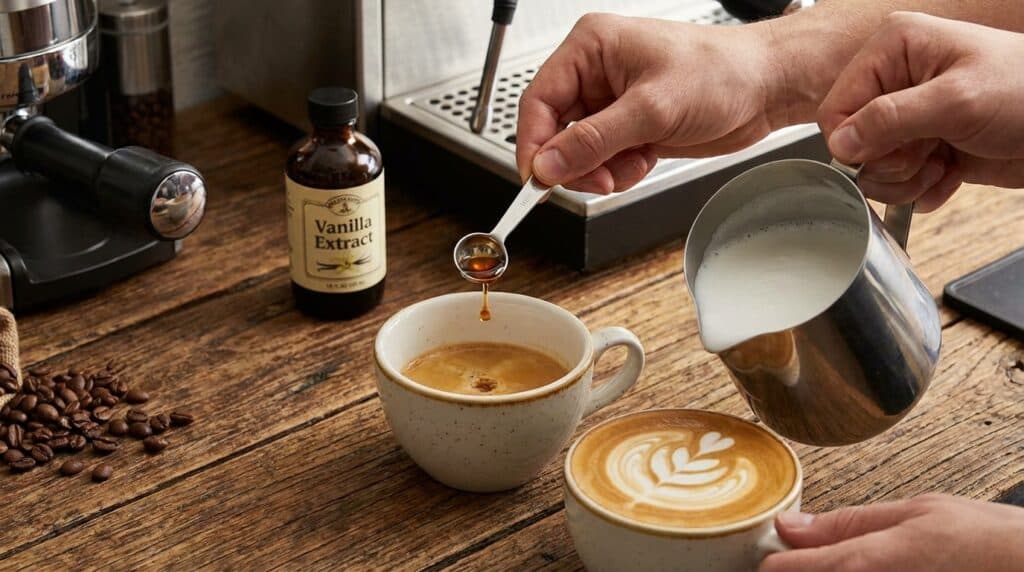
This is where vanilla extract truly shines. The steamed milk amplifies the vanilla’s creamy notes, creating something that tastes like a vanilla latte without the syrup. Add 1/4 teaspoon to your espresso before adding the milk, and you’ll understand why this combination is a classic.
Cold Brew
Cold brew’s naturally smooth, low-acid profile pairs exceptionally well with vanilla. Because cold brew is less bitter, the vanilla comes through more clearly. Try adding 1/2 teaspoon per 12 ounces of cold brew—the cold temperature means you might need slightly more extract to taste it.
French Press Coffee
The full-bodied nature of French press coffee can handle vanilla extract beautifully. Add it to your grounds before pouring in the hot water, and let them steep together. The result is a rich, aromatic cup with vanilla woven throughout.
Drip Coffee
Standard drip coffee works fine with vanilla extract, though the flavor may be more subtle compared to espresso drinks. This is a good starting point if you’re new to flavoring your coffee at home.
Taste Profile: Expect a smooth, slightly sweet aroma with warm, comforting undertones. The coffee’s natural characteristics remain present but softened.
Common Mistakes to Avoid
I’ve made all of these mistakes so you don’t have to. Here’s what to watch out for when adding vanilla extract to your coffee.
Using Too Much Extract
This is the number one mistake. Vanilla extract contains alcohol, and too much will make your coffee taste harsh and overly perfumed. Remember: 1/4 teaspoon is your starting point. More isn’t better here.
Choosing Imitation Vanilla
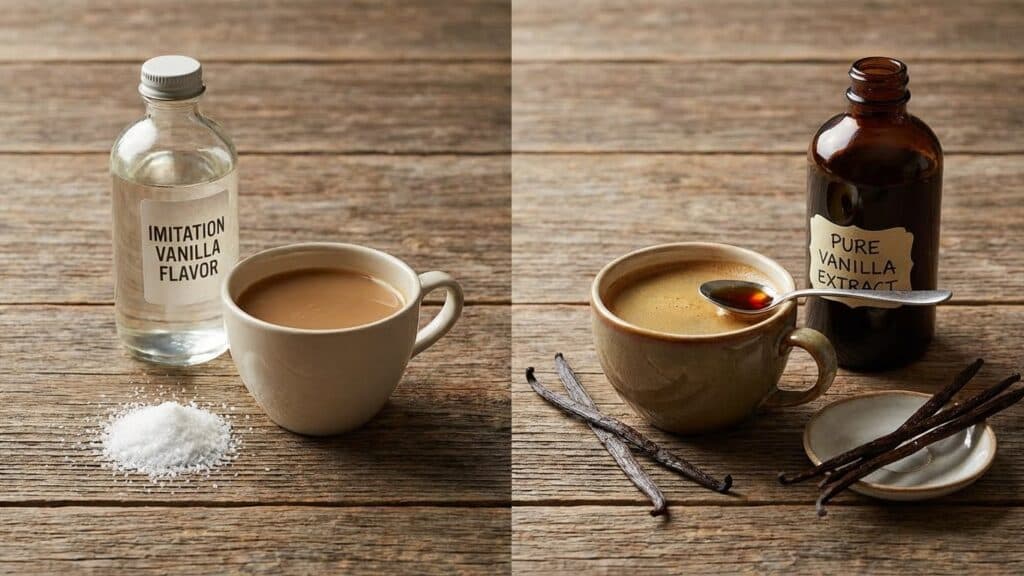
Imitation vanilla extract is made from synthetic vanillin and lacks the complexity of pure extract. While it’s cheaper, it can taste flat or artificial in coffee. If you’re going to flavor your coffee, invest in the real thing—it makes a noticeable difference.
Adding It to Burnt or Stale Coffee
Vanilla extract won’t save bad coffee. If your beans are stale or your brew is over-extracted and bitter, vanilla will just add another layer of flavor to something that’s already off. Start with decent coffee, and the vanilla will enhance it.
Forgetting to Stir
Vanilla extract doesn’t dissolve instantly, especially in cooler drinks. Give your coffee a good stir after adding the extract, or you’ll end up with an uneven flavor—bland sips followed by an overwhelming vanilla hit at the bottom.
Other Ways to Get Vanilla Flavor in Coffee
While vanilla extract is my go-to method, it’s not the only option. Here are some alternatives worth considering:
- Vanilla bean – Split a vanilla bean and add it to your coffee grounds or cold brew concentrate. This gives the most authentic, nuanced flavor but costs more.
- Vanilla powder – Ground vanilla beans without liquid. Works well in espresso drinks and won’t add any alcohol taste.
- Vanilla-infused milk – Heat your milk with a vanilla bean before frothing for lattes. This creates a subtle, creamy vanilla note.
- Homemade vanilla syrup – If you want sweetness along with vanilla flavor, make a simple syrup infused with vanilla beans.
Each method has its place. Extract remains the most convenient and cost-effective for daily use.
Frequently Asked Questions
Does vanilla extract add calories to coffee?
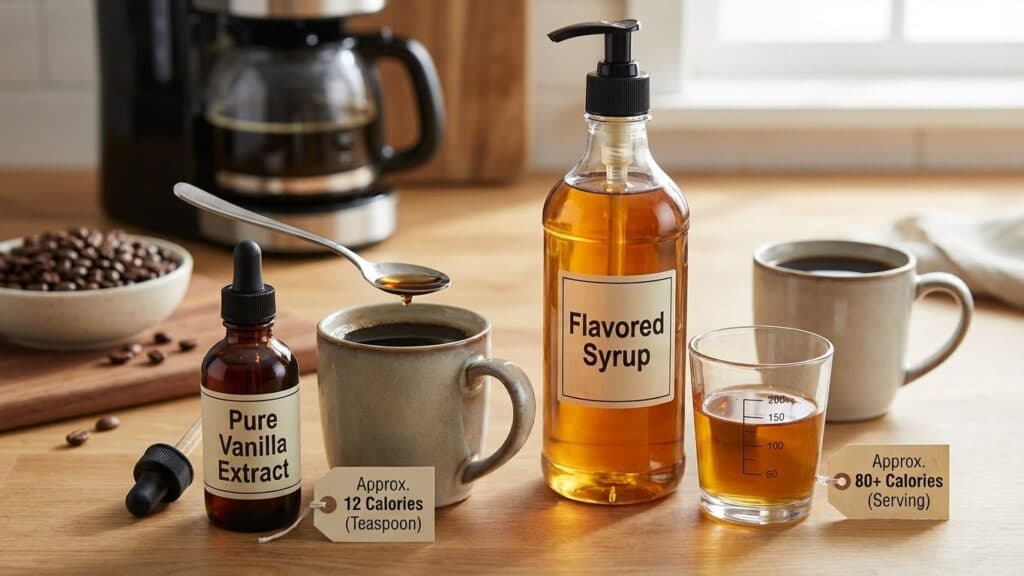
Barely. One teaspoon of pure vanilla extract contains about 12 calories, and you’re using a fraction of that per cup. Compared to flavored syrups that can add 80+ calories per serving, vanilla extract is essentially calorie-free for practical purposes.
Can I use vanilla extract in coffee if I’m avoiding alcohol?
Pure vanilla extract does contain alcohol (usually 35% by volume), but the amount you’re adding to coffee is minimal—we’re talking drops. The alcohol also evaporates quickly when added to hot coffee. However, if you need to avoid alcohol completely, look for alcohol-free vanilla extract or vanilla powder instead.
Will vanilla extract make my coffee sweet?
Vanilla extract creates the perception of sweetness without actually adding sugar. Your brain associates vanilla with sweet foods, so your coffee will taste slightly sweeter even though no sweetener was added. Many people find they can reduce or eliminate sugar in their coffee when using vanilla extract.
How long does vanilla extract last?
Pure vanilla extract has an almost indefinite shelf life when stored properly in a cool, dark place. The alcohol acts as a preservative. Imitation vanilla extract has a shorter lifespan of about 2-4 years. Either way, a single bottle will last you a very long time given how little you use per cup.
Can I add vanilla extract to coffee pods or K-cups?
Yes, but add it to your cup after brewing rather than trying to add it to the pod itself. A few drops in your mug before the coffee dispenses works perfectly.
Final Thoughts and Next Steps
Adding vanilla extract to coffee is one of those small upgrades that makes a surprisingly big difference. It’s inexpensive, easy, and transforms an ordinary cup into something that feels a bit more special—without the sugar crash or artificial ingredients found in most flavored coffee products.
Start with 1/4 teaspoon per cup, experiment with adding it to your grounds versus your finished brew, and find what works for your taste. Once you nail your preferred ratio, you’ll have a new go-to trick for impressing yourself (and anyone else who drinks your coffee). Life really is too short for boring coffee—and a little vanilla goes a long way toward fixing that.


Comments