


Table of Contents
- What You Need for Low-Acid Iced Coffee
- Ingredients
- Gear
- Why Iced Coffee Can Feel Harsh
- Low Acid Does Not Mean No Acid
- The Best Method: Cold Brew Concentrate
- Step-by-Step Cold Brew Instructions
- How to Choose Beans for a Gentler Cup
- Bean Traits to Look For
- Brands to Consider
- Other Low-Acid Iced Coffee Options
- Modified Japanese Iced Coffee
- About Baking Soda and Alkaline Additions
- Mistakes That Make Iced Coffee Harsher
- Flavor Boosters That Keep the Cup Gentle
- Frequently Asked Questions
- Is cold brew always lower in acid than regular coffee?
- Can I heat cold brew and keep the gentler profile?
- Does milk reduce coffee acidity?
- How long should homemade cold brew last?
- Is decaf better for sensitive stomachs?
- Bottom Line
If iced coffee tends to leave you with heartburn, a sour stomach, or that uncomfortable burning feeling, the answer is not automatically “quit coffee forever.” It may simply mean your usual brew is too strong, too acidic for you, too late in the day, or hitting an empty stomach. This guide keeps the promise realistic: you can make gentler iced coffee at home, but no recipe can guarantee it will work for every sensitive stomach.
The most reliable starting point is cold brew made with the right beans, a coarse grind, filtered water, and enough dilution. From there, you can adjust serving size, milk, timing, and flavorings. If coffee regularly triggers severe reflux, pain, nausea, or symptoms that worry you, treat that as a medical question and talk with a clinician. For ordinary coffee sensitivity, though, the steps below are practical and low-risk.
What You Need for Low-Acid Iced Coffee
Ingredients
- Low-acid or naturally mellow coffee beans, ideally medium to medium-dark roast
- Filtered water, cold or room temperature
- Ice made from clean-tasting water
- Optional milk, cream, oat milk, or almond milk
- Optional sweetener, kept light so the coffee stays balanced
Gear
- Burr grinder, or pre-ground coarse coffee if that is what you have
- Cold brew pitcher, French press, mason jar, or covered container
- Fine mesh strainer, paper filter, or cheesecloth
- Measuring cup or kitchen scale
- A clean bottle or jar for storing concentrate
Practical note: Filtered water is worth using here. Hard or heavily chlorinated water can make coffee taste sharper, even when the coffee itself is not unusually acidic.
Why Iced Coffee Can Feel Harsh
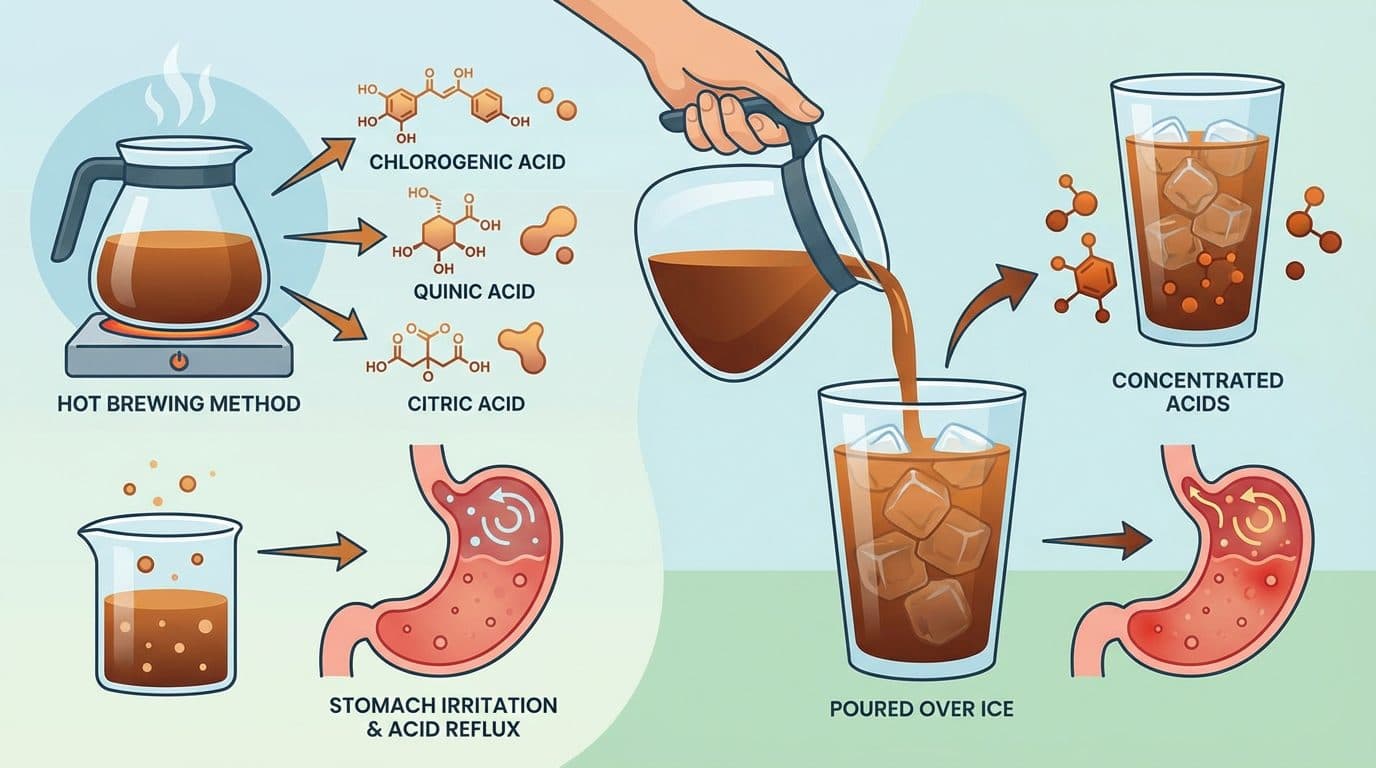
Coffee naturally contains acids and bitter compounds. Some of those compounds give coffee its bright, lively flavor. The problem is that hot brewing pulls them out quickly, especially when the grind is fine, the water is very hot, or the brew is strong. If you brew hot coffee and pour it over ice, you may end up with a cup that tastes diluted but still feels sharp.
There is also a separate issue: caffeine can stimulate acid production and gut movement in some people. That means a “low-acid” coffee may still bother you if the serving is large, concentrated, or taken on an empty stomach. It is useful to think in layers: acidity, caffeine dose, strength, timing, and your own tolerance.
Low Acid Does Not Mean No Acid
Be skeptical of any brand or recipe that promises stomach-safe coffee for everyone. “Low-acid” usually means lower perceived acidity or lower extraction of certain compounds. It does not make coffee neutral like water, and it is not care for reflux or digestive disease. The goal is gentler coffee, not a medical fix.
Key takeaway: Brewing method often matters more than the label on the bag. Cold extraction, coarse grinding, and sensible dilution are the biggest levers you control at home.
The Best Method: Cold Brew Concentrate
Cold brew is the easiest low-acid iced coffee method because cold water extracts coffee slowly and tends to produce a smoother cup. It usually tastes round, chocolatey, and less sharp than hot coffee chilled over ice. It can also be strong, so dilution matters.
Step-by-Step Cold Brew Instructions
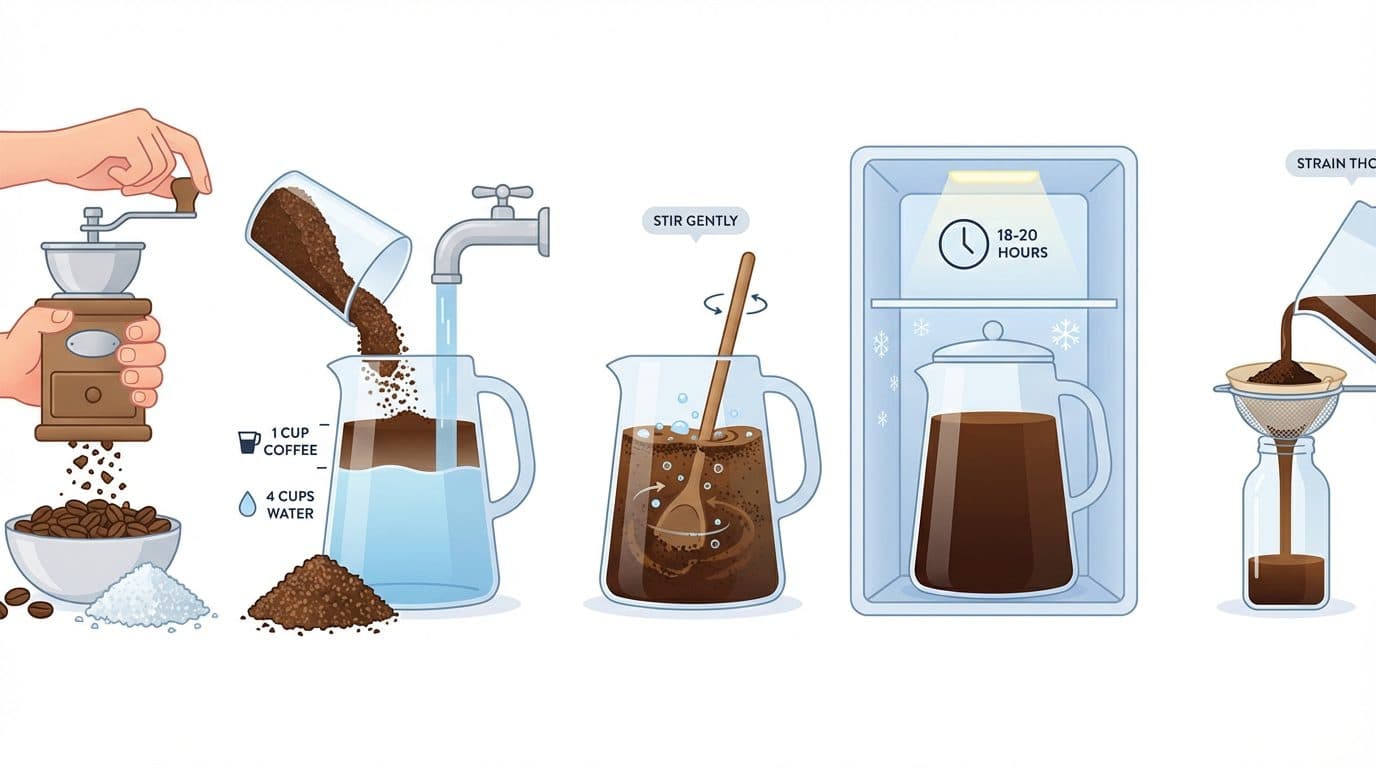
- Grind coarse. Aim for a texture like coarse sea salt. Fine coffee makes the brew muddy and can pull harsher flavors.
- Use a simple ratio. Start with 1 cup coarse coffee to 4 cups filtered water, or about 1 part coffee to 4 parts water by volume.
- Wet all the grounds. Stir gently so there are no dry pockets at the top.
- Steep 12 to 18 hours. Refrigerate or leave at cool room temperature. Start at 16 hours if you are unsure.
- Strain carefully. Use a fine mesh strainer, then a paper filter if you want a cleaner cup.
- Dilute before drinking. Try 1 part concentrate to 1 part water or milk over ice. If your stomach is sensitive, start weaker.
Taste expectation: Cold brew should taste smooth and sweet, not sour or rough. If it tastes woody, bitter, or heavy, shorten the steep next time or grind slightly coarser.
Storage tip: Keep concentrate in a sealed container in the refrigerator and use it within 7 to 10 days for best flavor. Two weeks may be safe for many batches, but the taste usually fades before then.
How to Choose Beans for a Gentler Cup
Bean choice cannot solve everything, but it can help. The safest strategy is to avoid bright, high-acid flavor profiles and choose coffees described as chocolatey, nutty, smooth, mellow, or low-acid.
Bean Traits to Look For
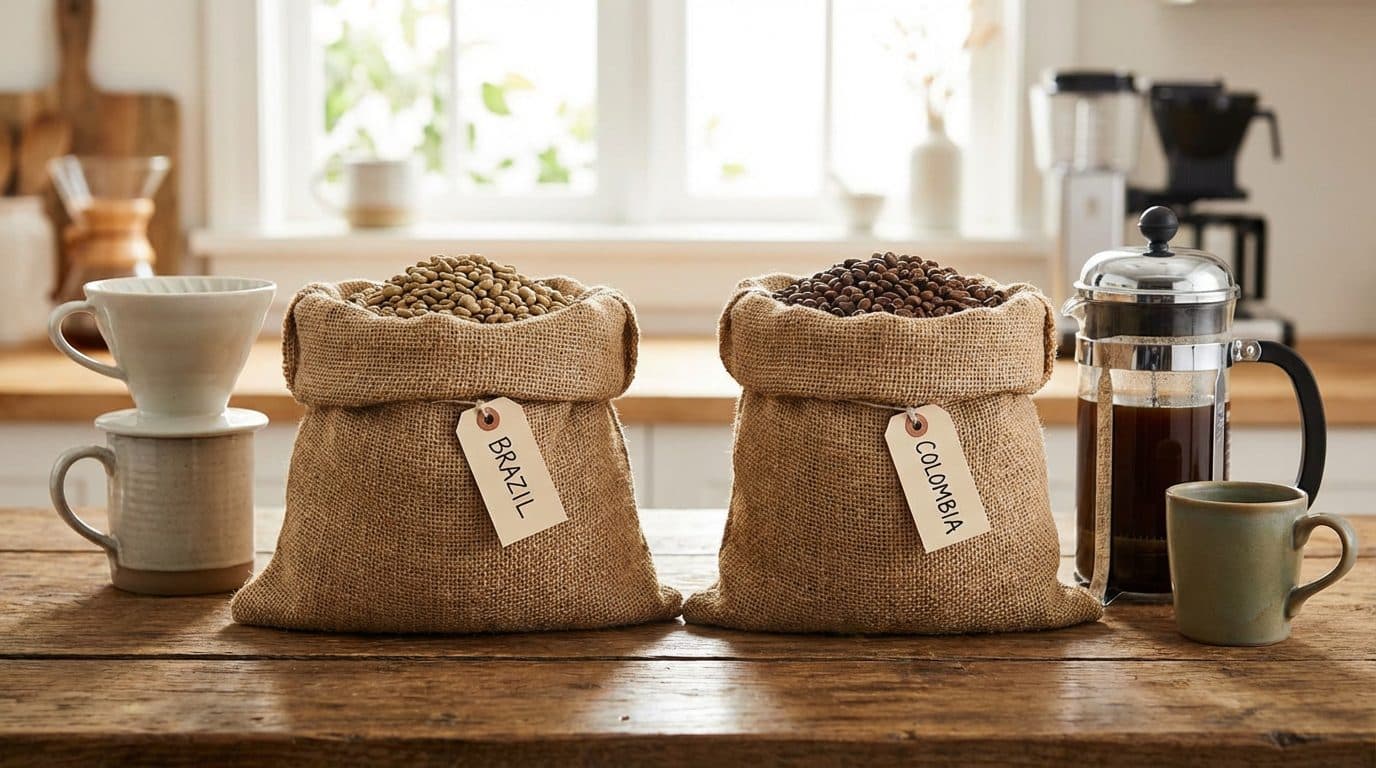
- Origin: Brazilian, Sumatran, Guatemalan, Mexican, and some Colombian coffees often taste rounder than very bright Kenyan or Ethiopian coffees.
- Roast: Medium to medium-dark roasts are a good first stop. Very light roasts can taste sharp; very dark roasts can taste smoky and bitter.
- Processing: Natural and pulped-natural coffees often taste fuller and less citrusy than washed coffees, though there are exceptions.
- Freshness: Use beans that smell good and are not stale. Old coffee can taste flat, bitter, and harsh.
- Low-acid labels: These can be useful, but they are not regulated like a medical claim. Treat them as a starting point, not proof.
A naturally processed Brazilian medium roast is a strong baseline for low-acid iced coffee. It usually brings chocolate, nut, and caramel notes without the sharp citrus profile that bothers some drinkers.
Brands to Consider
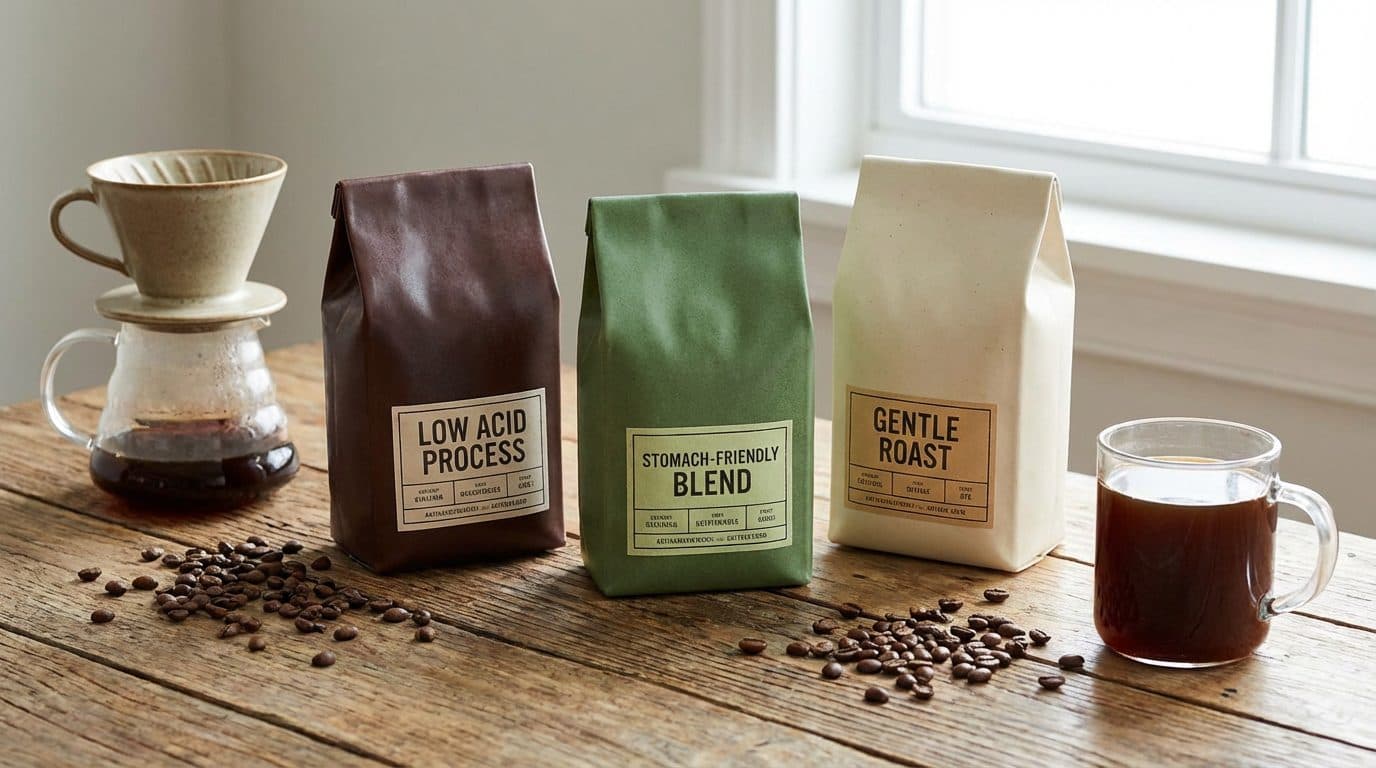
Some roasters sell coffees specifically positioned as low-acid, including Puroast, Lucy Jo’s, and other stomach-friendly blends. They can be convenient if you want a predictable starting point. Still, a local roaster may have a mellow Brazil, Sumatra, or medium-dark blend that tastes better and works just as well for you.
Other Low-Acid Iced Coffee Options
Cold brew is the most forgiving method, but it is not the only one. If you want iced coffee today, a modified Japanese iced coffee can be a reasonable compromise.
Modified Japanese Iced Coffee
- Use mellow beans and a slightly coarser grind than your normal pour-over.
- Brew around 195°F instead of very hot water.
- Use part of your total water as ice in the server.
- Keep the brew time modest, usually around 2:30 to 3:30 depending on the brewer.
This cup will taste brighter than cold brew. If bright coffee is exactly what bothers you, stick with cold brew. If you miss the aroma of fresh-brewed coffee, this method gives you more fragrance with less bite than simply chilling a strong hot brew.
About Baking Soda and Alkaline Additions
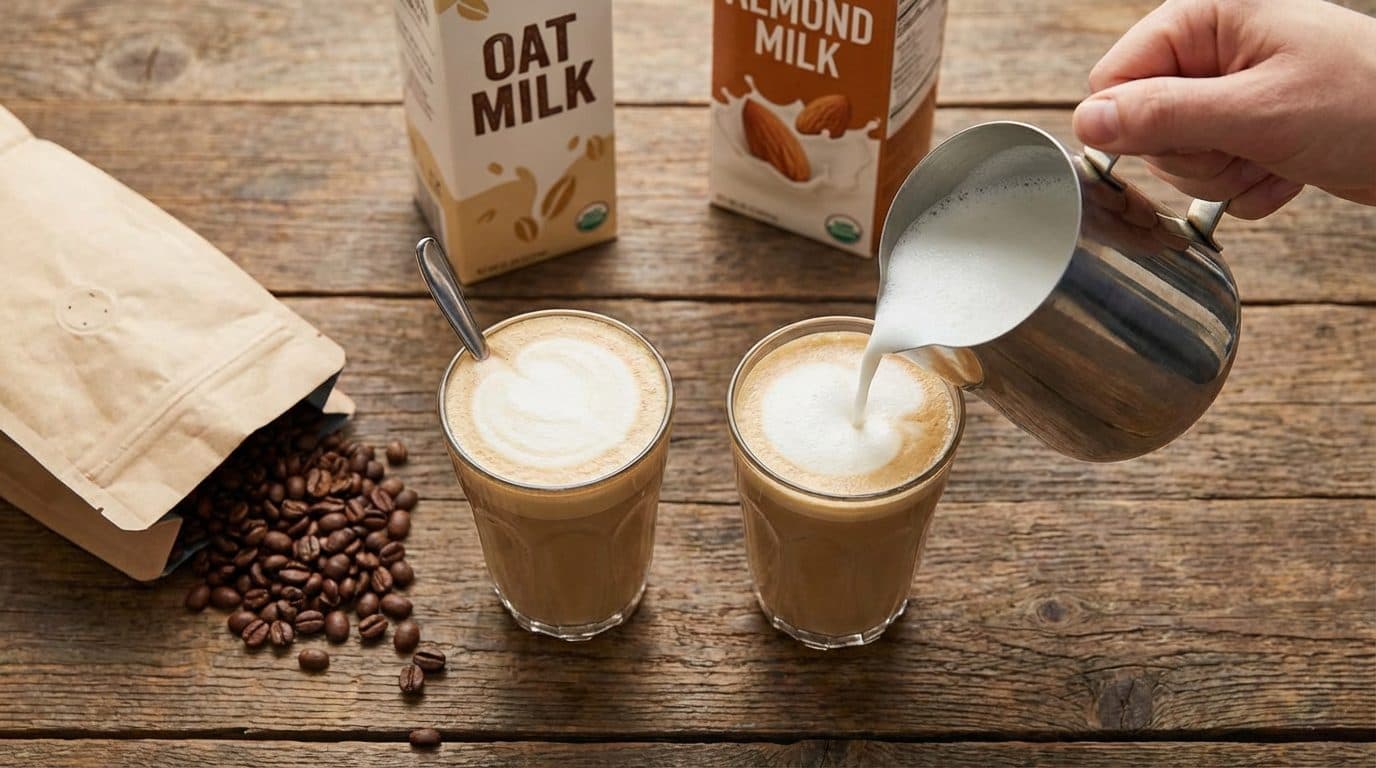
A tiny pinch of baking soda can reduce perceived acidity, but use caution. Too much tastes soapy and adds sodium. If you try it, start with less than 1/16 teaspoon in a full glass and adjust only if needed. Milk, cream, oat milk, or almond milk may feel gentler because they dilute the coffee and soften the flavor, even when they do not magically change everything happening in your stomach.
Mistakes That Make Iced Coffee Harsher
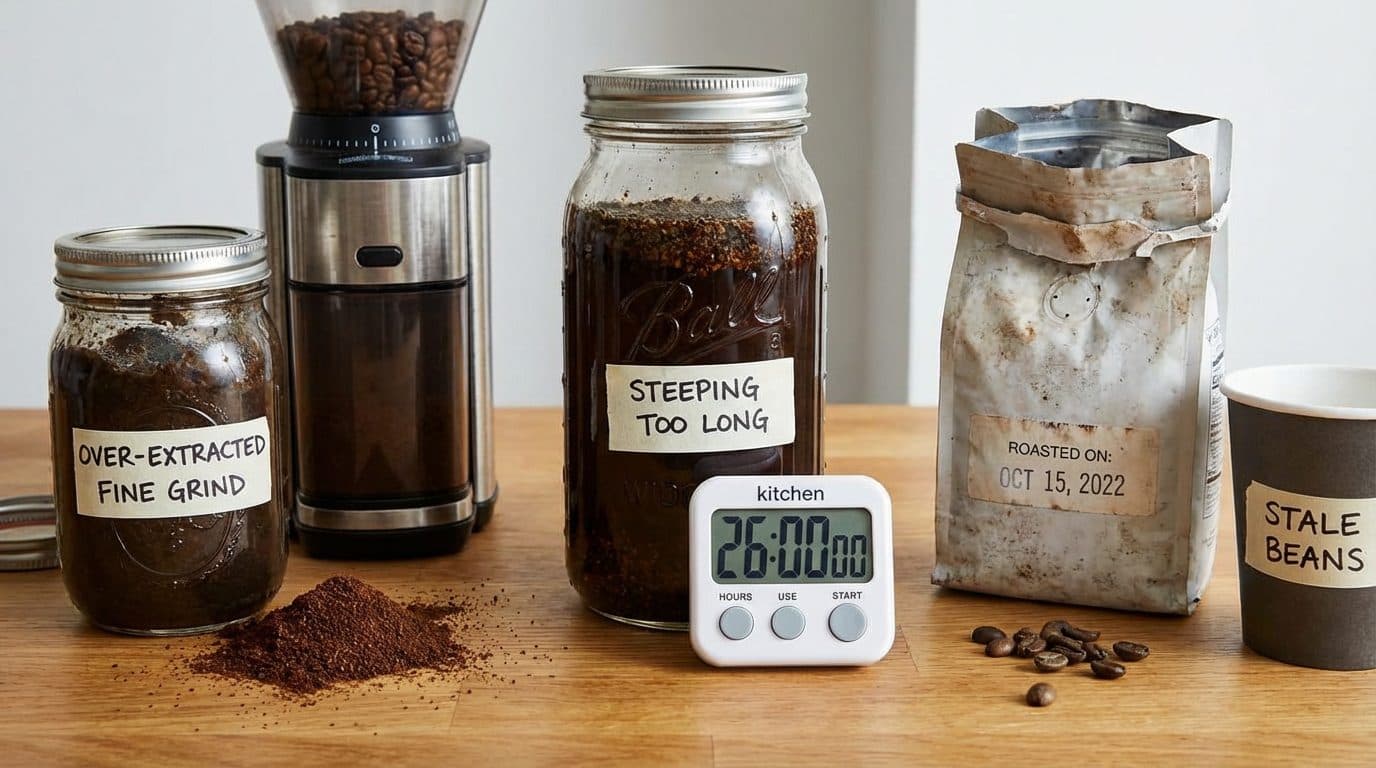
- Making concentrate and drinking it straight: Cold brew concentrate can carry a lot of caffeine. Dilute first.
- Grinding too fine: Fine grounds over-extract and leave sediment that can taste rough.
- Steeping too long: More time is not always better. Past 18 to 24 hours, many batches taste woody.
- Using very bright beans: If the bag says lemon, grapefruit, winey, or sparkling, it may not be your best sensitive-stomach choice.
- Drinking coffee before food: Even gentle coffee can feel harsh on an empty stomach.
- Adding acidic flavors: Citrus syrups and fruit concentrates may undo the point of making a gentler cup.
When troubleshooting, change one variable at a time. If you switch beans, brew method, milk, and serving size all at once, you will not know what actually helped.
Flavor Boosters That Keep the Cup Gentle
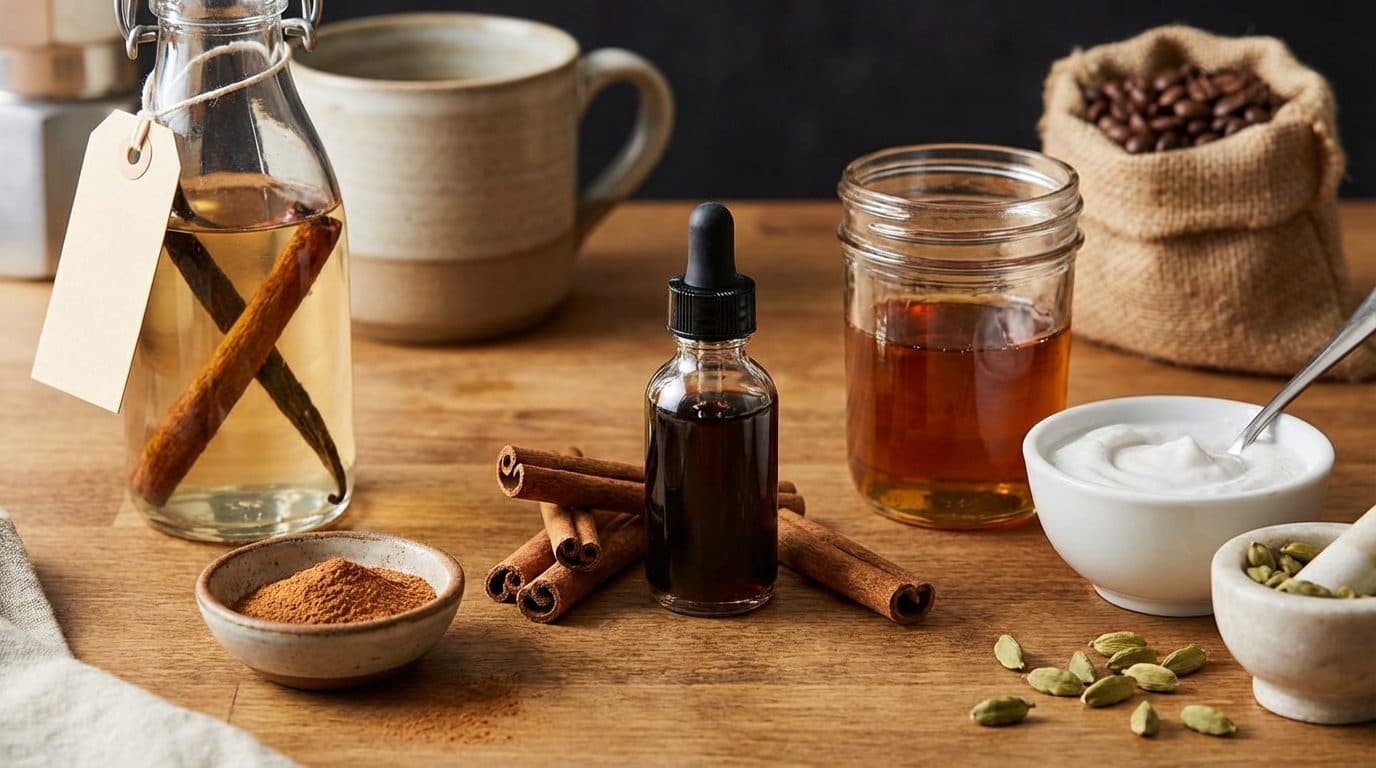
- Vanilla extract: A few drops add sweetness without turning the drink into dessert.
- Cinnamon: Adds warmth and makes less sugar feel satisfying.
- Maple syrup: Use a small amount if you want sweetness that blends easily.
- Coconut cream: Rich and soft, especially with chocolatey cold brew.
- Cardamom: A tiny pinch gives the cup a fragrant, cafe-style note.
A simple cinnamon-vanilla syrup is useful if you want consistency. Make a small batch, keep it refrigerated, and use just enough to round out the coffee.
Frequently Asked Questions
Is cold brew always lower in acid than regular coffee?
Cold brew is generally less sharp and often lower in extracted acidic compounds than hot-brewed coffee, but exact numbers vary by bean, grind, water, and steep time. The practical test is how it tastes and how you personally tolerate it.
Can I heat cold brew and keep the gentler profile?
Yes. Heating finished cold brew does not re-extract the acids that were left in the grounds. Warm it gently and avoid boiling, which can make the flavor harsh.
Does milk reduce coffee acidity?
Milk mainly dilutes and buffers the drink, which can make coffee feel gentler. It does not guarantee relief from reflux or stomach symptoms.
How long should homemade cold brew last?
For best flavor, use it within 7 to 10 days. Keep it cold, covered, and clean. If it smells off, tastes sour in a spoiled way, or looks unusual, discard it.
Is decaf better for sensitive stomachs?
Sometimes. Decaf is not automatically lower in acid, but it may help if caffeine is part of what bothers you. Decaf cold brew is a good test if regular cold brew still feels too stimulating.
Bottom Line
The best low-acid iced coffee for sensitive stomachs is usually not complicated: mellow beans, coarse grind, cold brew, careful straining, and enough dilution. Start there before buying expensive specialty products.
Keep your expectations honest. This approach can make iced coffee smoother and easier to tolerate for many people, but it is not a treatment for GERD, ulcers, chronic stomach pain, or unexplained digestive symptoms. If coffee keeps causing significant discomfort, pause the experiment and get personal medical guidance. A good cup should make your day better, not leave you negotiating with your stomach all morning.


Comments