


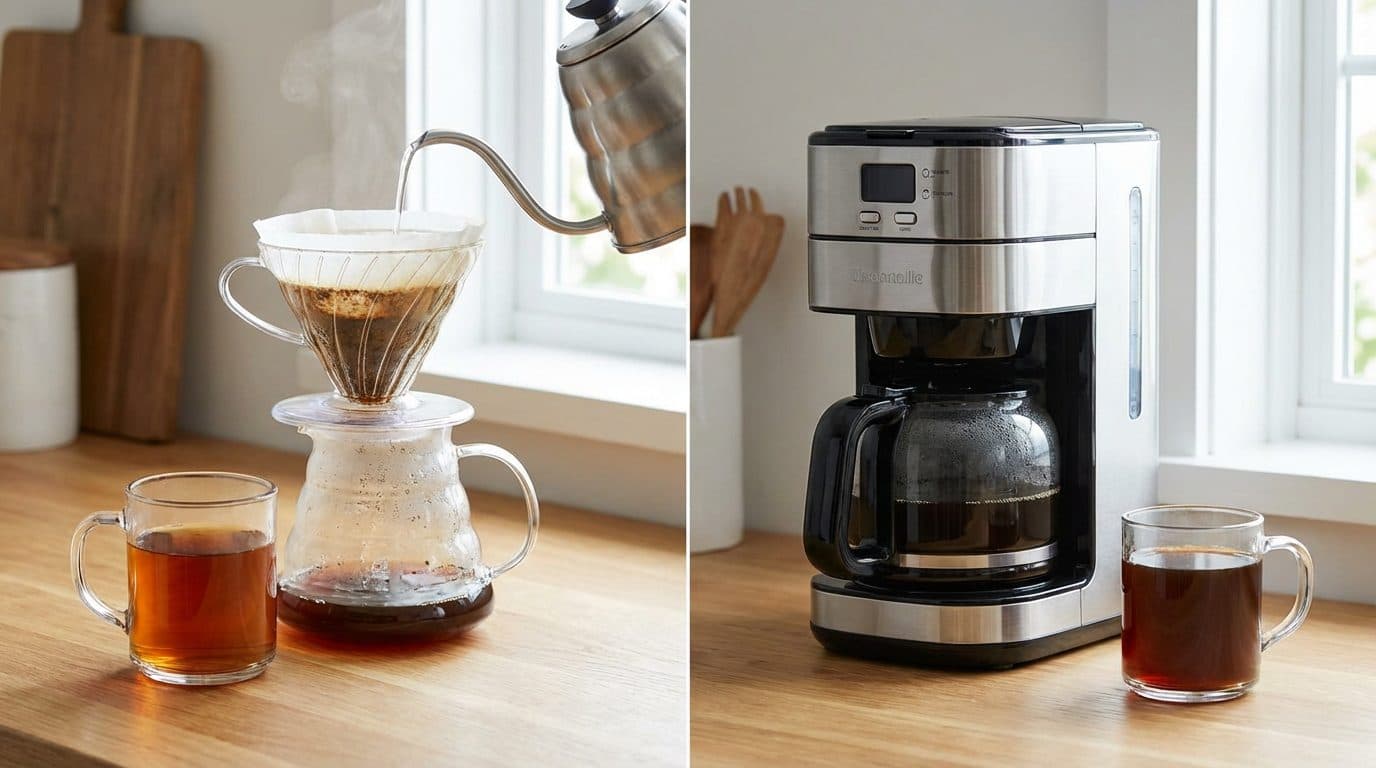
Table of Contents
- Quick Verdict: Pour-Over Takes the Crown for Clean Coffee
- What Does "Clean Coffee" Actually Mean?
- Factors That Affect Coffee Cleanliness
- Pour-Over Coffee: The Case for Manual Brewing
- How Pour-Over Delivers Cleaner Coffee
- Pros of Pour-Over Brewing
- Cons of Pour-Over Brewing
- Who Is Pour-Over For?
- Who Is Pour-Over NOT For?
- Drip Machine Coffee: Convenience Meets Consistency
- How Drip Machines Handle Extraction
- Pros of Drip Machines
- Cons of Drip Machines
- Who Is a Drip Machine For?
- Who Is a Drip Machine NOT For?
- Pour-Over vs Drip Machine: Head-to-Head Comparison
- Flavor Clarity and Cleanliness
- Consistency
- Time and Effort
- Cost Comparison
- Scalability
- Tips for Getting Cleaner Coffee from Either Method
- Frequently Asked Questions
- Is pour-over coffee healthier than drip coffee?
- Why does my drip coffee taste bitter?
- Can I use the same coffee for pour-over and drip?
- How do I make drip coffee taste more like pour-over?
- Is pour-over worth the extra effort?
- Conclusion: Which Method Should You Choose?
You’ve probably stood in your kitchen, staring at your coffee setup, wondering if you’re actually getting the best cup possible. It’s a question that haunts many home coffee lovers: does pour-over really make cleaner, better-tasting coffee than a drip machine? Or is that just coffee snob talk? The pour-over vs drip machine debate has been brewing for years, and if you’re trying to figure out which method delivers that crisp, clean coffee experience at home, you’re in the right place.
In this guide, I’ll break down exactly how these two brewing methods compare when it comes to producing clean-tasting coffee. We’ll look at extraction, flavor clarity, convenience, and which one actually belongs in your kitchen. Life is too short for bad coffee, so let’s make sure you’re brewing the good stuff.
Quick Verdict: Pour-Over Takes the Crown for Clean Coffee
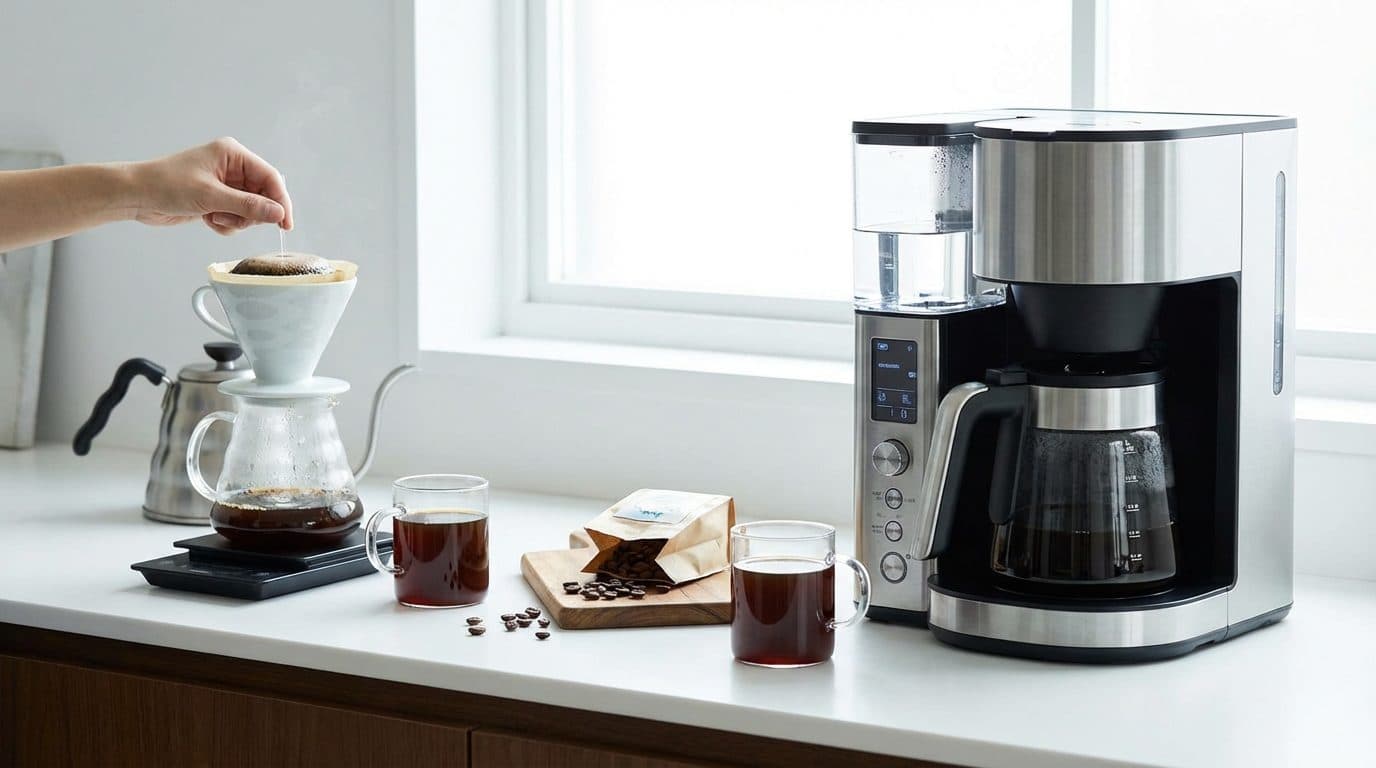
If your top priority is the cleanest, most nuanced cup of coffee, pour-over wins. The manual control over water temperature, pour rate, and bloom time allows you to extract flavors with precision that most drip machines simply can’t match. You’ll taste more of the coffee’s origin characteristics and less of the muddy, over-extracted notes that can creep into machine-brewed coffee.
That said, drip machines have come a long way. High-end models with SCA certification can produce impressively clean cups with zero effort. So the real answer depends on what you value more: ultimate flavor clarity or morning convenience.
| Factor | Pour-Over | Drip Machine |
|---|---|---|
| Flavor Clarity | Excellent | Good to Very Good |
| Control Over Brewing | Complete | Limited |
| Convenience | Low | High |
| Learning Curve | Moderate | Minimal |
| Cost to Start | $20–$50 | $30–$300+ |
What Does “Clean Coffee” Actually Mean?
Before we dive deeper into pour-over vs drip machine comparisons, let’s clarify what we’re chasing here. When coffee people talk about “clean” coffee, they’re not talking about hygiene. Clean coffee refers to a cup where individual flavor notes are distinct and easy to identify. There’s no muddiness, no bitter aftertaste clinging to your palate, and no oily residue coating your tongue.
In short, clean coffee means clarity. You can taste the fruity brightness of an Ethiopian bean or the chocolatey depth of a Colombian roast without those flavors getting lost in a murky mess.
Factors That Affect Coffee Cleanliness
- Filter type: Paper filters remove oils and fine particles, producing cleaner cups than metal filters.
- Water temperature: Optimal brewing happens between 195–205°F (90–96°C). Too hot extracts bitter compounds; too cool leaves coffee sour and weak.
- Extraction time: Over-extraction pulls out harsh tannins; under-extraction leaves you with thin, acidic coffee.
- Grind consistency: Uneven grounds lead to uneven extraction, muddying the flavor.
Both pour-over and drip machines can produce clean coffee, but they approach these variables very differently. That’s where the real comparison begins.
Pour-Over Coffee: The Case for Manual Brewing
Pour-over brewing puts you in the driver’s seat. You control every variable—water temperature, pour speed, bloom time, and total brew time. This hands-on approach is exactly why pour-over devotees swear by the method for achieving clean, complex cups.
How Pour-Over Delivers Cleaner Coffee
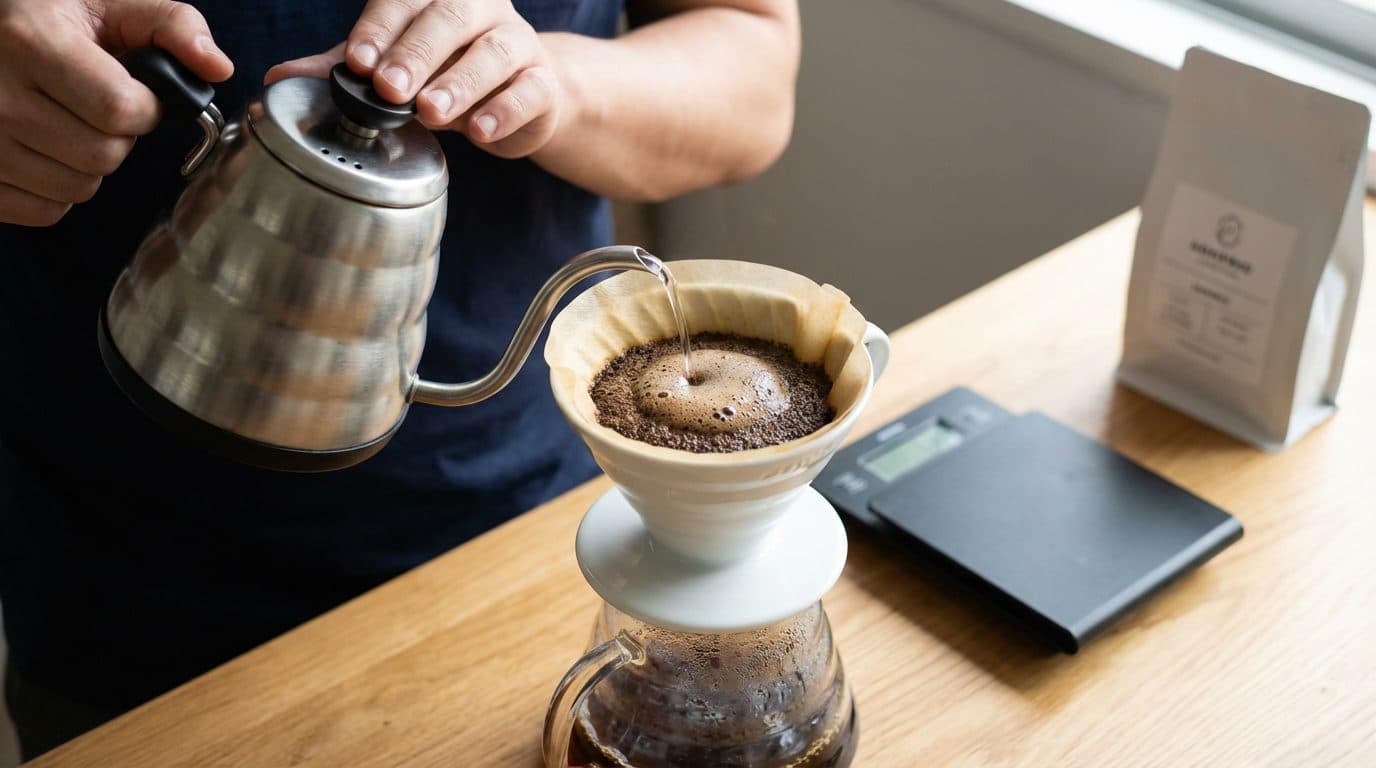
When you pour water manually over coffee grounds, you can adjust your technique in real time. Notice the bloom isn’t expanding much? Your coffee might be stale. See the water draining too fast? Your grind is probably too coarse. This feedback loop helps you dial in the perfect extraction.
I’ve found that the slow, controlled pour allows water to saturate grounds evenly. There’s no channeling (where water finds shortcuts through the coffee bed), which means every particle contributes equally to the final cup. The result? A remarkably balanced, clean brew.
Popular pour-over devices like the Hario V60, Chemex, and Kalita Wave all use paper filters. These trap oils and micro-fines that would otherwise make your coffee taste heavier or grittier. The Chemex, with its thick bonded filters, produces an especially crisp cup that highlights delicate floral and fruity notes.
Pros of Pour-Over Brewing
- Maximum control over every brewing variable
- Produces exceptionally clean, nuanced flavors
- Affordable equipment (a basic setup costs under $50)
- No electricity needed—great for travel or camping
- Meditative, enjoyable ritual for coffee lovers
Cons of Pour-Over Brewing
- Requires 4–6 minutes of active attention
- Learning curve to master technique
- Typically makes only 1–2 cups at a time
- Need a separate kettle (gooseneck preferred)
- Inconsistent results until you develop your skills
Who Is Pour-Over For?
Pour-over is ideal if you genuinely enjoy the process of making coffee. If tasting subtle origin flavors excites you, and you don’t mind spending a few extra minutes each morning, this method will reward your efforts with exceptional cups.
Who Is Pour-Over NOT For?
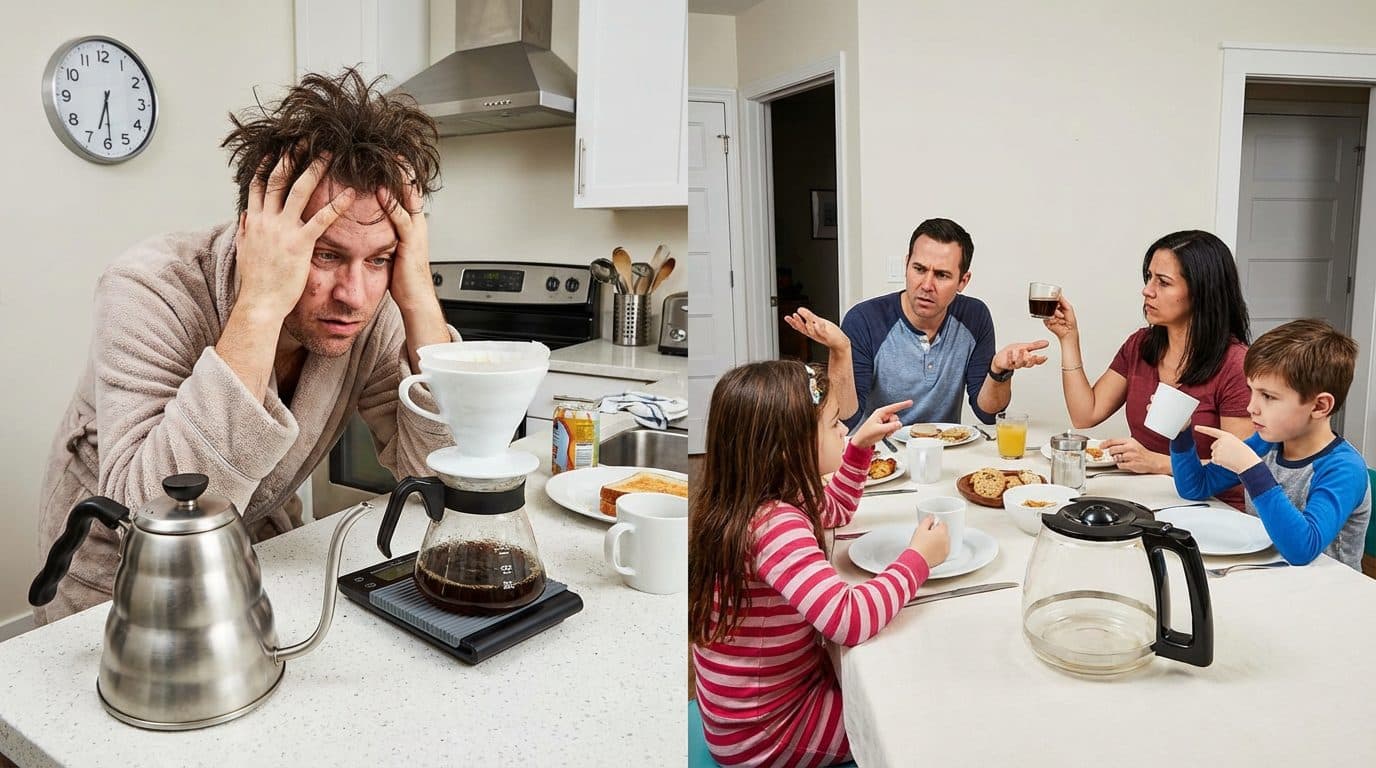
If you need coffee immediately after waking up and the idea of weighing beans sounds exhausting, pour-over will frustrate you. It’s also not great for households where multiple people want coffee at the same time—unless you enjoy making five separate brews before breakfast.
Drip Machine Coffee: Convenience Meets Consistency
Automatic drip machines do the work for you. Add water, add grounds, press a button, and walk away. For busy mornings or households with multiple coffee drinkers, this convenience is hard to beat. But does convenience come at the cost of clean coffee?
How Drip Machines Handle Extraction
Standard drip machines spray hot water over a bed of coffee grounds, letting gravity pull the brewed coffee through a filter into a carafe. The challenge is that most machines don’t give you control over water temperature or spray pattern. Cheaper models often brew at temperatures below the optimal range, leading to under-extracted, sour coffee.
In my experience, the difference between a $30 drip machine and a $200 one is massive. Budget models tend to spray water unevenly, creating dry spots in the coffee bed where extraction barely happens. Premium machines with shower-head style spray heads saturate grounds more evenly, approaching pour-over quality.
Machines certified by the Specialty Coffee Association (SCA) meet strict brewing standards for water temperature, brew time, and extraction. If you’re shopping for a drip machine and want clean coffee, look for that SCA certification—it’s a reliable quality marker.
Pros of Drip Machines
- Completely hands-off brewing
- Brews large quantities (8–12 cups) at once
- Consistent results once dialed in
- Many models have programmable timers
- No technique required—just add coffee and water
Cons of Drip Machines
- Limited control over brewing variables
- Cheap models produce mediocre coffee
- Hot plates can scorch coffee left in the carafe
- Takes up counter space
- Requires electricity
Who Is a Drip Machine For?
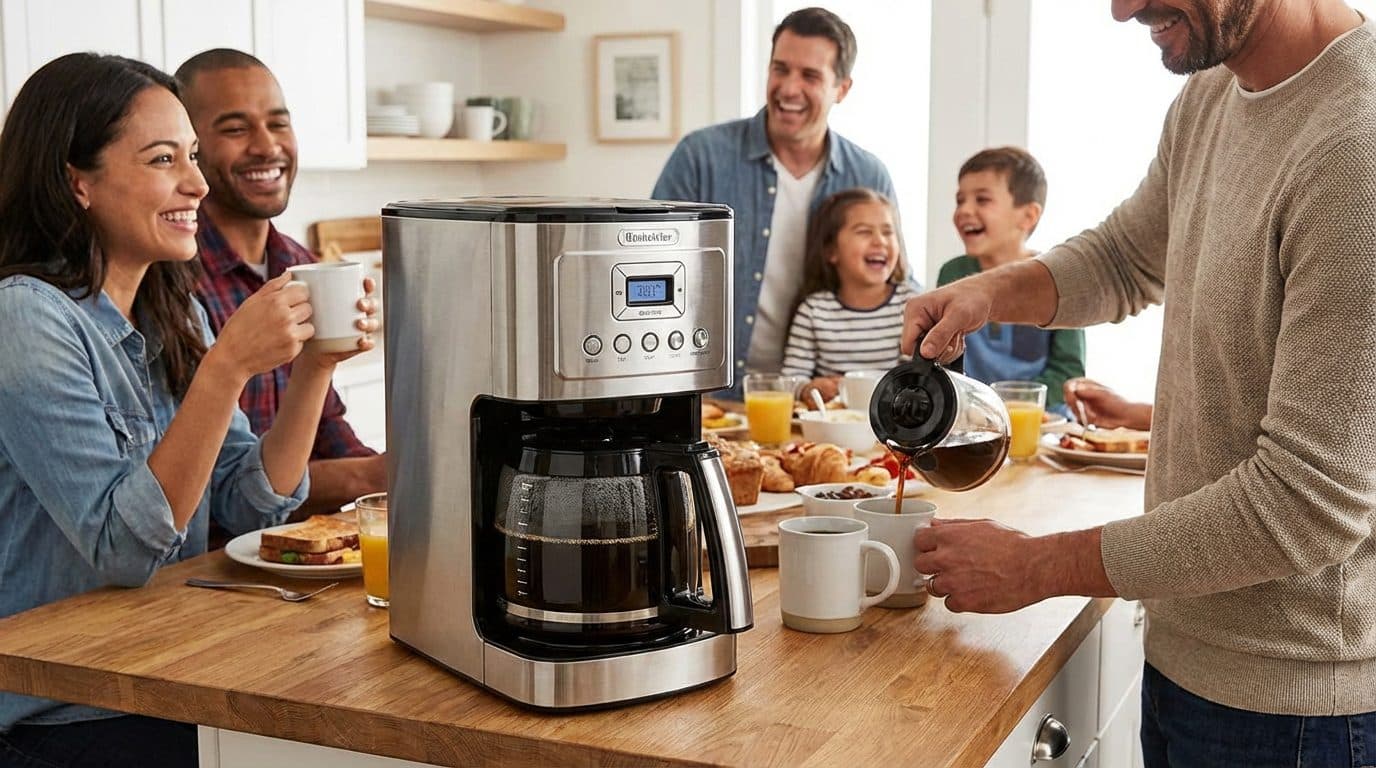
If you prioritize convenience above all else, a quality drip machine makes perfect sense. It’s also great for families or anyone who entertains regularly. Having a full carafe ready for guests beats making individual pour-overs while everyone waits.
Who Is a Drip Machine NOT For?
If you’re chasing the absolute cleanest, most refined cup and you enjoy being hands-on, a drip machine will feel limiting. Coffee enthusiasts who geek out over extraction ratios will likely find even premium machines somewhat frustrating.
Pour-Over vs Drip Machine: Head-to-Head Comparison
Let’s put these two methods side by side across the factors that matter most for brewing clean coffee at home.
Flavor Clarity and Cleanliness
Pour-over wins here. The manual control and paper filtration produce a cup with distinct, identifiable flavor notes. Drip machines can get close—especially SCA-certified models—but rarely match the precision of a well-executed pour-over. If you’ve ever tasted a Chemex brew next to a standard drip coffee, the difference in clarity is immediately obvious.
Consistency
This one goes to drip machines, assuming you’re using a decent model. Once you set your coffee-to-water ratio, the machine does the same thing every time. Pour-over results vary based on your technique, mood, and how much you’ve had to wake up yet. Beginners often struggle with consistency until they’ve logged dozens of brews.
Time and Effort
Drip machines require about 30 seconds of effort—just add coffee and water. Pour-over demands 4–6 minutes of active pouring, plus time to boil water and prep your equipment. On rushed mornings, that difference feels enormous.
Cost Comparison
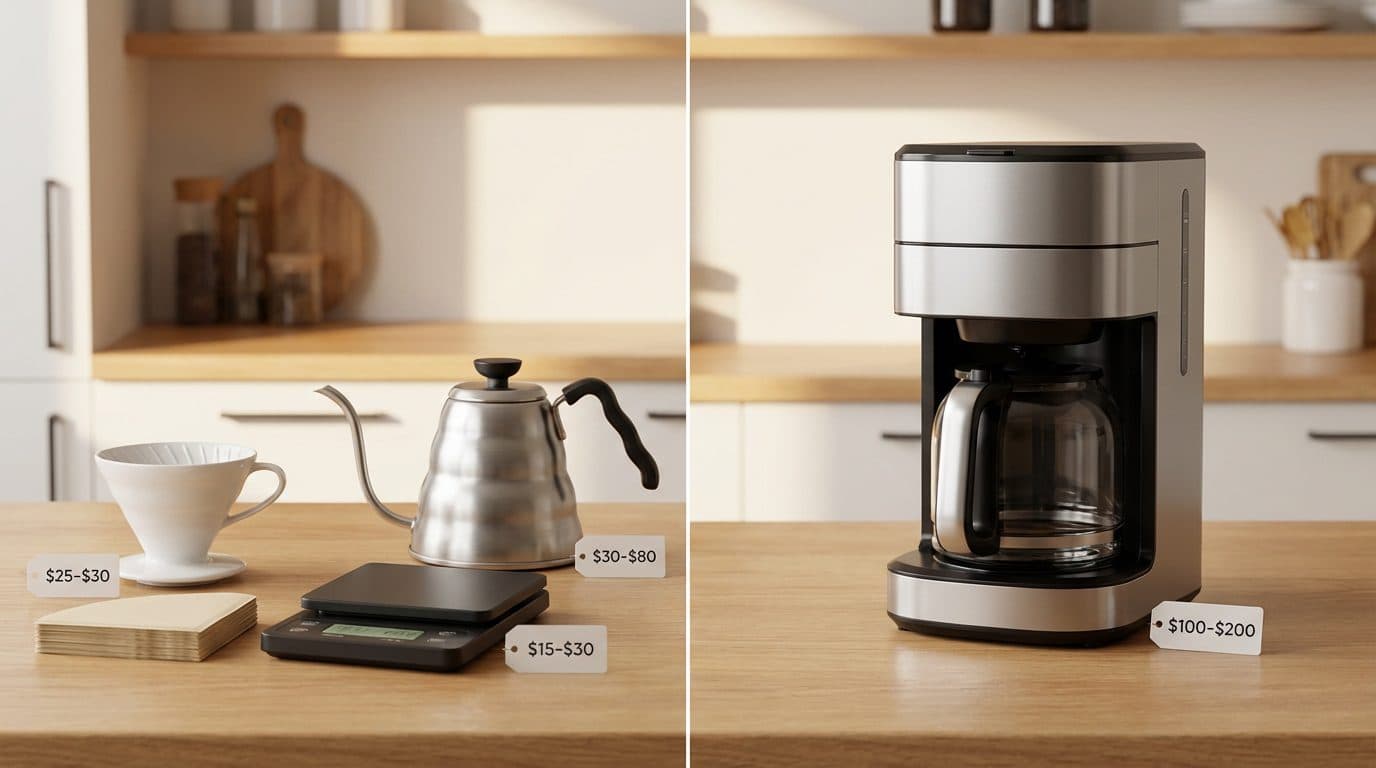
Basic pour-over setups cost less upfront. A Hario V60 with filters runs about $25–$30. However, you’ll want a gooseneck kettle ($30–$80) and a scale ($15–$30) for best results. A quality drip machine costs $100–$200, but that’s a one-time investment with no additional gear needed.
Scalability
Making coffee for a group? Drip machines handle volume effortlessly. Pour-over works best for 1–2 cups. Devices like the Chemex can brew larger batches, but the technique changes and brew times extend significantly.
Tips for Getting Cleaner Coffee from Either Method
Regardless of which brewing method you choose, these tips will help you achieve cleaner-tasting coffee:
- Use freshly roasted beans: Coffee peaks 7–21 days after roasting. Stale beans taste flat and muddy.
- Grind right before brewing: Pre-ground coffee loses aromatics quickly. A burr grinder makes a huge difference.
- Use filtered water: Tap water with chlorine or heavy minerals affects flavor. Filtered water lets the coffee shine.
- Rinse paper filters: A quick hot water rinse removes papery taste and preheats your brewer.
- Clean your equipment: Coffee oils build up and go rancid. Clean your brewer weekly for the freshest taste.
Barista Tip: If you’re using a drip machine, try pre-wetting the grounds before starting the brew cycle. This mini “bloom” helps release CO2 and improves extraction, mimicking one of pour-over’s advantages.
Frequently Asked Questions
Is pour-over coffee healthier than drip coffee?
Both methods produce similarly healthy coffee when using paper filters. Paper traps cafestol and kahweol, compounds linked to raised cholesterol. The main health difference comes from what you add—sugar, cream, flavored syrups—not the brewing method itself.
Why does my drip coffee taste bitter?
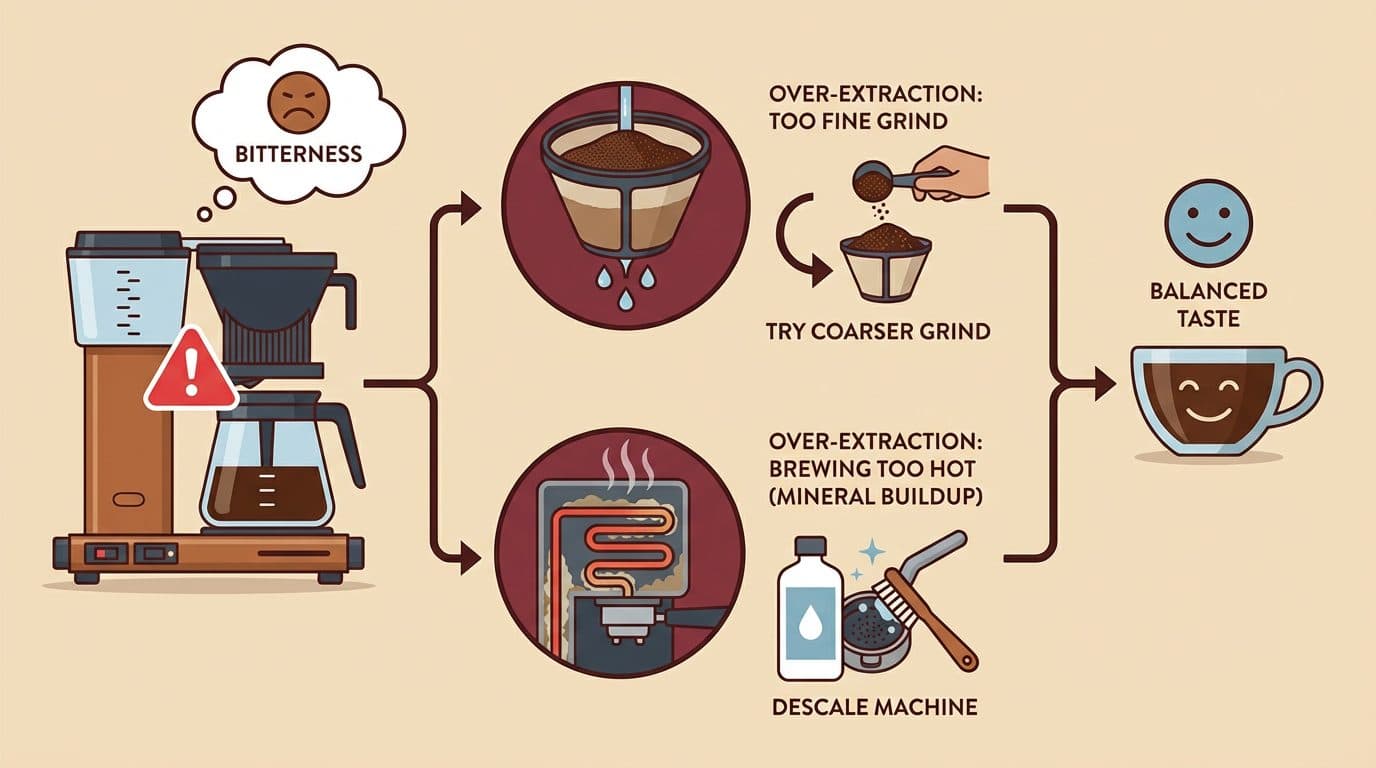
Bitterness usually indicates over-extraction. Your coffee might be ground too fine, or your machine might be brewing too hot. Try a coarser grind or check if your machine needs descaling—mineral buildup can cause overheating.
Can I use the same coffee for pour-over and drip?
Yes, but you may want different grind sizes. Pour-over typically uses a medium-fine grind, while drip machines work best with medium. Using the wrong grind leads to either weak or over-extracted coffee.
How do I make drip coffee taste more like pour-over?
Use freshly ground beans, filtered water, and a high-quality machine with good water distribution. Pre-wet your grounds before brewing, and don’t let coffee sit on a hot plate—use a thermal carafe instead.
Is pour-over worth the extra effort?
If you appreciate subtle coffee flavors and enjoy the brewing ritual, absolutely. If you just want caffeine quickly, a good drip machine serves you better. Neither choice is wrong—it’s about what fits your lifestyle.
Conclusion: Which Method Should You Choose?
The pour-over vs drip machine debate ultimately comes down to your priorities. For the cleanest, most nuanced coffee experience at home, pour-over remains the gold standard. The manual control lets you extract exactly what you want from your beans, producing cups with remarkable clarity and complexity.
But let’s be realistic: not everyone wants to perform a careful ritual every morning. A quality drip machine—especially one with SCA certification—can produce clean, enjoyable coffee with zero effort. For many households, that trade-off makes perfect sense.
My honest recommendation? If you’re serious about coffee, own both. Use pour-over on relaxed weekend mornings when you can savor the process. Let the drip machine handle busy weekdays when you need caffeine fast. Either way, start with fresh beans, filtered water, and clean equipment. Those fundamentals matter more than any single brewing method.
Now it’s time to brew. Pick your method, dial in your recipe, and enjoy that clean, delicious cup you’ve been chasing.


Comments