


Table of Contents
- Quick Verdict: Timemore C3
- Timemore C2 Overview: The Budget King
- What You Get With the C2
- Pros of the Timemore C2
- Cons of the Timemore C2
- Timemore C3 Overview: The Refined Upgrade
- What You Get With the C3
- Pros of the Timemore C3
- Cons of the Timemore C3
- Timemore C2 vs. C3: Head-to-Head Comparison
- Grind Quality and Consistency
- Adjustment Mechanism: The Real Difference
- Build Quality and Ergonomics
- Who Is Each Grinder For?
- The Timemore C2 Is For You If:
- The Timemore C2 Is NOT For You If:
- The Timemore C3 Is For You If:
- The Timemore C3 Is NOT For You If:
- Barista Tips for Getting the Best Results
- Conclusion and Final Recommendation
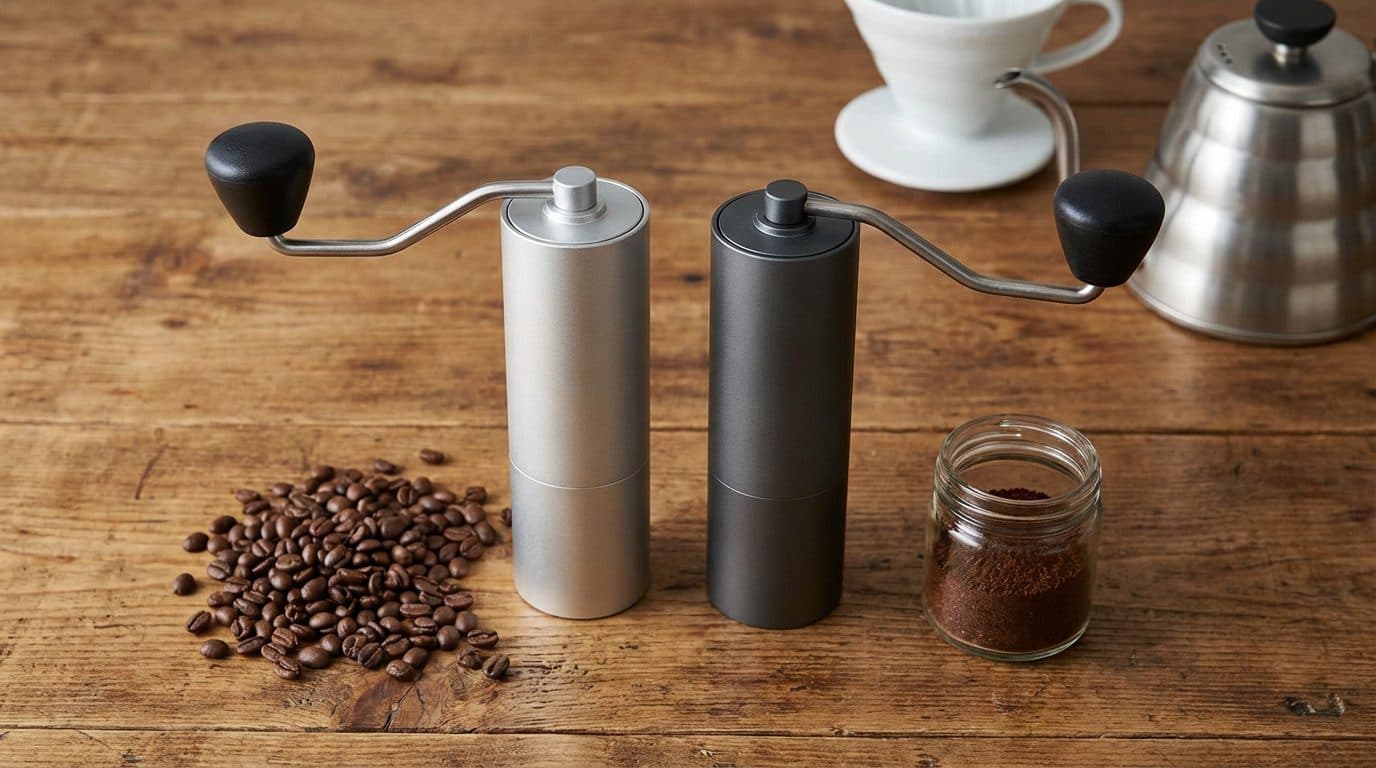
You’ve saved up for a quality hand grinder, done your research, and now you’re stuck between two of the most popular budget options on the market: the Timemore C2 and the Timemore C3. Trust me, I’ve been there. Both grinders promise cafe-quality grinds without destroying your wallet, but which one actually deserves a spot on your coffee station? If you’re wondering whether the C3’s upgrades justify the price bump over the beloved C2, you’re in the right place.
In this comparison, I’ll break down everything that matters: grind quality, build differences, ease of use, and value for money. By the end, you’ll know exactly which Timemore hand grinder matches your brewing style and budget.
Quick Verdict: Timemore C3
After grinding countless beans through both, the Timemore C3 takes the win for most home baristas. The improved external adjustment dial alone makes it worth the modest price increase. You get faster grind size changes, slightly better consistency, and a more refined user experience. That said, the C2 remains an incredible value if you’re on a tight budget and don’t mind the internal adjustment mechanism.
In short: the C3 is the better grinder, but the C2 is still a fantastic choice if saving money is your priority.
Timemore C2 Overview: The Budget King
The Timemore C2 has been the go-to recommendation for budget hand grinders for years, and for good reason. It delivers surprisingly consistent grinds for pour-over, French press, and even Moka pot brewing. I remember being genuinely shocked the first time I used one—the grind quality punched way above its price point.
What You Get With the C2
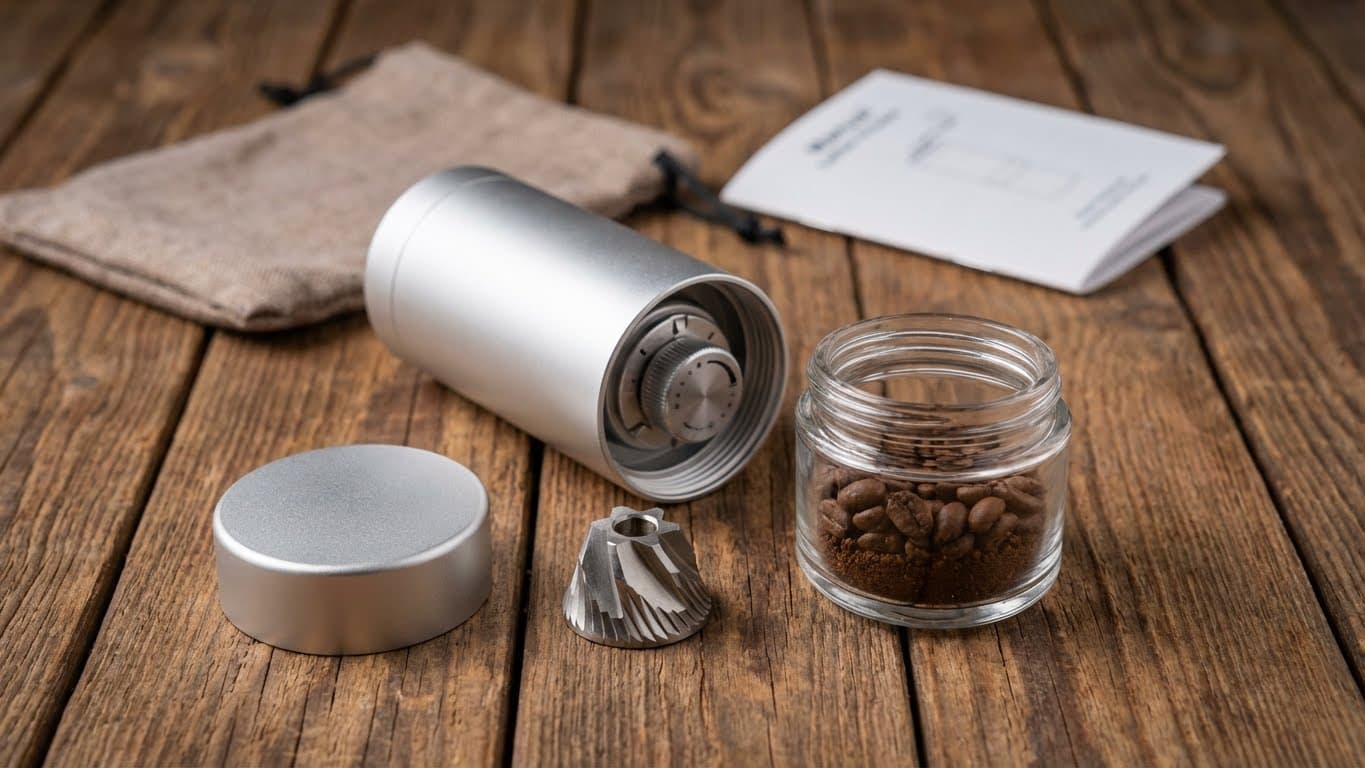
The C2 features Timemore’s signature 38mm stainless steel conical burrs, an aluminum body, and an internal stepped adjustment system. The capacity sits around 25 grams, which is perfect for single servings or a small Chemex batch. The build feels solid despite being lightweight, making it great for travel.
- Burrs: 38mm stainless steel conical burrs
- Adjustment: Internal stepped dial (requires removing top parts)
- Capacity: Approximately 25 grams
- Weight: Around 430 grams
- Best for: Pour-over, French press, Aeropress, Moka pot
Pros of the Timemore C2
- Exceptional value for money—hard to beat at this price
- Smooth grinding action with minimal effort
- Consistent grinds for filter and immersion brewing
- Lightweight and travel-friendly
- Durable aluminum construction
Cons of the Timemore C2
- Internal adjustment is fiddly and slow to change
- No click numbers visible—you have to count by feel
- Not ideal for espresso (lacks fine adjustment precision)
- Grounds can get stuck in threads occasionally
A common scenario I see: someone buys the C2, loves it for their morning pour-over ritual, but gets frustrated when switching between French press on weekends and V60 on weekdays. That internal dial means removing the handle, top bearing, and burr assembly just to adjust. Life is too short for that kind of hassle every morning.
Timemore C3 Overview: The Refined Upgrade
The Timemore C3 launched as the direct successor to the C2, addressing the main pain points users had been complaining about for years. The headline feature? An external adjustment dial. This seemingly small change transforms the daily grinding experience.
What You Get With the C3
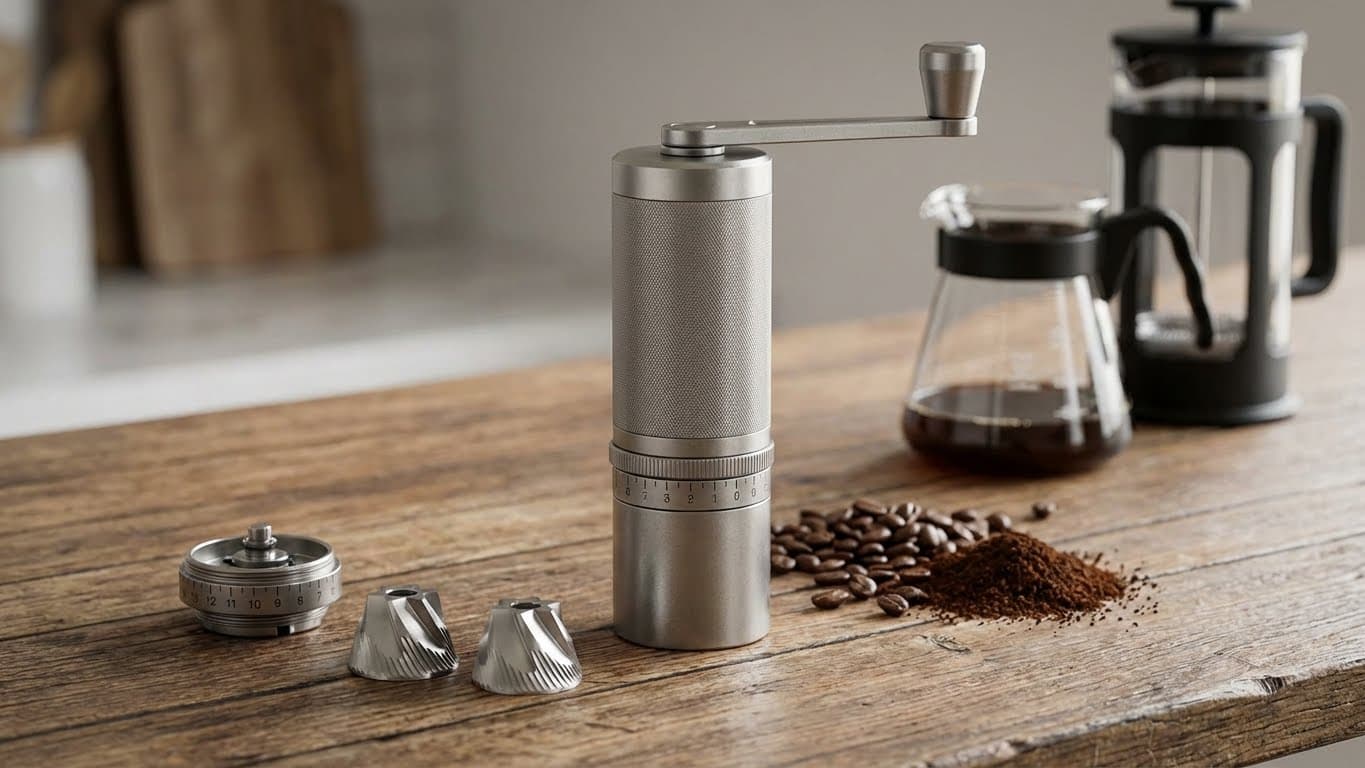
The C3 keeps the same excellent 38mm stainless steel burrs but adds an external numbered adjustment dial at the bottom. You also get a slightly updated design with improved ergonomics and a folding handle option on some models. The capacity and overall dimensions remain nearly identical to the C2.
- Burrs: 38mm stainless steel conical burrs (same as C2)
- Adjustment: External stepped dial with visible numbers
- Capacity: Approximately 25 grams
- Weight: Around 450 grams
- Best for: Pour-over, French press, Aeropress, Moka pot
Pros of the Timemore C3
- External adjustment dial—switch grind sizes in seconds
- Numbered settings for repeatable results
- Same excellent burr quality as the C2
- Slightly improved grind consistency in my testing
- More ergonomic handle design
- Still very affordable for the quality
Cons of the Timemore C3
- Costs more than the C2 (typically $15–25 extra)
- Still not great for espresso-fine grinds
- Adjustment dial can feel slightly loose on some units
- Minor weight increase
In my experience, the C3 feels like what the C2 should have been from the start. That external dial isn’t just convenient—it actually encourages you to experiment with grind sizes. When adjusting takes two seconds instead of a minute, you’re more likely to dial in that perfect cup.
Timemore C2 vs. C3: Head-to-Head Comparison
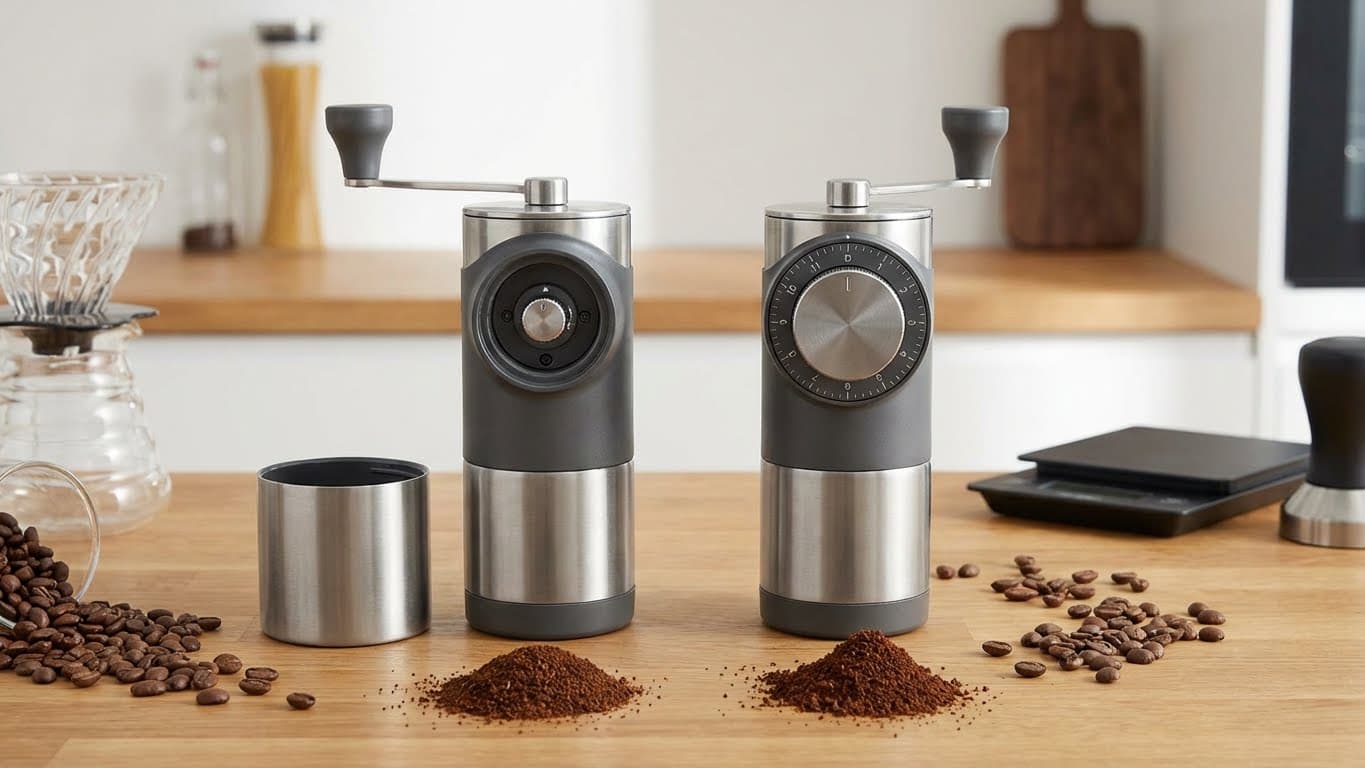
Let’s put these grinders side by side and examine the key differences that actually matter for your daily brew.
| Feature | Timemore C2 | Timemore C3 |
|---|---|---|
| Burr Size | 38mm stainless steel | 38mm stainless steel |
| Adjustment Type | Internal (hidden) | External (numbered dial) |
| Grind Consistency | Very good | Very good to excellent |
| Ease of Adjustment | Slow and fiddly | Quick and intuitive |
| Price Range | $50–65 | $65–85 |
| Best For | Single brew method users | Multi-method experimenters |
| Travel-Friendly | Yes | Yes |
Grind Quality and Consistency
Here’s the truth: the grind quality difference is subtle. Both use the same burr set, so the fundamental performance is nearly identical. However, I’ve noticed the C3 produces slightly more uniform particles, especially in the medium range. This could be due to tighter manufacturing tolerances or the more stable adjustment mechanism.
For pour-over and French press, both deliver excellent results. Neither excels at true espresso grinds—you’ll want to look at the Timemore C2 Max or 1Zpresso models for that. But for filter coffee, Aeropress, and immersion brewing, these grinders punch well above their weight class.
Adjustment Mechanism: The Real Difference
This is where the C3 shines. With the C2, changing your grind size means:
- Removing the handle
- Taking off the top cap
- Pulling out the burr assembly
- Rotating the internal dial (while counting clicks)
- Reassembling everything
With the C3, you simply turn the numbered dial at the bottom. Done. In my experience, this makes you more likely to actually adjust your grind when switching beans or brewing methods. That leads to better-tasting coffee overall.
Build Quality and Ergonomics
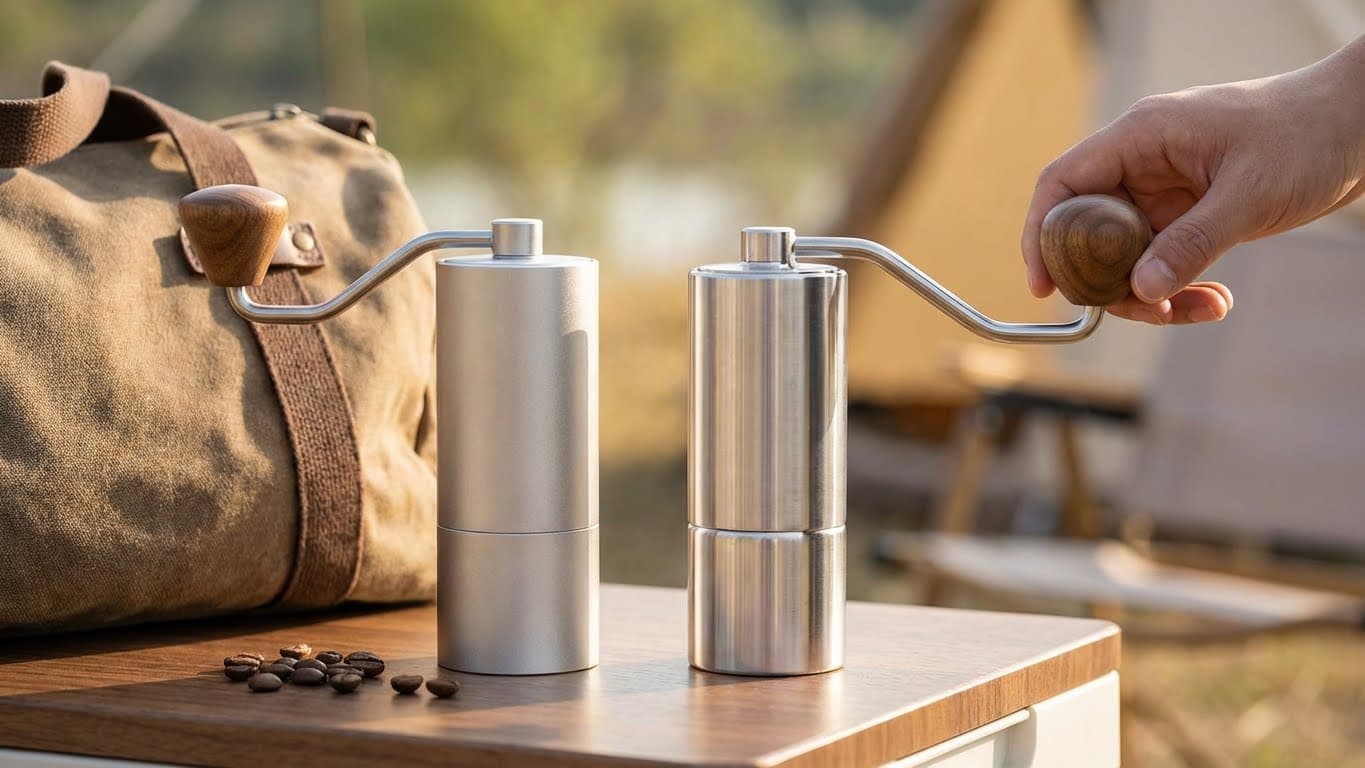
Both grinders feel well-made. The aluminum bodies are sturdy, and the bearings spin smoothly. The C3 has a slightly more refined feel overall, with a handle that sits more comfortably during extended grinding sessions. The weight difference is negligible—about 20 grams—so both remain excellent travel companions.
Who Is Each Grinder For?
The Timemore C2 Is For You If:
- Budget is your primary concern
- You use one brewing method consistently
- You rarely need to change grind settings
- You’re just starting your specialty coffee journey
- You want a reliable travel grinder
The Timemore C2 Is NOT For You If:
- You frequently switch between brewing methods
- Convenience matters more than saving $20
- You want to experiment with different grind sizes regularly
- You need espresso-capable grinding
The Timemore C3 Is For You If:
- You value quick, easy grind adjustments
- You use multiple brew methods throughout the week
- Repeatable settings matter to you
- You want the best user experience in this price range
- You’re willing to spend a bit more for convenience
The Timemore C3 Is NOT For You If:
- You’re on the tightest possible budget
- You only use one grind setting ever
- You need true espresso grinding capability
Barista Tips for Getting the Best Results
Whichever grinder you choose, these tips will help you maximize your grinding experience:
- Tip: For pour-over, start around 18–22 clicks on either grinder. Adjust finer if your brew tastes sour (under-extracted) or coarser if it’s bitter (over-extracted).
- Tip: Give the grinder a few shakes while grinding to prevent grounds from sticking.
- Tip: Clean your burrs monthly with a dry brush to maintain consistency.
- Tip: Grind beans within two weeks of roasting for optimal flavor.
I’ve found that both grinders perform best with light-to-medium roasts. Very dark, oily beans can clog the burrs and require more frequent cleaning.
Conclusion and Final Recommendation
Both the Timemore C2 and C3 represent exceptional value in the budget hand grinder market. For the money, you’re getting professional-quality burrs and solid construction that will last years with proper care.
My recommendation? Go with the Timemore C3 if your budget allows. The external adjustment dial transforms the daily grinding experience, making it faster, more intuitive, and more enjoyable. That extra $15–25 pays for itself in convenience within the first month of use.
However, if every dollar counts, the C2 remains a phenomenal choice. It grinds just as well—you’ll simply need more patience when changing settings. Many home baristas have used their C2 happily for years without upgrading.
Ready to upgrade your coffee game? Check the latest prices on Amazon for both the Timemore C2 and Timemore C3, and start enjoying fresher, better-tasting coffee tomorrow. Your taste buds will thank you.


Comments