


Table of Contents
- Why Hotplates Aren't the Best Solution
- Invest in a Quality Thermal Carafe or Mug
- Thermal Carafes for Batch Brewing
- Insulated Travel Mugs for Personal Use
- Preheat Everything Before Brewing
- How to Preheat Your Coffee Gear
- Use a Mug Warmer (The Smarter Alternative)
- Brewing Habits That Help Keep Coffee Hot
- Brew Smaller Batches More Often
- Use Hotter Water
- Cover Your Cup
- Alternative Methods Worth Trying
- Candle Warmers
- Immersion Heaters
- The Towel Wrap Method
- Frequently Asked Questions
- How long does coffee stay hot in a thermal mug?
- Does reheating coffee ruin the taste?
- What temperature should coffee be served at?
- Can I use a slow cooker to keep coffee hot?
- Why does my coffee get cold so fast?
- Summary and Next Steps
You’ve just brewed the perfect cup of coffee—rich aroma, ideal temperature, that first sip is pure bliss. But ten minutes later? It’s lukewarm at best. If you’ve ever wondered how to keep coffee hot without a hotplate, you’re not alone. Hotplates can scorch your brew, leaving it bitter and unpleasant. The good news is there are plenty of simple, effective ways to maintain that perfect drinking temperature without sacrificing flavor.
In this guide, I’ll walk you through practical methods to keep your coffee hot longer, from gear upgrades to brewing habits you can start using today. Whether you’re a slow sipper or someone who gets distracted mid-cup, these tips will help you enjoy every last drop at the right temperature.
Why Hotplates Aren’t the Best Solution
Before diving into alternatives, let’s talk about why you might want to ditch the hotplate in the first place. Traditional coffee maker hotplates keep your carafe warm, but they also continue to “cook” your coffee. This ongoing heat exposure breaks down the delicate oils and compounds that give coffee its nuanced flavors.
After about 20-30 minutes on a hotplate, most coffee develops that burnt, bitter taste we all recognize. In my experience, coffee left on a hotplate for an hour tastes nothing like the fresh brew you started with. It’s essentially a different (and much worse) beverage.
Key Takeaway: Keeping coffee hot is important, but the method matters just as much as the temperature itself.
Invest in a Quality Thermal Carafe or Mug
The single most effective way to keep coffee hot without a hotplate is using vacuum-insulated containers. These work by creating a near-vacuum between two walls of stainless steel, dramatically reducing heat transfer.
Thermal Carafes for Batch Brewing
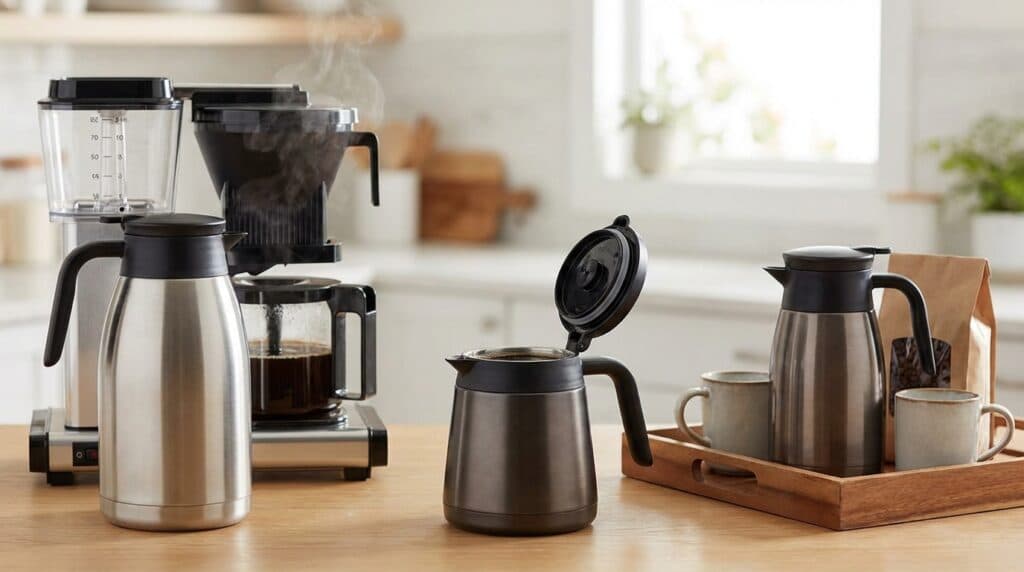
If you brew a full pot in the morning, a thermal carafe is your best friend. Many drip coffee makers now come with thermal carafes instead of glass pots, but you can also purchase standalone versions. A good thermal carafe can keep coffee hot for 4-6 hours without any external heat source.
- Look for double-walled stainless steel construction
- Choose a carafe with a tight-sealing lid to minimize heat escape
- Opt for a size that matches your typical brewing volume
Insulated Travel Mugs for Personal Use
For single servings, a quality insulated mug is a game-changer. I’ve found that a well-made travel mug can keep coffee drinkably hot for 3-4 hours, even longer if you keep the lid closed between sips.
Barista Tip: Not all travel mugs are created equal. Look for mugs with copper or ceramic lining, which can help preserve flavor while maintaining temperature. Avoid plastic interiors if possible—they can absorb odors and affect taste over time.
Preheat Everything Before Brewing
Here’s a trick that makes a surprising difference: preheat your mug, carafe, or thermos before pouring your coffee. When you pour hot coffee into a cold container, the liquid immediately loses heat to warm up the vessel itself. This can drop your coffee temperature by 10-15 degrees right off the bat.
How to Preheat Your Coffee Gear
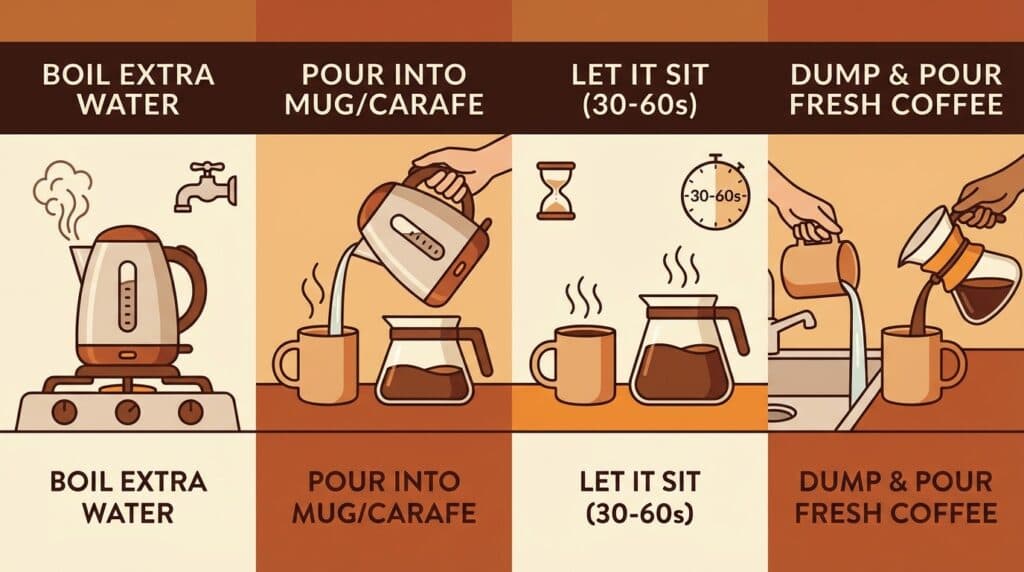
- Boil some extra water while brewing your coffee
- Pour the hot water into your mug or carafe
- Let it sit for 30-60 seconds
- Dump the water and immediately pour in your fresh coffee
This simple habit takes less than a minute but can extend your coffee’s optimal drinking window significantly. I do this every morning, and the difference is noticeable—especially on cold winter days when ceramic mugs feel like ice blocks.
Barista Tip: If you’re using a French press, preheat it too. The glass or stainless steel body will steal heat from your brewing water otherwise, potentially affecting extraction.
Use a Mug Warmer (The Smarter Alternative)
If you really want an electric solution but don’t like hotplates, consider a dedicated mug warmer. These small devices sit on your desk and provide gentle, consistent heat directly to your cup. Unlike hotplates, they’re designed for single servings and typically operate at lower temperatures.
- Most mug warmers maintain temperatures between 130-140°F (55-60°C)
- They work best with flat-bottomed ceramic or glass mugs
- Many models have auto-shutoff features for safety
The key advantage here is control. You’re warming a single cup rather than an entire carafe, and you can remove your mug whenever you want. Some newer models even let you set your preferred temperature via smartphone apps.
Who is this for? Desk workers, slow sippers, and anyone who tends to forget about their coffee for extended periods.
Who is this NOT for? Minimalists who don’t want another gadget, or those who prefer to drink their coffee within 15-20 minutes of brewing.
Brewing Habits That Help Keep Coffee Hot
Sometimes the best solutions don’t require buying anything new. A few adjustments to your brewing routine can help maintain temperature naturally.
Brew Smaller Batches More Often
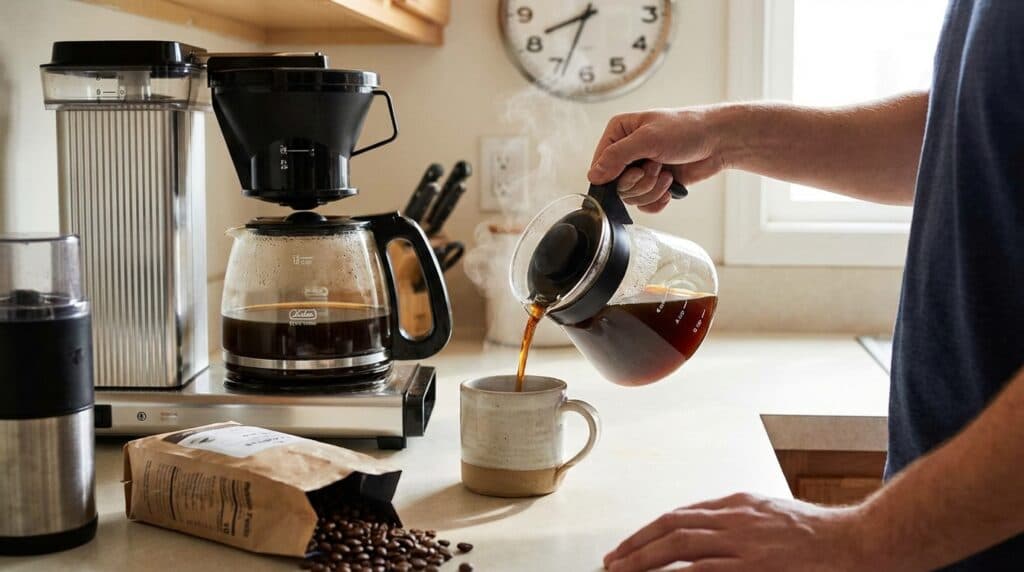
Instead of making a full 12-cup pot that sits around getting cold, try brewing smaller amounts more frequently. A 4-cup batch that you’ll finish in 30 minutes will taste better than a large pot that lingers for two hours.
Use Hotter Water
If your coffee cools too quickly, your brewing water might not be hot enough to begin with. The ideal brewing temperature is between 195-205°F (90-96°C). Water that’s too cool will result in under-extracted coffee that also starts at a lower temperature.
Cover Your Cup
This sounds almost too simple, but covering your mug makes a real difference. Heat escapes primarily through the top surface of your coffee. A simple lid, saucer, or even a small plate placed over your mug can slow heat loss considerably.
- Silicone mug covers are inexpensive and reusable
- A matching saucer works perfectly for traditional coffee cups
- Some ceramic mugs come with fitted lids designed for this purpose
Alternative Methods Worth Trying
Beyond the main strategies above, here are a few other approaches that can help keep your coffee at the perfect temperature.
Candle Warmers
A candle warmer plate (the kind designed to melt wax melts) can double as a gentle mug warmer. They provide low, consistent heat without the intensity of a hotplate. Just make sure your mug has a flat bottom and isn’t too tall.
Immersion Heaters
Small immersion heaters designed for beverages can reheat a cup of coffee in a pinch. While this doesn’t prevent cooling, it offers a quick fix when your coffee has gone cold. Use these sparingly though—repeatedly reheating coffee degrades its flavor.
The Towel Wrap Method
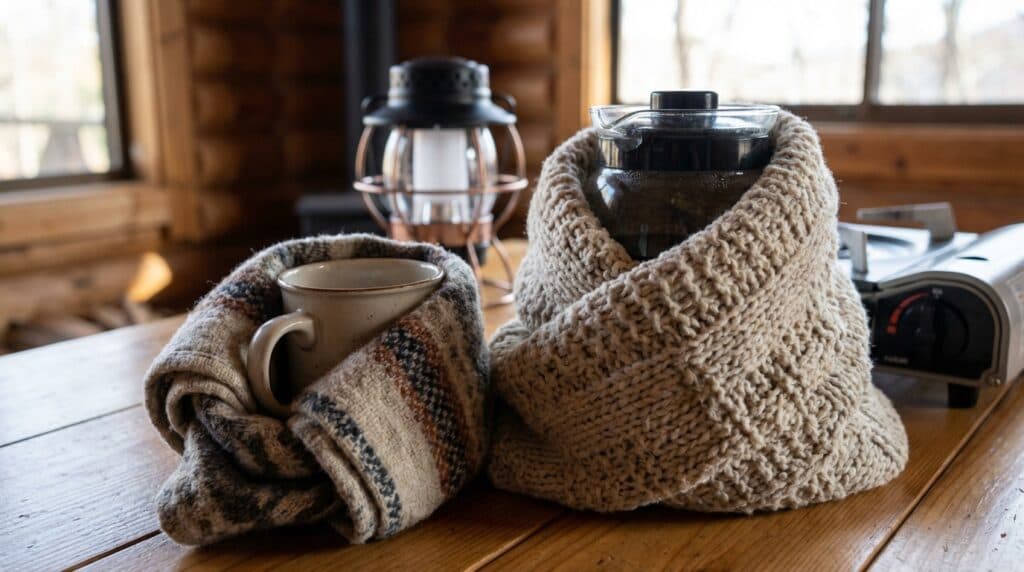
In a pinch, wrapping your mug or carafe in a thick towel provides extra insulation. It’s not elegant, but it works. I’ve used this method while camping or during power outages, and it can add 20-30 minutes to your coffee’s hot window.
Frequently Asked Questions
How long does coffee stay hot in a thermal mug?
A quality vacuum-insulated thermal mug can keep coffee hot for 3-6 hours, depending on the brand and construction. Higher-end models with better insulation tend to perform at the longer end of that range. Keeping the lid closed between sips significantly extends this time.
Does reheating coffee ruin the taste?
Reheating coffee in the microwave or on the stove does affect flavor, though how much depends on the coffee and how long it’s been sitting. The reheating process can make coffee taste more bitter and flat. For best results, it’s better to keep coffee hot from the start rather than letting it cool and reheating.
What temperature should coffee be served at?
Most coffee experts recommend serving temperatures between 155-175°F (68-80°C). This range is hot enough to be satisfying but cool enough to actually taste the flavors. Coffee served too hot can scald your tongue and mask subtle tasting notes.
Can I use a slow cooker to keep coffee hot?
While technically possible, slow cookers aren’t ideal for keeping coffee hot. Even on the lowest setting, most slow cookers run hotter than optimal coffee serving temperature. This can lead to the same burnt taste you’d get from a hotplate. A thermal carafe is a much better choice.
Why does my coffee get cold so fast?
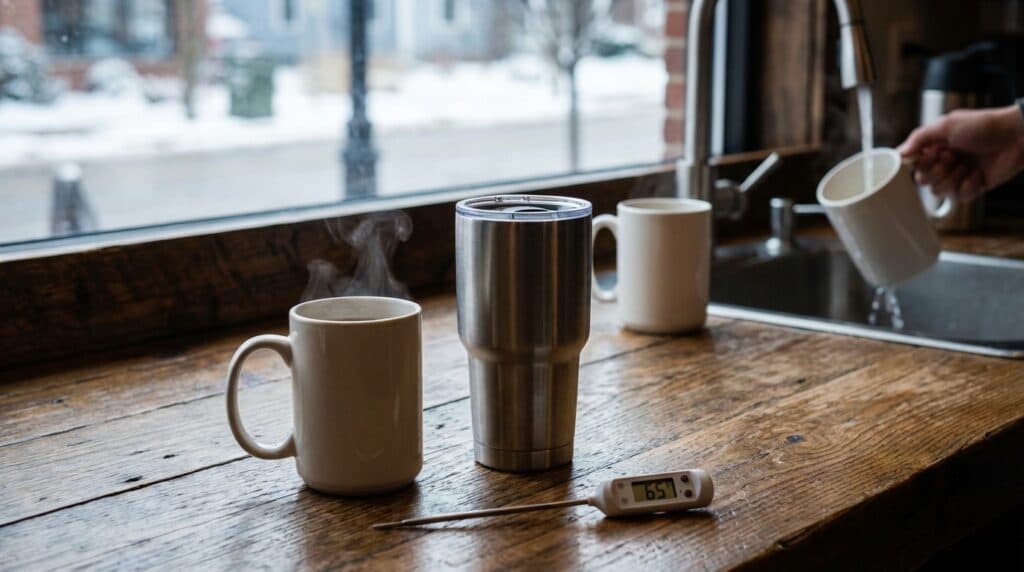
Several factors affect how quickly coffee cools: the material and thickness of your mug, ambient room temperature, whether the mug was preheated, and how much surface area is exposed to air. Thin ceramic mugs in cold rooms with no lid will lose heat fastest. Switching to an insulated mug and preheating can dramatically slow this process.
Summary and Next Steps
Keeping coffee hot without a hotplate isn’t just possible—it’s actually better for your brew’s flavor. The key strategies to remember are: invest in quality insulated containers, always preheat your gear, brew smaller batches, and keep your cup covered when you’re not drinking.
Life is too short for bad coffee, and that includes lukewarm coffee that’s lost its magic. Start with one or two of these methods and see what works best for your routine. I’d suggest beginning with preheating your mug—it costs nothing and takes seconds. From there, consider upgrading to a thermal carafe or insulated mug if you haven’t already. Your taste buds will thank you for every perfectly-temperatured sip.

Comments