


Table of Contents
- Why an Evening Coffee Ritual With Decaf Actually Makes Sense
- The Comfort Factor
- Choosing the Right Decaf Beans for Your Evening Ritual
- Understanding Decaffeination Methods
- Flavor Profiles That Work for Evening
- What You'll Need for Your Evening Coffee Ritual
- Gear List
- Optional Additions
- The Best Brewing Methods for Evening Decaf Coffee
- French Press: The Classic Comfort Choice
- Pour-Over: The Meditative Method
- Moka Pot: For Espresso-Style Comfort
- Creating the Perfect Atmosphere for Your Evening Ritual
- Lighting Matters More Than You Think
- Choose Your Spot Intentionally
- Put the Phone Away (Seriously)
- Sample Evening Coffee Rituals to Inspire You
- The Quick Wind-Down (15 minutes)
- The Extended Slow-Down (30-45 minutes)
- The Social Ritual (for couples or roommates)
- Frequently Asked Questions
- Is decaf coffee really caffeine-free?
- Will decaf taste as good as regular coffee?
- What's the best time to start an evening coffee ritual?
- Can I add flavors or syrups to my evening decaf?
- How do I keep this ritual consistent?
- Make It Yours Without Overcomplicating It
A cozy evening coffee ritual works best when it is simple: good decaf, a calm brewing method, warm light, and a clear stop point for the day. It should feel like a pause, not another task on the list.
Decaf is the practical way to keep the flavor and comfort of coffee without taking in a full serving of caffeine late at night. It is not completely caffeine-free, so sensitive sleepers should still be careful. But with the right beans and timing, an evening decaf can become a small routine that helps you slow down after dinner.
Why an Evening Coffee Ritual With Decaf Actually Makes Sense
Evening coffee sounds wrong if you associate coffee only with alarms, commutes, and getting through email. But the ritual is separate from the stimulant. Grinding beans, heating water, choosing a mug, and sitting still for ten minutes can be useful even when the drink is decaf.
The caveat matters: decaf still contains some caffeine. The FDA notes that decaffeinated coffee has had most caffeine removed, not all of it, and caffeine sensitivity varies. If you know even small amounts affect your sleep, keep the ritual earlier or choose an herbal drink instead.
The Comfort Factor

The appeal is not complicated:
- Aroma: Coffee smell can make the kitchen feel settled and familiar.
- Warmth: A hot mug gives your hands something grounding to hold.
- Repetition: Repeated steps help mark the shift from active day to quieter evening.
- Taste: Good decaf can be genuinely enjoyable, not a punishment cup.
Modern decaf is much better than its old reputation suggests, especially when roasters start with good coffee and use careful processing. The ritual fails when the beans taste flat, so bean choice matters.
Choosing the Right Decaf Beans for Your Evening Ritual
Buy decaf the same way you would buy regular coffee: check roast date, process, origin, and tasting notes. Avoid treating decaf as an afterthought. If the bag gives you no information beyond "decaf," it may still be fine, but you are guessing.
Understanding Decaffeination Methods
Different decaffeination methods affect flavor, cost, and how people feel about the process. Here is a practical breakdown:
| Method | Flavor Impact | Solvent Used? | Best For |
|---|---|---|---|
| Swiss Water Process | Excellent flavor retention | No added solvent | Most careful home brewers |
| CO2 Process | Very good flavor | No added solvent | Premium beans |
| Methylene Chloride | Good, but can taste flat | Yes | Budget options |
| Ethyl Acetate (Sugarcane) | Slightly sweet notes | Ethyl acetate | Those who like sweetness |
Buying note: Swiss Water, Mountain Water, CO2, and sugarcane-process decafs are often strong choices for flavor-focused home brewing. Solvent-processed decaf is regulated; for example, FDA rules limit methylene chloride residues in decaf coffee. If that method bothers you, choose a water-process or CO2 bag instead of worrying over every cup.
Flavor Profiles That Work for Evening

Evening coffee usually feels better with comfort notes: cocoa, toasted nuts, brown sugar, caramel, vanilla, or gentle stone fruit. Medium roasts are a good starting point because they keep sweetness without becoming too smoky.
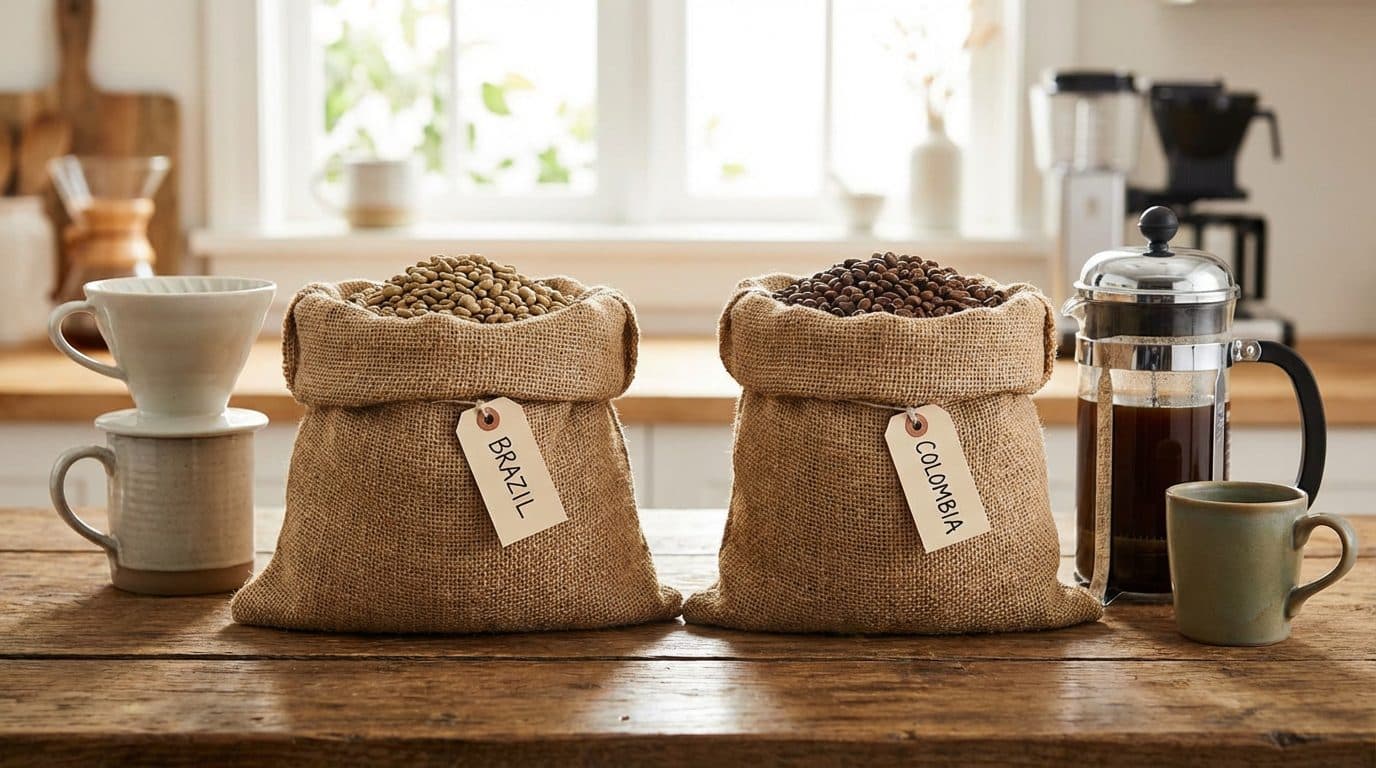
- Choose Colombian, Brazilian, or Central American decafs for chocolate and nut notes.
- Try sugarcane-process decaf if you like a little sweetness.
- Be cautious with very bright citrusy decafs at night; they can taste sharp after dinner.
What You’ll Need for Your Evening Coffee Ritual
You do not need a new setup. Use gear you already like, then remove friction so the routine is easy to repeat.
Gear List
- Quality decaf beans – Freshly roasted if possible, with the process listed on the bag
- A burr grinder – Hand or electric; fresh grinding helps decaf taste less flat
- A brewer – French press, pour-over, AeroPress, or Moka pot
- A kettle – Gooseneck helps pour-over, but any kettle works for immersion methods
- A favorite mug – Small detail, real effect
- A chosen seat – Chair, couch corner, balcony, or kitchen table
Optional Additions
- Warm milk, oat milk, or a small amount of cream
- Dark chocolate, biscotti, or a small cookie
- Warm lamp light or a candle
- Instrumental music, a book, or a notebook
The Best Brewing Methods for Evening Decaf Coffee
Evening brewing should match your energy level. If you are tired, use AeroPress. If you want a slower pause, use French press or pour-over. If you want a small strong drink with milk, use a Moka pot.
French Press: The Classic Comfort Choice

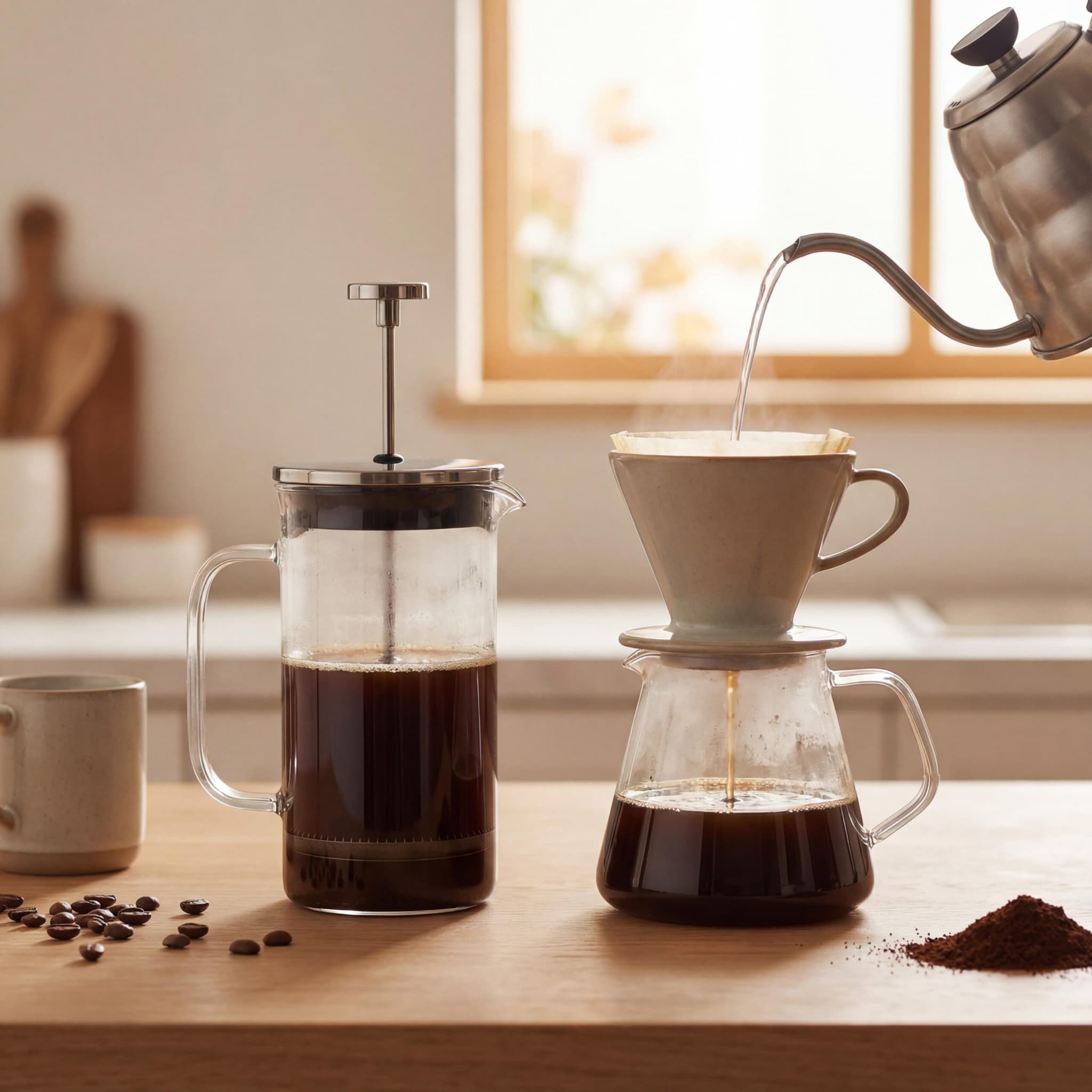
French press is ideal when you want a richer, heavier cup. It is also slow enough to feel like a pause without requiring much precision.
How to do it:
- Heat water, then let it rest briefly off boil.
- Use coarsely ground decaf, around 1g coffee to 15g water.
- Add water, stir gently, and place the lid on without plunging.
- Wait 4 minutes. Use the wait as the actual ritual, not dead time.
- Press slowly and pour everything out so it does not keep extracting.
Taste profile: Full-bodied, round, and good with milk or a small dessert.
Pour-Over: The Meditative Method
Pour-over is best when you want the brewing itself to hold your attention. The slow circles, bloom, and steady pour make it hard to multitask. That is the point.
Brewing tip: Decaf beans are often more brittle and can produce fines. If the brew stalls or tastes bitter, go a little coarser. If it tastes thin, tighten the grind or use slightly more coffee.
Moka Pot: For Espresso-Style Comfort

A Moka pot gives you a concentrated decaf that works well with warm milk. It is a good choice if a full mug feels like too much liquid late at night.
Keep the heat moderate and remove the pot when the stream turns pale. Burnt Moka pot coffee is harsh at any hour, but it is especially unwelcome before bed.
Creating the Perfect Atmosphere for Your Evening Ritual
The room matters because the drink is only one part of the cue. Make the setting different from work mode.
Lighting Matters More Than You Think
Harsh overhead light keeps the kitchen feeling like a task zone. For a calmer setup, use:
- Warm table lamps
- Low under-cabinet lighting
- A candle placed safely away from clutter
- Dimmed overhead lights if that is what you have
Choose Your Spot Intentionally
Do not drink the evening cup at your desk if your desk already means work. Choose one chair, one side of the couch, or one small table. Repeating the same location helps the habit feel settled.
It helps to keep the setup visible but small: mug, coaster, book, lamp. If the ritual requires cleaning half the kitchen first, you will skip it on the nights when you need it most.
Put the Phone Away (Seriously)
Scrolling turns the ritual into background liquid. Try ten phone-free minutes. If that feels unrealistic, put the phone across the room and set one timer. The goal is not perfection; it is a real pause.
Sample Evening Coffee Rituals to Inspire You
Use these as templates, then simplify them until they fit your real evening.
The Quick Wind-Down (15 minutes)
- Brew one AeroPress or small pour-over.
- Add warm milk or oat milk if you want softness.
- Sit somewhere away from your work area.
- Drink without screens until the mug is finished.
The Extended Slow-Down (30-45 minutes)

- Use French press or Moka pot.
- Pair the cup with dark chocolate or a small cookie.
- Read, journal, stretch, or listen to quiet music.
- Keep the lighting warm and low.
The Social Ritual (for couples or roommates)
- Brew enough decaf to share.
- Keep phones off the table.
- Use the cup as a cue to talk through the day.
- End the ritual before it turns into another late-night hangout.
Frequently Asked Questions
Is decaf coffee really caffeine-free?
No. Decaf usually contains a small amount of caffeine. The exact amount depends on beans, serving size, and process. If caffeine affects your sleep strongly, drink decaf earlier in the evening or skip it at night.
Serving size matters here. A small 5-ounce cup and a large mug are not the same caffeine exposure, even with decaf. If sleep is the priority, keep the portion modest while you learn your tolerance.
Will decaf taste as good as regular coffee?
Good decaf can taste excellent, but cheap decaf often tastes flat. Buy from roasters that list the decaf process, roast date, and tasting notes. Fresh grinding also helps a lot.
What’s the best time to start an evening coffee ritual?
Two to three hours before bed is a safer window for many people. If you are very caffeine-sensitive, move it earlier. The ritual should support sleep, not test your tolerance.
Can I add flavors or syrups to my evening decaf?
Yes. Vanilla, cinnamon, nutmeg, cocoa, and a small amount of maple syrup all work well. Keep sugar moderate if sweet drinks close to bed bother your stomach or sleep.
How do I keep this ritual consistent?
Attach it to something you already do, such as clearing dinner or turning off work notifications. Keep the steps short enough that you will still do them on a tired night.
Make It Yours Without Overcomplicating It
Start with one bag of quality decaf, one brewing method, and one repeatable time. Do that for a week before adding candles, playlists, desserts, or new gear. A ritual that depends on perfect conditions will disappear quickly.
A useful first week looks boring on purpose: same mug, same chair, same decaf, same time. Once the habit feels automatic, adjust the details. Maybe you prefer a shorter cup. Maybe milk makes it feel too dessert-like. Maybe pour-over is too much work on weekdays and perfect on Sunday.
The best evening decaf routine is quiet, repeatable, and honest about caffeine sensitivity. If it helps you slow down and still sleep well, keep it. If it makes you restless, move it earlier or change the drink. The point is the pause.


Comments