


Table of Contents
- What You'll Need to Brew Turkish Coffee
- Essential Equipment
- Ingredients
- Step-by-Step Guide to Brewing Turkish Coffee
- Step 1: Measure Your Water
- Step 2: Add Coffee and Sugar
- Step 3: Apply Low Heat
- Step 4: Watch for the Foam
- Step 5: Catch the Rise
- Step 6: Pour and Serve
- Common Mistakes When Brewing Turkish Coffee
- Using the Wrong Grind Size
- Heating Too Fast
- Stirring During Brewing
- Drinking Too Soon
- Tips for Perfecting Your Turkish Coffee
- Taste Profile: What to Expect
- Choosing the Right Cezve for Home Brewing
- Material Matters
- Size Considerations
- Frequently Asked Questions
- Can I make Turkish coffee without a cezve?
- Why doesn't my Turkish coffee have foam?
- Should I filter the grounds out of Turkish coffee?
- How much caffeine is in Turkish coffee?
- Can I reheat Turkish coffee?
- Conclusion and Your Next Step
Have you ever wondered why Turkish coffee has captivated people for over 500 years? This isn’t just a brewing method—it’s a ritual, a form of art, and in my experience, one of the most rewarding ways to enjoy coffee at home. The thick, aromatic brew with its signature foam and grounds settled at the bottom offers an experience no other method can replicate.
In this guide, you’ll learn exactly how to brew Turkish coffee at home using the traditional step-by-step approach. I’ll walk you through everything from selecting the right equipment to mastering the foam (called “kaimaki” or “köpük”) that separates a good cup from a great one. Whether you’re completely new to this style or looking to refine your technique, you’ll find practical tips that actually work.
What You’ll Need to Brew Turkish Coffee
Before we start brewing, let’s gather everything you need. Turkish coffee requires specific tools, but don’t worry—the investment is minimal compared to most brewing setups.
Essential Equipment
- Cezve (Ibrik): The traditional small pot with a long handle, typically made of copper or brass. Stainless steel works too, but copper heats more evenly.
- Small demitasse cups: Traditional Turkish coffee cups hold about 2-3 ounces (60-90 ml).
- Small spoon: For stirring and measuring.
- Heat source: A stovetop works perfectly. Some purists use hot sand, but that’s optional.
Ingredients
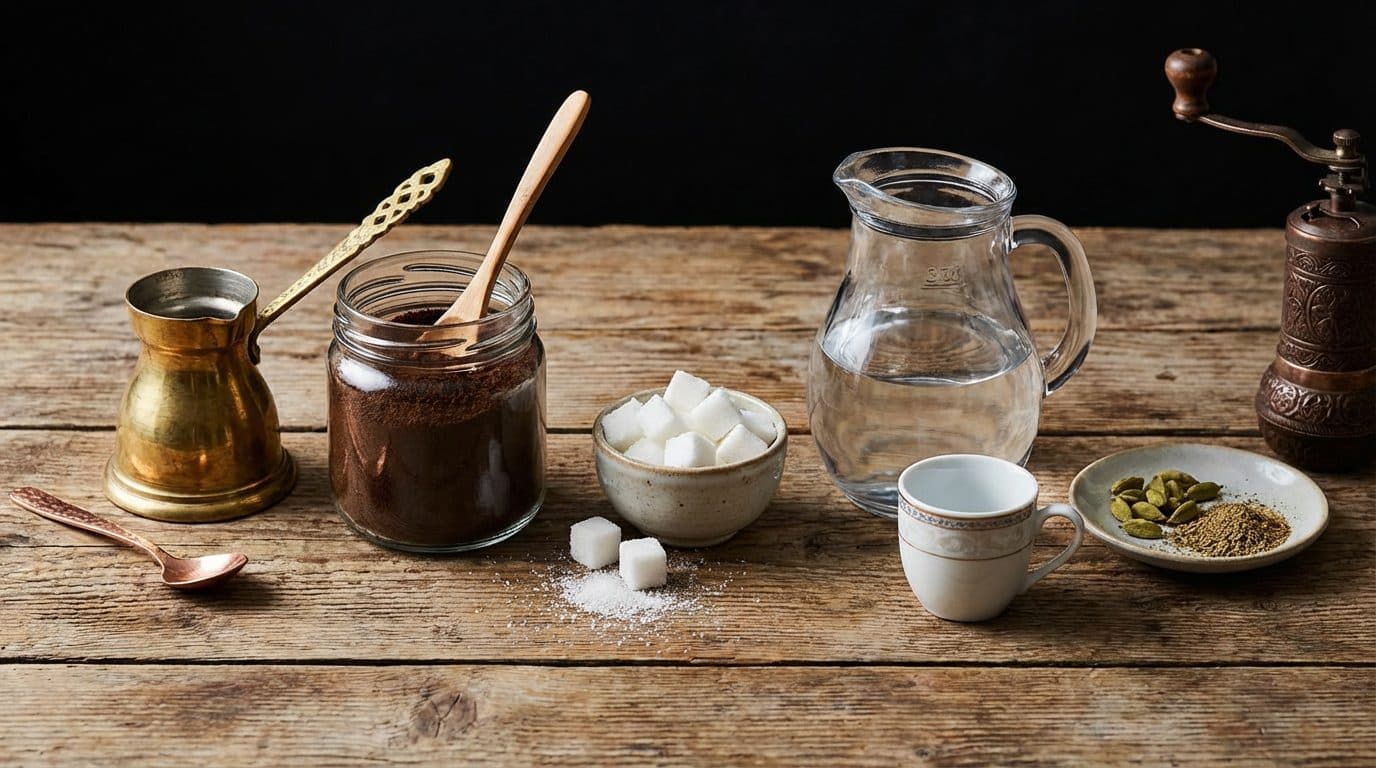
- Turkish coffee grounds: Extra-fine, powder-like consistency (finer than espresso). Pre-ground Turkish coffee is widely available, or you can grind your own if you have a capable burr grinder.
- Cold, filtered water: Use your demitasse cup to measure the water directly.
- Sugar (optional): Added before brewing, not after. Traditional options are unsweetened (sade), slightly sweet (az şekerli), medium sweet (orta), or sweet (şekerli).
- Cardamom (optional): A pinch adds a beautiful aromatic dimension, popular in Middle Eastern preparations.
Barista Tip: The quality of your water matters more than you might think. Hard water can make your coffee taste flat and interfere with foam formation. I’ve found that filtered water produces noticeably better results.
Step-by-Step Guide to Brewing Turkish Coffee
Now for the fun part. Follow these steps carefully, and you’ll be rewarded with an authentic, delicious cup of Turkish coffee.
Step 1: Measure Your Water
Fill your demitasse cup with cold water and pour it into your cezve. This ensures you brew exactly the right amount. For multiple servings, simply multiply—one cup of water per person.
Step 2: Add Coffee and Sugar
Add one heaping teaspoon of Turkish coffee per cup of water. If you want sugar, add it now—about one teaspoon for medium sweetness. Stir everything together gently while the water is still cold. This is crucial because you won’t stir once the brewing begins.
Step 3: Apply Low Heat
Place your cezve on the stovetop over low heat. I can’t stress this enough: low heat is essential. High heat will cause the coffee to boil too quickly, destroying the foam and resulting in a bitter, harsh cup. Patience is your best friend here.
Step 4: Watch for the Foam
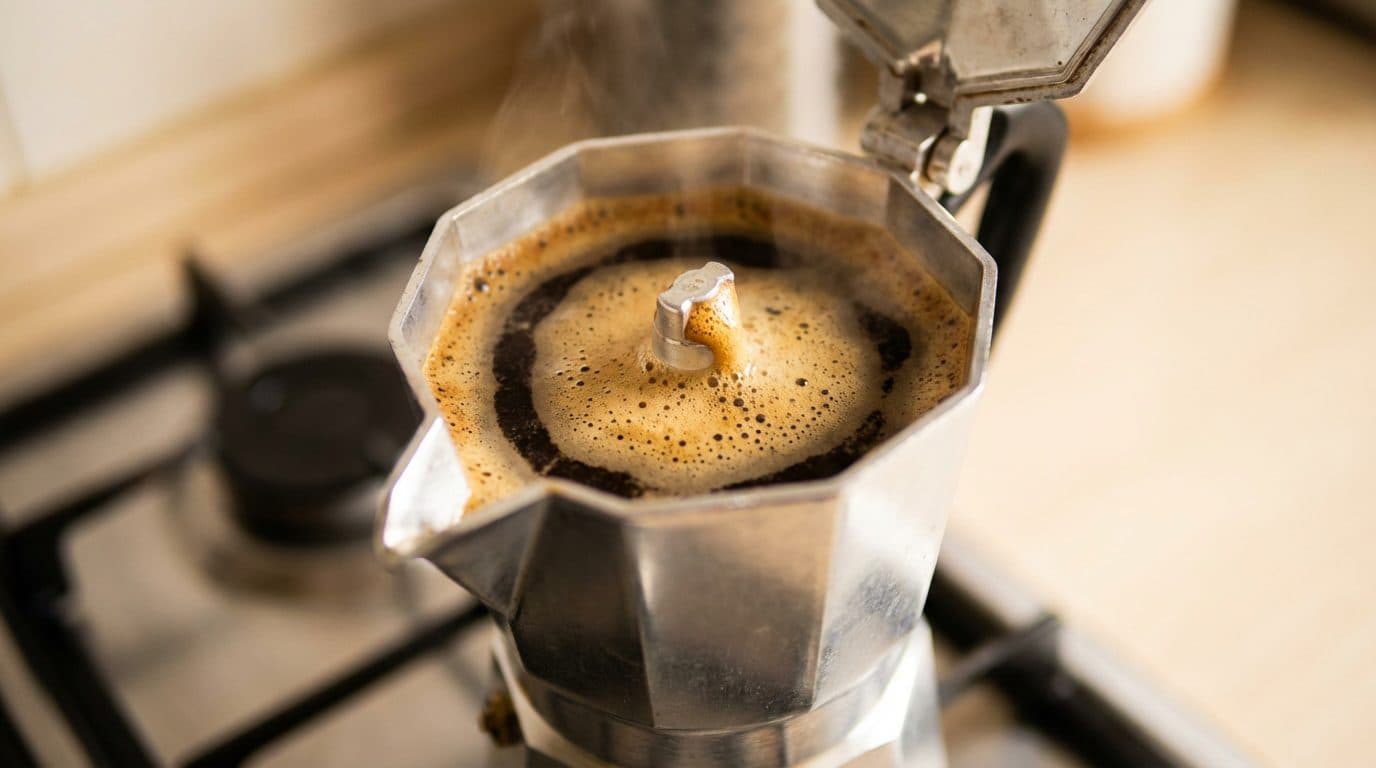
As the coffee heats, you’ll notice a dark foam ring forming around the edges. This foam will gradually move toward the center and begin to rise. Keep your eyes on it—this happens faster than you’d expect.
Step 5: Catch the Rise
Just as the foam rises and threatens to overflow, remove the cezve from heat immediately. Don’t let it boil over. Some people like to return it to heat and let it rise again (two or three times total), which can intensify the flavor. In my experience, one rise produces a smoother cup, while multiple rises create a stronger, more intense brew.
Step 6: Pour and Serve
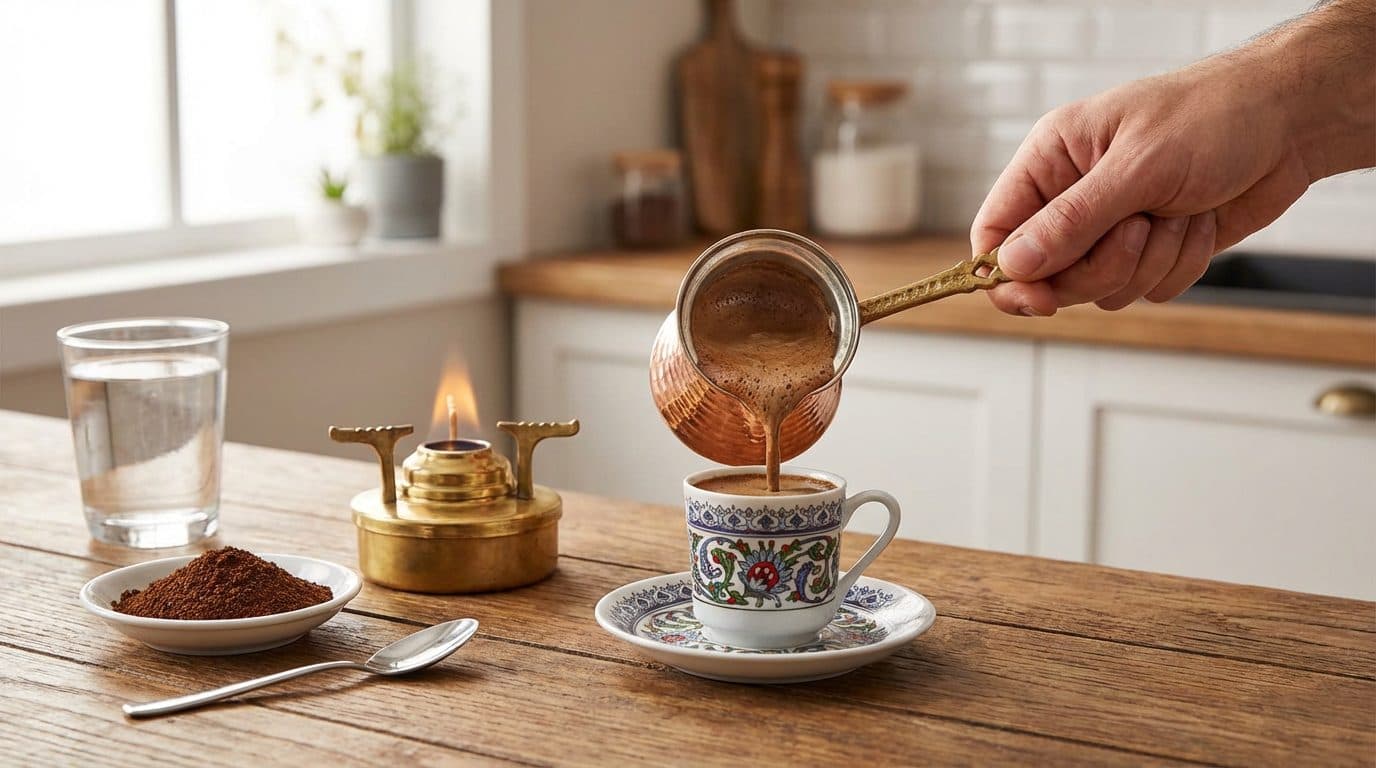
Pour slowly into your demitasse cup, distributing the foam evenly. If serving multiple people, pour a little into each cup first to share the foam, then go back and fill each cup. Let the coffee sit for about a minute before drinking—this allows the grounds to settle at the bottom.
| Step | Time | What to Watch For |
|---|---|---|
| Heating | 3-4 minutes | Slow, gentle heat; no bubbles yet |
| Foam Formation | 1-2 minutes | Dark ring forms around edges |
| Rising | 30 seconds | Foam moves to center and rises quickly |
| Settling | 1 minute | Grounds sink to bottom of cup |
Common Mistakes When Brewing Turkish Coffee
Even with simple techniques, things can go wrong. Here are the mistakes I see most often—and how to avoid them.
Using the Wrong Grind Size
Turkish coffee requires an almost powder-like grind, much finer than espresso. If your grounds feel gritty between your fingers, they’re too coarse. Most standard home grinders can’t achieve this consistency. Either buy pre-ground Turkish coffee or invest in a quality hand grinder designed for ultra-fine grinding.
Heating Too Fast
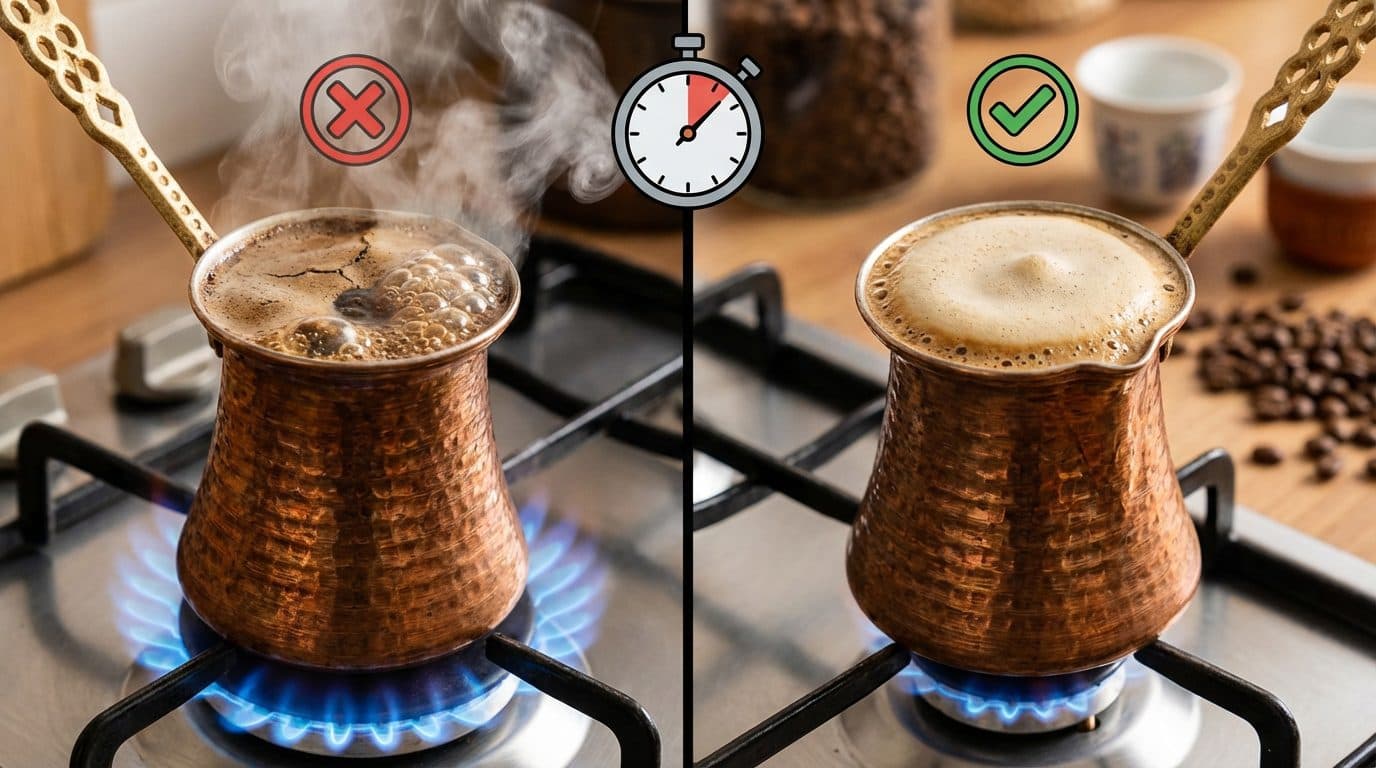
This is the number one killer of good Turkish coffee. High heat causes the water to boil before the coffee has properly extracted, leaving you with a bitter, foam-less disappointment. Think of it like this: you’re coaxing the flavors out slowly, not forcing them.
Stirring During Brewing
Once your cezve is on the heat, resist the urge to stir. Stirring disrupts foam formation and can make your coffee taste uneven. All mixing should happen before you apply heat.
Drinking Too Soon
I get it—the aroma is intoxicating, and you want to dive in. But if you drink immediately, you’ll get a mouthful of grounds. Wait at least 60 seconds for the sediment to settle. Traditional Turkish coffee is sipped slowly anyway, often accompanied by a glass of water and something sweet like Turkish delight.
Did You Know? Turkish coffee reading (tasseography) is a centuries-old tradition where the grounds left in the cup are used for fortune-telling. After finishing your coffee, you flip the cup onto the saucer, let it cool, and then “read” the patterns formed by the grounds. Whether you believe in it or not, it’s a fun way to extend the experience.
Tips for Perfecting Your Turkish Coffee
Once you’ve mastered the basics, these refinements will take your brew to the next level.
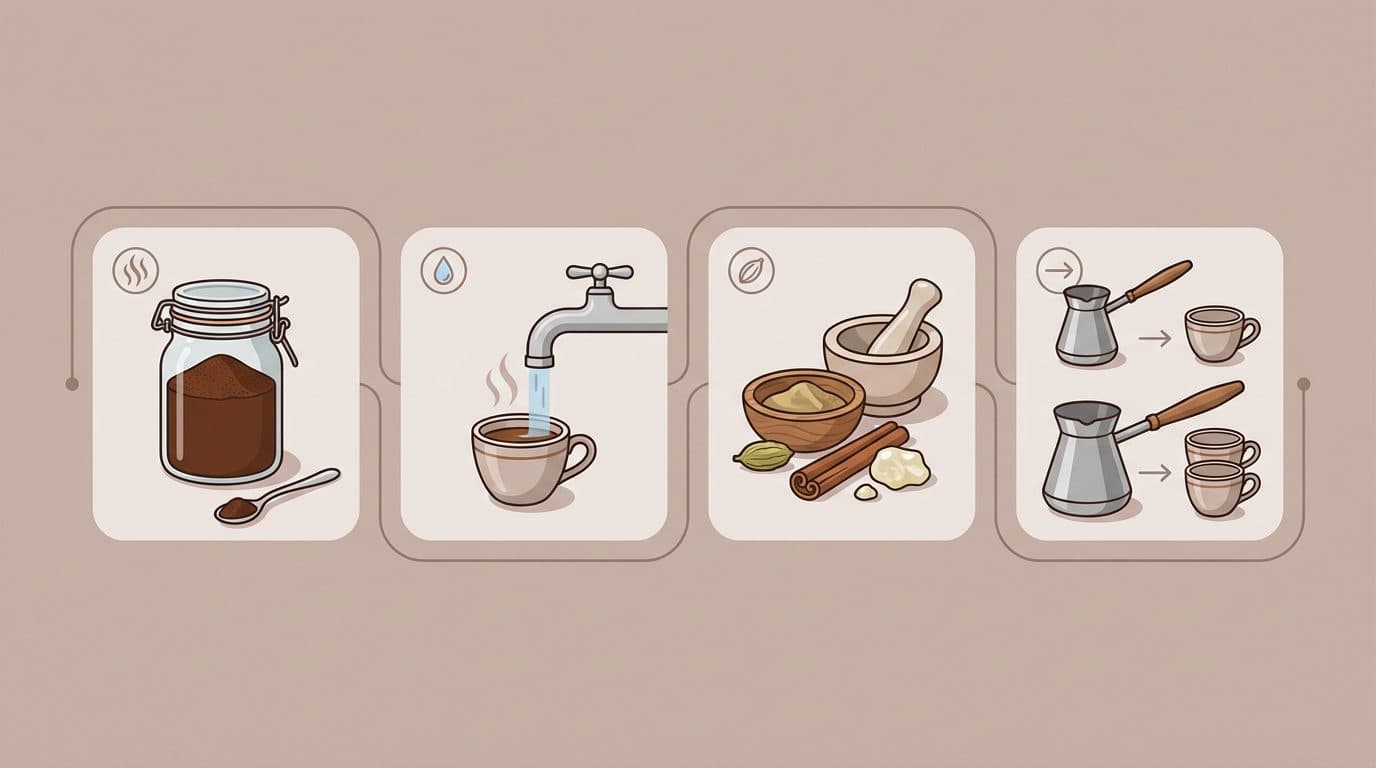
- Use fresh coffee: Turkish coffee loses its aroma quickly. Buy in small quantities and store in an airtight container away from light.
- Preheat your cups: Rinse your demitasse cups with hot water before pouring. This keeps your coffee warmer longer.
- Experiment with spices: Beyond cardamom, try a tiny pinch of cinnamon or mastic gum for interesting variations.
- Match your cezve size to your serving: A cezve that’s too large for a single serving won’t produce good foam. Ideally, the coffee should fill about two-thirds of the pot.
In short: The details matter. Small adjustments in heat, timing, and equipment sizing can dramatically improve your results.
Taste Profile: What to Expect
A well-made Turkish coffee should be bold and intense with a full body and almost syrupy texture. The flavor profile tends toward chocolatey and earthy notes with low acidity. The foam adds a creamy mouthfeel to the first sips, while the unfiltered grounds contribute oils that you’d lose with paper filtration. It’s a completely different experience from drip or pour-over coffee.
Choosing the Right Cezve for Home Brewing
Not all cezves are created equal. If you’re serious about brewing Turkish coffee at home, choosing the right pot makes a real difference.
Material Matters
Copper is the traditional choice and conducts heat beautifully, allowing for even, gentle extraction. Brass offers similar properties. Stainless steel is durable and affordable but doesn’t heat as evenly—you’ll need to be more careful with your heat control. Avoid aluminum, which can affect flavor and doesn’t last as long.
Size Considerations

Cezves typically come in sizes ranging from one to six cups. A smaller cezve (one to two cups) is easier to control for beginners. If you often make coffee for guests, a larger one is convenient, but remember that you need to match your water and coffee amounts to the pot size for optimal foam.
When I started, I bought an inexpensive stainless steel cezve to learn the technique. Once I knew I loved the process, I upgraded to a hand-hammered copper one. If budget allows, go straight for copper—you’ll taste the difference.
Frequently Asked Questions
Can I make Turkish coffee without a cezve?
Technically, yes—you can use a small saucepan. However, the narrow neck of a cezve is specifically designed to promote foam formation. Without it, achieving that characteristic foam becomes much harder. If you’re just experimenting, a small pot will work, but for authentic results, a cezve is worth the modest investment.
Why doesn’t my Turkish coffee have foam?
The most common culprits are heat that’s too high, coffee that’s not fresh, or stirring after heating begins. Also, check your grind—it needs to be powder-fine. Sometimes the water quality is the issue; hard water can inhibit foam development.
Should I filter the grounds out of Turkish coffee?
No, Turkish coffee is meant to be unfiltered. The grounds settle naturally at the bottom of the cup and are not consumed. Filtering would remove the oils and body that make Turkish coffee distinctive.
How much caffeine is in Turkish coffee?
Despite the small serving size, Turkish coffee is quite caffeinated—typically 50-65 mg per 2-ounce cup. The extended contact time between water and grounds leads to higher extraction. If you’re sensitive to caffeine, enjoy it earlier in the day.
Can I reheat Turkish coffee?
It’s not recommended. Reheating destroys the foam and can make the coffee taste stale and bitter. Turkish coffee is best enjoyed fresh, immediately after brewing. Life is too short for reheated coffee.
Conclusion and Your Next Step
Brewing Turkish coffee at home is a beautiful ritual that connects you to centuries of coffee tradition. With the right equipment, fresh finely-ground coffee, and a patient approach to heating, you can create an authentic cup that rivals any café. Remember: low heat, no stirring once you start, and watch carefully for that rising foam.
Start with the basic technique outlined here, and once you’re comfortable, experiment with sugar levels, spices, and multiple rises to find your perfect cup. Each batch teaches you something new. Grab your cezve, measure out your coffee, and begin your Turkish coffee journey today. Your mornings will never be the same.


Comments