


Table of Contents
- Why Limited Space Doesn't Limit Quality
- Best Brewing Methods for Dorm Rooms and Tiny Apartments
- AeroPress
- French Press
- Pour-Over (Single-Cup Dripper)
- Comparison Table
- Essential Gear That Won't Clutter Your Counter
- Step-by-Step: Your First AeroPress Brew
- Troubleshooting Common Small-Space Problems
- Problem: No Sink Access in Your Room
- Problem: Roommate Complains About Noise
- Problem: Coffee Tastes Flat or Stale
- Problem: Water Temperature Is Inconsistent
- Myth vs. Reality
- Key Takeaways
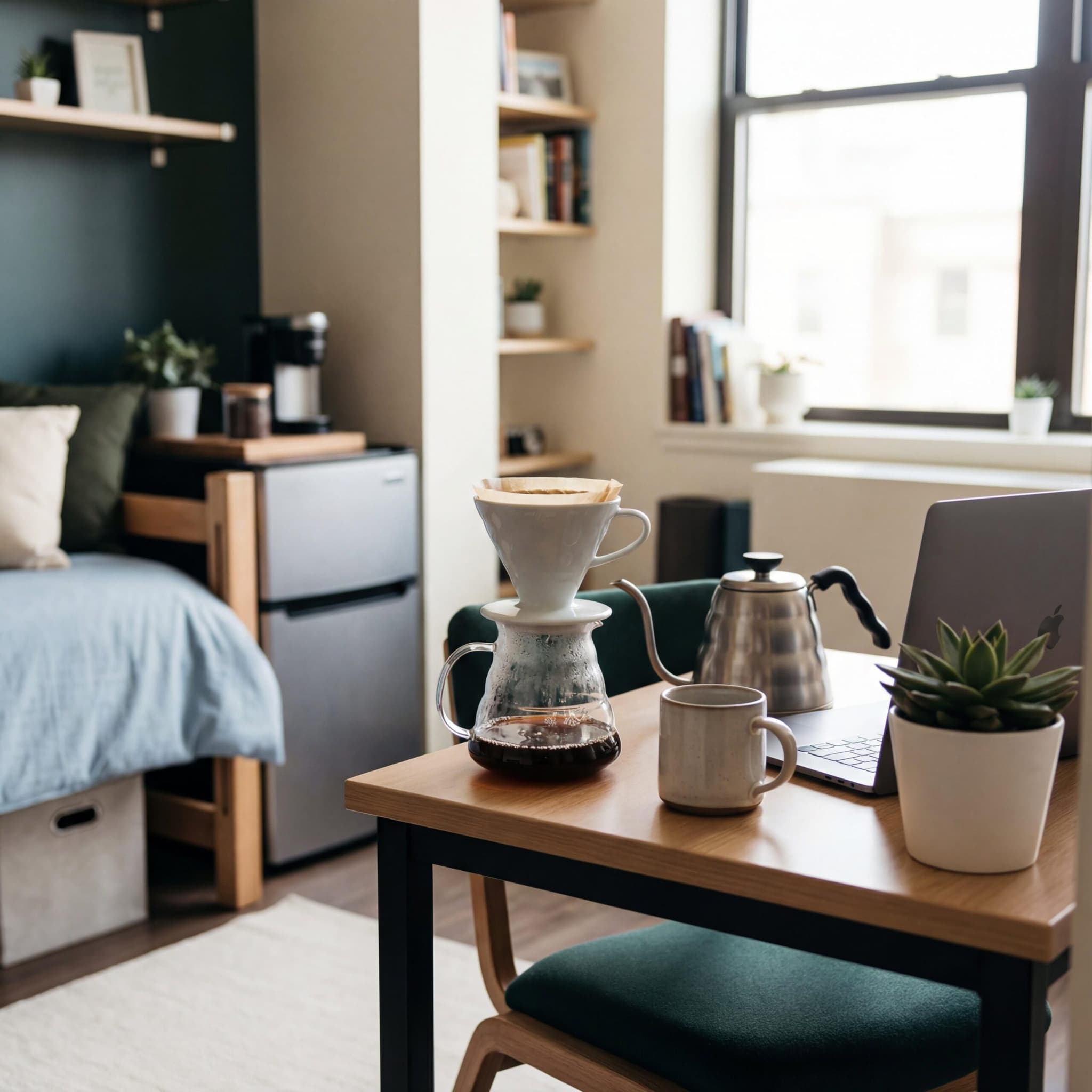
The biggest mistake people make when brewing coffee in a dorm or tiny apartment? Assuming they need a full countertop setup to make anything decent. They don’t. A single square foot of space, a kettle, and one compact brewer can produce coffee that rivals most cafés—sometimes better, because freshness matters more than fancy equipment.
This guide covers the best low-footprint brewing methods, the minimal gear worth owning, and a step-by-step approach to making genuinely good coffee when counter space is measured in inches, not feet.
Why Limited Space Doesn’t Limit Quality
Commercial espresso machines and drip brewers take up space because they’re designed for volume and convenience, not necessarily taste. Manual brewing methods—pour-over, French press, AeroPress—actually give you more control over extraction variables like water temperature, brew time, and agitation.
Here’s the counter-intuitive part: constraints often improve coffee. When you can only own one brewer, you learn it deeply. When you measure by hand, you pay attention. Many competition baristas prefer manual methods for this exact reason.
The real requirements for excellent coffee are simple:
- Fresh beans (roasted within 2-4 weeks)
- Proper grind size for your method
- Water between 90°C-96°C (195°F-205°F)
- Consistent ratio (start with 1:15 coffee to water)
None of these require a large kitchen.
Best Brewing Methods for Dorm Rooms and Tiny Apartments
Not every brewer suits small-space living. Here’s an honest breakdown of what works, what doesn’t, and why.
AeroPress
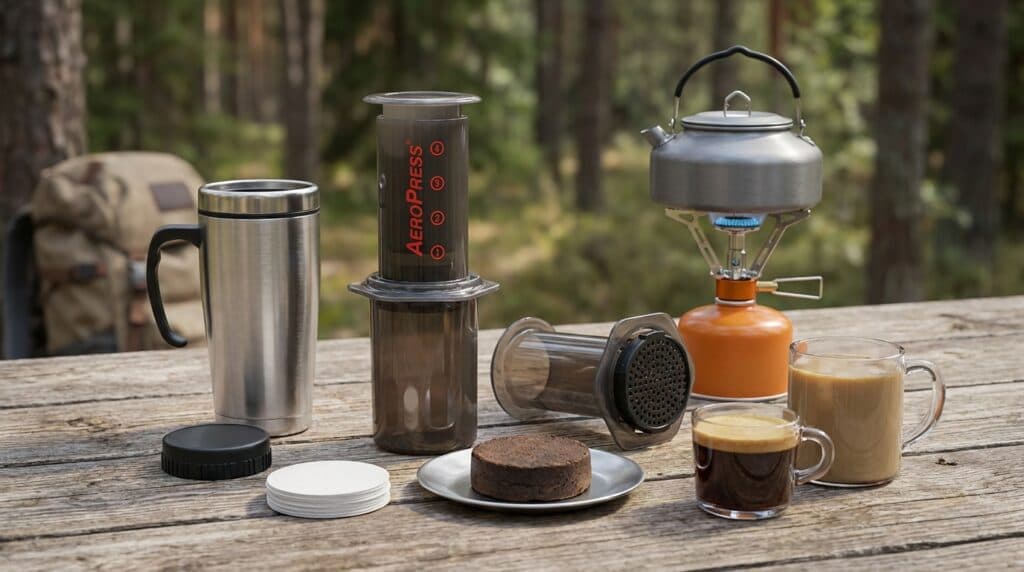
Footprint: About the size of a travel mug when stored
Pros:
- Brews in 1-2 minutes
- Nearly impossible to break
- Easy cleanup (pop the puck, rinse, done)
- Versatile—can make concentrated “espresso-style” or longer drinks
- No electricity required beyond heating water
Cons:
- Single-serve only (makes roughly 200-250ml per brew)
- Requires paper filters (or a reusable metal filter)
Best for: Solo coffee drinkers who want speed and minimal cleanup.
French Press
Footprint: Slightly larger, but stores vertically
Pros:
- No filters to buy
- Makes 2-4 cups at once
- Full-bodied, rich flavor
- Doubles as a tea brewer
Cons:
- Sediment in the cup (some people dislike this)
- Cleanup takes slightly longer
- Glass versions can break
Best for: People who share coffee with roommates or prefer a heavier mouthfeel.
Pour-Over (Single-Cup Dripper)
Footprint: Fits in a drawer; sits directly on your mug
Pros:
- Clean, bright flavor profile
- Extremely portable
- Plastic versions are nearly indestructible
Cons:
- Requires more technique (pouring speed matters)
- Needs a gooseneck kettle for best results
- Single-serve
Best for: Those who enjoy the ritual and want clarity in their cup.
Comparison Table
| Method | Brew Time | Servings | Cleanup | Skill Level |
|---|---|---|---|---|
| AeroPress | 1-2 min | 1 | 30 seconds | Beginner |
| French Press | 4 min | 2-4 | 2-3 minutes | Beginner |
| Pour-Over | 2-3 min | 1 | 1 minute | Intermediate |
Essential Gear That Won’t Clutter Your Counter
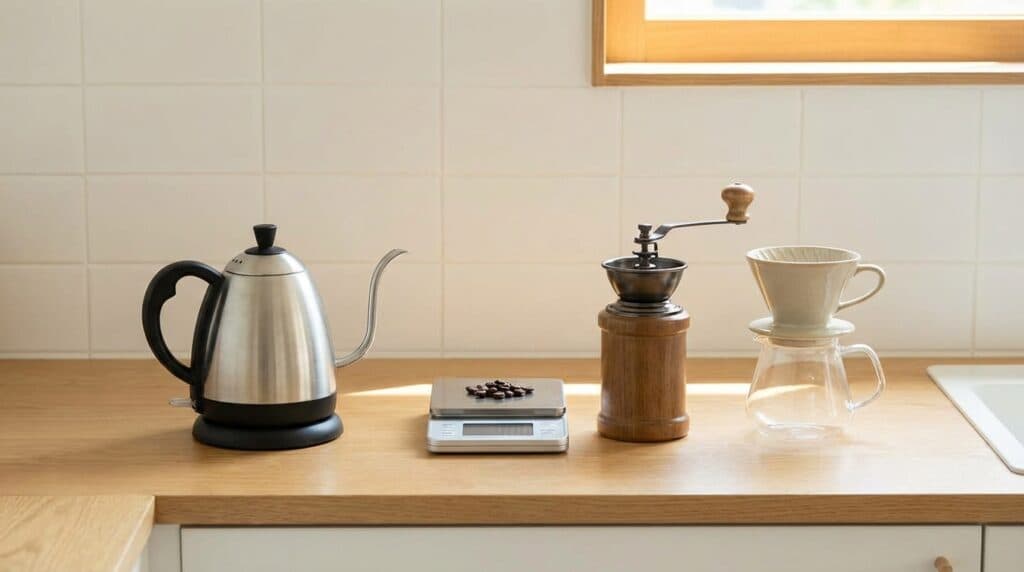
Beyond the brewer itself, here’s what actually matters—and what you can skip.
Must-Have:
- Electric kettle: Any basic model works. A gooseneck is better for pour-over but not essential for AeroPress or French press.
- Kitchen scale: A small digital scale (accurate to 0.1g) fits in a drawer and transforms your consistency. Scoops are unreliable—coffee density varies by roast.
- Hand grinder: Compact, quiet (important for dorms), and produces better grinds than blade grinders at similar prices. Look for ceramic or stainless steel burrs.
Nice-to-Have:
- Timer (your phone works)
- Airtight container for beans
- Thermometer (if your kettle doesn’t have one)
Skip:
- Blade grinders (inconsistent particle size = uneven extraction)
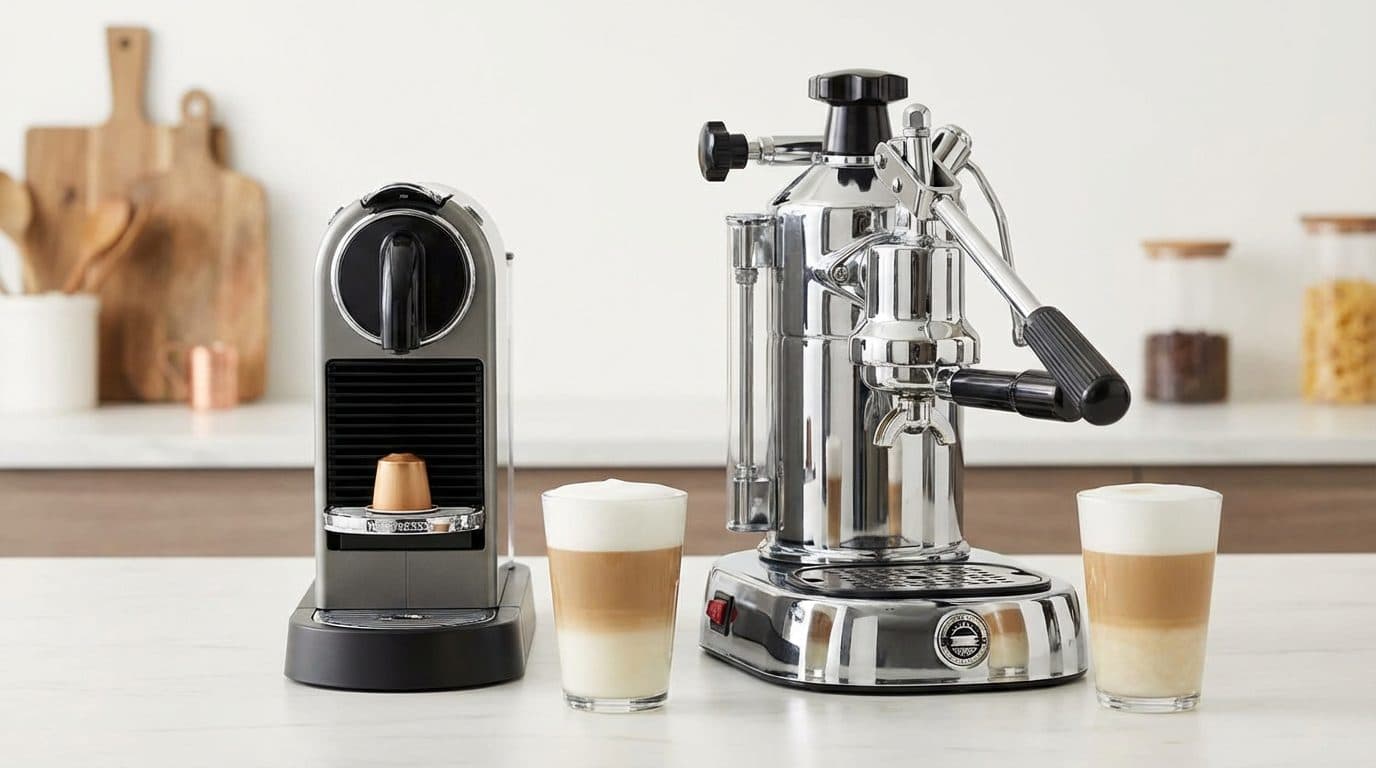
- Single-serve pod machines (expensive per cup, mediocre coffee, environmental waste)
- Milk frothers unless you specifically want lattes
Step-by-Step: Your First AeroPress Brew
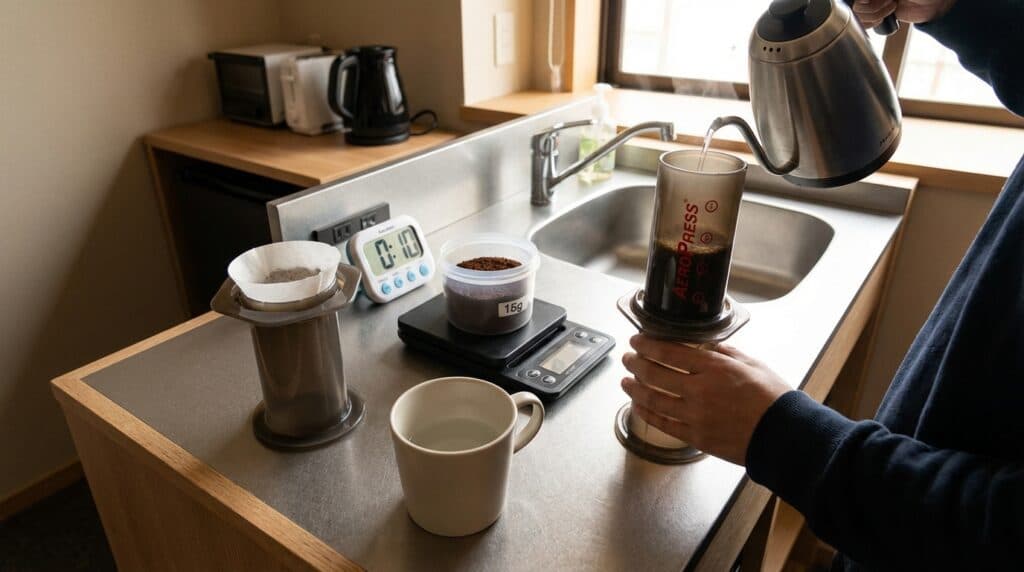
This recipe works in any small space with access to hot water—even a communal kitchen or hotel room.
What You Need:
- 15g coffee (medium-fine grind, like table salt)
- 240ml water at 92°C (198°F)
- AeroPress with paper filter
- Mug
- Timer
Method:
- Rinse the paper filter with hot water (removes papery taste and preheats the brewer).
- Add 15g ground coffee to the AeroPress chamber.
- Start your timer and pour 240ml water in a steady stream.
- Stir gently for 5 seconds to ensure all grounds are wet.
- Insert the plunger slightly to create a seal (prevents dripping).
- At 1:30, press down slowly over 20-30 seconds until you hear a hiss.
- Stop pressing when you hear air escaping—don’t force the last drops.
Barista Tip: If your coffee tastes sour, your water was too cool or your grind too coarse—try 94°C or grind finer. If it’s bitter and harsh, the opposite: cooler water or coarser grind.
Expected Taste Profile: A well-extracted AeroPress brew should be clean and smooth with low bitterness. Expect medium body—heavier than pour-over but lighter than French press. Depending on your beans, you’ll notice clear flavor notes (fruit, chocolate, nuts) without muddiness.
Troubleshooting Common Small-Space Problems
Problem: No Sink Access in Your Room
Cause: Dorm setup with shared bathrooms down the hall.
Fix: Keep a small pitcher or bottle of filtered water in your room for brewing. For cleanup, use a damp cloth to wipe equipment and do a proper rinse when you visit the bathroom. AeroPress is ideal here—the puck ejects cleanly into a trash can.
Problem: Roommate Complains About Noise
Cause: Electric grinders are loud, especially early morning.
Fix: Hand grinders are significantly quieter. Alternatively, grind your coffee the night before (freshness loss over 8 hours is minimal compared to pre-ground from the store).
Problem: Coffee Tastes Flat or Stale
Cause: Beans are old, or they’re stored improperly.
Fix: Buy smaller quantities more frequently. A 250g bag lasts a solo drinker about two weeks at two cups per day—that’s the sweet spot. Store in an opaque, airtight container away from heat. Never refrigerate or freeze unless you’re storing long-term and won’t be opening the container repeatedly.
Problem: Water Temperature Is Inconsistent
Cause: Basic kettles don’t have temperature control.
Fix: Boil water, then let it sit for 30-45 seconds before pouring. This typically brings it to the 90°C-96°C range. If you want precision, a simple probe thermometer costs under $10.
Myth vs. Reality
- Myth: You need expensive equipment to make good coffee.
Reality: A $30 AeroPress and $40 hand grinder outperform most $150 drip machines in taste tests. - Myth: Pre-ground coffee is fine if you seal it well.
Reality: Coffee stales rapidly after grinding—within 15-30 minutes, volatile aromatics begin escaping. Whole beans stay fresh 10-20x longer. - Myth: Darker roasts have more caffeine.
Reality: Roast level has minimal impact on caffeine. Lighter roasts actually retain slightly more caffeine by weight because the beans are denser.
Key Takeaways
- Choose one compact brewer and learn it well—AeroPress for speed, French press for volume, pour-over for clarity.
- Invest in a hand grinder before anything else. Fresh grinding matters more than brewing method.
- Use a 1:15 ratio (coffee to water) as your starting point, then adjust to taste.
- Water temperature between 90°C-96°C extracts properly without burning.
- Buy beans in small batches and store them airtight at room temperature.
Living in a small space isn’t a barrier to great coffee—it’s an invitation to simplify. Pick up an AeroPress or a single-cup dripper, grab some fresh beans this weekend, and try the recipe above. You might find that your 10-square-foot coffee corner produces better cups than the café downstairs.



Comments