


Table of Contents
- Quick Verdict: Espro Press P7
- What Makes the Espro Press Different?
- Espro Press Review: Pros and Cons
- Pros
- Cons
- How Does the Double Filter Actually Perform?
- Sediment Test
- Taste Comparison
- Who Is the Espro Press For?
- This Is Perfect For You If:
- This Is NOT For You If:
- Espro Press vs Traditional French Press: Quick Comparison
- Which Espro Model Should You Choose?
- Final Verdict: Is the Espro Press Double Filter Worth It?
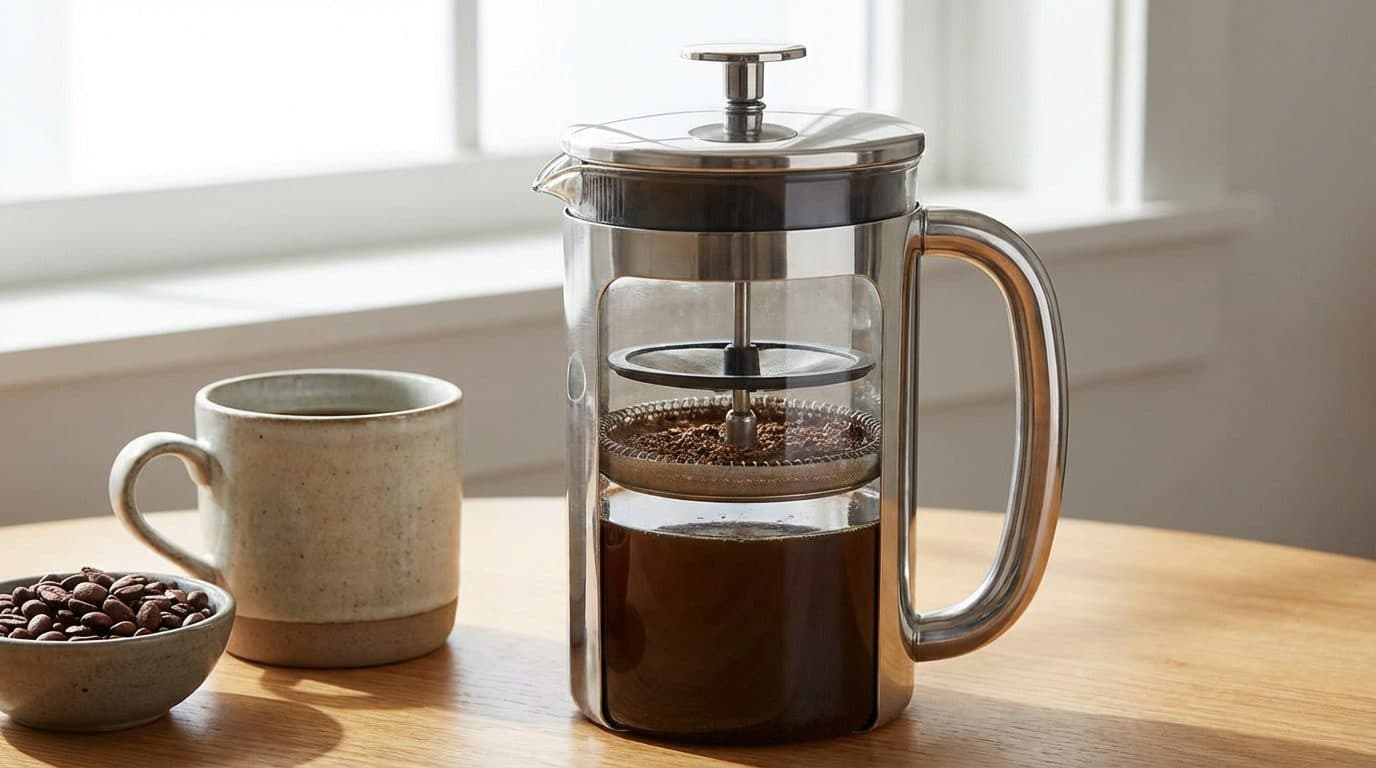
You love the rich, full-bodied taste of French press coffee, but you hate that gritty sludge at the bottom of your cup. Sound familiar? The Espro Press claims to solve this exact problem with its patented double micro-filter system. But with a price tag significantly higher than a standard French press, you’re probably wondering: is the Espro Press actually worth the investment, or is it just clever marketing?
I’ve been using the Espro Press for over a year now, testing it against my trusty Bodum and a few other French presses in my collection. In this review, I’ll break down exactly how the double filter performs, what I love about it, what I don’t, and whether it deserves a spot on your coffee counter.
Quick Verdict: Espro Press P7
If you’re serious about French press coffee and hate sediment, the Espro Press is worth every penny. The double micro-filter genuinely delivers a cleaner cup without sacrificing the oils and body that make French press special. It’s not cheap, but it’s a “buy it for life” kind of product.
Rating: 4.5/5 — A premium French press that actually lives up to its premium price.
What Makes the Espro Press Different?
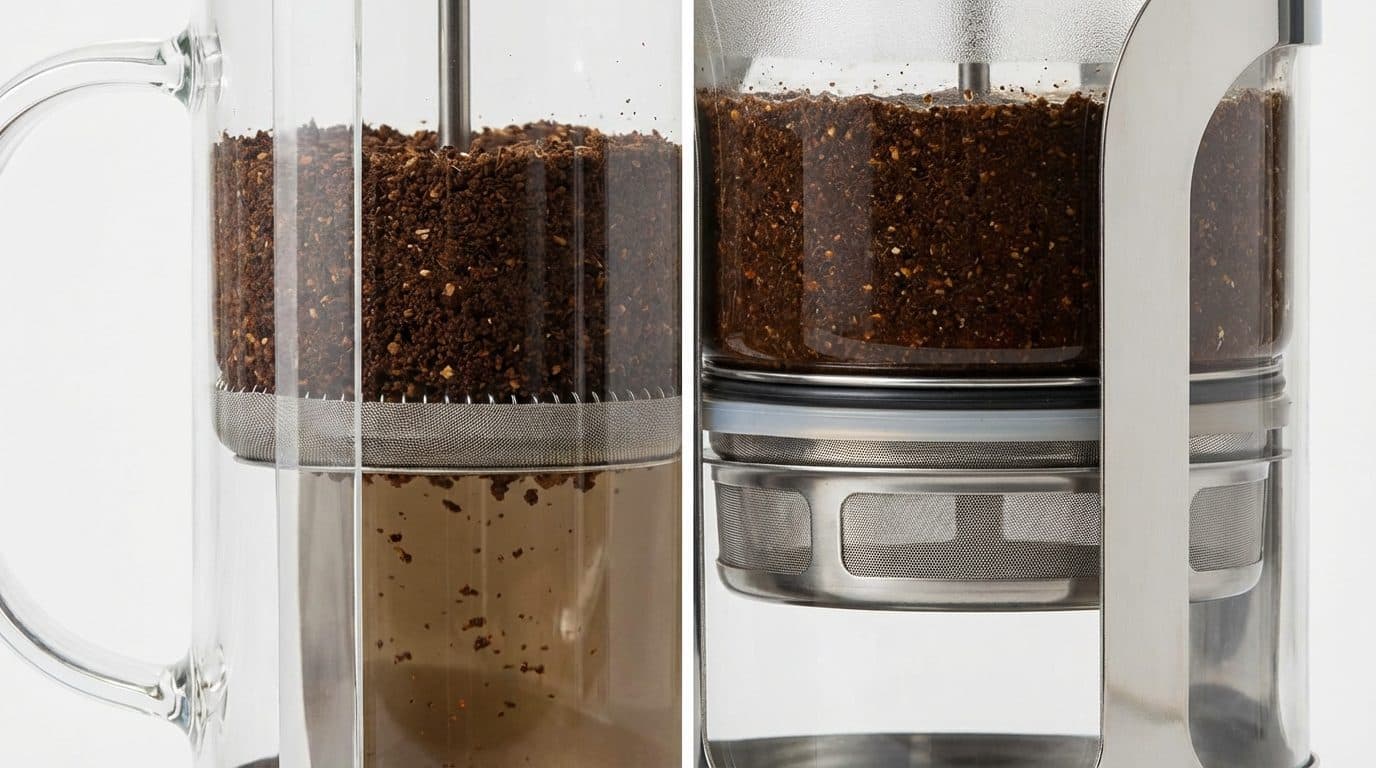
At first glance, the Espro Press looks like any other stylish French press. But the magic happens below the surface. Unlike traditional French presses that use a single mesh filter, the Espro features two stainless steel micro-filters stacked together. These filters are significantly finer than what you’ll find in a standard press.
Here’s how it works:
- The double filter catches particles as small as 100 microns
- A silicone seal around the filter prevents grounds from sneaking past the edges
- The filter locks at the bottom after pressing, stopping extraction immediately
That last point is huge. In a regular French press, your coffee keeps extracting even after you press down, leading to over-extraction and bitterness if you don’t pour immediately. The Espro’s locking mechanism essentially “freezes” your brew at the perfect moment.
Espro Press Review: Pros and Cons
Pros
- Dramatically cleaner cup — The difference is immediately noticeable. No more grit, no more sludge at the bottom
- Stops over-extraction — You can let your coffee sit without it becoming bitter
- Premium build quality — The stainless steel construction feels like it’ll last decades
- Double-walled insulation — Keeps coffee hot for much longer than glass alternatives
- Dishwasher safe — Easy cleanup, though hand washing is still recommended for the filter
- Elegant design — Looks great on any kitchen counter
Cons
- Higher price point — Costs 3-4x more than a basic French press
- Slightly more difficult to clean — The double filter requires a bit more attention
- Heavier than glass presses — Not ideal if you want something lightweight for travel
- Some body is lost — Purists might miss a tiny bit of that thick, oily mouthfeel
How Does the Double Filter Actually Perform?
Let’s get into the real-world testing. I brewed the same coffee (a medium roast Ethiopian) using identical grind size, water temperature, and steep time in both the Espro Press and a traditional Bodum Chambord.
Sediment Test
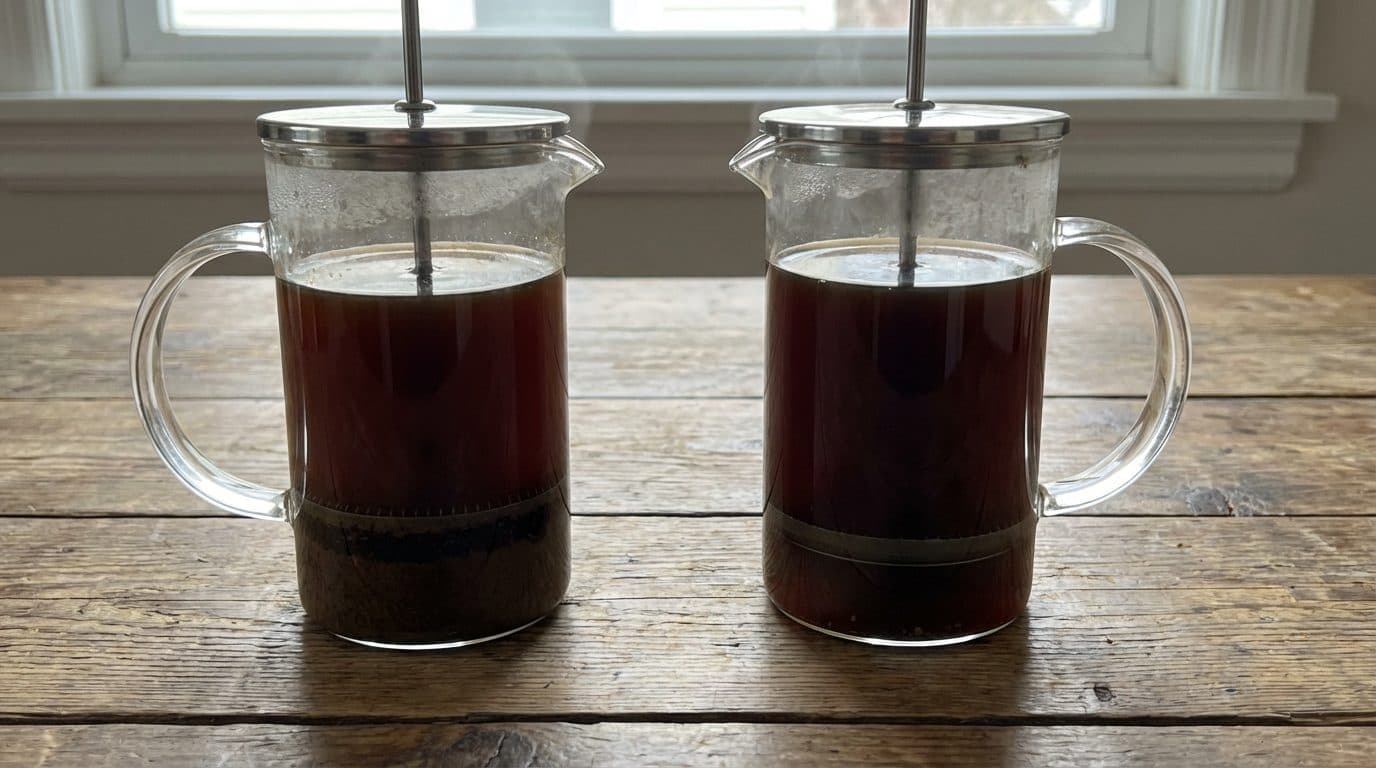
After letting both cups sit for five minutes, the difference was striking. The Bodum had visible sediment settled at the bottom — that familiar muddy layer we’ve all come to accept. The Espro cup? Almost completely clean. I’m talking maybe a few tiny particles that you’d only notice if you were specifically looking for them.
Taste Comparison
Here’s where it gets interesting. The Espro produced a noticeably cleaner, brighter cup. I could taste more of the fruity notes in the Ethiopian beans. The Bodum cup was richer and heavier, with that classic French press thickness.
In my experience, neither is objectively “better” — they’re different experiences. But if you’ve ever wished your French press coffee tasted a bit more like pour-over while keeping that full body, the Espro hits that sweet spot beautifully.
Barista Tip: Use a slightly finer grind with the Espro than you would with a traditional French press. The double filter can handle it, and you’ll get better extraction.
Who Is the Espro Press For?
The Espro Press isn’t for everyone, and that’s okay. Here’s how to know if it’s right for you.
This Is Perfect For You If:
- You love French press flavor but hate the sediment
- You want to let your coffee sit without it getting bitter
- You appreciate premium, durable kitchen gear
- You’re willing to invest in a “buy it for life” product
- You want something that looks as good as it performs
This Is NOT For You If:
- You’re on a tight budget — a $30 Bodum makes great coffee too
- You love that thick, almost chewy French press body
- You prefer the simplicity of a basic single-filter design
- You’re looking for a travel-friendly option
Espro Press vs Traditional French Press: Quick Comparison
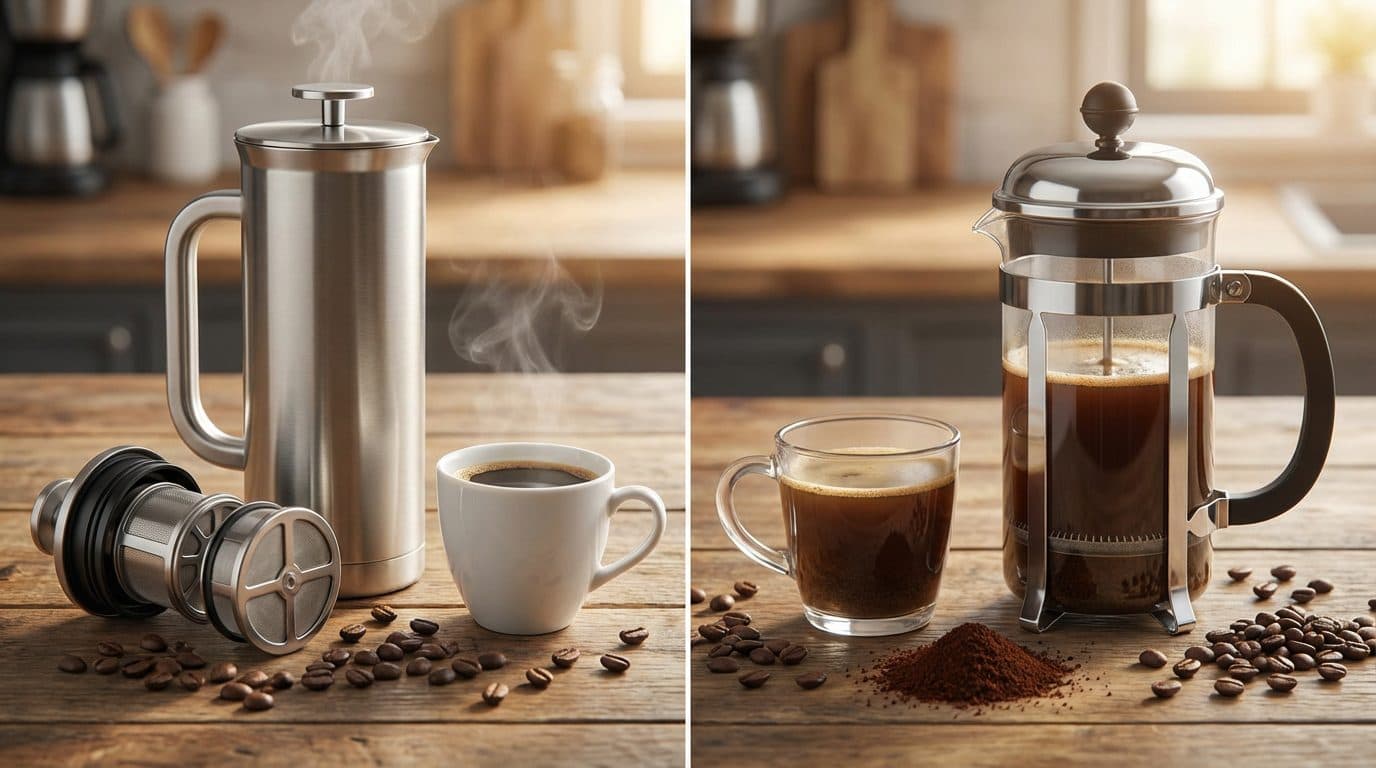
| Feature | Espro Press | Traditional French Press |
|---|---|---|
| Filter Type | Double micro-filter | Single mesh filter |
| Sediment | Minimal to none | Noticeable |
| Over-extraction | Prevented by lock mechanism | Continues after pressing |
| Body/Mouthfeel | Full but cleaner | Thick and heavy |
| Heat Retention | Excellent (double-walled) | Poor to moderate |
| Price Range | $80-$150 | $20-$40 |
| Durability | Very high | Moderate (glass can break) |
Which Espro Model Should You Choose?
Espro offers several versions, and the differences matter:
- Espro P3 — Glass carafe with plastic frame. Most affordable option, but you lose the insulation benefits
- Espro P5 — Glass carafe with stainless steel frame. Better looking, still no insulation
- Espro P6 — Matte stainless steel, double-walled. Great balance of price and features
- Espro P7 — Polished stainless steel, double-walled. The premium choice
My recommendation? Go for the P6 or P7 if your budget allows. The double-walled insulation is a game-changer, especially if you like to savor your coffee slowly. Life is too short for cold coffee.
Final Verdict: Is the Espro Press Double Filter Worth It?
After a year of daily use, I can confidently say the Espro Press has earned its place as my go-to French press. The double filter system isn’t just marketing hype — it genuinely delivers a cleaner, more refined cup while keeping what makes French press coffee special. The build quality means I’ll probably be using this thing for the next decade.
Is it worth three or four times the price of a basic French press? If you drink French press coffee regularly and sediment bothers you, absolutely yes. If you’re a casual coffee drinker or you actually enjoy that thick, gritty character, save your money and stick with a traditional press.
For everyone else sitting on the fence: the Espro Press is one of those upgrades that makes your daily coffee ritual noticeably better. And isn’t that worth investing in?
Check the latest price on Amazon to see current deals on the Espro Press lineup.


Comments