


Table of Contents
- How French Press and Drip Coffee Actually Work
- The French Press Method
- The Drip Coffee Method
- Flavor and Body: What Each Method Delivers
- French Press Flavor Profile
- Drip Coffee Flavor Profile
- Convenience and Time: The Everyday Factor
- Brewing Time Comparison
- Cleanup Reality Check
- Cost Considerations for Home Brewing
- Initial Investment
- Ongoing Expenses
- Coffee Bean Usage
- Capacity and Serving Size
- Which Method Suits Your Lifestyle?
- Conclusion: Making Your Choice
You’re standing in your kitchen, staring at two coffee makers, wondering which one deserves a permanent spot on your counter. French press or drip coffee machine? It’s a question that haunts many home brewers who want great coffee without the hassle. Both methods have passionate fans, but when it comes to everyday home brewing, the “better” choice depends entirely on your lifestyle, taste preferences, and how much effort you’re willing to put into your morning routine.
If strength is the main thing you care about, our full moka pot vs drip coffee maker guide explains where each brewer wins.
This comparison breaks down everything you need to know—from flavor profiles and brewing time to cleanup and cost—so you can finally decide which method fits your daily coffee ritual.
How French Press and Drip Coffee Actually Work
Understanding the brewing mechanics helps explain why these two methods produce such different results in your cup.
The French Press Method
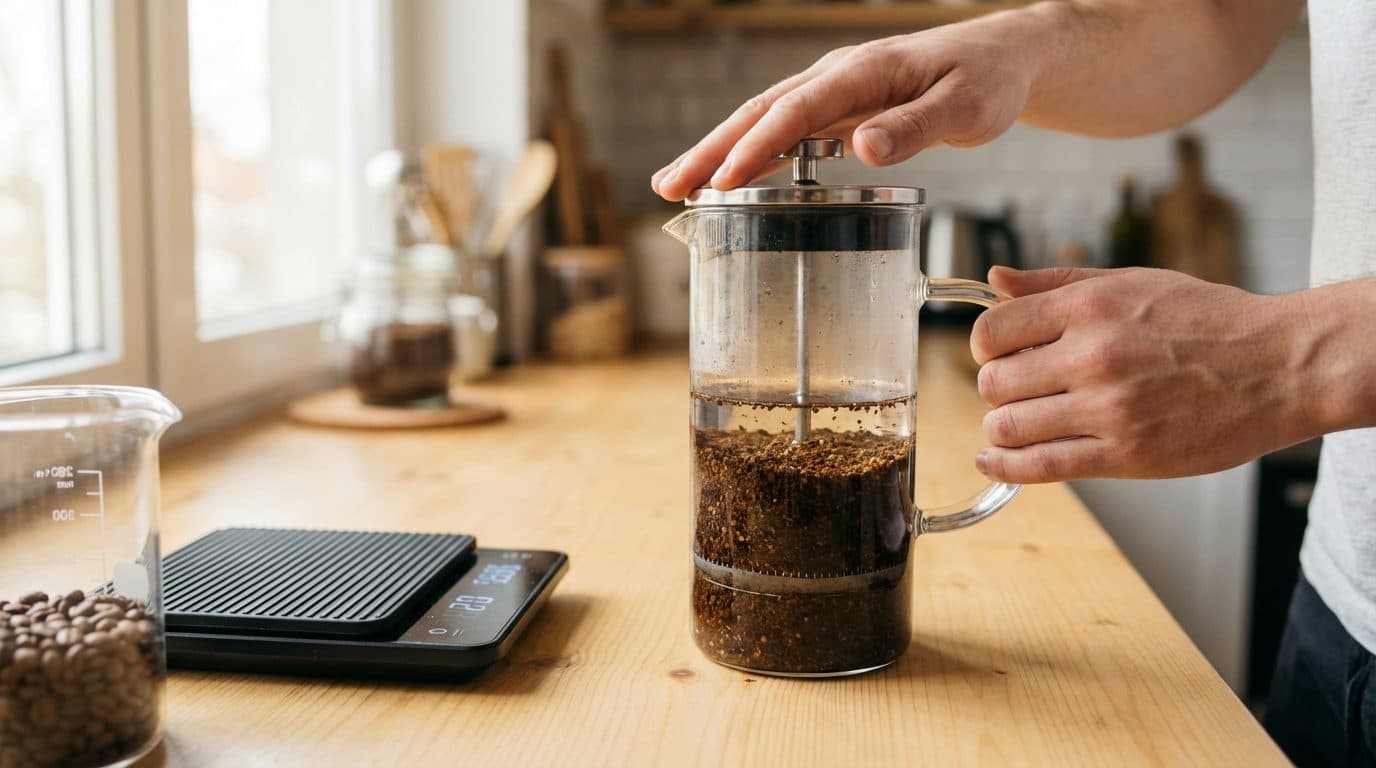
A French press uses immersion brewing. You add coarse coffee grounds directly to hot water, let them steep for about four minutes, then push down a metal mesh plunger to separate the grounds from the liquid. The coffee stays in contact with water throughout the entire brewing process, extracting oils, flavors, and fine particles that other methods filter out.
Picture this: you’re essentially making coffee tea. The grounds float freely, releasing everything they have to offer before you manually stop the extraction.
The Drip Coffee Method
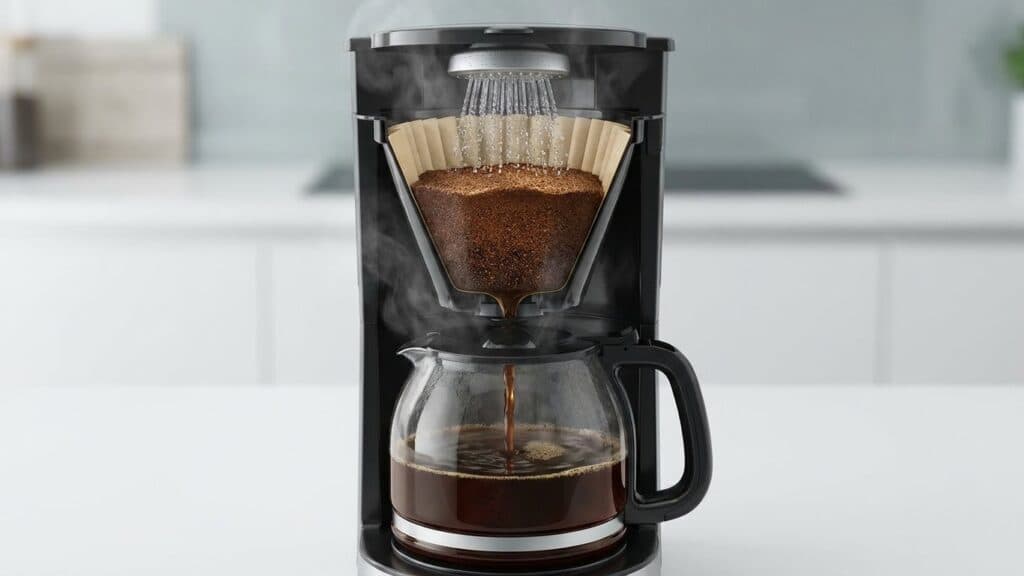
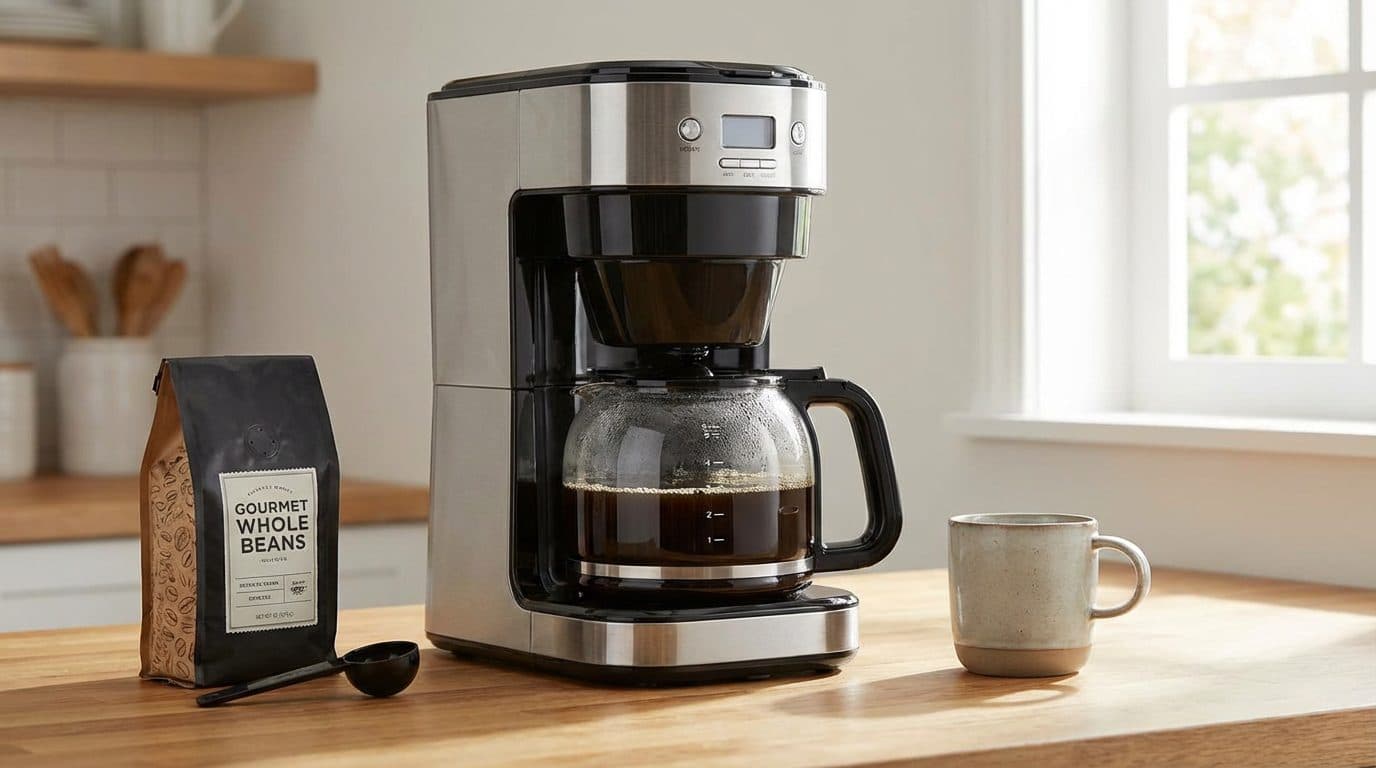
Drip coffee makers work through percolation. Hot water drips through a bed of medium-ground coffee held in a paper or metal filter. Gravity pulls the water through the grounds, and the brewed coffee collects in a carafe below. The paper filter catches oils and fine sediment, producing a cleaner cup.
Think of it like a controlled shower over your coffee grounds—water passes through once and moves on, taking dissolved flavors with it.
Flavor and Body: What Each Method Delivers
This is where French press and drip coffee diverge dramatically, and it’s often the deciding factor for most home brewers.
French Press Flavor Profile
French press coffee is known for its full body and rich, robust taste. Because the metal mesh filter allows oils and fine particles to pass through, you get:
- A heavier, almost syrupy mouthfeel
- More pronounced natural coffee oils on the surface
- Complex, layered flavors with earthy undertones
- Slight sediment at the bottom of your cup
If you enjoy bold, intense coffee that feels substantial, French press delivers that experience. Many coffee enthusiasts argue this method showcases a bean’s true character better than any other brewing technique.
Drip Coffee Flavor Profile
Drip coffee tends to be lighter, cleaner, and more consistent. The paper filter removes oils and sediment, resulting in:
- A smoother, lighter body
- Brighter, more acidic notes (in a pleasant way)
- Cleaner finish without grittiness
- More subtle flavor nuances
For everyday drinking, many people prefer this cleaner profile. It’s easy to drink multiple cups without feeling overwhelmed by intensity. If you add milk or cream to your coffee, drip coffee blends more seamlessly.
Convenience and Time: The Everyday Factor
When you’re rushing out the door on a Monday morning, convenience matters. Here’s how both methods stack up for daily use.
Brewing Time Comparison
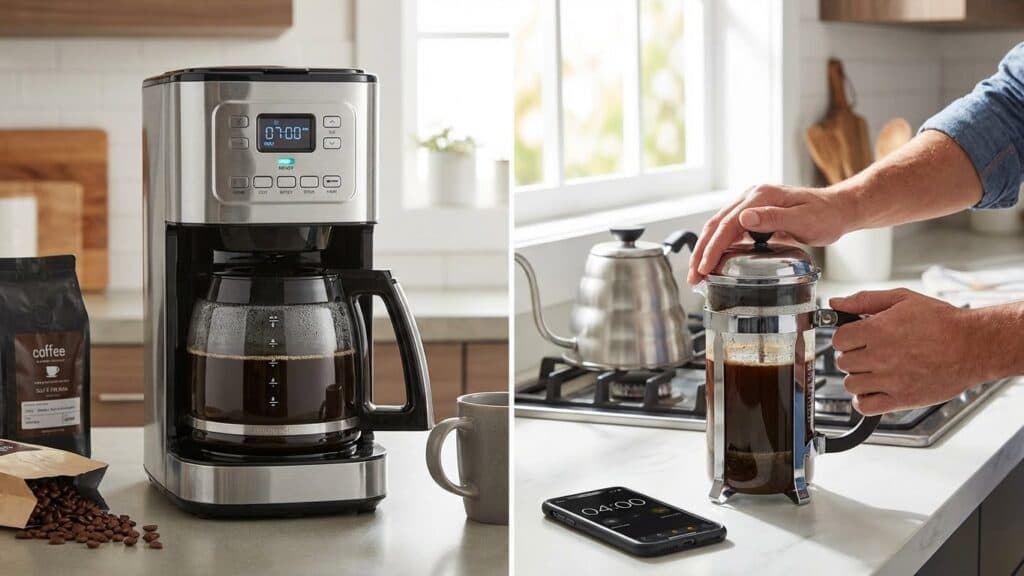
A standard drip coffee maker takes about 5-10 minutes to brew a full pot, but here’s the key advantage: you can set it up the night before and program it to start automatically. You wake up to fresh coffee waiting for you.
French press requires more active involvement. You need to boil water separately (3-5 minutes), add it to the press, wait exactly 4 minutes for steeping, then plunge. Total hands-on time is around 8-10 minutes, and you can’t walk away and forget about it—over-steeping makes your coffee bitter.
Cleanup Reality Check
This is where French press loses points for many home brewers:
- French press cleanup: You need to scoop out wet grounds (they can clog drains), disassemble the plunger, and wash multiple parts. It takes 3-5 minutes if you’re thorough.
- Drip coffee cleanup: Toss the paper filter with grounds into the trash, rinse the carafe. Done in under a minute.
Over weeks and months of daily brewing, this difference adds up. If you value simplicity, drip coffee wins the convenience battle.
Cost Considerations for Home Brewing
Budget plays a role in any kitchen decision. Let’s break down the real costs of each method.
Initial Investment
A quality French press costs between $20-50 for most home users. There are no electrical components, so it lasts for years with basic care. High-end options with double-walled insulation run around $50-80.
Drip coffee makers range widely. Basic models start at $25-40, mid-range machines with programmable features cost $50-100, and premium options with thermal carafes and specialty brewing modes can exceed $200.
Ongoing Expenses
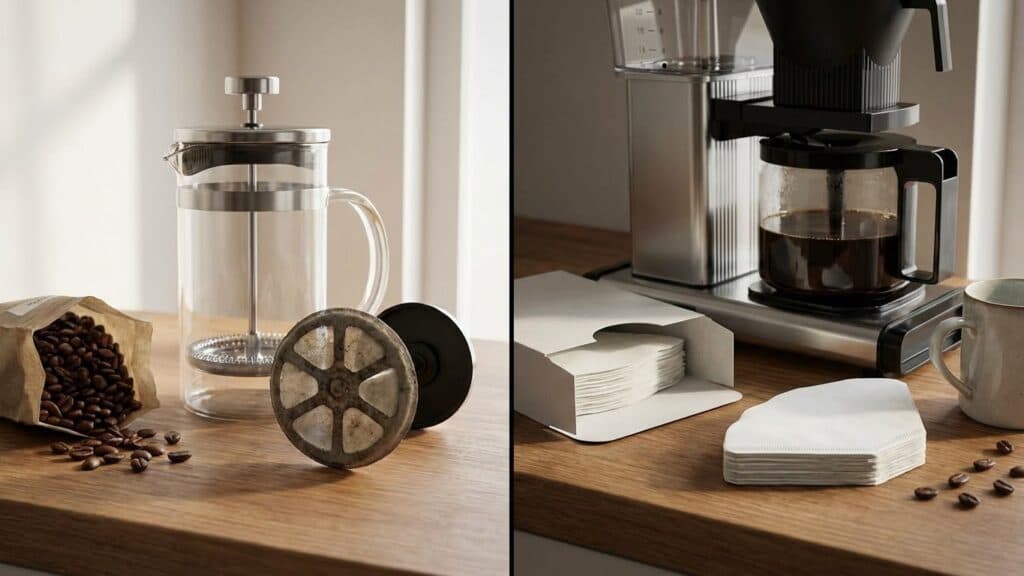
French press has virtually no recurring costs beyond coffee beans. You might replace the mesh filter every few years for around $10.
Drip coffee requires paper filters (unless you use a reusable metal filter). A pack of 100 filters costs $5-10, which adds up to roughly $25-50 per year for daily brewers. Not a huge expense, but it’s something to consider.
Coffee Bean Usage
Both methods use similar amounts of coffee per cup—about 1-2 tablespoons per 6 ounces of water. However, French press often encourages using slightly more coffee to achieve that bold flavor, which can increase your bean consumption marginally.
Capacity and Serving Size
How much coffee do you need each morning? This practical consideration often gets overlooked.
Standard French presses come in 3-cup, 4-cup, and 8-cup sizes. The “cups” are small European-style servings (about 4 ounces each), so an 8-cup French press actually makes about 32 ounces—roughly four American mugs. You need to brew the full capacity for best results; making a single cup in a large French press doesn’t work well.
Drip coffee makers offer more flexibility. Most 12-cup machines let you brew anywhere from 2-12 cups, and the coffee stays warm on a hot plate or in a thermal carafe. For households with multiple coffee drinkers or people who want coffee available throughout the morning, drip machines handle volume better.
A typical scenario: if you live alone and drink one large mug each morning, a small French press works perfectly. If you have a family of coffee drinkers or frequently host guests, a drip machine makes more sense.
Which Method Suits Your Lifestyle?
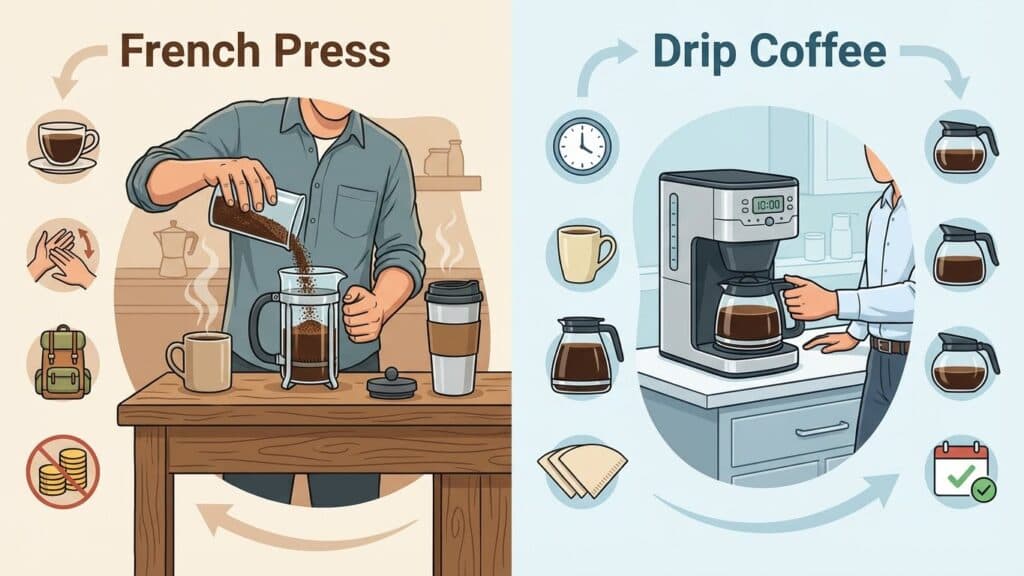
After weighing all the factors, here’s a quick guide to help you decide.
Choose French press if you:
- Prioritize flavor depth and full-bodied coffee above all else
- Enjoy the ritual of hands-on brewing
- Typically brew 1-4 cups at a time
- Don’t mind spending a few extra minutes on cleanup
- Want a portable option (great for camping or travel)
- Prefer a lower upfront cost with no ongoing filter expenses
Choose drip coffee if you:
- Value convenience and speed in your morning routine
- Prefer lighter, cleaner-tasting coffee
- Need to brew larger quantities regularly
- Want programmable features like delayed brewing
- Appreciate minimal cleanup effort
- Like having hot coffee available for extended periods
Conclusion: Making Your Choice
There’s no universal winner in the French press vs drip coffee debate—only the right choice for your specific needs. French press rewards those who appreciate bold, complex flavors and don’t mind a slightly more involved process. Drip coffee serves people who want reliable, convenient brewing with easy cleanup and the flexibility to make coffee for a crowd.
Many dedicated coffee lovers eventually own both. They use the drip machine for busy weekday mornings and save the French press for leisurely weekend brewing when they can savor the process. If you’re starting fresh, consider which factors matter most to you: flavor intensity, time investment, or daily convenience. Your answer points directly to your ideal brewing method.
Start with whichever method aligns with your current lifestyle, and don’t be afraid to experiment. Great coffee at home is about finding what works for you—not following someone else’s rules.

Comments