


Table of Contents
- How Espresso Machines and Moka Pots Actually Work
- The Espresso Machine Process
- The Moka Pot Process
- Taste and Coffee Quality Compared
- Cost Breakdown: Initial Investment and Long-Term Expenses
- Upfront Costs
- Ongoing Costs
- Ease of Use and Learning Curve
- Space and Convenience Factors
- Which One Should You Actually Buy First?
- Final Verdict and Recommendations
You’re standing in your kitchen, dreaming of café-quality coffee every morning. But here’s the dilemma: should you invest in an espresso machine or start with a humble moka pot? Both can deliver rich, concentrated coffee, yet they differ wildly in price, ease of use, and the type of brew they produce. If you’re trying to decide between an espresso machine vs moka pot for home use, you’re not alone—this is one of the most common questions among coffee enthusiasts just starting their journey.
If you are weighing manual brewing against machine convenience, it also helps to see a moka pot compared with drip brewing before choosing your first setup.
By the end of this guide, you’ll understand exactly how each brewing method works, what kind of coffee drinker each one suits best, and which option makes the most sense for your budget and lifestyle.
How Espresso Machines and Moka Pots Actually Work
Before comparing these two, it helps to understand what’s happening inside each device. The brewing process directly affects the taste, strength, and texture of your coffee.
The Espresso Machine Process
An espresso machine forces hot water through finely ground coffee at high pressure—typically around 9 bars. This pressure extracts oils, sugars, and soluble compounds quickly, producing a concentrated shot topped with crema (that golden-brown foam espresso lovers adore). The entire process takes about 25-30 seconds.
There are several types of espresso machines for home use:
- Manual lever machines that give you full control
- Semi-automatic machines where you control the shot timing
- Fully automatic machines that handle everything with one button
- Super-automatic machines that even grind the beans for you
The Moka Pot Process
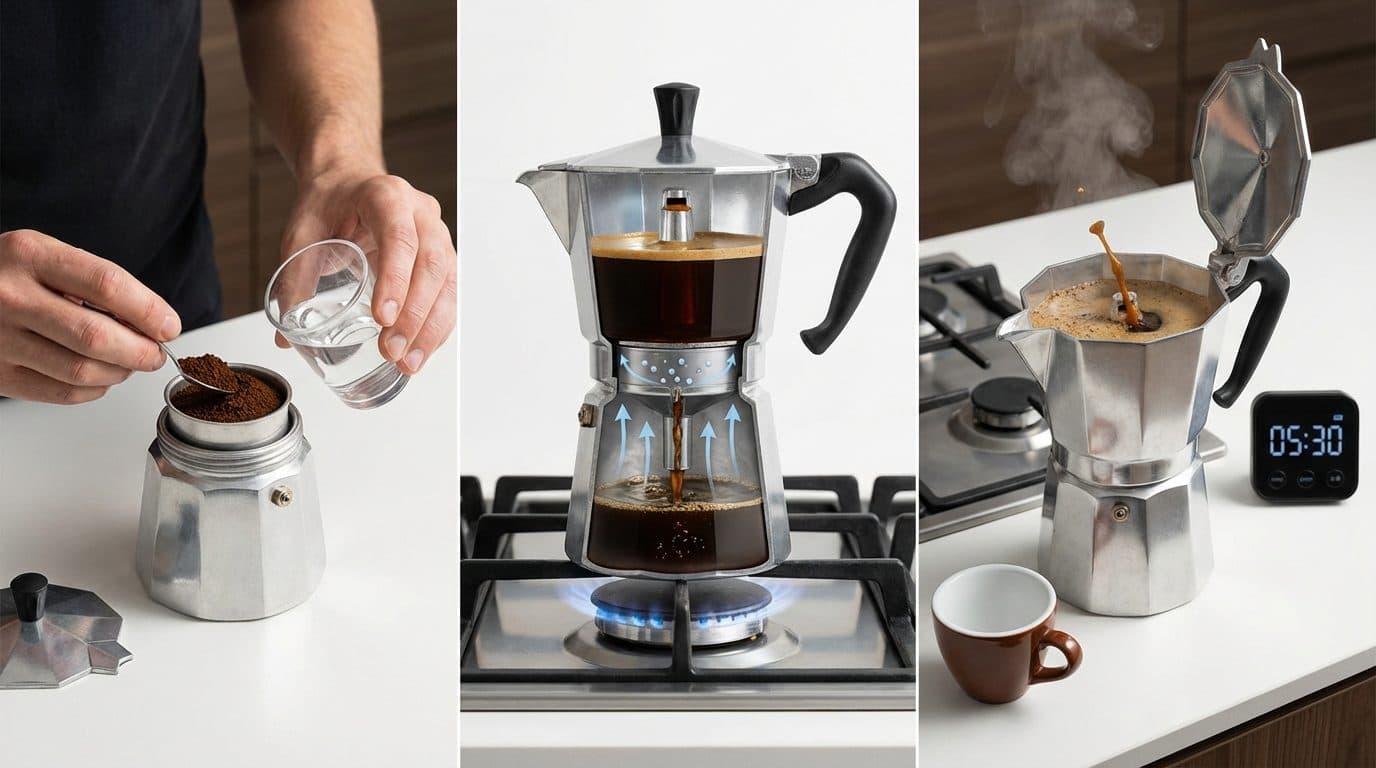
A moka pot uses steam pressure—about 1-2 bars—to push water from a bottom chamber through coffee grounds and into an upper chamber. The result is a strong, concentrated brew often called “stovetop espresso.” However, it’s technically not true espresso since the pressure is much lower.
The moka pot is beautifully simple: fill the bottom with water, add ground coffee to the filter basket, screw on the top, and place it on your stove. In about 5-7 minutes, you’ll hear that distinctive gurgling sound signaling your coffee is ready.
Taste and Coffee Quality Compared
Let’s be honest—taste is probably your biggest concern. Here’s where these two methods diverge significantly.
Espresso from a proper machine delivers a complex flavor profile with bright acidity, rich body, and that signature crema. The high pressure extracts compounds that lower-pressure methods simply can’t reach. If you love lattes, cappuccinos, or flat whites, an espresso machine is the only way to get that authentic base.
Moka pot coffee is bold and intense, but different. It has a slightly bitter edge and lacks crema entirely. Many people describe it as somewhere between drip coffee and espresso—stronger than your regular cup but without the syrupy texture of a true shot. For black coffee drinkers who want something punchy, a moka pot delivers.
Here’s a practical example: imagine making a latte. With an espresso machine, your shot cuts through the milk beautifully, creating that balanced coffee-forward drink. With moka pot coffee, the flavor tends to get lost in the milk, resulting in something closer to a strong café au lait.
Cost Breakdown: Initial Investment and Long-Term Expenses
Budget often determines which brewing method makes sense for a first-time buyer. The price gap between these options is substantial.
Upfront Costs
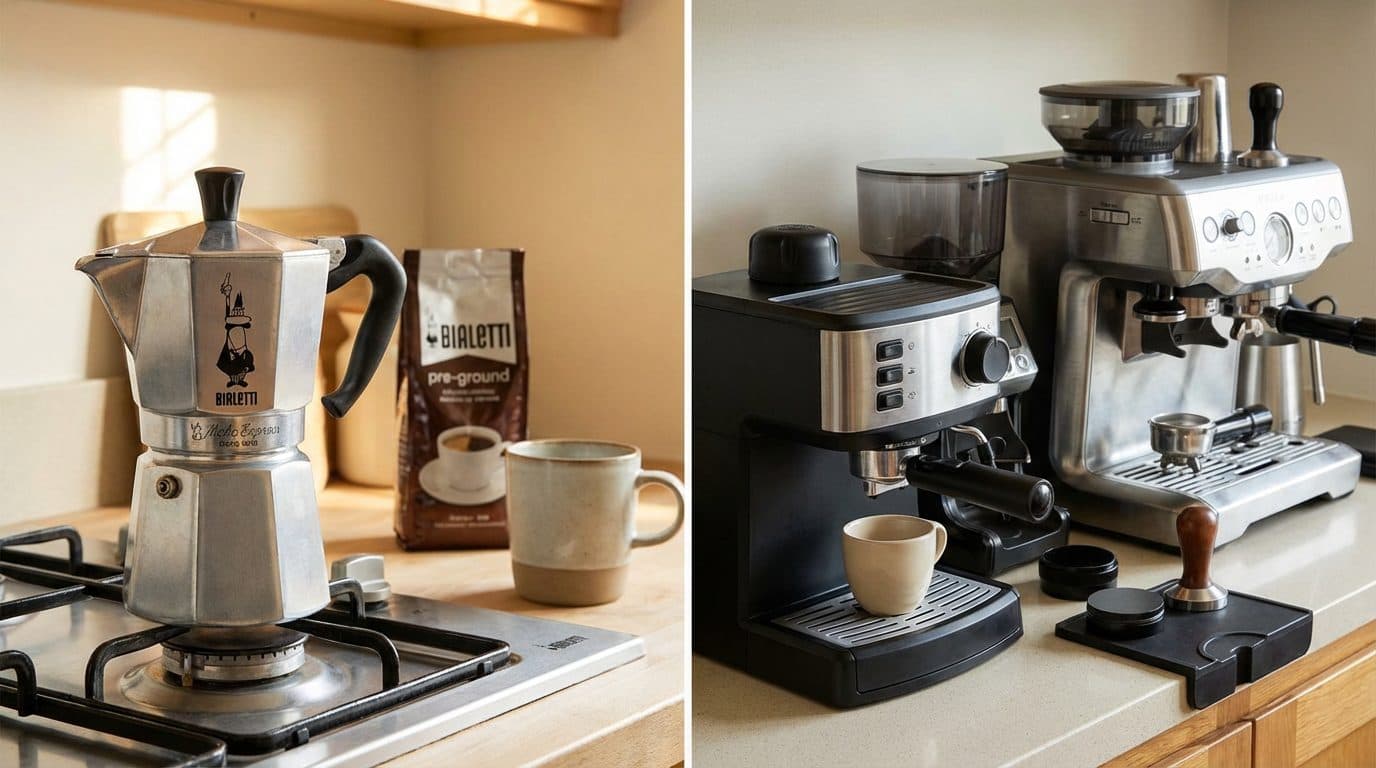
A quality moka pot costs between $25-50 for most home sizes. The classic Bialetti Moka Express, for instance, has been a kitchen staple for decades and remains affordable. You don’t need any additional equipment besides a stove and pre-ground coffee.
Entry-level espresso machines start around $100-200, but these budget options often struggle with temperature stability and pressure consistency. A reliable semi-automatic machine that produces genuinely good espresso typically costs $300-600. Add a decent grinder (essential for espresso), and you’re looking at another $150-400.
- Moka pot setup: $25-50 total
- Basic espresso setup: $450-1000 for machine plus grinder
- Premium home espresso setup: $1500+ easily
Ongoing Costs
Moka pots have virtually zero maintenance costs. Replace the rubber gasket every year or two for a few dollars, and you’re set. The device itself can last decades with basic care.
Espresso machines require descaling solutions, replacement gaskets, and occasional repairs. Some machines need backflushing with cleaning tablets. Over time, these costs add up, though they’re manageable for most home users.
Ease of Use and Learning Curve
How much time and effort are you willing to invest in your morning coffee ritual? This question matters more than most people realize.
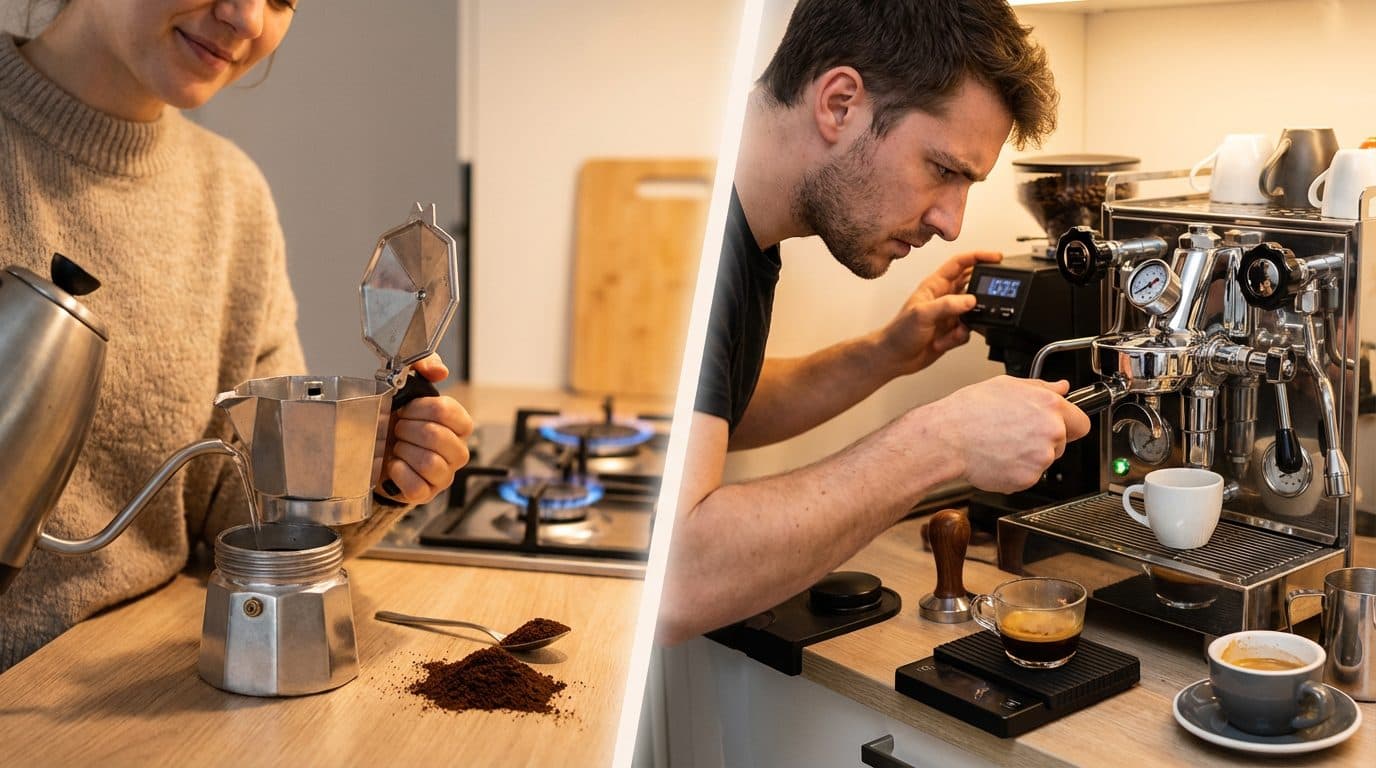
The moka pot is forgiving. Fill it up, apply heat, wait for the gurgle. Sure, you can optimize your technique—using pre-heated water, removing from heat at the right moment—but even a complete beginner will produce drinkable coffee on their first attempt. The learning curve is gentle.
Espresso machines demand more from you. Dialing in the perfect shot involves adjusting grind size, dose, tamp pressure, and extraction time. Your first few weeks might produce sour, bitter, or watery shots while you learn. Many home baristas spend months refining their technique.
Consider this scenario: it’s 6:30 AM, you’re half-asleep, and you need coffee before a work call. With a moka pot, you’re on autopilot. With an espresso machine, you might need to adjust your grinder because the humidity changed overnight, or troubleshoot why your shot is running too fast.
That said, the espresso learning curve is part of the appeal for many people. If you enjoy the process of mastering a craft, pulling shots becomes a satisfying ritual rather than a chore.
Space and Convenience Factors
Your kitchen setup plays a role in this decision too.
A moka pot takes up minimal counter space and stores easily in a cabinet. It’s also portable—perfect for camping trips, vacation rentals, or small apartments. Cleanup involves rinsing three parts under water. Total time from start to sipping: about 10 minutes.
Espresso machines are countertop appliances that demand permanent real estate. Even compact models need space for the machine itself, a knock box for spent grounds, and ideally a grinder nearby. Cleanup involves purging the group head, wiping the steam wand, and emptying the drip tray. Total time: 15-20 minutes including prep and cleanup.
If you’re in a tiny apartment or value simplicity, the moka pot wins on convenience. If you have space and don’t mind a more involved process, the espresso machine becomes viable.
Which One Should You Actually Buy First?
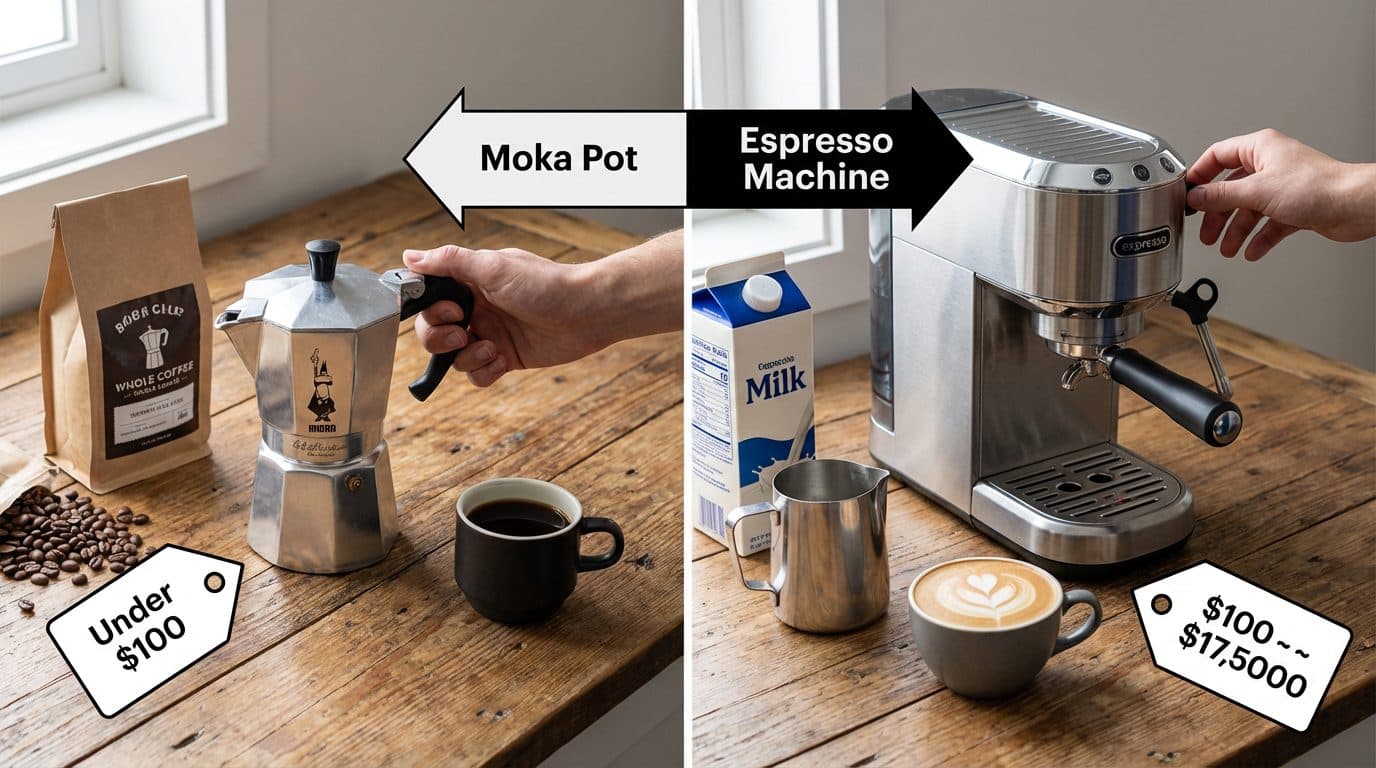
After weighing all these factors, here’s a straightforward framework for your decision.
Choose a moka pot first if:
- You’re new to specialty coffee and want to explore without major investment
- Your budget is under $100
- You primarily drink black coffee or Americano-style drinks
- You value simplicity and quick morning routines
- You have limited kitchen space
- You’re not sure if you’ll stick with the hobby long-term
Choose an espresso machine first if:
- You’re committed to making milk-based drinks like lattes and cappuccinos
- You have $500+ to invest in a quality setup
- You enjoy learning new skills and don’t mind a steep learning curve
- You have dedicated counter space
- You’ve already tried moka pot coffee and want something more refined
Many coffee enthusiasts actually recommend starting with a moka pot regardless of budget. It teaches you the basics of coffee extraction, helps you develop your palate, and costs little if you decide espresso isn’t for you. Think of it as coffee training wheels—useful even if you eventually upgrade.
Final Verdict and Recommendations
The espresso machine vs moka pot debate doesn’t have a universal winner. Each serves different needs, budgets, and coffee preferences. A moka pot offers an affordable entry point into concentrated coffee with minimal fuss. An espresso machine delivers authentic espresso and milk drinks but demands more money, space, and skill.
For most people buying their first home coffee setup, the moka pot makes practical sense. It’s low-risk, easy to use, and produces genuinely enjoyable coffee. Once you’ve used it for a few months and confirmed that you want to go deeper into the espresso world, upgrading to a machine becomes a more informed decision.
Whichever you choose, you’re taking a step toward better coffee at home. Start brewing, experiment with different beans, and enjoy the process of finding what works for your taste.


Comments