


Table of Contents
- Why Coffee Works So Well in Chili
- The Science Behind Coffee's Flavor-Boosting Power
- What Type of Coffee to Use in Chili
- Brewed Coffee vs. Espresso vs. Instant
- Roast Level Matters
- How Much Coffee to Add to Your Chili
- General Guidelines
- A Practical Example
- When to Add Coffee to Your Chili
- The Best Timing
- What About Adding Coffee at the End?
- Coffee-Enhanced Chili Recipe Framework
- What You'll Need
- Basic Steps
- Common Mistakes to Avoid
- Frequently Asked Questions
- Will my chili taste like coffee?
- Can I use decaf coffee in chili?
- Does coffee work in vegetarian or vegan chili?
- Can I combine coffee with cocoa powder?
- How do I adjust coffee amounts for slow cooker chili?
- The Bottom Line
Coffee belongs in chili when you want deeper, darker flavor without simply adding more heat. Used carefully, it should not make the pot taste like breakfast coffee. It adds roasted bitterness, a little backbone, and the kind of savory depth people often describe as “something extra” but cannot quite name.
The useful range is narrow: strong dark coffee can help a tomato-and-chile base taste rounder, while stale or flavored coffee can make the whole batch taste harsh. Start small, add it early, and treat it like cocoa powder or Worcestershire sauce: a supporting ingredient, not the point of the dish.
Why Coffee Works So Well in Chili
Chili already leans on roasted and browned flavors. Toasted dried chiles, cumin, seared meat, onions, garlic, and tomato paste all bring bitterness, sweetness, and savory notes. Coffee fits because it carries similar roasted compounds, so it can deepen the existing flavor instead of sending the recipe in a strange direction.
The biggest benefit is balance. Tomatoes and onions can push chili sweet or acidic. Dark coffee adds a controlled bitterness that keeps those flavors from feeling flat. In meat-heavy chili, it also reinforces the browned edge you get from a good sear, especially after a long simmer.
The Science Behind Coffee’s Flavor-Boosting Power

Roasted coffee contains melanoidins, the brown compounds formed during roasting and other high-heat cooking. You also meet them in toast crust, browned meat, roasted onions, and malt. That overlap is why coffee can feel natural in a savory pot once it has simmered with the spices.
Coffee also carries many aroma compounds, some nutty, smoky, earthy, or chocolate-like. Food scientists often describe this as interaction between aroma, bitterness, salt, acid, and fat. You do not need a lab coat to use it; you only need to keep the dose modest and give the pot enough time.
Key takeaway: Coffee is best used as a flavor bridge. It links tomatoes, chiles, browned meat, beans, and spices into a darker, more unified chili.
What Type of Coffee to Use in Chili
The right coffee is plain, fresh, and fairly dark. The wrong coffee is old, scorched, flavored, or aggressively fruity. Chili is forgiving, but it will not hide a stale pot that already tastes unpleasant on its own.
Brewed Coffee vs. Espresso vs. Instant
| Coffee Type | Flavor Intensity | Best For | Notes |
|---|---|---|---|
| Brewed Coffee | Mild to Medium | Larger batches, subtle flavor | Use strong brew for best results |
| Espresso | Strong | Intense depth, smaller batches | A little goes a long way |
| Instant Coffee | Adjustable | Convenience, precise control | Dissolves easily, no brewing needed |
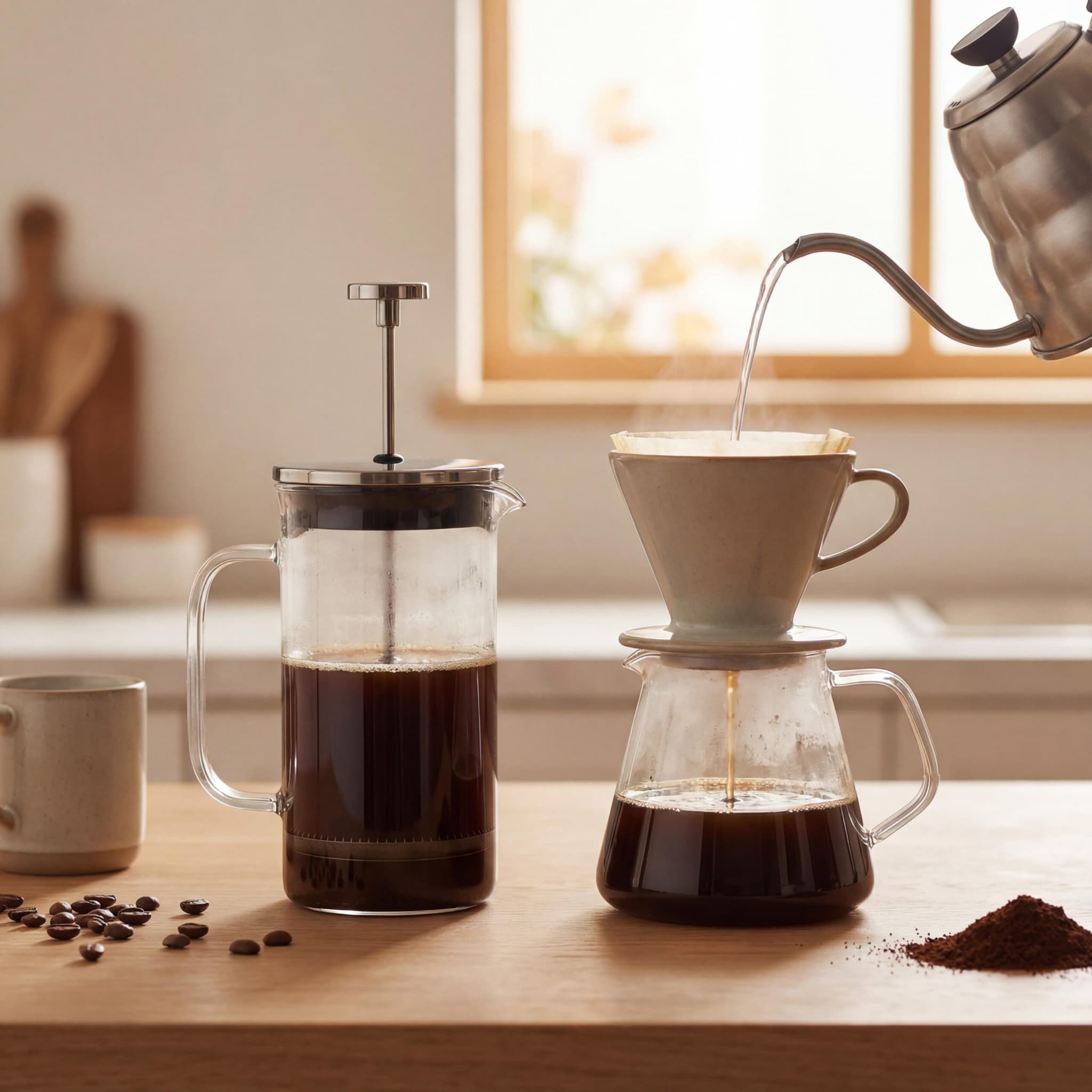
Strong brewed coffee is the easiest choice for most cooks. Espresso is useful when you want intensity without adding much liquid, but it can take over quickly. Instant coffee is underrated here because it gives you tight control: dissolve a teaspoon or two in a splash of hot water, stir it in, then taste.
If you are using leftover coffee, taste it first. Coffee that has sat on a hot plate for hours turns sharp and papery, and those flavors follow it into the chili. Fresh instant granules are usually better than a bitter half-pot from breakfast.
Roast Level Matters

Dark roast usually works best because its smoky, bittersweet profile makes sense beside chile powder and cumin. Medium roast can work if it tastes chocolatey or nutty. Light roast is riskier; bright berry, floral, or citrus notes can clash with beef, beans, and tomato.
Cook’s note: French roast, Italian roast, or any plain dark blend is a safe starting point. Skip vanilla, hazelnut, caramel, pumpkin spice, and other flavored coffees.
How Much Coffee to Add to Your Chili
Most bad coffee-chili experiments fail because the cook adds too much at once. Coffee should round the pot, not announce itself from across the table.
General Guidelines
- For 1 pound of meat: Use 1/4 to 1/2 cup of strongly brewed coffee
- For 2 pounds of meat: Use 1/2 to 3/4 cup of brewed coffee
- When using espresso: Start with 1-2 tablespoons per pound of meat
- When using instant coffee: Dissolve 1-2 teaspoons in a small amount of hot water
Start at the low end if your recipe already includes cocoa, beer, chipotle, dark chile paste, or a lot of tomato paste. Those ingredients already bring bitterness and roasted depth. If the chili still tastes thin after 30 minutes of simmering, add a little more coffee and give it time before judging again.
A Practical Example

For a classic two-pound beef chili with crushed tomatoes, beans, onion, garlic, broth, and spices, add 1/2 cup of strong black coffee with the other liquids. Simmer for at least an hour. By serving time, the flavor should read as deeper and slightly smoky rather than plainly coffee-like.
If you are making a smaller weeknight batch, use 1/4 cup or 1 teaspoon of instant coffee dissolved in water. Taste after it simmers, not immediately after stirring it in. Freshly added coffee can taste sharper before it has blended with fat, salt, and spices.
When to Add Coffee to Your Chili
Add coffee early for subtle depth and late for a stronger roasted note. That one timing choice changes the result more than most people expect.
The Best Timing
For balanced chili, add coffee after browning the meat and blooming the spices, at the same time you add tomatoes, broth, beer, or water. That timing lets the coffee simmer into the sauce and lose its separate edge.
A long simmer matters. One to two hours gives the coffee time to connect with the chiles and tomato. For a 30-minute chili, use a lighter hand because the coffee will have less time to mellow.
What About Adding Coffee at the End?
Adding coffee in the last 15 to 20 minutes is valid, but it gives a more obvious roasted-coffee presence. That can be good in a chili built around cocoa, chipotle, and dark beer. For a standard family chili, early addition is usually safer.
Coffee-Enhanced Chili Recipe Framework
What You’ll Need

Ingredients:
- 2 pounds ground beef, turkey, pork, or a blend
- 1 large onion, diced
- 4 cloves garlic, minced
- 1 can (28 oz) crushed tomatoes
- 1 can (15 oz) kidney beans, drained and rinsed
- 1/2 cup strongly brewed dark coffee, or 2 tablespoons espresso
- 3 tablespoons chili powder
- 2 teaspoons cumin
- 1 teaspoon smoked paprika
- Salt and black pepper to taste
- 1 cup beef broth, chicken broth, or vegetable broth
Gear:
- Large Dutch oven or heavy-bottomed pot
- Wooden spoon or heat-safe spatula
- Coffee maker, espresso machine, or instant coffee
Basic Steps
- Brown the ground meat over medium-high heat, breaking it into small crumbles. Drain excess fat if the pot looks greasy.
- Add onion and cook until softened, about 5 minutes. Stir in garlic and cook for 30 to 60 seconds.
- Add chili powder, cumin, and smoked paprika. Stir for about 30 seconds so the spices bloom in the fat.
- Pour in crushed tomatoes, broth, and brewed coffee. Scrape the bottom of the pot so the browned bits dissolve into the sauce.
- Add beans, bring the pot to a simmer, then lower the heat. Cover partly and cook for at least 1 hour, stirring now and then.
- Taste near the end. Adjust salt, pepper, chile heat, and acidity before serving.
Taste profile: Savory, slightly smoky, and rounded. The coffee should make the chili taste fuller, with enough bitterness to balance the tomatoes without turning the bowl harsh.
Common Mistakes to Avoid

The technique is simple, but a few choices can make coffee taste like a mistake instead of a smart addition.
- Using flavored coffee: Sweet dessert flavors fight the savory base. Plain coffee only.
- Using burnt coffee: If it tastes acrid in a cup, it will taste acrid in chili.
- Adding a full mug without measuring: A mug can be 10 to 16 ounces. Measure the first time.
- Skipping the simmer: Coffee needs time with fat, tomato, salt, and spices to soften.
- Confusing bitterness with heat: Coffee does not replace chile peppers. It adds depth, not spice.
Frequently Asked Questions
Will my chili taste like coffee?
It should not. If you can identify coffee immediately, the dose was probably too high or it was added too late for the style of chili you wanted.
Can I use decaf coffee in chili?
Yes. Decaf works well because the flavor contribution comes mostly from roasted coffee solids and aroma compounds, not caffeine. It is a sensible choice for late dinners or caffeine-sensitive guests.
Does coffee work in vegetarian or vegan chili?
Yes, often very well. Vegetarian chili can lack the browned-meat depth people expect from classic chili, and coffee helps add a roasted, savory layer. Pair it with mushrooms, beans, smoked paprika, or toasted dried chiles for the best result.
Can I combine coffee with cocoa powder?
Yes. Coffee and unsweetened cocoa are a strong pair in chili because both add bitterness and dark complexity. Start with 1 tablespoon cocoa powder and 1/4 to 1/2 cup coffee for a standard batch, then adjust after simmering.
How do I adjust coffee amounts for slow cooker chili?
Use slightly less coffee because slow cookers do not reduce liquid as aggressively as stovetop pots. For a standard slow cooker batch, start with 1/4 cup brewed coffee or 1 teaspoon instant coffee dissolved in water.
The Bottom Line
Coffee is useful in chili because it adds roasted depth, bitterness, and structure. It is not magic, and it cannot fix under-salted chili, weak spices, or meat that was never browned. But in a solid recipe, it can make the pot taste more complete.
Use fresh plain dark coffee, add it with the cooking liquid, and let the chili simmer long enough for the flavor to settle. If you are skeptical, test it on a half batch first. The right amount should make people ask why the chili tastes richer, not why it tastes like coffee.



Comments