


Table of Contents
- Quick Verdict: Cheap vs. Expensive Filters
- What Actually Makes Coffee Filters Different?
- Paper Thickness and Porosity
- Bleached vs. Unbleached
- Fiber Quality and Sourcing
- The Taste Test: Can You Actually Tell the Difference?
- My Side-by-Side Experiment
- When Filter Quality Matters Most
- Cheap vs. Expensive Coffee Filters: Direct Comparison
- Who Should Buy Expensive Filters (And Who Shouldn't)
- Who Are Expensive Filters For?
- Who Are Expensive Filters NOT For?
- The Smart Middle Ground: Best Value Filter Recommendations
- For Pour-Over (V60, Chemex, Kalita)
- For Auto-Drip Machines
- Consider Reusable Filters
- Key Takeaway
- Practical Tips for Getting the Most From Any Filter
- Conclusion and Final Recommendations
You’re standing in the coffee aisle, staring at a wall of paper filters. Some cost a few dollars for a hundred, while others are nearly triple the price for the same quantity. A small voice in your head asks: “Does it really matter?” After all, it’s just paper, right? Well, I’ve spent years brewing countless cups and testing filters at every price point, and the answer isn’t as simple as you might think.
In this guide, we’ll break down exactly what separates cheap filters from expensive ones, whether you can actually taste the difference, and most importantly, which one deserves a spot in your kitchen. By the end, you’ll know whether those premium filters are worth the splurge or if your money is better spent on better beans.
Quick Verdict: Cheap vs. Expensive Filters
Mid-range filters are the sweet spot for most home baristas. Premium filters like Chemex bonded or bleached Melitta offer noticeably cleaner cups and better flow consistency, but you don’t need to buy the absolute most expensive option. Budget filters work fine in a pinch, but they can impart papery flavors and create inconsistent extraction. If you brew daily, spending a few extra dollars per hundred filters genuinely improves your coffee experience.
What Actually Makes Coffee Filters Different?
Before we dive into the cheap vs. expensive debate, let’s understand what we’re comparing. Coffee filters aren’t just thin paper—they’re engineered products with specific characteristics that affect your brew.
Paper Thickness and Porosity
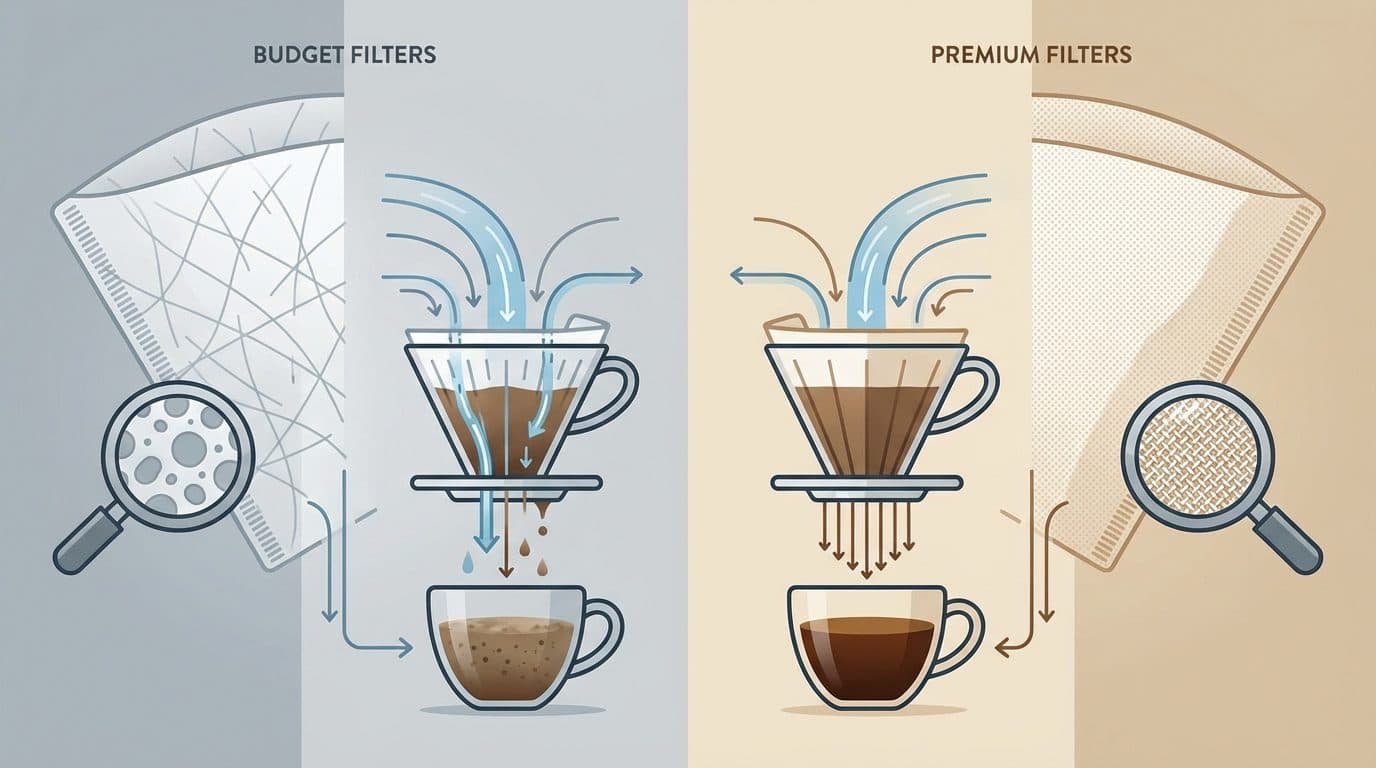
The thickness of a filter determines how quickly water passes through and how many oils and fine particles end up in your cup. Cheap filters tend to be thinner and less consistent in their thickness across the surface. This means some areas let water rush through while others slow it down, creating uneven extraction.
Premium filters use denser paper with more uniform porosity. In my experience, this translates to a more balanced cup where every sip tastes the same. Budget filters sometimes give you that first delicious sip followed by increasingly bitter or thin-tasting coffee as you work through the cup.
Bleached vs. Unbleached
You’ll notice filters come in white (bleached) and brown (unbleached) varieties at nearly every price point. Here’s the quick breakdown:
- Bleached filters – Processed with either chlorine or oxygen. Oxygen-bleached options are environmentally friendlier and don’t impart any taste.
- Unbleached filters – More natural but can add a subtle papery or cardboard-like flavor if not rinsed properly before brewing.
Interestingly, expensive unbleached filters often taste cleaner than cheap bleached ones. The quality of the base paper matters more than the bleaching process.
Fiber Quality and Sourcing
Premium brands typically use higher-quality wood pulp fibers that are longer and more uniform. Cheaper filters often use recycled fibers or shorter pulp strands, which can break down during brewing and let sediment into your cup. I once used a bargain brand that left tiny paper fragments floating in my coffee—not exactly appetizing.
The Taste Test: Can You Actually Tell the Difference?
Let’s get to what really matters: does the filter affect how your coffee tastes? The short answer is yes, but the degree depends on several factors.
My Side-by-Side Experiment
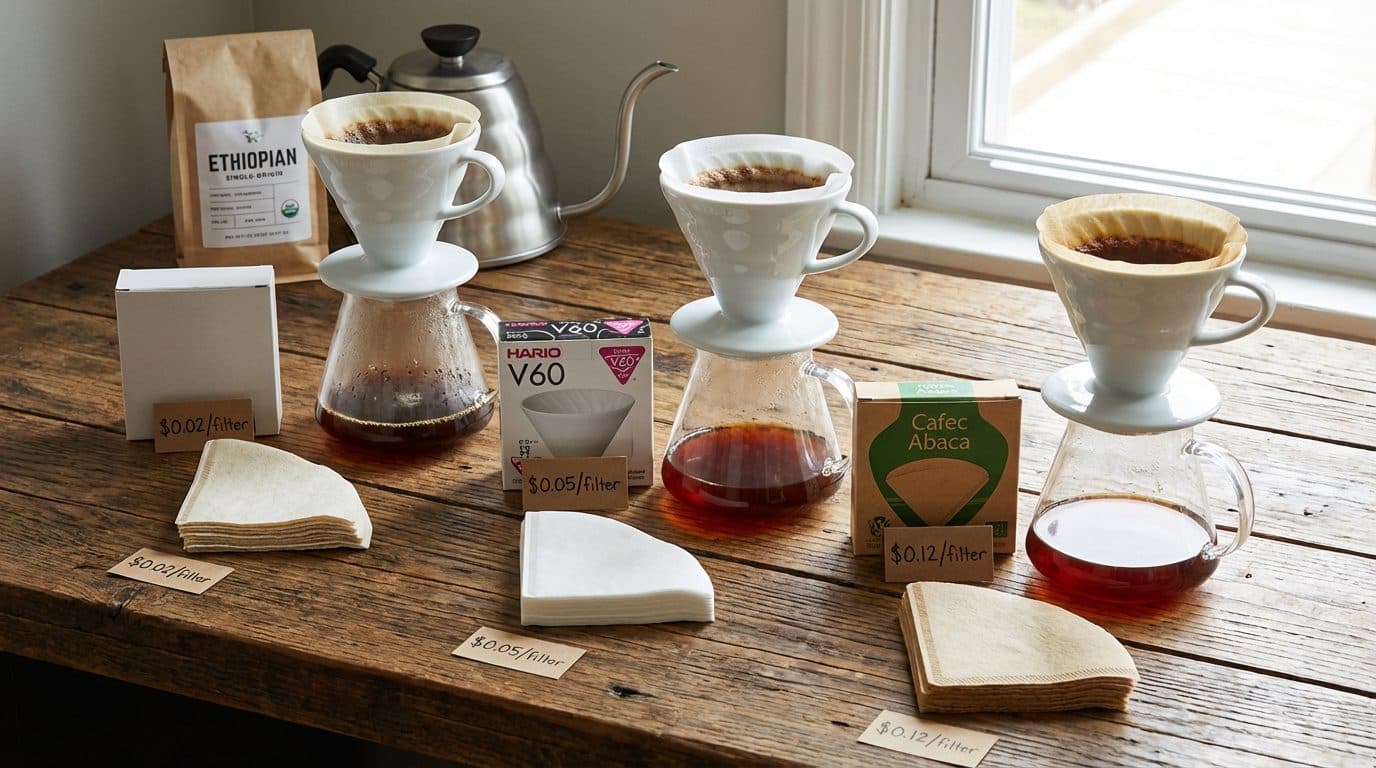
I brewed the same single-origin Ethiopian beans using my V60 with three different filters: a generic store brand (about $0.02 per filter), a mid-range option from Hario (about $0.05 per filter), and premium Cafec Abaca filters (about $0.12 per filter). Same water temperature, same grind size, same technique.
The results surprised me. The cheap filter produced a cup with noticeable papery undertones and a slightly muddier body. The Hario filter was clean and bright—exactly what I expected from those beans. The premium Cafec filter was marginally cleaner with slightly more pronounced fruit notes, but honestly? The difference between mid-range and premium was subtle.
When Filter Quality Matters Most
Here’s what I’ve learned after years of home brewing:
- Light roasts and single-origins – These delicate coffees show filter differences more dramatically. If you’re paying for specialty beans, don’t undermine them with terrible filters.
- Pour-over methods – V60, Chemex, and Kalita Wave all depend heavily on controlled flow rates. Cheap, inconsistent filters can ruin your technique.
- Dark roasts and blends – The bold flavors here tend to mask filter-related off-tastes. Budget filters work reasonably well.
- Auto-drip machines – Since you’re not manually controlling the pour, filter consistency matters less. Mid-range is still better, but you can get away with cheaper options.
Cheap vs. Expensive Coffee Filters: Direct Comparison
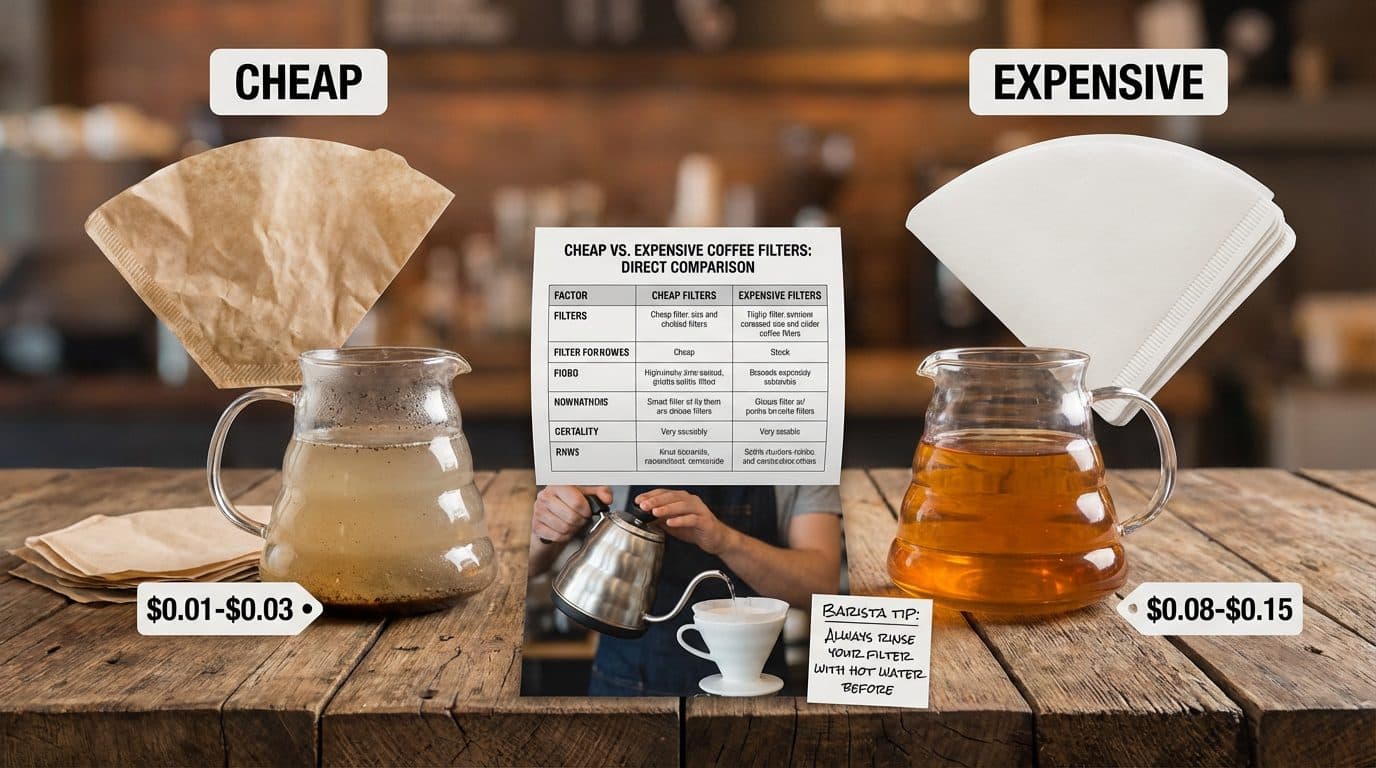
Let’s break this down in a way that’s easy to reference when you’re making your next purchase.
| Factor | Cheap Filters | Expensive Filters |
|---|---|---|
| Price per filter | $0.01–$0.03 | $0.08–$0.15 |
| Paper thickness | Thin, inconsistent | Thick, uniform |
| Flow rate | Variable, often too fast | Consistent, optimized |
| Taste impact | May add papery notes | Clean, neutral |
| Durability | Can tear or collapse | Holds shape well |
| Sediment | More fines pass through | Cleaner cup |
Barista Tip: Always rinse your filter with hot water before brewing, regardless of price. This removes loose paper fibers and preheats your brewing device. Budget filters especially benefit from a good rinse—it can eliminate most of that cardboard taste.
Who Should Buy Expensive Filters (And Who Shouldn’t)
Let me be honest: premium filters aren’t for everyone. Here’s how to decide where you fall.
Who Are Expensive Filters For?
- Home baristas who buy specialty-grade beans and want to taste every nuance
- Pour-over enthusiasts who geek out over extraction and technique
- Anyone who’s noticed papery or off flavors in their current setup
- People brewing for guests and wanting consistently impressive results
Who Are Expensive Filters NOT For?
- Casual coffee drinkers who add cream and sugar
- People who primarily use dark roasts or pre-ground coffee
- Anyone brewing large batches in a standard drip machine
- Budget-conscious folks who’d rather spend extra money on better beans
Here’s a scenario: if you’re buying premium $20-per-bag single-origin coffee and using fifty-cent generic filters, you’re leaving flavor on the table. But if you’re brewing Folgers for your morning caffeine fix, splurging on Chemex filters is overkill.
The Smart Middle Ground: Best Value Filter Recommendations
After testing dozens of options, here are my go-to recommendations that balance quality and cost.
For Pour-Over (V60, Chemex, Kalita)
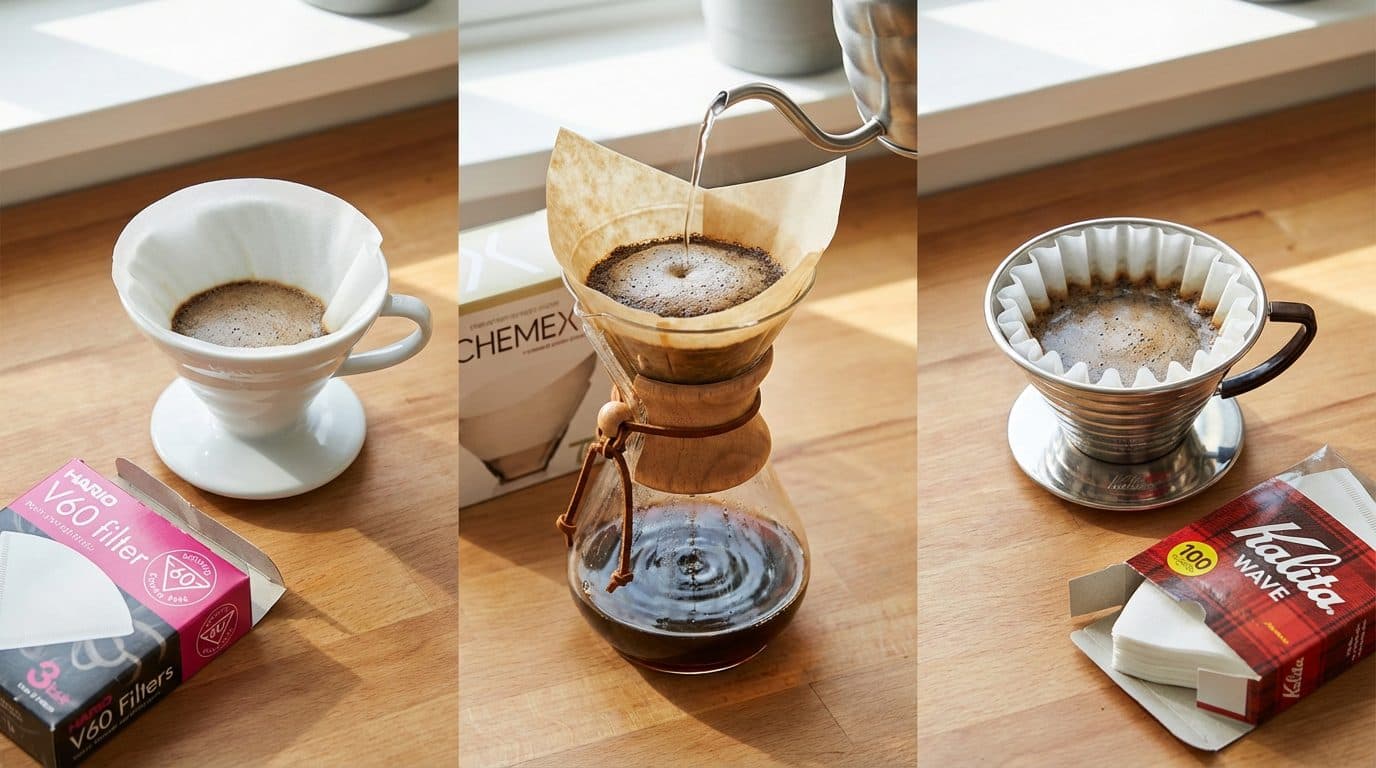
Use the brand-specific filters designed for your brewer. Hario V60 filters, Chemex bonded filters, and Kalita Wave filters are engineered for those specific devices. They’re not the cheapest, but they’re not outrageously expensive either, and they work exactly as intended.
Pros:
- Optimized fit and flow for your specific brewer
- Consistent results batch after batch
- Clean taste with no papery notes
Cons:
- Can’t easily substitute between brewers
- Cost adds up if you brew multiple cups daily
For Auto-Drip Machines
Melitta or Filtropa filters offer excellent quality at reasonable prices. Skip the absolute cheapest store brands, but you don’t need boutique options either. These filters are thick enough for clean extraction and affordable enough for daily use.
Pros:
- Widely available at most grocery stores
- Good balance of quality and affordability
- Available in both basket and cone styles
Cons:
- Not as refined as specialty pour-over filters
- Quality can vary slightly between batches
Consider Reusable Filters
If you’re tired of the filter debate entirely, metal or cloth reusable filters are worth exploring. They eliminate ongoing costs and produce a different cup—fuller bodied with more oils. I keep a metal filter for my AeroPress when I want that richer mouthfeel. Just know that they require more cleaning and produce a noticeably different flavor profile.
Key Takeaway
The difference between cheap and expensive coffee filters is real, but it’s not dramatic. Think of it like cooking oil: the cheapest option might leave an off-taste, the premium option is pristine but pricey, and something in the middle serves most cooks perfectly well. For daily home brewing, mid-range filters from reputable brands deliver 90% of the performance at 50% of the premium price.
Practical Tips for Getting the Most From Any Filter
Regardless of which filters you choose, these habits will help you brew better coffee:
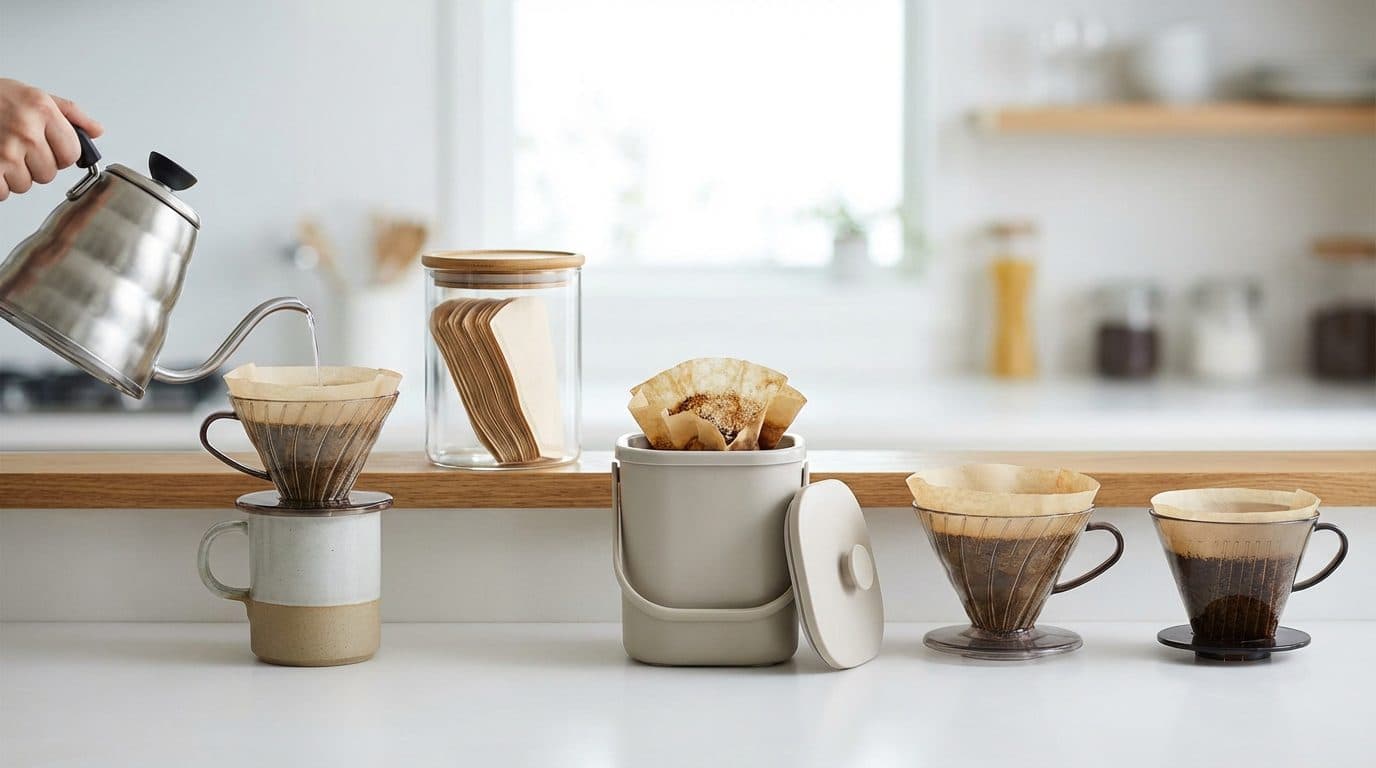
- Always pre-wet your filter – This rinses away paper dust and loose fibers while preheating your brewer.
- Store filters in a dry place – Moisture can cause filters to stick together and develop off-flavors.
- Don’t reuse paper filters – They’re designed for single use. Reusing them leads to weak, stale-tasting coffee.
- Match your grind to your filter – Thick filters can handle finer grinds; thin filters need coarser grounds to avoid over-extraction.
- Buy in reasonable quantities – Paper filters don’t improve with age. Purchase what you’ll use in a few months.
I’ve made the mistake of buying a massive box of bargain filters only to regret it for the next six months. Life is too short for bad coffee—and definitely too short for a thousand mediocre filters.
Conclusion and Final Recommendations
So, do cheap vs. expensive filters matter? They do, but perhaps not as much as marketing would have you believe. The biggest quality jump happens when you move from the absolute cheapest generic filters to decent mid-range options. Going from mid-range to premium yields diminishing returns that only the most discerning palates will appreciate.
My recommendation: invest in proper filters for your specific brewer, pre-wet them every time, and focus your remaining budget on great beans and good water. Those factors will impact your cup far more than the difference between a $0.05 and $0.12 filter. Start experimenting with what you have, pay attention to how your coffee tastes, and adjust from there. Your perfect cup is waiting.



Comments