


Table of Contents
- Quick Verdict: Flat White
- Understanding the Core Differences
- Cappuccino: The Foam Lover's Choice
- Latte: The Smooth, Mellow Option
- Flat White: The Espresso-Forward Favorite
- Practical Tips for Making These at Home
- Milk Steaming Basics
- Espresso Quality
- Temperature Matters
- Choosing the Right Milk
- Summary and Your Next Step
You’ve finally invested in an espresso machine or a quality moka pot, and now you’re staring at recipes wondering: what exactly separates a cappuccino from a latte from a flat white? You’re not alone. These three drinks look similar, taste different, and can be surprisingly tricky to nail at home. The good news? Once you understand the ratios and techniques, you’ll be pulling café-quality drinks in your own kitchen.
In this guide, I’ll break down the key differences between cappuccino, latte, and flat white so you can decide which one suits your taste—and your morning routine. Life is too short for bad coffee, so let’s get this right.
Quick Verdict: Flat White
If you want the strongest coffee flavor with silky milk texture, go for the flat white. It’s the most espresso-forward of the three and requires less milk, making it easier to steam properly at home. Cappuccinos are perfect if you love foam and texture variety, while lattes work best when you want a milder, creamier drink to sip slowly.
Understanding the Core Differences

All three drinks share the same two ingredients: espresso and steamed milk. The magic lies in the ratios and how the milk is textured. Here’s a simple breakdown:
| Drink | Espresso | Steamed Milk | Foam | Total Size |
|---|---|---|---|---|
| Cappuccino | 1 shot (30ml) | 60ml | 60ml (thick) | 150ml |
| Latte | 1-2 shots (30-60ml) | 180-240ml | Thin layer | 240-300ml |
| Flat White | 2 shots (60ml) | 120ml | Microfoam only | 150-180ml |
In my experience, the flat white is the most forgiving for beginners because you need less milk volume and the microfoam technique is more straightforward than creating the thick, dry foam required for a proper cappuccino.
Cappuccino: The Foam Lover’s Choice
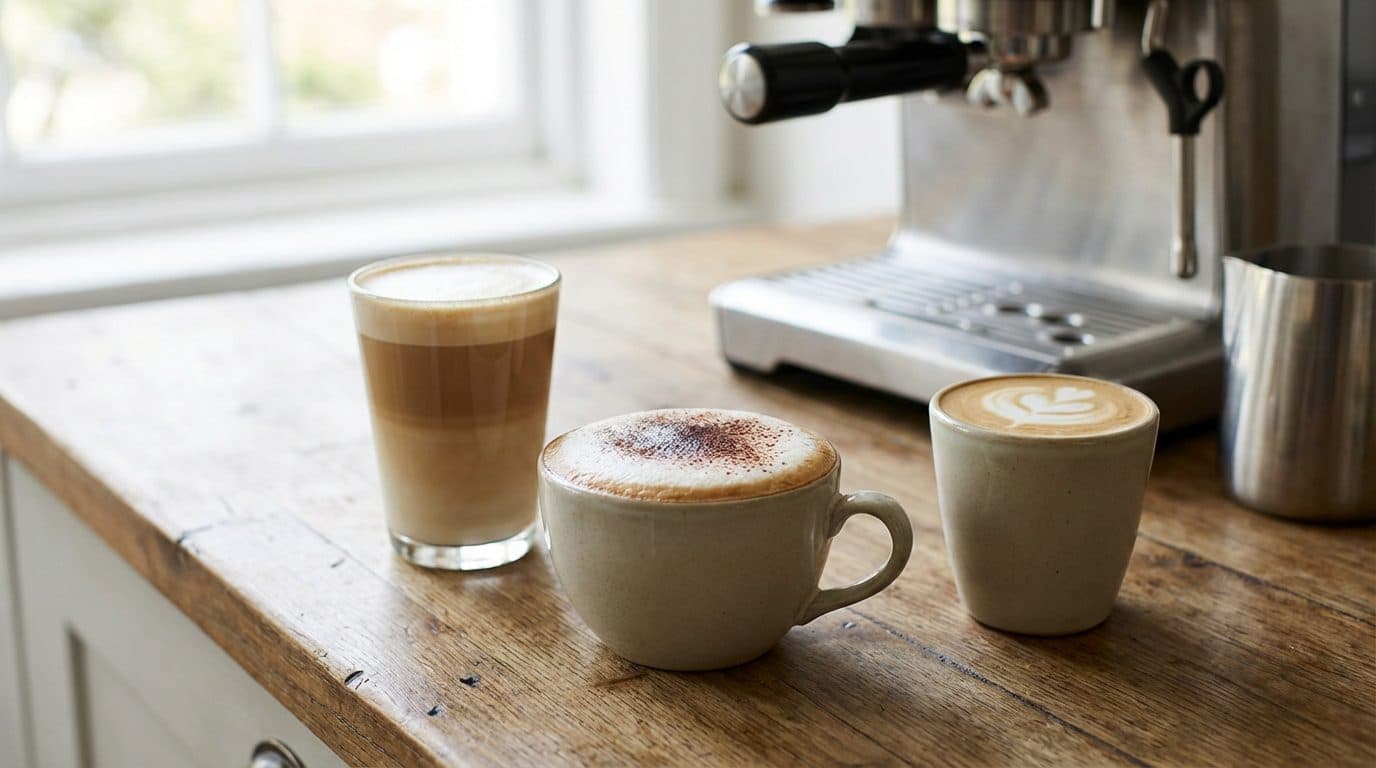
A traditional cappuccino follows the rule of thirds: equal parts espresso, steamed milk, and milk foam. This creates distinct layers and a satisfying textural experience. When made correctly, you get the bold espresso punch first, followed by creamy milk, topped with airy foam.
Pros:
- Strong coffee flavor that cuts through the milk
- Satisfying foam texture adds variety to each sip
- Smaller size means less milk consumption
- Classic presentation that feels special
Cons:
- Thick foam is harder to create with home equipment
- Foam can separate quickly if not made properly
- Cools down faster due to the airy foam layer
- Not ideal for latte art practice
Who is this for? You’ll love cappuccinos if you enjoy texture contrast in your drinks and prefer a stronger espresso presence. It’s also great if you’re watching your calorie intake since it uses less milk than a latte.
Who is this NOT for? Skip the cappuccino if you find foam annoying or if your steam wand struggles to create thick, stable foam. It’s also not the best choice if you like to nurse your coffee slowly—it’s meant to be enjoyed relatively quickly.
Barista Tip: For home cappuccinos, try the “stretch and swirl” method. Stretch the milk (introduce air) for the first 3-4 seconds, then submerge the wand and create a whirlpool until you reach temperature. This builds that signature thick foam layer.
Latte: The Smooth, Mellow Option

The latte is essentially espresso swimming in a sea of steamed milk with just a thin cap of microfoam. It’s the mildest of the three, making it perfect for those who want coffee flavor without intensity. I’ve found that lattes are what most people actually want when they say they like “coffee with milk.”
Pros:
- Smooth, creamy texture throughout
- Mild flavor that’s approachable for everyone
- Larger size means longer enjoyment
- Perfect canvas for latte art
- Easy to customize with syrups and flavors
Cons:
- Espresso flavor gets diluted significantly
- Higher calorie content due to more milk
- Requires more milk-steaming practice for proper texture
- Can taste watery if espresso isn’t strong enough
Who is this for? Lattes are ideal if you prefer milder coffee, enjoy adding flavored syrups, or want to practice latte art. They’re also great for sharing with guests who might not be hardcore coffee enthusiasts.
Who is this NOT for? If you want to actually taste your espresso, a latte will disappoint you. The milk dominates, so coffee purists often find lattes too diluted.
Here’s a mini scenario: imagine you’ve just pulled a beautiful shot of single-origin Ethiopian espresso with fruity notes. In a latte, those delicate flavors will vanish under all that milk. Save your fancy beans for flat whites or cappuccinos instead.
Flat White: The Espresso-Forward Favorite

Originating from Australia and New Zealand, the flat white has become the drink of choice for those who want strong coffee flavor with velvety milk texture. It uses a double shot of espresso with less milk than a latte, and the milk is steamed to create microfoam—tiny, uniform bubbles that integrate completely with the liquid.
Pros:
- Strongest coffee flavor of the three
- Silky, velvety texture without heavy foam
- Smaller size keeps the drink hot longer
- Microfoam is easier to achieve than thick cappuccino foam
- Showcases espresso quality better
Cons:
- Less forgiving of poor espresso shots
- Smaller size might feel insufficient for some
- Requires good milk-steaming technique for proper microfoam
- Can taste too intense if you prefer milder drinks
Who is this for? The flat white is perfect if you love espresso and want the milk to complement rather than mask it. It’s also ideal for home baristas who’ve invested in quality beans and want to taste what they’re paying for.
Who is this NOT for? If you find straight espresso too strong or prefer larger, more leisurely drinks, the flat white might feel too intense and too small.
In short: think of the flat white as espresso with just enough milk to smooth out the edges while keeping the coffee front and center.
Practical Tips for Making These at Home
Your equipment matters, but technique matters more. Here’s what I’ve learned from years of home brewing:
Milk Steaming Basics
For cappuccinos, you need to introduce more air into the milk during the first few seconds of steaming. This creates the thick, dry foam that sits on top. For lattes and flat whites, minimize the air introduction and focus on creating a smooth, paint-like texture with tiny bubbles throughout.
Espresso Quality

A weak or poorly extracted espresso will taste sour or bitter in all three drinks, but it’s most noticeable in flat whites. If your shots aren’t tasting right, work on your grind size and dose before worrying about milk technique.
Temperature Matters
Steam your milk to around 60-65°C (140-150°F). Going hotter will scald the milk and create an unpleasant taste. I’ve ruined plenty of drinks by overheating—trust the thermometer or learn to feel when the pitcher becomes too hot to hold comfortably.
- Use cold, fresh milk straight from the fridge
- Purge your steam wand before and after each use
- Tap the pitcher on the counter to pop large bubbles
- Swirl the milk to integrate the foam before pouring
Choosing the Right Milk
Whole milk creates the best texture and sweetness for all three drinks. If you’re using plant-based alternatives, barista-edition oat milk performs closest to dairy. Almond and soy can work but require more practice to steam properly.
Summary and Your Next Step
The difference between cappuccino, latte, and flat white comes down to milk ratio and texture. Cappuccinos offer bold espresso with thick foam layers. Lattes provide a mild, creamy experience with lots of milk. Flat whites deliver the strongest coffee flavor with silky microfoam.
My recommendation for home drinkers just starting out: begin with flat whites. They require less milk, showcase your espresso quality, and the microfoam technique translates well to other drinks once you’ve mastered it. From there, experiment with cappuccino foam or scale up to lattes based on your taste preferences.
Pick one drink, practice it for a week, and you’ll be surprised how quickly your skills improve. Your morning coffee ritual is about to get a serious upgrade.



Comments