


Table of Contents
- Quick Verdict: Breville Barista Express Impress
- What Makes an Espresso Machine and Grinder Combo "Good Value"?
- The Three Pillars of Value
- Integrated vs. Separate Units
- Best All-in-One Espresso Machine and Grinder Combos
- Breville Barista Express Impress ($750–$900)
- Breville Barista Pro ($850–$1,000)
- De'Longhi La Specialista Arte ($500–$600)
- Best Separate Espresso Machine and Grinder Combos for Value
- Budget Champion: Gaggia Classic Pro + Baratza Sette 30 ($550 + $280)
- Mid-Range Excellence: Rancilio Silvia Pro X + Eureka Mignon Notte ($1,050 + $350)
- Best Value Grinder for Any Setup: 1Zpresso JX-Pro ($170)
- Common Mistakes to Avoid When Buying
- Mistake 1: Overspending on the Machine, Underspending on the Grinder
- Mistake 2: Buying Based on Features You Won't Use
- Mistake 3: Ignoring Long-Term Costs
- Mistake 4: Expecting Super-Automatic Convenience from Semi-Automatic Quality
- Conclusion and Your Next Step
Quick Verdict: Breville Barista Express Impress
After testing dozens of setups and helping countless home baristas find their perfect match, the Breville Barista Express Impress stands out as the best value-for-money espresso machine and grinder combo for most home users. It delivers consistent, café-quality shots without requiring years of barista training, and the integrated grinder eliminates the guesswork that frustrates so many beginners.
But here’s the thing: “best value” means different things to different people. A $300 combo that makes decent espresso might be perfect value for a casual coffee drinker, while a $1,200 setup could represent incredible value for someone serious about the craft. That’s exactly why I’ve broken down the top options across different price points and skill levels.
In this guide, you’ll discover which espresso machine and grinder combos deliver the most bang for your buck, who each setup is actually designed for, and which common mistakes to avoid when shopping. Life is too short for bad coffee—let’s find you the right gear.
What Makes an Espresso Machine and Grinder Combo “Good Value”?
Before diving into specific recommendations, let’s establish what we’re actually looking for. Value isn’t just about the lowest price tag. It’s about what you get for what you pay.
The Three Pillars of Value
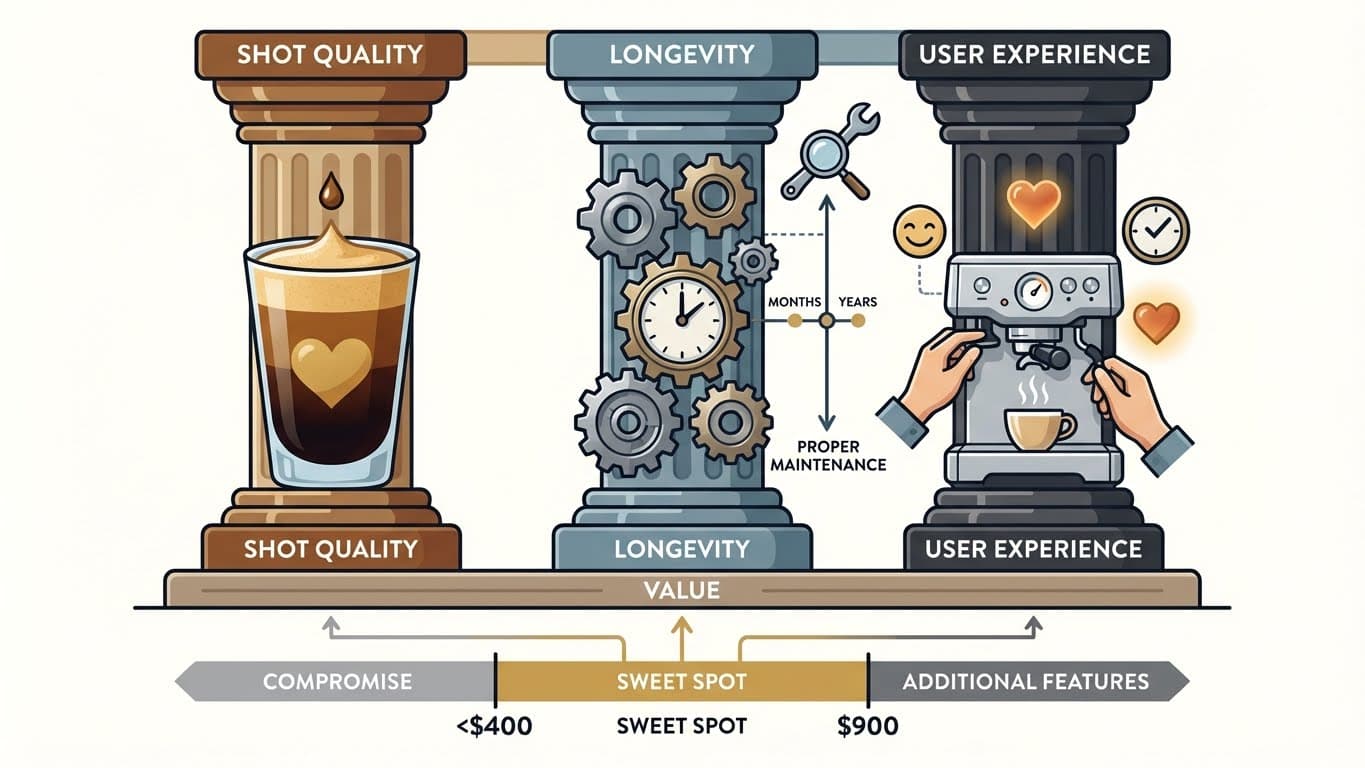
- Shot Quality: Can it produce balanced, properly extracted espresso with good crema?
- Longevity: Will it last years with proper maintenance, or will parts fail after months?
- User Experience: Does it make your morning routine enjoyable or frustrating?
I’ve found that the sweet spot for most home baristas sits between $400 and $900 for a complete setup. Below that range, you’re often compromising on build quality or grind consistency. Above it, you’re typically paying for features that matter more to professionals than home users.
Integrated vs. Separate Units
Here’s a common question: should you buy an all-in-one machine or pair a separate espresso machine with a standalone grinder? Both approaches have merit.
| Factor | All-in-One Combo | Separate Machine + Grinder |
|---|---|---|
| Counter Space | Less (single footprint) | More (two units) |
| Upgrade Flexibility | Limited | Can upgrade either piece |
| Grind Quality at Price | Good | Often better |
| Convenience | Higher | Slightly more involved |
In short, all-in-one machines offer convenience and space savings, while separate units typically provide better grind quality at equivalent price points and room to grow.
Best All-in-One Espresso Machine and Grinder Combos
These machines combine the espresso maker and grinder into a single unit, perfect for those who value simplicity and counter space.
Breville Barista Express Impress ($750–$900)
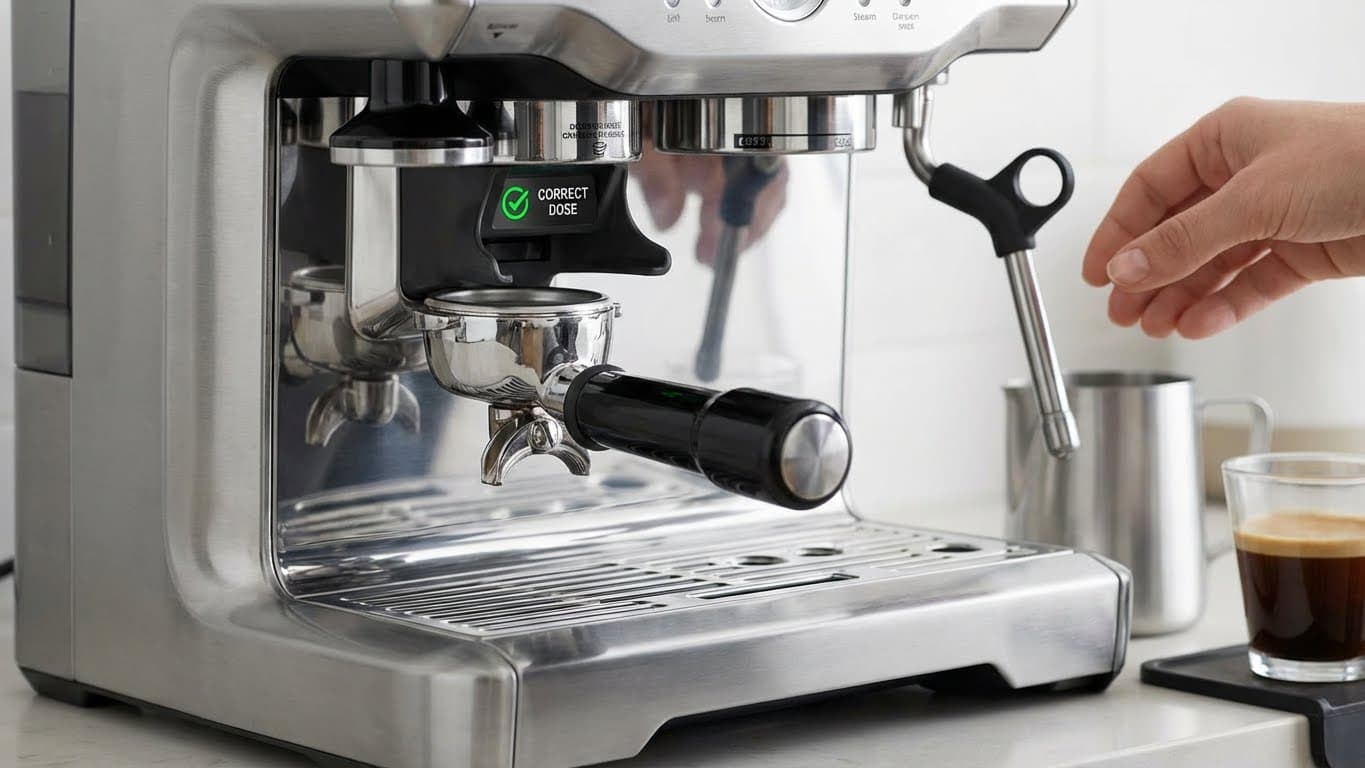
The Barista Express Impress takes everything great about the original Barista Express and adds intelligent dosing assistance. The machine literally tells you when your dose and tamp pressure are correct, removing the biggest variables that trip up beginners.
Pros:
- Assisted dosing takes the guesswork out of dialing in
- Integrated conical burr grinder with 25 settings
- PID temperature control for shot consistency
- Includes all accessories you need to start immediately
- Excellent steam wand for milk drinks
Cons:
- Grinder retention can be inconsistent with lighter roasts
- Steeper learning curve than super-automatic machines
- Larger footprint than basic espresso makers
Who is this for? Home baristas who want hands-on involvement in the espresso-making process but appreciate guidance. Perfect if you enjoy the ritual of making coffee and want consistent results without years of practice.
Who is this NOT for? Those who want push-button simplicity or anyone with extremely limited counter space. Also not ideal if you exclusively drink light-roasted single origins, which can be tricky with integrated grinders.
I’ve used this machine for over a year now, and it consistently produces shots that rival my local specialty café. The learning curve takes about a week of daily use, and after that, pulling excellent shots becomes second nature.
Breville Barista Pro ($850–$1,000)
Think of the Barista Pro as the Barista Express’s faster, more refined sibling. It heats up in just 3 seconds thanks to its ThermoJet heating system, and the digital display provides more precise control over your shots.
Pros:
- Incredibly fast heat-up time (3 seconds)
- Digital temperature control with LCD display
- 30 grind settings for fine-tuned adjustment
- More compact than the Barista Express
- Professional-grade steam wand
Cons:
- No dosing assistance (manual tamping required)
- Slightly higher price for similar shot quality
- Small hopper capacity
Who is this for? Busy professionals who need their espresso fast in the morning but still want craft quality. Great for anyone upgrading from a basic machine and comfortable with manual techniques.
Who is this NOT for? Complete beginners who need more guidance, or those on a tighter budget who can get similar results from the standard Barista Express.
De’Longhi La Specialista Arte ($500–$600)
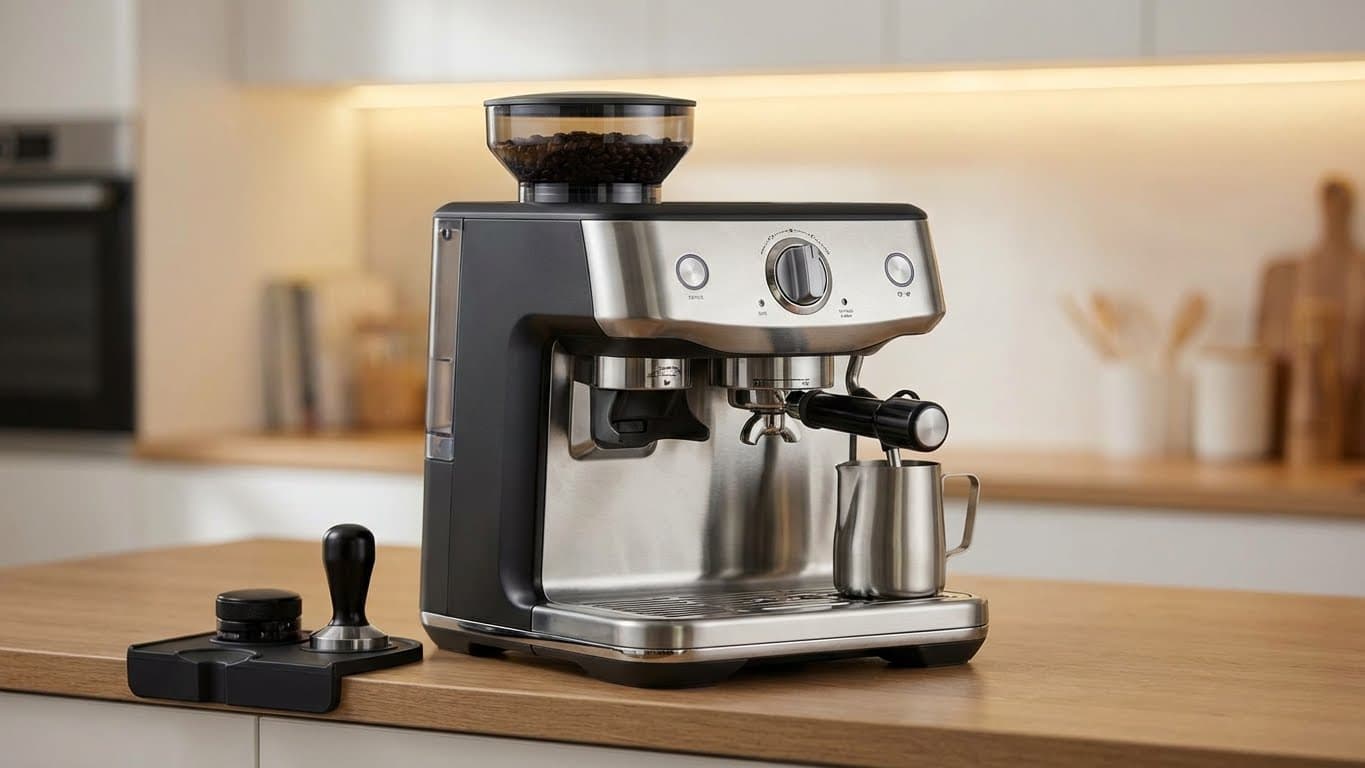
De’Longhi offers a compelling mid-range option with their Specialista Arte. It features sensor grinding technology that aims to deliver consistent doses, and the active temperature control helps maintain extraction stability.
Pros:
- Excellent entry price for an integrated setup
- Smart tamping station included
- Attractive, compact design
- My Latte Art steam wand for beginners
Cons:
- Grinder not as refined as Breville alternatives
- Fewer grind settings limit dialing-in precision
- Plastic components in some areas
Who is this for? Budget-conscious buyers who want a complete package without spending over $600. Good for households where multiple people will use the machine with different skill levels.
Who is this NOT for? Espresso enthusiasts chasing competition-level shots or anyone planning to experiment extensively with different bean origins and roast levels.
Best Separate Espresso Machine and Grinder Combos for Value
Pairing a standalone espresso machine with a dedicated grinder often yields better results at similar price points. Here are my top recommended pairings.
Budget Champion: Gaggia Classic Pro + Baratza Sette 30 ($550 + $280)
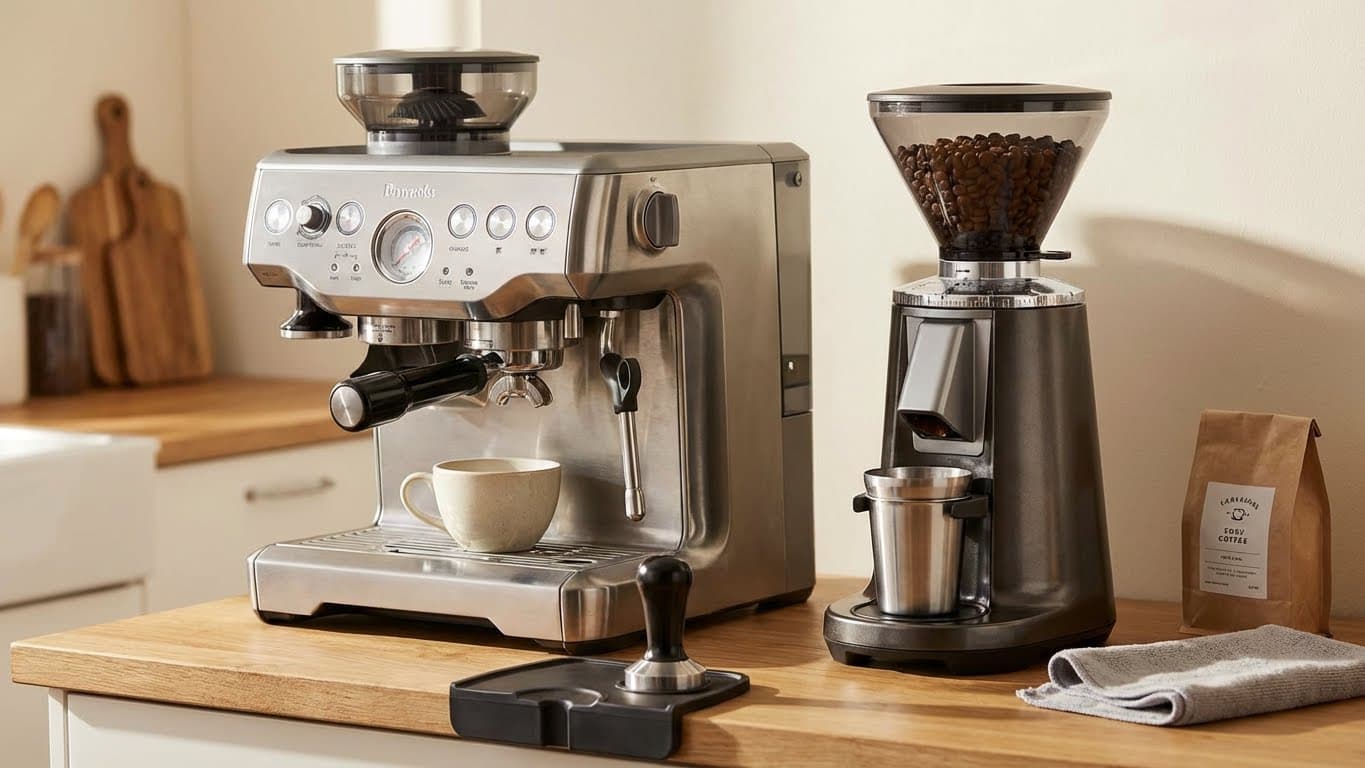
This pairing has been a home barista favorite for good reason. The Gaggia Classic Pro is essentially a commercial group head in a home-sized package, and the Baratza Sette 30 delivers exceptional grind consistency for espresso.
Combined Pros:
- Commercial-style 58mm portafilter with professional baskets
- Highly moddable platform (OPV adjustment, PID upgrades available)
- Sette grinder designed specifically for espresso dosing
- Both units are easily serviceable and have long parts availability
- Total cost under $900 for a professional-capable setup
Combined Cons:
- Steeper learning curve than all-in-one machines
- Gaggia’s steam power is adequate but not exceptional
- Requires more counter space for two units
- Stock Gaggia benefits significantly from modifications
In my experience, this combo punches well above its weight class. A friend of mine runs a small pop-up coffee cart using a modified Gaggia Classic, and customers regularly assume he’s using equipment costing three times as much.
Barista Tip: The Gaggia Classic Pro comes set at 15 bars of pressure from the factory. Adjusting the OPV (over-pressure valve) down to 9 bars dramatically improves shot quality and costs nothing but 15 minutes of your time.
Mid-Range Excellence: Rancilio Silvia Pro X + Eureka Mignon Notte ($1,050 + $350)
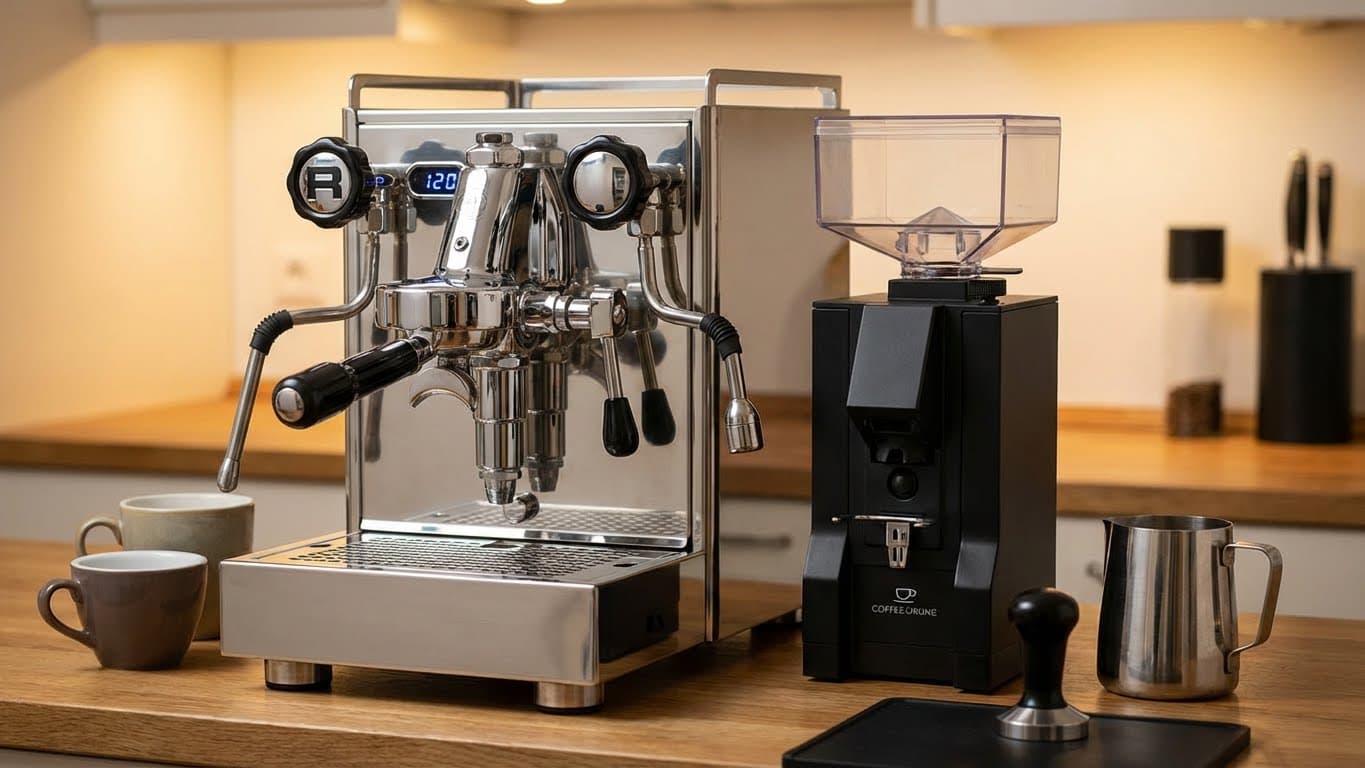
When you’re ready to invest a bit more, this pairing delivers café-quality results with impressive consistency.
Combined Pros:
- Dual boiler design means simultaneous brewing and steaming
- PID temperature control built-in (no modifications needed)
- Eureka’s 50mm flat burrs produce excellent grind uniformity
- Both units built to last decades with minimal maintenance
- Nearly silent grinding operation
Combined Cons:
- Higher initial investment
- Silvia Pro X has a learning curve for milk texturing
- Eureka Notte lacks timed dosing (stepless adjustment only)
Who is this for? Serious home baristas ready to commit to the craft. Excellent for households that drink multiple milk-based drinks in succession, thanks to the dual boiler design.
Who is this NOT for? Casual coffee drinkers who want simplicity, or anyone not willing to spend time learning proper technique.
Best Value Grinder for Any Setup: 1Zpresso JX-Pro ($170)
Did you know? A quality hand grinder can outperform electric grinders costing twice as much. The 1Zpresso JX-Pro produces grind consistency comparable to $400+ electric grinders, making it exceptional value for any espresso setup.
The trade-off is manual effort—about 30-45 seconds of grinding per double shot. But if you’re only making one or two drinks daily and want to maximize your machine budget, this is a smart way to allocate your money.
Common Mistakes to Avoid When Buying
I’ve seen home baristas waste money on setups that don’t serve them well. Here are the most common pitfalls.
Mistake 1: Overspending on the Machine, Underspending on the Grinder
This is the classic beginner error. Your grinder matters at least as much as your espresso machine—arguably more. A mediocre grinder paired with an excellent machine will produce mediocre espresso. Split your budget roughly 50/50 between the two, or even favor the grinder slightly.
Mistake 2: Buying Based on Features You Won’t Use
That built-in cup warmer and automatic milk frother sound great, but will you actually use them? Many home baristas pay premium prices for features that gather dust. Think honestly about your daily routine before splurging on bells and whistles.
Mistake 3: Ignoring Long-Term Costs
Some machines require proprietary cleaning tablets, expensive replacement parts, or professional servicing. Research ongoing costs before purchasing. The Gaggia and Rancilio machines I mentioned earlier use standard parts and are designed for home service, keeping long-term costs low.
Mistake 4: Expecting Super-Automatic Convenience from Semi-Automatic Quality
Semi-automatic machines with grinders require skill development. If you want truly push-button coffee with no learning curve, you need a super-automatic machine—but you’ll sacrifice some shot quality and pay more. Be honest about your patience for learning the craft.
Conclusion and Your Next Step
Finding the best value-for-money espresso machine and grinder combo depends on your specific needs, budget, and willingness to learn the craft. For most home baristas, the Breville Barista Express Impress offers the best balance of quality, convenience, and price in an all-in-one package. If you prefer separate components with room to grow, the Gaggia Classic Pro paired with a Baratza Sette 30 delivers exceptional value and nearly unlimited upgrade potential.
Start by honestly assessing your morning routine, counter space, and how involved you want to be in the process. Then pick the setup that matches your reality rather than your aspirations. You can always upgrade later—many of us do—but beginning with a well-matched combo ensures you’ll actually enjoy the journey from day one.
By choosing any of these recommended espresso machine and grinder combos, you’re setting yourself up for years of excellent home espresso. Take your time dialing in your first bag of beans, and don’t be afraid to experiment. That’s where the real fun begins.

Comments