



Table of Contents
- Quick Verdict: Cream for Richness, Milk for Refreshment
- Why Texture Matters in Your Iced Coffee
- Heavy Cream in Iced Coffee: The Full Breakdown
- What Heavy Cream Does to Your Drink
- Pros of Using Heavy Cream
- Cons of Using Heavy Cream
- Who Is Heavy Cream For?
- Who Is Heavy Cream NOT For?
- Milk in Iced Coffee: What You Need to Know
- How Milk Changes the Texture
- Pros of Using Milk
- Cons of Using Milk
- Who Is Milk For?
- Who Is Milk NOT For?
- Cream vs. Milk Texture Comparison at a Glance
- The Science Behind Texture Differences
- Half-and-Half: The Middle Ground Option
- How to Choose Based on Your Coffee Type
- For Cold Brew Coffee
- For Iced Espresso Drinks
- For Flash-Chilled Pour Over
- Practical Tips for the Best Texture
- Conclusion: Matching Texture to Your Mood
Quick Verdict: Cream for Richness, Milk for Refreshment
If you want a luxuriously creamy, indulgent iced coffee that coats your palate, heavy cream is your winner. If you prefer a lighter, more refreshing drink that lets the coffee shine, milk is the way to go. The texture difference between cream and milk in iced coffee is dramatic, and choosing the right one depends entirely on what experience you’re craving.
Why Texture Matters in Your Iced Coffee
Have you ever wondered why some iced coffees feel like a silky treat while others seem thin and watery? The answer lies almost entirely in your choice of dairy. When it comes to cream vs. milk in iced coffee, texture is where the real battle happens.
I’ve found that texture affects more than just mouthfeel. It changes how you perceive sweetness, how long the flavor lingers, and even how satisfying your drink feels. A thin, watery iced coffee might leave you reaching for another sip immediately, while a creamy one can feel complete after just a few gulps.
The cold temperature of iced coffee actually amplifies these texture differences. Fat molecules in cream and milk behave differently when chilled, which is why your iced latte might feel completely different from your hot one made the same way.
Heavy Cream in Iced Coffee: The Full Breakdown
What Heavy Cream Does to Your Drink

Heavy cream contains around 36-40% milk fat, making it the richest option for your iced coffee. When you pour it over ice, something beautiful happens. The cream creates visible swirls and ribbons before slowly blending into the coffee. In my experience, this visual appeal is part of what makes cream so appealing.
The high fat content creates a velvety, almost syrupy texture that clings to your tongue. Your coffee transforms from a simple beverage into something closer to dessert. The cream also rounds out any harsh or bitter notes in your coffee, making it taste smoother overall.
Pros of Using Heavy Cream
- Incredibly rich and satisfying mouthfeel
- Masks bitterness and harsh acidity in lower-quality coffees
- Creates beautiful swirling patterns in your glass
- A little goes a long way, so you use less
- Keeps you feeling full longer due to higher fat content
- Perfect for keto and low-carb diets
Cons of Using Heavy Cream
- High in calories (about 50 calories per tablespoon)
- Can overpower delicate coffee flavors and subtle notes
- May feel too heavy in hot weather when you want refreshment
- Doesn’t mix as easily; tends to sink or separate initially
- More expensive than regular milk
Who Is Heavy Cream For?
Heavy cream is perfect if you love rich, indulgent drinks and don’t mind the extra calories. It’s ideal for keto dieters, anyone who finds black coffee too harsh, or those lazy weekend mornings when you want something special. If you’re using mediocre coffee beans, cream can actually save your drink by smoothing out unpleasant flavors.
Who Is Heavy Cream NOT For?
Skip the heavy cream if you’re counting calories, prefer lighter beverages, or want to taste the nuanced flavors of specialty coffee. It’s also not great when you’re looking for maximum refreshment on a scorching day. The richness can feel heavy when you really just need hydration.
Milk in Iced Coffee: What You Need to Know

How Milk Changes the Texture
Whole milk contains about 3.25% fat, while 2% and skim milk contain even less. This dramatically affects how your iced coffee feels in your mouth. Milk creates a lighter, more fluid texture that lets you drink quickly and easily.
I’ve noticed that milk blends more uniformly with coffee than cream does. You get a consistent experience from first sip to last. The lower fat content means the coffee flavor comes through more clearly, which is fantastic when you’re using high-quality beans you want to showcase.
Pros of Using Milk
- Lighter texture that’s refreshing in warm weather
- Lets coffee flavor shine through
- Lower in calories than cream
- Mixes easily and creates a uniform drink
- More affordable and always on hand
- Multiple options: whole, 2%, 1%, or skim
Cons of Using Milk
- Less satisfying mouthfeel for richness lovers
- Doesn’t mask bitterness as effectively
- Can make iced coffee taste watery if you use too much
- Skim milk especially can feel thin and unsatisfying
- Contains more lactose than heavy cream
Who Is Milk For?
Milk is your best friend if you want a balanced, everyday iced coffee that’s refreshing and not too heavy. It’s perfect for coffee enthusiasts who want to taste their beans, calorie-conscious drinkers, and anyone who drinks multiple iced coffees per day. Whole milk offers the best texture compromise.
Who Is Milk NOT For?
If you’re looking for that luxurious, dessert-like experience, milk will leave you wanting more. It’s also not ideal if you’re trying to cover up bad coffee or need something that feels substantial enough to replace a meal.
Cream vs. Milk Texture Comparison at a Glance
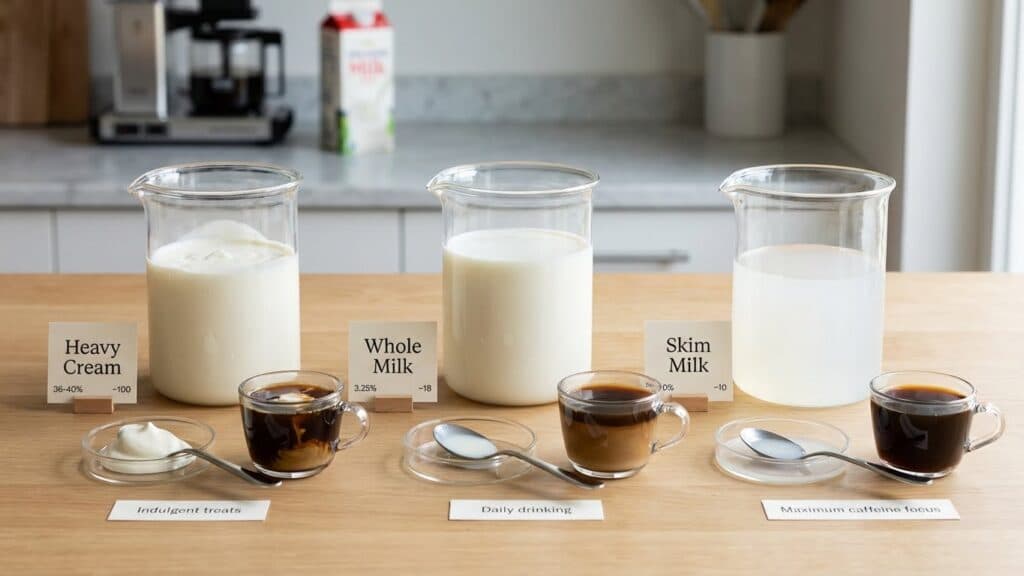
| Factor | Heavy Cream | Whole Milk | Skim Milk |
|---|---|---|---|
| Fat Content | 36-40% | 3.25% | 0% |
| Texture | Thick, velvety, syrupy | Smooth, medium body | Thin, watery |
| Mouthfeel | Coats the tongue | Light coating | No coating |
| Coffee Flavor | Muted, smoothed | Balanced | Very prominent |
| Calories (2 tbsp) | ~100 | ~18 | ~10 |
| Best For | Indulgent treats | Daily drinking | Maximum caffeine focus |
The Science Behind Texture Differences
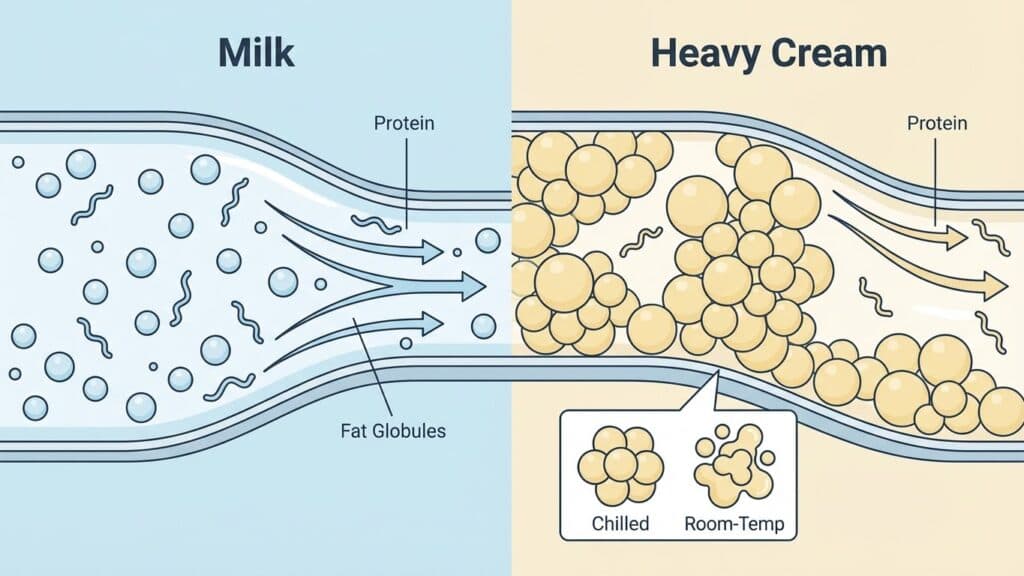
Understanding why cream and milk feel so different comes down to fat globules and protein content. In short, fat creates a sensation of creaminess by lubricating your mouth and slowing down how quickly liquid flows across your palate.
Heavy cream’s abundant fat globules cluster together and create that characteristic thick texture. When cold, these fats become even more solid, which is why chilled cream feels thicker than room-temperature cream. This is also why cream takes longer to blend into iced coffee. The cold makes it more viscous.
Milk proteins contribute to texture too, but in a different way. Casein and whey proteins create a subtle creaminess even in lower-fat milks. This is why whole milk still feels smoother than water, even though its fat content is relatively low.
Key Takeaway: The colder your drink, the more pronounced the texture differences become. If you want maximum creaminess, use very cold cream. If you want milk to blend better, let it sit at room temperature briefly before adding.
Half-and-Half: The Middle Ground Option
Can’t decide between cream and milk? Half-and-half might be your perfect compromise. With about 10-12% fat content, it falls right between the extremes and offers a balanced texture that many coffee lovers prefer.
In my experience, half-and-half gives you noticeable richness without the heaviness of pure cream. It mixes more easily than heavy cream but still provides that satisfying mouthfeel you might miss with plain milk. It’s probably the most popular choice at coffee shops for good reason.
The texture of half-and-half in iced coffee is smooth and slightly creamy. It adds body to your drink without overwhelming it. Think of it as the “Goldilocks” option when cream feels like too much and milk feels like too little.
Barista Tip: If you love cream’s richness but worry about calories, try using one tablespoon of heavy cream plus a splash of milk. You’ll get most of the texture benefits with fewer calories than using cream alone.
How to Choose Based on Your Coffee Type
For Cold Brew Coffee
Cold brew is naturally smooth and low in acidity, so it pairs beautifully with either option. I lean toward milk or half-and-half here because cold brew doesn’t need cream’s bitterness-masking properties. The coffee’s natural sweetness comes through better with lighter dairy.
For Iced Espresso Drinks
Strong espresso can handle heavy cream without getting lost. If you’re making an iced latte with bold espresso, cream adds a luxurious dimension. For lighter roasts or single-origin espressos, milk preserves more of the complex flavors.
For Flash-Chilled Pour Over

This is where I’d almost always recommend milk. Flash-chilled pour over highlights delicate tasting notes, and heavy cream would bulldoze right over those subtleties. A splash of whole milk is usually enough.
Practical Tips for the Best Texture
- Temperature matters: Add dairy after the ice, not before. Cold dairy blends better with cold coffee.
- Stir properly: Cream needs more vigorous stirring than milk to fully incorporate.
- Use less than you think: With cream especially, start with a tablespoon and add more if needed.
- Consider coffee strength: Stronger coffee stands up better to heavy cream.
- Ice quality counts: Large, slow-melting ice cubes prevent dilution that can make your drink watery.
Conclusion: Matching Texture to Your Mood
The cream vs. milk debate in iced coffee really comes down to what texture experience you want. Heavy cream delivers indulgent, dessert-like richness that transforms your coffee into a treat. Milk provides refreshing, clean texture that showcases your coffee’s natural character. Half-and-half offers a satisfying compromise.
Life is too short for bad coffee, and it’s also too short to drink your coffee the “wrong” way just because someone told you to. Experiment with different ratios and find what makes your taste buds happiest. Start with whole milk as your baseline, then venture into cream territory when you want something special. Your perfect iced coffee texture is waiting to be discovered.


Comments