



Table of Contents
- Why Coffee Can Upset Your Stomach
- Key Takeaway
- Cold Brew Coffee: The Gentler Option?
- The Acidity Factor
- Smoother Flavor, Fewer Irritants
- Did You Know?
- Hot Coffee: The Traditional Brew
- The Case for Hot Coffee
- When Hot Coffee Causes Problems
- Cold Brew vs. Hot Coffee: Side-by-Side Comparison
- Who Should Choose Cold Brew?
- Who Might Stick with Hot Coffee?
- Tips for Making Any Coffee Easier on Your Stomach
- Barista Tip
- Frequently Asked Questions
- Is cold brew actually less acidic than hot coffee?
- Can I heat up cold brew without losing the low-acid benefits?
- Does cold brew have more caffeine than hot coffee?
- Will switching to cold brew completely eliminate my stomach issues?
- Are there hot coffee options that are easier on the stomach?
- Final Verdict: Which Should You Choose?
You love your morning cup of coffee, but your stomach? Not so much. If you’ve ever experienced heartburn, acid reflux, or general digestive discomfort after drinking coffee, you’re not alone. Millions of coffee lovers deal with this frustrating trade-off every single day. The good news is that not all coffee is created equal when it comes to your gut.
So, which brewing method is easier on your stomach—cold brew or hot coffee? In my experience, the answer isn’t as simple as picking one over the other. Let’s break down the science, bust some myths, and help you figure out which brew works best for your body.
Why Coffee Can Upset Your Stomach
Before we compare cold brew and hot coffee, it helps to understand why coffee causes stomach issues in the first place. Coffee contains several compounds that can irritate your digestive system:
- Chlorogenic acids: These antioxidants are healthy but can increase stomach acid production.
- Caffeine: Stimulates gastric acid secretion and can relax the lower esophageal sphincter, leading to acid reflux.
- N-alkanoyl-5-hydroxytryptamides: Compounds that trigger stomach acid release.
- Catechols: Can speed up gastric emptying, sometimes causing discomfort.
The brewing method you choose affects how much of these compounds end up in your cup. That’s where the cold brew vs. hot coffee debate gets interesting.
Key Takeaway
It’s not just the caffeine causing your stomach troubles. Multiple compounds in coffee work together to affect your digestive system, and brewing temperature plays a significant role in extracting them.
Cold Brew Coffee: The Gentler Option?

Cold brew has earned a reputation as the “stomach-friendly” coffee, and there’s some solid science behind this claim. The brewing process involves steeping coarsely ground coffee in cold or room-temperature water for 12 to 24 hours. This slow extraction method changes the chemical profile of your coffee significantly.
The Acidity Factor
Studies have shown that cold brew coffee can be up to 67% less acidic than hot-brewed coffee. In short, lower acidity means less irritation to your stomach lining and esophagus. For people with acid reflux or GERD, this difference can be a game-changer.
I’ve found that switching to cold brew helped several friends of mine who had almost given up on coffee entirely. One described it as “finally being able to enjoy coffee without paying for it later.”
Smoother Flavor, Fewer Irritants
The cold extraction process pulls fewer of the bitter compounds and oils that can upset sensitive stomachs. You get a naturally sweeter, smoother taste without needing to add as much sugar or cream—both of which can cause their own digestive issues.
- Lower chlorogenic acid content
- Reduced bitter compounds
- Smoother overall taste profile
- Often requires less added sweetener
Did You Know?
Cold brew concentrate can be diluted with water or milk to your preferred strength. This gives you control over how much coffee you’re actually consuming, which can help you manage caffeine intake and stomach sensitivity.
Hot Coffee: The Traditional Brew
Hot coffee isn’t necessarily the villain here. The higher brewing temperature (195°F to 205°F) extracts a broader range of compounds from the coffee grounds, including more acids and oils. This creates that complex, aromatic flavor profile many of us love.
The Case for Hot Coffee
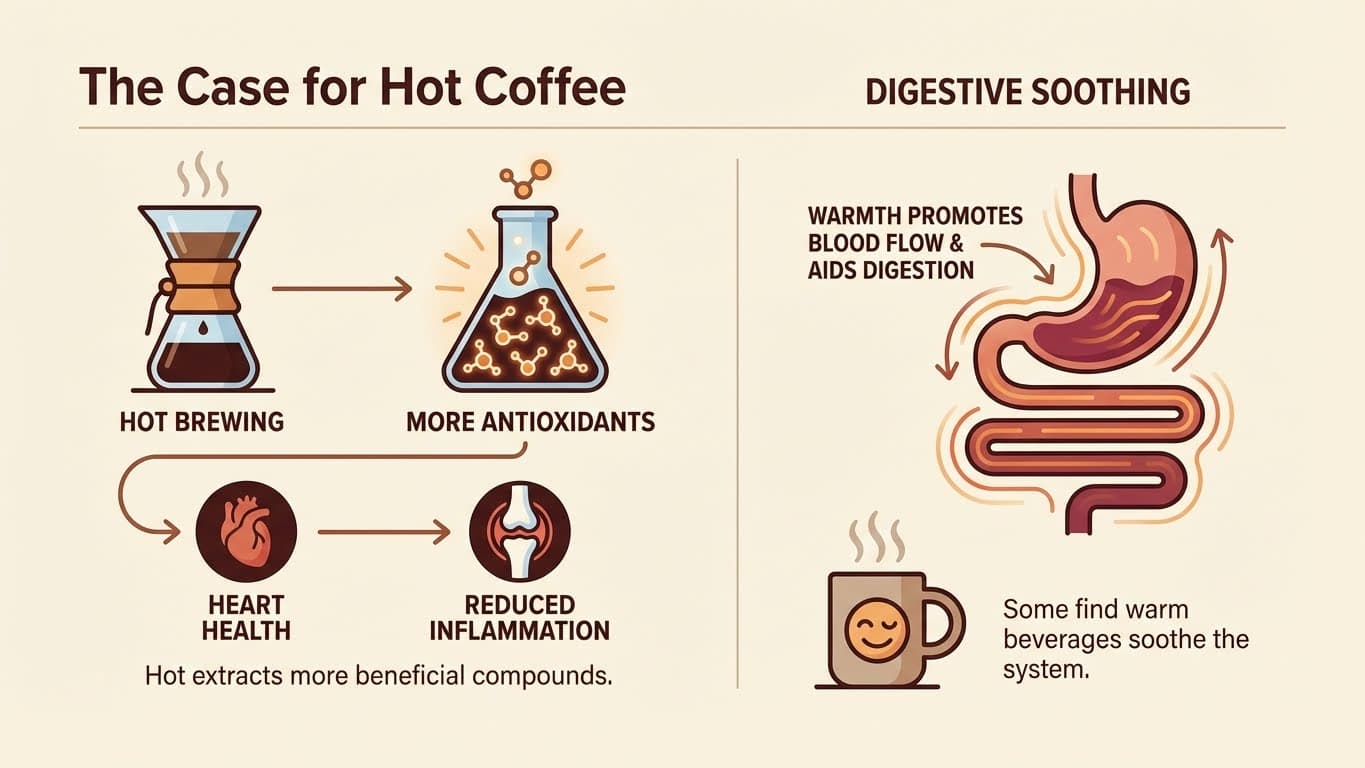
Hot brewing extracts more antioxidants than cold brewing. These antioxidants offer health benefits like reduced inflammation and improved heart health. If your stomach can handle it, hot coffee delivers more of these beneficial compounds.
Some people actually find that warm beverages soothe their digestive system. The warmth can promote blood flow to the stomach and aid digestion. Life is too short for bad coffee, but it’s also too short to avoid something your body handles just fine.
When Hot Coffee Causes Problems
The higher acidity in hot coffee is the main culprit for stomach issues. Here’s what typically happens:
- Increased stomach acid production leads to heartburn
- Relaxation of the esophageal sphincter causes acid reflux
- Faster gastric emptying can trigger nausea or cramping
- Bitter compounds may irritate the stomach lining
If you experience these symptoms regularly, it might be worth experimenting with cold brew or low-acid hot coffee options.
Cold Brew vs. Hot Coffee: Side-by-Side Comparison
Let’s put these two brewing methods head-to-head so you can see the differences at a glance:
| Factor | Cold Brew | Hot Coffee |
|---|---|---|
| Acidity Level | Lower (pH 6.0-6.5) | Higher (pH 4.5-5.5) |
| Stomach Irritation | Generally less | Can be more irritating |
| Caffeine Content | Variable (often higher in concentrate) | Moderate |
| Antioxidant Content | Lower | Higher |
| Flavor Profile | Smooth, sweet, chocolatey | Complex, aromatic, bright |
| Brew Time | 12-24 hours | 3-5 minutes |
Who Should Choose Cold Brew?

- People with acid reflux, GERD, or frequent heartburn
- Those with sensitive stomachs or IBS
- Anyone who finds regular coffee too bitter or harsh
- Coffee lovers who prefer a smoother, less acidic taste
Who Might Stick with Hot Coffee?
- People without significant stomach sensitivity
- Those who want maximum antioxidant benefits
- Anyone who prefers the traditional coffee flavor and aroma
- People who don’t want to wait 12+ hours for their brew
Tips for Making Any Coffee Easier on Your Stomach
Regardless of which brewing method you choose, there are ways to make your coffee gentler on your digestive system:
- Don’t drink coffee on an empty stomach. Having food in your stomach creates a buffer against acid.
- Choose darker roasts. They contain less caffeine and fewer stomach-irritating compounds than light roasts.
- Limit your intake. Stick to 1-2 cups per day if you’re prone to stomach issues.
- Add a splash of milk. The proteins in milk can help neutralize some of the acidity.
- Try low-acid coffee beans. Some brands specifically process beans to reduce acidity.
Barista Tip
If you’re making cold brew at home, use a coarse grind and filtered water. A finer grind can lead to over-extraction and bitterness, while unfiltered tap water may introduce off-flavors. The result? A cleaner, smoother cold brew that’s even gentler on your stomach.
Frequently Asked Questions
Is cold brew actually less acidic than hot coffee?
Yes, research confirms that cold brew is significantly less acidic than hot-brewed coffee. The cold extraction process simply doesn’t pull as many acidic compounds from the grounds. However, the exact difference depends on the beans, grind size, and steeping time.
Can I heat up cold brew without losing the low-acid benefits?

You can warm cold brew concentrate without significantly increasing its acidity. The acids were never extracted in the first place, so heating it up won’t suddenly make it as acidic as traditionally brewed hot coffee. Just don’t boil it.
Does cold brew have more caffeine than hot coffee?
Cold brew concentrate typically has more caffeine per ounce than regular hot coffee. However, most people dilute their cold brew with water or milk, which brings the caffeine content closer to—or even below—a standard cup of hot coffee.
Will switching to cold brew completely eliminate my stomach issues?
Not necessarily. While cold brew is gentler for many people, individual responses vary. Other factors like caffeine sensitivity, what you eat with your coffee, and underlying digestive conditions all play a role. If stomach issues persist, consult a healthcare professional.
Are there hot coffee options that are easier on the stomach?
Yes. Look for low-acid coffee brands, choose dark roasts over light roasts, and consider brewing methods like the French press that produce a fuller-bodied but sometimes less acidic cup. Adding milk or a non-dairy alternative can also help.
Final Verdict: Which Should You Choose?
If stomach sensitivity is your main concern, cold brew is generally the safer bet. Its lower acidity and smoother profile make it easier on your digestive system. I’ve personally recommended it to dozens of coffee lovers who thought they’d have to give up their favorite beverage.
That said, hot coffee isn’t off the table. Many people with mild sensitivity find that choosing the right beans, roast level, and brewing method makes all the difference. The key is listening to your body and experimenting to find what works for you.
Start by trying cold brew for a week and see how your stomach responds. If you miss the warmth and complexity of hot coffee, explore low-acid options or simply warm up your cold brew. Life is too short for bad coffee—and it’s definitely too short to spend it with an upset stomach.
Note: This article provides general information about coffee and digestive health. If you experience persistent stomach issues, please consult a healthcare professional for personalized advice.




Comments